How do I keep swordfish from drying out?
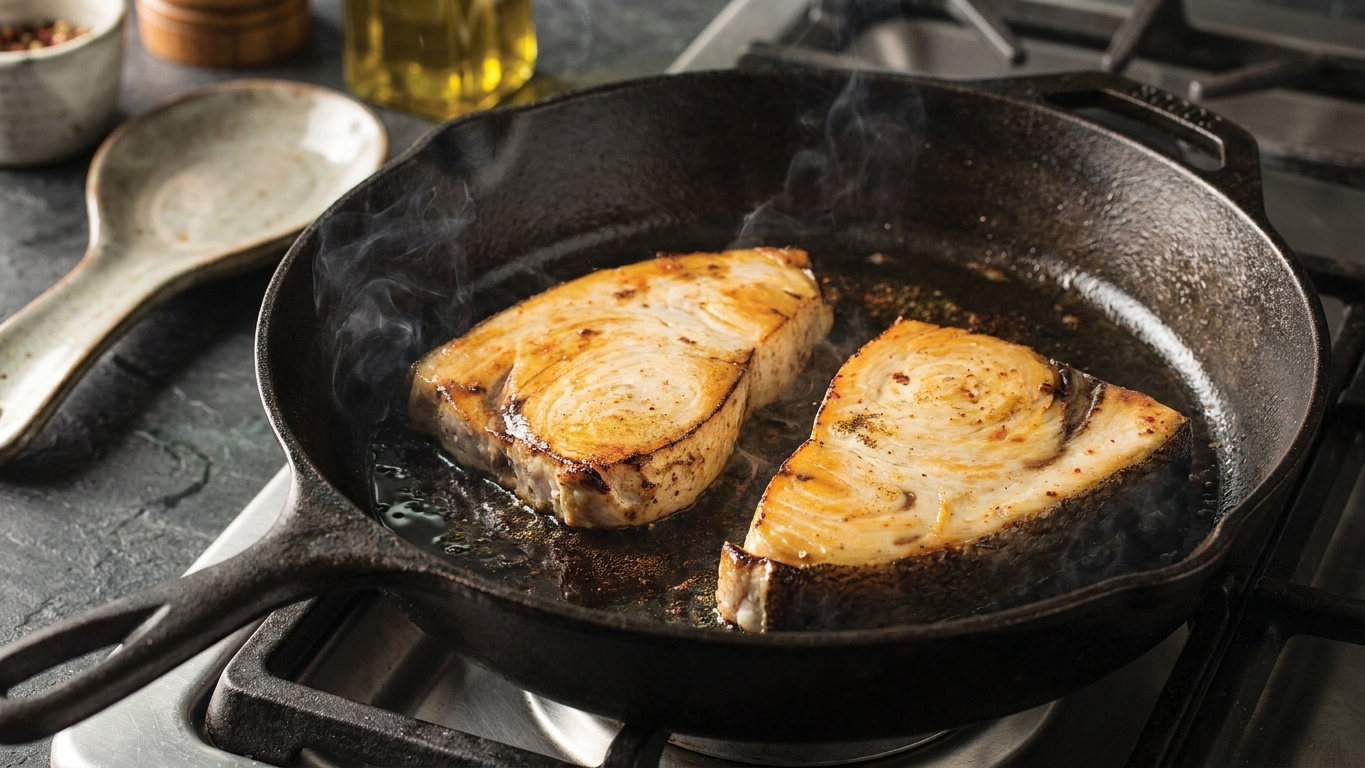
Two things: do not overcook it, and do not start with a wet steak. Pat the fish very dry, use a hot pan, and pull it at 130 to 135 F in the thickest part, then rest 5 minutes. It will coast up a few degrees and stay juicy.
What internal temperature should swordfish be cooked to?
Texture-wise, I like swordfish that finishes around 135 F after resting (pull around 130 to 135 F). For food-safety guidance, the FDA recommends 145 F for finfish. Cook to your comfort level and the diners you are serving. Just know swordfish firms up fast as you climb past the mid-130s.
What if I do not have a thermometer?
Look for the fish to turn mostly opaque and feel firm but still springy when pressed in the thickest part. If it feels stiff, it is likely past the sweet spot. When in doubt, err on the slightly under side and let the rest do the last bit of work.
Can I grill swordfish instead?
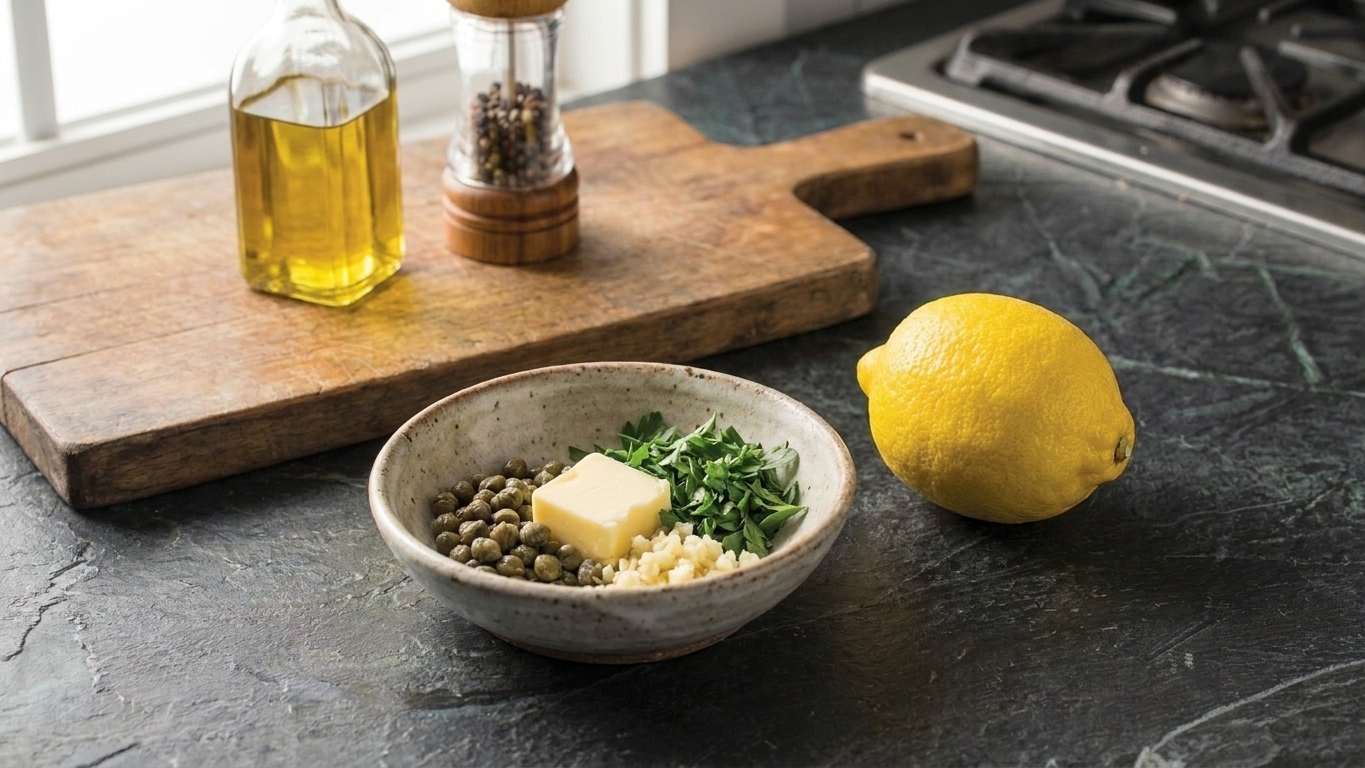
Yep. Oil the grates, preheat to medium-high, and grill about 3 to 5 minutes per side depending on thickness. Finish with the same lemon caper butter.
How do I handle extra-thick swordfish steaks?
If your steaks are closer to 1 1/2 to 2 inches, you can sear both sides, then slide the skillet into a 375 F oven for a few minutes to finish gently without over-browning the outside.
Is swordfish “fishy” tasting?
Not really. It is mild and meaty. The lemon and capers lean into fresh, briny flavors that make it taste clean, not fishy.
What thickness of swordfish steaks works best?
1 to 1 1/2 inches is ideal. Thinner cooks too fast and can dry out before you get good browning.
Do I need to remove skin or dark bloodline?
Most swordfish steaks are sold skinless. If you see a darker strip, you can trim it for a milder flavor, but it is optional.