Mom's Best Recipes
Recipe

Pasta e Fagioli

A cozy, one-pot Italian soup with creamy beans, tender pasta, and a tomato-forward broth that tastes like you cooked all day.

Author By Matt Campbell
4.8
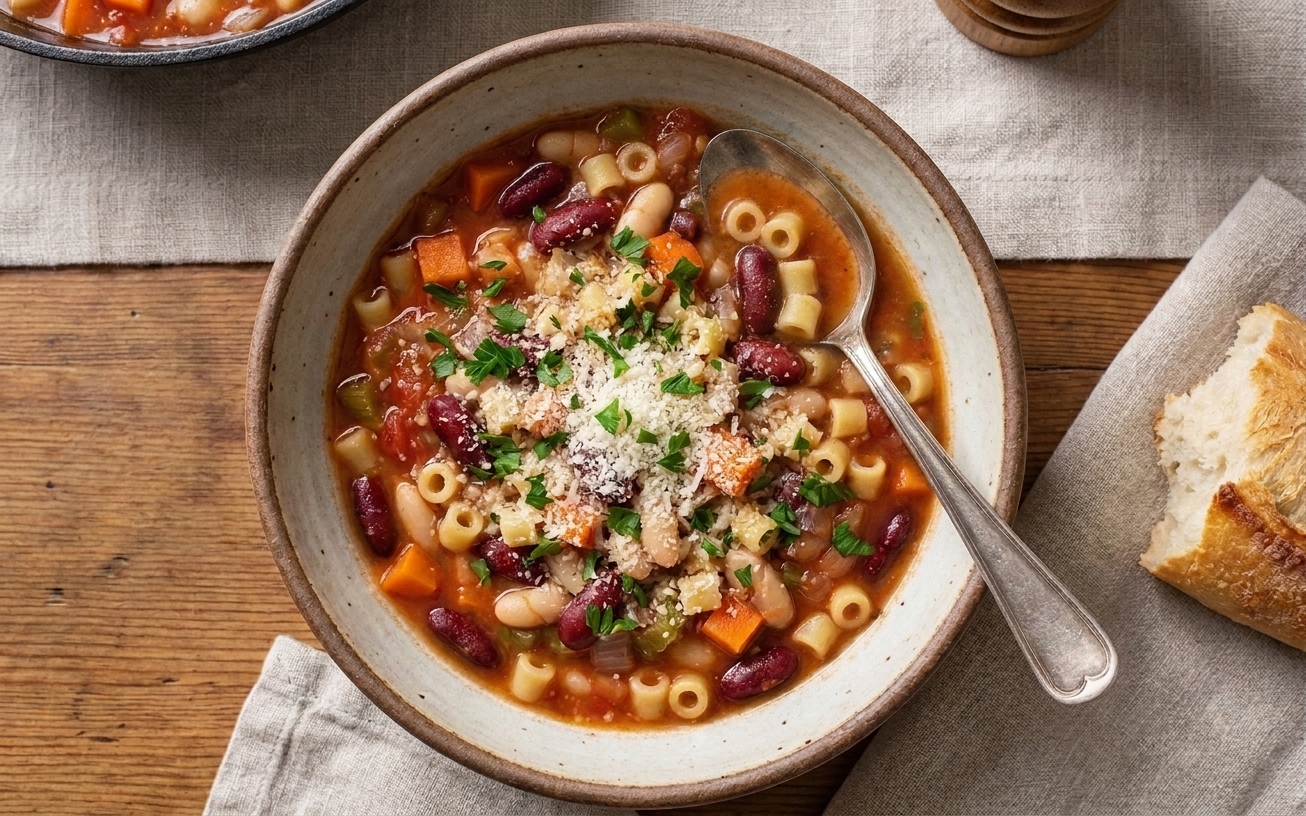
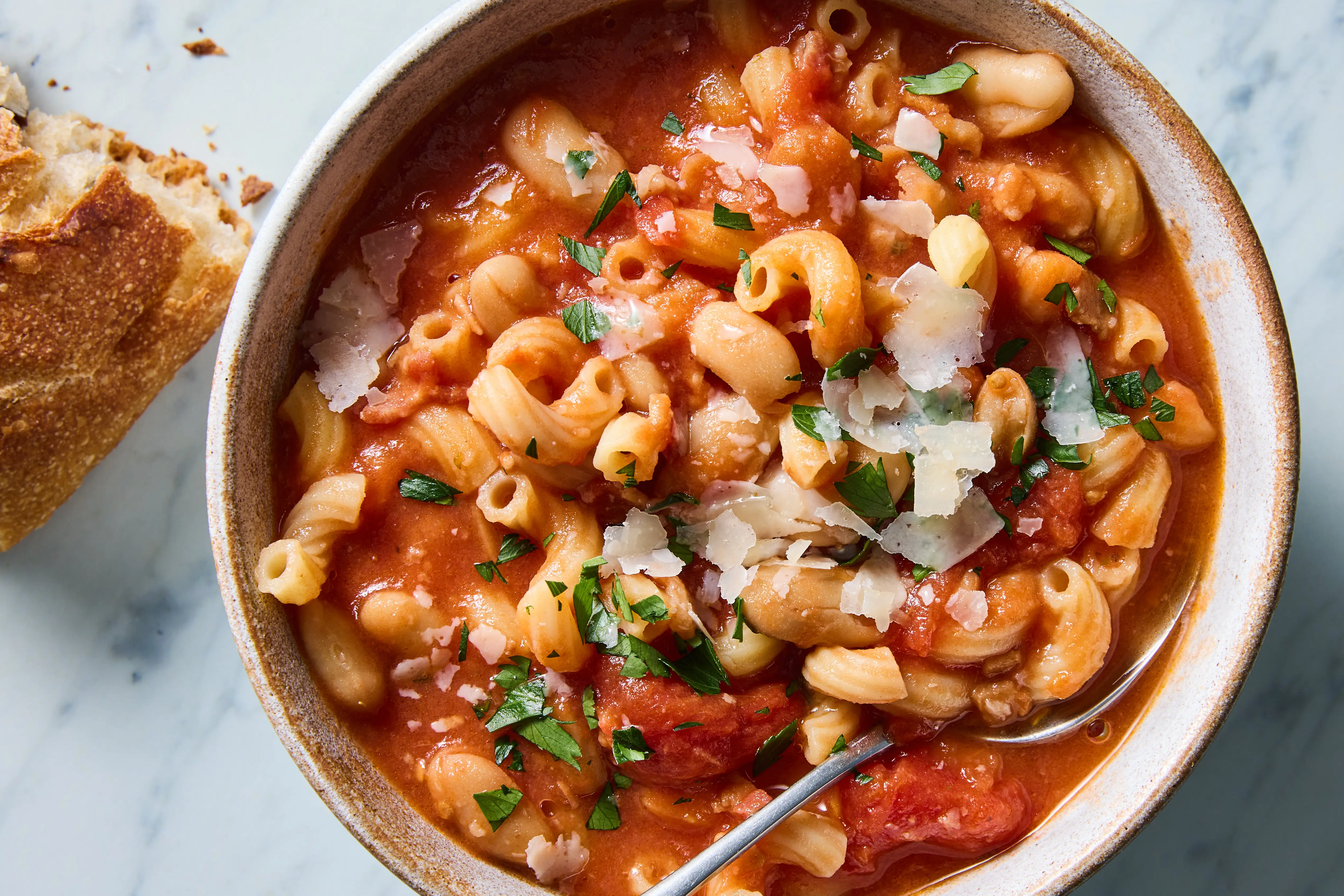
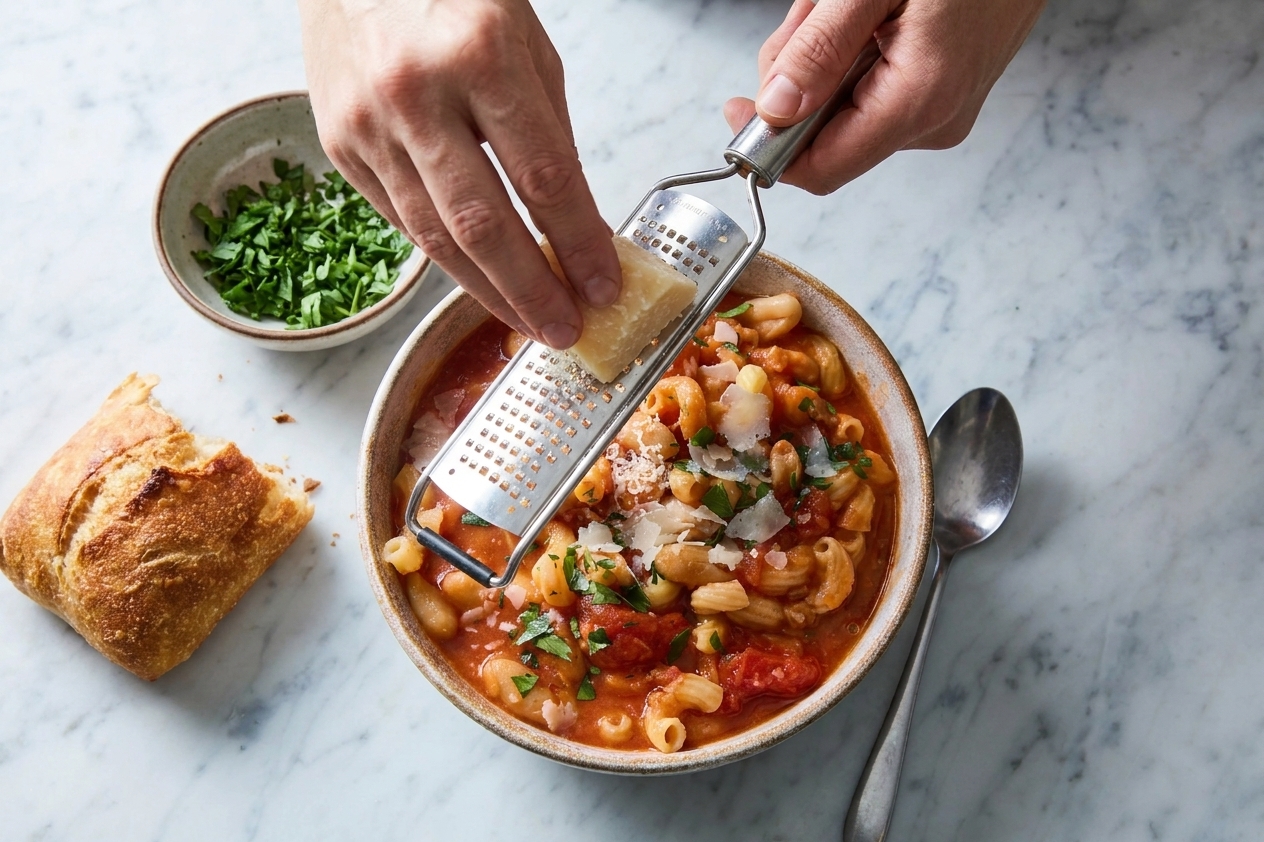
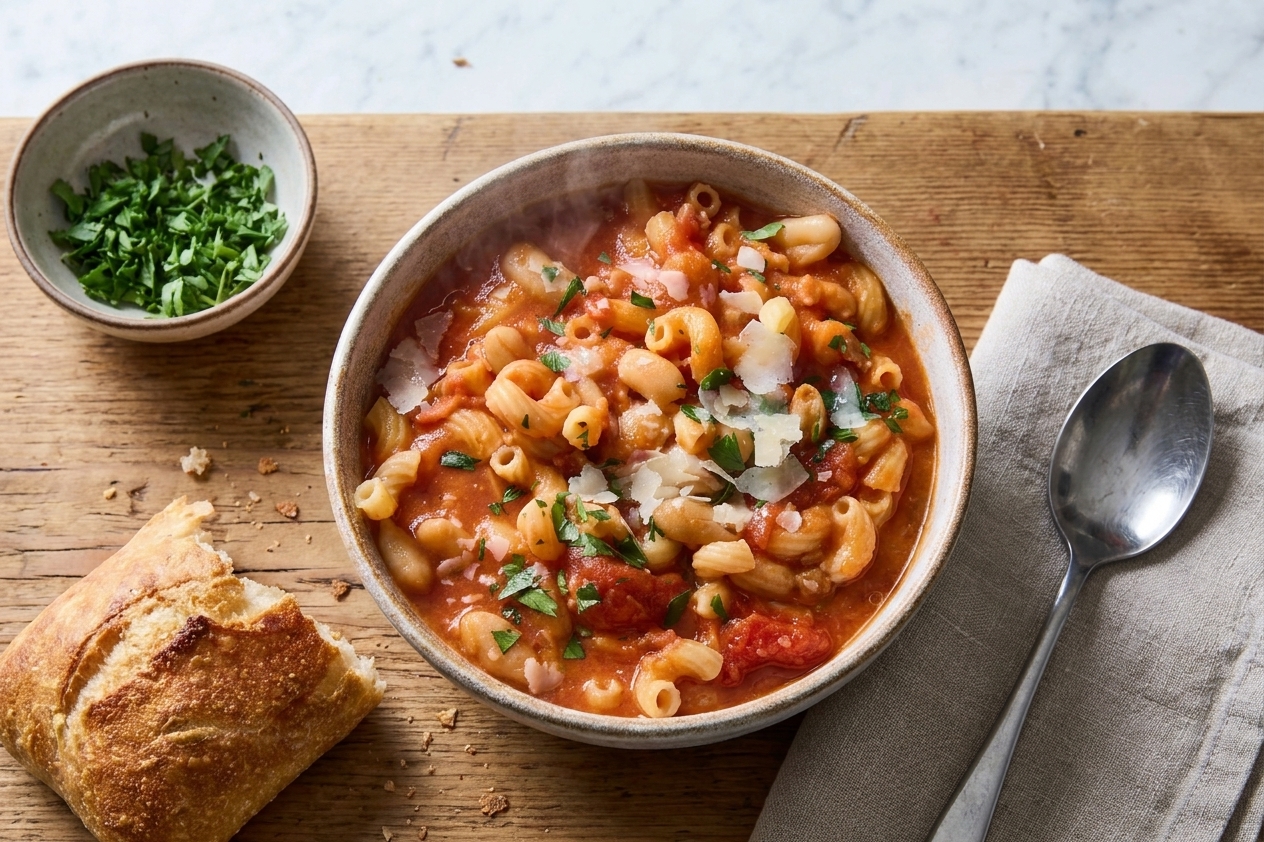
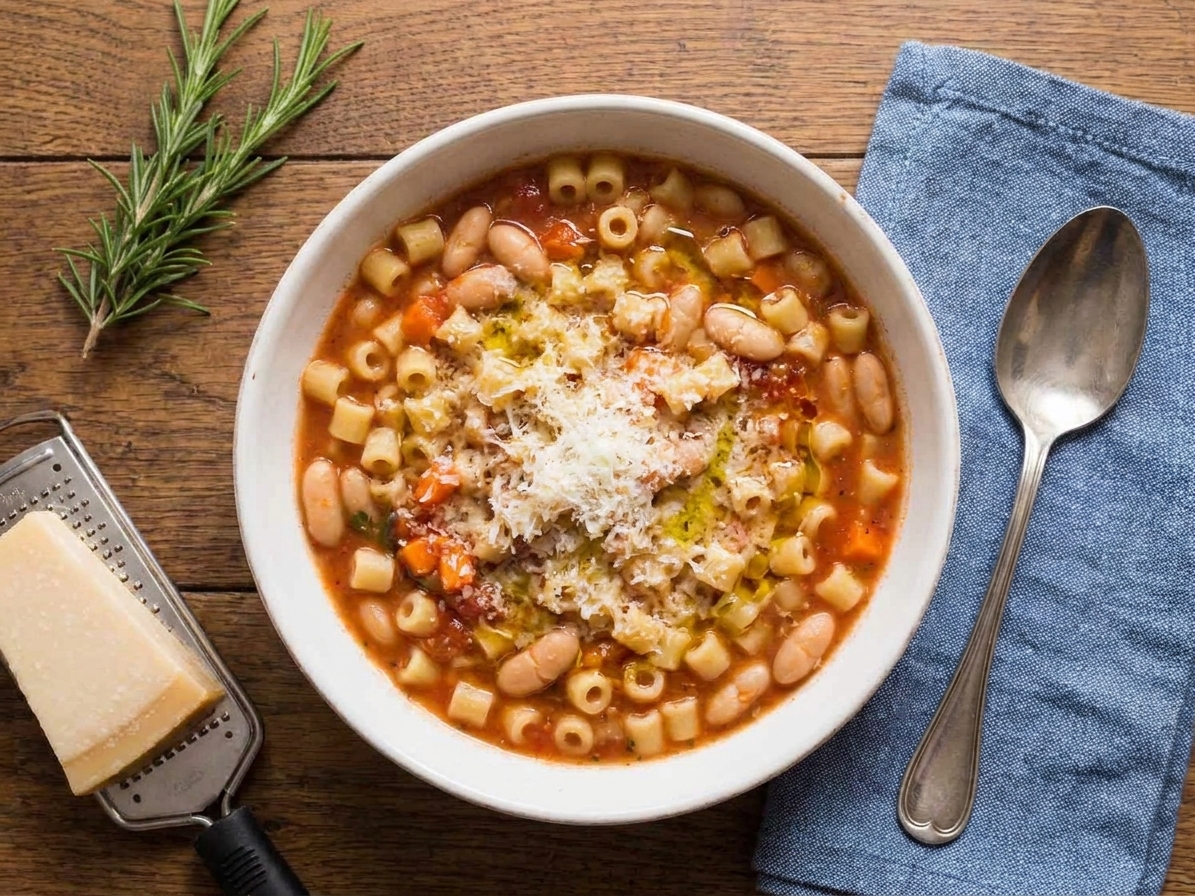
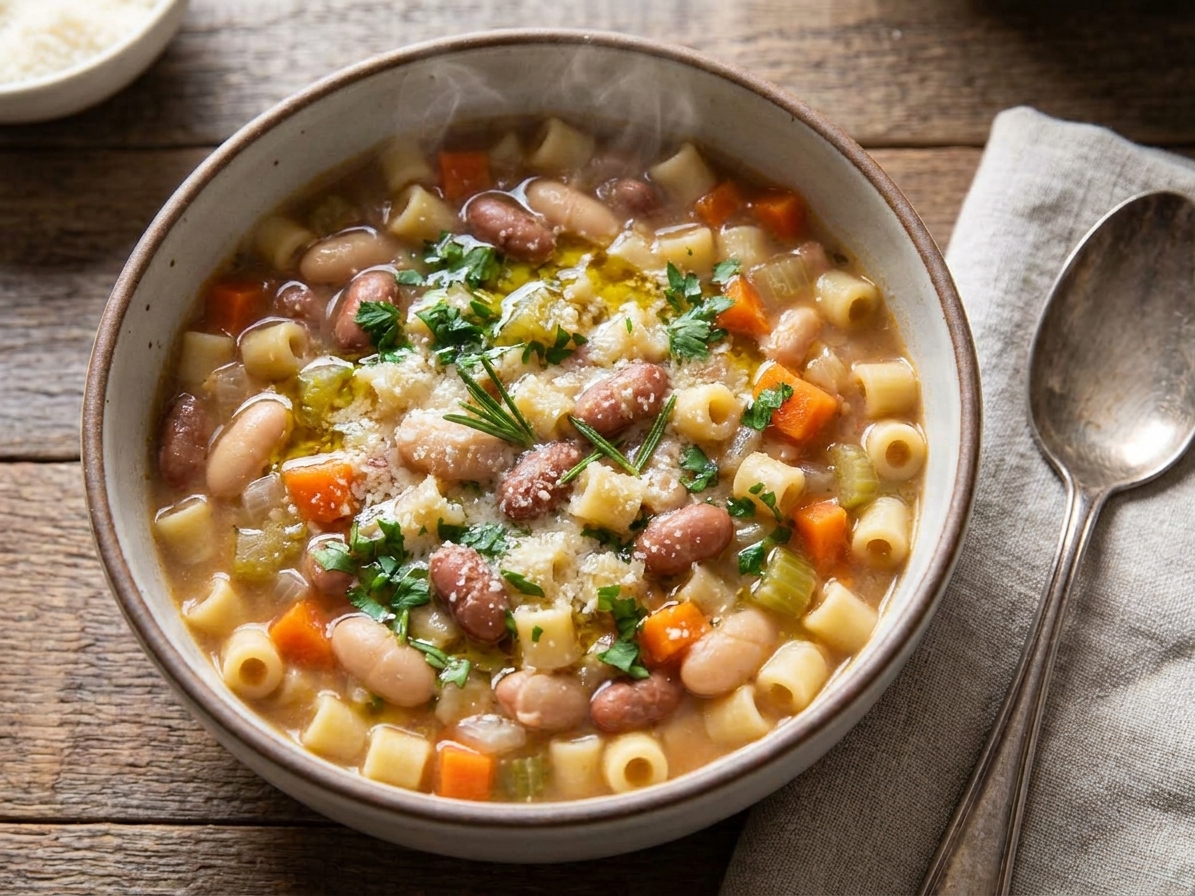
A steaming bowl of pasta e fagioli topped with grated Parmesan and chopped parsley, set on a rustic kitchen table with a spoon and a slice of crusty bread

Pasta e fagioli is the kind of dinner that makes your kitchen smell like you have your life together. It’s bean-and-pasta soup, yes. But when you do it right, it lands in that perfect zone: cozy carbs, a brothy tomato backbone, and beans that get creamy enough to feel a little luxurious.

My version is built for real life. Canned beans, pantry pasta, and a short ingredient list that still tastes layered. The trick is simple: mash a portion of the beans right in the pot to thicken the broth without cream, without fuss, and without turning this into a weekend project.
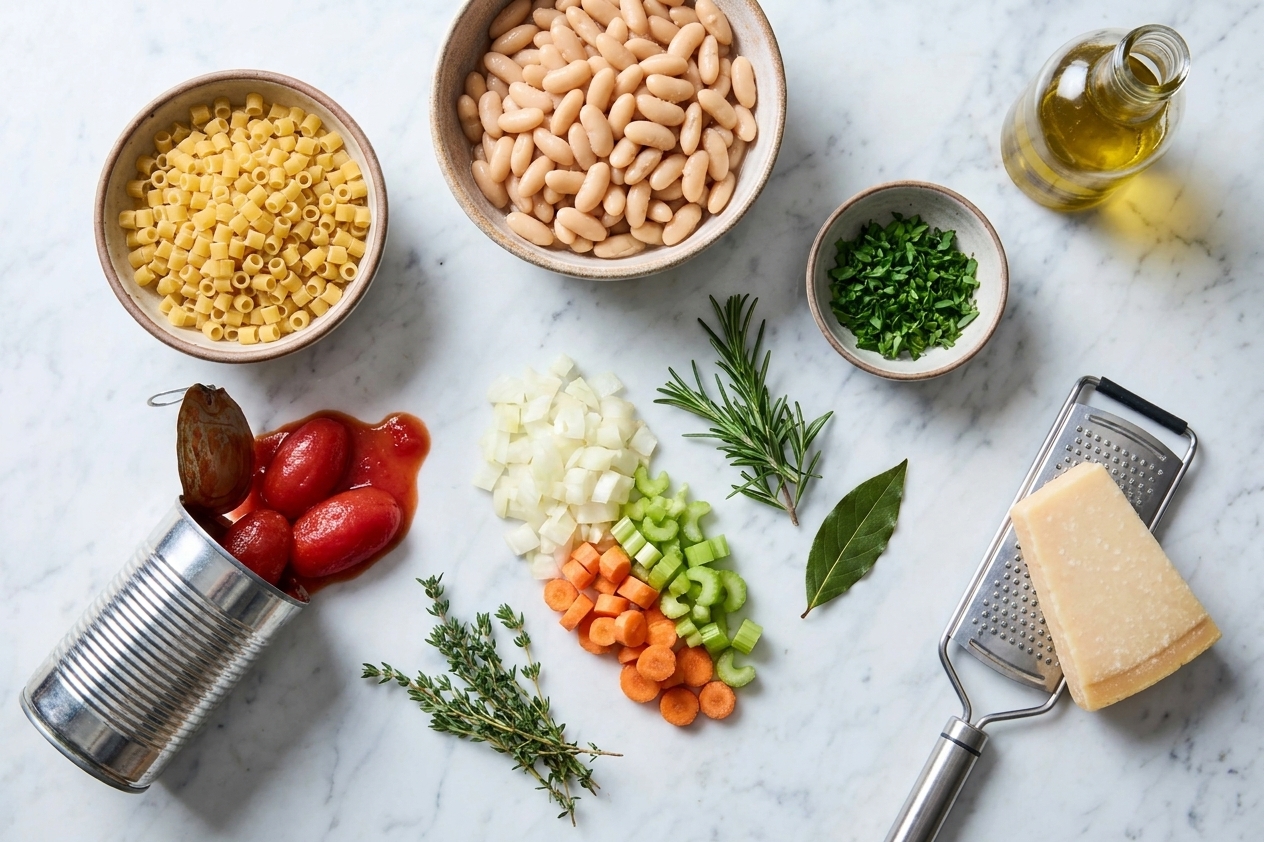
A simple lineup of pasta e fagioli ingredients including beans, pasta, tomatoes, aromatics, herbs, olive oil, and Parmesan

Why It Works

  • Thick, spoon-coating broth from mashed beans, not heavy cream.
  • Bright, savory flavor from tomato paste, garlic, and a hit of Parmesan rind if you have it.
  • Tender pasta that doesn’t go mushy thanks to a simple timing move.
  • Weeknight flexible with easy swaps for greens, beans, and pasta shapes.

Expect a hearty soup that eats like a meal, with enough depth to make you pause mid-bite and do a quiet little nod.

Pairs Well With

Storage Tips

This soup is famously even better the next day, but pasta can keep drinking broth like it’s getting paid.

Refrigerate

  • Cool completely, then store in an airtight container for 3 to 4 days.
  • If possible, store the pasta separately to keep it nicely al dente.

Reheat

  • Warm on the stove over medium-low heat, stirring often.
  • Add a splash of water or broth to loosen it back up. Start with 1/4 cup and go from there.

Freeze

  • For best texture, freeze the soup before adding pasta.
  • Freeze for up to 2 to 3 months. Thaw overnight in the fridge, reheat, then cook pasta fresh and stir it in.
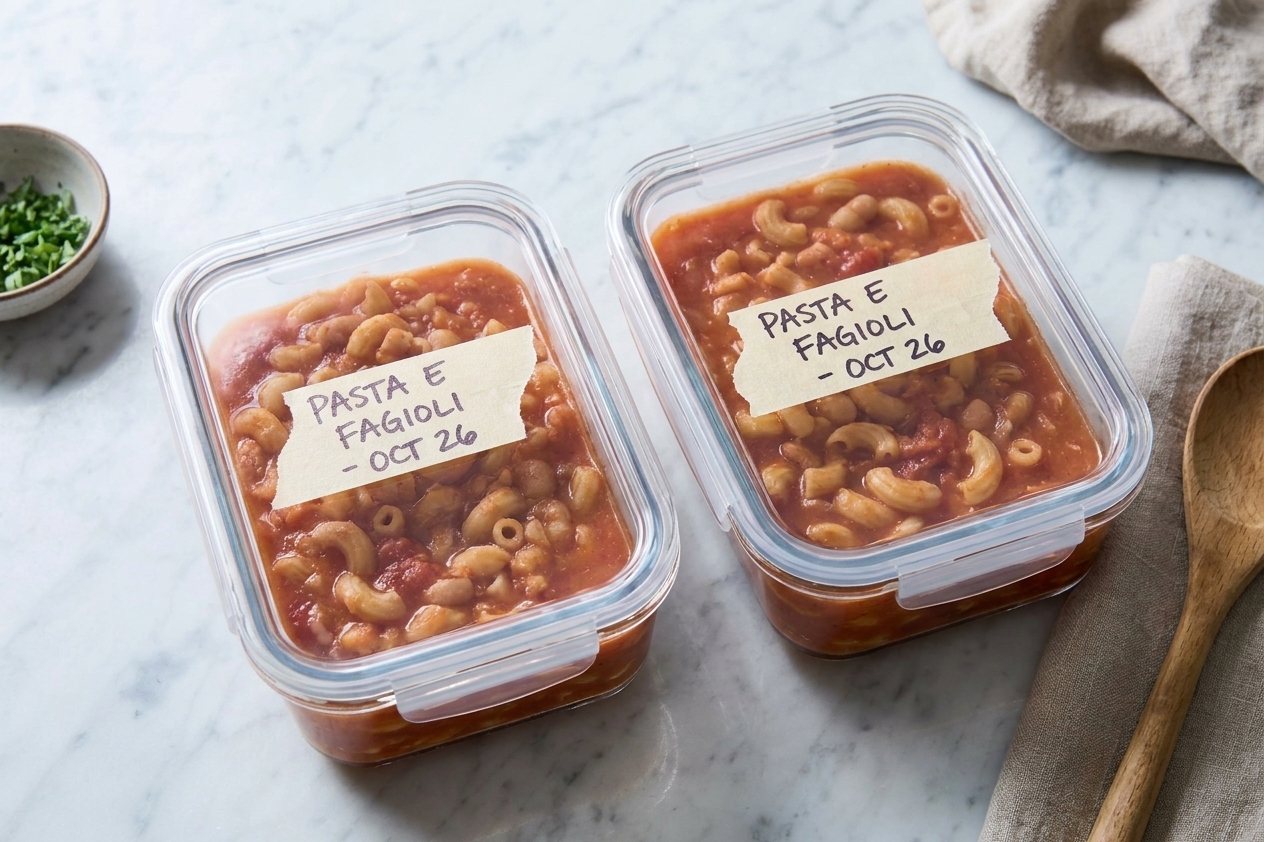
Two clear airtight containers filled with pasta e fagioli leftovers, one labeled with masking tape on the lid

Common Questions

What does pasta e fagioli mean?

It literally means pasta and beans in Italian. The vibe is humble, hearty, and pantry-friendly.

Should pasta e fagioli be thick or brothy?

Either is correct depending on the region and the cook. I like it somewhere in the middle: brothy enough to be soup, thick enough to feel comforting. Mashing some beans gives you that balance.

Can I use canned beans?

Absolutely. Canned cannellini or great northern beans make this a true weeknight recipe. Rinsing them helps rinse away some sodium and the starchy canning liquid, so the broth tastes cleaner. If you want a thicker, more rustic feel, you can skip the rinse.

How do I keep the pasta from getting mushy?

Cook the pasta just to al dente and serve right away. For leftovers, cook pasta separately and add it to each bowl, or be ready to add extra broth when reheating.

What pasta shape is best?

Small shapes are the move: ditalini is classic, but small shells, elbows, or tubetti all work. In a pinch, break spaghetti into short pieces and call it rustic.

Can I make it vegetarian or gluten-free?

Yes. Use vegetable broth, and skip the Parmesan rind or use a vegetarian-friendly hard cheese. For gluten-free, use your favorite GF small pasta and start checking early since it can go from firm to soft quickly.

Can I add meat?

Yes. Brown Italian sausage at the start, remove it, then continue with the vegetables in the drippings. Add the sausage back in near the end.

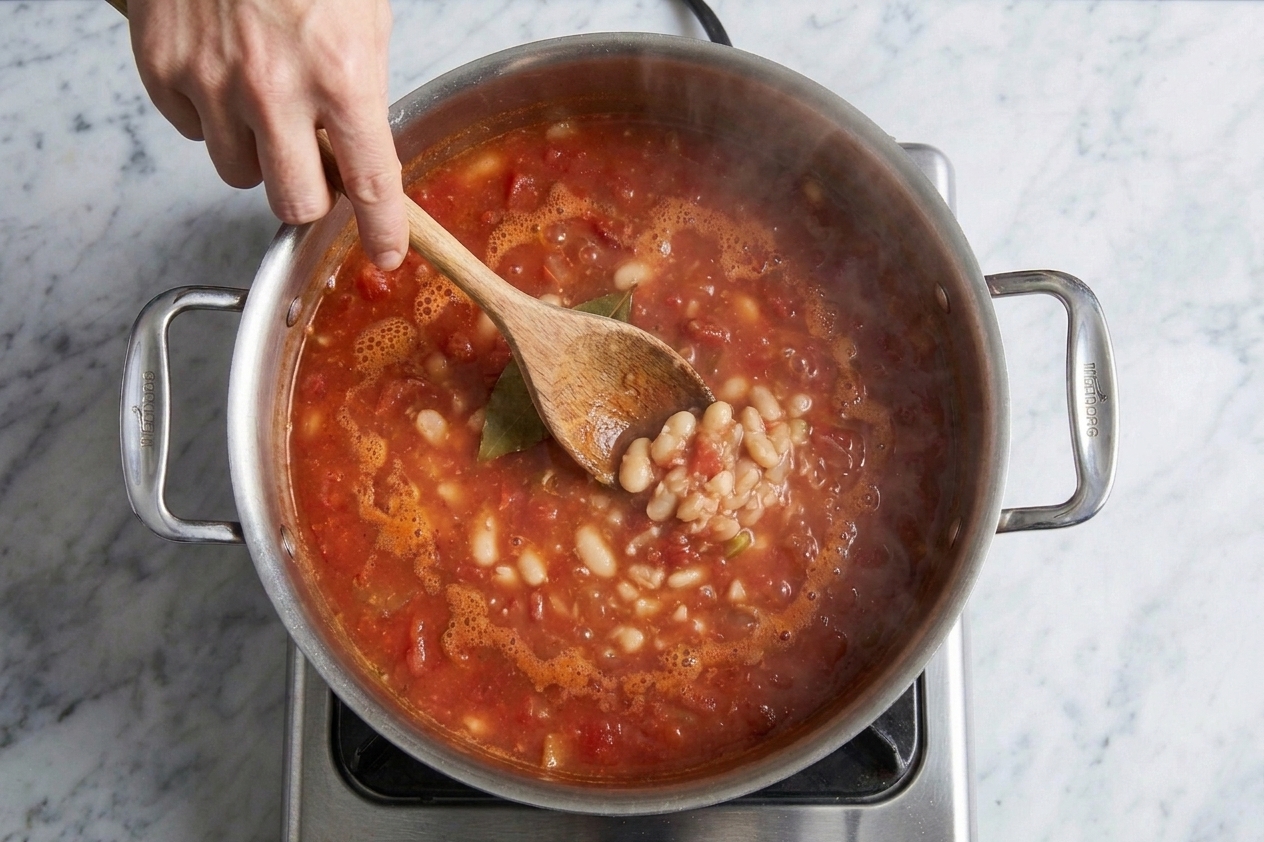
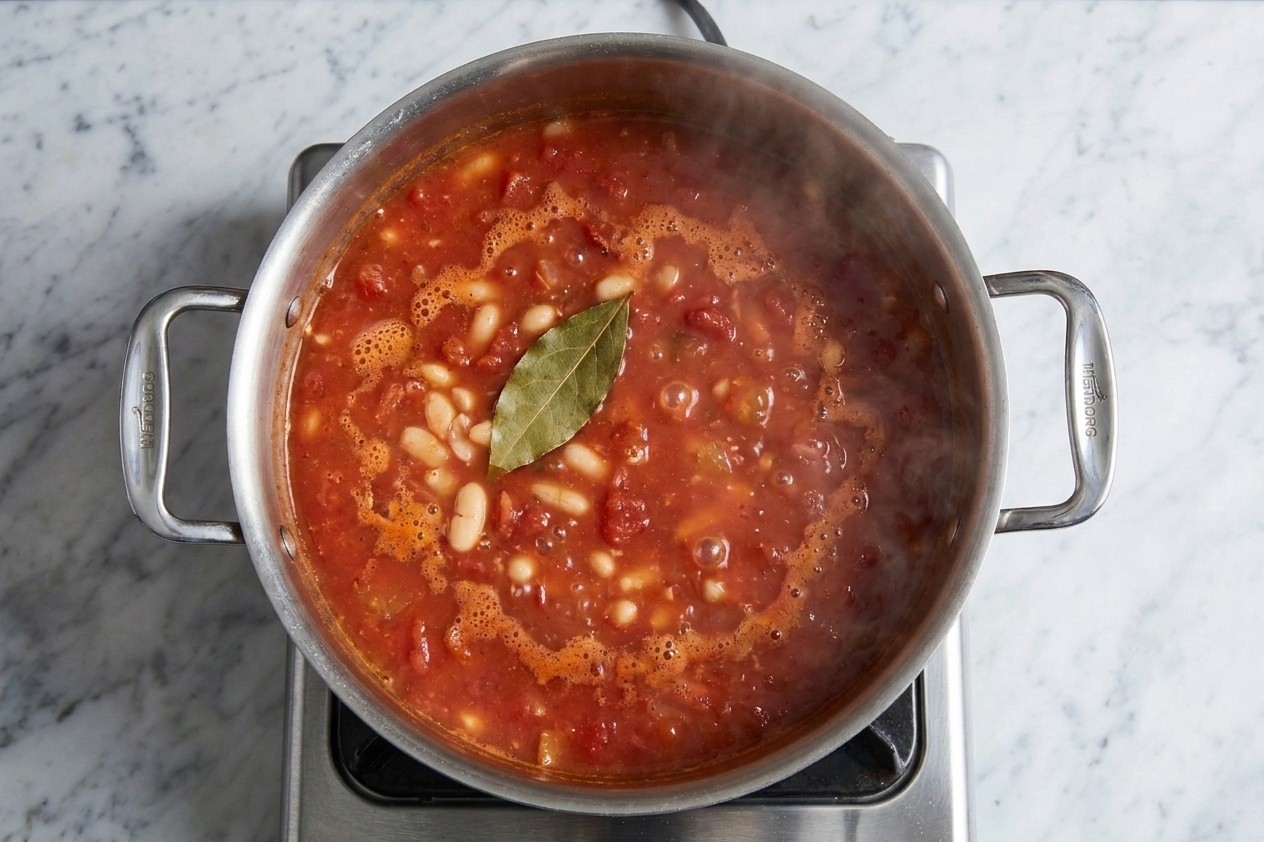
A wooden spoon mashing white beans against the side of a pot of tomato-bean soup to thicken the broth

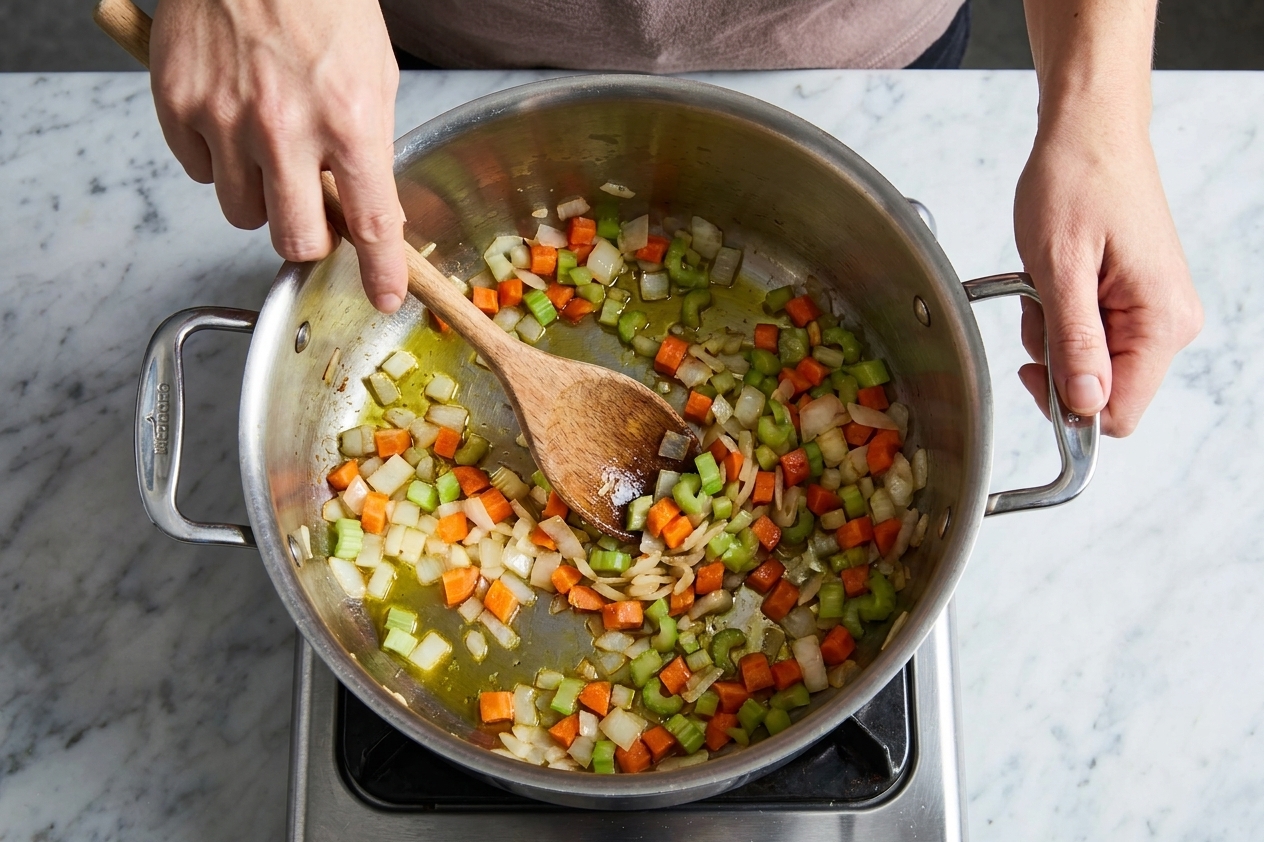
I started making pasta e fagioli when I was trying to cook more like a working kitchen without actually living in one. You know that feeling when you want something comforting, but you also want it to taste thoughtful? This was my answer. It’s mostly pantry stuff, but the little moves matter: tomato paste gets toasted, rosemary actually has time to show up, and the beans do double duty as both the main ingredient and the thickener. It’s the kind of pot that quietly feeds everyone, including Future Me, who is always thrilled about leftovers.