Why is my spaghetti squash watery?
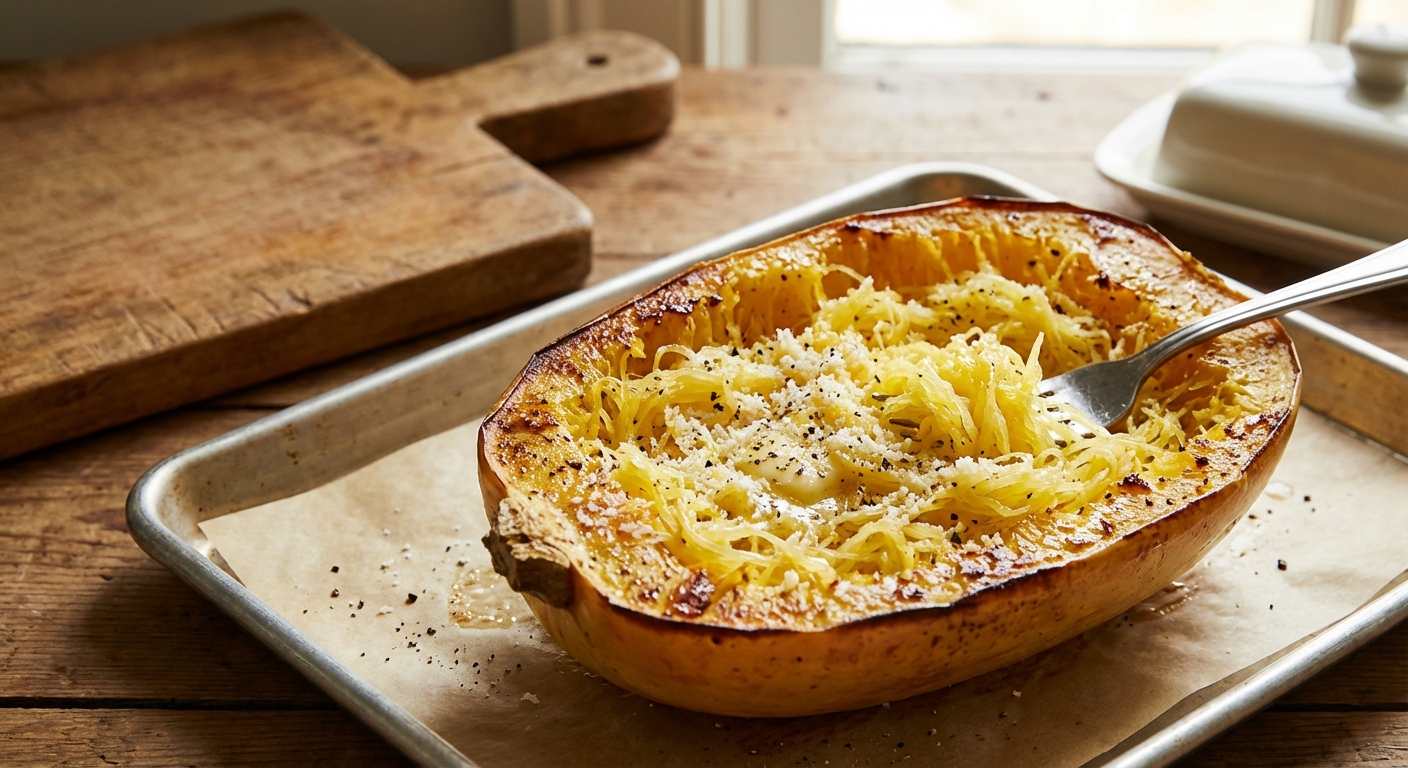
It is usually from trapped steam or a squash that went a little too long and turned soft around the edges. Roast at 425°F cut-side down and do not wrap it in foil. After roasting, let it rest 5 to 10 minutes so steam can settle before you fluff the strands. If it still seems wet, toss the strands in a hot skillet for 2 to 3 minutes to cook off extra moisture.
How do I make the strands more “smooth” and less crunchy?
Roast a little longer. You want a fork to slide into the thickest part with almost no resistance. Also, toss the hot strands with butter or olive oil right away to coat them.
Do I need to salt it before roasting?
Yes, lightly. Salt seasons the interior and can help reduce surface moisture during roasting. I salt the cut faces and add more at the end to taste.
Can I make this dairy-free?
Absolutely. Use olive oil instead of butter and swap Parmesan for nutritional yeast or a dairy-free Parmesan-style alternative. Add an extra squeeze of lemon for brightness.
Is spaghetti squash “authentic” Italian?
Nope. Think of this as Italian-American–style comfort: roasted squash treated like a real pasta moment with garlic, fat, cheese, and a little acid. Nothing weird, nothing fussy.
Any tips for cutting spaghetti squash safely?
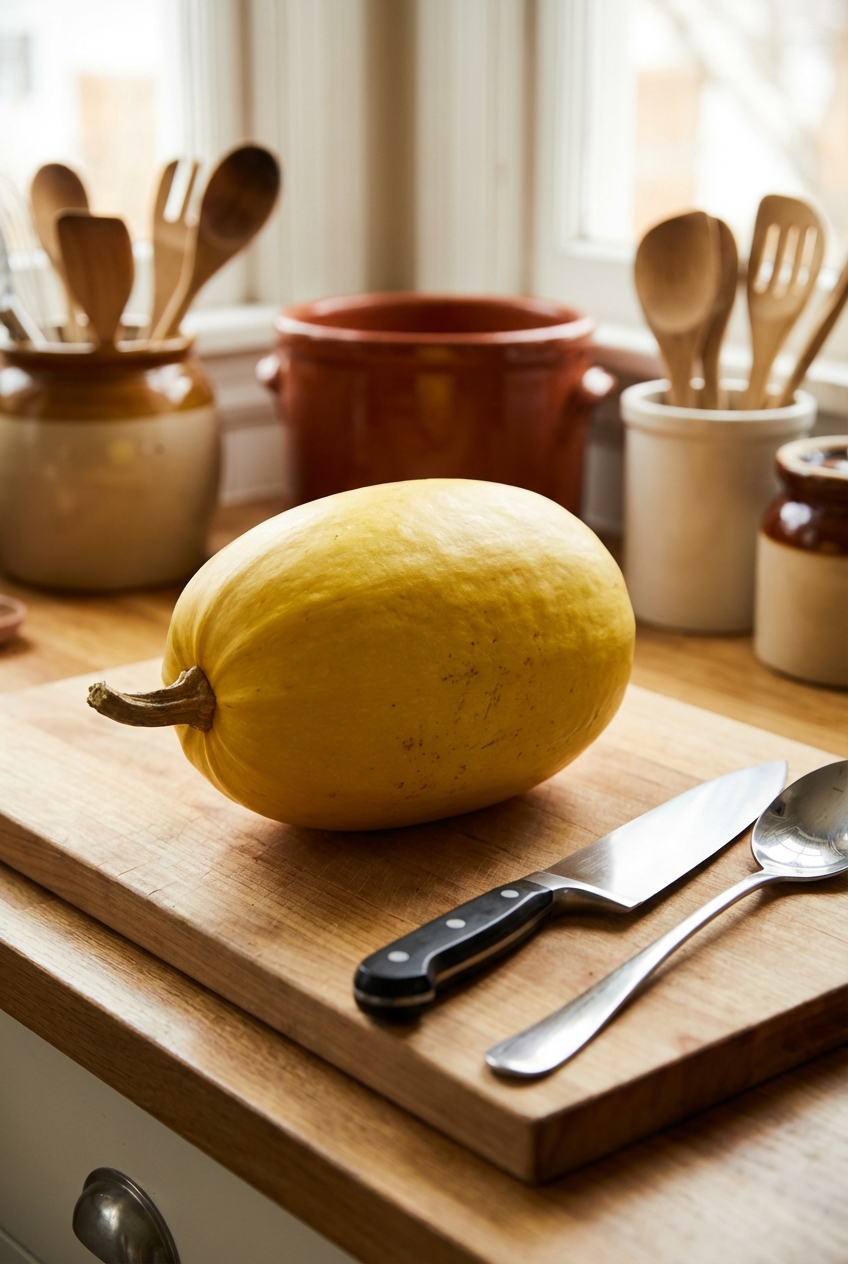
Yes. Spaghetti squash is a wrist workout. Prick it all over with a fork, microwave it for 2 to 3 minutes to slightly soften the skin, then cut it lengthwise on a stable cutting board. (Let it cool for a minute first. It will be hot.)