Common questions
What fish is best for Peruvian ceviche?
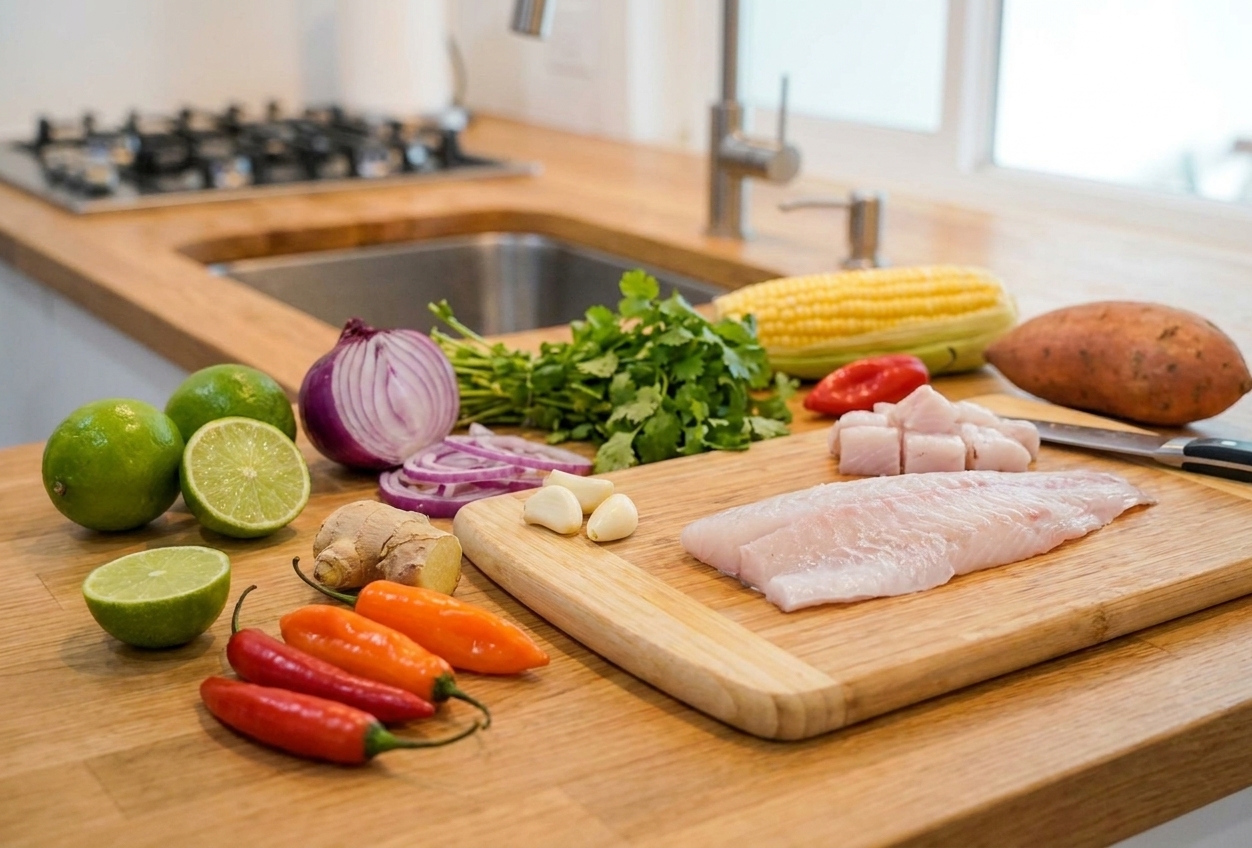
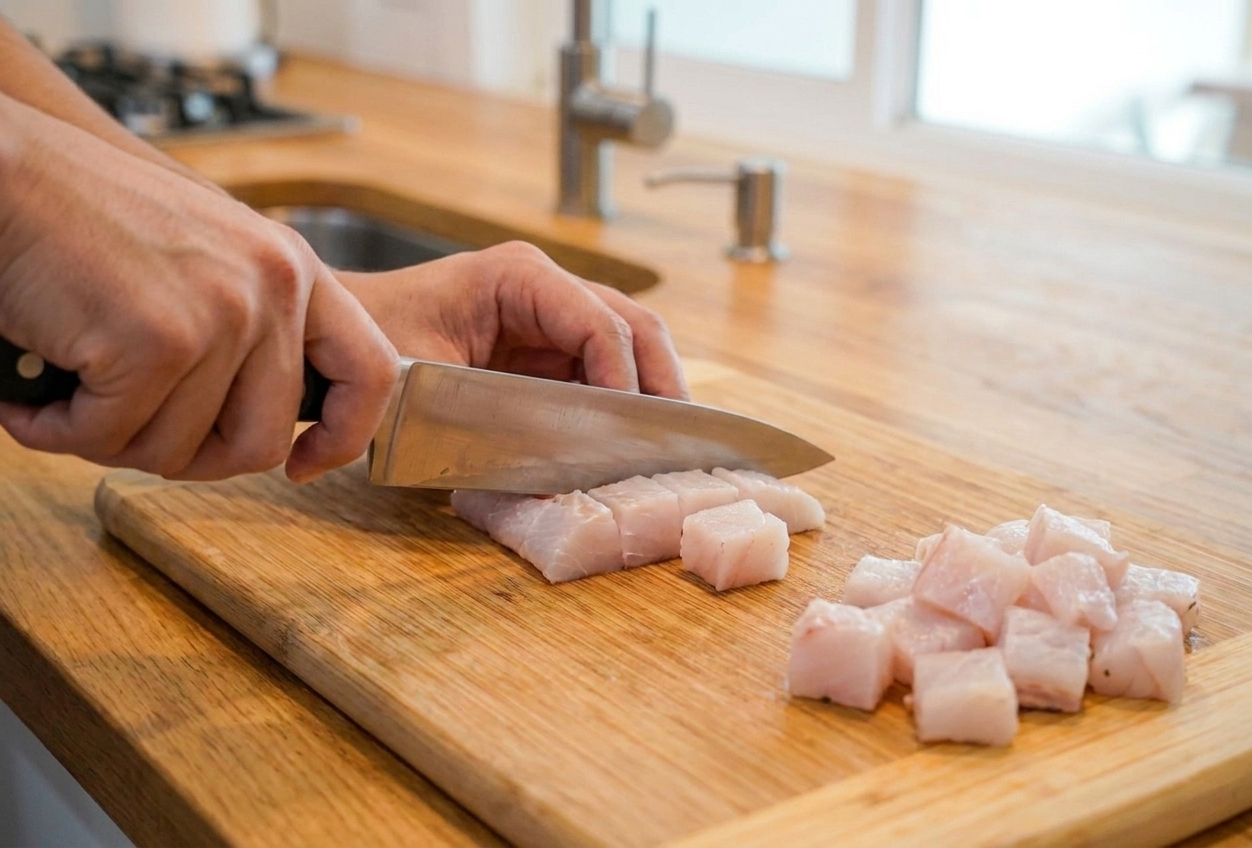
Pick a firm, mild white fish that holds its shape: corvina (classic), grouper, snapper, mahi-mahi, halibut, or cod. “Sea bass” can mean different fish depending on the market, so ask what it actually is. Flounder can work, but it is more delicate and can break down faster, so keep the cut a bit larger and marinate on the shorter side. Ask your fishmonger for fish suitable for raw preparations, and keep it cold until you cut it.
Does lime juice “cook” the fish?
It changes the protein structure (denatures it), which makes the fish turn opaque and firm. It does not reliably kill pathogens the way heat does. Freshness and cold handling matter a lot here.
How long should ceviche marinate?
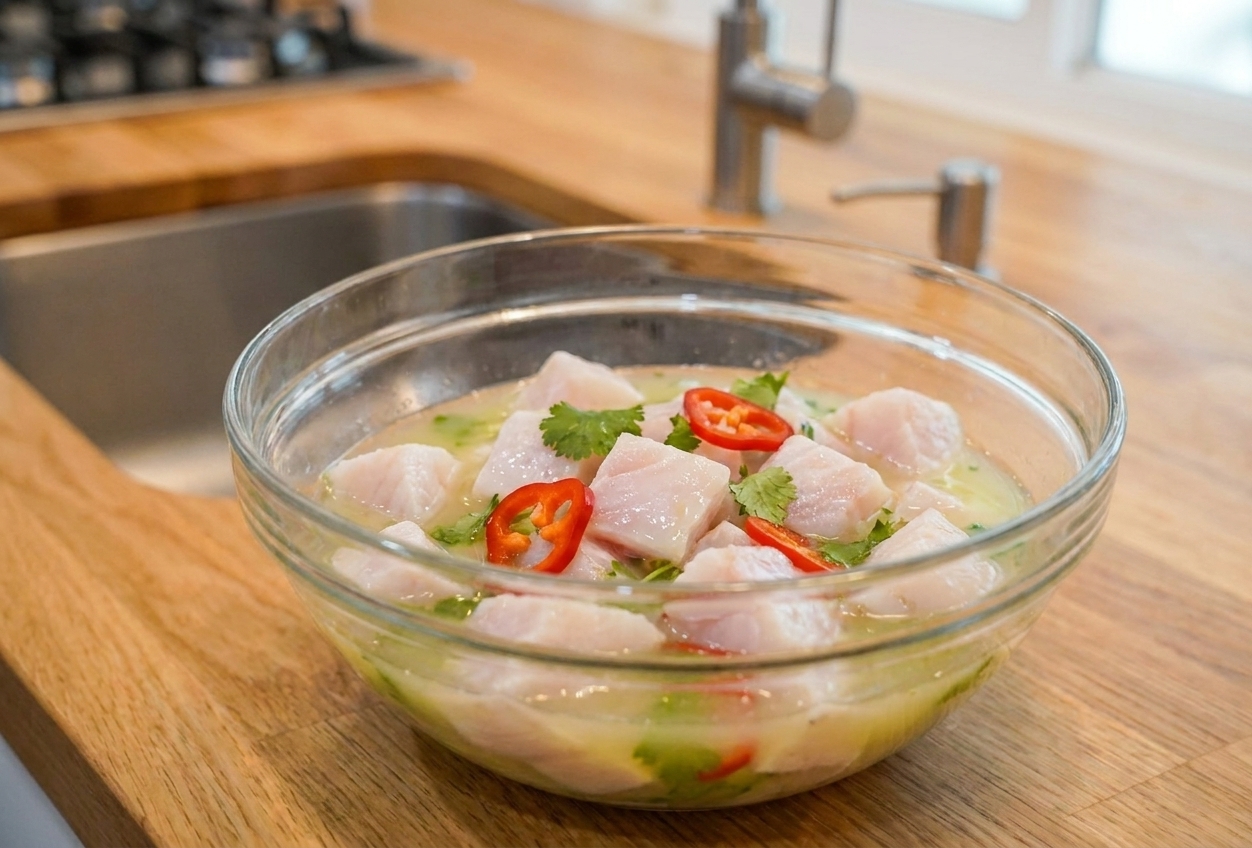
For 1/2-inch cubes of firm fish, 10 to 15 minutes in lime usually gets you tender with a clean bite. If you like it firmer, go 20 minutes. Past that, it can start heading toward chewy.
What can I use instead of aji limo?
Aji limo is fruity and bright. For an easy swap, use Fresno chile or serrano. Habanero works too, but use less since it can bully the lime.
Why rinse the onion?
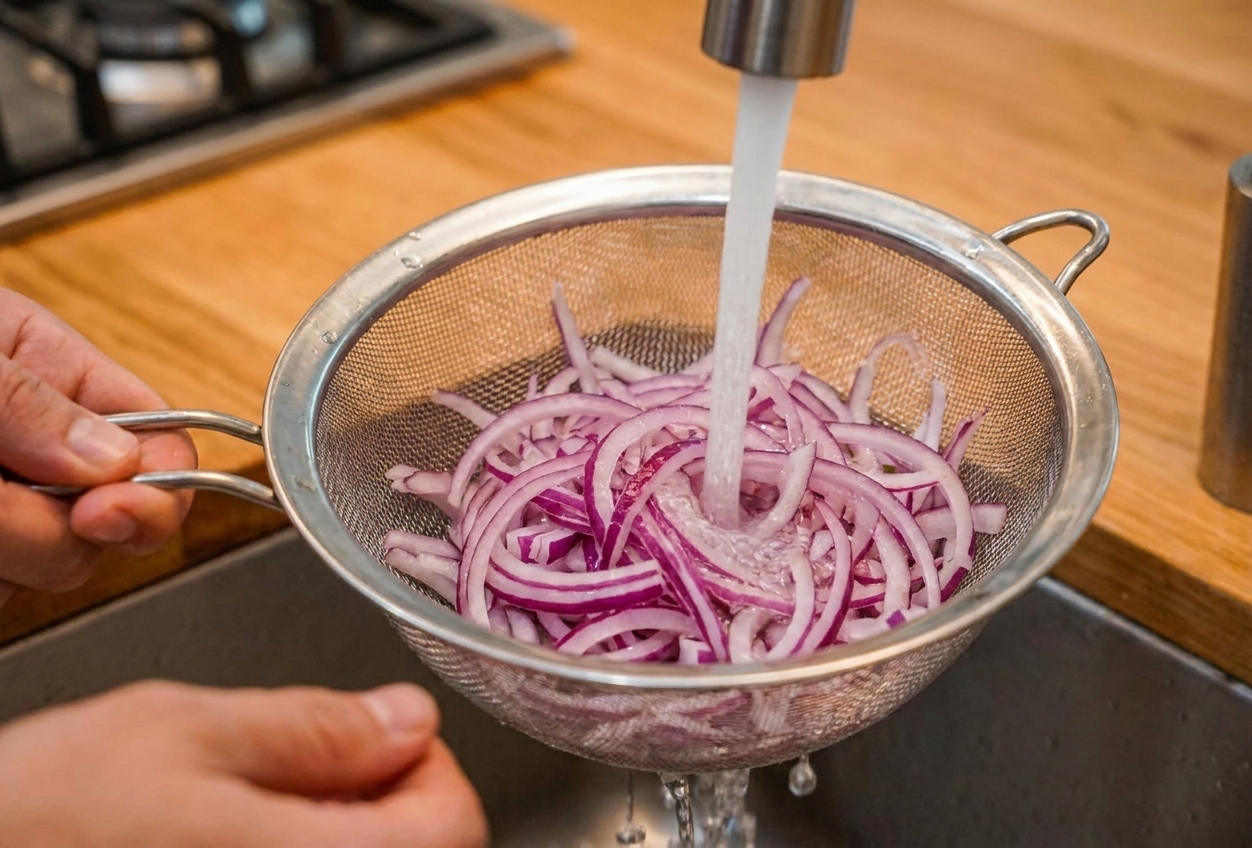
It keeps the onion crisp but takes off that harsh raw bite. A quick cold rinse (or a 5-minute ice bath) makes the ceviche taste cleaner and more balanced.
Is Peruvian ceviche the same as Mexican ceviche?
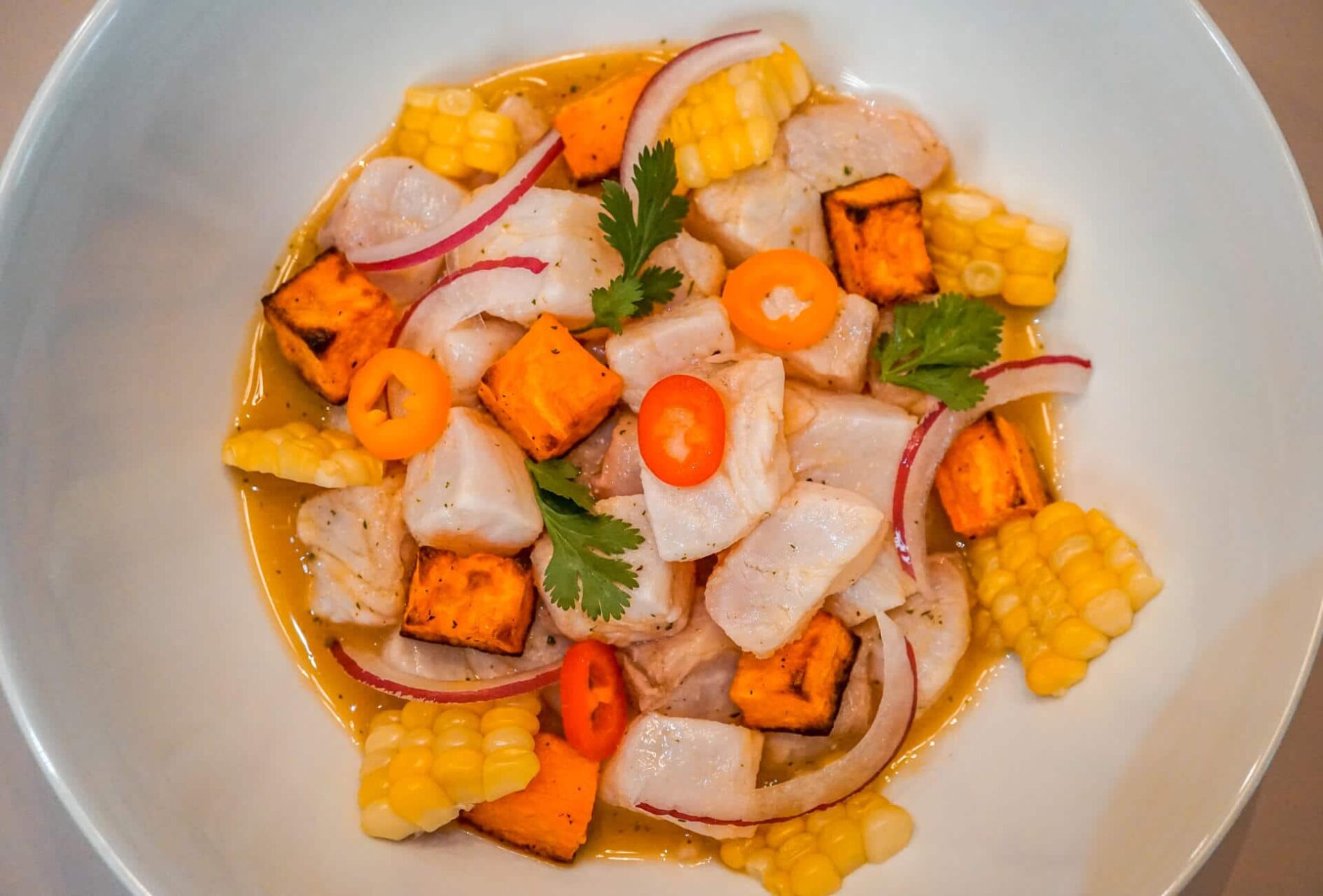
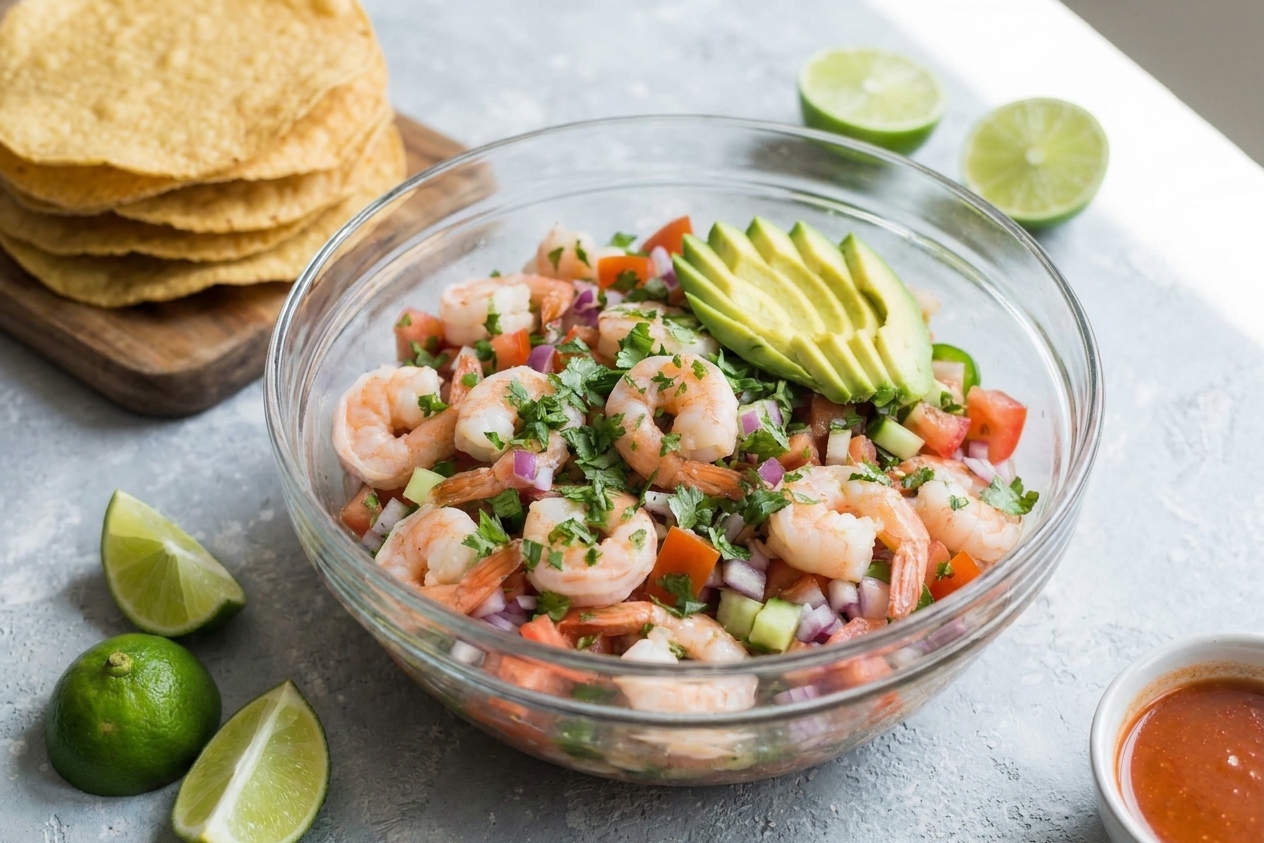
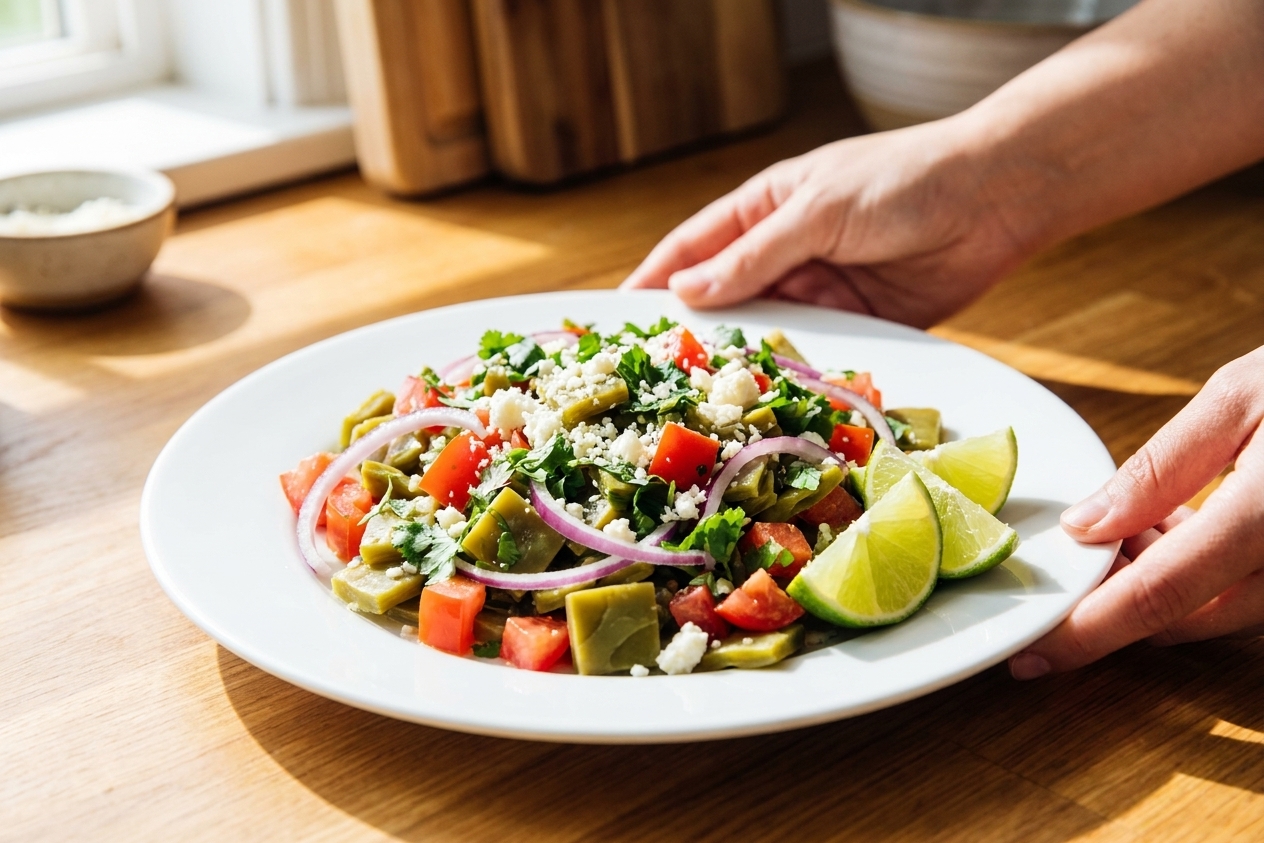
They are cousins, not twins. Peruvian ceviche often focuses on fish, lime, aji, and leche de tigre with minimal extras. Mexican versions commonly include tomato, cucumber, or avocado and usually marinate longer.
Do I need “sushi-grade” fish?
Labels vary and are not regulated everywhere. The most helpful move is to buy from a trusted fishmonger, tell them you are making ceviche, and choose very fresh fish handled cold. Some people prefer fish that has been previously frozen to reduce parasite risk. When in doubt, ask your fishmonger what they recommend for raw preparations.