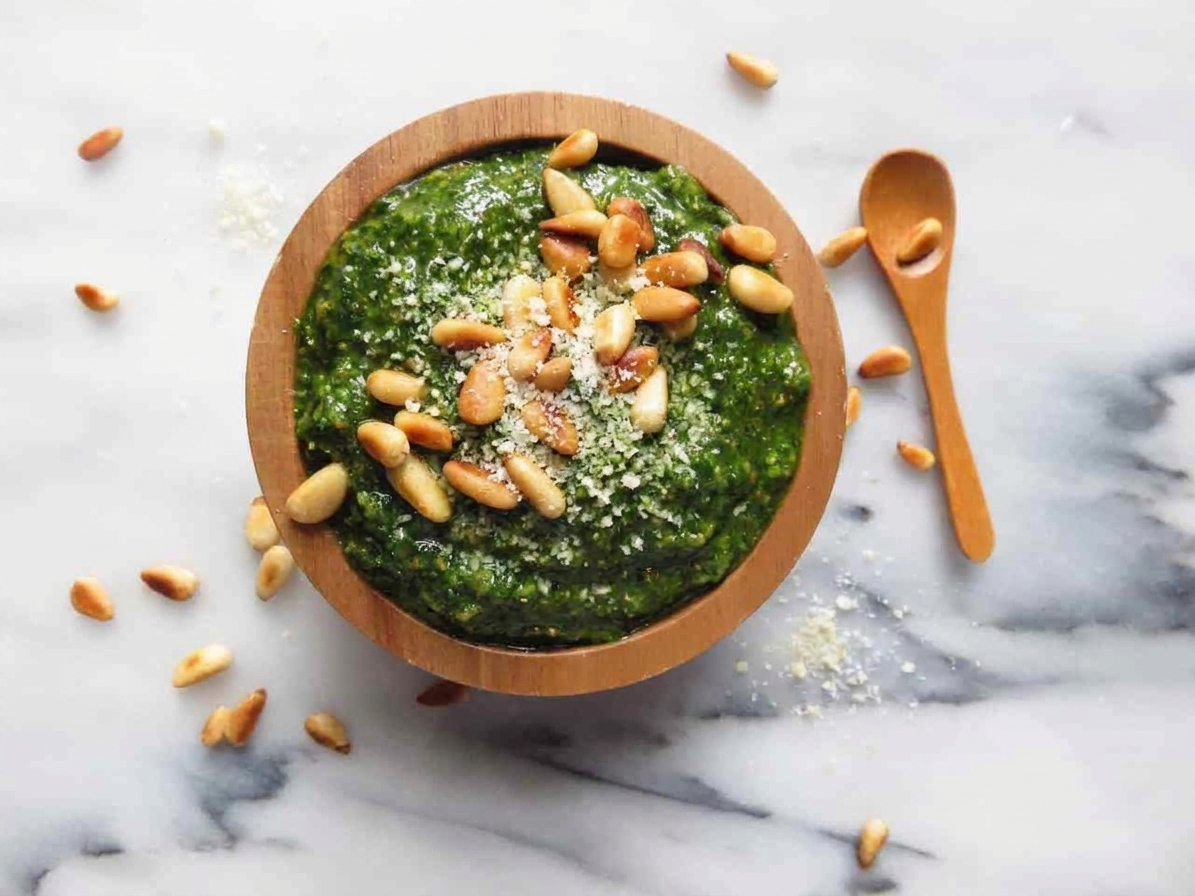
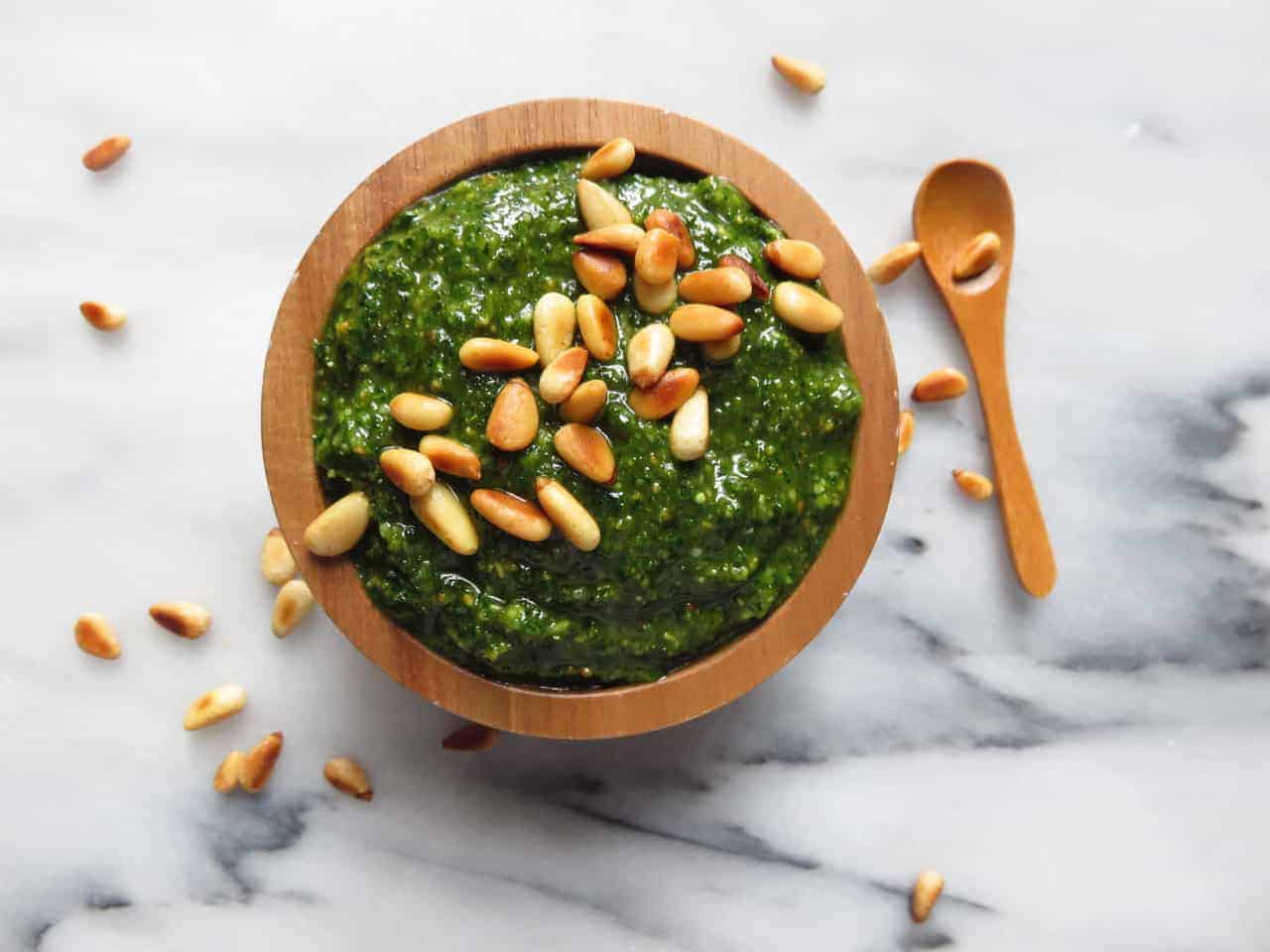
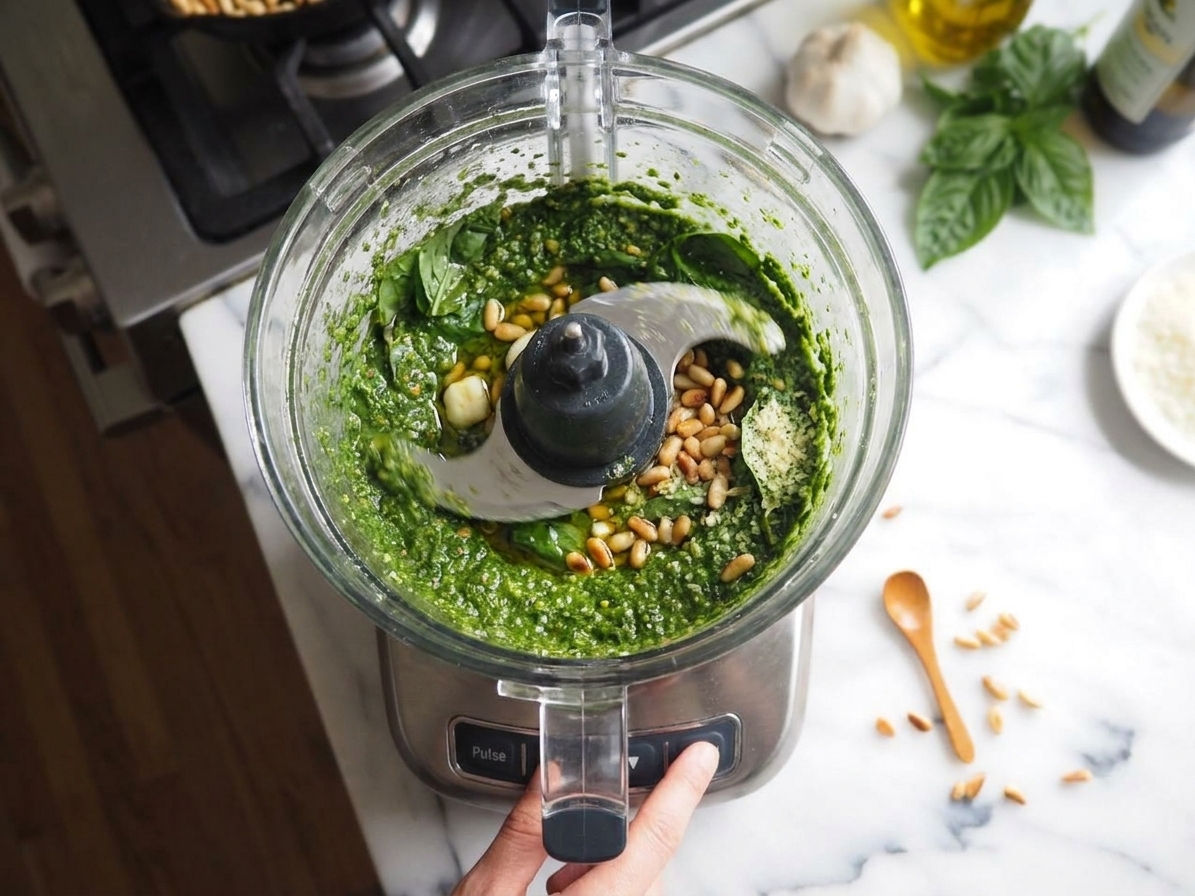
Do I have to toast the pine nuts?
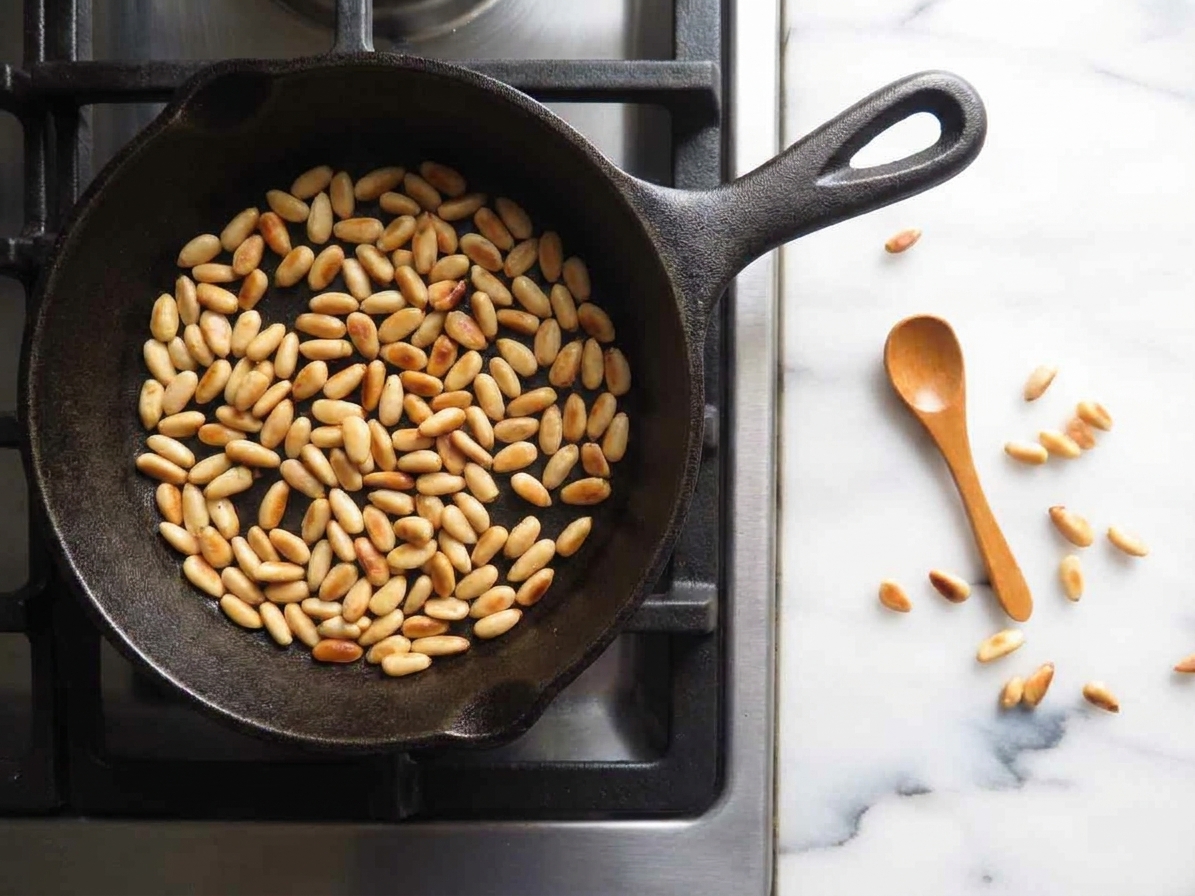
You don't have to, but you should. Toasting takes 3 to 5 minutes and makes the pesto taste nuttier and less raw. Watch them closely. Pine nuts go from pale to burnt in a blink.
Why does pesto turn bitter sometimes?
Common causes include older or bruised basil (especially if it's starting to flower), too much raw garlic, bitter nuts, oxidized olive oil, or over-processing that warms the mixture and speeds up oxidation. Use fresh basil, remove any dark leaves, and pulse in short bursts to keep things cool. If it's only slightly bitter, try a bit more Parmesan, a squeeze of lemon, and a tiny pinch of sugar. You can also add a little more pine nuts for sweetness, or switch to a milder olive oil. Sometimes bitterness can't be fully erased, but you can usually nudge it back into balance.
How do I keep pesto bright green?
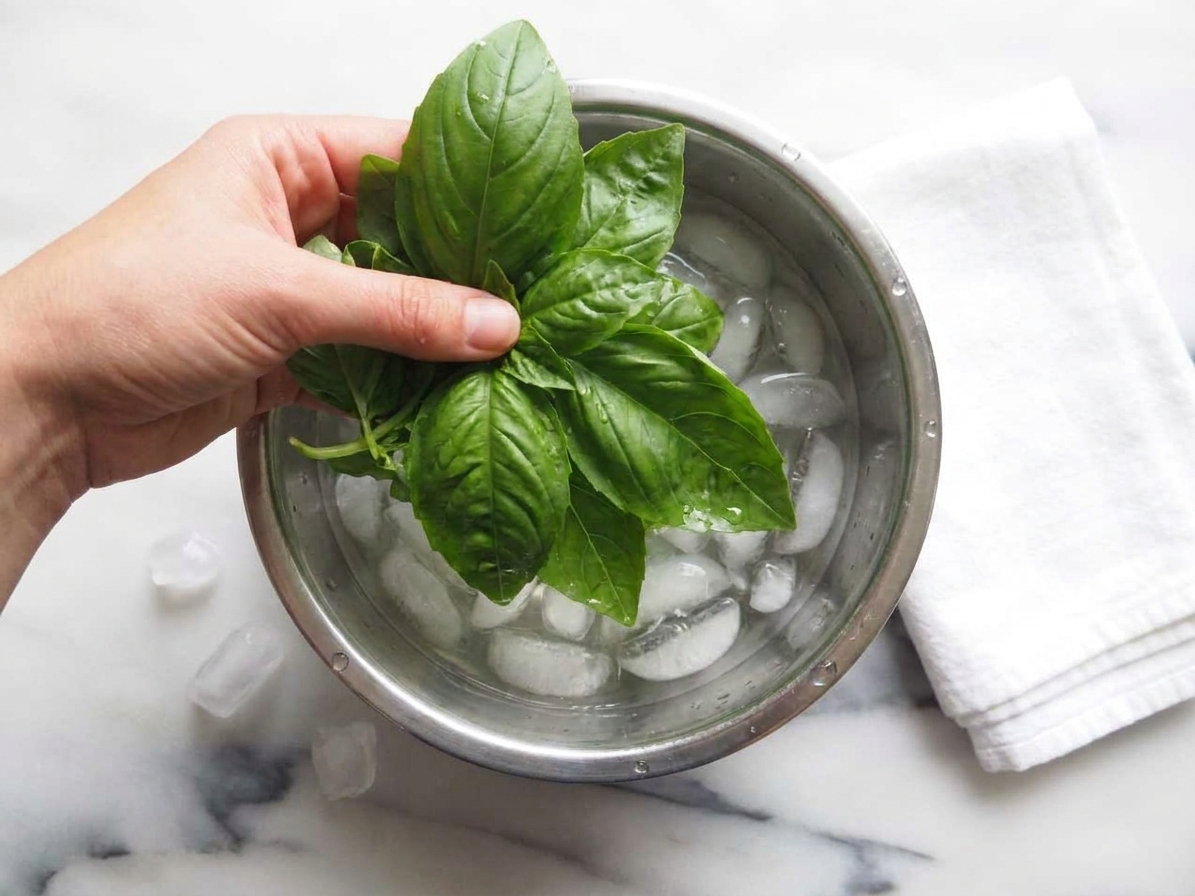
Optional but effective: blanch the basil for 10 seconds, then ice bath and dry it really well. Also, store it with a thin olive oil layer on top.
Can I make it without cheese?
Yes. Swap Parmesan for 2 to 3 tablespoons nutritional yeast plus extra salt to taste, or simply skip cheese and add more pine nuts for body.
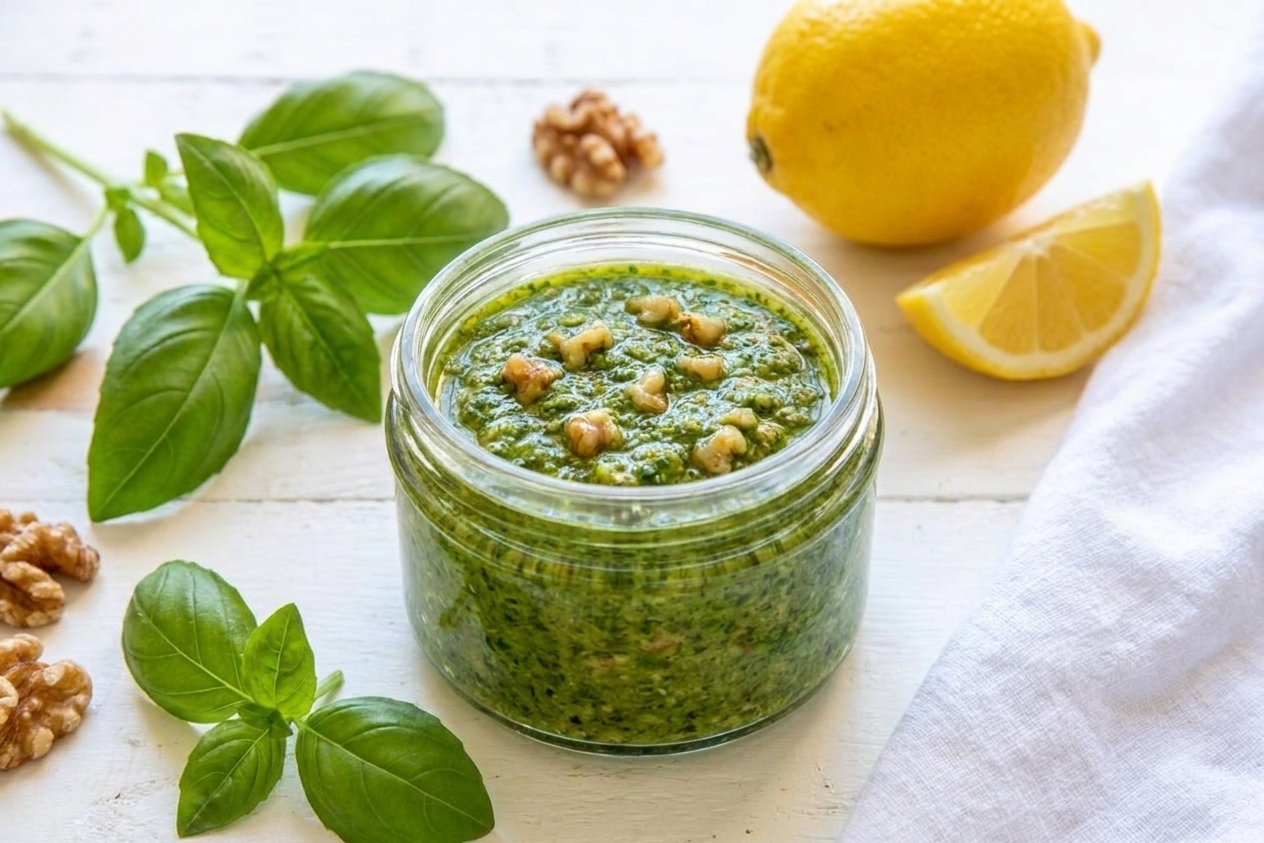
What can I use instead of pine nuts?
Walnuts, almonds, pistachios, or even sunflower seeds work. You'll get a different flavor, still delicious. For this recipe, keep the amount the same and toast them.
How much pesto per pound of pasta?
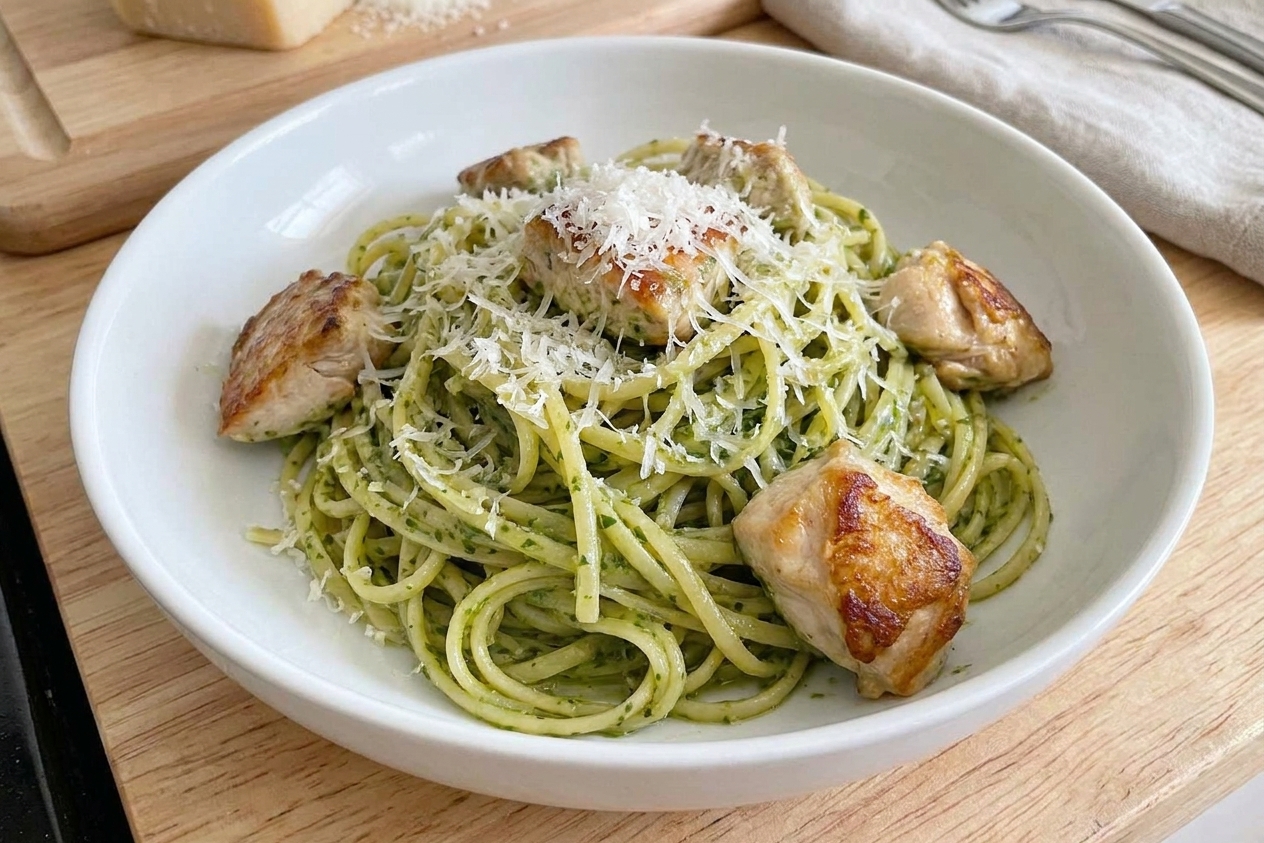
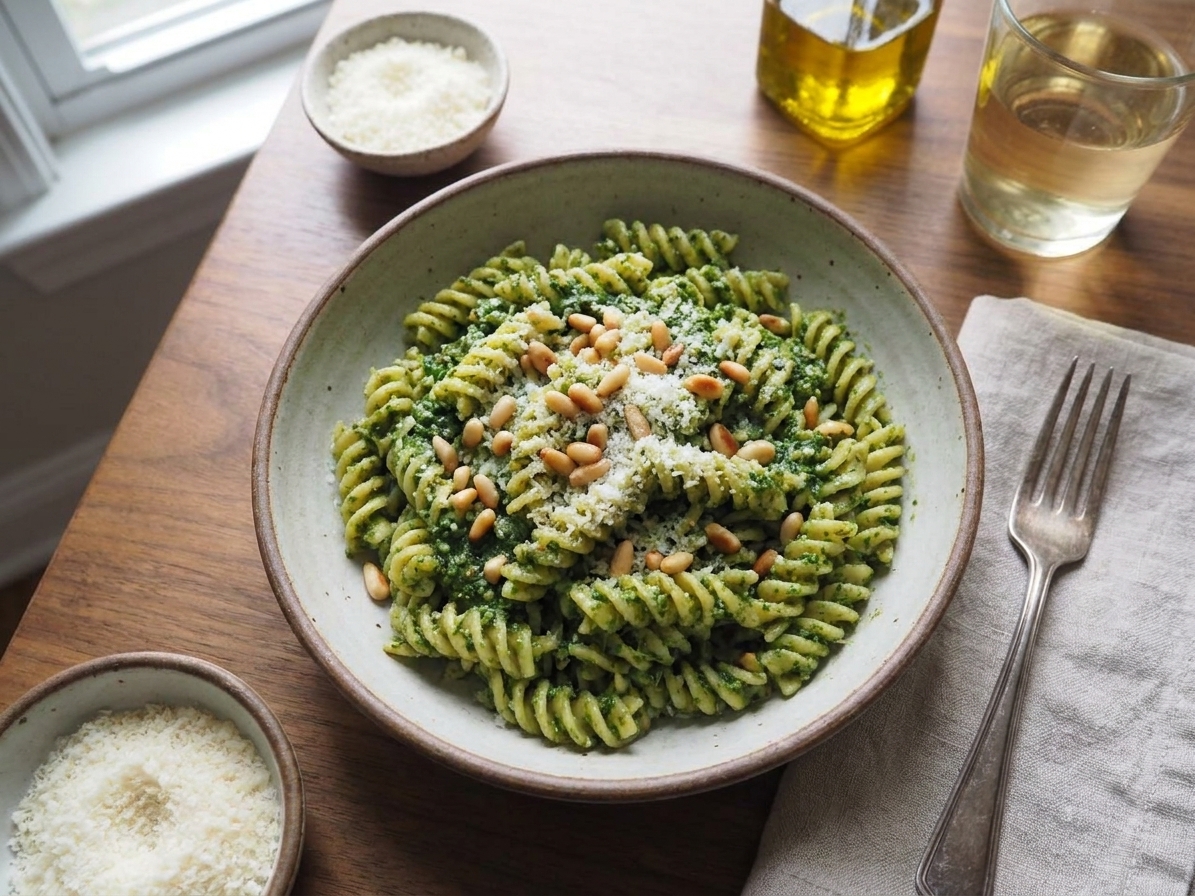
Start with 1/2 cup per 1 pound pasta, then add more to taste. Always loosen with pasta water so it coats instead of clumping.
My pesto is too thick or too thin. How do I fix it?
Too thick: add olive oil, water, or warm pasta water 1 teaspoon at a time until it loosens up. Too thin: pulse in a little more basil, Parmesan, or pine nuts to thicken it back up.
Any allergy notes?
Yes. This recipe contains tree nuts (pine nuts) and dairy (Parmesan). For nut-free, use sunflower seeds. For dairy-free, use nutritional yeast or skip the cheese and adjust salt.