Common Questions
What is the best substitute for pine nuts in pesto?
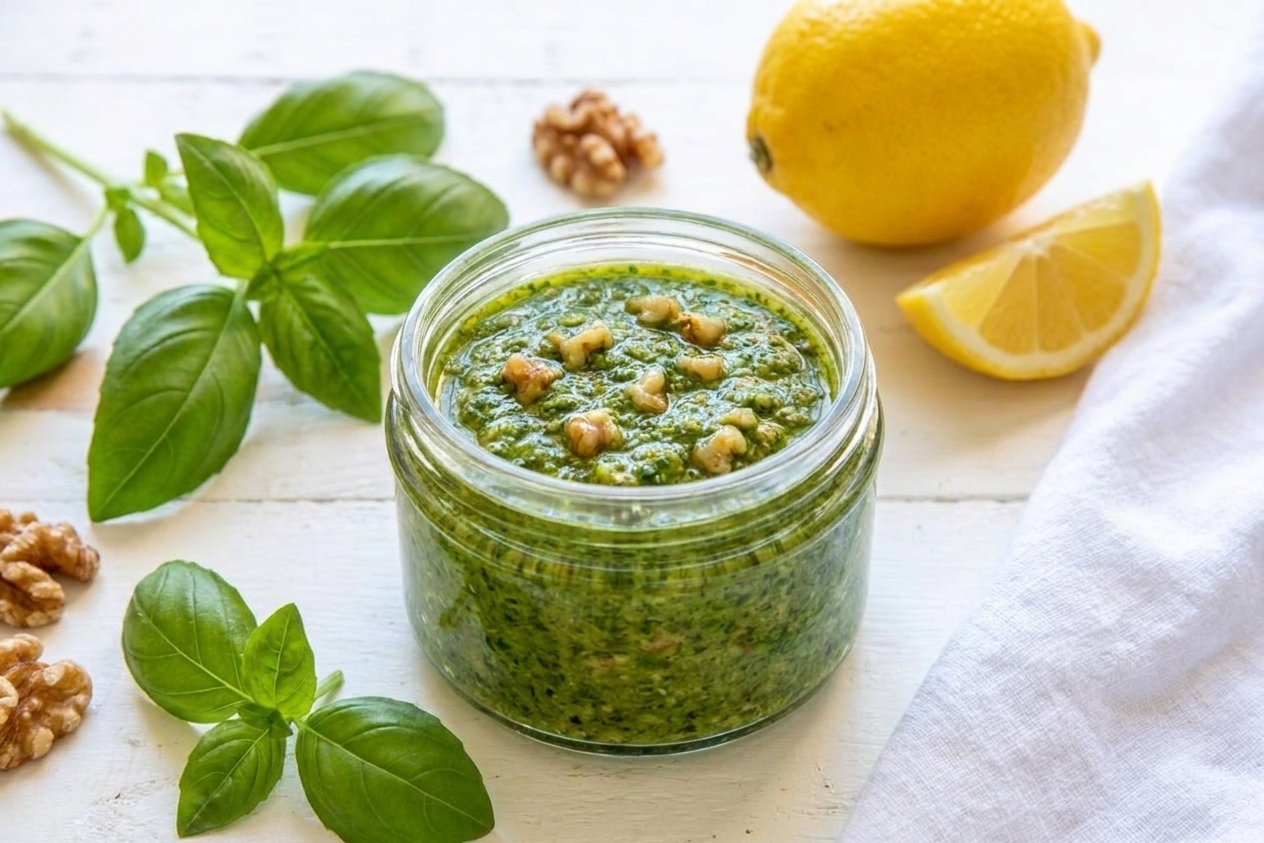
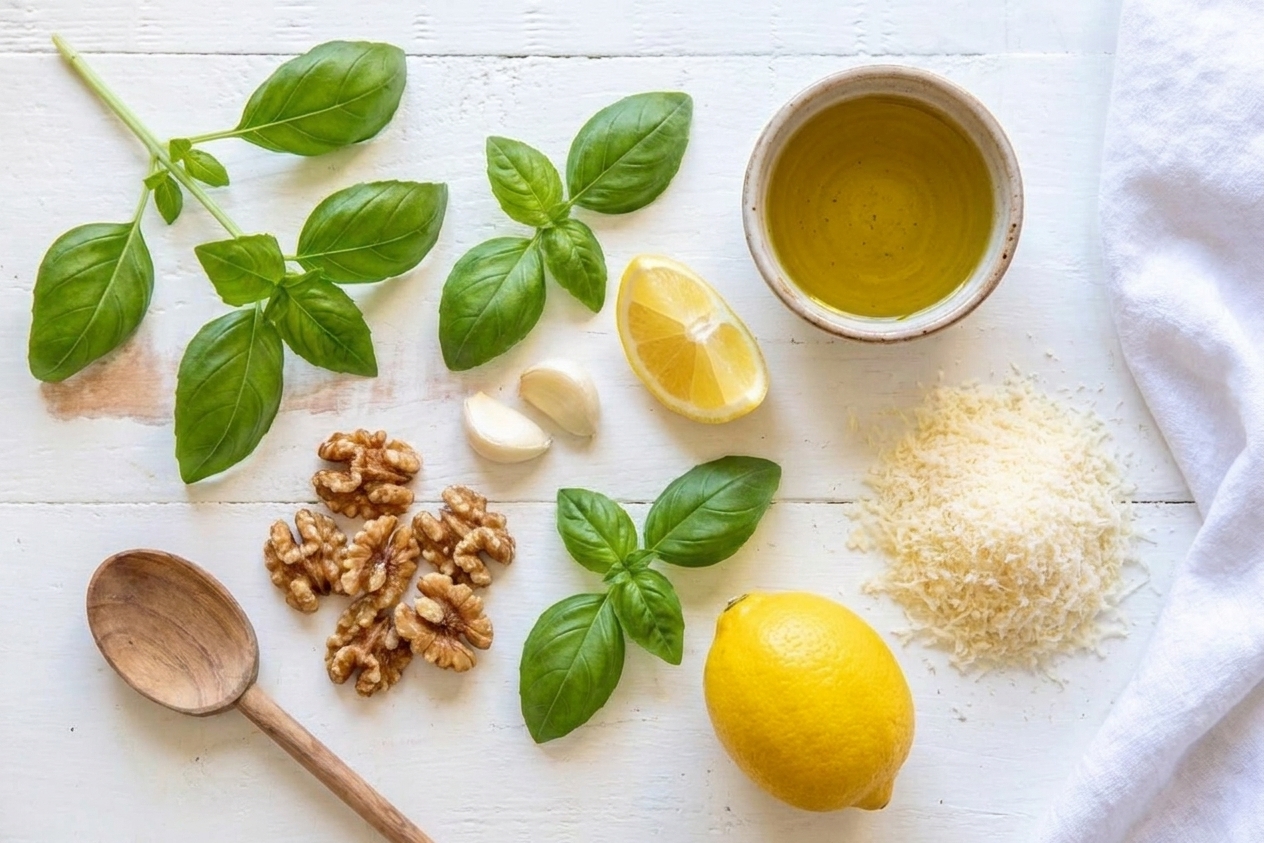
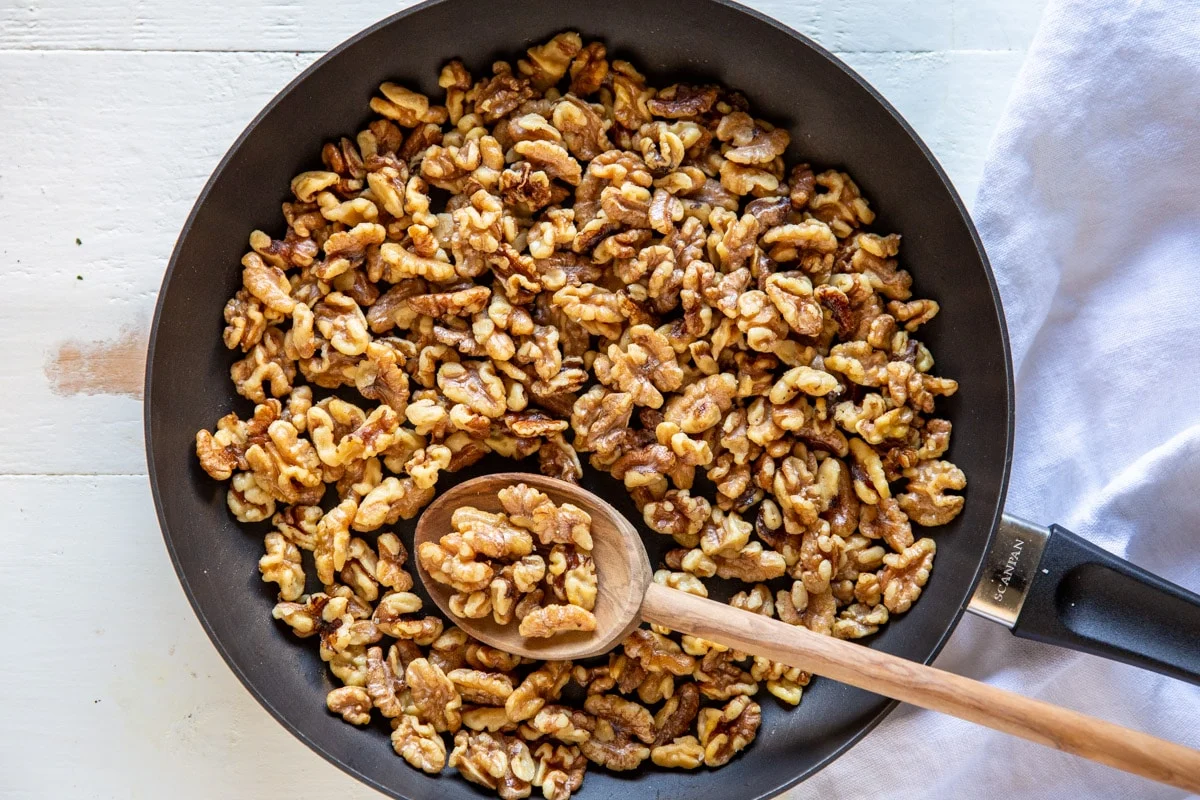
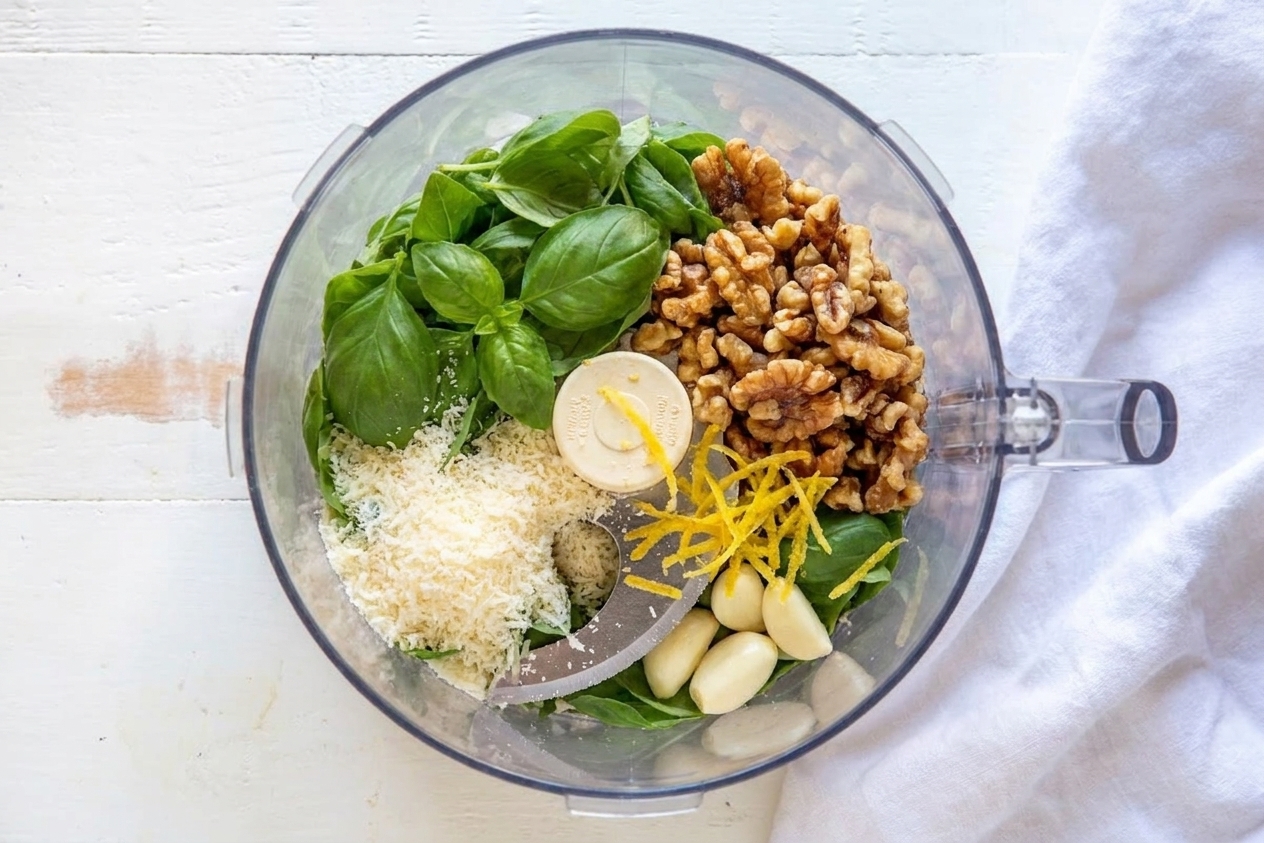
Walnuts are my favorite all-around swap because they are rich, easy to find, and blend into a creamy paste. For a milder, more neutral pesto, use sunflower seeds. For a slightly sweet, buttery vibe, use almonds or cashews.
Allergy note: walnuts, almonds, and cashews are tree nuts. If you need a nut-free option, go with sunflower seeds or pepitas.
Do I need to toast the nuts or seeds?
Not required, but it helps. A quick toast brings out flavor and makes the pesto taste deeper. Just do not take them too dark or the pesto can lean bitter.
How do I keep pesto from turning brown?
Three moves: blanch the basil (optional but effective), use lemon juice, and store with a thin olive oil layer on top. Also, avoid over-blending which warms the leaves and dulls the color.
Blanching note: It keeps pesto bright green, but it can slightly soften basil's punchy, raw edge. If you love that fresh bite, skip it and lean on lemon plus the oil cap instead.
Why does my pesto taste bitter?
Common causes are over-toasted nuts, older or bruised basil, or using a very peppery olive oil. Over-processing can also push bitterness by warming and oxidizing the basil. Basil stems can contribute too, especially thicker ones.
Fix it by adding a pinch of salt, a little more lemon, and more cheese or a splash of olive oil to round it out. If it still tastes sharp, add a tiny pinch of sugar. Honey also works, but it will make the pesto a little less classic and slightly sweet.
Can I make it dairy-free?
Yes. Skip the cheese and add 1 to 2 tablespoons nutritional yeast plus an extra pinch of salt. You can also add a small spoon of white miso for savory depth.
Can I make pesto without a food processor?
Yes. Use a blender (pulse and scrape often), or go old-school with a mortar and pestle for the best texture if you have the patience. If using a blender, add oil slowly and avoid running it too long.