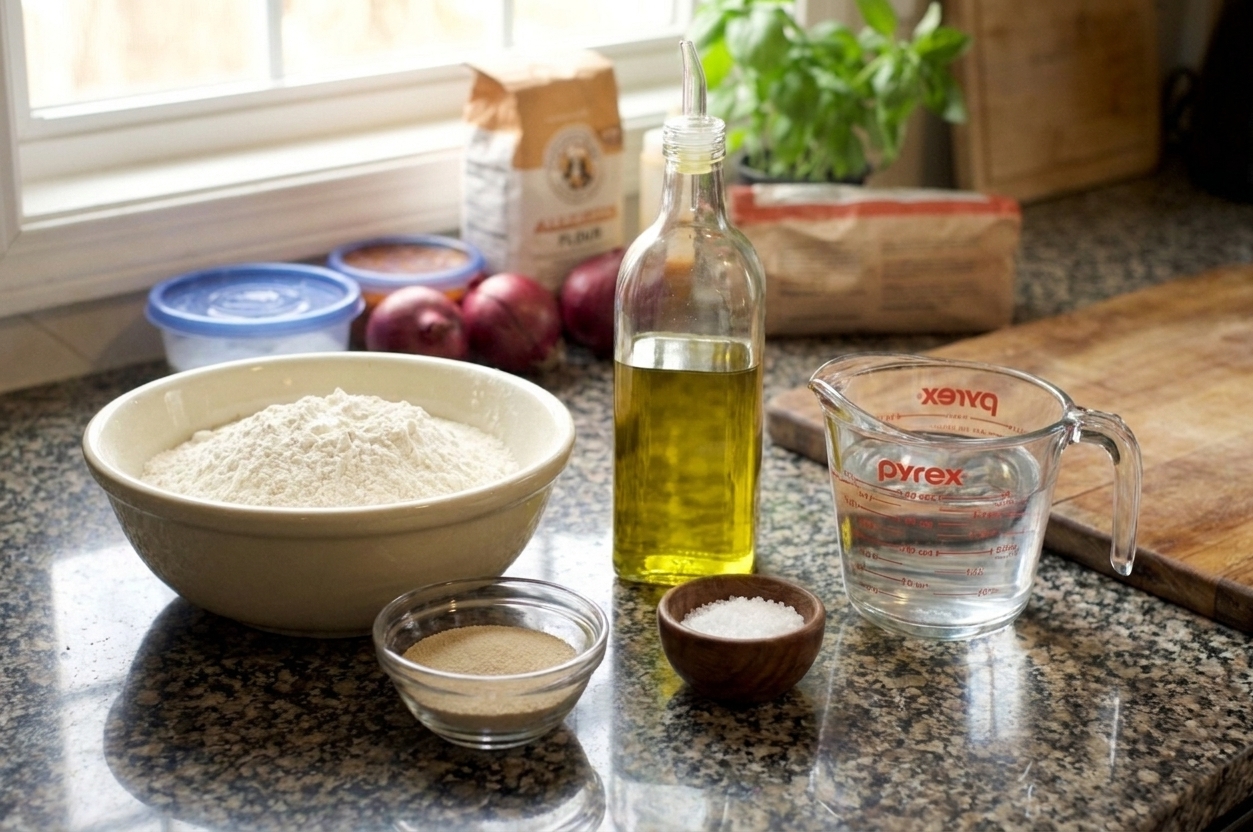
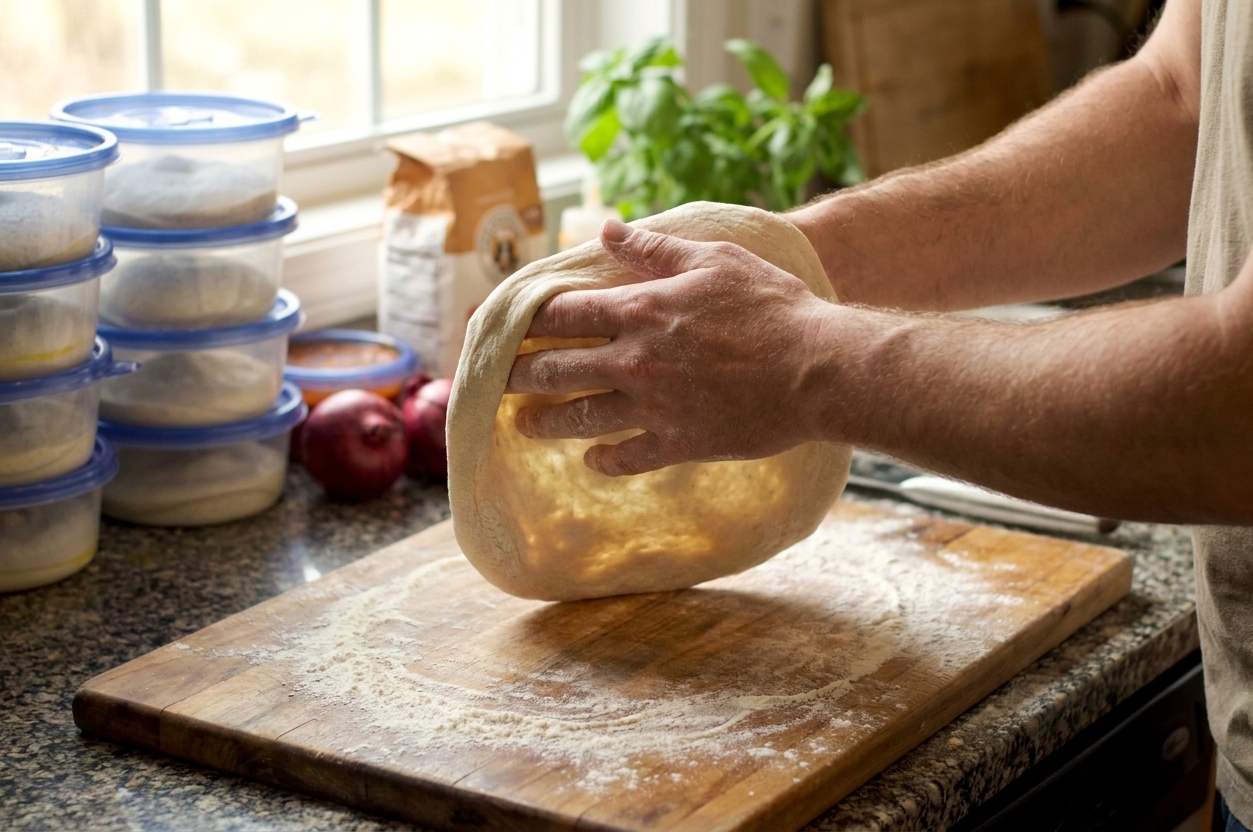
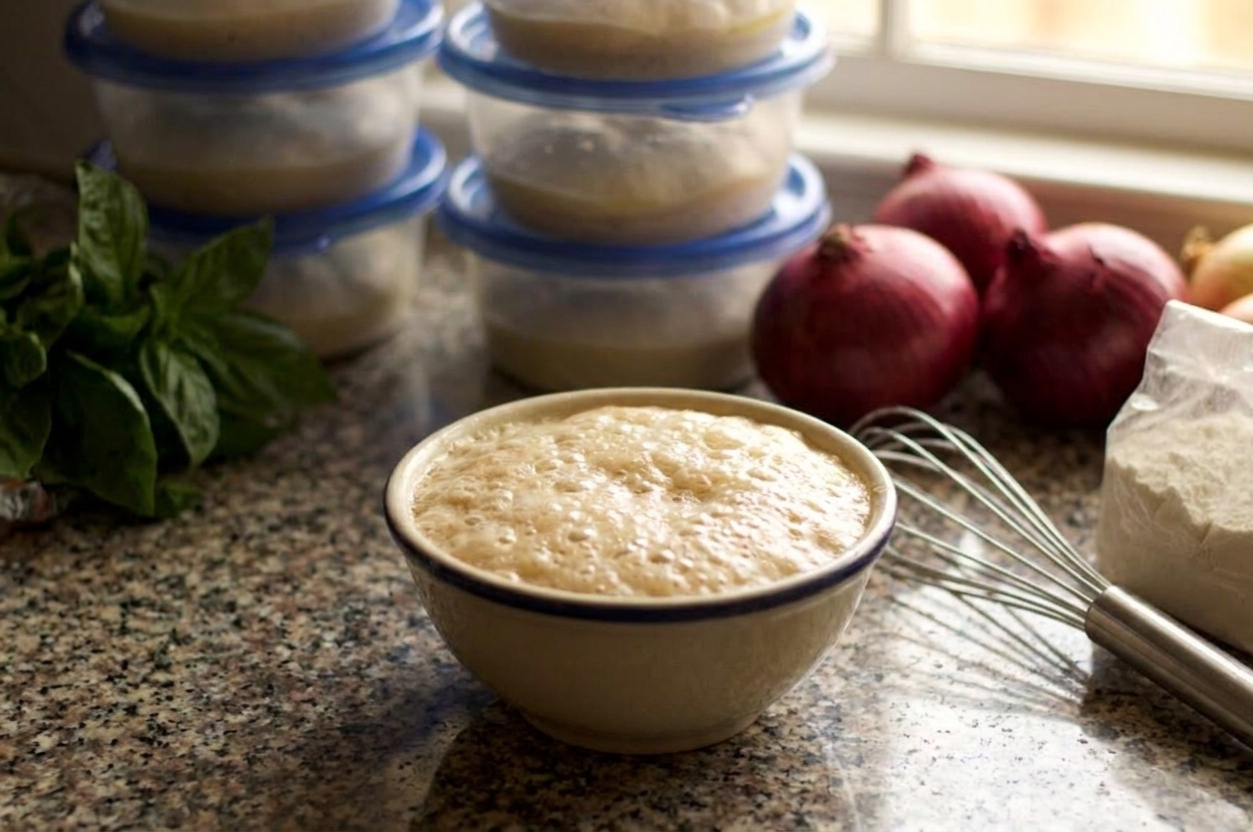
Bloom the yeast. In a large bowl, stir together the warm water and sugar. Sprinkle the yeast over top and let it sit for 5 to 10 minutes, until foamy. If it does not foam, your yeast may be expired or the water may have been too hot or too cool.
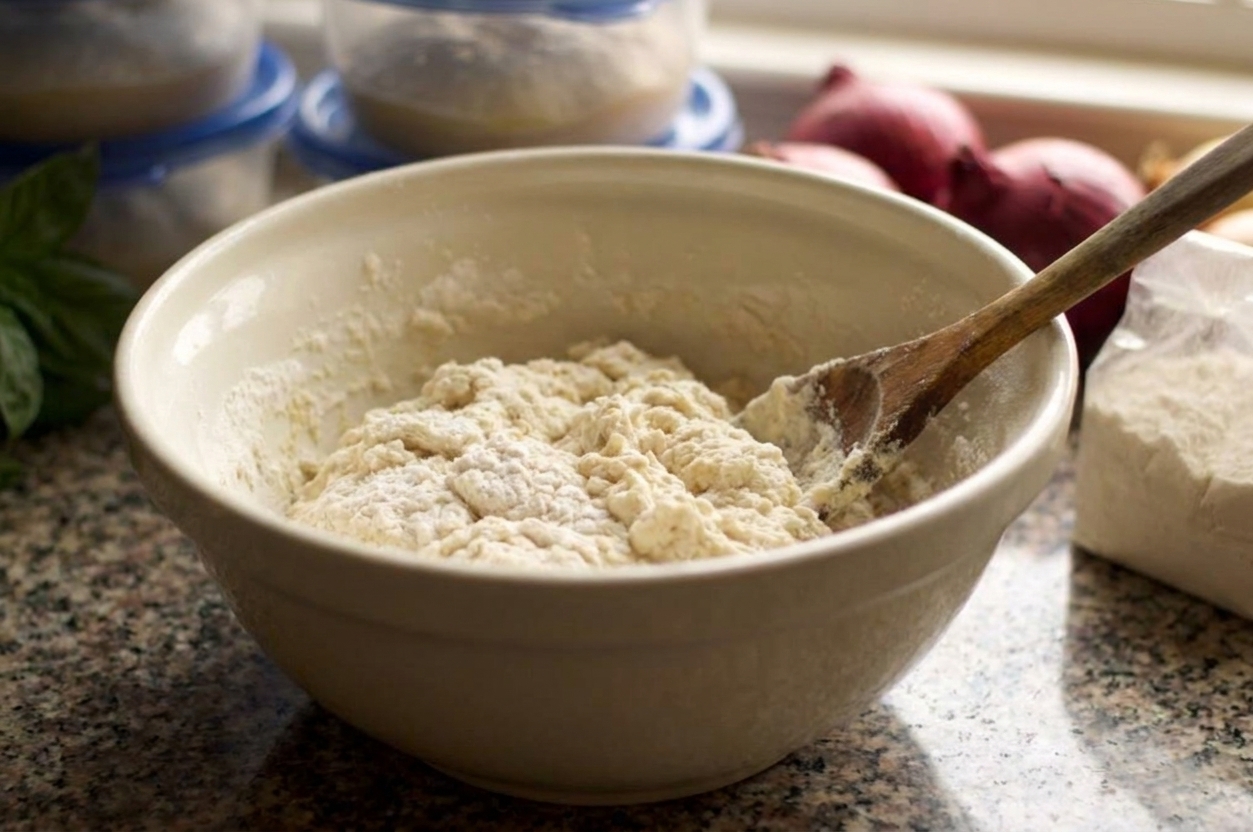
Mix the dough. Add the flour and salt to the bowl. Drizzle in the olive oil. Stir with a spoon until a shaggy dough forms and most of the flour is absorbed. The dough should look rough but feel soft and slightly tacky.
Note: Flour brands and humidity vary. If the dough looks soupy, add flour 1 tablespoon at a time. If it feels dry with dusty flour in the bowl, add water 1 teaspoon at a time.
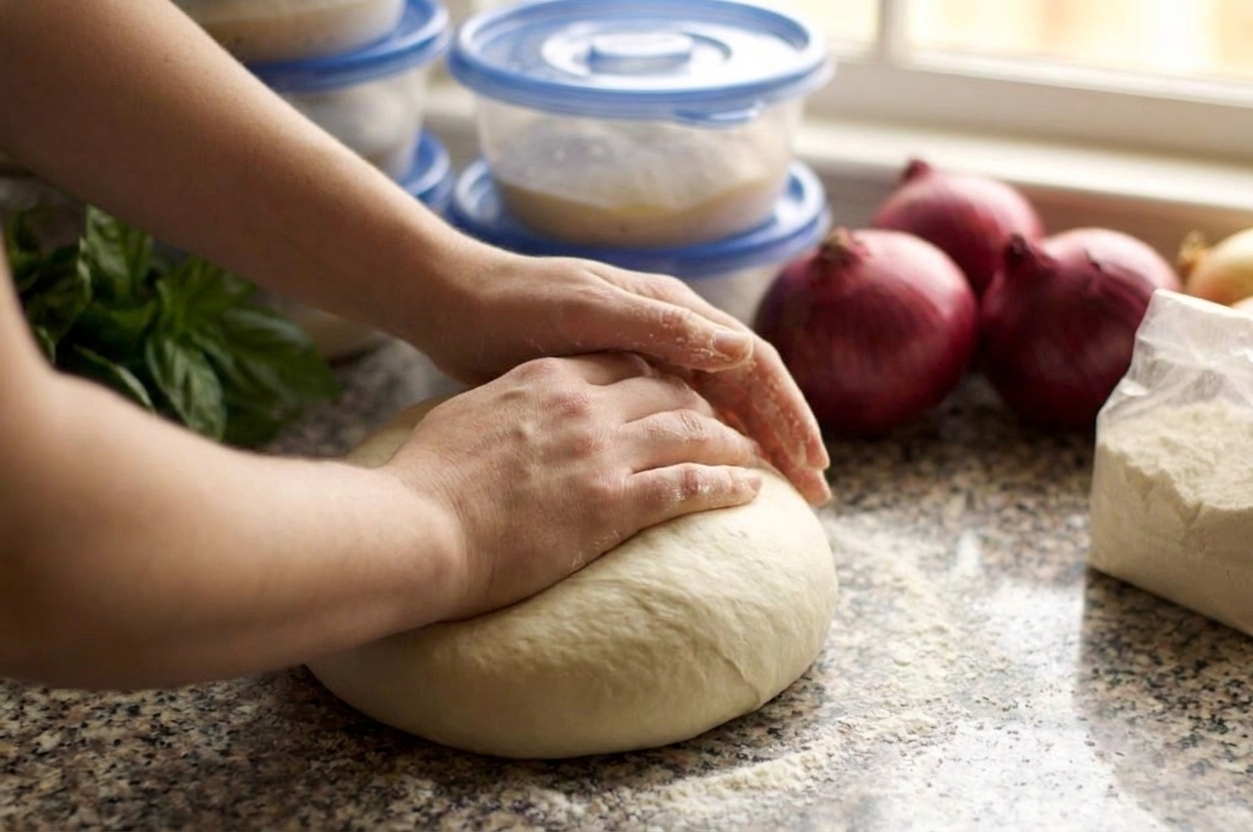
Knead until smooth. Turn the dough onto a lightly floured counter and knead for 8 to 10 minutes (or knead in a stand mixer on low for 5 to 6 minutes). You want a smooth, elastic dough that springs back when you poke it. If it is very sticky, add flour 1 tablespoon at a time.
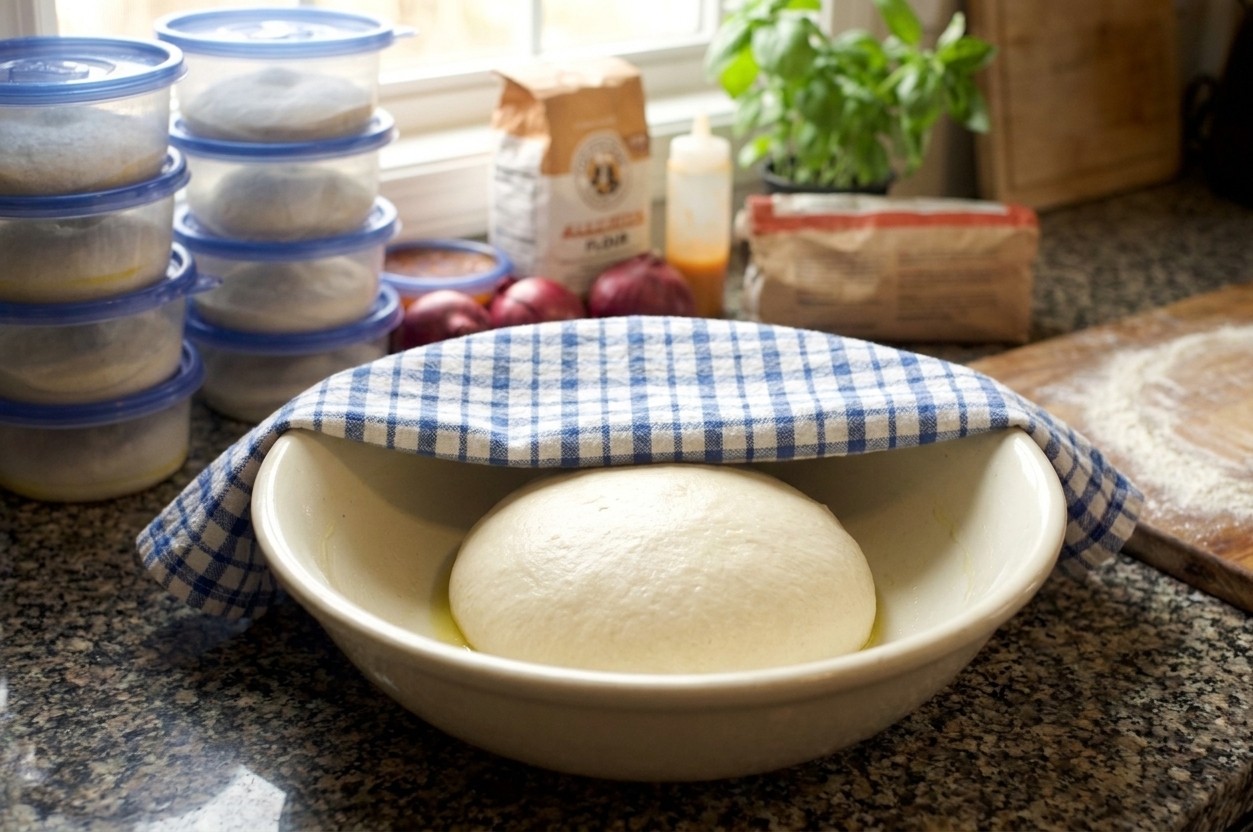
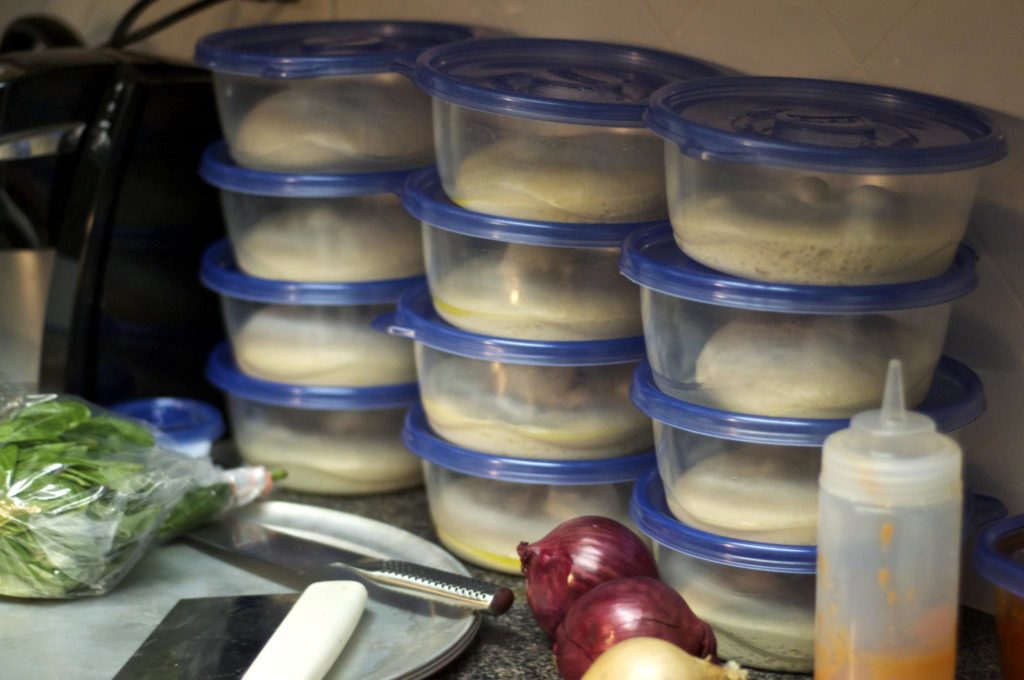
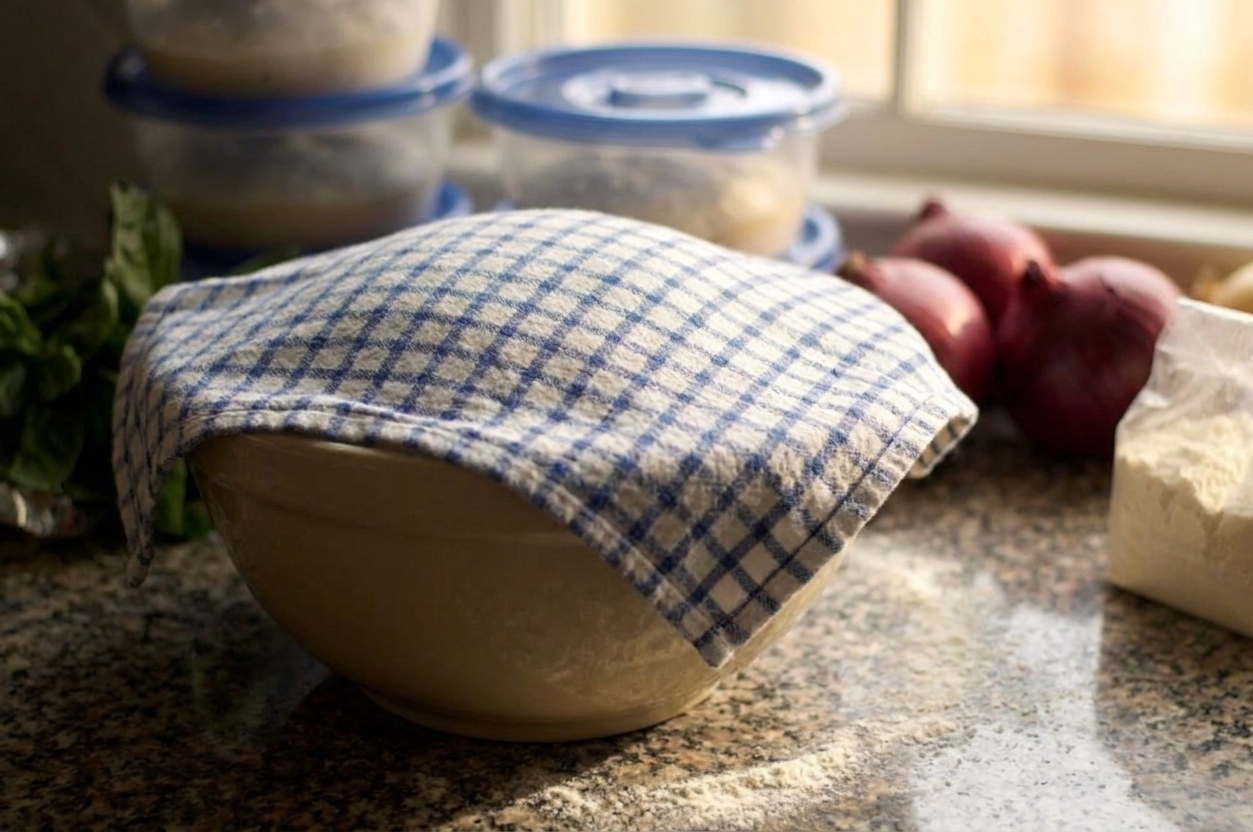
First rise. Lightly oil the mixing bowl. Place the dough inside and turn it once so it is lightly coated. Cover with a damp towel or plastic wrap and let rise in a warm spot until doubled, about 60 to 90 minutes.
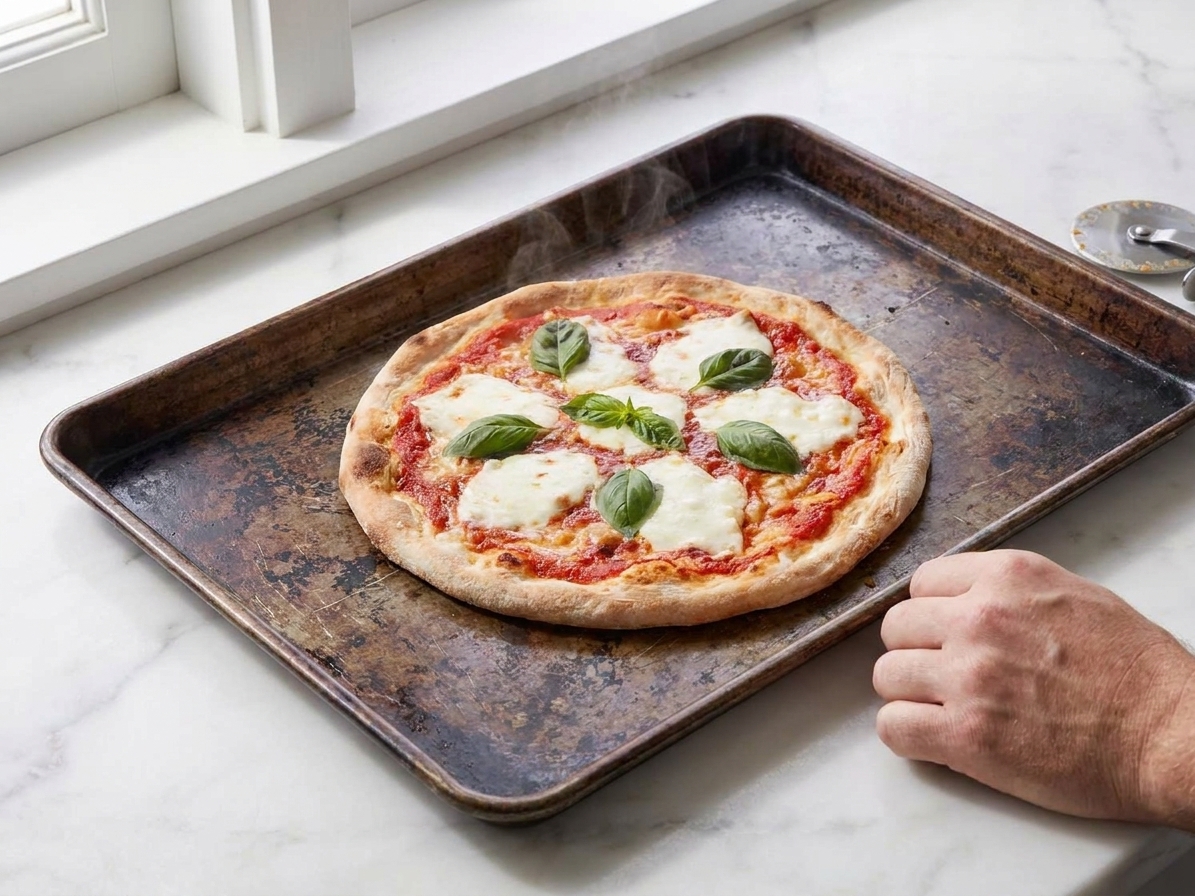
Preheat the oven. Place a pizza stone or steel on the middle rack and preheat to 500°F (or as high as your oven safely goes) for at least 30 minutes. No stone? Invert a sturdy sheet pan and preheat it the same way.
Shape the dough. Punch the dough down gently to release air. For one large pizza, keep it as one piece. For two pizzas, divide into 2 equal balls.
Easy portion guide: The full batch is roughly 780 to 820 g. For two pizzas, aim for about 390 to 410 g each.
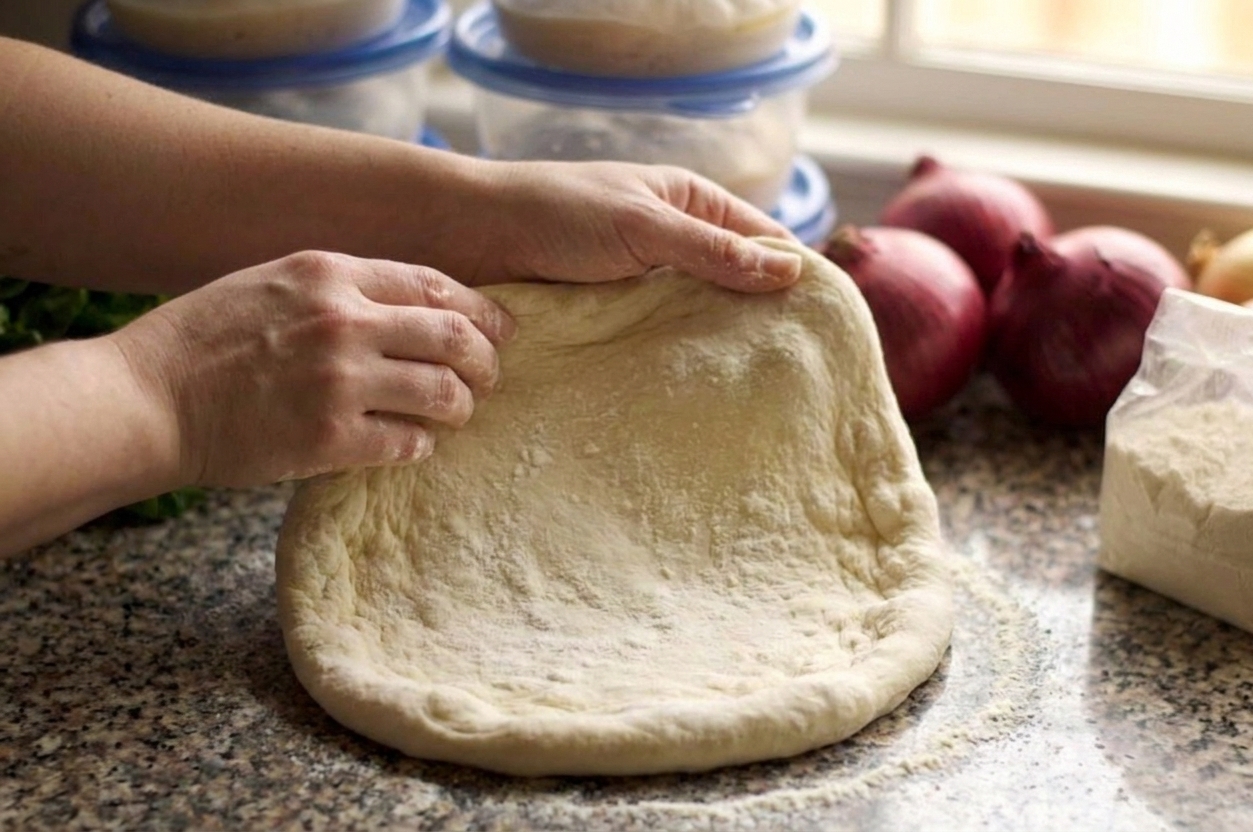
If the dough keeps snapping back, cover it and let it rest 10 to 15 minutes. On a floured surface, stretch into your desired shape, leaving a slightly thicker rim.
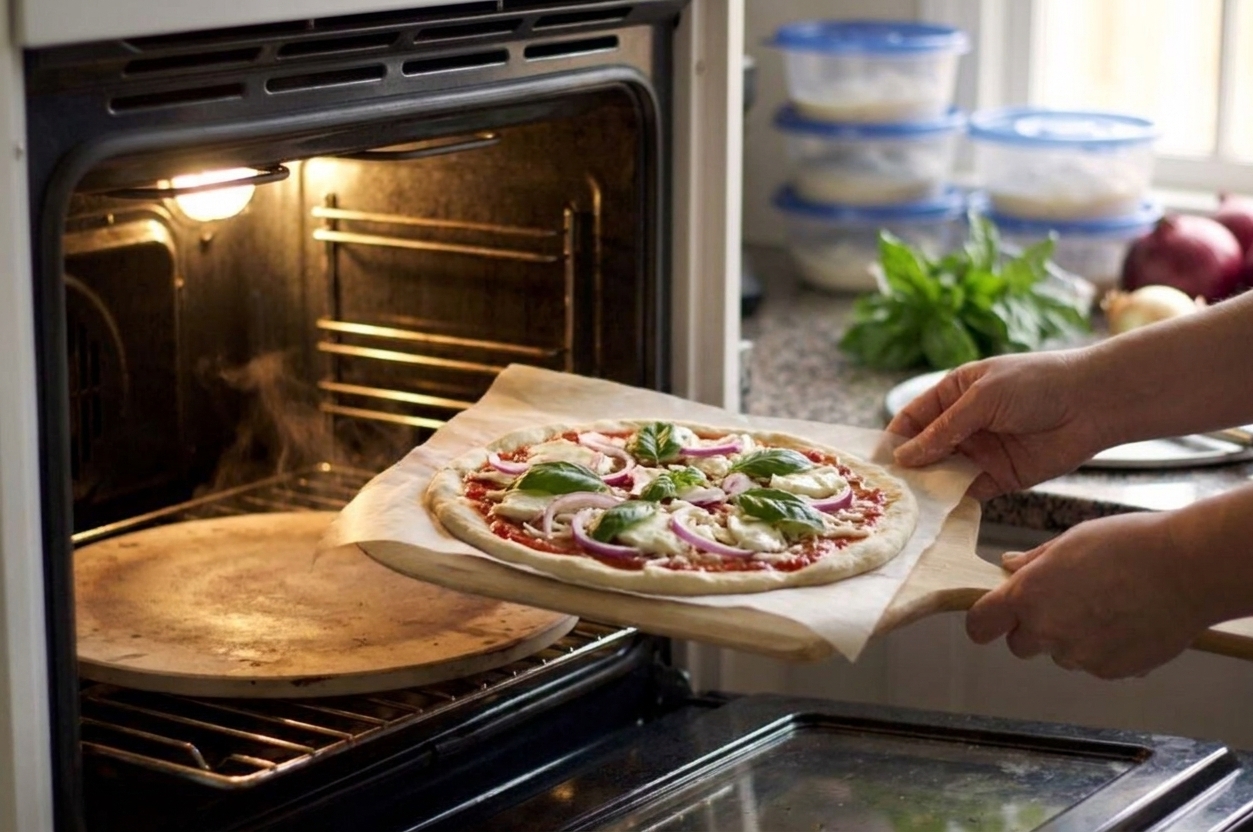
Top and bake. Transfer dough to parchment (easy mode) or a lightly floured peel or the back of a sheet pan. If you are not using parchment, a little semolina or cornmeal under the dough helps it slide.
If you use parchment, trim any excess so the edges do not scorch in the hot oven.
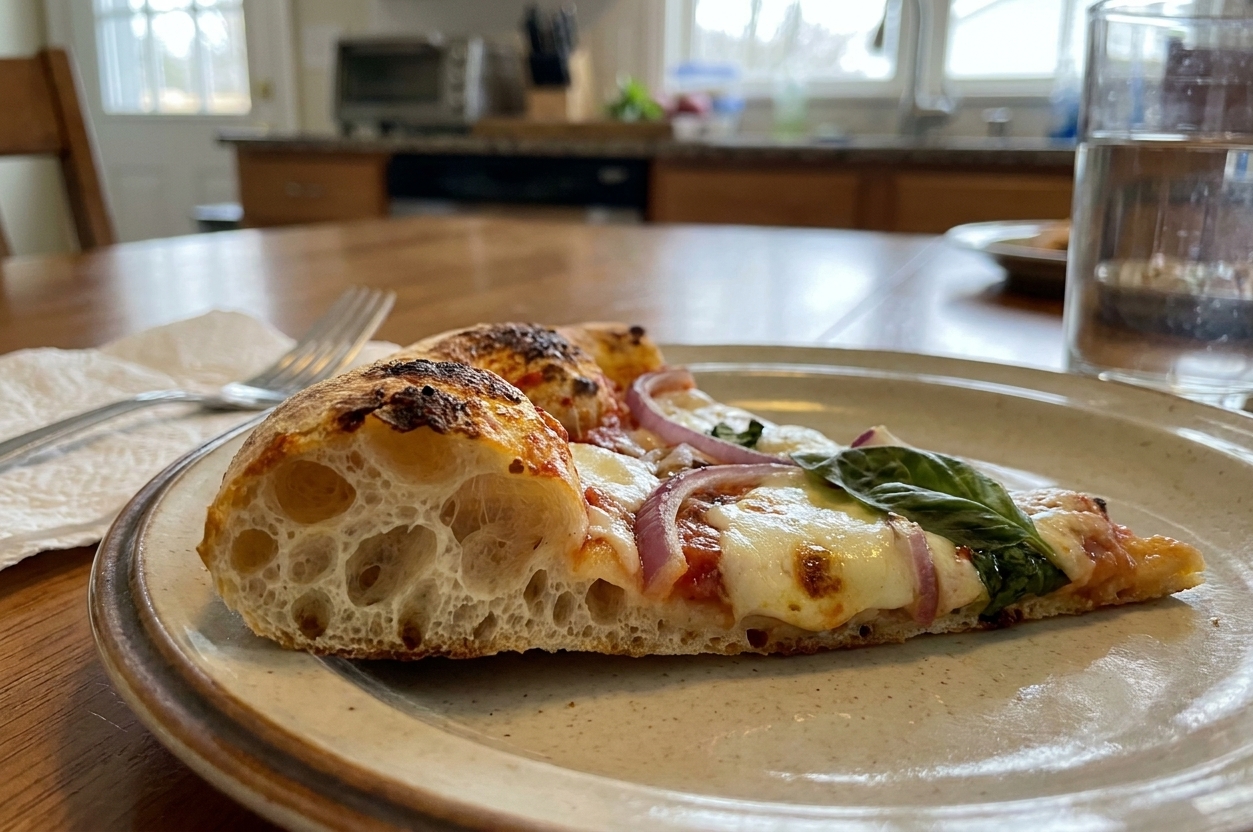
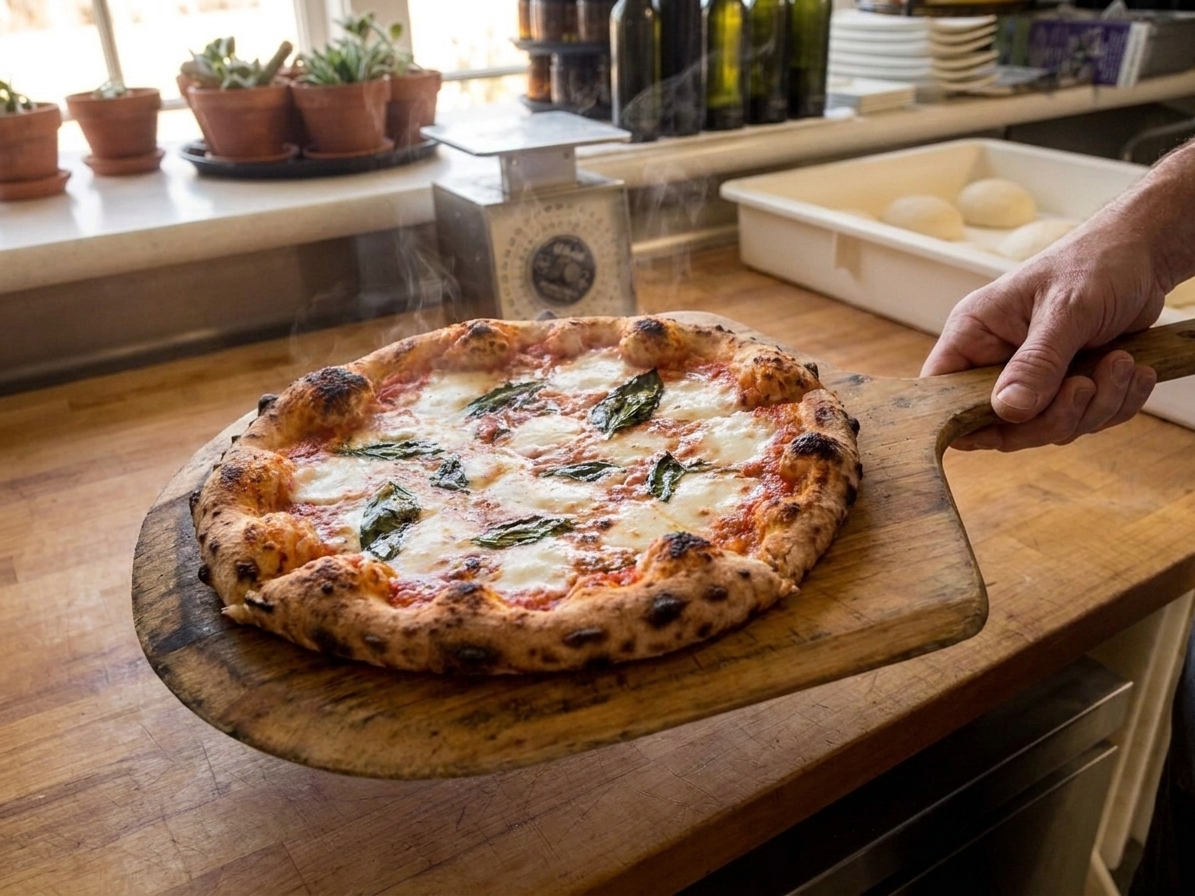
Add sauce, cheese, and toppings. Slide onto the hot stone or pan and bake for 10 to 14 minutes, until the crust is browned and the cheese is bubbling. For extra color, broil for 30 to 60 seconds at the end, watching closely.
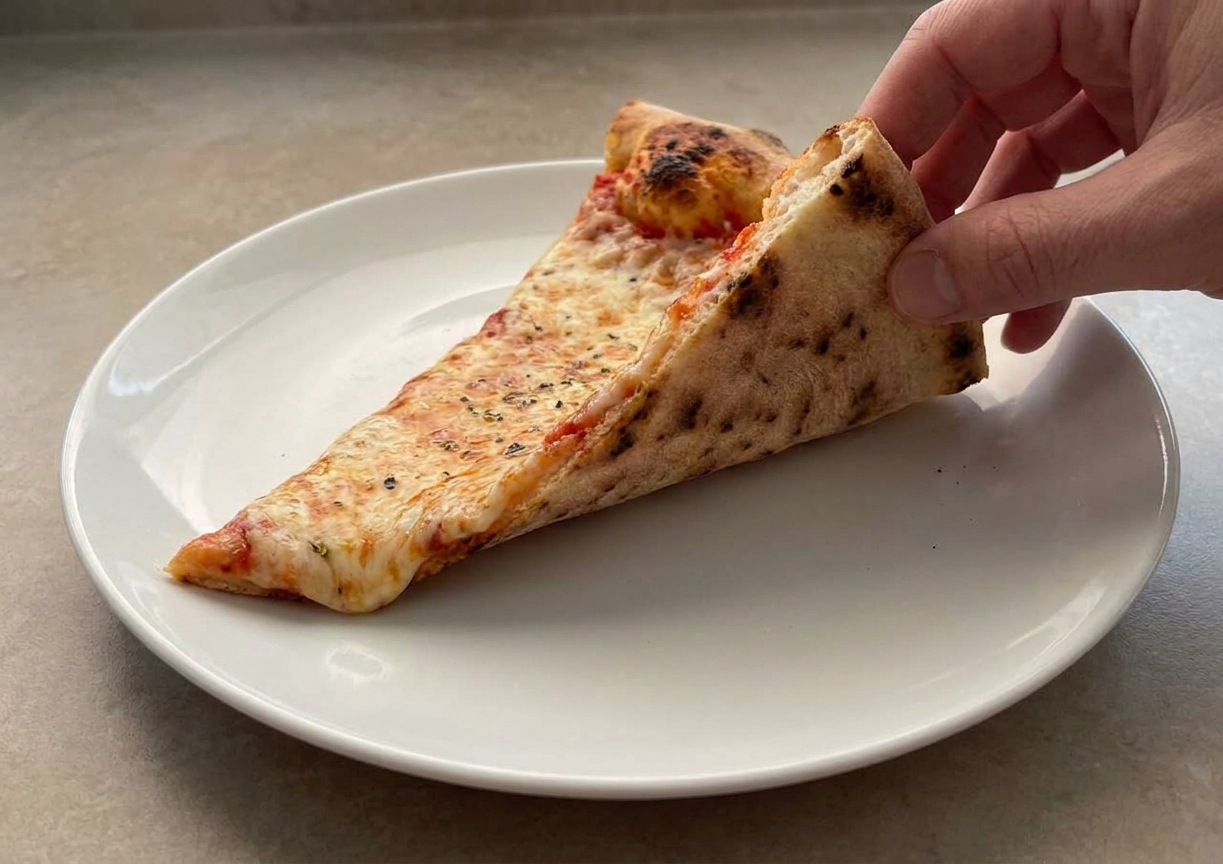
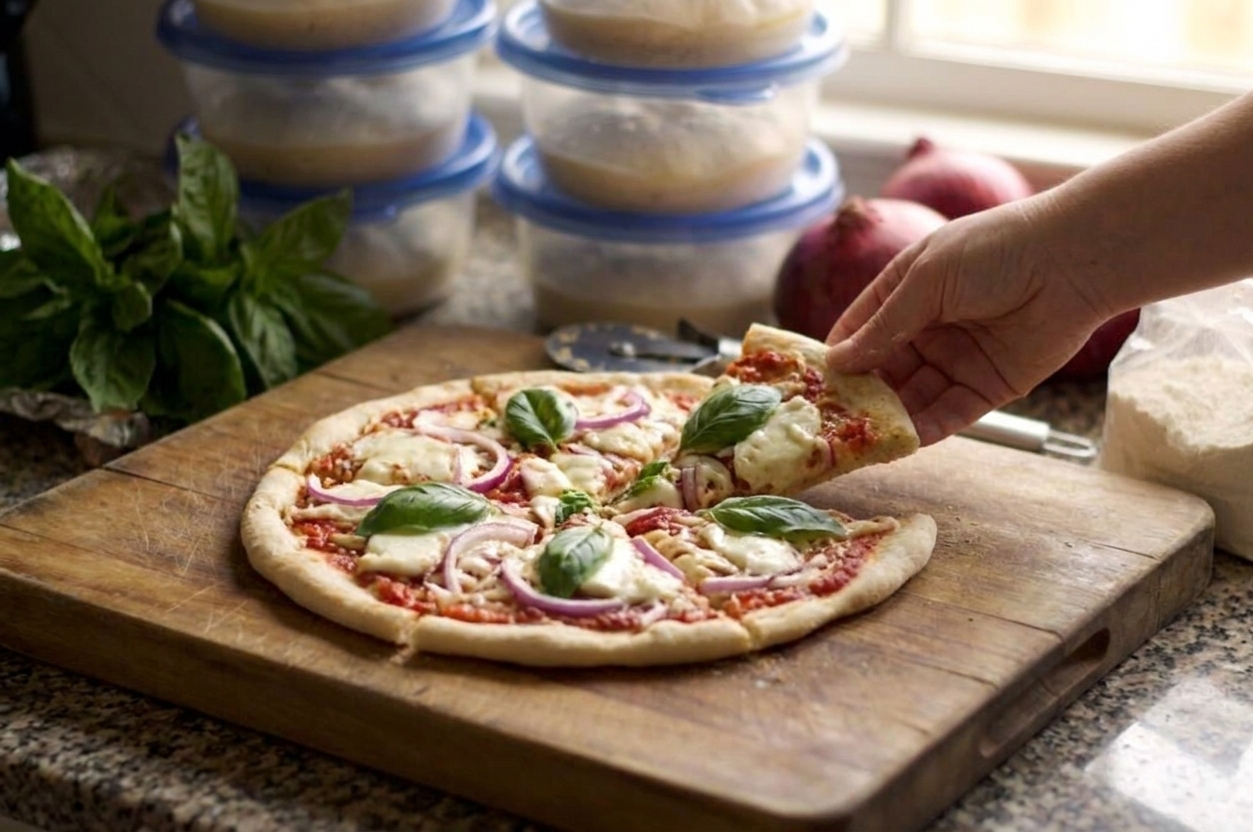
Rest, slice, and eat. Let the pizza cool for 2 to 3 minutes so the cheese sets a bit, then slice and serve.
Tips and Variations
Cold ferment for better flavor
If you have time, let the dough do a slow rise in the fridge. You have two easy options:
- Option A (most convenient): After kneading, let the dough rest at room temperature for 20 to 30 minutes, then refrigerate (bulk or as dough balls) for 12 to 72 hours.
- Option B (as written above): After the first rise, refrigerate it for 12 to 72 hours.
Either way, bring the dough to room temperature for 60 to 90 minutes before stretching.
Thicker pan-style pizza
Oil a 9x13-inch pan with 2 tablespoons olive oil. Press the dough into the pan, cover, and let it rest 20 minutes. Press again to fill the corners, then top and bake at 475°F for 14 to 18 minutes.
Want it thicker? Use a smaller pan (like 9x9) or scale the dough up to 1.25 to 1.5x.
Whole wheat swap
Replace up to 1 cup of the all-purpose flour with whole wheat flour. Add an extra 1 to 2 tablespoons water if the dough feels dry.
Garlic butter crust
Brush the rim with melted butter mixed with a little garlic powder and salt right when it comes out of the oven. It is a small move with big payoff.
If your kitchen is cold
Let the dough rise in the oven with the light on (oven off), or set the bowl near the stove while the oven preheats.