Mom's Best Recipes
Recipe

Pork Belly Burnt Ends

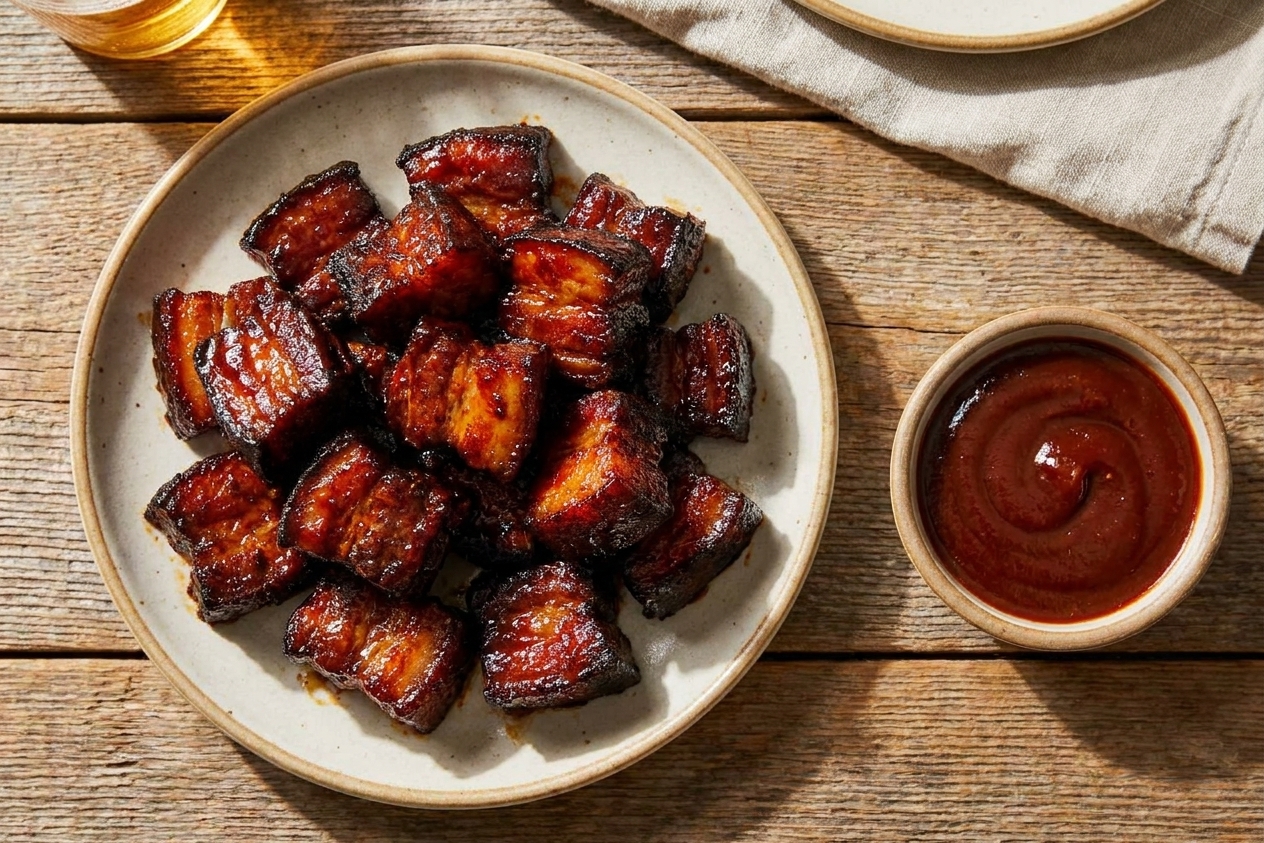
Crispy-edged pork belly cubes glazed in a sticky BBQ sauce with just enough heat to keep you coming back for “one more.”

Author By Matt Campbell
4.8
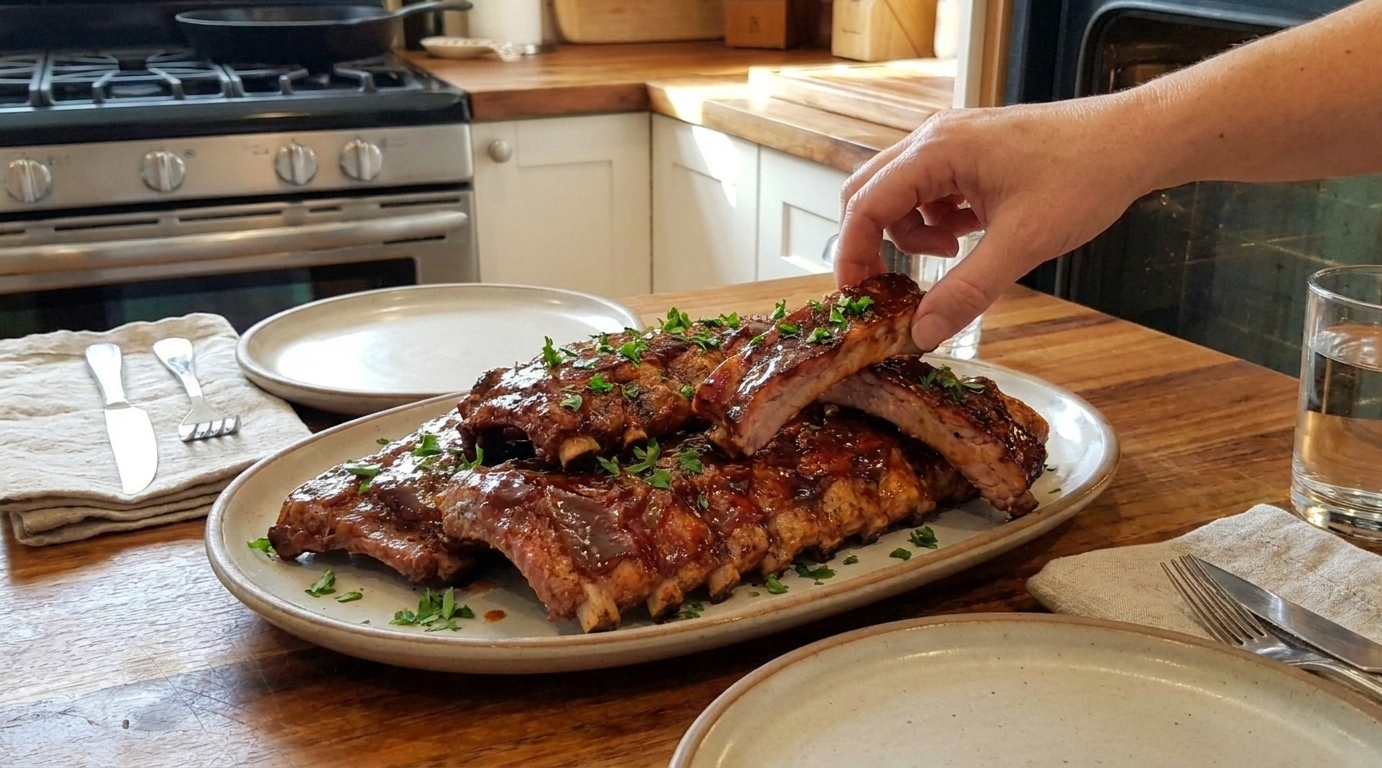
A platter of glossy pork belly burnt ends with caramelized edges, sprinkled with sliced scallions, set on a warm wooden table with a small bowl of extra barbecue sauce

Pork belly burnt ends are the snacky, saucy cousin of classic brisket burnt ends. You get that same sticky, caramelized glaze and smoky-sweet vibe, but the path to tender is a lot more forgiving because pork belly is basically built to stay juicy. The goal is bite-through cubes with crisp edges, not wobbly-soft fat or chewy bark that fights you.

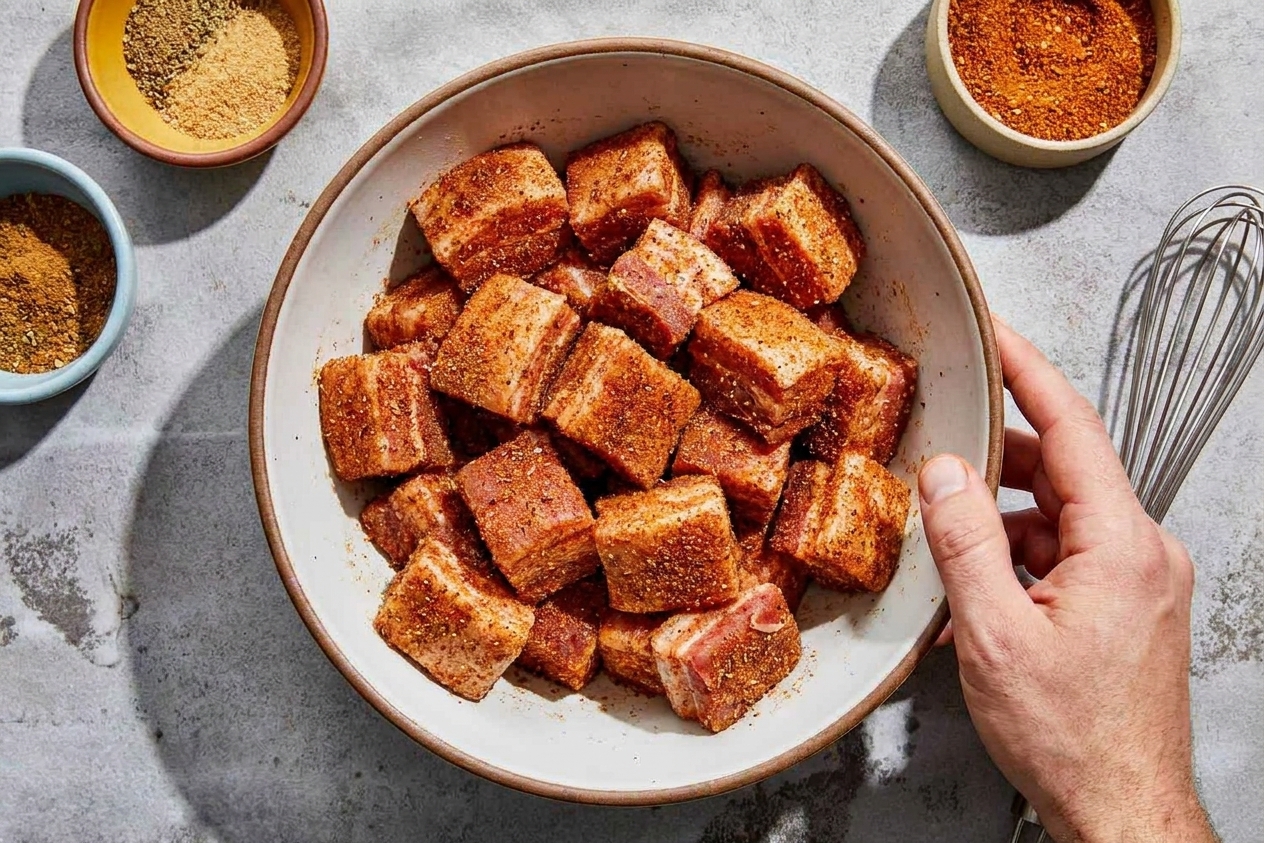
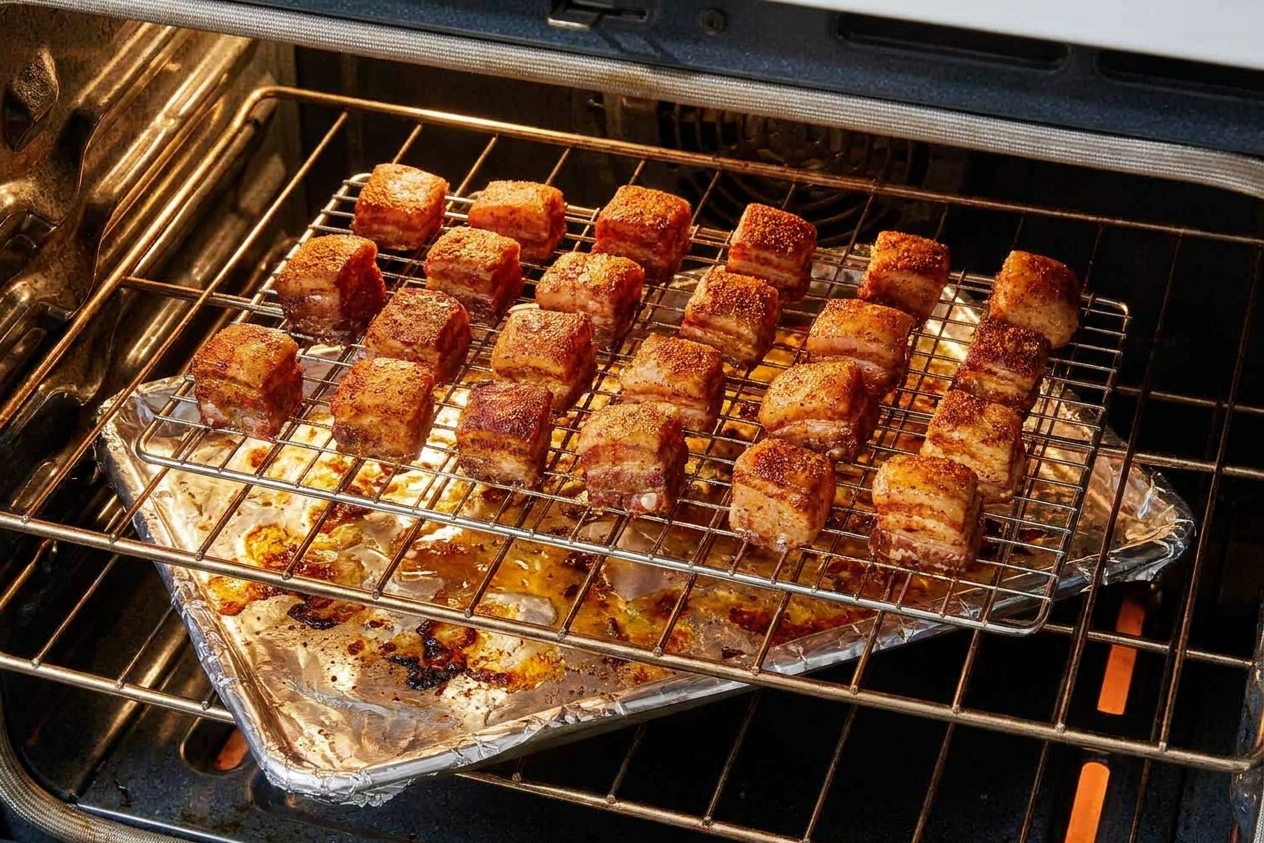
This is my go-to method when I want big BBQ energy without turning the day into a full-time job. You can do it on a smoker if you have one, or in the oven with a quick broil to finish. Either way, we season, roast or smoke until the cubes render and turn golden, then we drown them (lovingly) in butter, brown sugar, and BBQ sauce until they turn into little lacquered nuggets of joy.

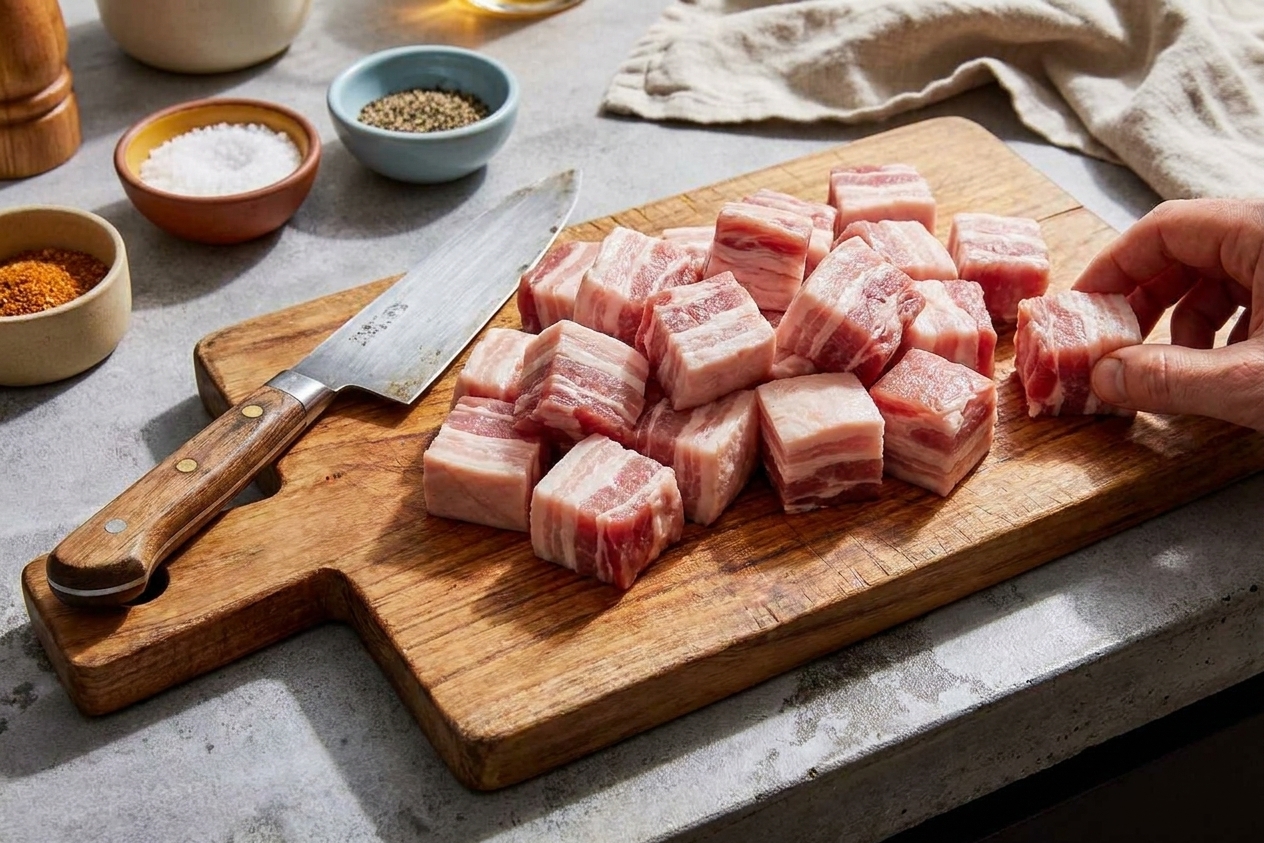
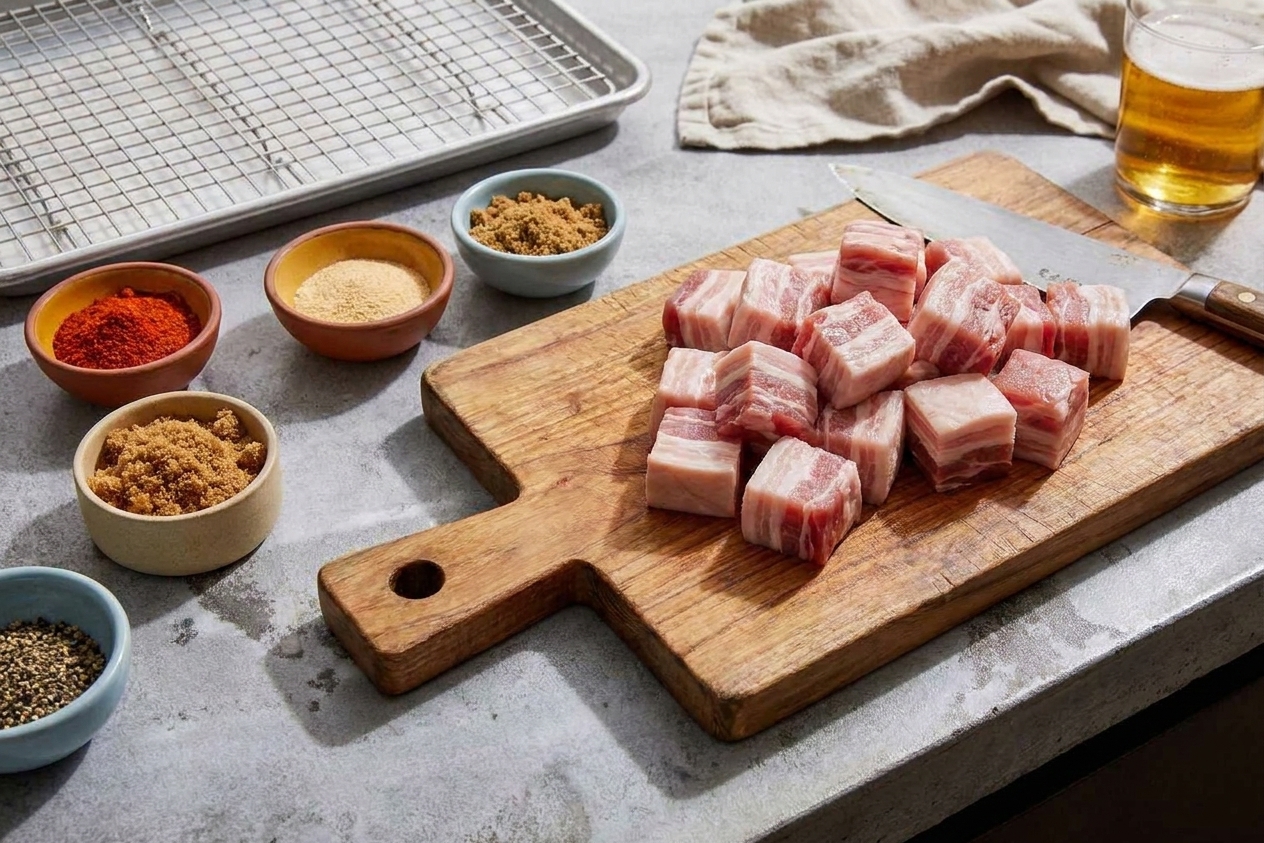
Raw pork belly cut into even cubes on a wooden cutting board with a chef knife nearby on a kitchen counter under warm lighting

Why It Works

  • Pork belly stays juicy. Even if you cook it a little past “perfect,” the fat keeps the texture rich instead of dry.
  • Two-stage cooking builds the best texture. First you render and brown the cubes, then you glaze so the sauce caramelizes instead of burning.
  • Sweet plus heat plus smoke. Brown sugar and BBQ sauce bring the sticky; a little chili and smoked paprika keep it from tasting flat.
  • Oven and smoker friendly. The technique is identical. Only the heat source changes.

What you are looking for: a dark amber glaze, edges that feel tacky and slightly crisp, and fat that has softened and turned silky. (Food safety note: pork is safe at 145°F, but burnt ends are at their best when cooked higher for that rendered, bite-through texture.)

Pairs Well With

Storage Tips

Refrigerate: Cool completely, then store in an airtight container for up to 4 days. The glaze will thicken as it chills. That is normal and honestly kind of magical.

Freeze: Freeze in a single layer on a sheet pan until firm, then transfer to a freezer bag. Keeps well for up to 2 months.

Reheat (best texture):

  • Oven or air fryer: 375°F for 8 to 12 minutes, tossing once. Add a splash of water or extra BBQ sauce if they look dry.
  • Skillet: Medium heat with a tiny splash of water, cover for 2 minutes, then uncover and let the glaze tighten.
  • Microwave: Works, but the edges soften. Do 30-second bursts and stop as soon as they are hot.
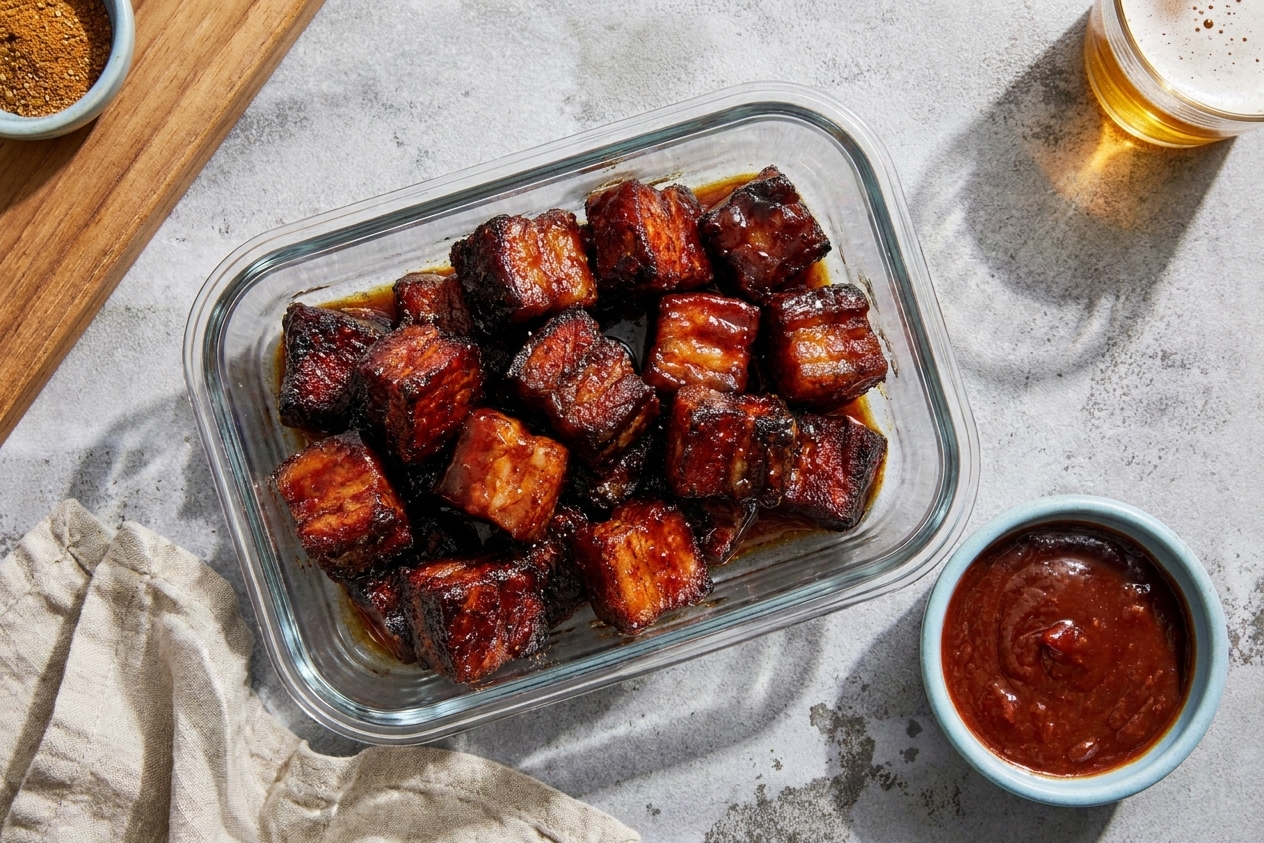
A clear airtight container filled with leftover pork belly burnt ends on a kitchen counter next to a small ramekin of barbecue sauce

Common Questions

Are pork belly burnt ends the same as brisket burnt ends?

Not exactly. Brisket burnt ends come from a smoked brisket point and are meat-forward with rendered fat. Pork belly burnt ends are fattier, usually cubed from raw pork belly, and end up more like sticky BBQ candy with crisp edges.

Do I have to remove the skin?

Strongly recommended, yes. This recipe is happiest with skinless pork belly. At these temps and in cube form, skin tends to turn tough and chewy instead of crackly. If you only have skin-on, ask the butcher to remove it, or slide a sharp knife between skin and fat and peel it off.

If you really want to keep the skin, your best bet is to remove it now, cook it separately until crisp (high heat), then crumble it on top at the end.

What temperature should pork belly burnt ends reach?

Pork is food-safe at 145°F, but burnt ends are not about “safe,” they are about texture. For that soft, fully rendered bite, aim for roughly 195°F to 203°F internal, or cook until a skewer slides in with very little resistance and the fat looks more translucent than opaque.

Why are my burnt ends chewy?

Usually one of two things: the cubes are too large (harder to render) or they were pulled too early. Keep cooking until the fat looks silky and a skewer slides in easily. If they are at 175°F and still feel tight, keep going.

Can I make these without a smoker?

Absolutely. The oven method is legit. Add smoked paprika and use a smoky BBQ sauce, then finish with a quick broil to get that sticky caramelization. If you want extra “pit” energy, a tiny pinch of chipotle powder or smoked salt can help.

What wood pairs best if I am smoking them?

Apple or cherry for sweet smoke, hickory for bolder BBQ flavor. Avoid going too heavy with mesquite unless you really like it intense.

What kind of BBQ sauce works best?

Thicker, sweeter sauces glaze up faster and stickier. Thinner, vinegar-forward sauces usually need a few extra minutes uncovered to tighten. Taste your sauce first, then adjust the honey and vinegar in the glaze stage to keep it balanced.

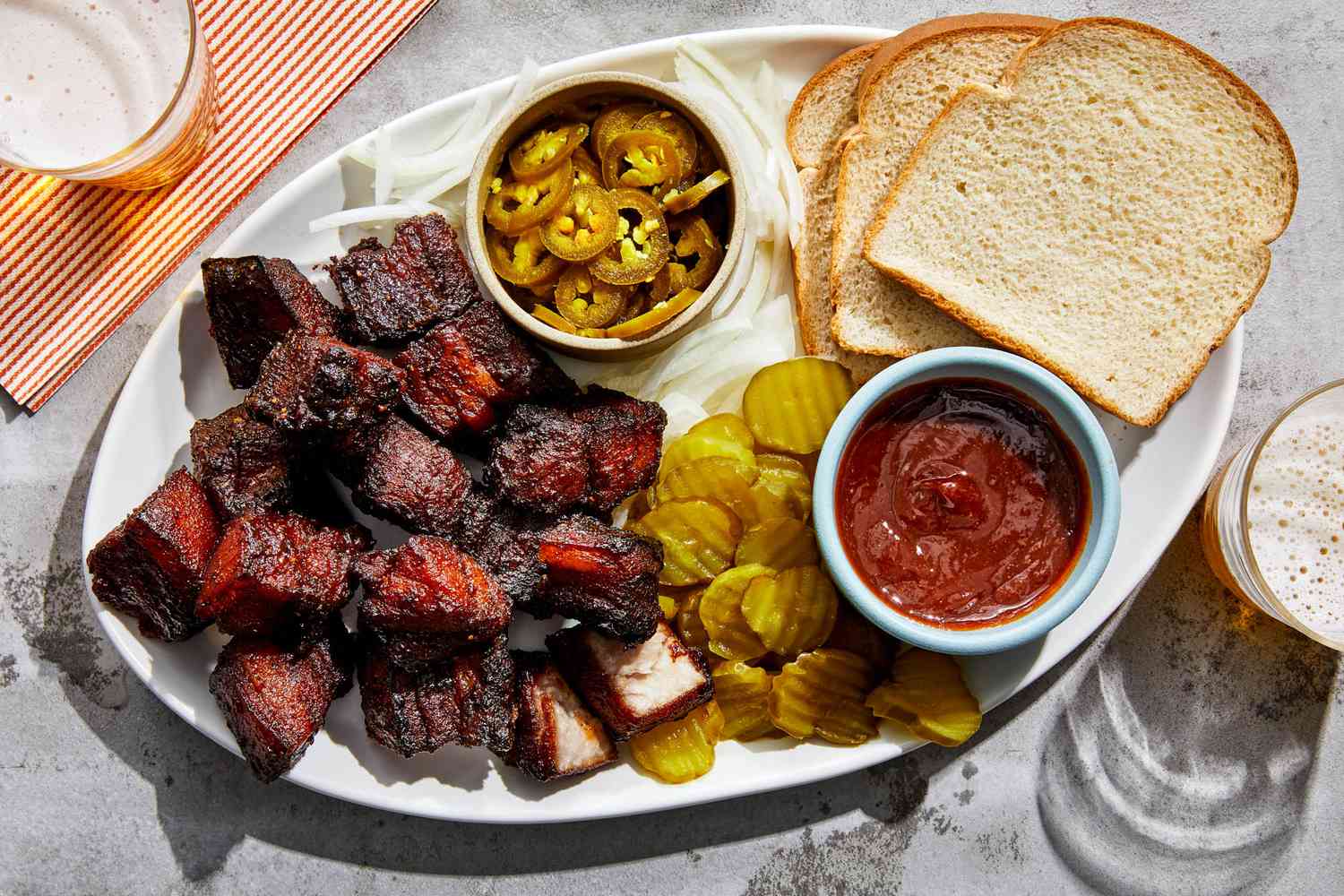
The first time I made pork belly burnt ends, I treated them like a serious project. I fussed with the rub like it was a chemistry exam, babysat the heat, and still managed to eat half the batch standing at the counter “just to test.” Now I make them like a weeknight-friendly BBQ cheat code: cut, season, render, glaze, repeat tasting as needed. They are the kind of food that makes people hover near the kitchen, pretending they are helping while they wait for you to say, “Okay fine, grab a fork.”

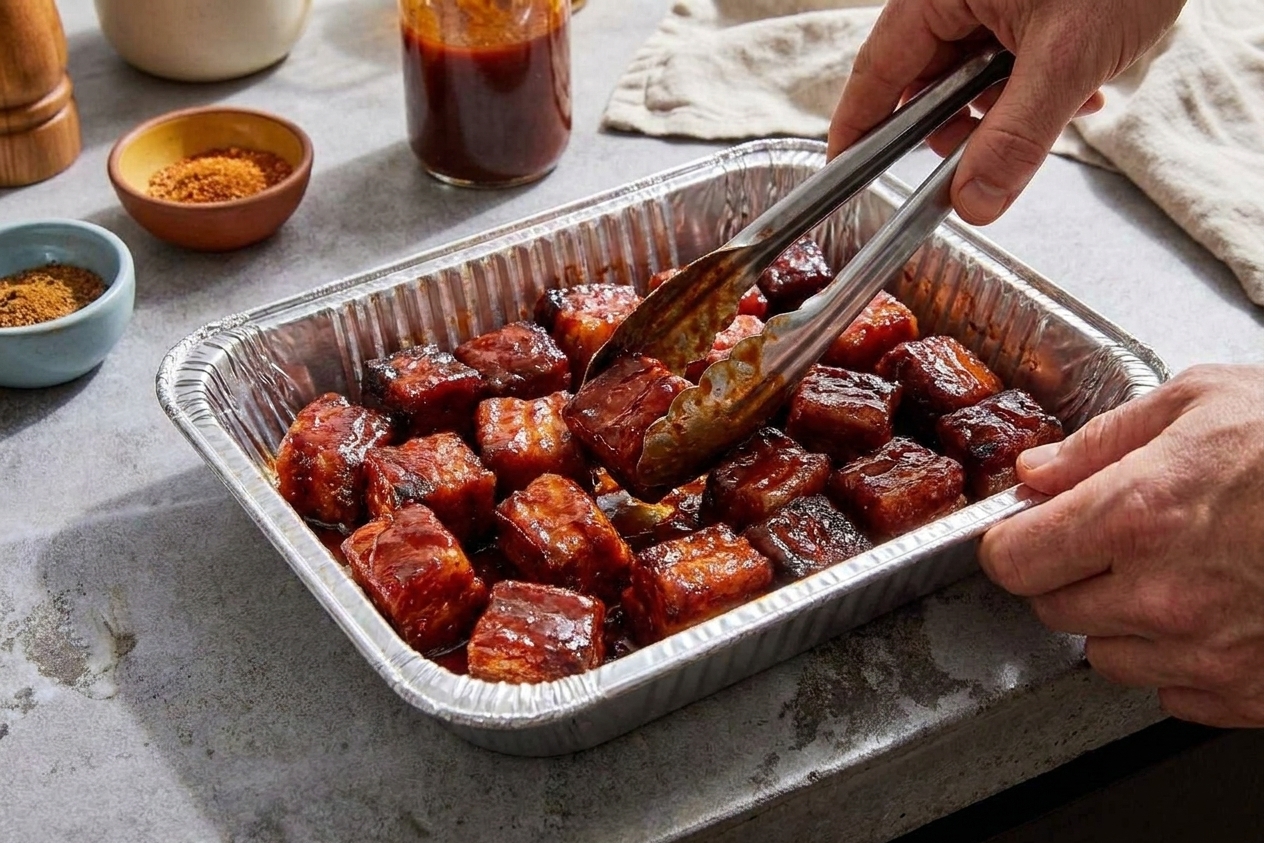
A cook using tongs to toss pork belly burnt ends in a foil pan coated with glossy barbecue sauce on a kitchen counter