Mom's Best Recipes
Recipe

Prime Rib in the Oven

A relaxed, dependable method for oven-roasting prime rib with a crunchy herb crust, a rosy interior, and a simple pan au jus you can make while it rests.

Author By Matt Campbell
4.8
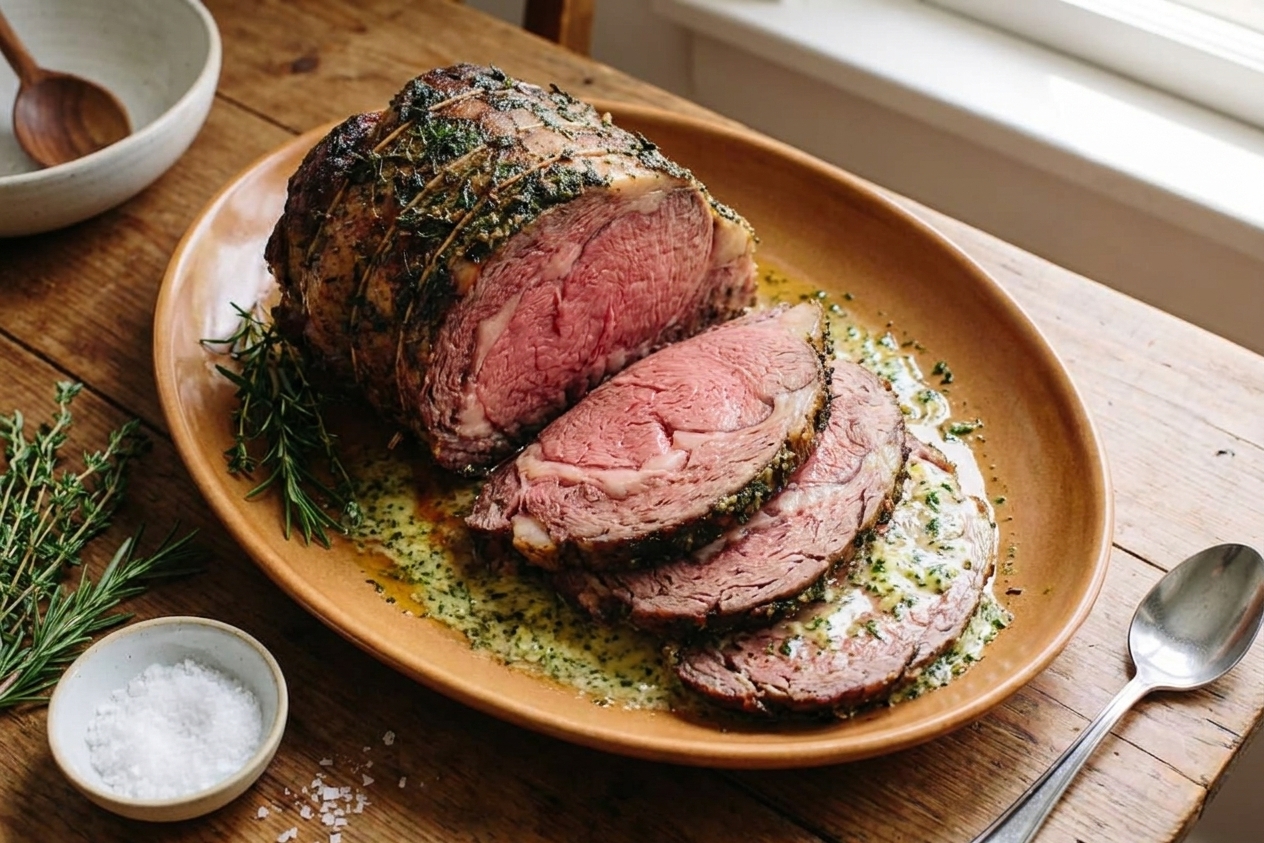
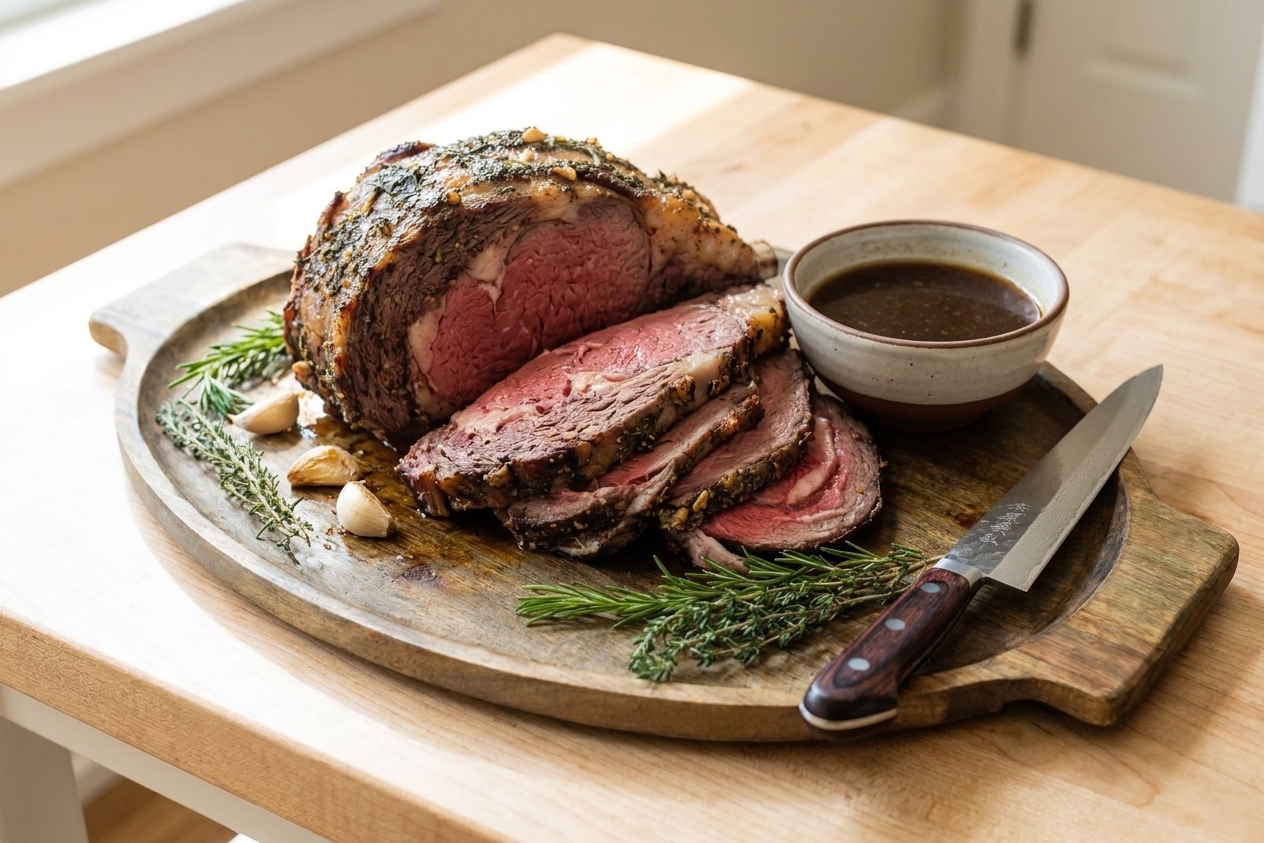
A sliced prime rib roast on a white platter with a browned herb crust, pink medium-rare center, and a small bowl of au jus on a cozy dinner table

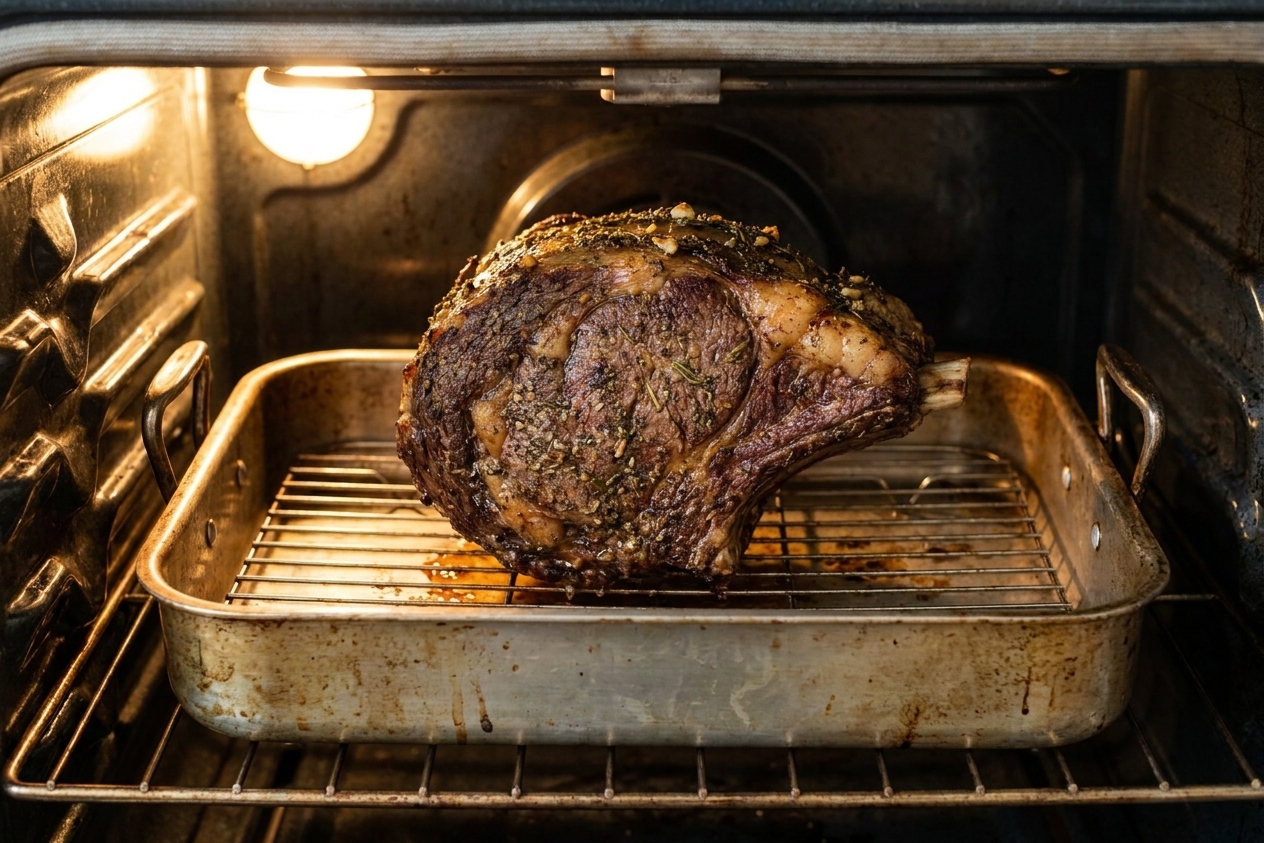
Prime rib is one of those dishes that looks like you hired a personal chef, even if you are just you, wearing socks, holding a meat thermometer like it is a mic. The oven does most of the heavy lifting here. Your job is to season boldly, roast with intention, and pull it early so carryover heat can finish the job.

This recipe is built for real home kitchens. No obscure ingredients, no mysterious “chef’s math,” and no panic when the timer goes off. You will get a deeply browned crust, a juicy center, and a quick pan au jus that tastes like you tried way harder than you did.

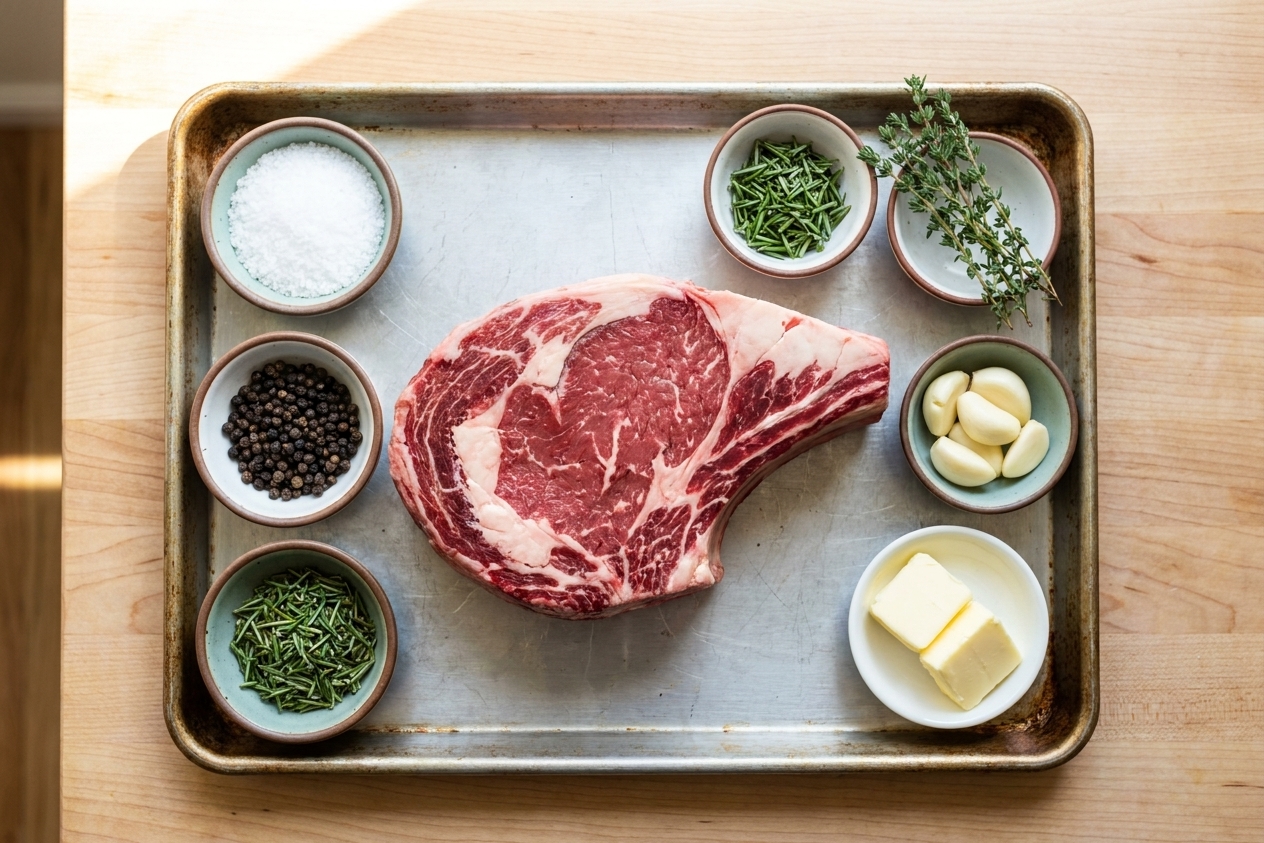
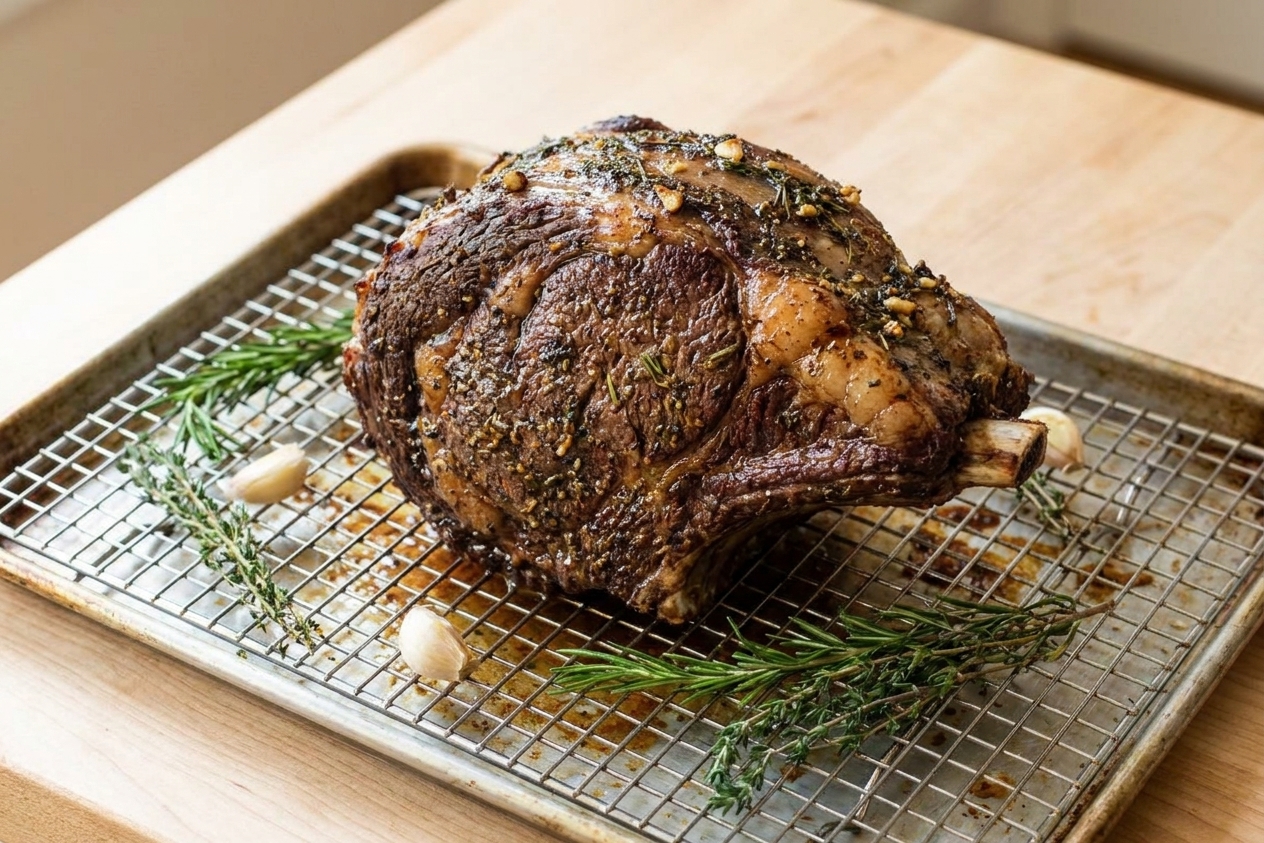
A raw bone-in prime rib roast on a rimmed baking sheet with bowls of kosher salt, black pepper, chopped rosemary, thyme, garlic, and butter on a light kitchen counter

Why It Works

  • High heat first jumpstarts browning so you get that steakhouse crust without overcooking the middle.
  • Low and steady roasting keeps the interior tender and evenly rosy.
  • Thermometer-first timing means you cook to temperature, not to vibes.
  • A proper rest lets juices redistribute so the cutting board does not steal your dinner.
  • Pan au jus uses the drippings you already earned, turning them into a glossy, savory sauce in minutes.

Pairs Well With

Storage Tips

Refrigerate: Cool leftovers, then wrap tightly or store in an airtight container for up to 4 days.

Freeze: Slice and freeze in a single layer, then transfer to a freezer bag for up to 2 months. Add a little au jus to the bag if you have it, it helps protect the meat.

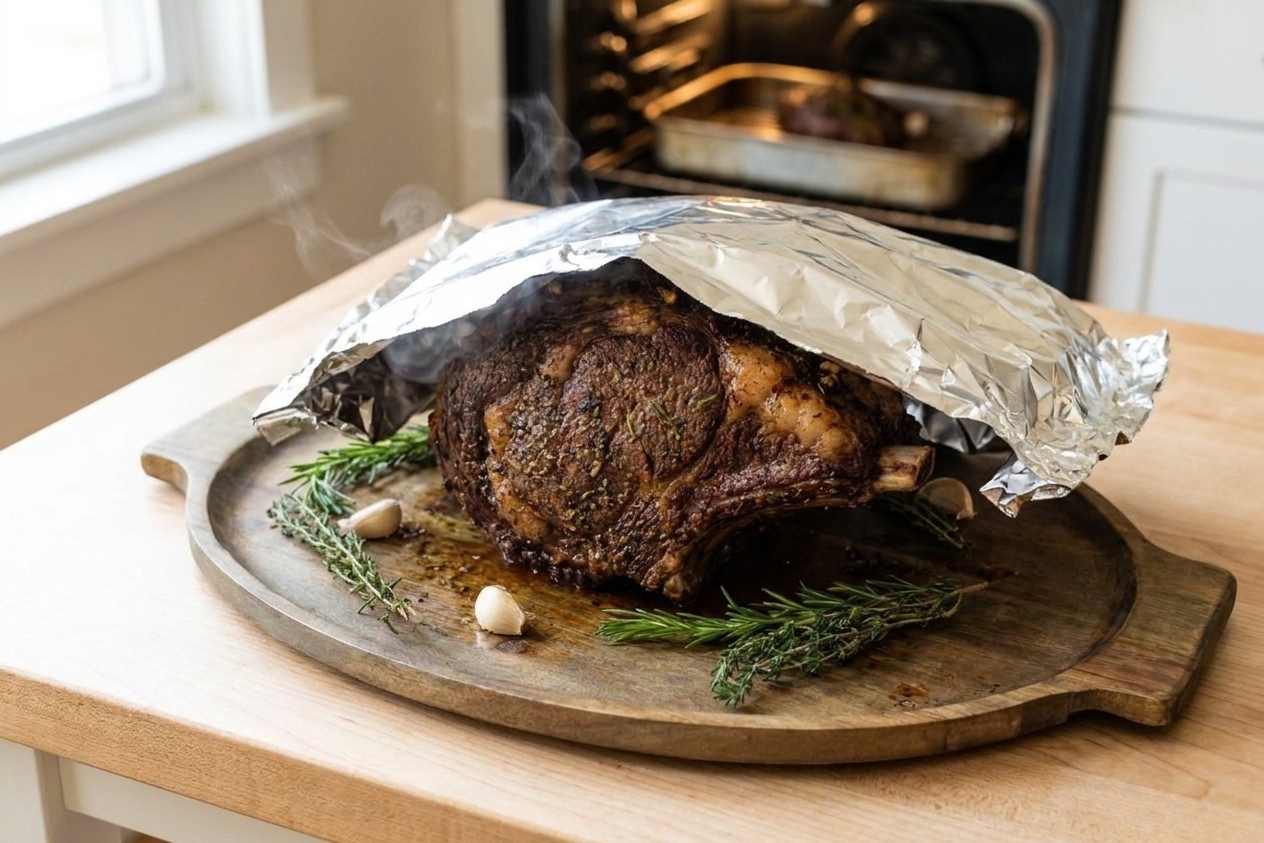
Reheat (best way): Put slices in a baking dish with a splash of au jus or beef broth, cover with foil, and warm at 250°F until just heated through, usually 10 to 20 minutes. Keep it gentle so it stays pink and juicy.

Fast option: Warm slices in a skillet over low heat with a spoonful of au jus, flipping once. Do not crank the heat unless you want “prime rib turns into well-done roast beef,” which is a different plan.

Common Questions

Do I need to bring prime rib to room temperature?

You do not need to. I like taking it out for 45 to 60 minutes so it roasts a bit more evenly, but the real key is using a thermometer and allowing a full rest.

Bone-in or boneless, which is better?

Bone-in tends to cook a touch more evenly and looks extra dramatic on the table. Boneless is easier to carve. Both work with this method. If yours is boneless and tied, keep it tied while roasting.

How much prime rib per person?

Plan on 1 pound per person for bone-in (the bones add weight). For boneless, 3/4 pound per person is usually plenty, especially if you have sides.

Where do I put the thermometer?

Insert it into the center of the thickest part of the roast. Aim for the middle, not the fat cap, and avoid touching bone (bone reads hotter and can trick you). If you have a probe thermometer, set the alarm for your pull temperature and enjoy your new personality trait.

What internal temperature should I aim for?

  • Rare: pull at 115°F to 120°F, rest to about 125°F
  • Medium-rare: pull at 120°F to 125°F, rest to about 130°F to 135°F
  • Medium: pull at 125°F to 130°F, rest to about 135°F to 140°F

Carryover heat is real, but it is also a little chaotic. Bigger roasts and longer rests can climb closer to 10°F, while smaller roasts may rise less. If you are nervous about overshooting medium, pull closer to 125°F and let the rest do the work.

USDA recommends 145°F for beef with a 3-minute rest. Serving prime rib below that is common for an intact roast, but households with higher-risk eaters (pregnant, immunocompromised, elderly) may prefer sticking closer to USDA guidance.

Why did my prime rib turn out dry?

The usual suspects are: cooked past target temp, sliced too soon (no rest), or reheated too aggressively. For leftovers, low heat plus a little broth or au jus is the fix.

Can I make gravy instead of au jus?

Yes. After making the au jus, whisk 1 to 2 tablespoons flour into a couple tablespoons of fat/drippings in the pan, cook 1 minute, then slowly whisk in the au jus until thickened.

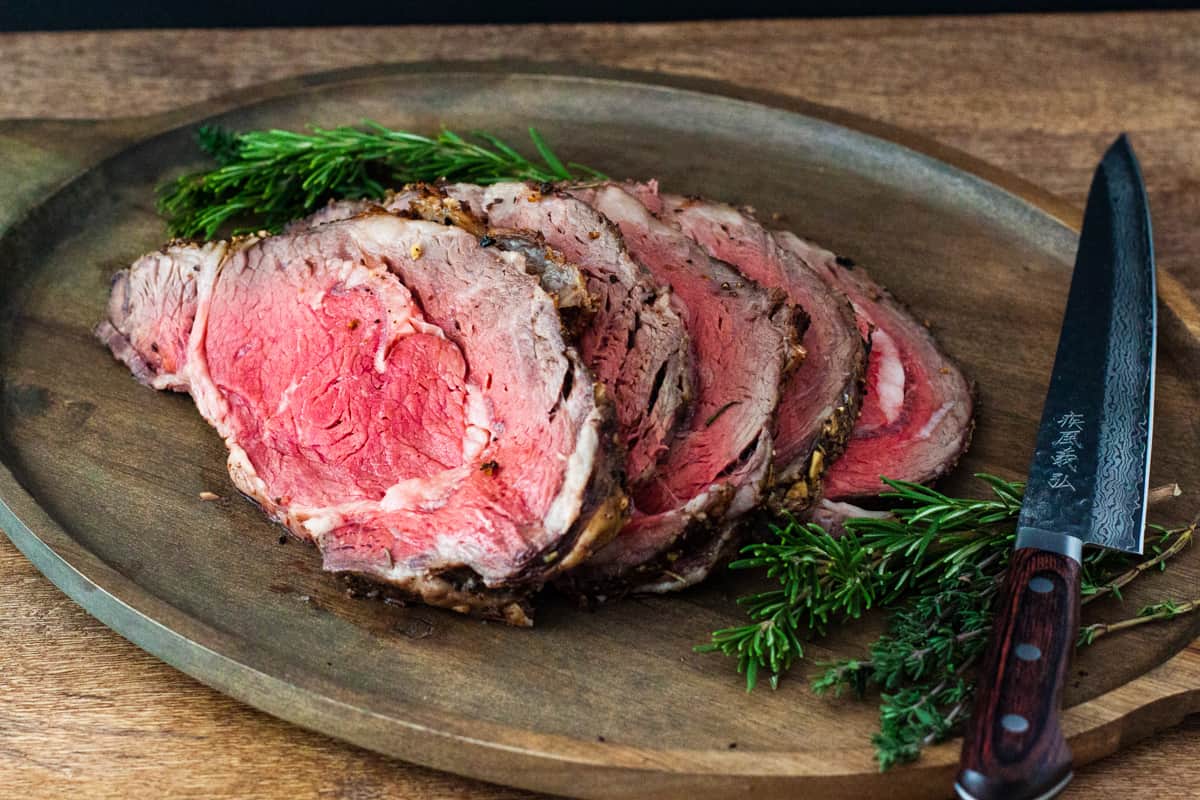
I did not grow up making prime rib on random Tuesdays. This was the kind of “big deal” roast that showed up when the whole house was buzzing and the table was suddenly set like we were trying to impress someone. When I started cooking more seriously, prime rib became my favorite flex because it is mostly timing and confidence.

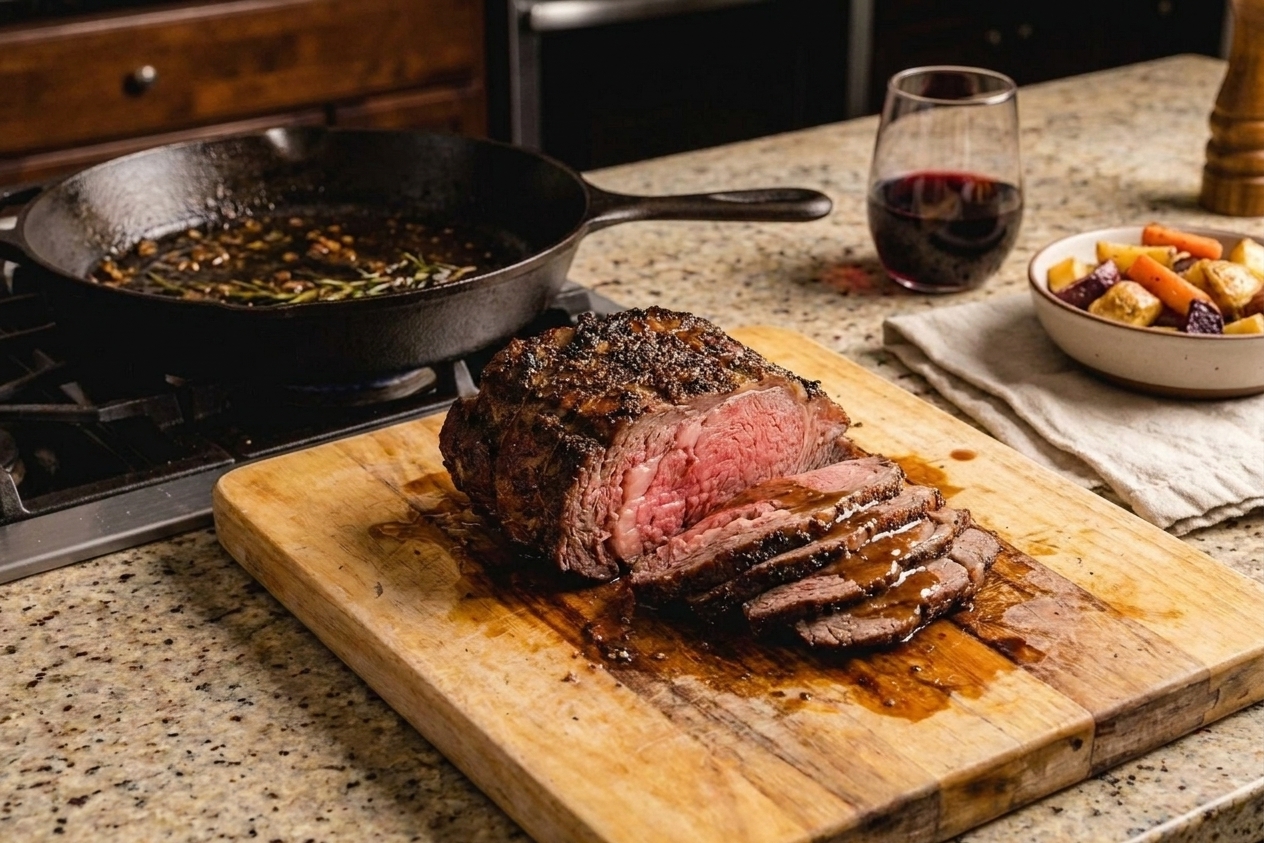
Now I treat it like the ultimate friendly-host move: season it like you mean it, let the oven do its thing, and then give everyone permission to hover while it rests. That rest window is when you make the au jus, pour a drink, and pretend you are not checking the thermometer history like a stock chart.