Common Questions
What is confiture, exactly?
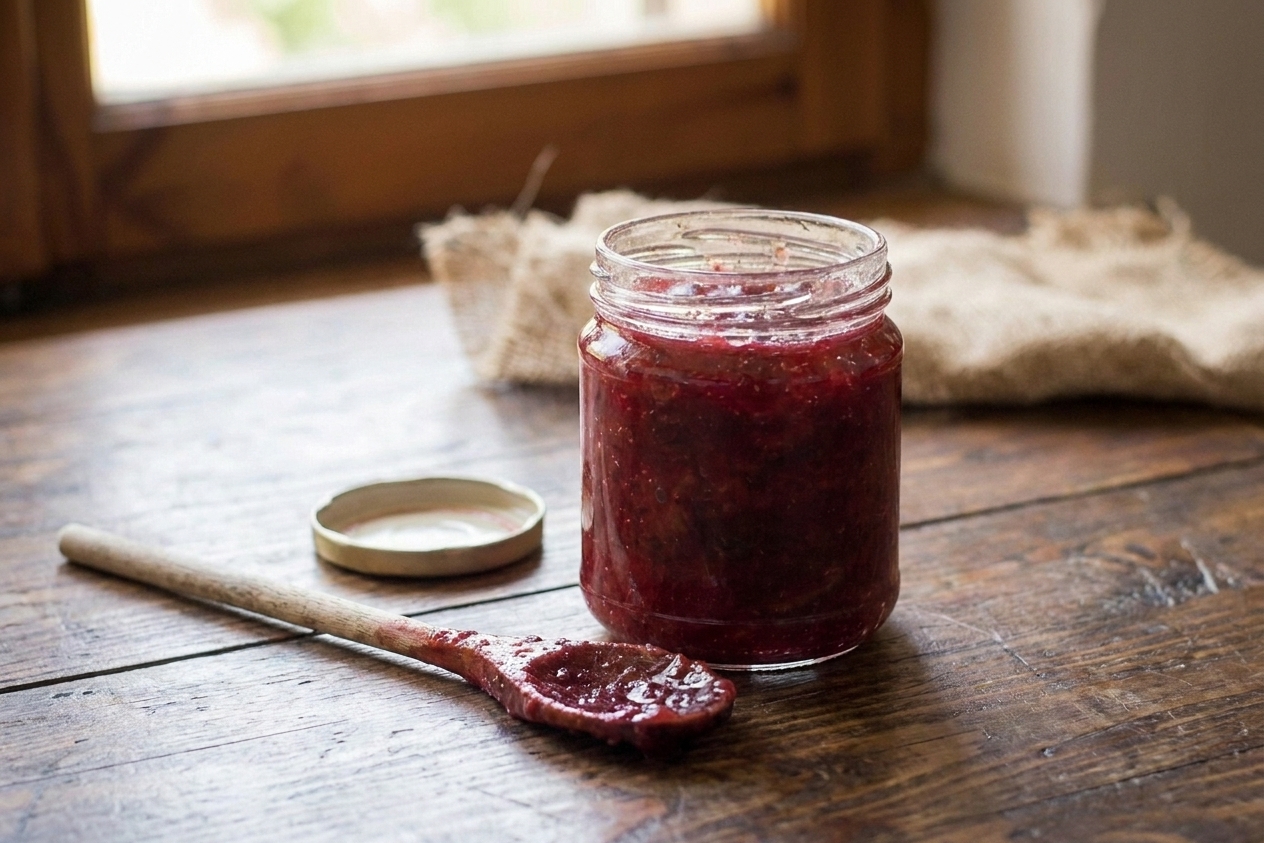
Confiture is a French-style fruit preserve. In home-kitchen terms, think of it as jam’s looser, spoonable cousin. You get soft fruit pieces suspended in a glossy syrupy base.
Do I need pectin for rhubarb confiture?
Nope. Rhubarb contains some natural pectin, but it is not a high-pectin fruit like apples or citrus peel. The good news is you do not need added pectin here. The combo of sugar, acid (lemon), and a steady simmer thickens it up beautifully. Let it cool fully to finish setting.
How do I know when it is done?
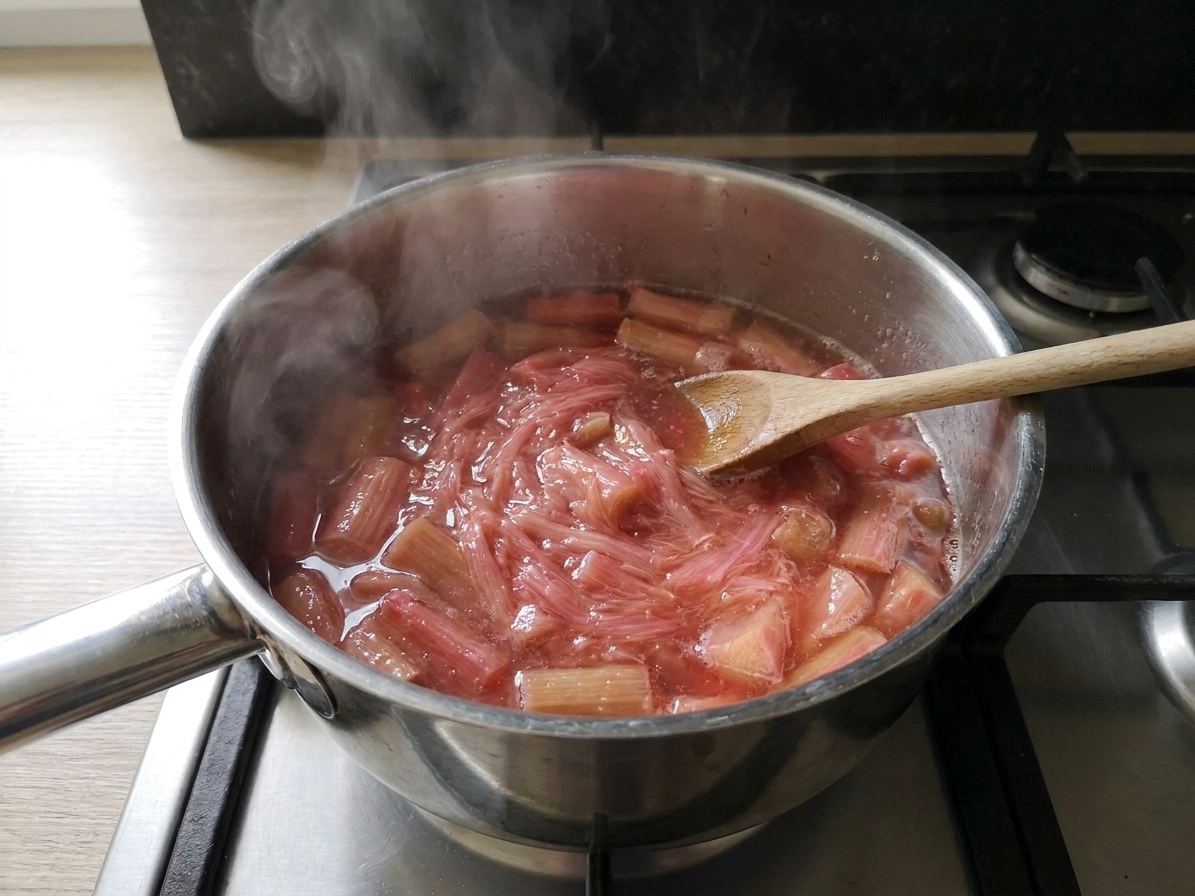
Look for slow, shiny bubbles and a mixture that thickly coats a spoon. For extra confidence, use the cold-plate test: chill a small plate in the freezer, spoon a little confiture onto it, wait 30 seconds, then drag your finger through. If it wrinkles slightly and the line holds, you are there.
Can I use frozen rhubarb?
Yes. You do not need to thaw it completely first. Add it frozen and expect a few extra minutes of cook time as the water cooks off.
Why is my confiture stringy?
Rhubarb can get a little fibrous if it is older or very thick-stalked. Chop it smaller next time, and mash more at the end. If it is already cooked, a few pulses with an immersion blender will fix it fast.
Can I reduce the sugar?
You can, but sugar is not only sweetness here. It also helps with thickness and shelf life. If you reduce it a lot, expect a looser confiture and a shorter fridge life.
Will it always turn neon pink?
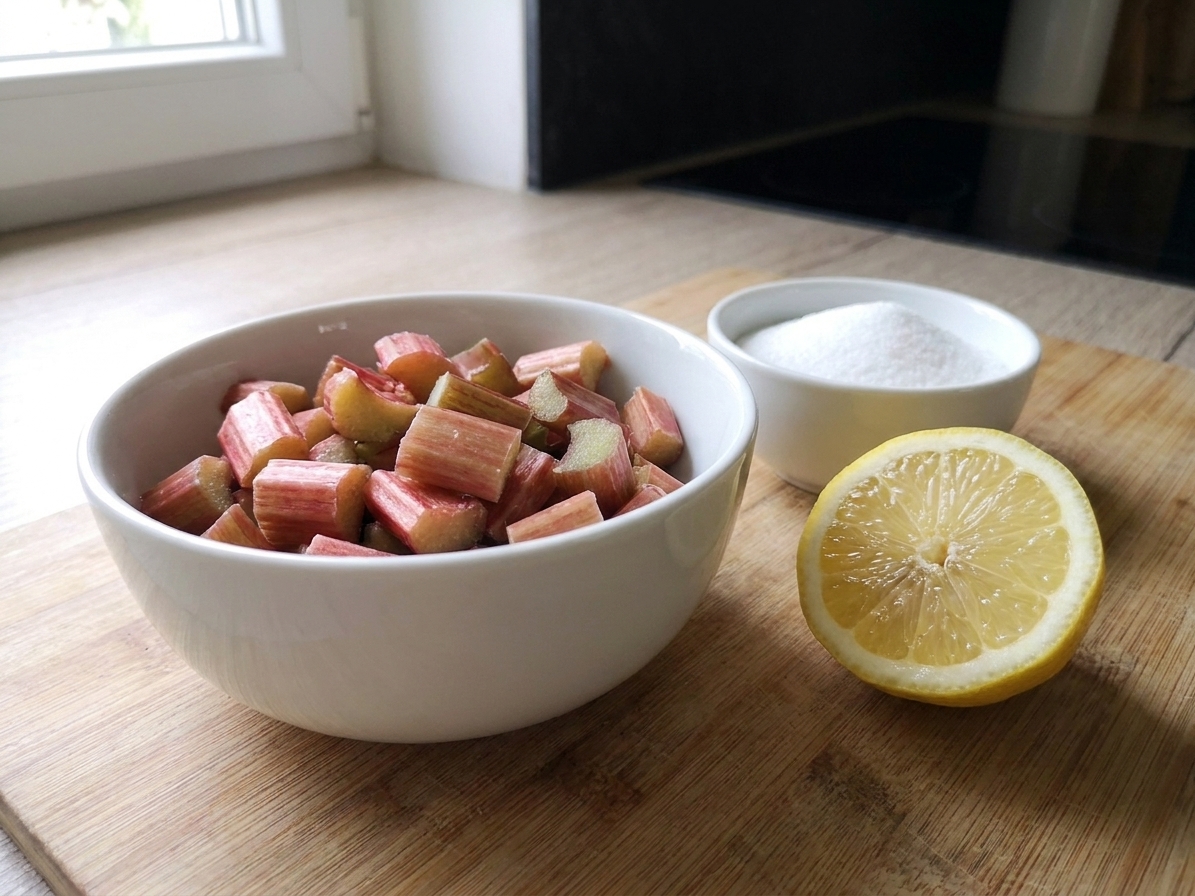
Not always. Rhubarb varies a lot. Some stalks are greenish, some are rosy, and the final color can range from pale blush to deep pink. The flavor is still the point, even if the color is feeling shy.
Does the yield ever change?
Yes. It depends on how juicy your rhubarb is and how far you reduce it. Think of the yield as “about” 1 1/2 cups, and trust your spoon test more than a measuring cup.