How long do I cook a ribeye roast per pound?
Cook time varies by thickness and starting temperature, so treat “per pound” as a rough guide. With this method (low oven then high heat), expect about 20 to 30 minutes per pound at 250 F to reach your pull temperature, but the thermometer is the real schedule.
If your roast is smaller (around 3 lb), start checking early. If it is bigger (6 to 7 lb), it will take longer. Same method, same temps, more patience.
What internal temperature should a ribeye roast be?
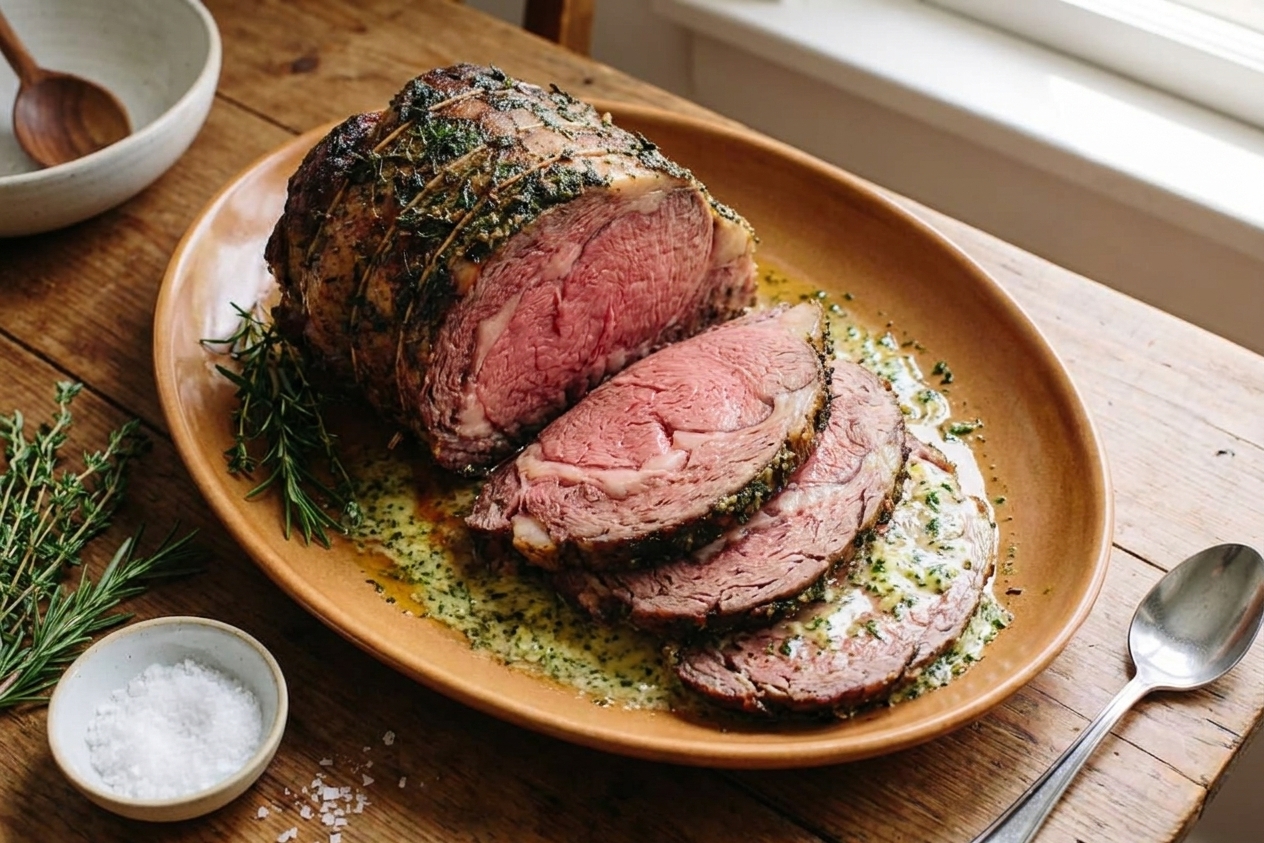
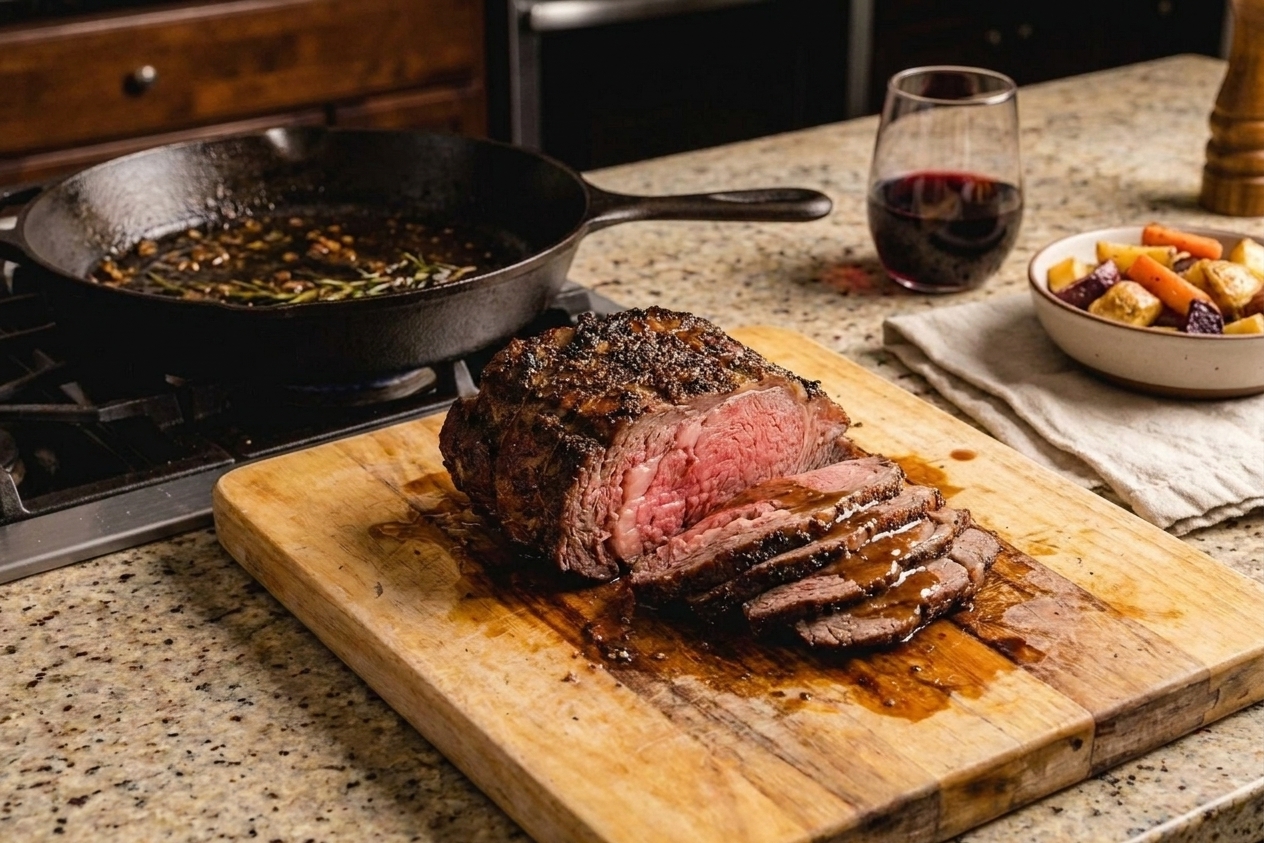
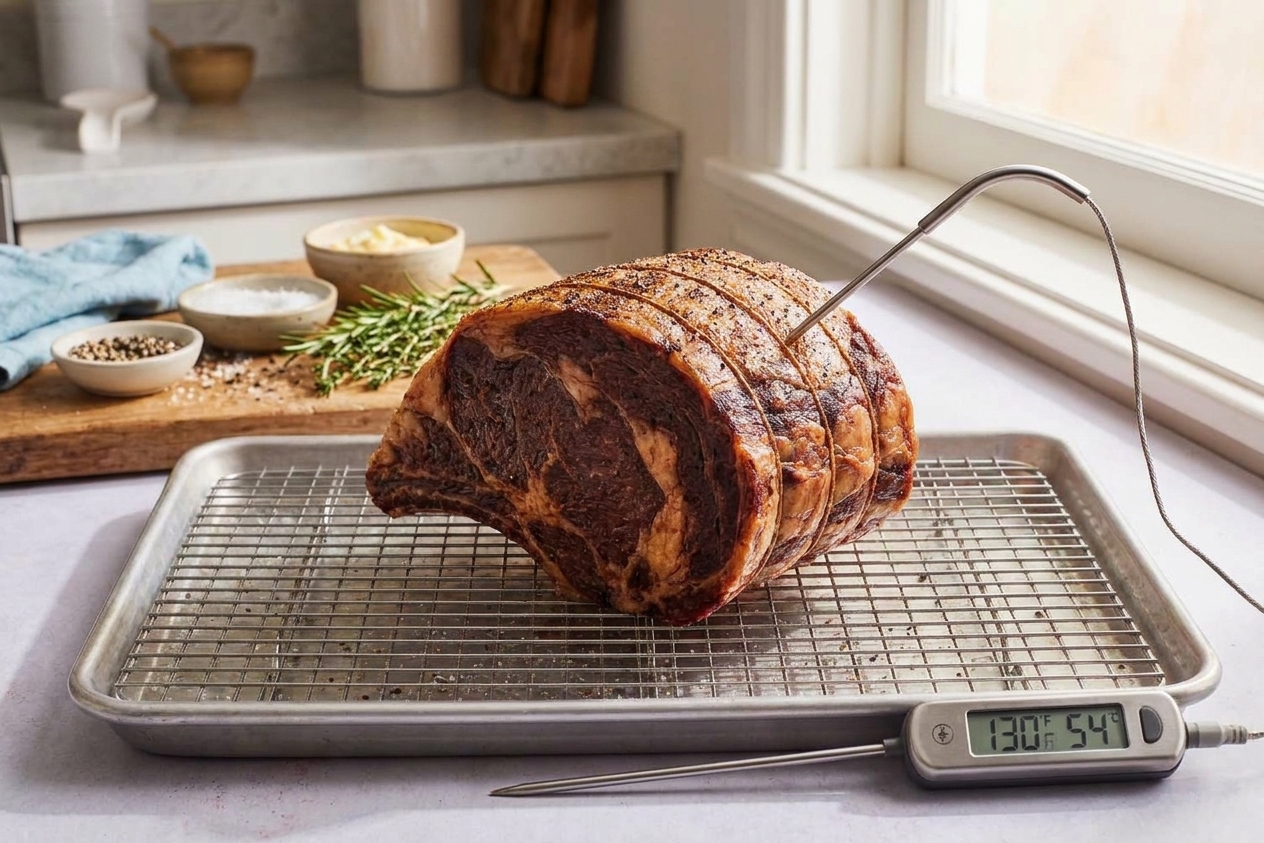
There are two numbers that matter: pull temperature (when you take it out after the low roast) and final temperature (what you will eat after the high-heat finish and the final rest). Because this recipe includes a rest, then a 500 F blast, then another rest, final temps can climb more than a single-rest estimate. If you like a true “on-the-nose” finish, pull a little earlier.
- Rare: pull at 110 to 115 F, final about 120 to 125 F
- Medium-rare: pull at 118 to 123 F, final about 128 to 135 F
- Medium: pull at 128 to 133 F, final about 138 to 145 F
- Medium-well: pull at 138 to 143 F, final about 148 to 155 F
- Well done: pull at 148 F+, final 160 F+
Tip: If you want a true 130 F medium-rare finish, aim for the low-roast pull temperature on the lower end of the range, and keep the high-heat finish closer to 6 minutes.
Is it safe to eat ribeye roast rare?
Food safety is a personal risk decision. USDA guidance for whole cuts of beef is 145 F with a 3-minute rest. Many people choose to cook ribeye roast to lower temperatures for tenderness and flavor. The high-heat finish helps with the surface, but the center will not be fully “pasteurized” at rare temps. If you are serving anyone pregnant, immunocompromised, or very young or elderly, consider cooking to USDA guidance.
Do I need to tie a ribeye roast?
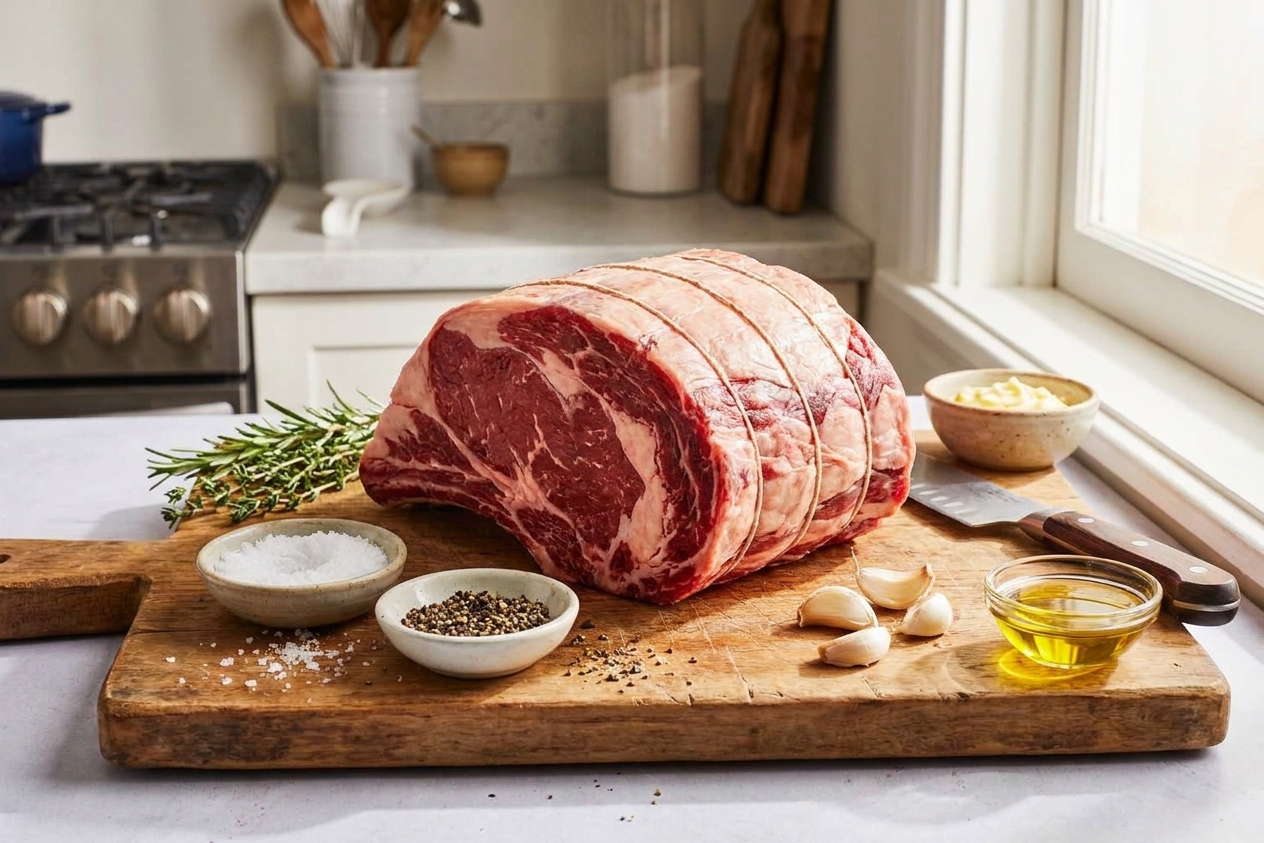
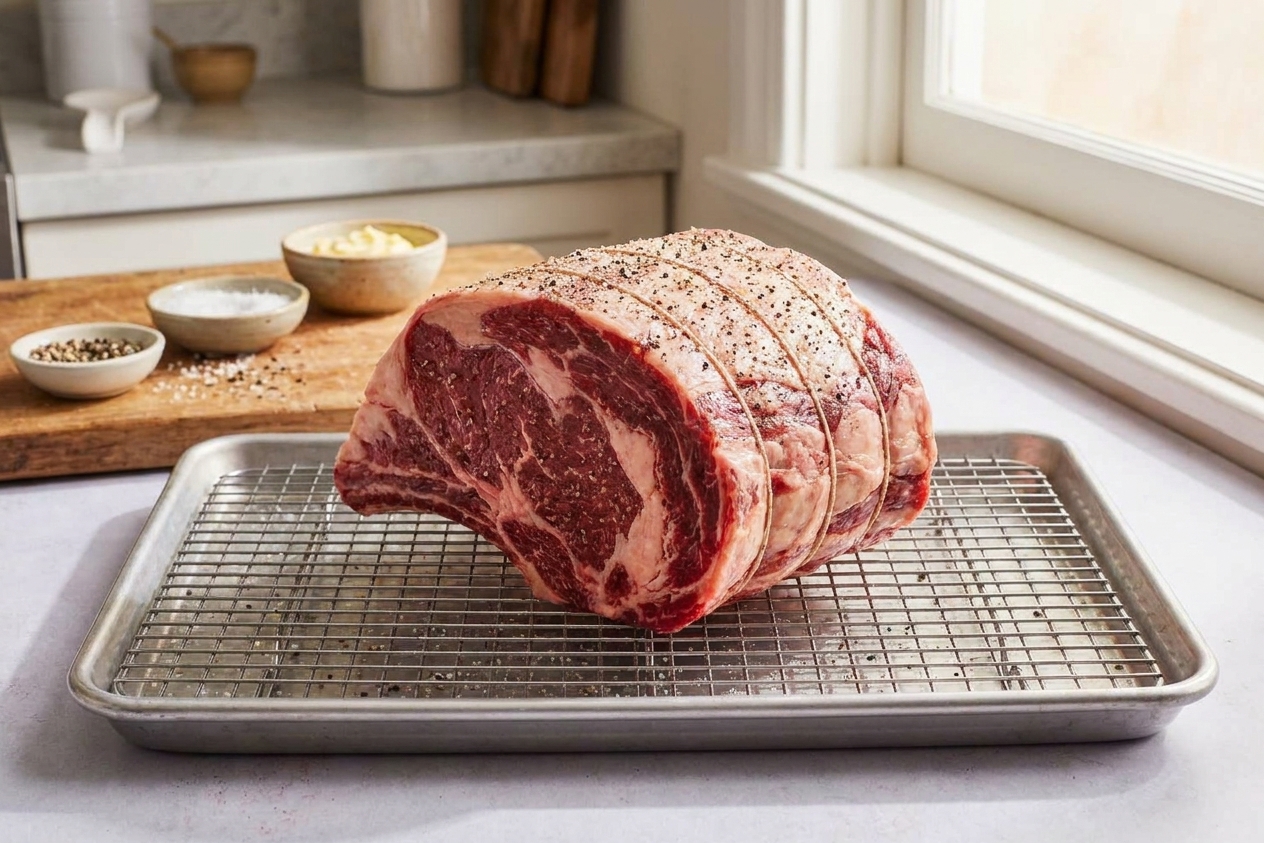
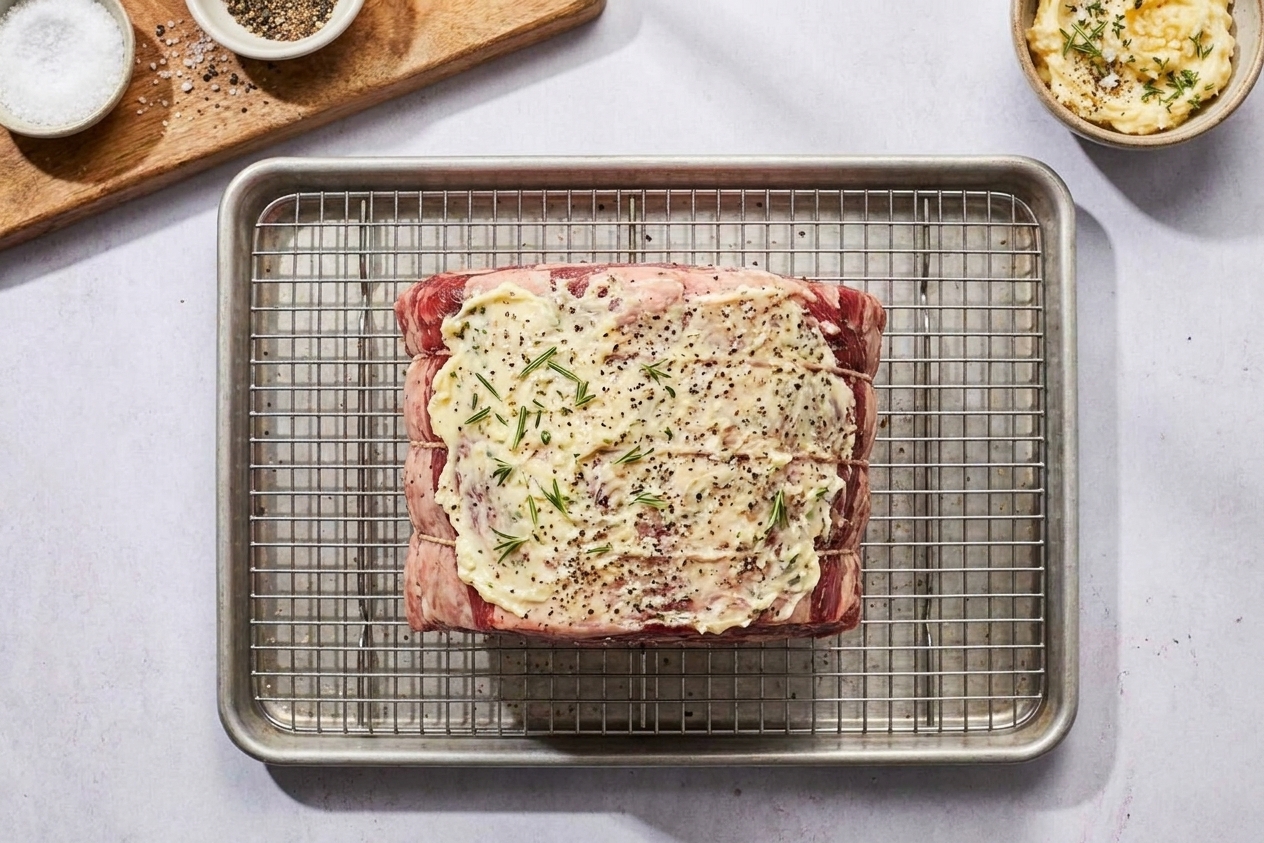
If it is already tied, keep it tied. If it is not, tying helps it cook evenly and hold a nice round shape, but it is optional. If your roast is a little floppy or uneven, a few loops of kitchen twine make a big difference.
Should I sear before roasting?
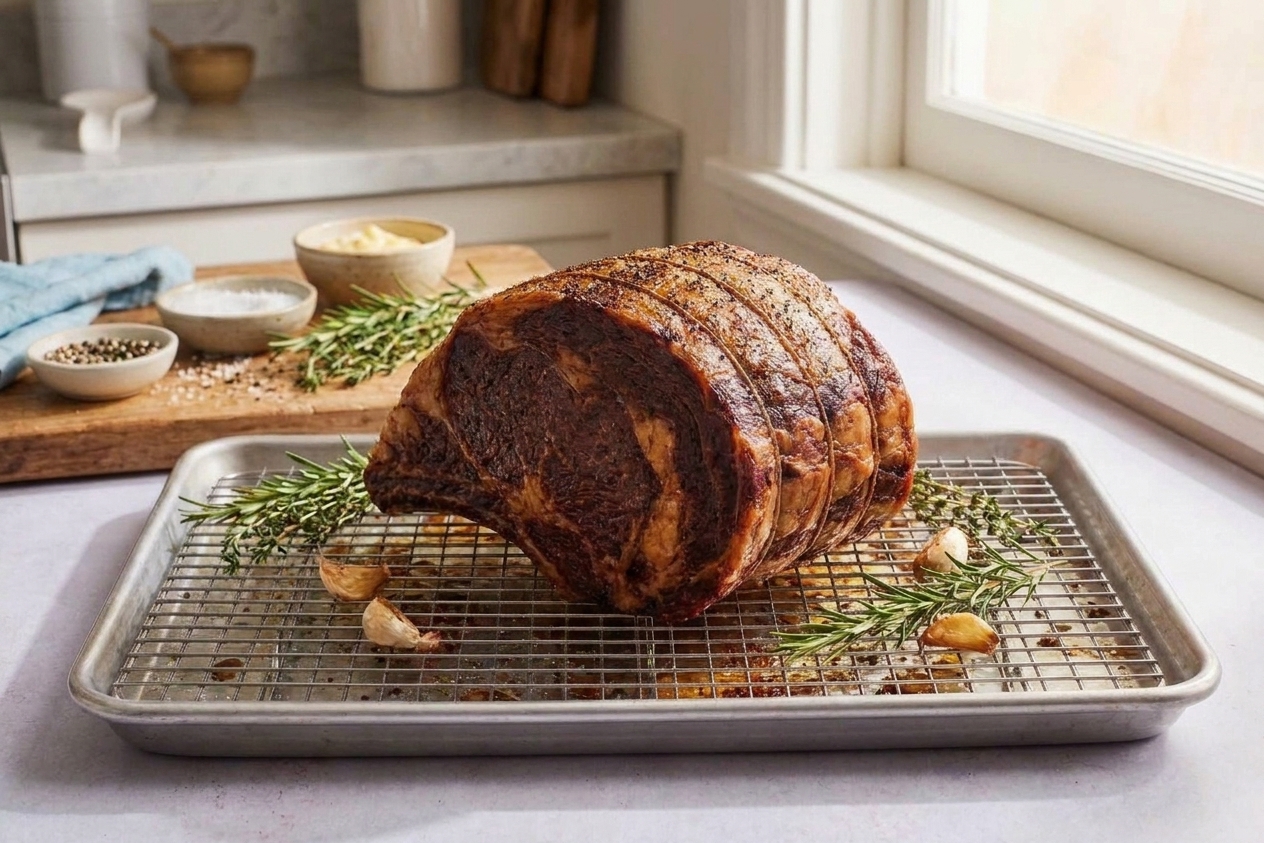
You can, but this recipe sears at the end, which helps avoid overcooking the outer layers. The high-heat finish gives you the crust without sacrificing a rosy center.
Can I make gravy from the drippings?
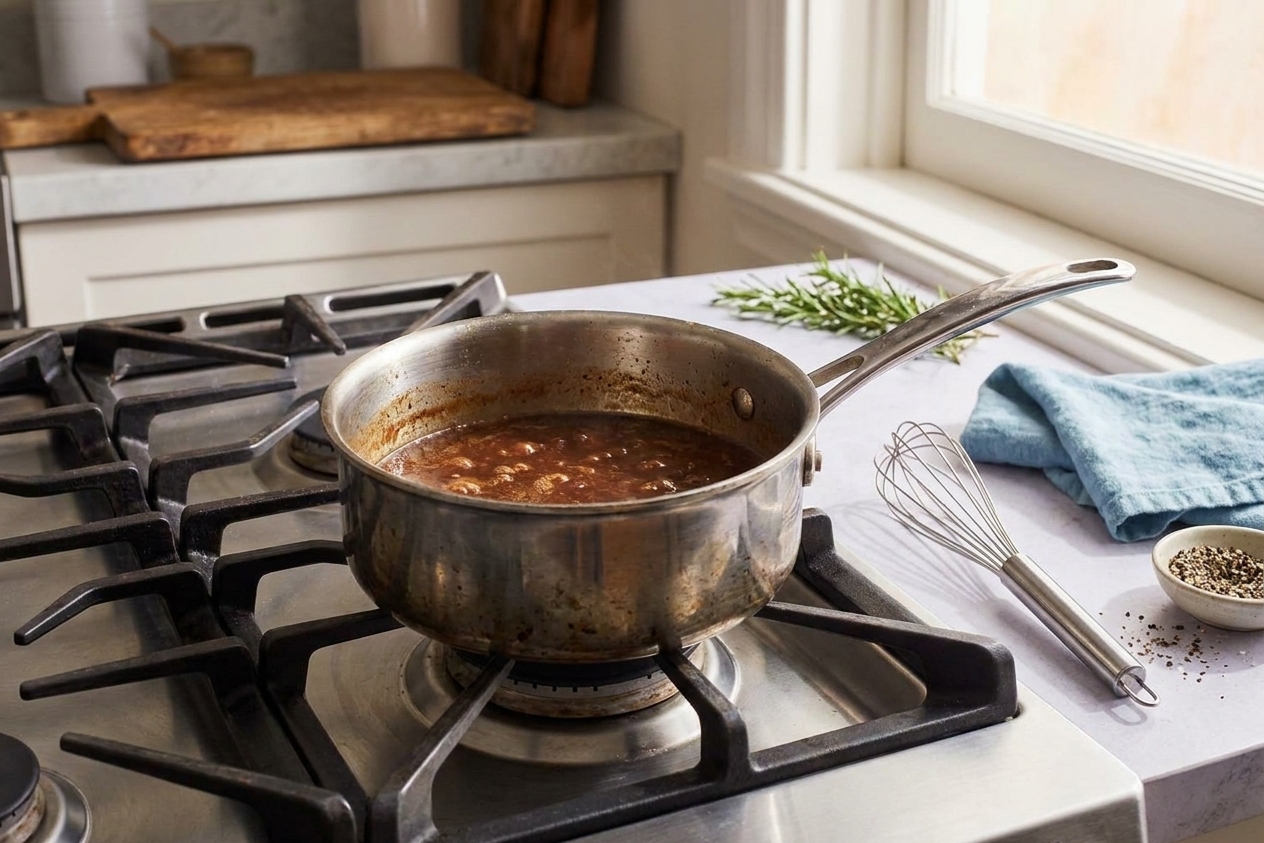
Yes. The quick pan sauce in the recipe is basically gravy-lite. If you want it thicker, whisk in a flour slurry or make a quick roux in the pan before adding broth.