What cut is “beef fillet” for roasting?
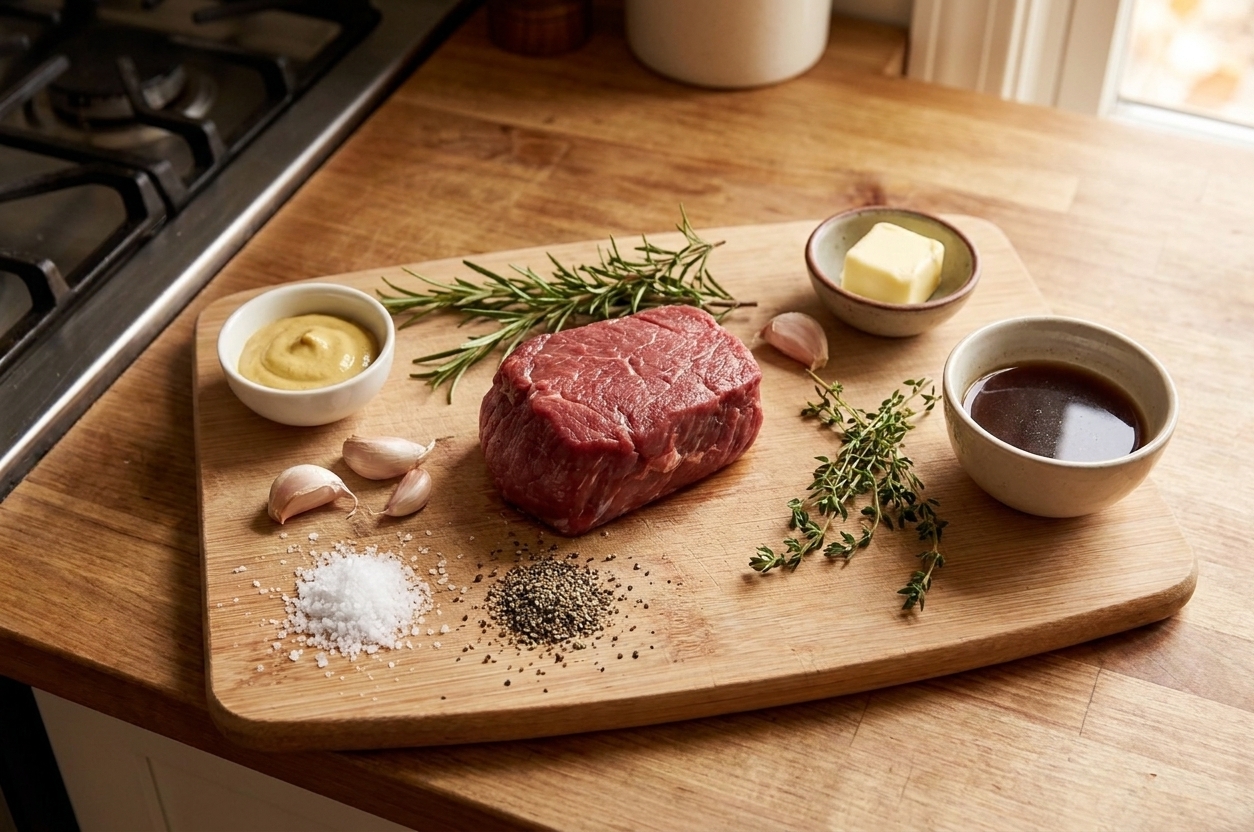
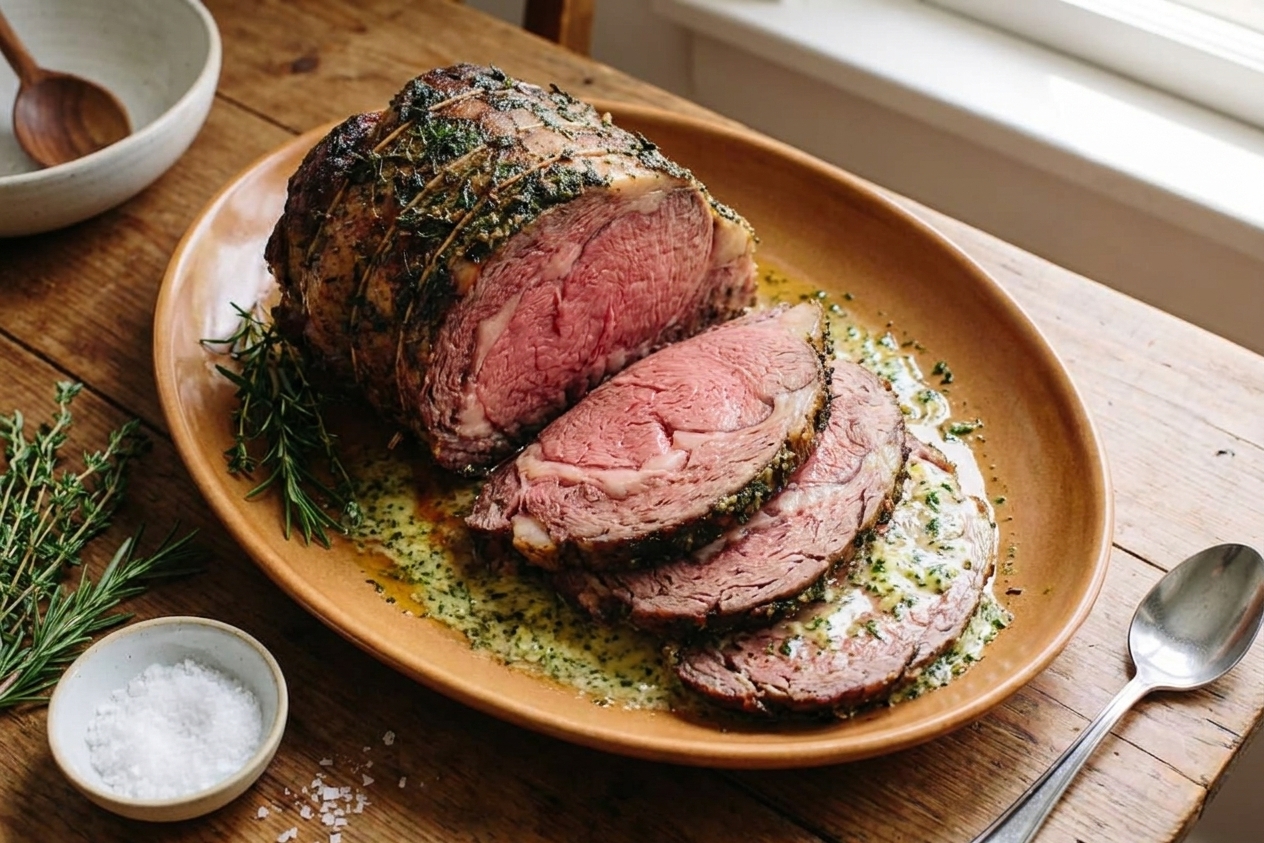
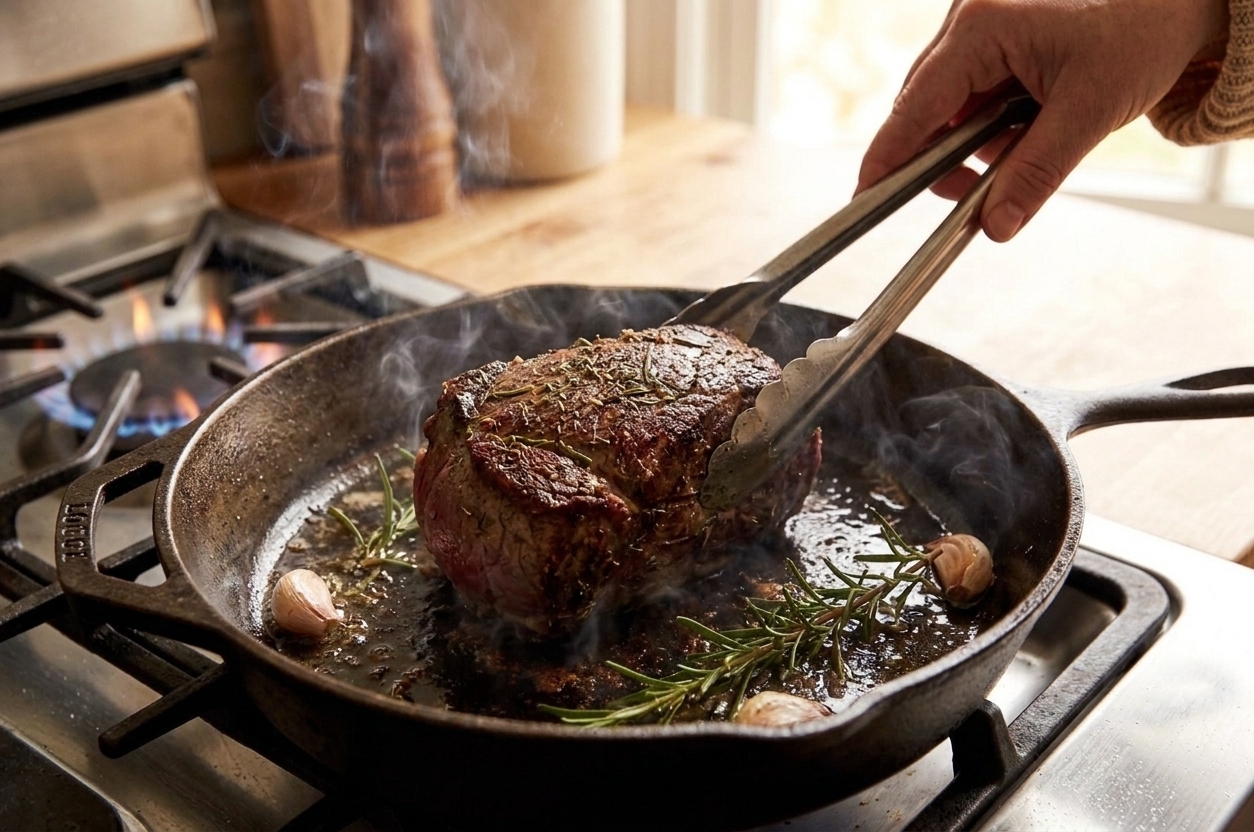
“Beef fillet” can be a bit of a catch-all label depending on where you live. In many US grocery stores, it often refers to beef tenderloin. You might see it sold as a whole tenderloin, a center-cut roast (often the easiest), or individual filet mignon steaks. When in doubt, ask the butcher for a center-cut tenderloin roast.
Do I need to tie the roast?
If your fillet roast is already an even cylinder, you can skip it. If it has a thinner tail end or uneven shape, tying with butcher’s twine helps it cook more evenly.
Quick tying tip: Cut 2 to 3 pieces of twine and tie them around the roast at even intervals, just snug enough to hold the shape.
What internal temperature should I aim for?
Pull the roast 5 to 10°F before your final target. Carryover depends on roast size, how hot the pan is, and how you rest it, but tenderloin often rises about 3 to 8°F (sometimes closer to 10°F if the skillet is ripping hot).
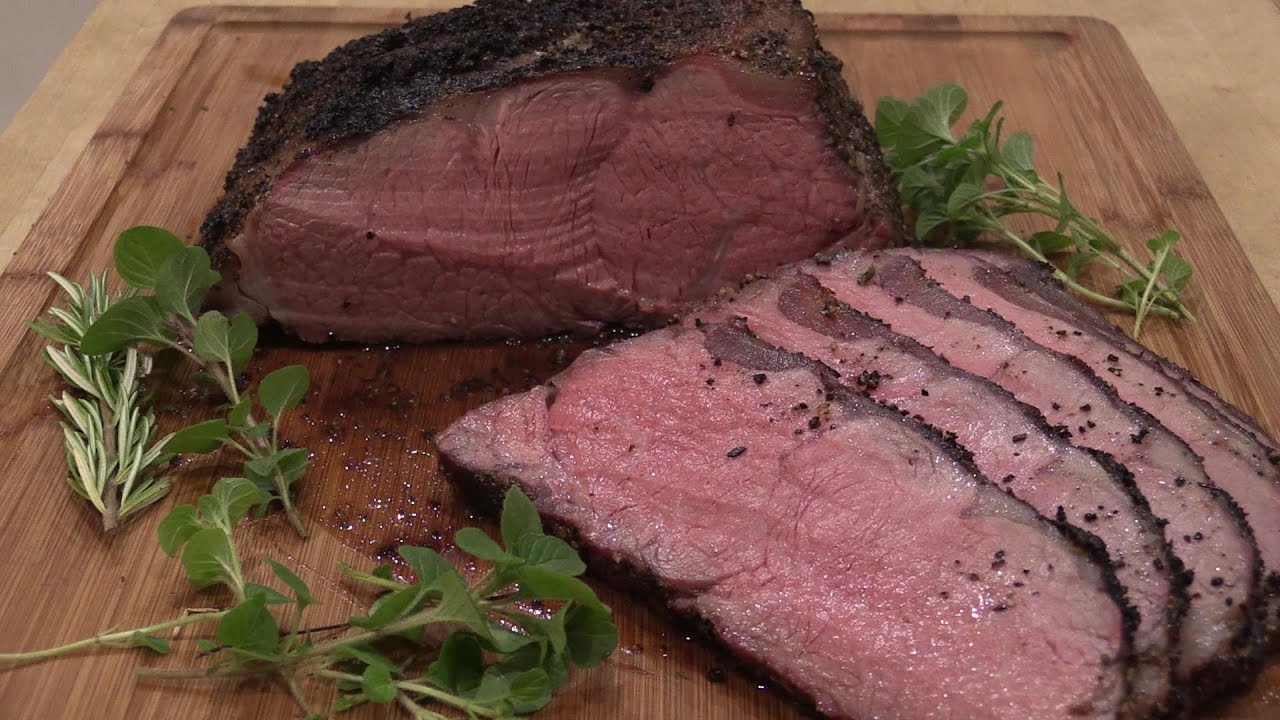
- Medium-rare: pull at 125 to 130°F, rest to about 130 to 138°F
- Medium: pull at 135 to 140°F, rest to about 140 to 148°F
Tenderloin shines from medium-rare to medium. If you like it more done, you can take it further, but it can start tasting dry even though it stays tender.
Why rest the meat, and how long?
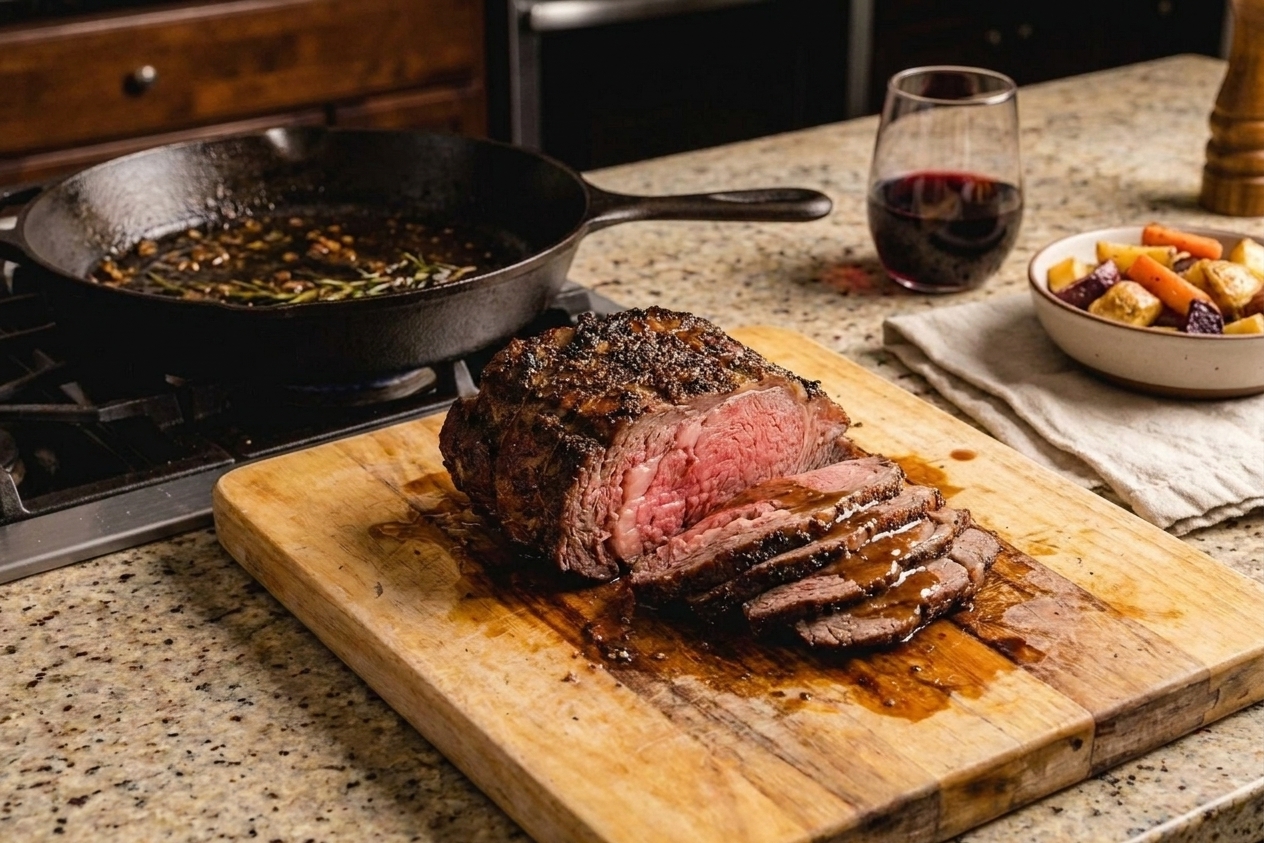
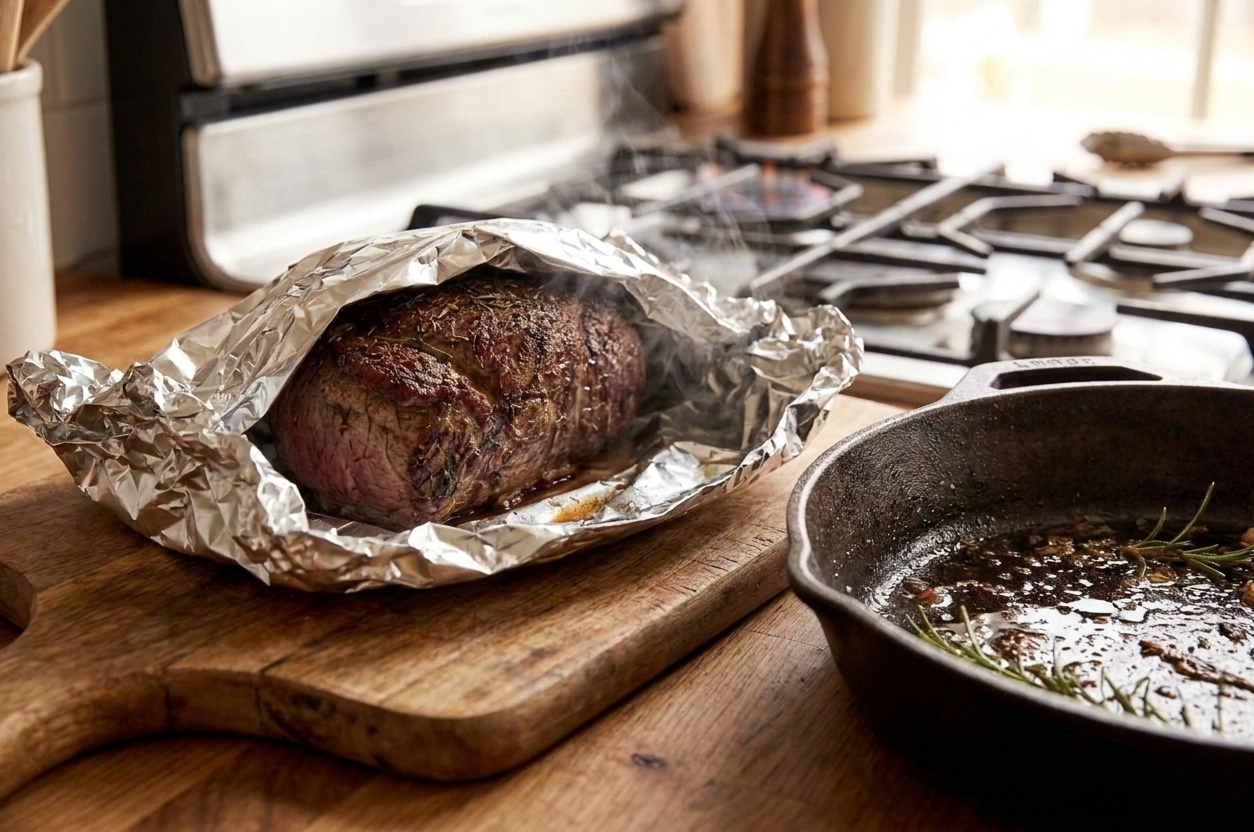
Resting lets juices redistribute so they stay in the beef instead of on your cutting board. Rest 15 to 20 minutes for a 2 to 3 pound roast.
Can I make this ahead?
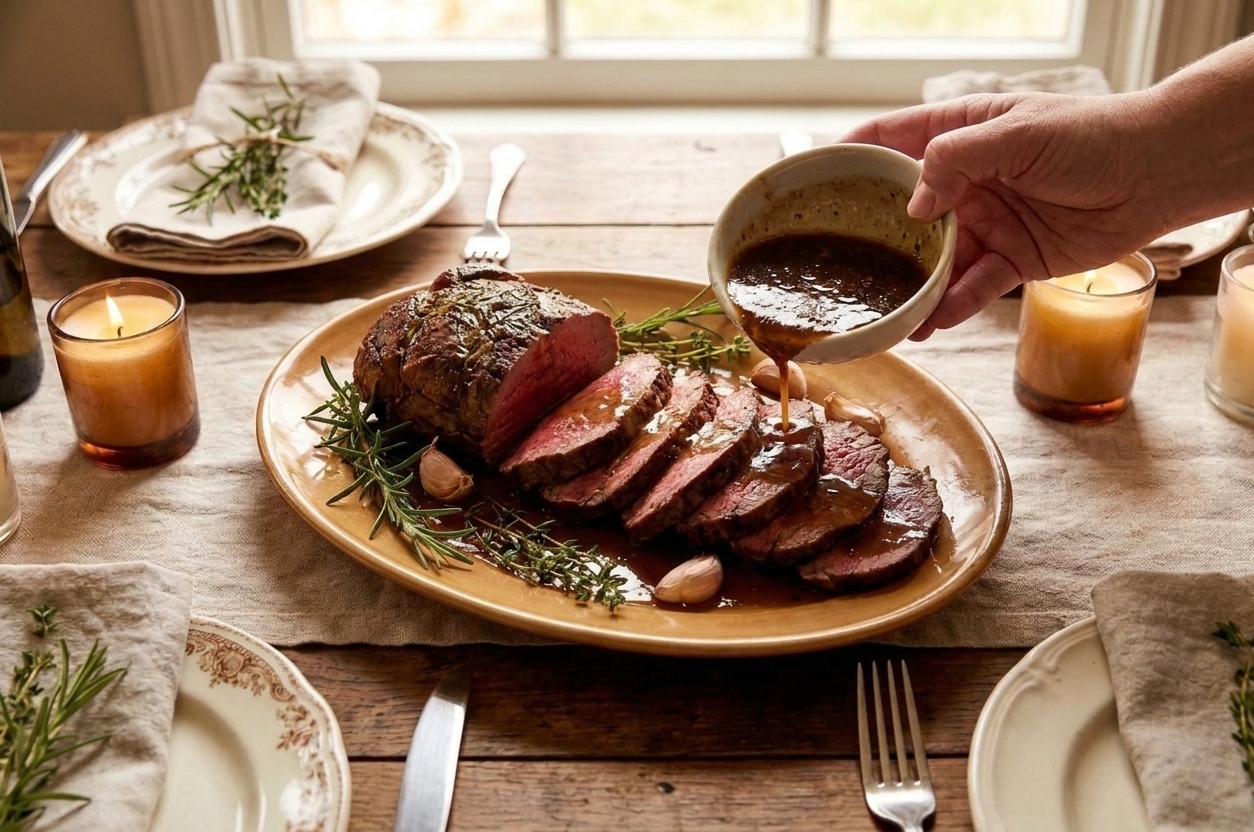
Yes. Roast it, cool it, and refrigerate. Serve thinly sliced at room temp, or gently rewarm in a low oven with a little broth. Make the sauce fresh if possible, or reheat it separately with a splash of stock.
My oven smokes at high heat, what should I do?
425°F gives you great browning, but some ovens and pans run smoky. Turn on your vent, crack a window, and if you are smoke-sensitive, roast at 400°F and just rely on the thermometer for doneness.