Mom's Best Recipes
Recipe

Roasted Butternut Squash

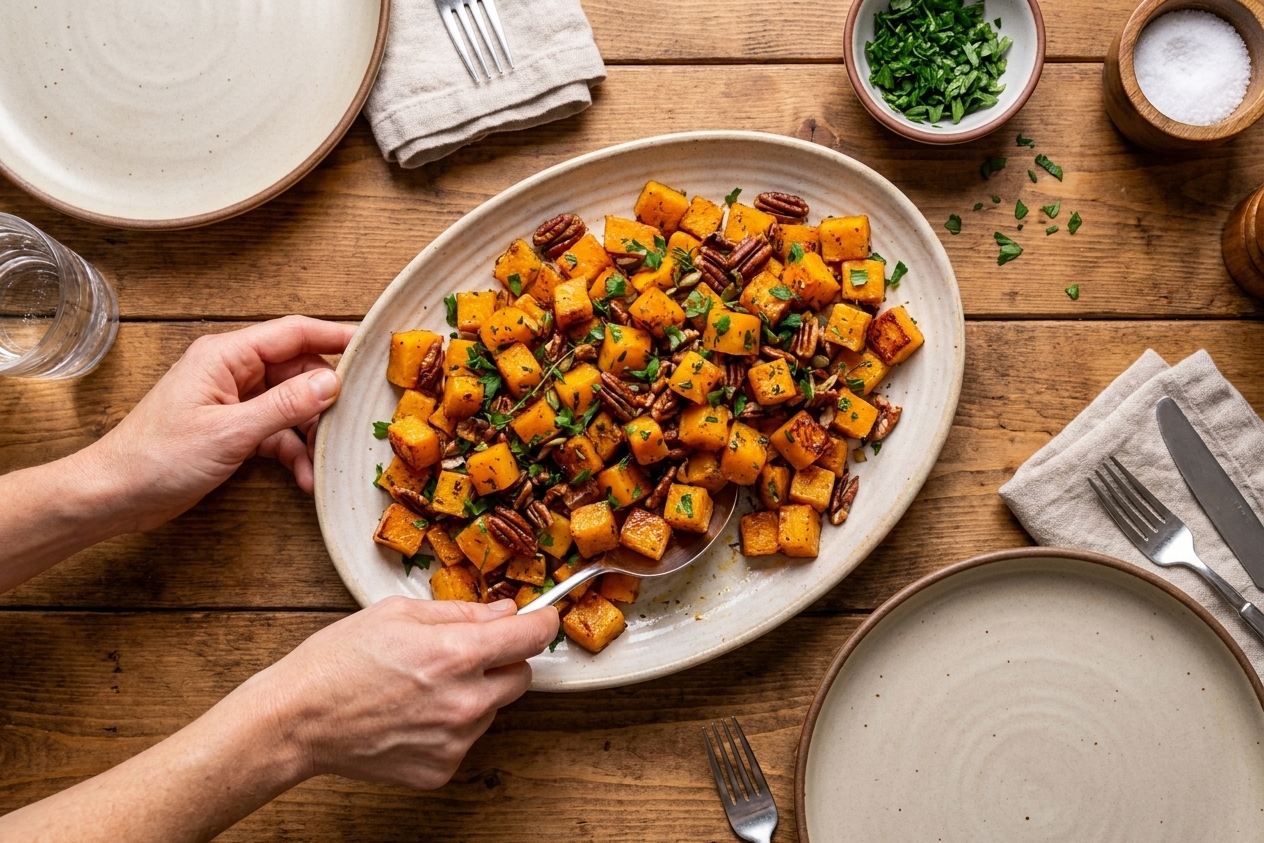
Golden, caramelized cubes with crisp edges and a cozy, savory-sweet seasoning you can use in bowls, salads, or as an easy side.

Author By Matt Campbell
4.8
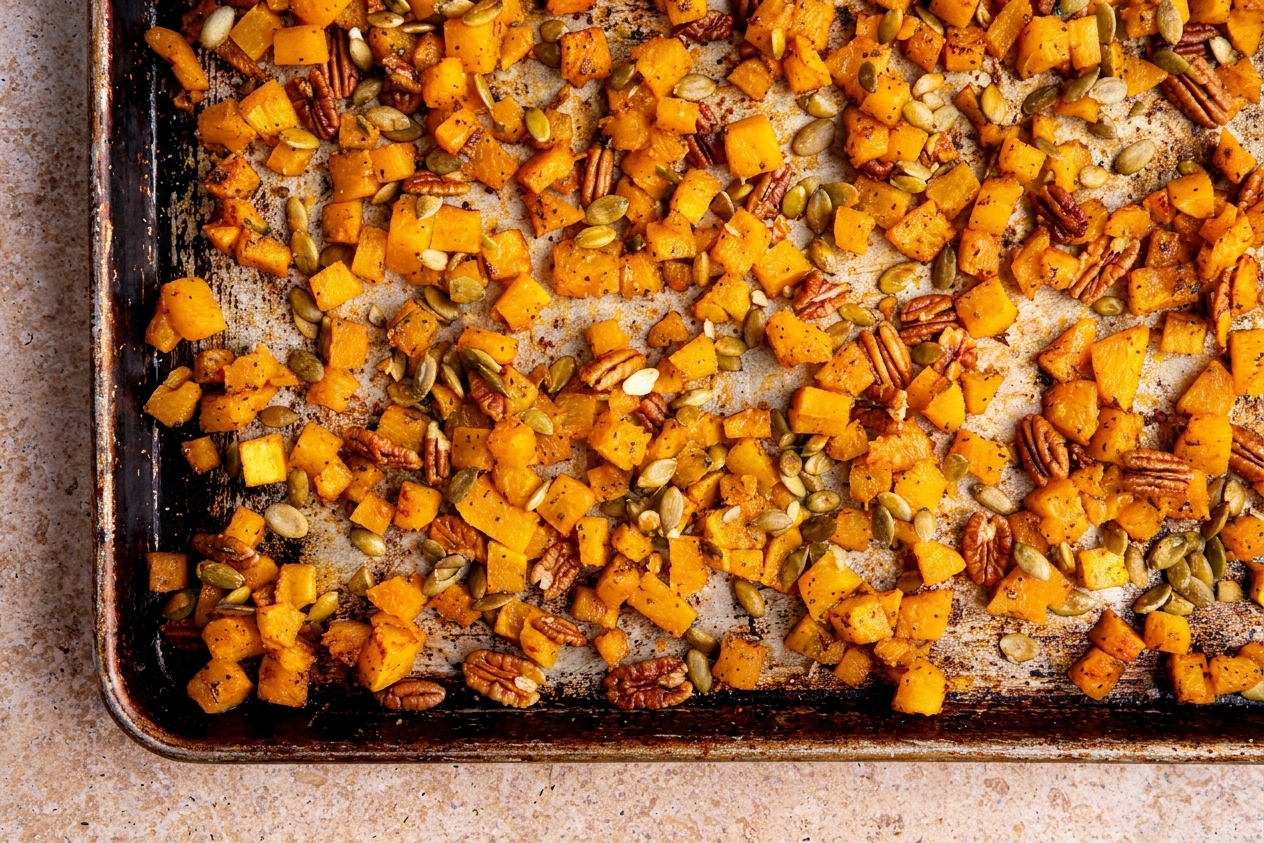
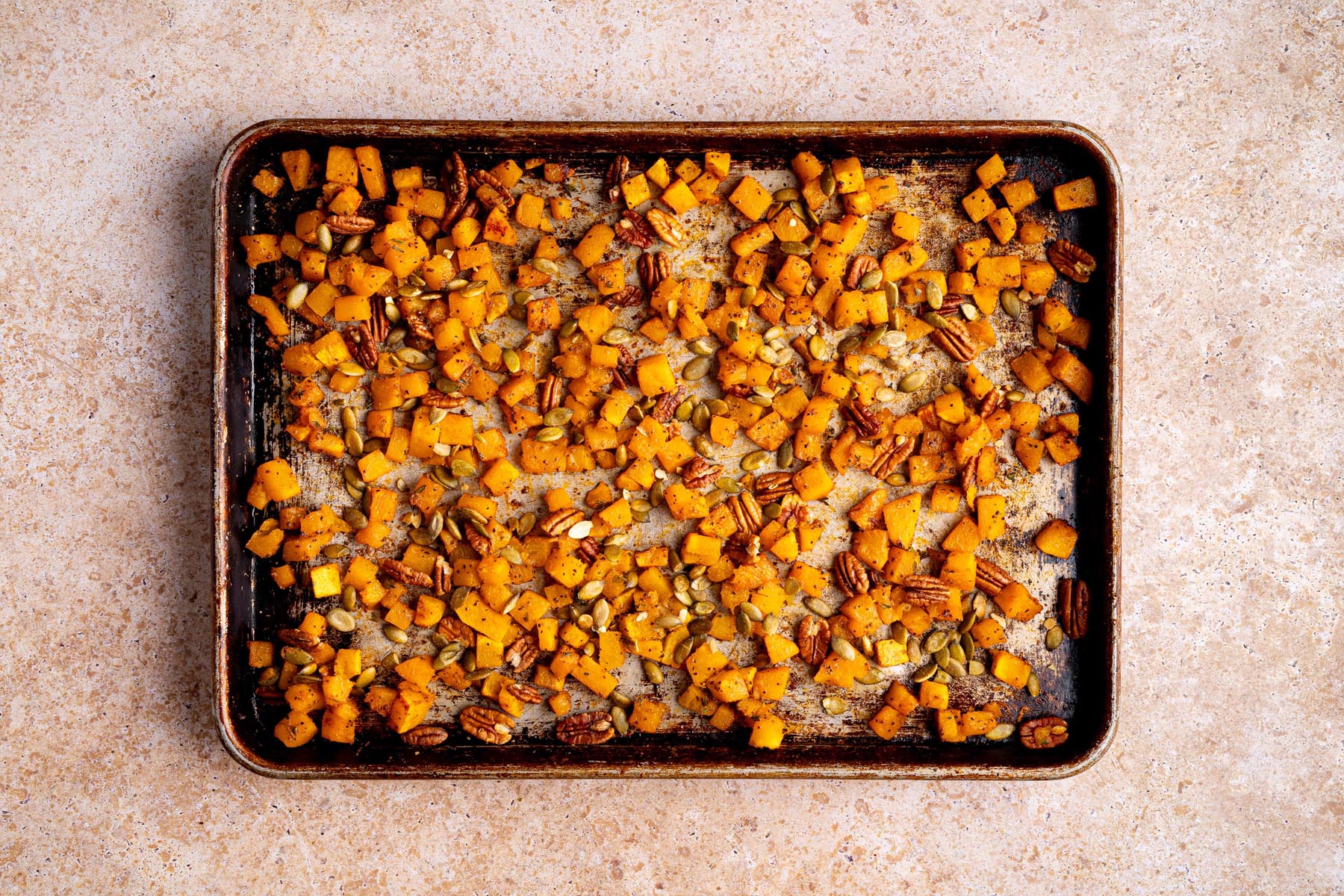
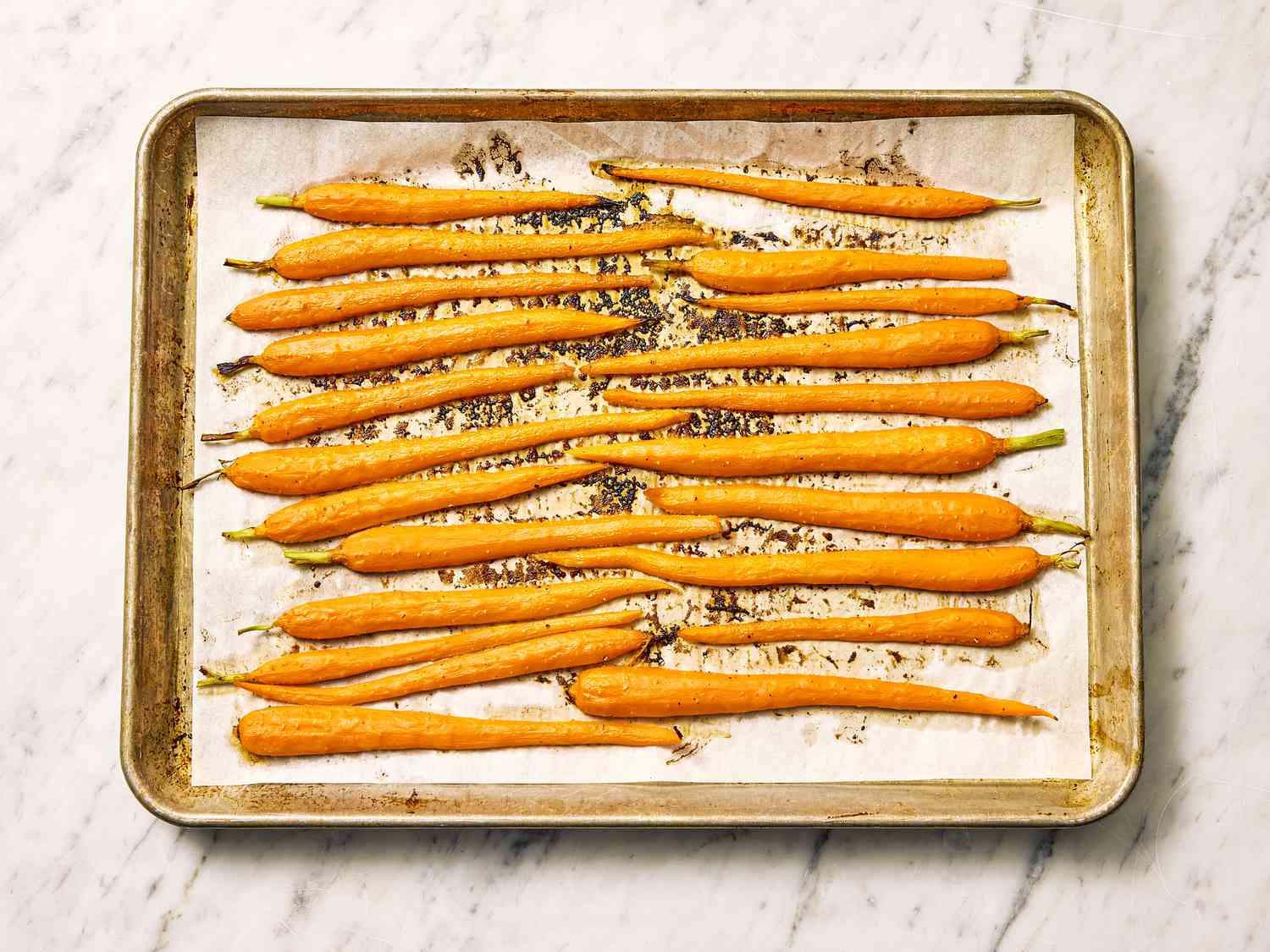
A single sheet pan of roasted butternut squash cubes with caramelized edges, lightly glossy from olive oil, on parchment paper in a warm home kitchen

Roasted butternut squash (also called butternut pumpkin in Australia and New Zealand) is one of those kitchen moves that feels almost too easy for how good it tastes. You toss a few humble cubes with oil, salt, and a couple of warm spices, then let the oven do the heavy lifting until the edges go crisp and the centers turn silky and sweet.

This is my go-to when I need a side that behaves, a meal prep staple that upgrades lunch bowls, or a “my fridge is a little sad” fix that still feels cozy. Keep it simple, taste as you go, and do not be afraid of a little extra browning. Think deep golden edges, not scorched.
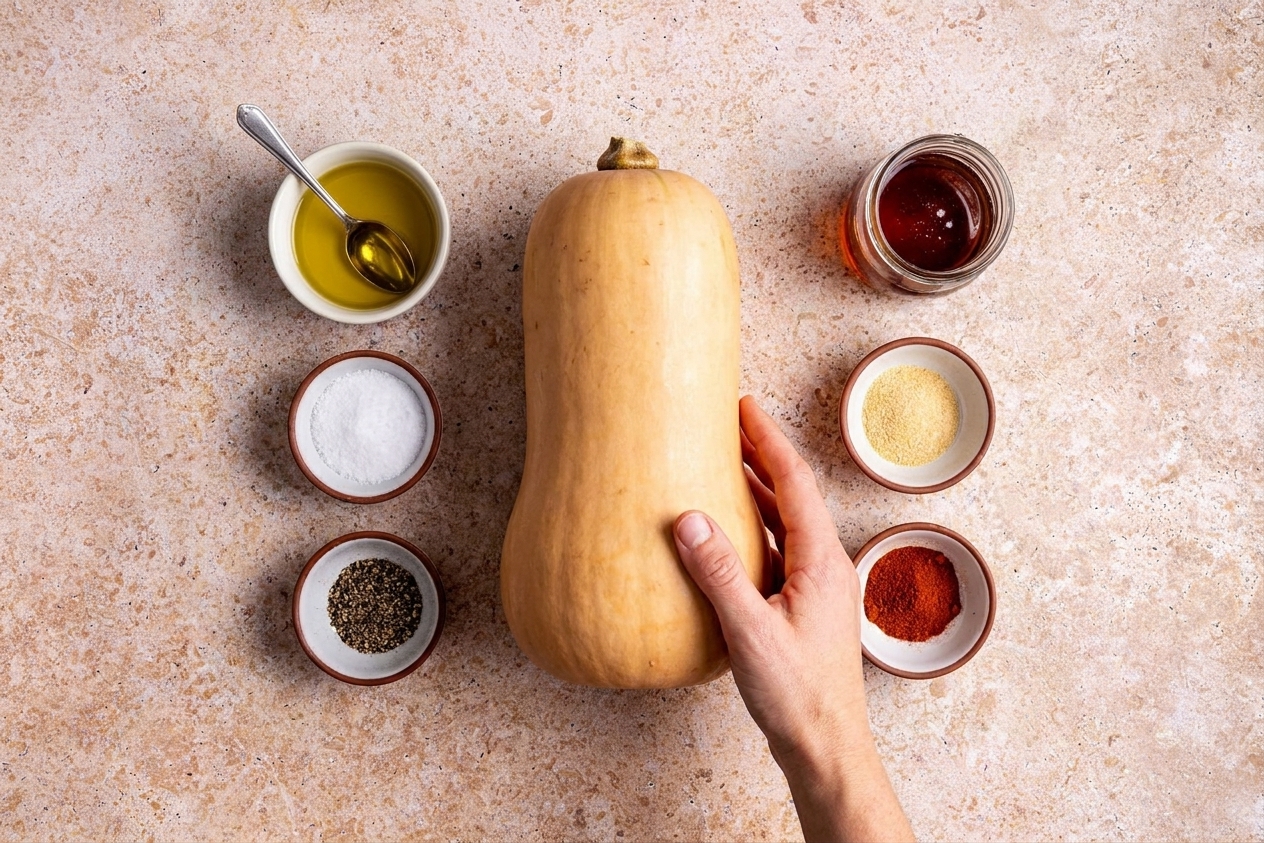
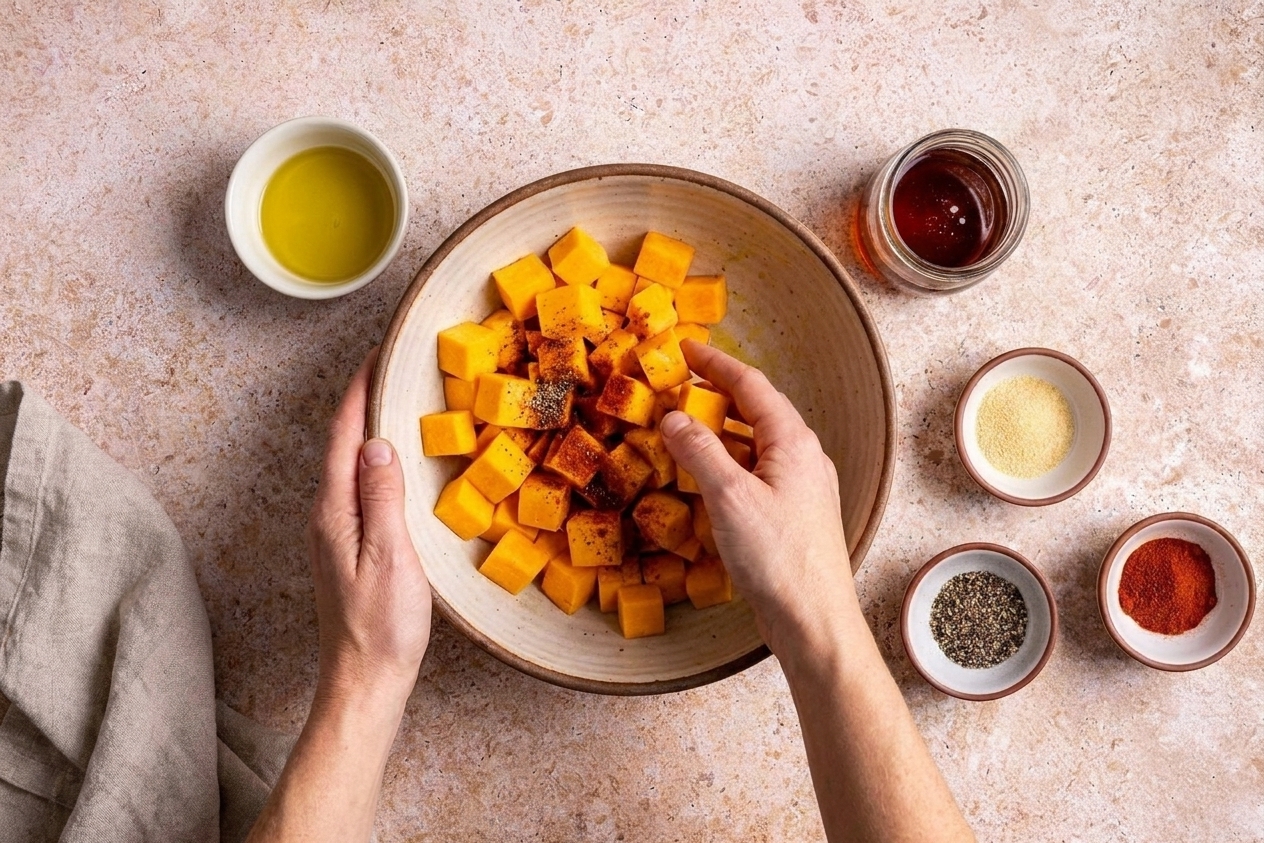
Whole butternut squash, olive oil, kosher salt, black pepper, garlic powder, smoked paprika, and maple syrup arranged on a light kitchen counter

Why It Works

  • Crisp edges, tender centers: High heat plus enough space on the pan gives you caramelization instead of steaming.
  • Big flavor from pantry staples: Smoked paprika and garlic powder bring savory depth that balances the squash’s natural sweetness.
  • Flexible: Use it as a side, toss it into salads, blend into soup, or pile it into grain bowls all week.
  • Low drama: One bowl, one pan, and a very forgiving cook time.

Pairs Well With

Storage Tips

How to Store Leftovers

  • Fridge: Cool completely, then store in an airtight container for up to 4 days.
  • Freezer: Freeze on a parchment-lined sheet pan until firm, then transfer to a freezer bag or container for up to 3 months.
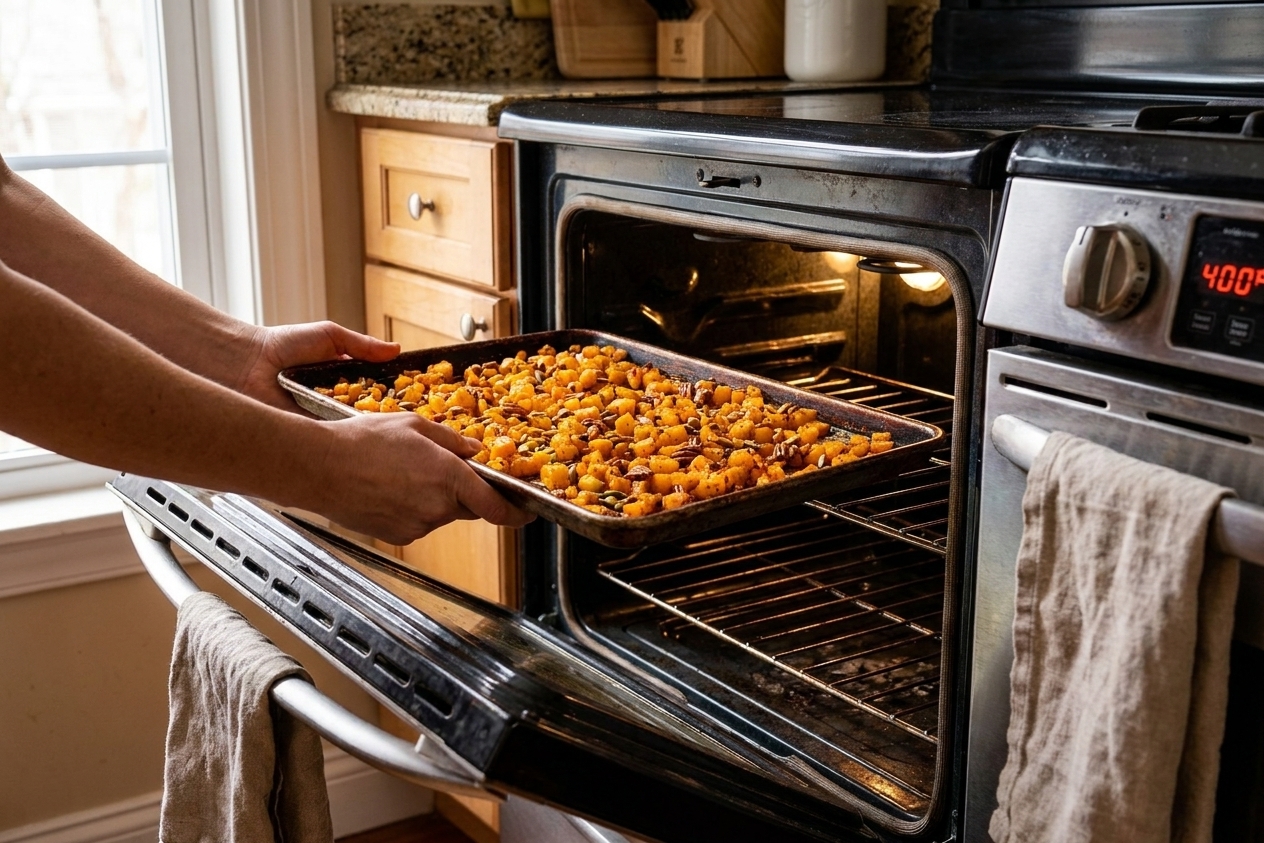
  • Reheat for best texture: Warm on a sheet pan at 400°F for 8 to 12 minutes, or in an air fryer at 375°F for 5 to 7 minutes. Microwave works, but you will lose the crisp edges.
  • Meal prep tip: Store a little extra seasoning or a squeeze of lemon separately and add it after reheating to wake up the flavor.

Common Questions

Common Questions

Is “butternut pumpkin” the same as butternut squash?

Usually, yes. In the U.S. it is typically sold as butternut squash, and in Australia and New Zealand you will often hear butternut pumpkin. Either way, you are looking for that classic tan, bell-shaped winter squash with bright orange flesh.

Do I need to peel it?

For butternut squash, yes, peeling is best. The skin is thicker and stays tough after roasting. If you are working with a different thin-skinned winter squash, the skin might be edible, but butternut is not my favorite to chew.

Why did mine turn out soft instead of crispy?

Usually it is one of these: the pan was crowded, the oven was not hot enough, or the cubes were too wet. Give the pieces breathing room, roast at 425°F, and pat the squash dry after peeling and cutting if it seems damp.

Can I roast it whole?

You can, but cubes are faster and give you more browned edges. If you want to roast halves, cut lengthwise, scoop seeds, oil and salt the cut sides, then roast cut-side down at 425°F until very tender, 35 to 50 minutes depending on size.

What is the best size to cut the cubes?

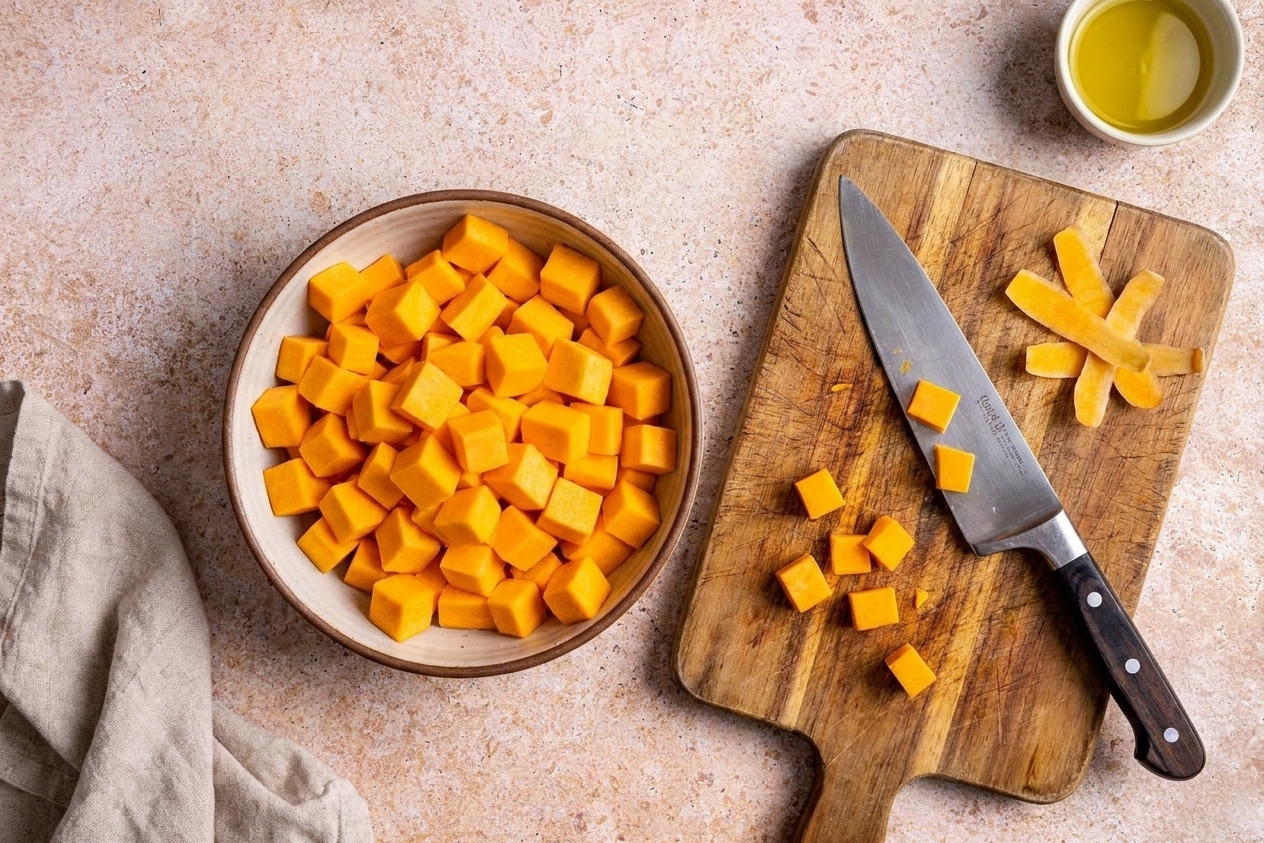
Aim for 3/4-inch to 1-inch cubes. Smaller can over-brown before the centers soften. Larger takes longer and browns less.

I started roasting butternut squash back when I was chasing “real kitchen skills” over classroom perfection, and it stuck because it is the kind of recipe that teaches you the good stuff. Space on the pan matters. Heat matters. And if you taste a piece halfway through and decide it needs more salt, that is not cheating. That is cooking. This is the sheet pan side I make when I want the house to smell like something cozy happened, even if dinner was thrown together in a hoodie.