What makes Sicilian pizza different from regular pizza?
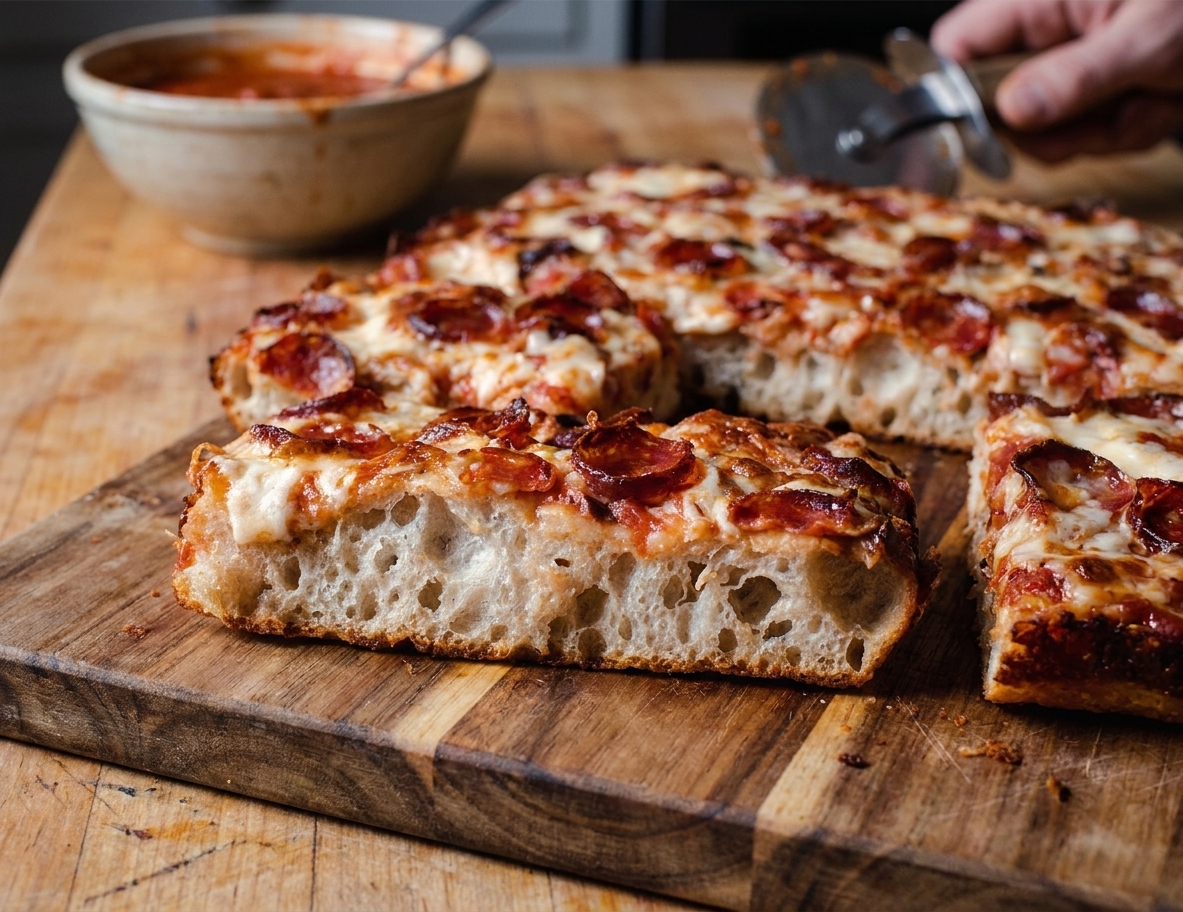
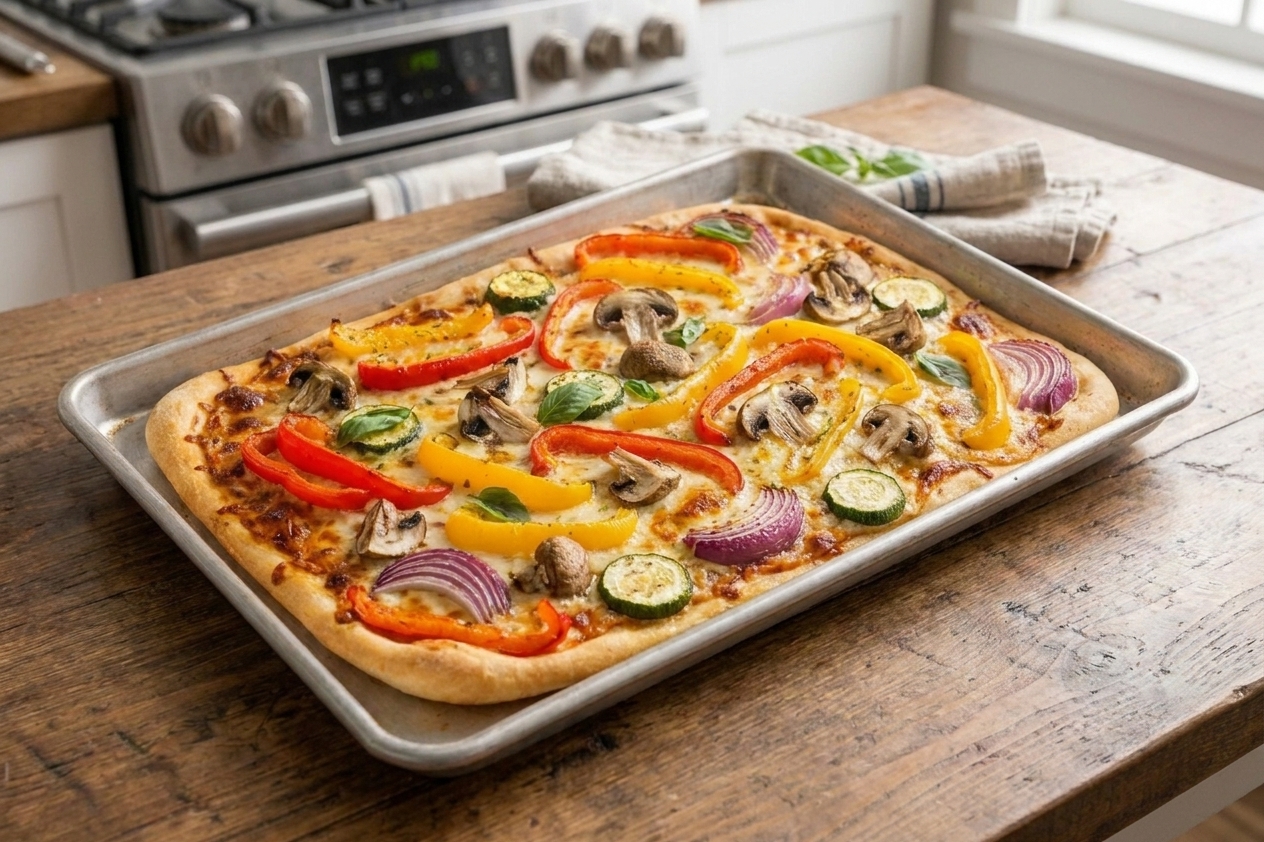
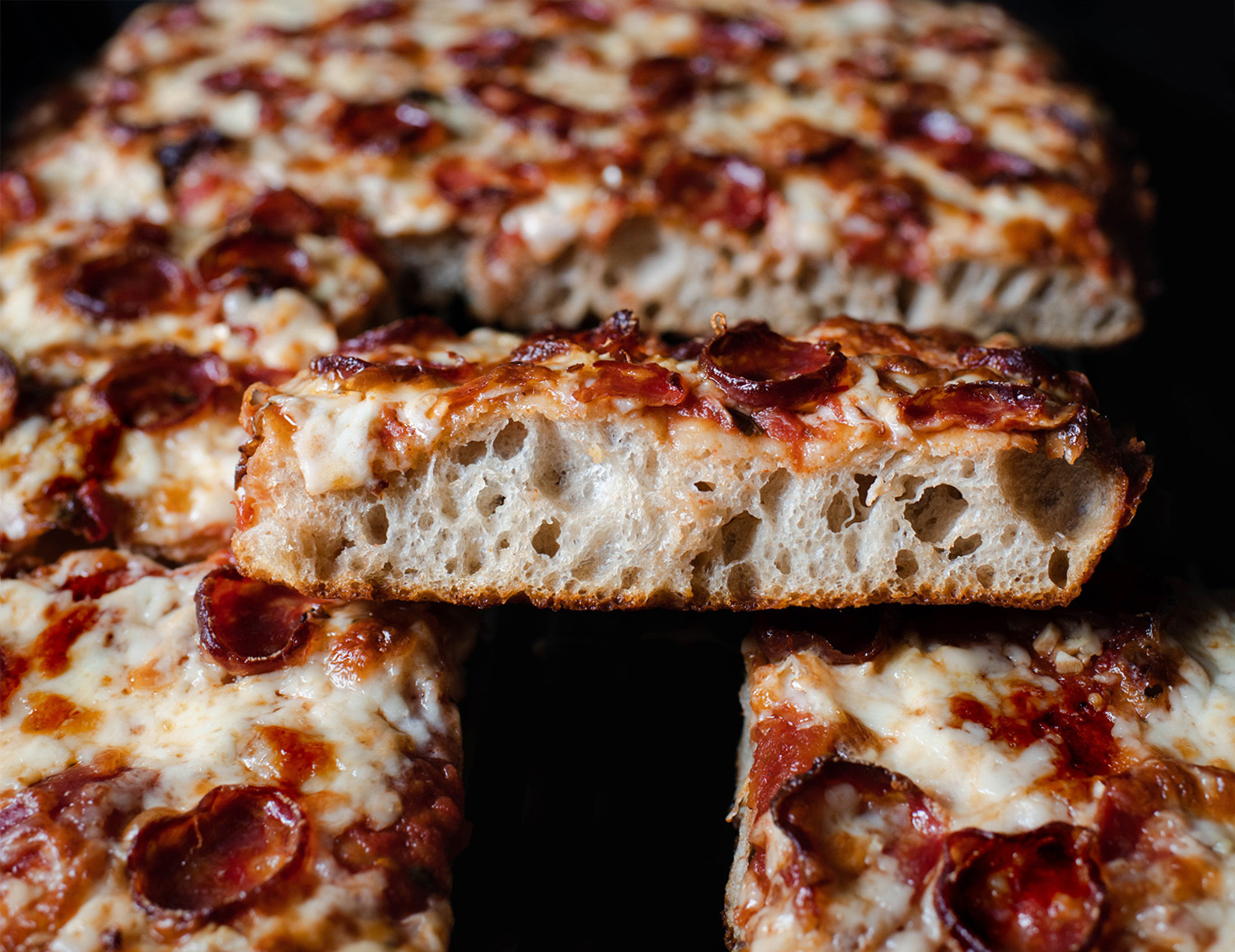
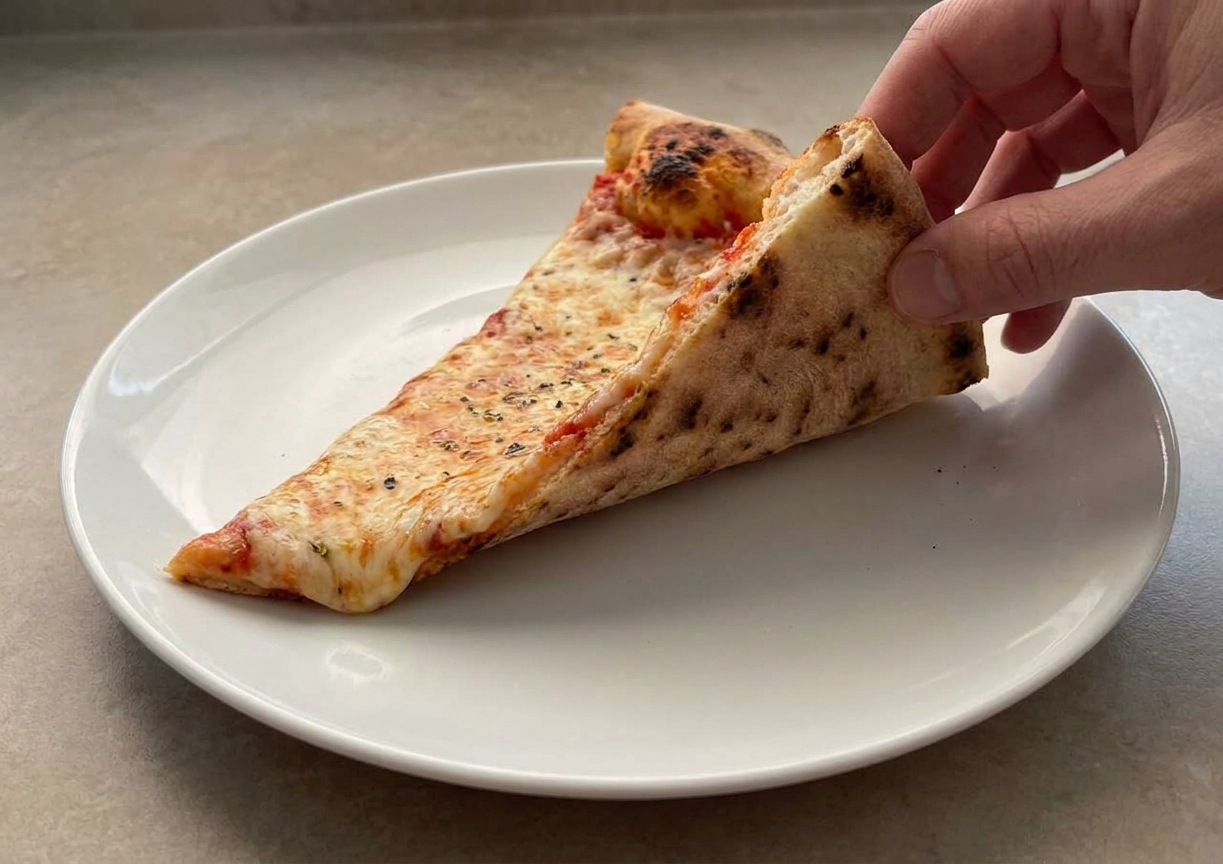
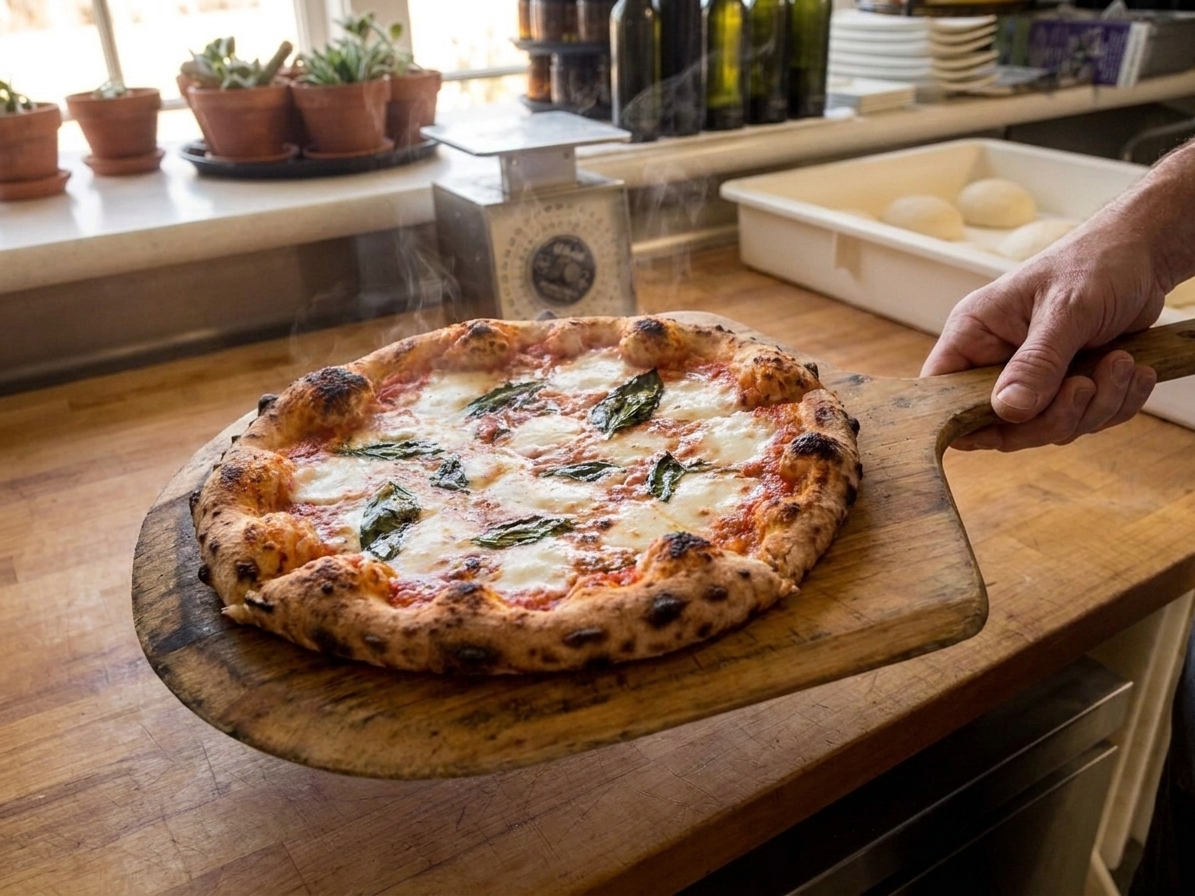
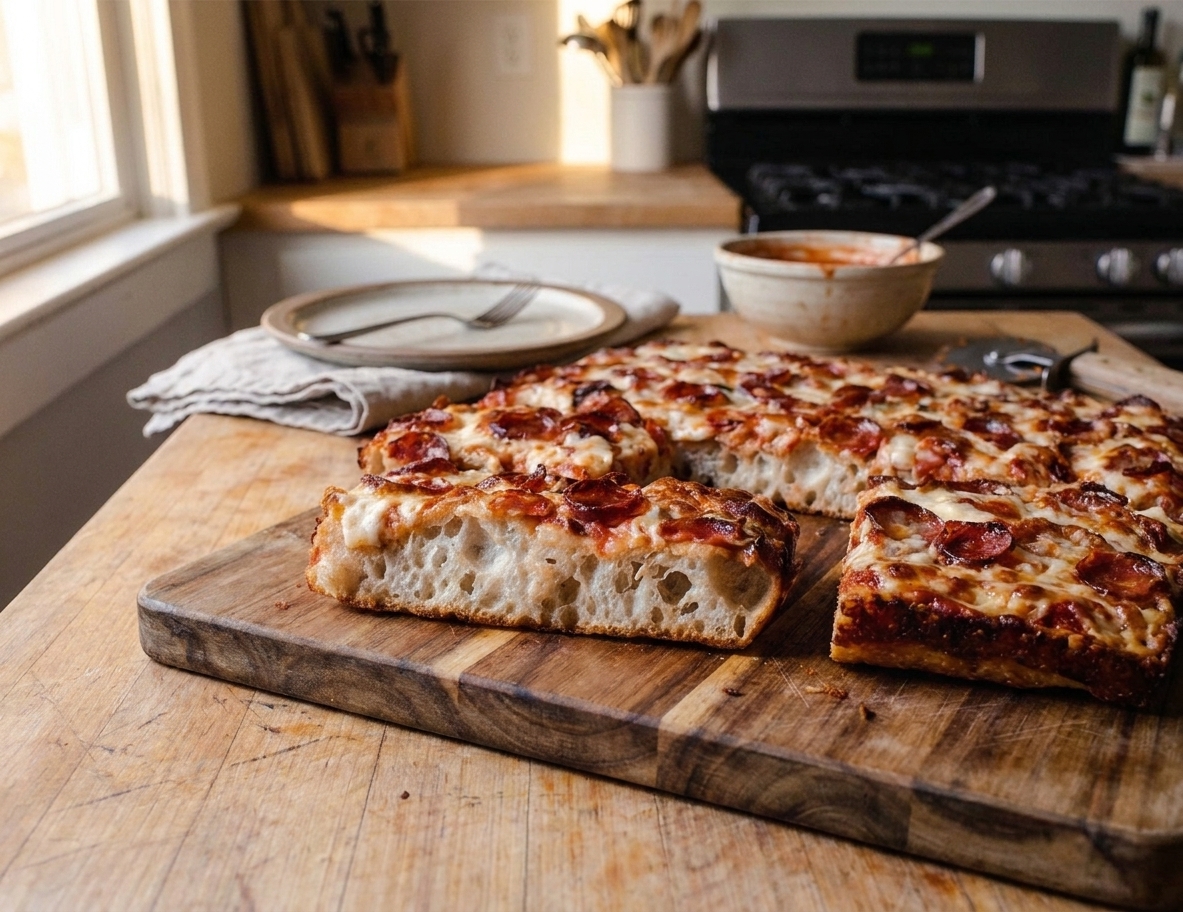
Sicilian-style pizza is baked in a pan with a thicker, focaccia-like crust. That pan and the olive oil are the secret weapons: you get a fluffy interior and crisp, almost fried edges. Toppings can vary, but the vibe is square slices and big texture.
Is this the same as traditional sfincione?
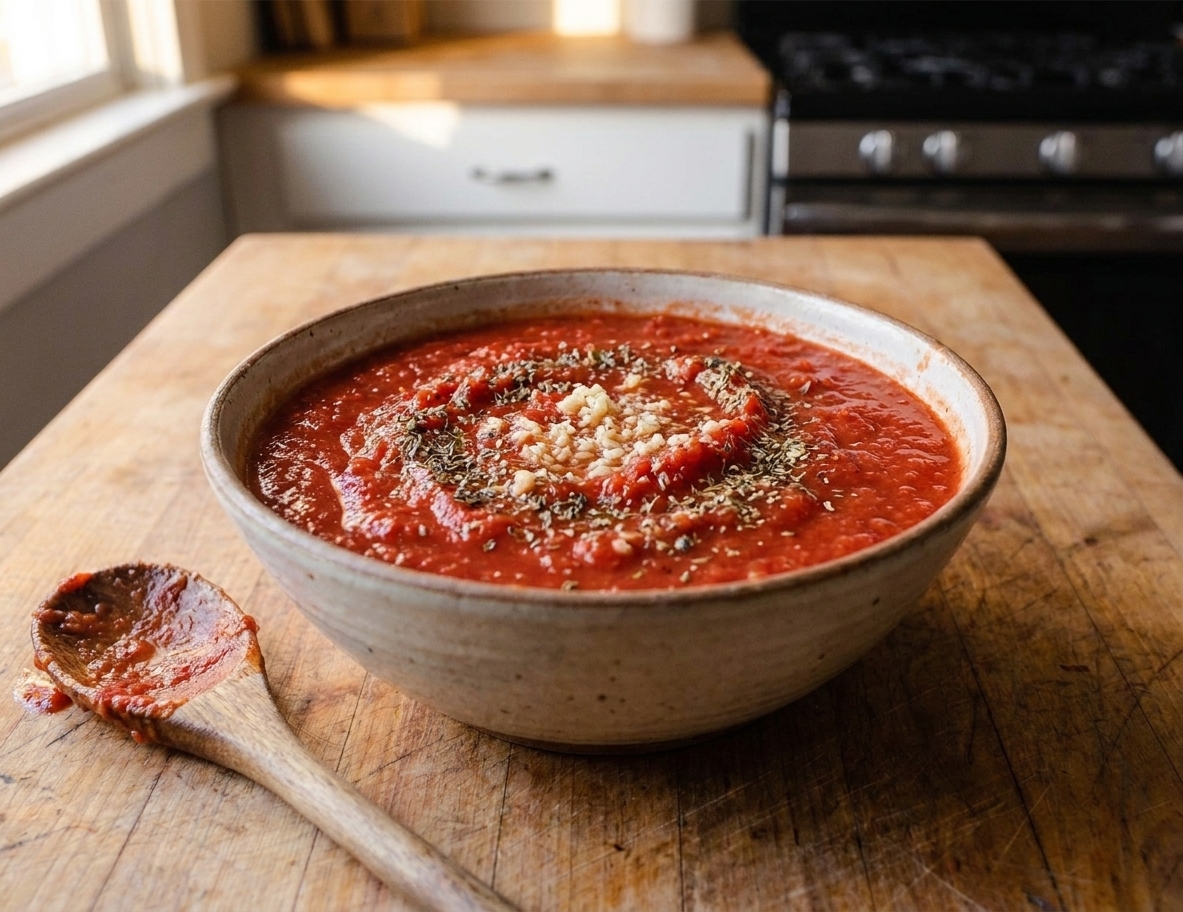
Not exactly. Traditional Palermo-style sfincione often features onions, breadcrumbs, and sometimes anchovies, and it may not be heavy on mozzarella. This is the Italian-American, sheet-pan Sicilian-style most of us grew up with: fluffy crust, melty cheese, bright tomato sauce.
Is Sicilian pizza the same as Detroit-style?
They are cousins, not twins. Detroit-style is typically baked in a deep rectangular pan and often features cheese pushed to the edges for a caramelized border. Sicilian is generally a little more bread-forward and focaccia-like. Both are excellent reasons to own a sturdy pan.
Do I need a pizza stone?
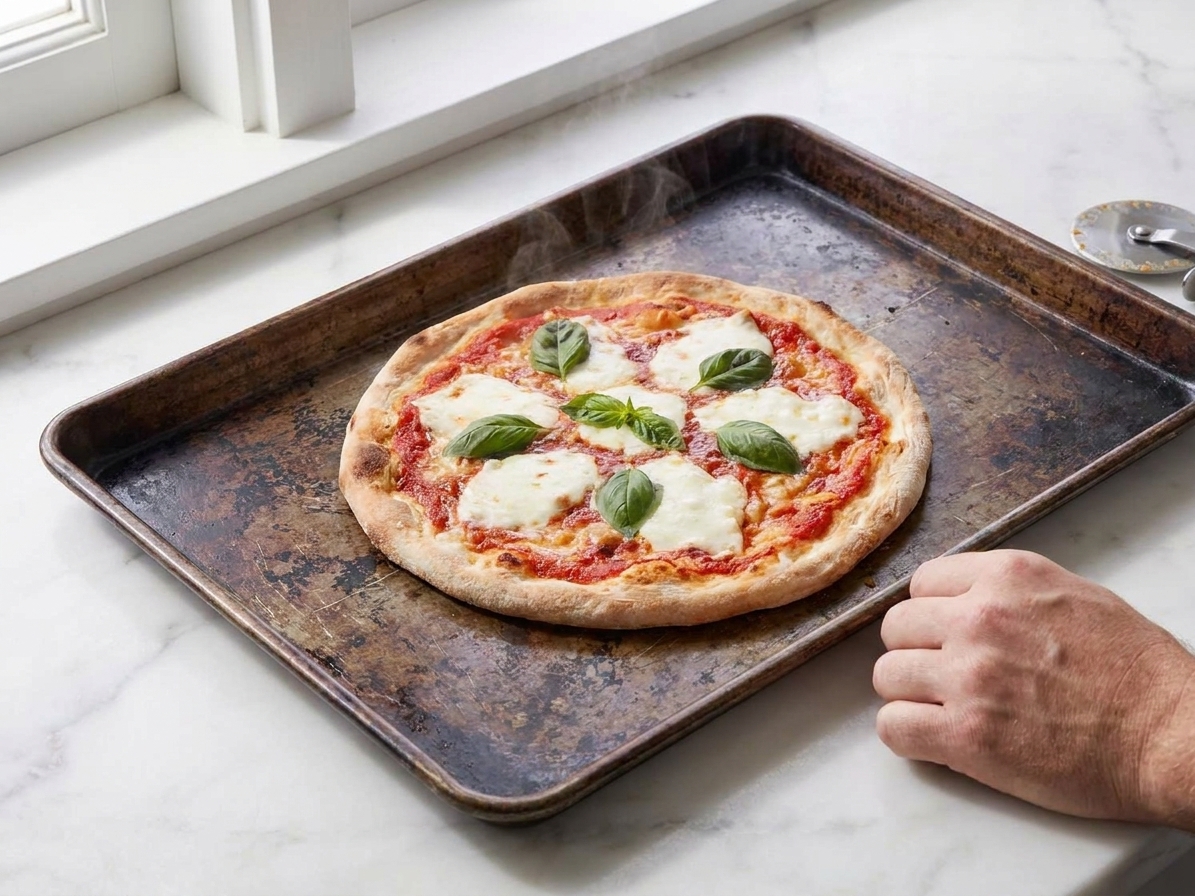
Nope. This recipe is built for a sheet pan. If you have a baking steel or stone, you can place the pan on it to boost bottom browning, but it is not required.
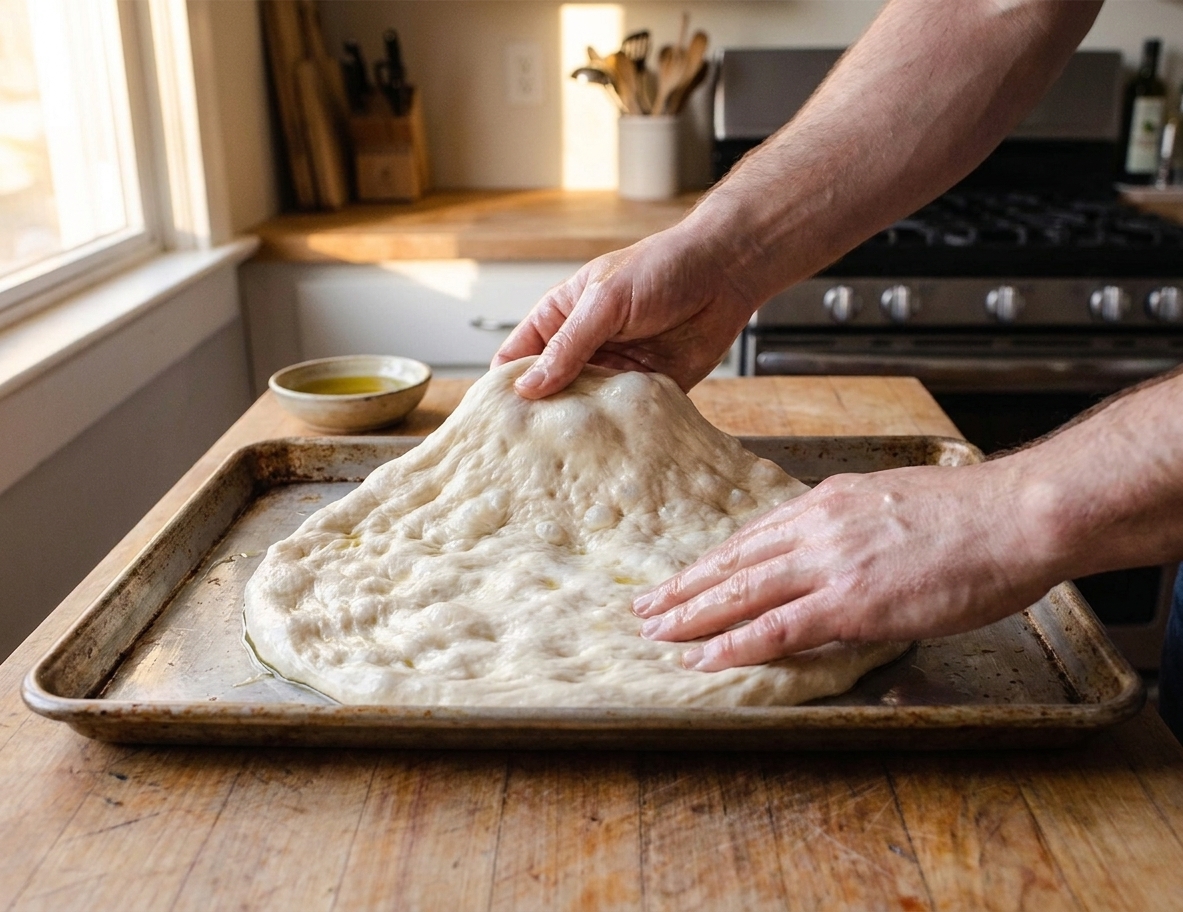
Why is my dough snapping back and refusing to stretch?
It needs more rest. Let it sit 10 to 15 minutes, then gently stretch again. Also make sure your hands are lightly oiled so you are not tearing the surface.
My dough is super sticky. Did I mess up?
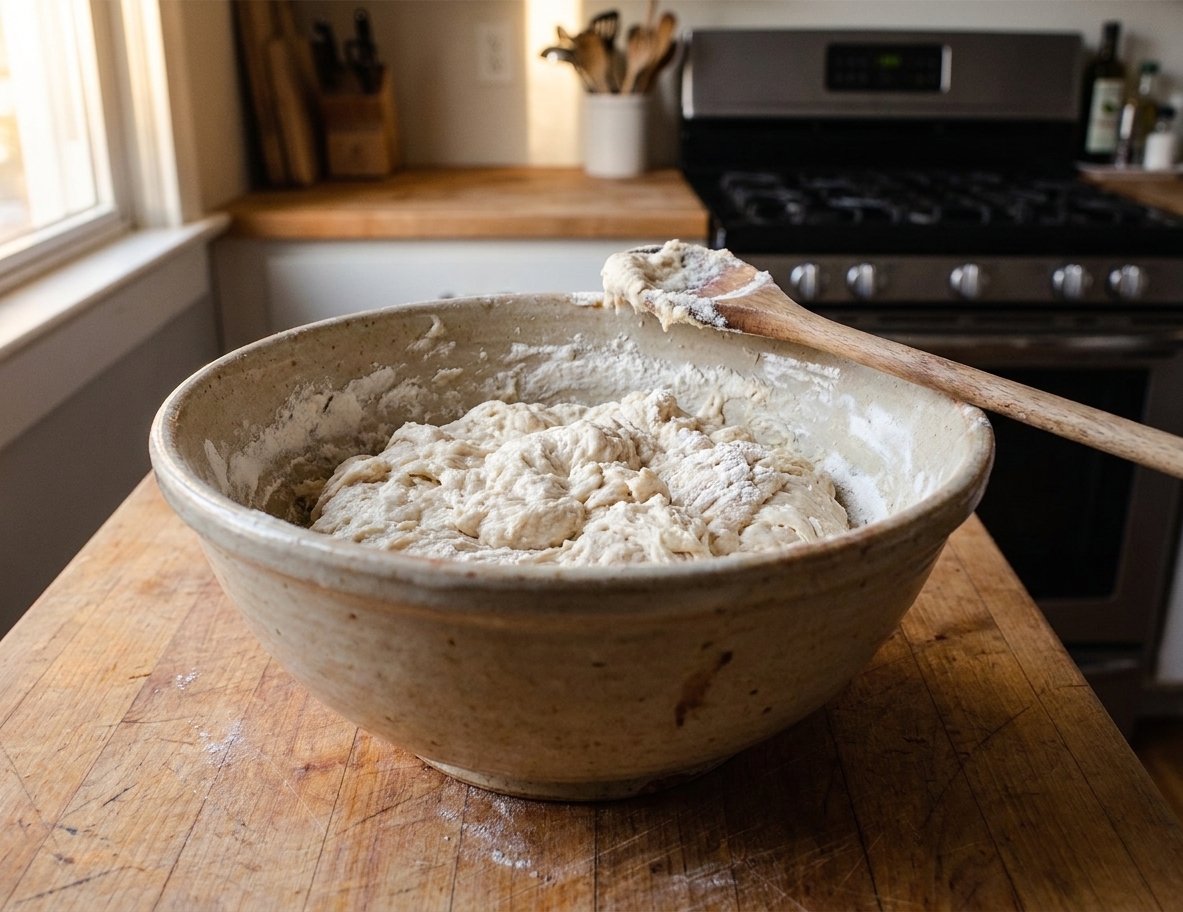
Nope. This is a high-hydration dough, which means it is supposed to feel wet and sticky. Do not panic and add extra flour, that will make the pizza heavier and less airy. Use oil on your hands (and the pan) instead.
Can I make the dough ahead?
Yes, and you should if you can. After mixing, cover and refrigerate 12 to 48 hours. Bring it to room temp for about 60 to 90 minutes before stretching into the pan.