Mom's Best Recipes
Recipe

Skillet Cornbread

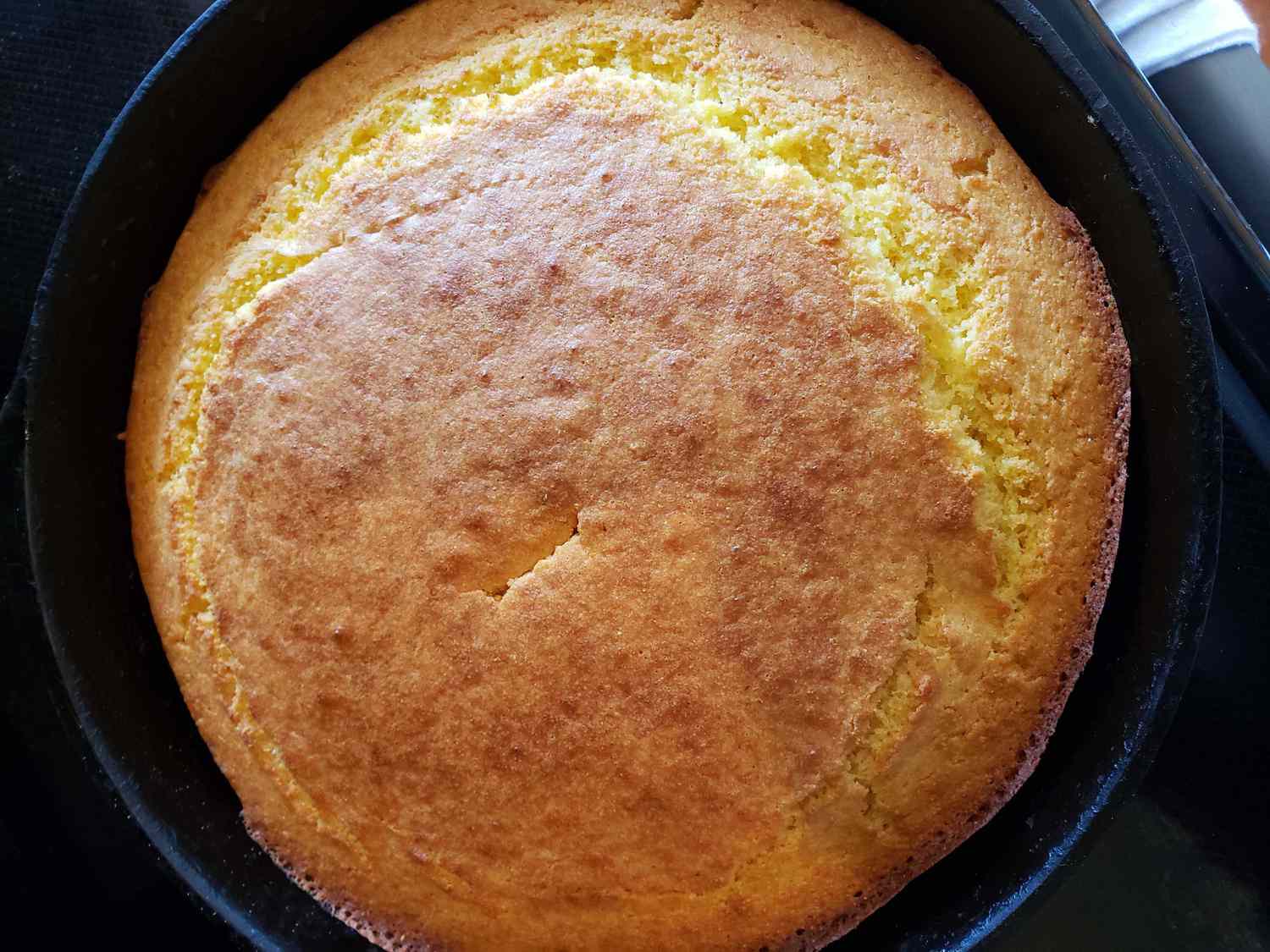
Crisp edges, tender center, and a golden top, all baked in a screaming hot cast iron skillet.

Author By Matt Campbell
4.8
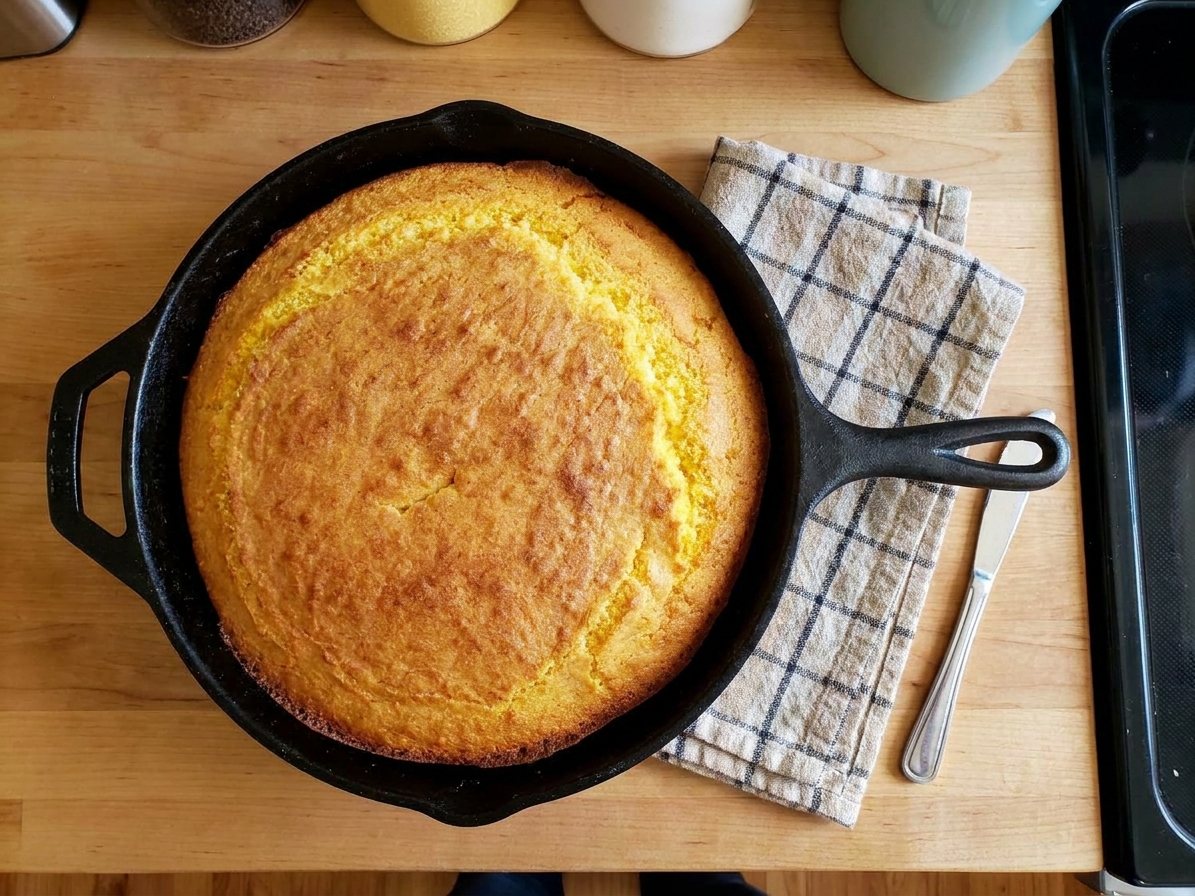
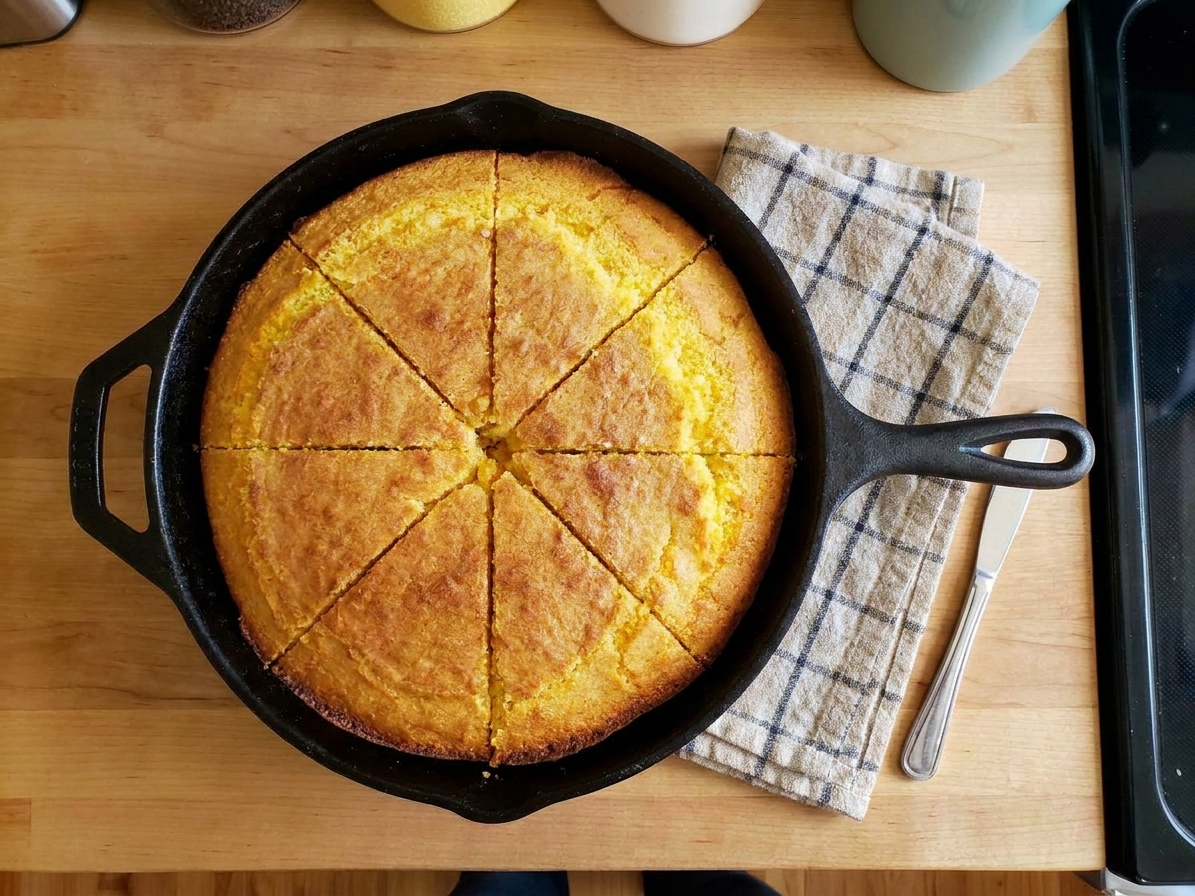
A golden skillet cornbread with deeply crisp edges cooling in a cast iron pan on a warm kitchen counter

Let’s talk skillet cornbread. Depending on where you grew up, you might know it as Southern cornbread, cast iron cornbread, or that one pan of golden magic that shows up next to beans and greens and somehow disappears before the meal is over.

In my kitchen, skillet cornbread means one thing: a hot cast iron skillet, sizzling fat, and a simple cornmeal batter that turns into a crusty-edged, tender-centered slab of comfort. No fussy ingredients. No drama. Just that little moment when the batter hits the pan and you hear the sssss. That sound is dinner getting its life together.

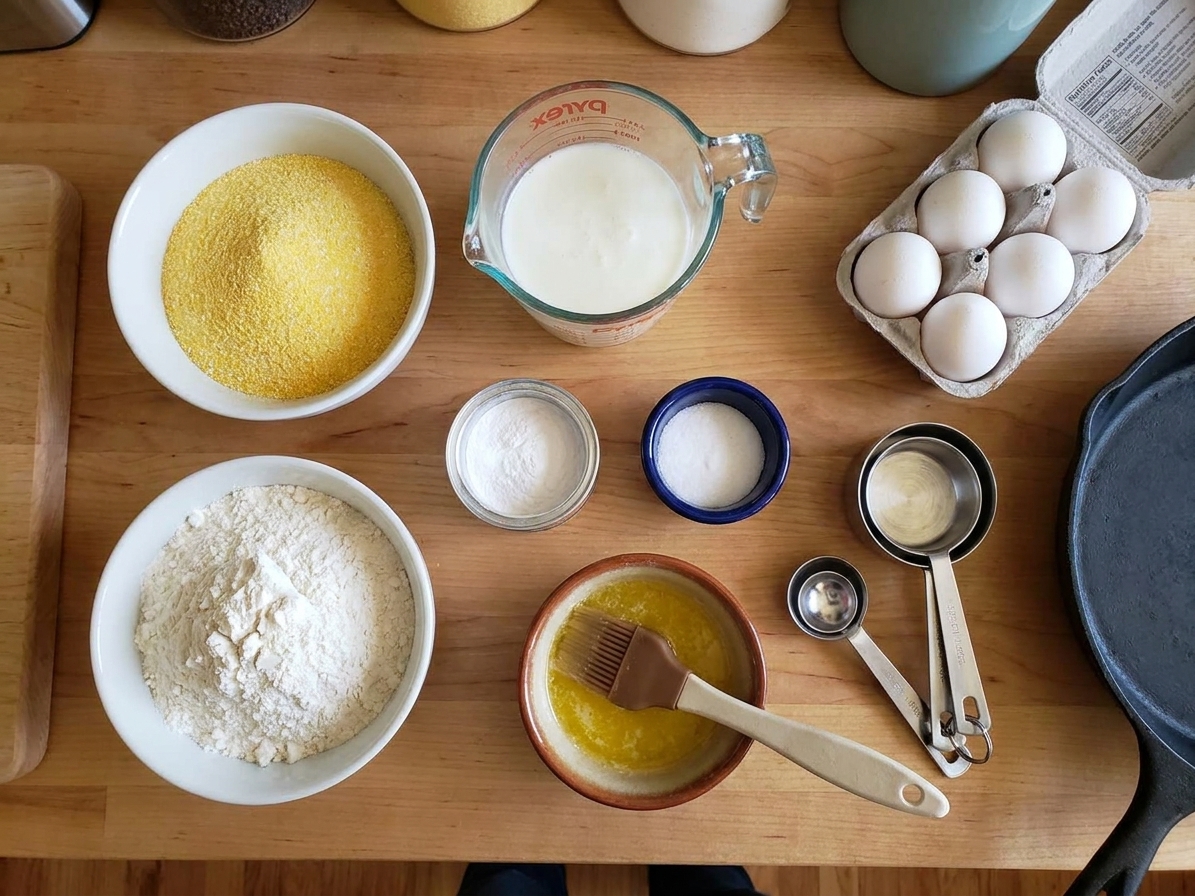
Cornmeal, flour, buttermilk, eggs, baking powder, salt, and a small bowl of melted butter arranged on a tidy kitchen counter

Why It Works

  • That signature crust: Preheating the skillet with butter or bacon drippings gives you crisp, browned edges without deep frying anything.
  • Tender, not dry: Buttermilk and a little fat keep the middle soft and sliceable.
  • Fast comfort: Mix in one bowl, bake quickly, and serve straight from the pan like the casual hero you are.
  • Flexible: Keep it classic, or add corn kernels, cheddar, jalapeños, or scallions when you want to show off a little.

Pairs Well With

Storage Tips

Room temp: Wrap cooled leftovers tightly and keep at room temperature up to 1 day if your kitchen is cool and dry.

Refrigerator: Store in an airtight container up to 4 days. The crust softens in the fridge, but we can bring it back.

Freezer: Wrap individual wedges in plastic wrap, then a freezer bag. Freeze up to 2 months.

Best reheat method: Warm wedges in a 350°F oven for 8 to 12 minutes directly on the rack or on a sheet pan. For extra crisp edges, pop a wedge in a dry skillet over medium heat for a couple minutes per side.

Common Questions

What do you call this, exactly?

This is skillet cornbread: a traditional Southern-style cornbread baked in a hot, well-greased skillet (usually cast iron). It is known for a browned, crisp crust and a simple cornmeal-forward flavor. Some folks also call similar skillet breads corn pone or a hoe cake, but this recipe is classic skillet cornbread.

Is skillet cornbread sweet?

Classic skillet cornbread is not sweet. It is more savory and corn-forward. If you like a hint of sweetness, add 1 to 2 tablespoons sugar or honey. Just know you are stepping into “sweet cornbread” territory, and some grandmas will have opinions.

Do I have to use buttermilk?

Buttermilk gives the best flavor and tenderness. In a pinch, make a quick substitute: for each 1 cup milk, stir in 1 tablespoon lemon juice or white vinegar and let sit 5 minutes.

For this recipe amount (1 1/4 cups), use 1 1/4 cups milk plus 1 tablespoon + 3/4 teaspoon lemon juice or vinegar. It is not fancy, but it works.

Why didn’t my edges get crispy?

Usually one of three things: the skillet was not hot enough, there was not enough fat in the pan, or you poured the batter too slowly while the skillet cooled. Preheat the skillet in the oven, add the fat, then pour the batter in immediately.

How do I know it’s done?

Look for a deep golden top, edges pulling slightly away from the pan, and a center that feels set (not jiggly). A toothpick in the center should come out clean or with a few moist crumbs.

Can I bake this in a glass dish?

You can, but you will lose the signature crust. If cast iron is not an option, use a metal cake pan and preheat it too. Glass often heats differently and usually gives a softer edge.

Can I use a different pan size?

Yes. An 8-inch skillet makes a thicker cornbread. Start checking around 20 to 25 minutes. A 12-inch skillet makes it thinner and crispier. Start checking around 15 to 18 minutes. Same rules apply: hot pan, enough fat, pour fast.

What about self-rising cornmeal mix?

If you have self-rising cornmeal mix, you can use it, but it varies by brand. As a general guide, replace the cornmeal, flour, baking powder, and salt with 2 cups self-rising cornmeal mix, then keep the rest the same. If your mix already tastes salty, start with less added salt (or skip it) and adjust next time.

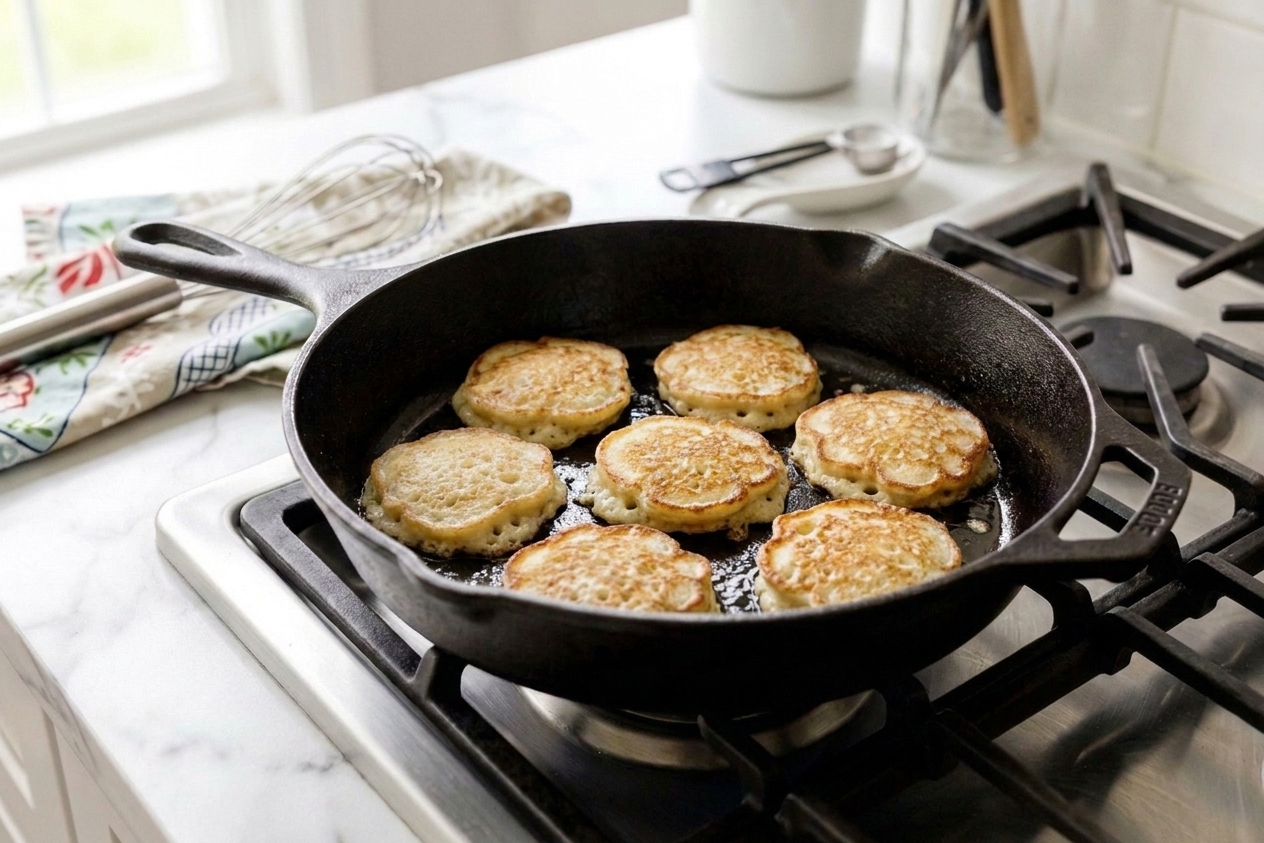
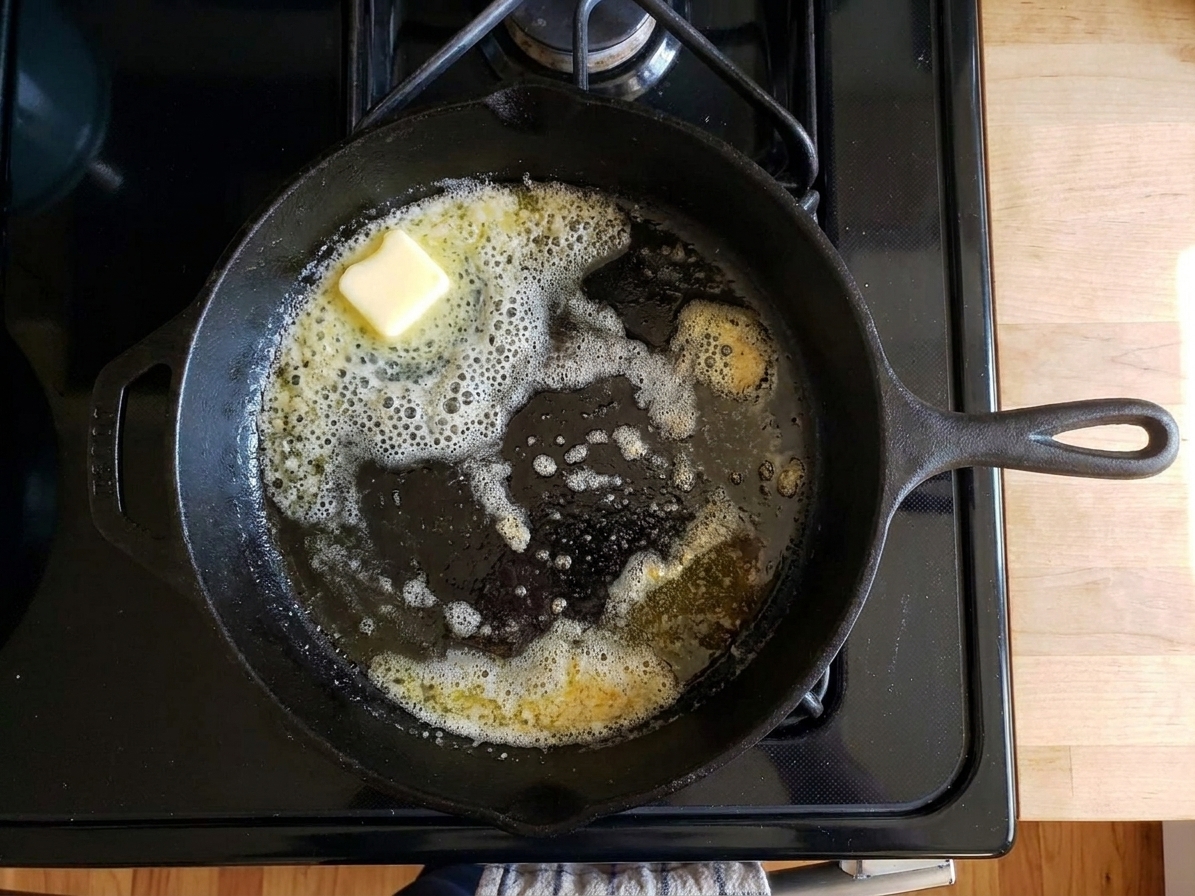
Cornbread batter being poured into a hot buttered cast iron skillet with visible sizzling bubbles around the edges

I started making skillet cornbread when I realized I was always chasing the same thing: crisp edges and a tender middle, without turning dinner into a project. The first time I nailed it, it was honestly because I got impatient and preheated the skillet a little too long. The butter hit the pan, browned fast, and I thought, “Welp, here we go.” Turns out that tiny bit of chaos was the move. Now I treat skillet cornbread like a weeknight superpower. It shows up with chili, with beans, with eggs, and occasionally at the counter at midnight with a swipe of butter and zero regrets.