Do I have to peel the apricots?
Nope. The skins soften as they cook and add a little body. If you want a super smooth jam, blend at the end, then simmer 1 to 2 minutes more.
How do I know when the jam is done?
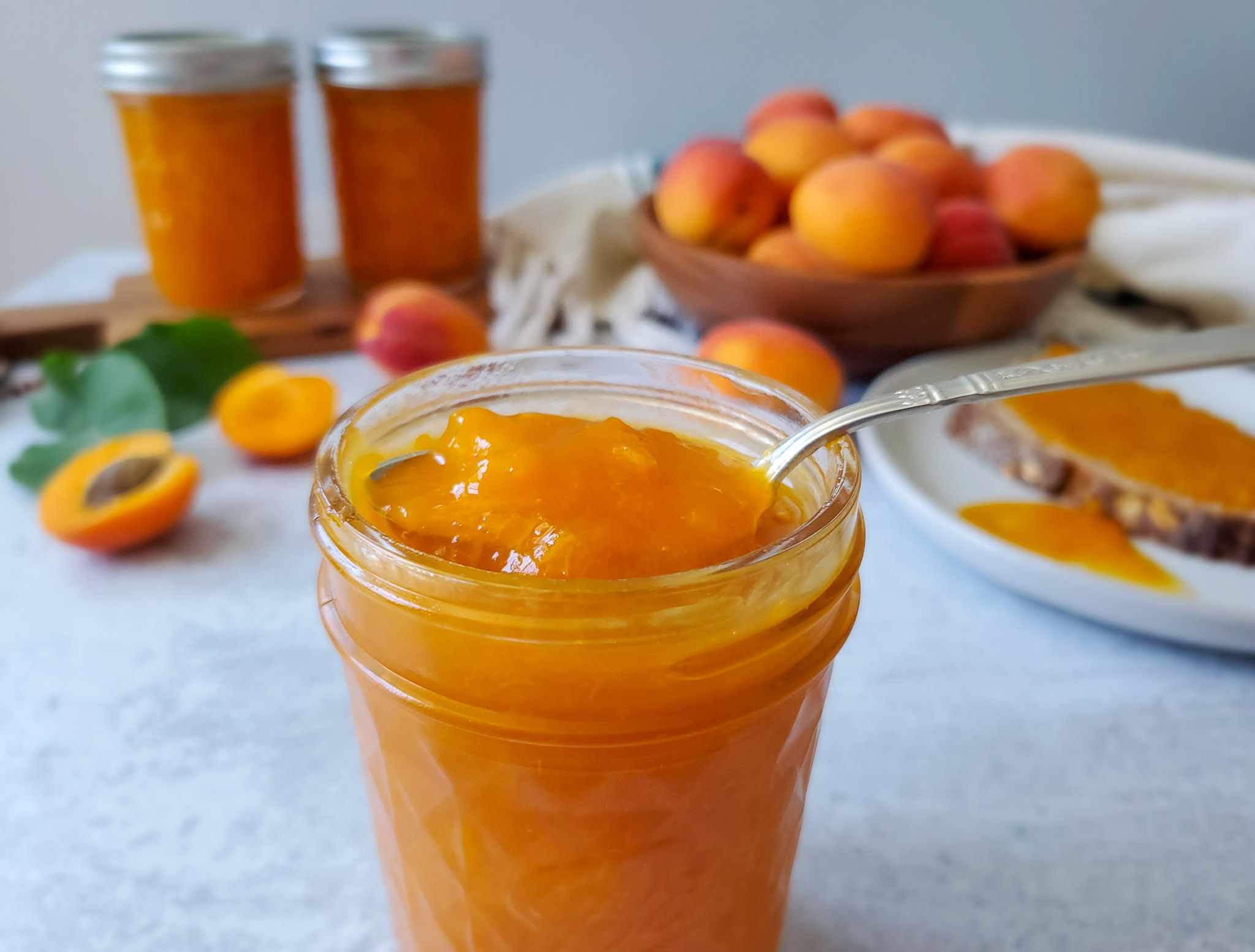
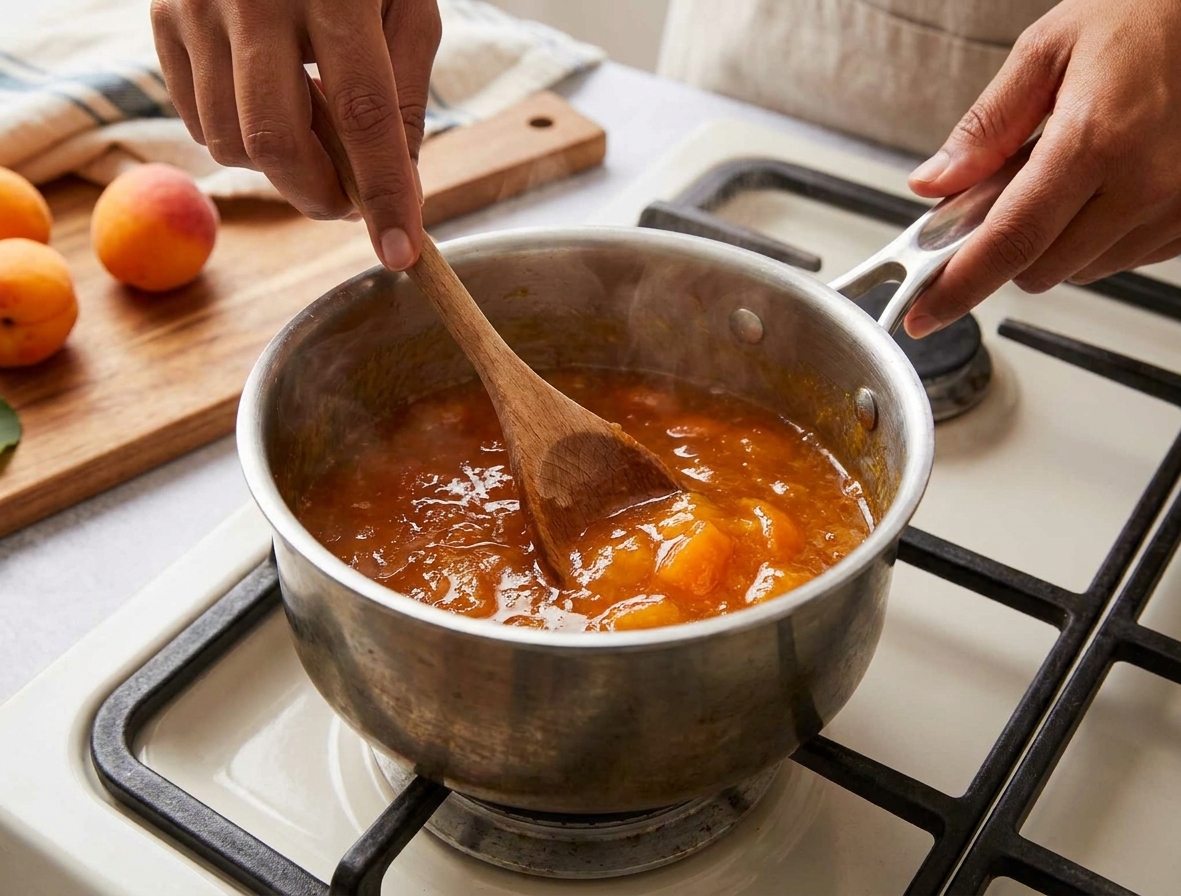
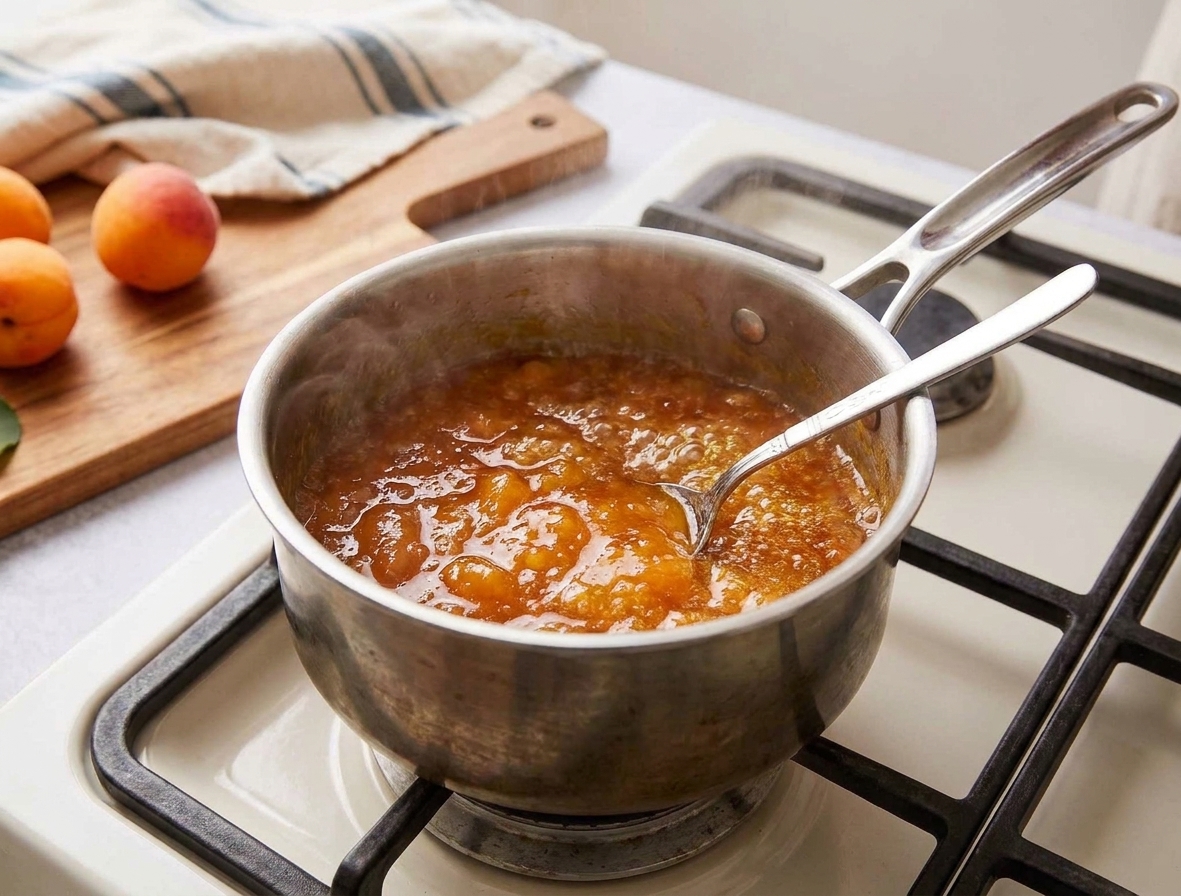
Look for three signs: (1) it looks glossy and thicker, (2) bubbles get slower and sound a little heavier, and (3) it hits the gel zone on a thermometer. At sea level, that is usually around 218 to 220°F. At higher altitude, the target is lower (a common rule is subtract about 2°F per 1,000 feet). You can also do the cold plate test: chill a plate, dab on a little jam, wait 30 seconds, then push it with your finger. If it wrinkles and holds a line, you are there.
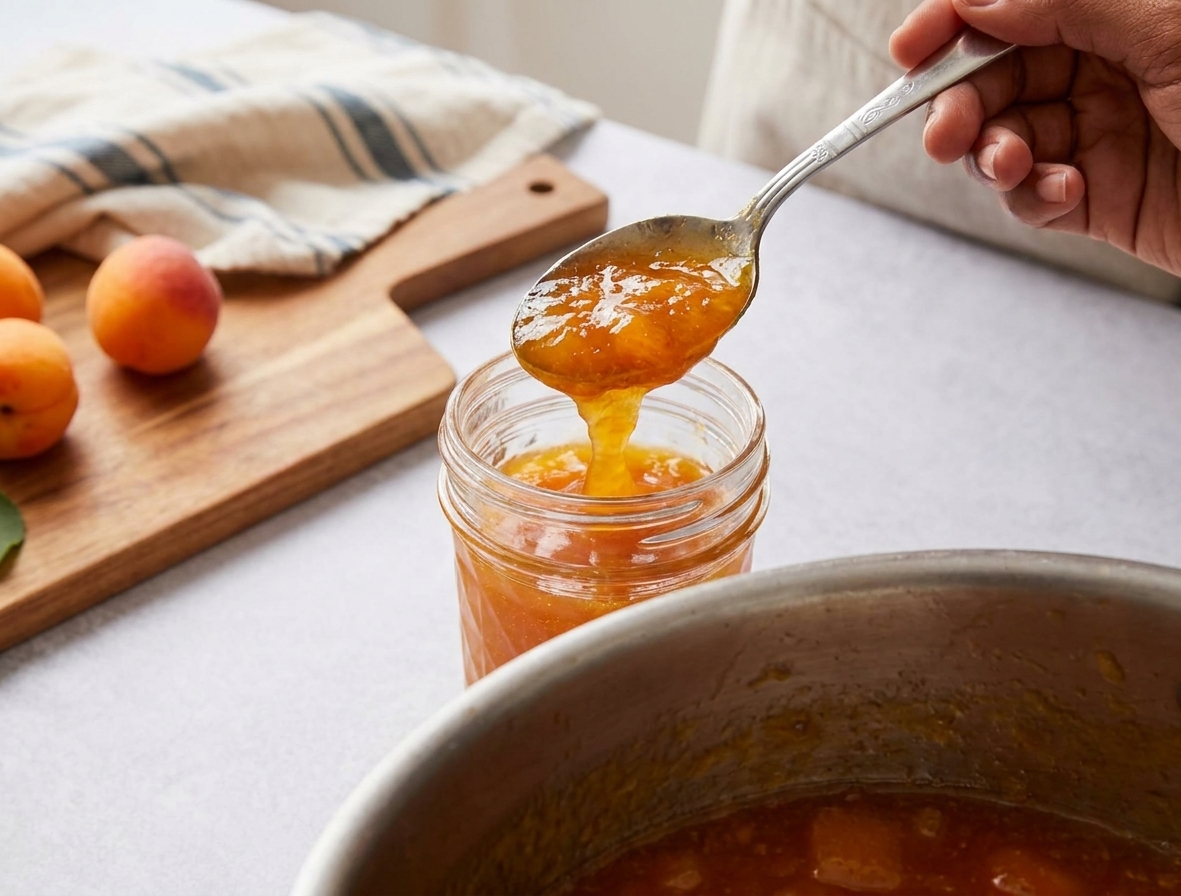
Bonus beginner-friendly cue: it should coat the back of a spoon and drip off slowly in thicker sheets, not a quick syrupy stream.
Why is my jam runny?
Most of the time it just needs more simmer time, or it was jarred before it truly thickened. Put it back in the pot and simmer 5 to 10 minutes, then re-test. Also, apricot pectin varies a lot by ripeness, so some batches simply set a little softer and need a touch more time.
Why did my jam get too thick?
It cooked a little long. Warm it gently and stir in 1 to 3 tablespoons water until it loosens. It will still be great on toast and as a glaze.
Can I use dried apricots?
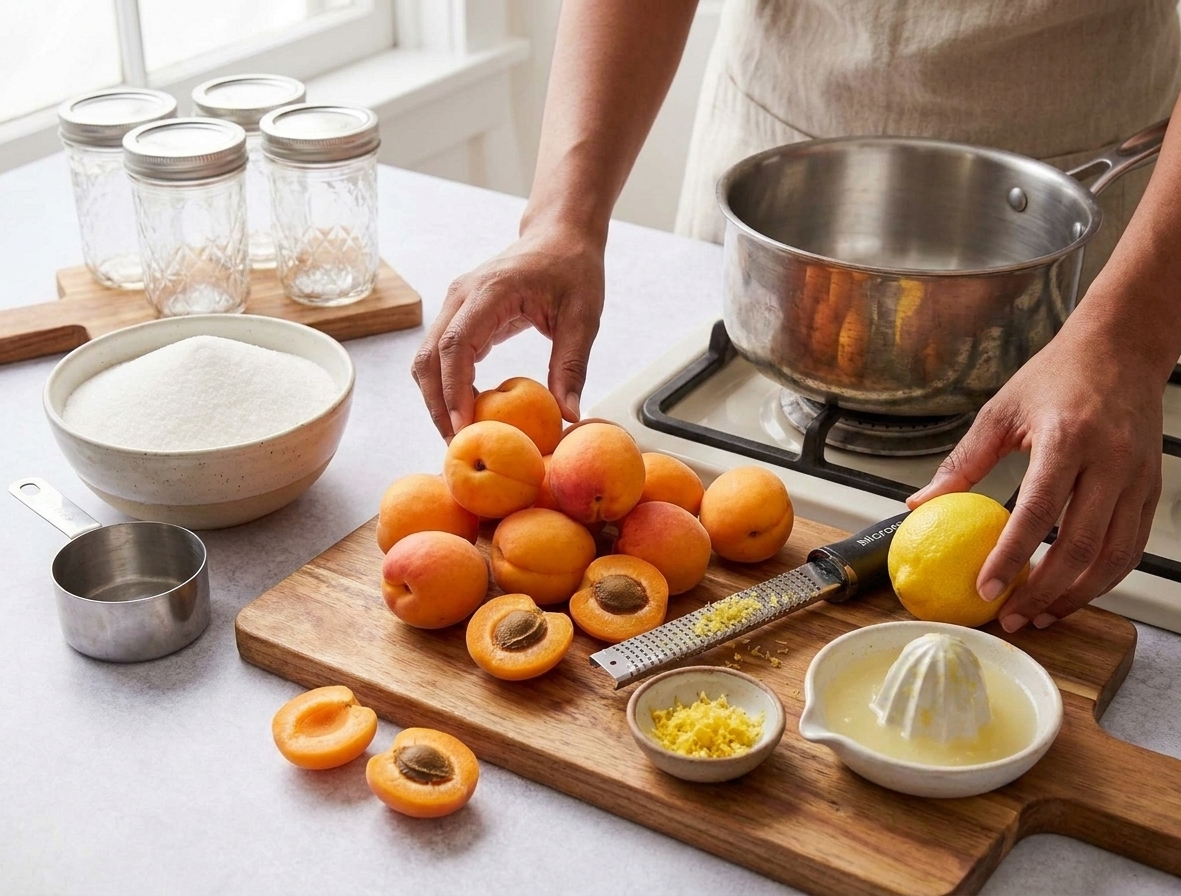
Yes. Dried apricots make a deeper, more caramel-like jam. You will simmer them with water first to rehydrate, then add sugar and lemon. See the ingredients list for the dried-apricot option.
Do I need to sterilize jars?
For fridge jam, wash jars well with hot soapy water and rinse. Let the jam cool a bit before sealing so you do not trap a bunch of steam.