Common Questions
Do I have to pit the cherries?
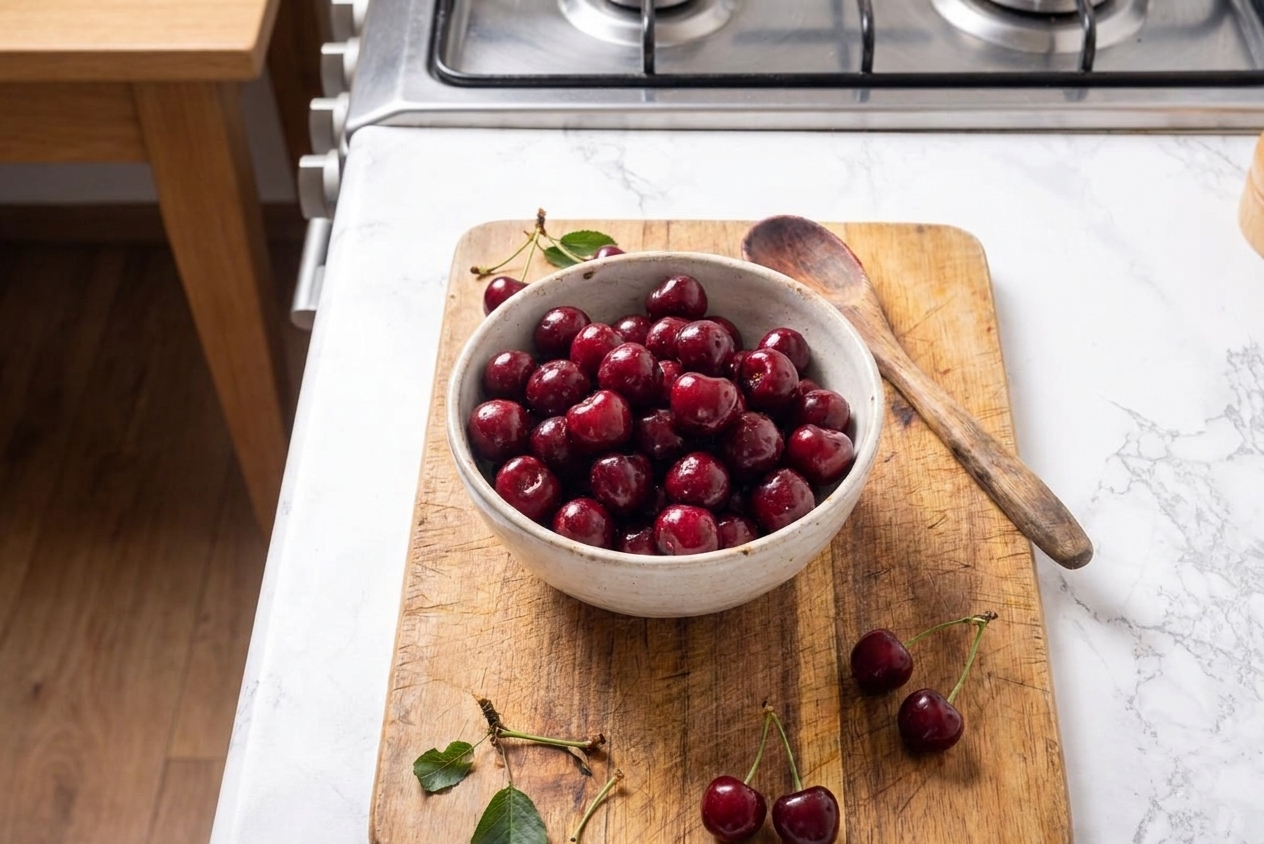
Yes, unless you want to live dangerously. Pitting is the only “annoying” step, but it is worth it. A cherry pitter is great, but a sturdy straw or chopstick works too.
Can I use frozen cherries?
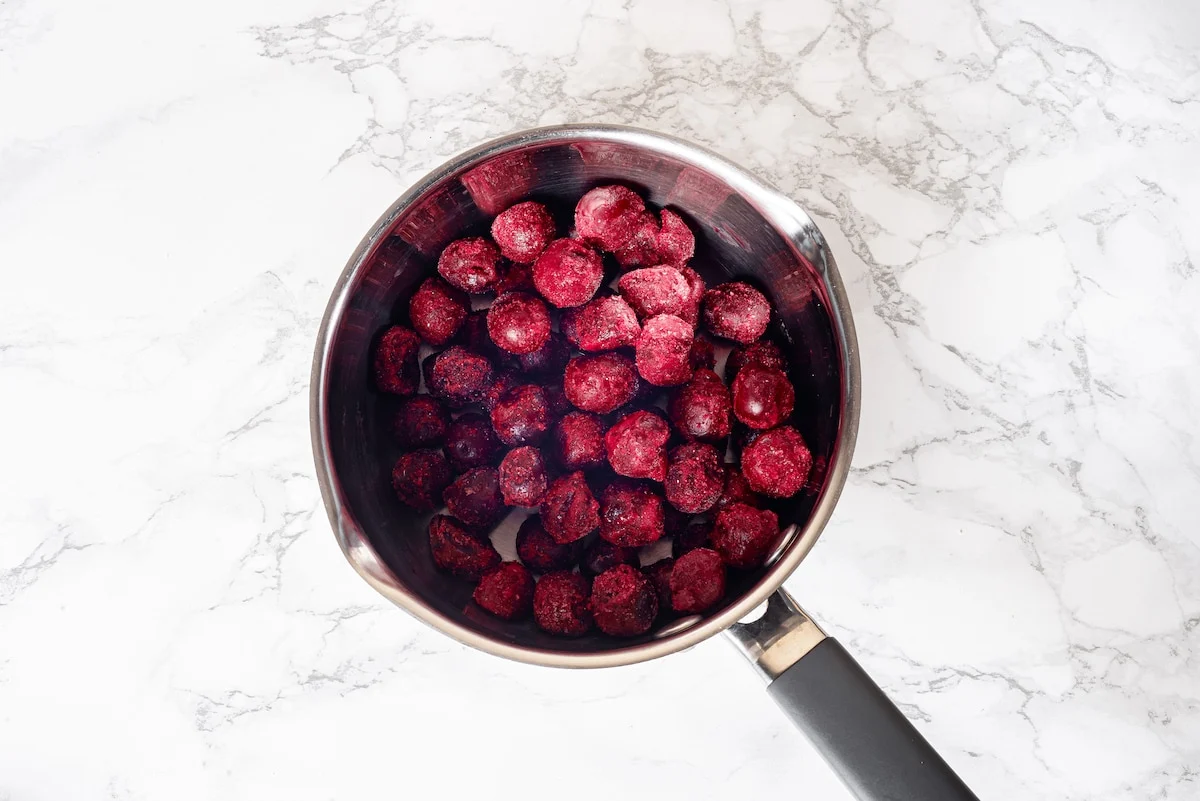
Yep. Thaw them first, then pour any juice into the pot too. Frozen cherries usually release a little extra liquid, so your cook time may run a few minutes longer.
Sweet or tart cherries?
Both work. Sweet cherries (like Bing or Rainier) make a classic, candy-bright jam. Tart cherries (like Montmorency) make a more punchy, bakery-style jam. If using tart cherries, you may want an extra 2 to 4 tablespoons of sugar.
How do I know when it is done?
You have options:
- Temperature: Jam sets around 220°F at sea level (subtract about 2°F for every 1,000 feet of elevation). Treat this as a helpful guide, not a law of nature.
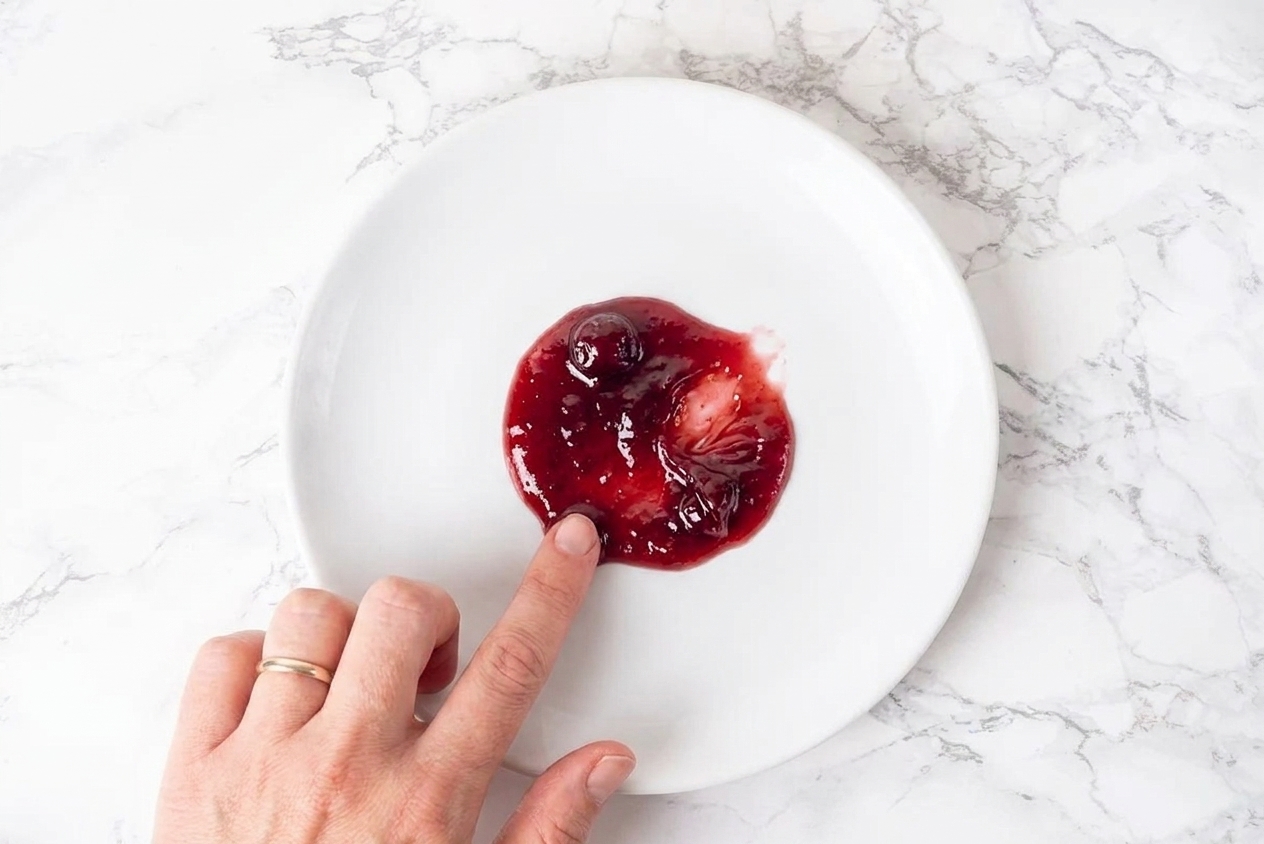
- Freezer plate test: Chill a plate in the freezer. Drop a spoonful of jam on it, wait 30 seconds, then push it with your finger. If it wrinkles and does not flood back, you are set. This is the most reliable test.
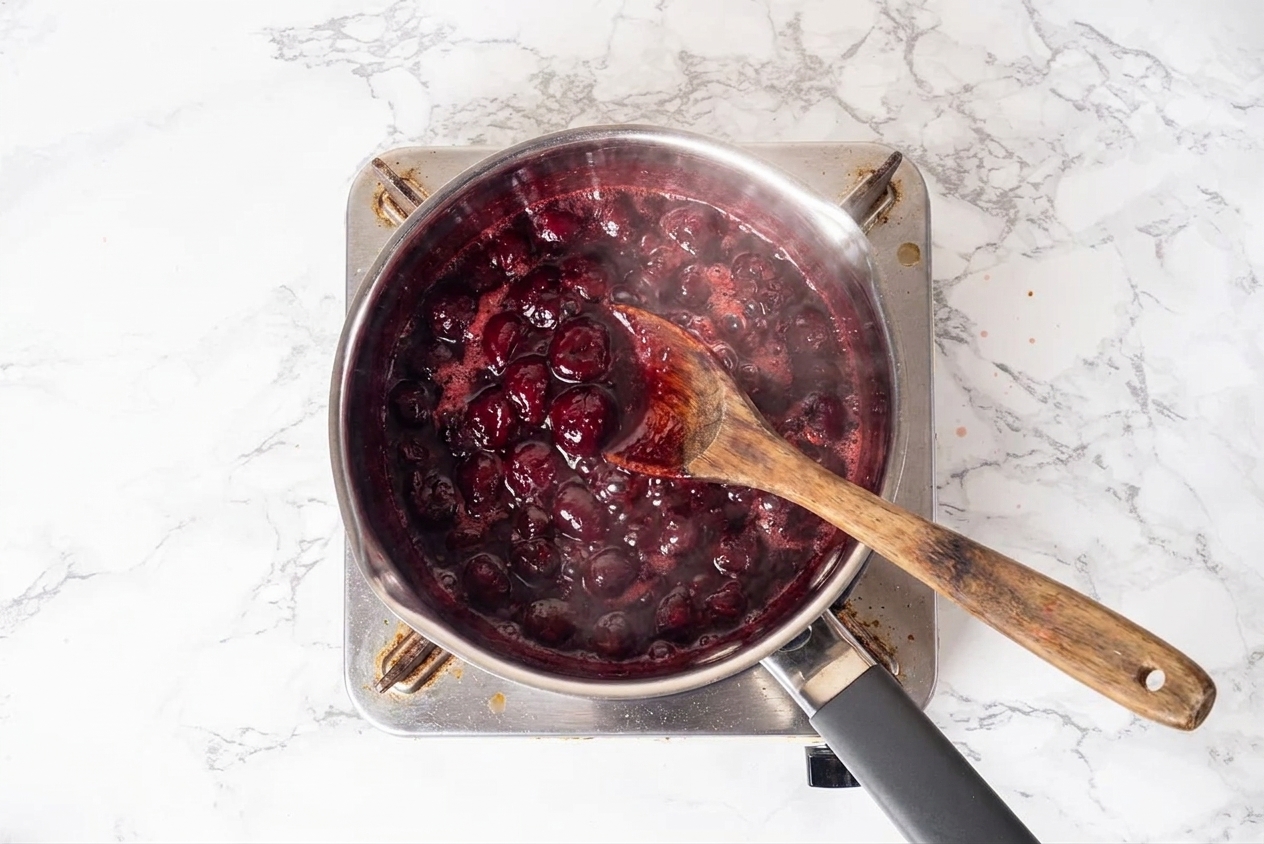
- Spoon test: Dip a spoon, lift it, and watch the drips. When it starts falling off in thicker sheets instead of thin syrup, you are close.
My jam is too runny. Can I fix it?
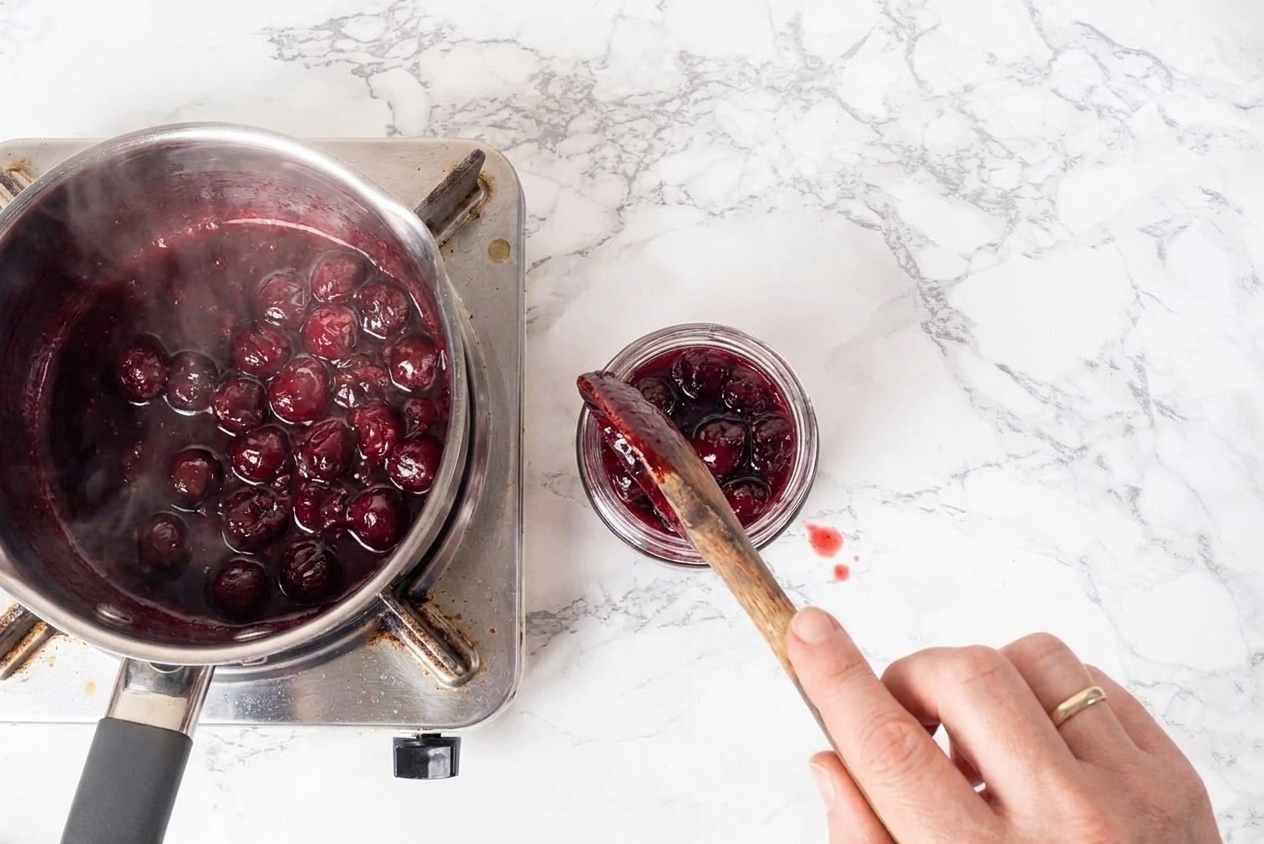
Absolutely. Put it back in the pot and simmer again in 2 to 3 minute bursts, stirring often, until it passes the freezer plate test. Runny jam is usually just undercooked, and cherries can vary.
My jam is too thick. What now?
Stir in a little water, 1 teaspoon at a time, over low heat until it loosens up. Think “spreadable,” not “fruit taffy.”
Can I reduce the sugar?
You can reduce it a bit, but sugar does more than sweeten. It helps the jam set and keeps it tasting fresh longer. If you cut the sugar a lot, expect a looser set and a shorter fridge life.