Mom's Best Recipes
Recipe

Smoked Chicken Wings

Crispy-edged, juicy smoked wings with a simple dry rub and a buttery hot sauce finish.

Author By Matt Campbell
4.8
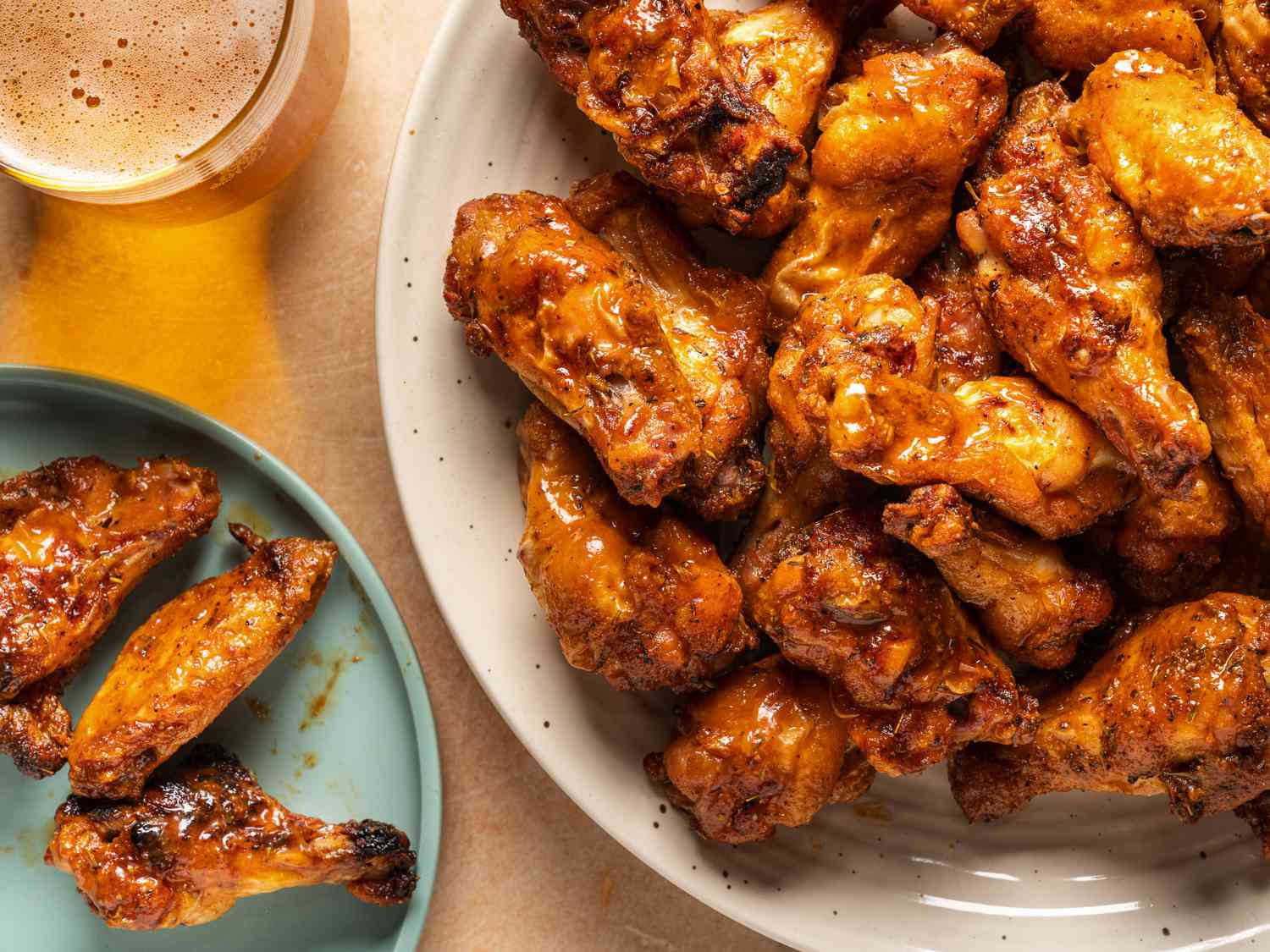
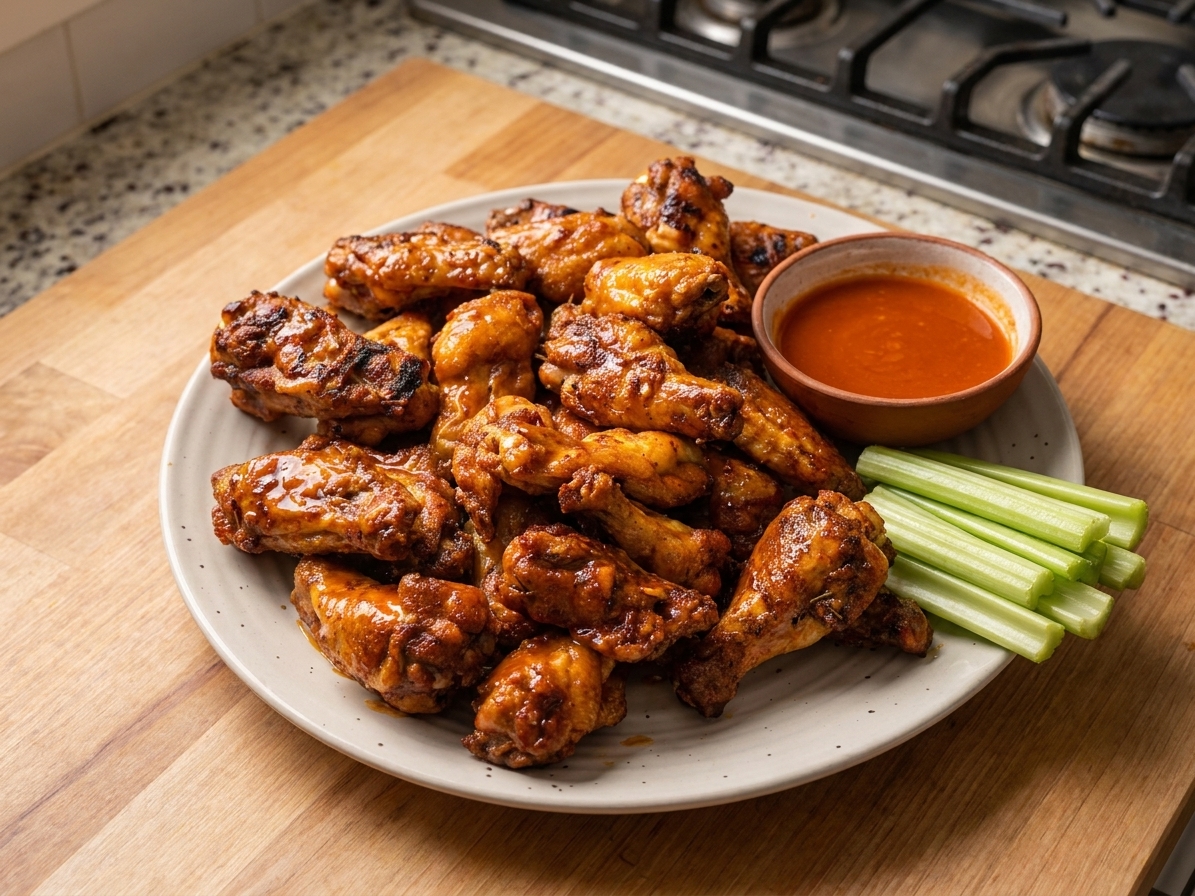
A platter of smoked chicken wings with crisped skin, a small bowl of hot sauce on the side, and celery sticks on a wooden table in warm kitchen light

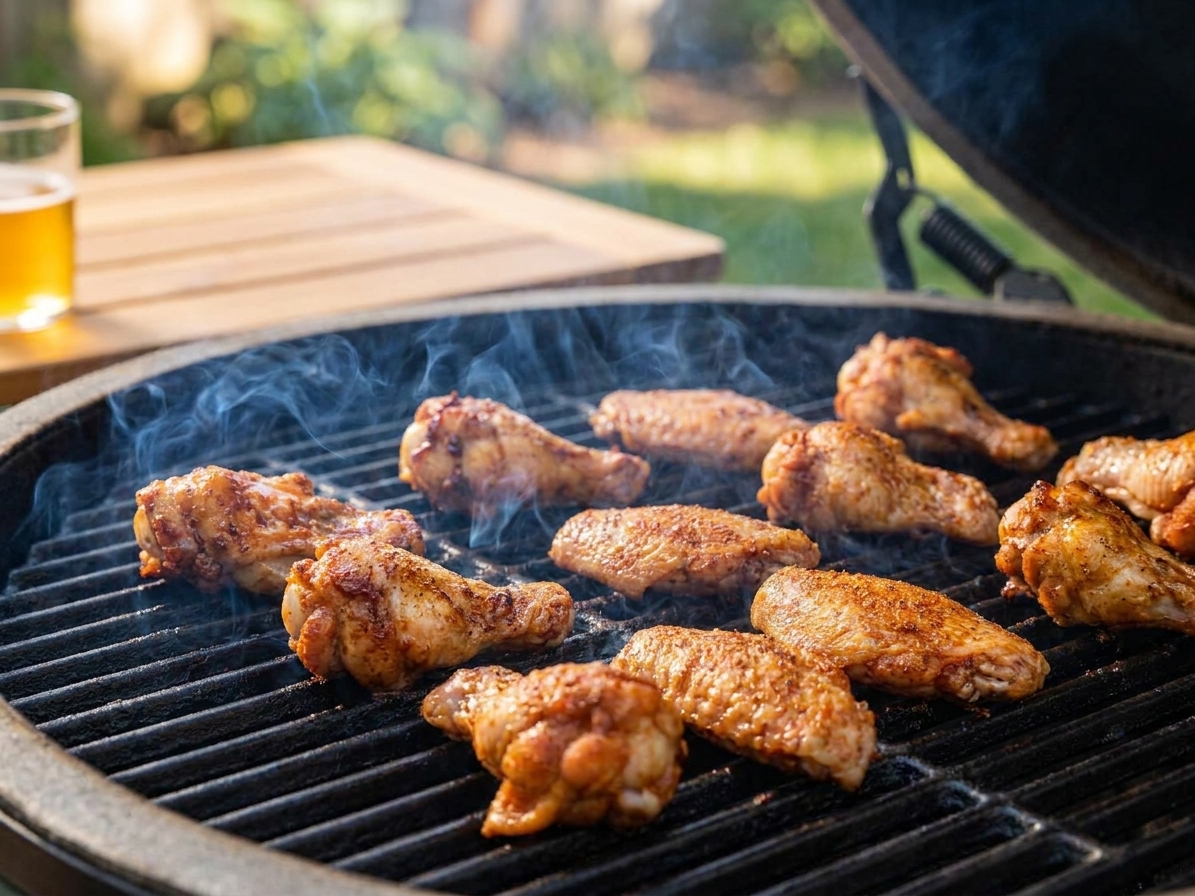
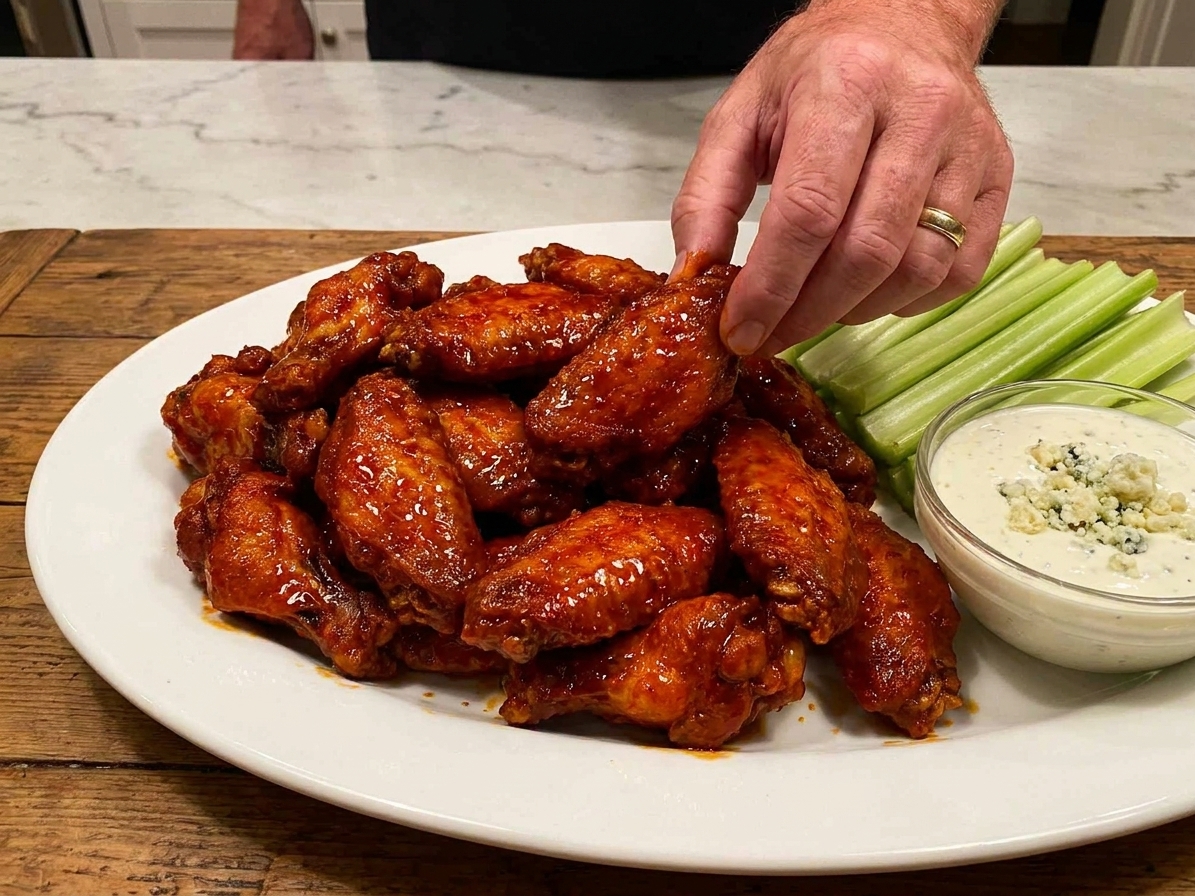
Smoked wings are one of those foods that make people hover around the smoker like it is a campfire with snacks. You get that deep, savory smoke flavor, the meat stays ridiculously juicy, and if you do the finish right, you still get the crisp edges that make wings worth the mess.

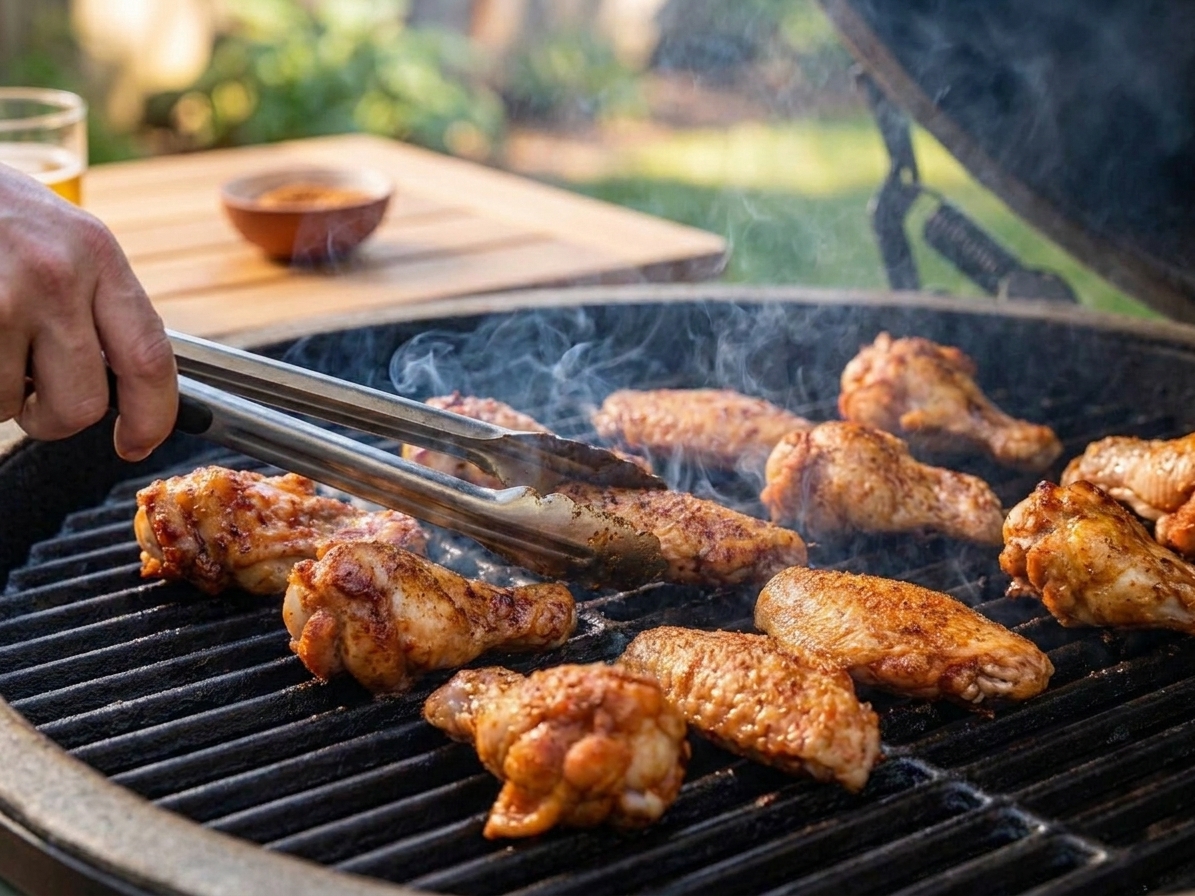
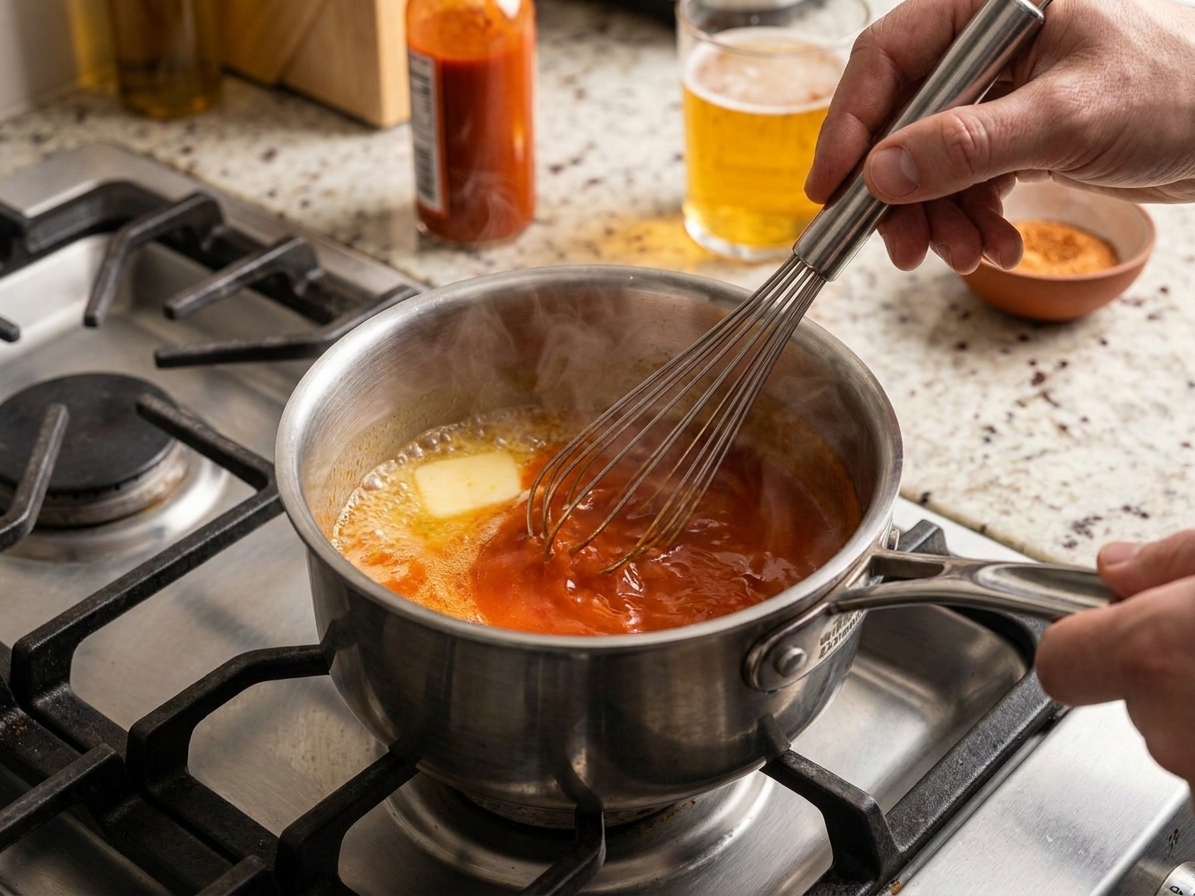
This recipe keeps it friendly: a pantry rub, steady smoke, and a quick high-heat finish so the skin is bite-through instead of rubbery. Then we toss them in a buttery hot sauce that is bright, salty, and just spicy enough to make you go back for “one more” until the plate is suspiciously empty.
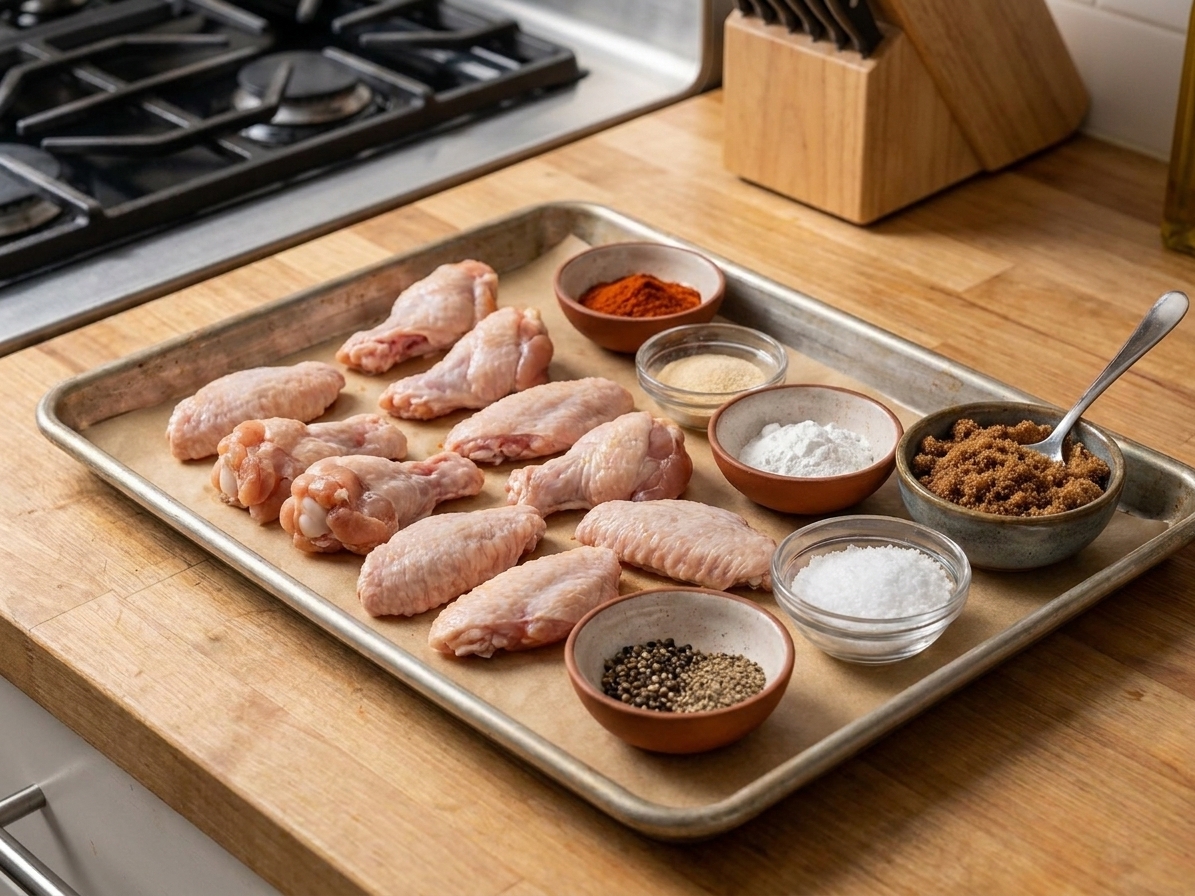
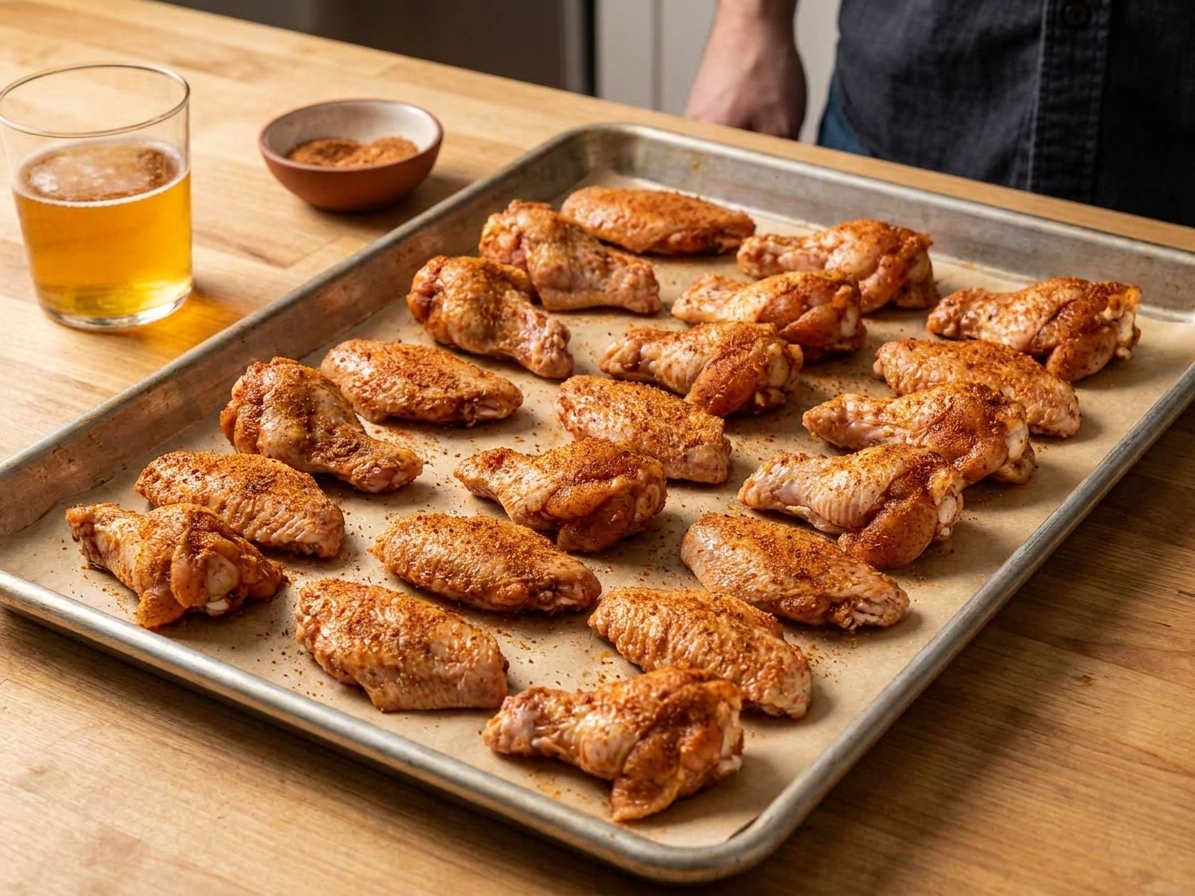
Raw chicken wings arranged on a sheet pan with small bowls of salt, pepper, paprika, garlic powder, baking powder, and brown sugar on a kitchen counter

Why It Works

  • Bite-through skin: a little baking powder in the rub plus a hot finish helps the skin crisp without deep frying.
  • Big smoke, not ashtray smoke: we run a clean, steady smoker temp and avoid over-smoking with heavy, wet wood.
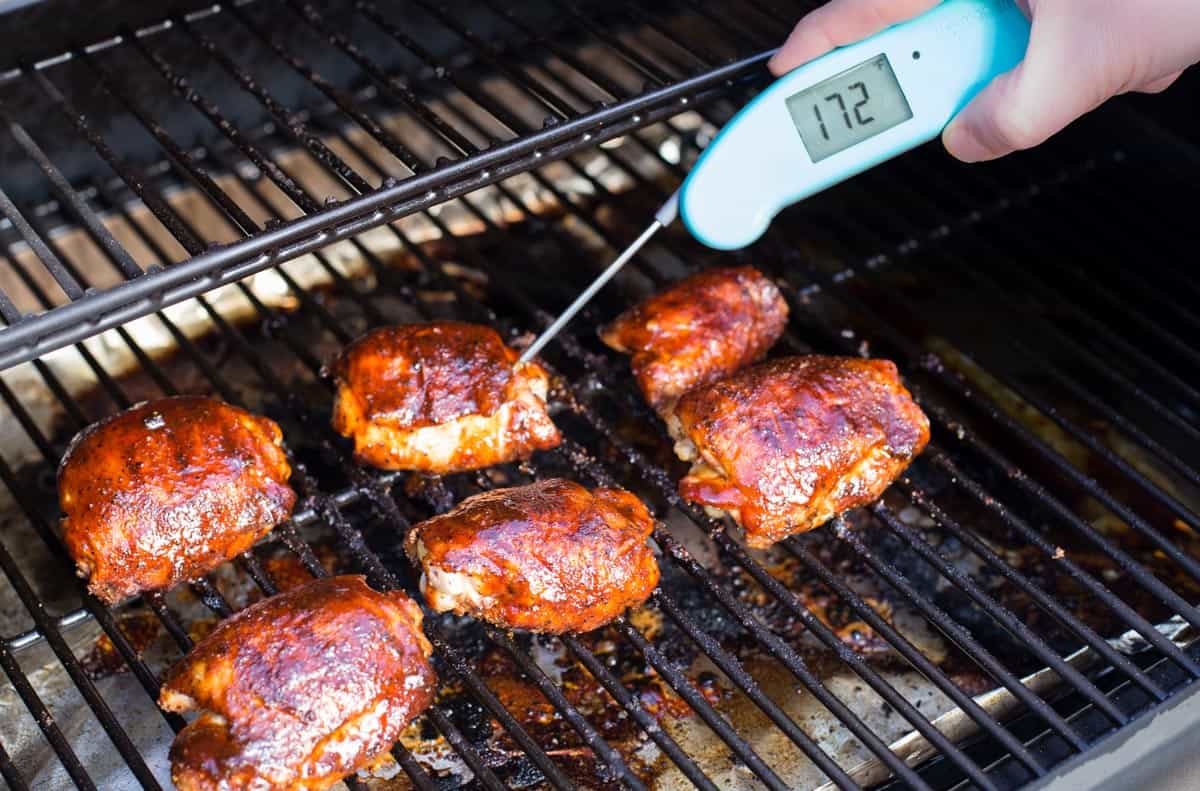
  • Juicy meat: wings are safe at 165 F, but they get truly tender at 185 to 195 F internal.
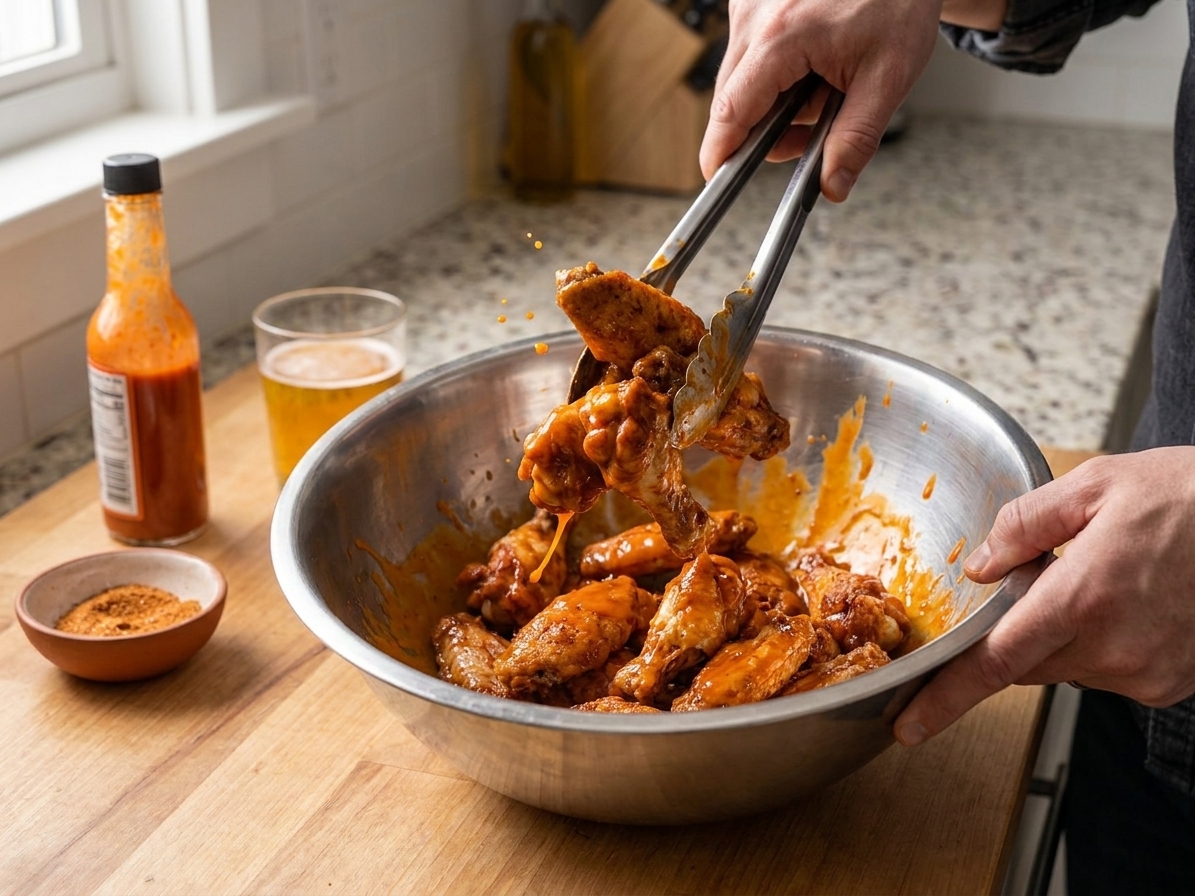
  • Sauce that clings: tossing while the wings are hot and lightly rendered helps the sauce stick instead of sliding off.

Pairs Well With

Storage Tips

Fridge: Cool wings to room temp (no longer than 2 hours), then store in an airtight container for up to 4 days. Keep sauce separate if you can.

Freezer: Freeze wings (preferably unsauced) on a sheet pan until solid, then transfer to a freezer bag. Store up to 3 months.

Best reheating for crisp skin:

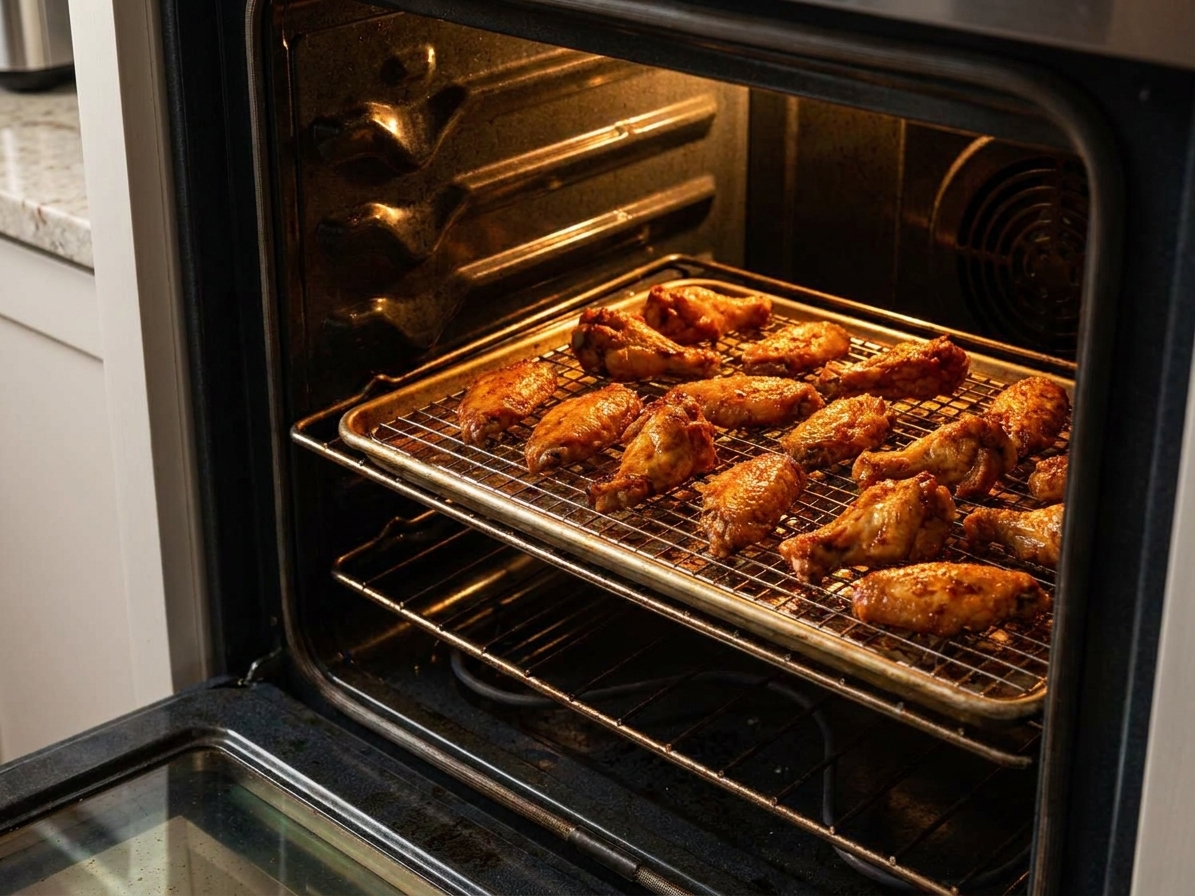
  • Oven: 425 F for 10 to 15 minutes on a wire rack over a sheet pan, flipping once.
  • Air fryer: 380 F for 6 to 9 minutes, shaking halfway.
  • Microwave: works for speed, but the skin will soften. If you microwave, finish in a hot skillet for 2 to 3 minutes to bring back some texture.
Smoked chicken wings reheating on a wire rack set over a sheet pan inside a home oven

Common Questions

What temperature should wings be when they are done?

For food safety, chicken needs to reach 165 F in the thickest part. That said, wings are at their best when you push them to 185 to 195 F. The collagen has time to relax, so the meat turns tender and pulls cleanly from the bone.

How do you keep smoked wings from getting rubbery?

Two moves: dry the skin and finish hot. Pat the wings dry, use a rub with a little baking powder (not baking soda), and then crisp them at high heat at the end (hot grill, oven, or air fryer).

Do I need to brine wings before smoking?

Not required. Wings have enough fat and connective tissue to stay juicy. If you want extra seasoning insurance, dry brine with salt (or this rub) for 2 to 12 hours in the fridge uncovered.

What wood is best for smoked wings?

For crowd-pleasing flavor, go with apple or cherry. If you want a deeper barbecue vibe, use hickory but keep it light. Mesquite can get intense fast on wings.

Can I sauce the wings before smoking?

You can, but sugary sauces can scorch and get bitter. I prefer smoking with the dry rub, then saucing right at the end, or serving sauce on the side.

Smoked wings are my favorite kind of low-drama party food. I can get them on the smoker, clean the kitchen while they cruise, and still look like I did something heroic when they hit the table. The first time I nailed the “crispy skin without frying” thing, I felt like I had unlocked a cheat code. Now I make them any time I want that backyard-smoke flavor but still need dinner to be, you know, actually dinner.

If you are feeding a group, 2 pounds can disappear fast. A good party rule is about 1⁄2 pound per person, and closer to 3⁄4 pound if your crew treats wings like a sport.