Mom's Best Recipes
Recipe

Smoked Pulled Pork

Tender, smoky, barky pulled pork with a simple rub and clear smoker temps that work for beginners and weekend pros.

Author By Matt Campbell
4.8
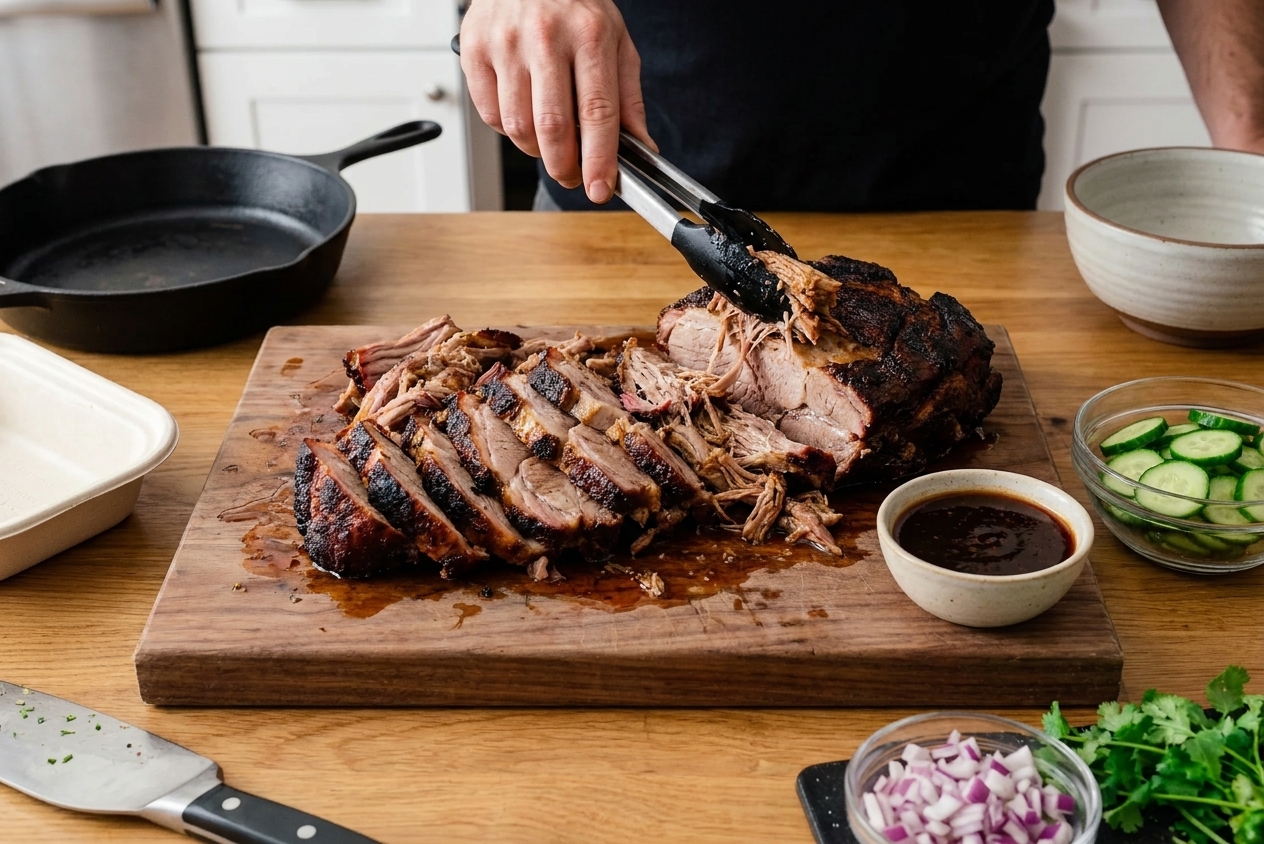
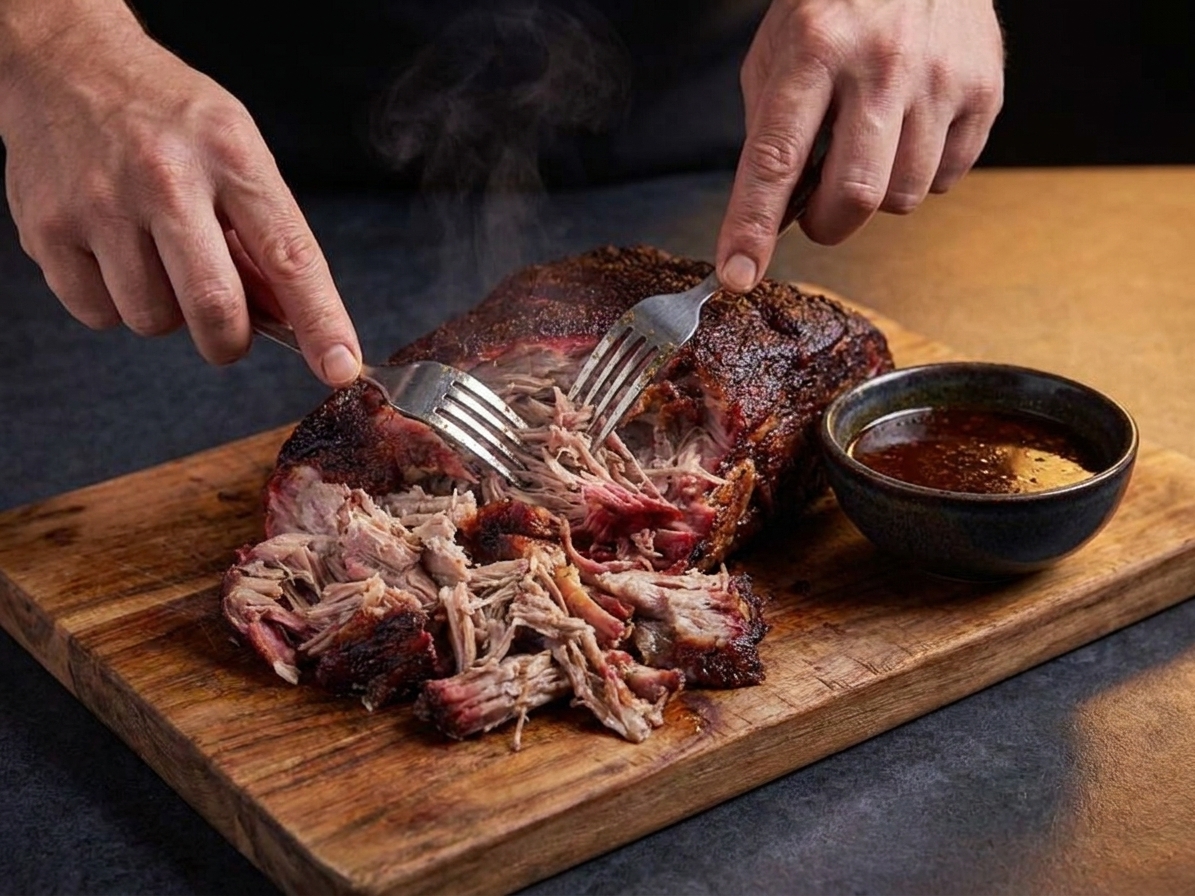
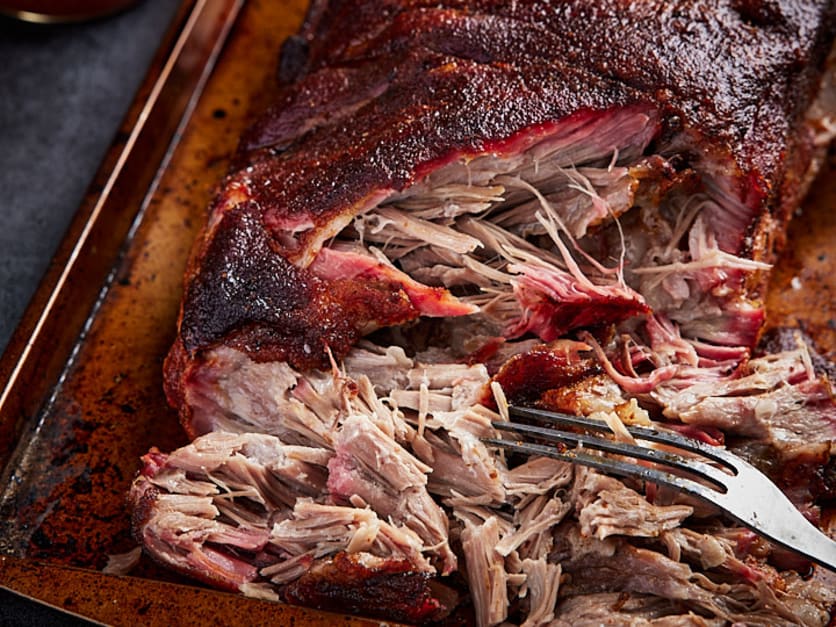
A tray of freshly smoked pulled pork with dark bark, steam rising as it is being shredded with gloved hands on a wooden cutting board

When someone says “smoker,” my brain immediately goes to two places: meat that tastes like you actually tried, and the sweet, slightly chaotic joy of hanging outside while something slow-cooks itself into greatness.

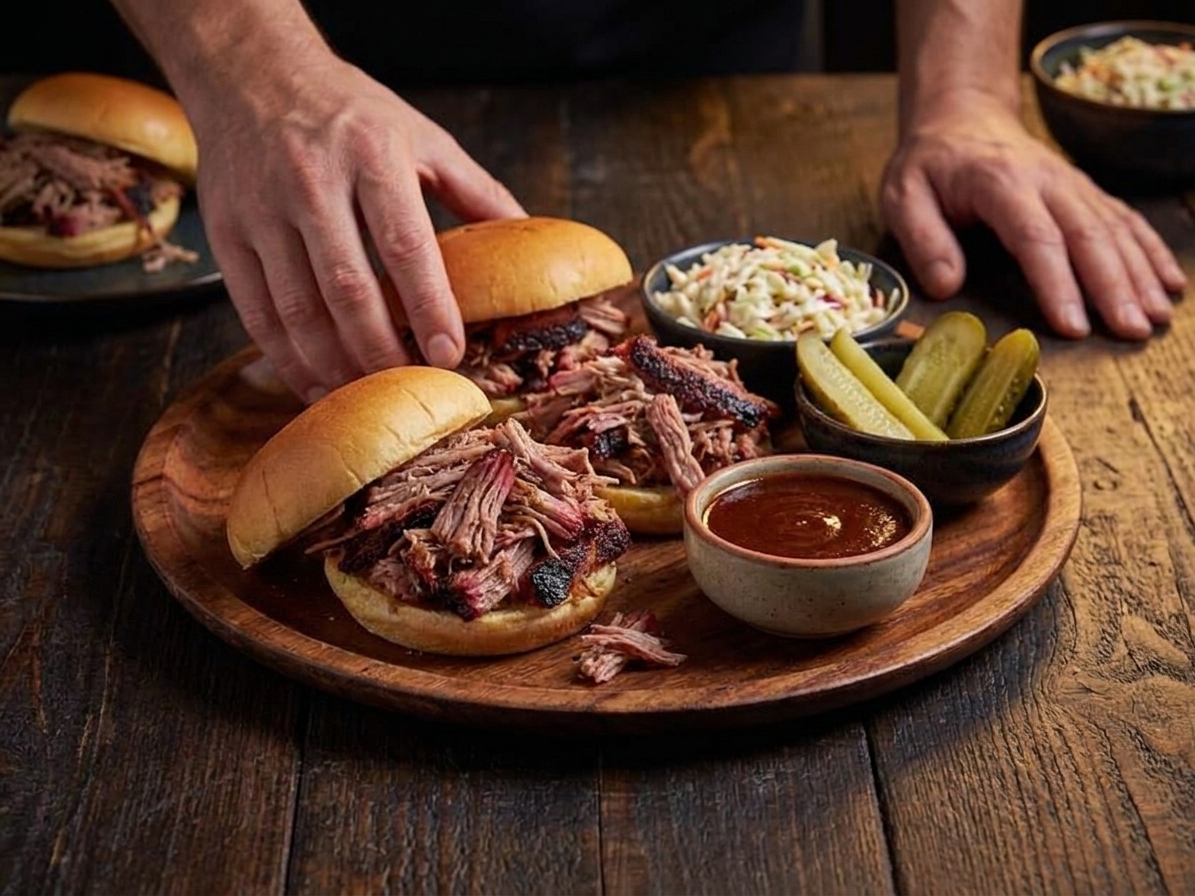
This smoked pulled pork is my go-to for feeding a crowd, stocking the fridge for the week, or turning a random Tuesday into a sandwich situation. We keep the ingredients accessible, the instructions clear, and the vibe low drama. You do not need a competition rig, a secret family rub, or a playlist of country songs, but I will not stop you.

We are aiming for deep smoke flavor, crisp edges and bark, and pork that shreds like it is auditioning for a comfort-food commercial. The best part is you can use this exact method on a pellet smoker, charcoal, or even a basic electric smoker with a wood tray.

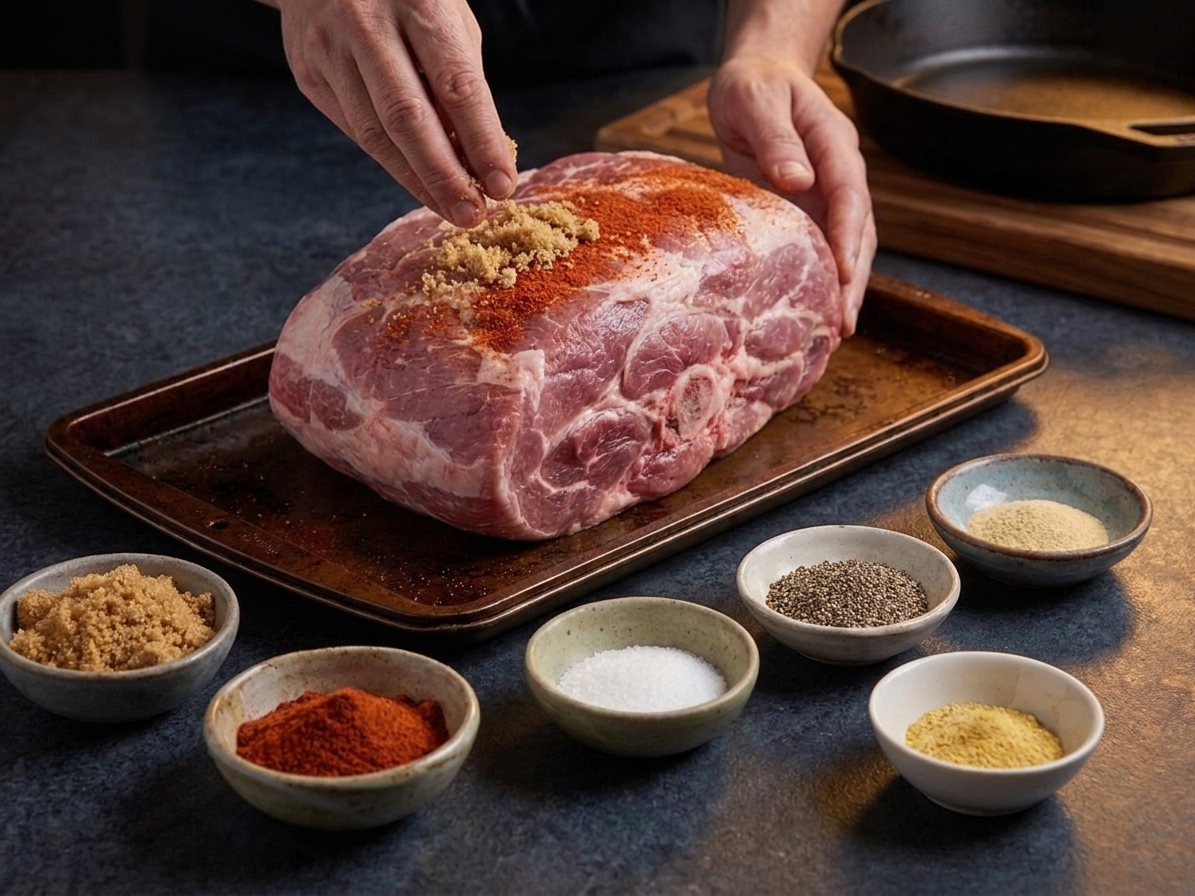
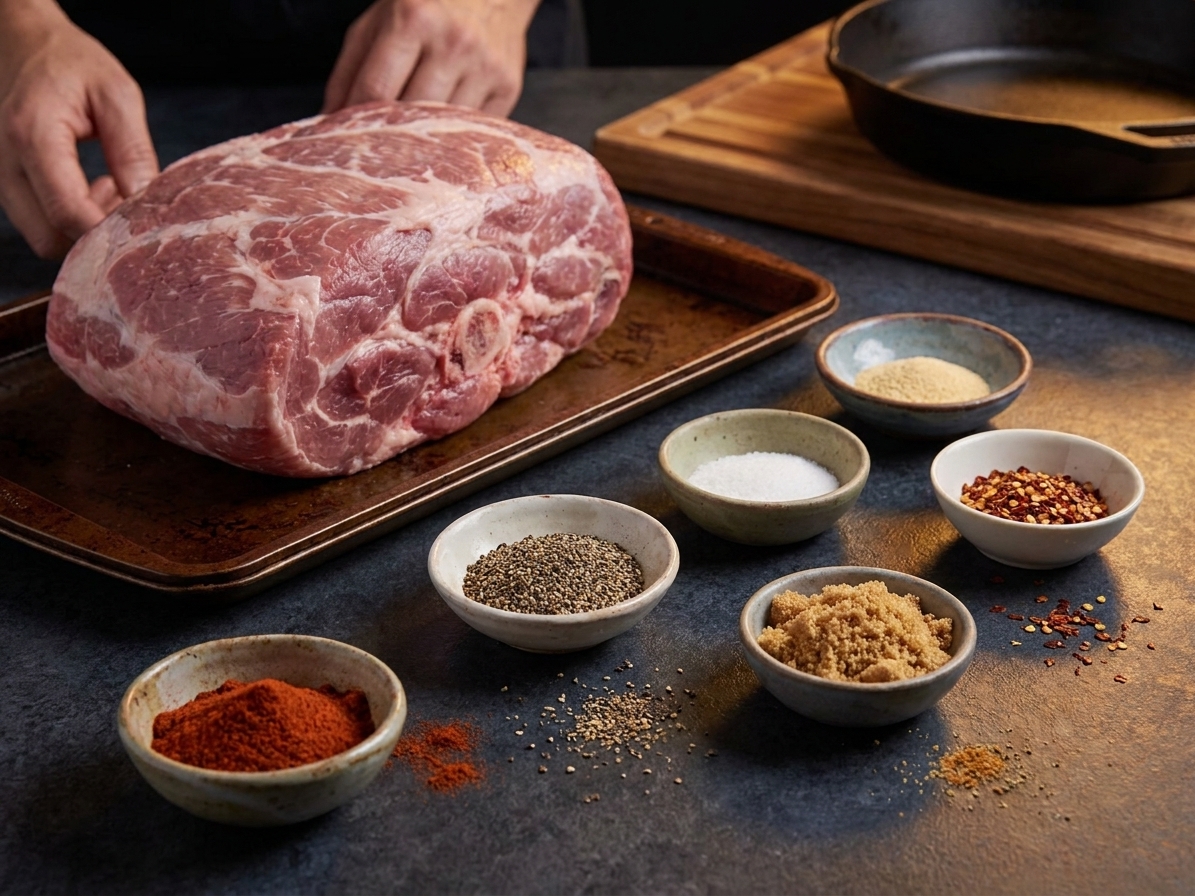
Pork shoulder on a rimmed baking sheet surrounded by small bowls of brown sugar, paprika, salt, pepper, garlic powder, and mustard

Why It Works

  • Simple rub, big payoff: Brown sugar, paprika, and spices build a bark that tastes like smoky barbecue chips in the best way.
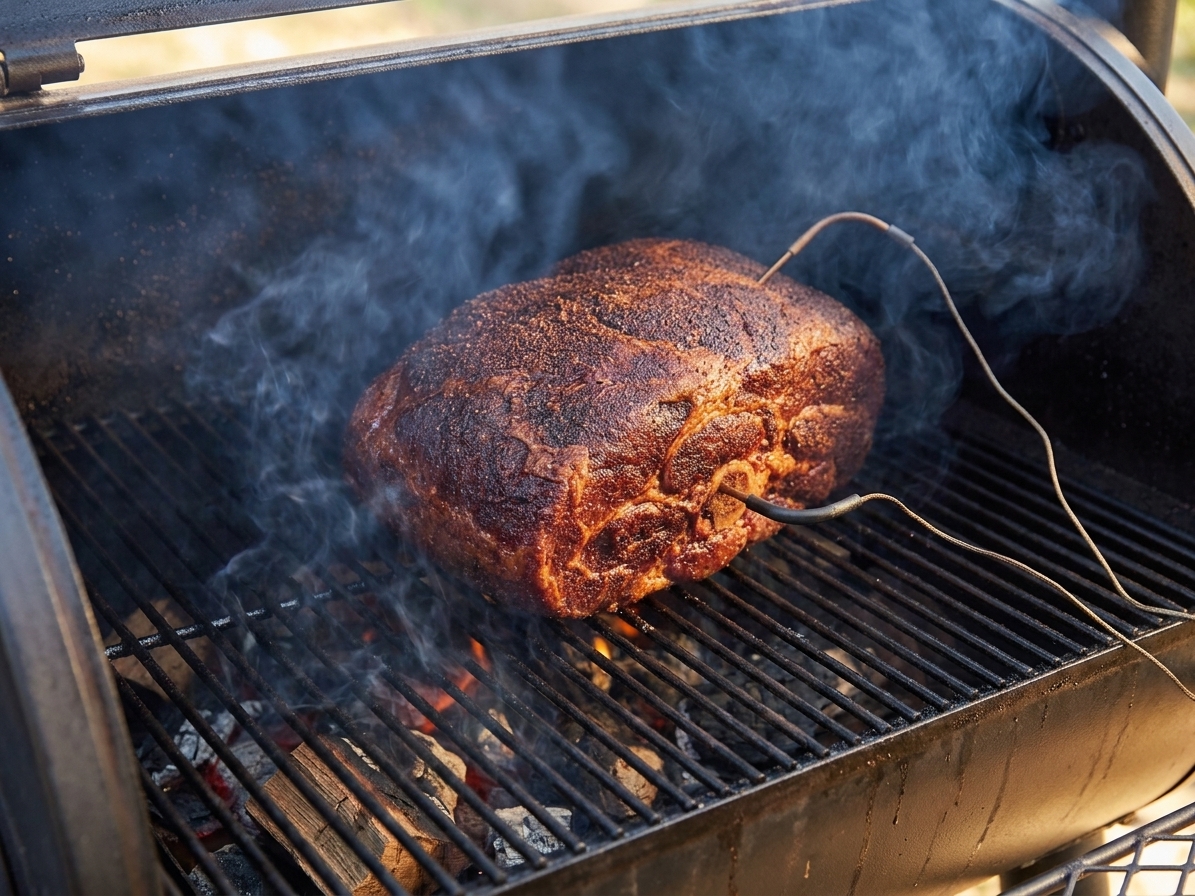
  • Steady temps = steady sanity: We hold the smoker around 225°F to 250°F so the fat renders slowly and the meat stays juicy.
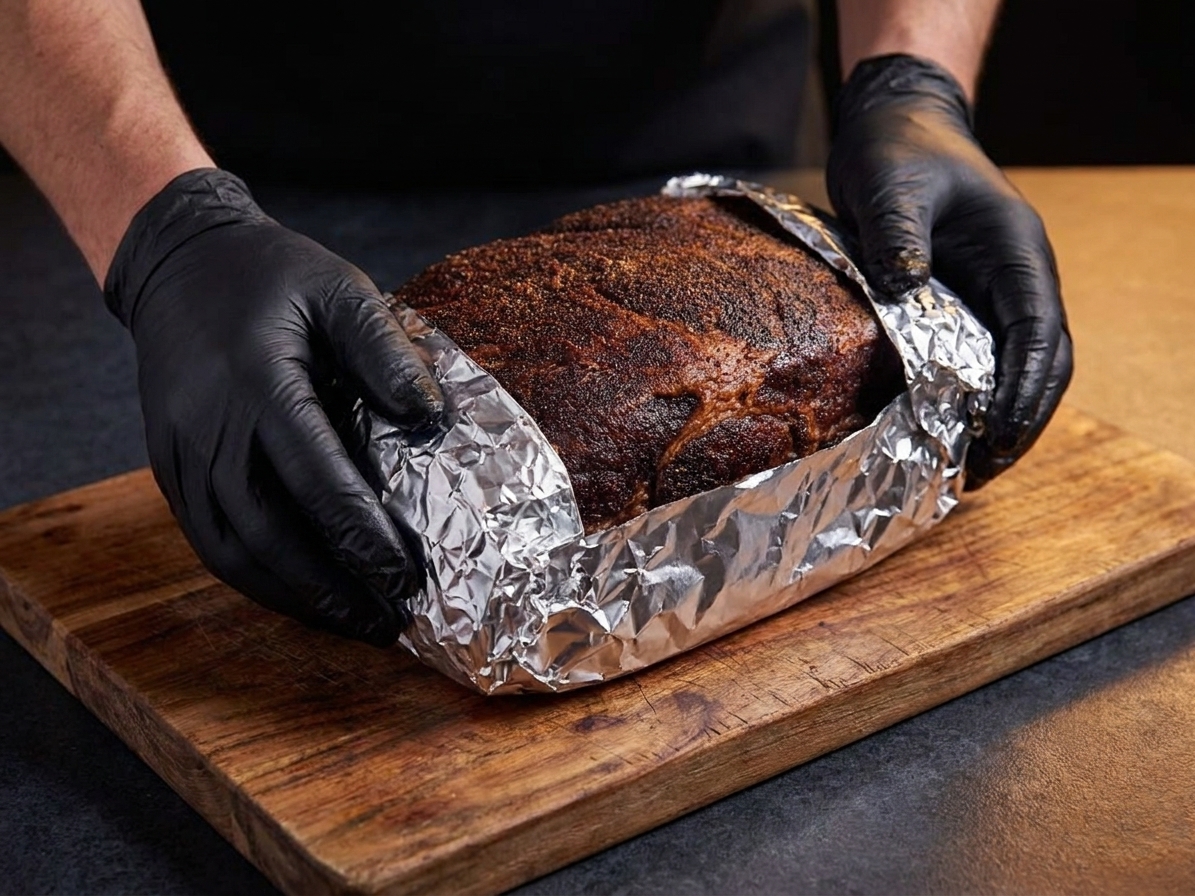
  • Built-in wiggle room: If the cook runs long, the wrapped rest in a cooler buys you time and makes the pork even more tender.
  • Flavor you can steer: Go sweeter, spicier, tangier, or keep it classic. This base plays well with whatever sauce you love.

Pairs Well With

Storage Tips

Fridge: Cool pulled pork quickly, then store in an airtight container for up to 4 days. I like to mix in a few spoonfuls of drippings or a splash of apple juice to keep it juicy.

Freezer: Freeze in portioned freezer bags for up to 3 months. Press the bag flat so it thaws fast.

Reheat (best methods):

  • Stovetop: Add pork to a skillet with a splash of water, apple juice, or broth. Cover and warm on low, then uncover to crisp the edges if you want.
  • Oven: Cover in a baking dish with a little liquid at 300°F until hot.
  • Microwave: Works fine. Cover and add a splash of liquid so it does not dry out.
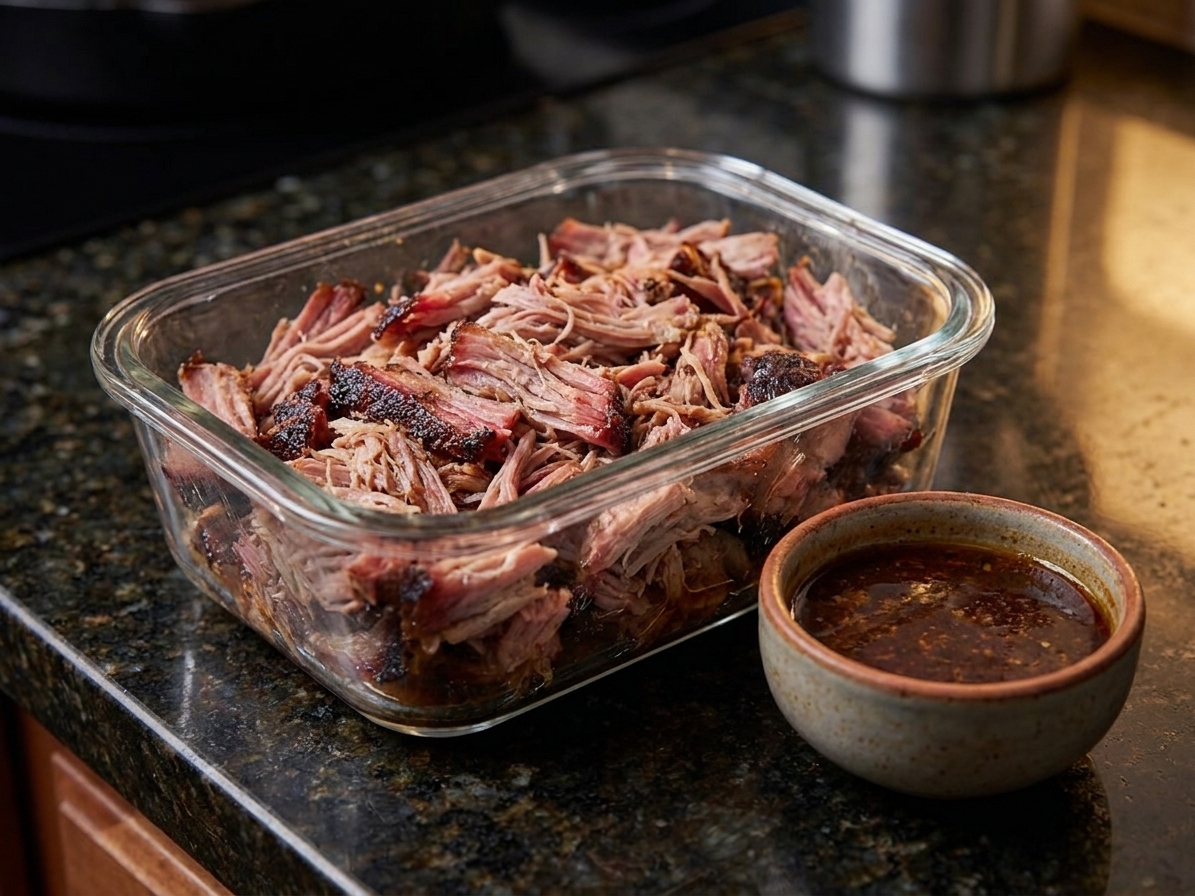
Shredded pulled pork stored in a clear airtight container on a kitchen counter next to a small cup of cooking juices

Common Questions

What cut of pork should I use for pulled pork?

Use a pork shoulder, sold as Boston butt or pork butt. Bone-in is great and forgiving, but boneless works too.

What smoker temperature is best?

I aim for 235°F as the happy middle, with a workable range of 225°F to 250°F. Lower is slower and smokier. Higher shortens the cook and still turns out great.

How long does it take to smoke a pork shoulder?

It varies more than people like to admit. A solid planning range is 60 to 120 minutes per pound at 225°F to 250°F, and the stall can add extra time. Cook to tenderness, not the clock.

What is the stall and should I worry?

The stall is when the internal temp seems stuck (often somewhere around 150°F to 170°F). It is normal. Moisture evaporating off the surface cools the meat a bit, like sweat. Keep your temp steady, and it will push through. Wrapping helps if you are on a schedule.

When should I wrap the pork?

Wrap when the bark looks set and deep mahogany and the internal temp is around 165°F (anywhere from 165°F to 175°F is common). Foil speeds things up and keeps it juicy. Butcher paper keeps the bark a little drier and more textured.

What internal temperature is pulled pork done?

Pork is safe to eat earlier, but pulled pork texture needs a higher finish. Start checking at 195°F, and expect it to finish around 200°F to 205°F. More important than the number: a probe or skewer should slide in with very little resistance, like warm butter.

Where should I put the thermometer probe?

Place it in the thickest part of the shoulder and avoid touching the bone (bone reads hotter and can throw you off). If it is boneless, aim for the center mass, not right under the surface.

Do I need a water pan?

Not required, but it helps with temperature stability and can keep the surface from drying too fast. If your smoker runs dry or hot, a water pan is a nice safety net.

Can I do this on a pellet smoker?

Absolutely. Pellet smokers make this almost too easy. If you want stronger smoke flavor, use a stronger wood like hickory or add a smoke tube.

The first time I smoked a pork shoulder, I treated the smoker like a spaceship. I checked the thermometer every five minutes and stared at the vents like they were going to tell me my future. Now I do the opposite. I set it up, trust the process, and let the smoke do its thing. Pulled pork is the ultimate lesson in relaxed cooking: you cannot rush it, but you also do not need to overthink it. Season boldly, keep the temp steady, and taste as you go once it is shredded. That is the whole magic trick.