Common Questions
What is idli made of?
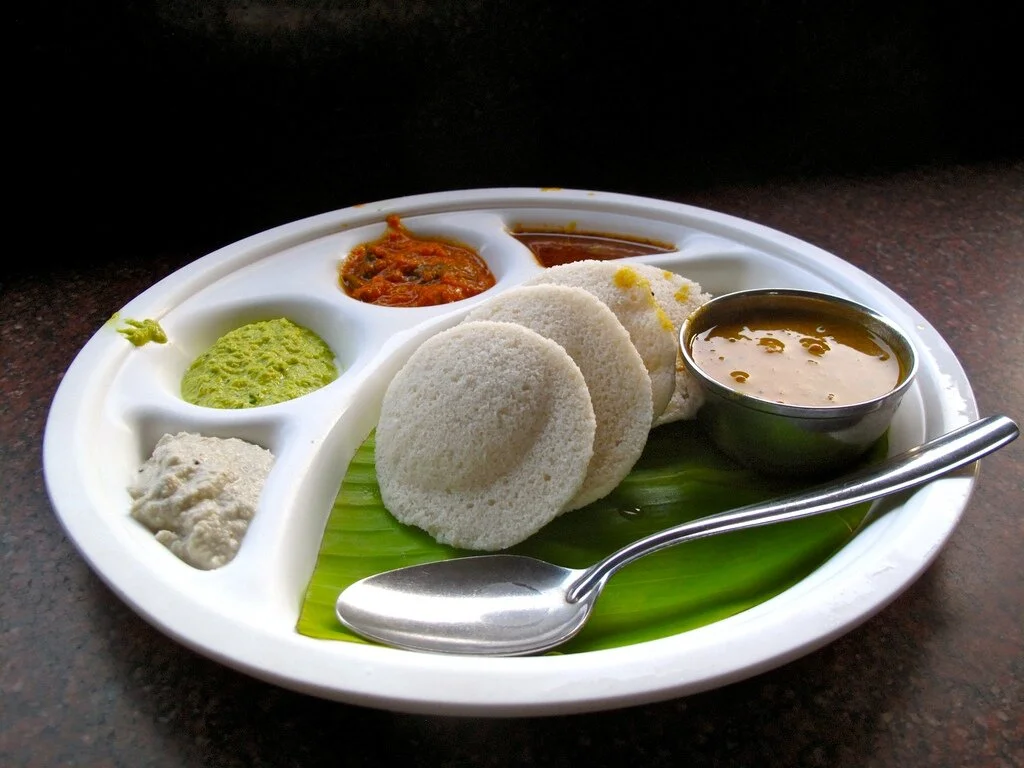
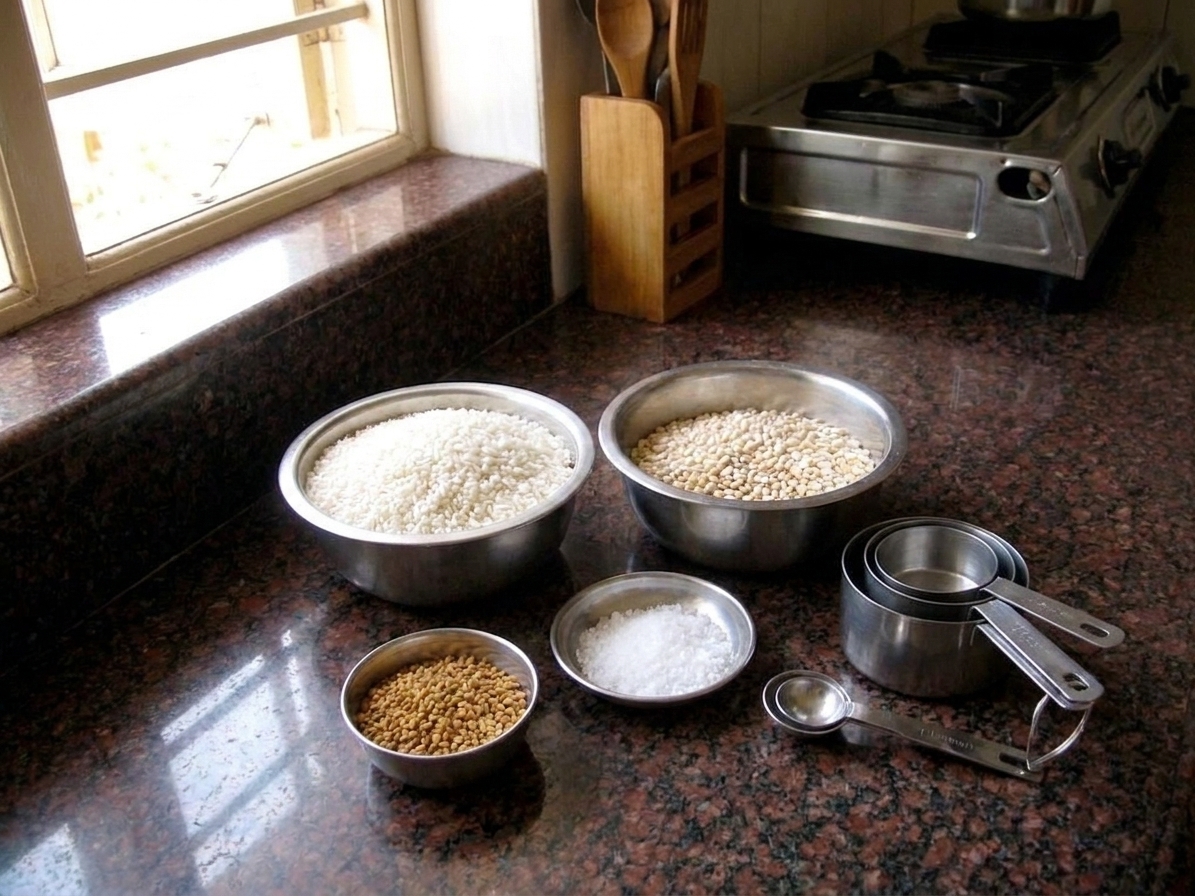
Classic idli batter is made from rice and urad dal (split black gram) that are soaked, ground, then fermented. Many home cooks also add a small amount of fenugreek for fermentation support and aroma.
Do I have to use idli rice?
No, but it helps. Idli rice is parboiled and designed for this job. If you cannot find it, use a mix of parboiled rice (like converted rice) plus regular white rice. The goal is fluffy, not pasty.
What rice to dal ratio should I use?
There is a range, and it depends on your taste and your grinder. Common ratios run from about 2:1 up to 4:1 (rice:urad dal by volume). This recipe uses about 4:1 for idli that stay light and tender. If you like a slightly richer, softer idli and your fermentation is strong, you can bump the urad dal up a bit next time.
How much water should I use for grinding?
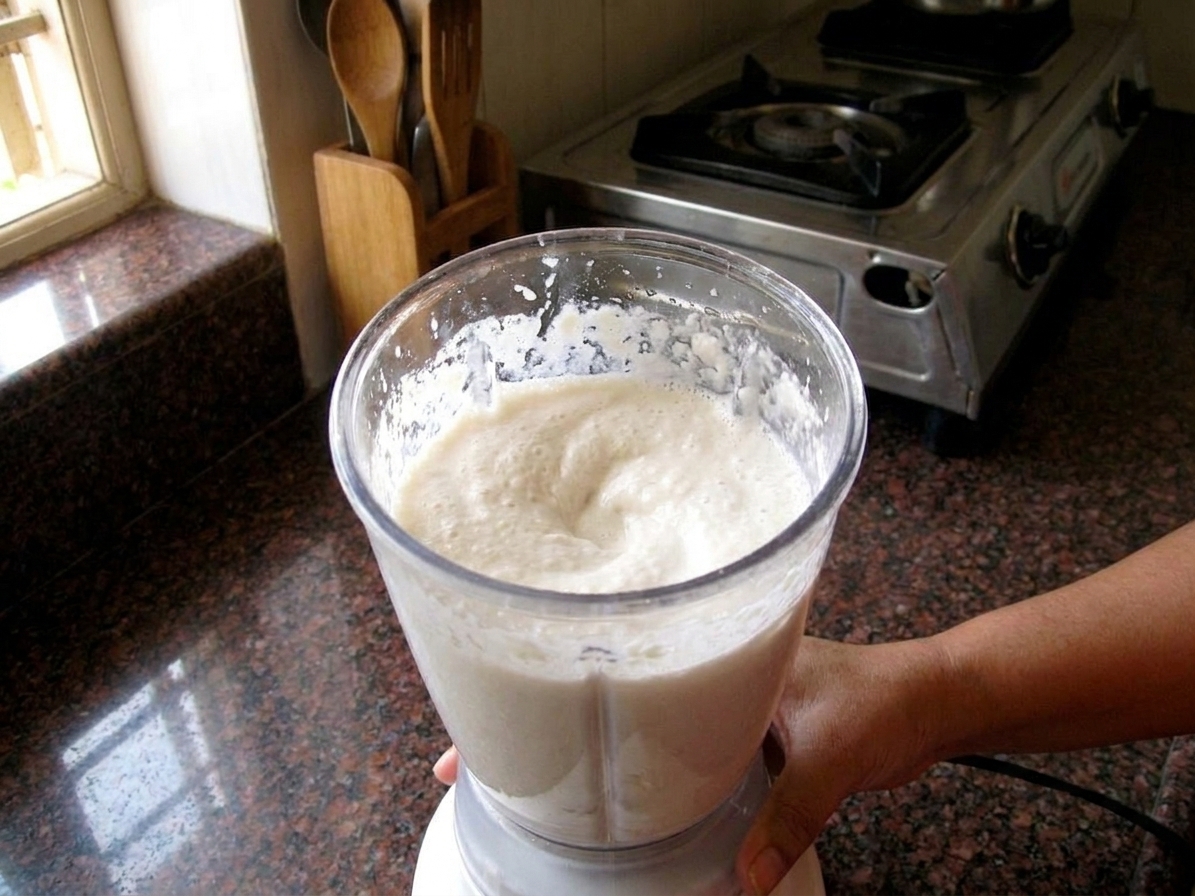
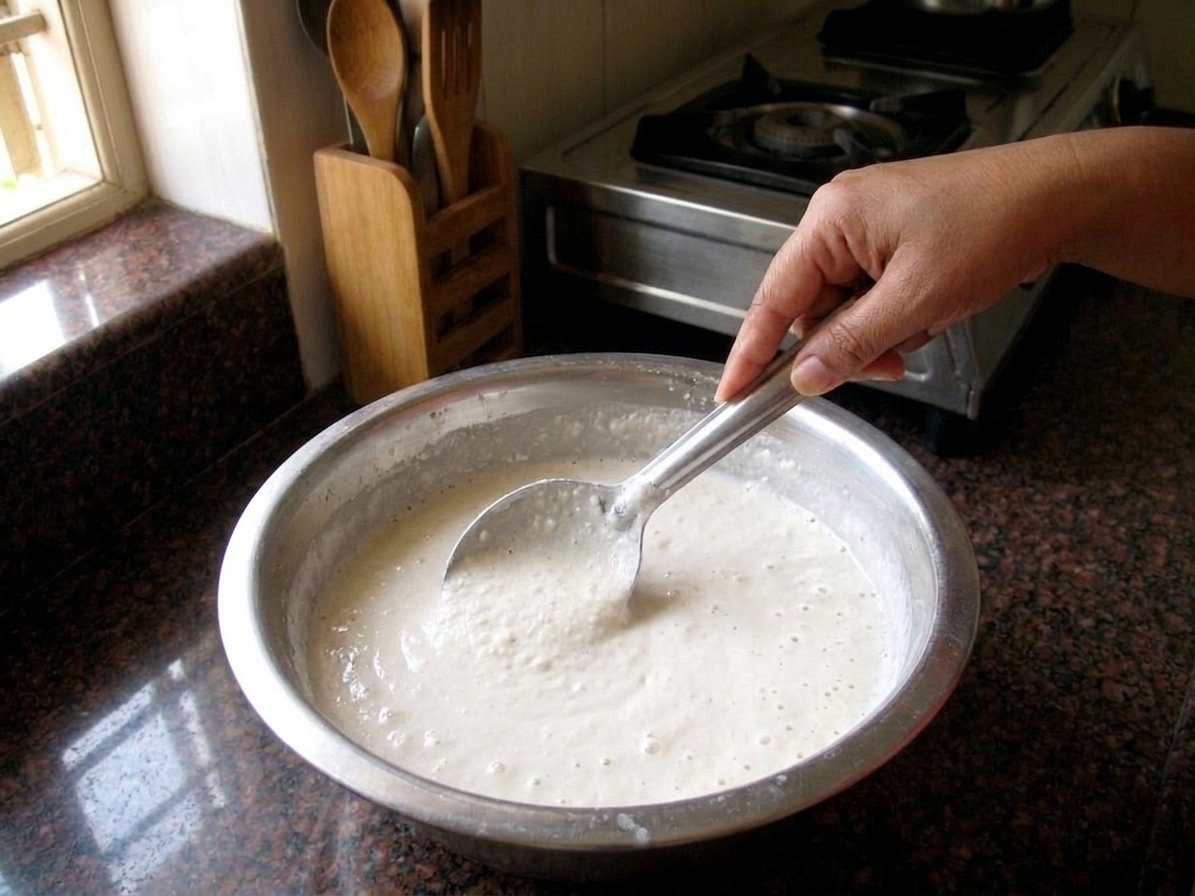
It varies by rice, dal, and grinder. A good starting point is about 1 to 1 1/2 cups total water for grinding, but some blender setups may need a bit more. Always add water a little at a time. The real target is texture: thick but pourable, like a thick pancake batter, not runny.
When do I add salt, before or after fermentation?
Both work, but here is the practical rule. Most traditional cooks add non-iodized salt (rock salt or kosher salt) before fermentation, often mixing by hand. If you are using iodized table salt, it may slow fermentation for some people depending on brand and conditions. In a very cold kitchen or if fermentation tends to struggle, add salt after fermentation so you do not accidentally slow things down.
Why did my idli turn out hard or dense?
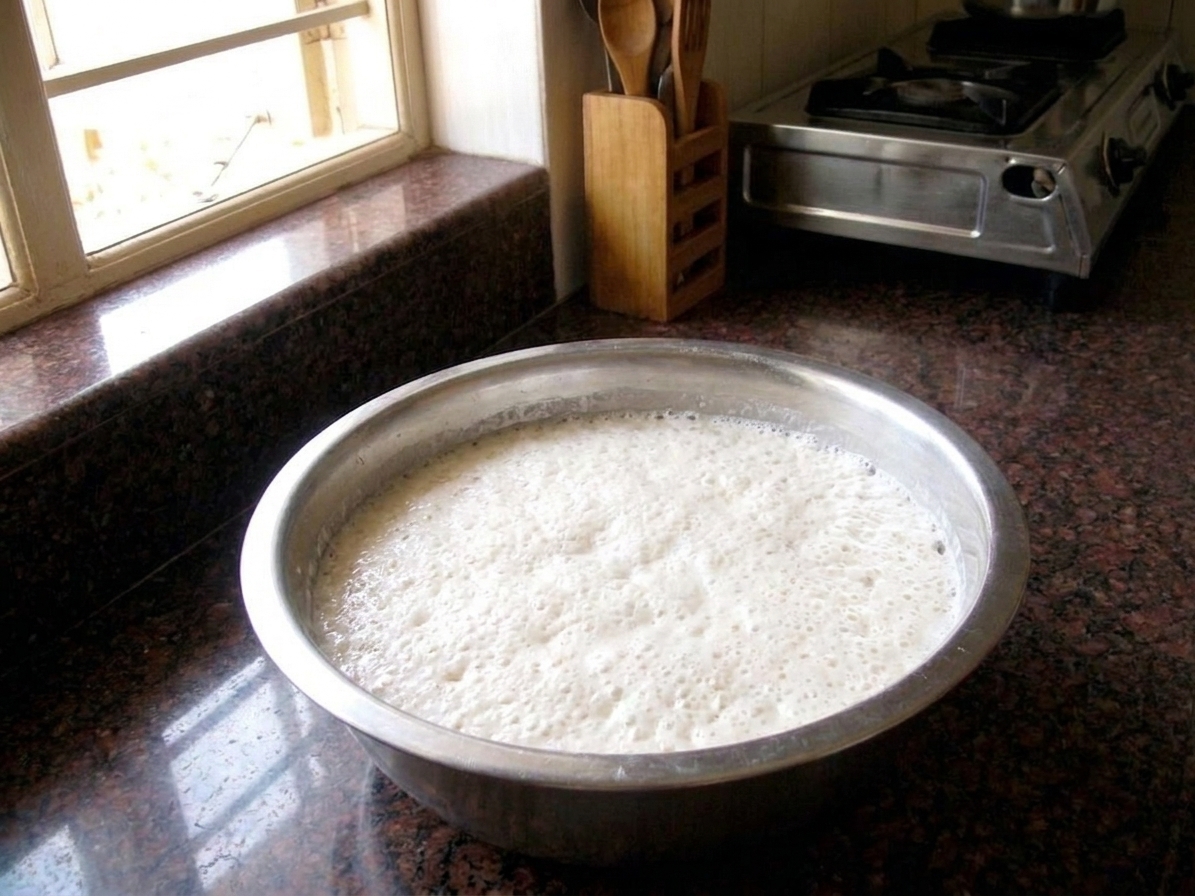
- Under-fermented batter: It should look airy and slightly risen with tiny bubbles.
- Batter too thick: It should drop from a spoon slowly, like thick pancake batter.
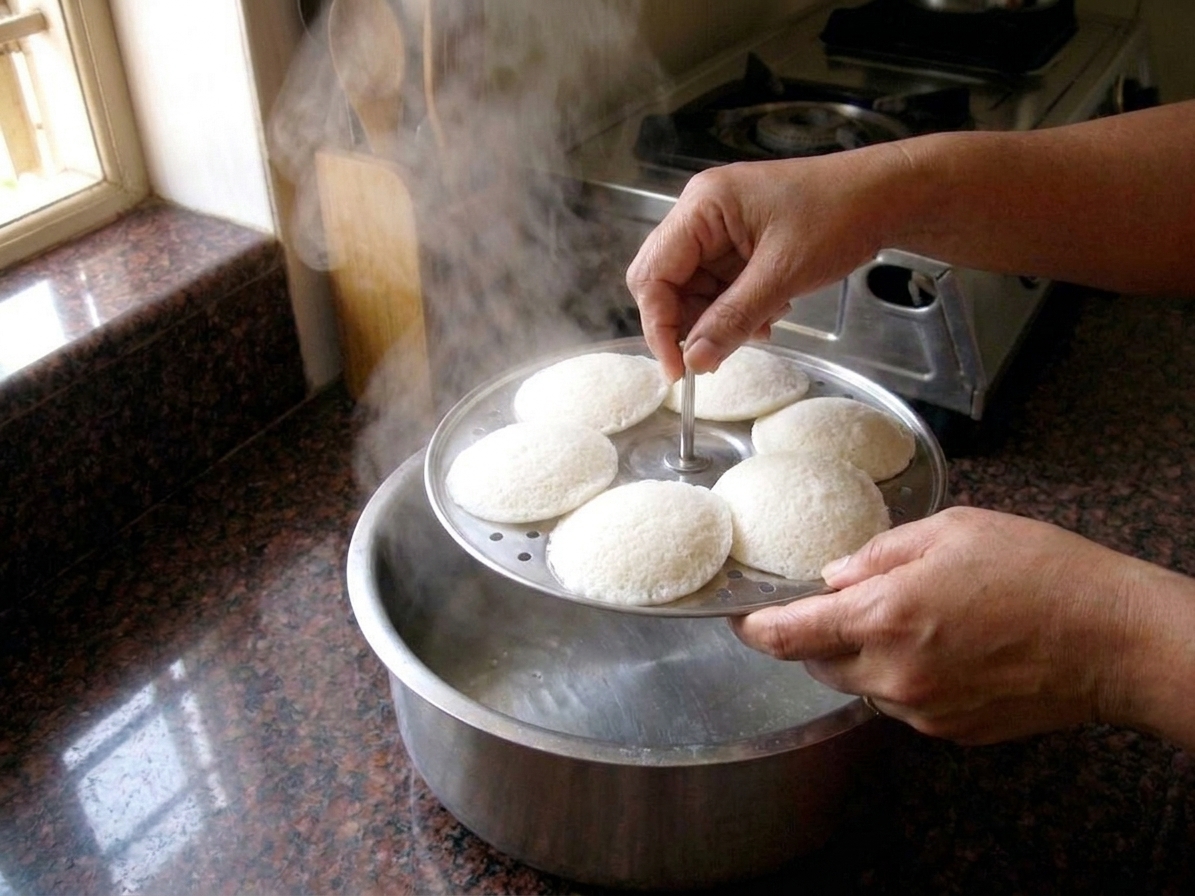
- Over-steaming: Steam just until a toothpick comes out clean. Overcooking dries them out.
Why is my batter not fermenting?
Most of the time it is temperature. Idli batter loves a warm spot around 80°F to 90°F. Try the oven with the light on, a proofing setting, or a warm corner of the kitchen. Avoid overheating above about 95°F, which can stress the fermentation.
If you used a blender, the jar can heat up during grinding. If the batter gets hot, it can hurt fermentation or push it in a weird direction later. Next time, use cold or ice-cold water and blend in short bursts with breaks.
Micro-fix: If you see no movement after about 10 to 12 hours, move the bowl to a warmer spot and give it more time. If it goes too far and tastes sharp, refrigerate sooner next time. You can balance a very sour batch with a tiny pinch of sugar in the batter, but consider it an emergency tool, not the plan.
Can I make idli without an idli stand?
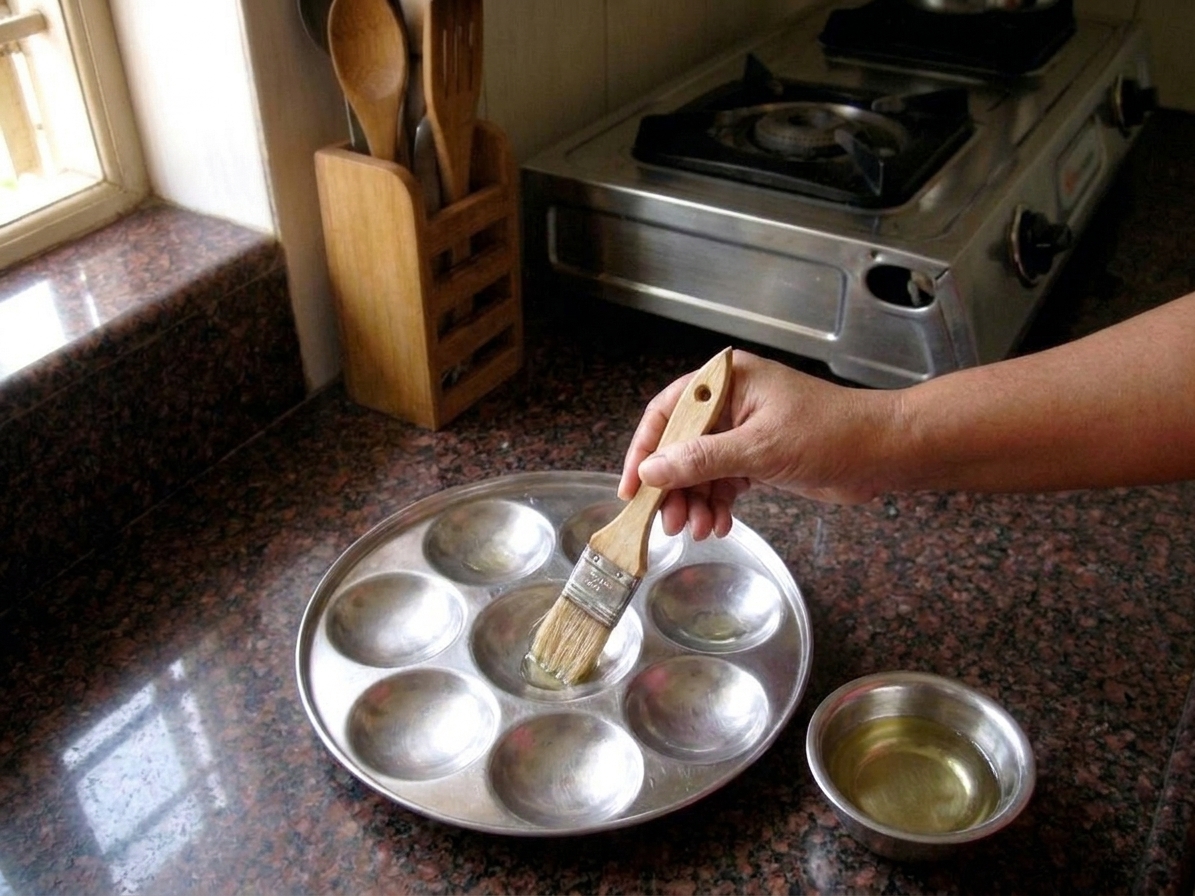
Yes. Use small stainless steel bowls, ramekins, or silicone muffin cups placed in a steamer basket. Grease lightly, fill, and steam the same way.
Can I skip fermentation?
You can, but it will not be the same texture or flavor. If you are in a hurry, you can make a quick version by adding a little ENO fruit salt or baking soda right before steaming, but consider it a different recipe. Fermented idli has that signature soft, light bite.