Mom's Best Recipes
Recipe

Soondubu Jjigae (Korean Tofu Stew)

Spicy, savory soondubu jjigae with kimchi and a quick broth, ready in about 30 minutes.

Author By Matt Campbell
4.8
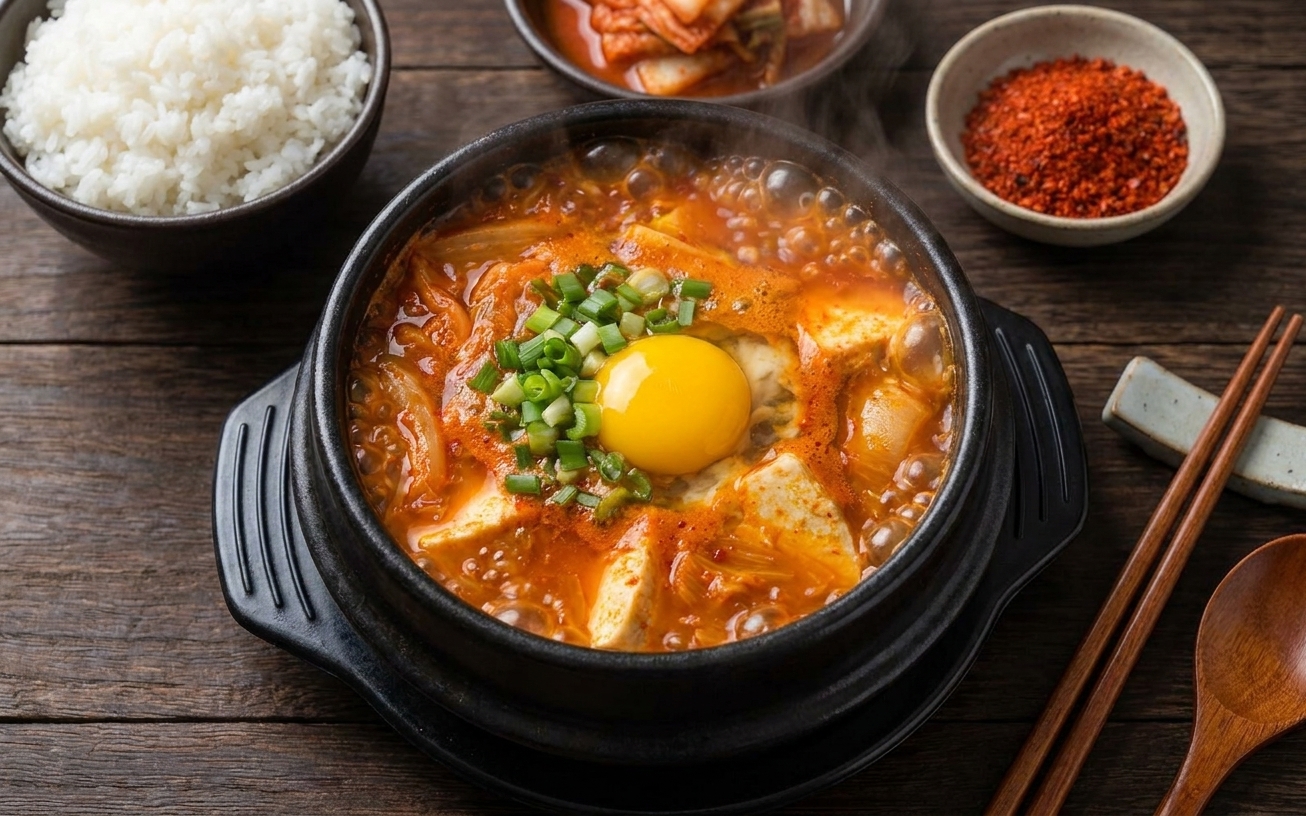
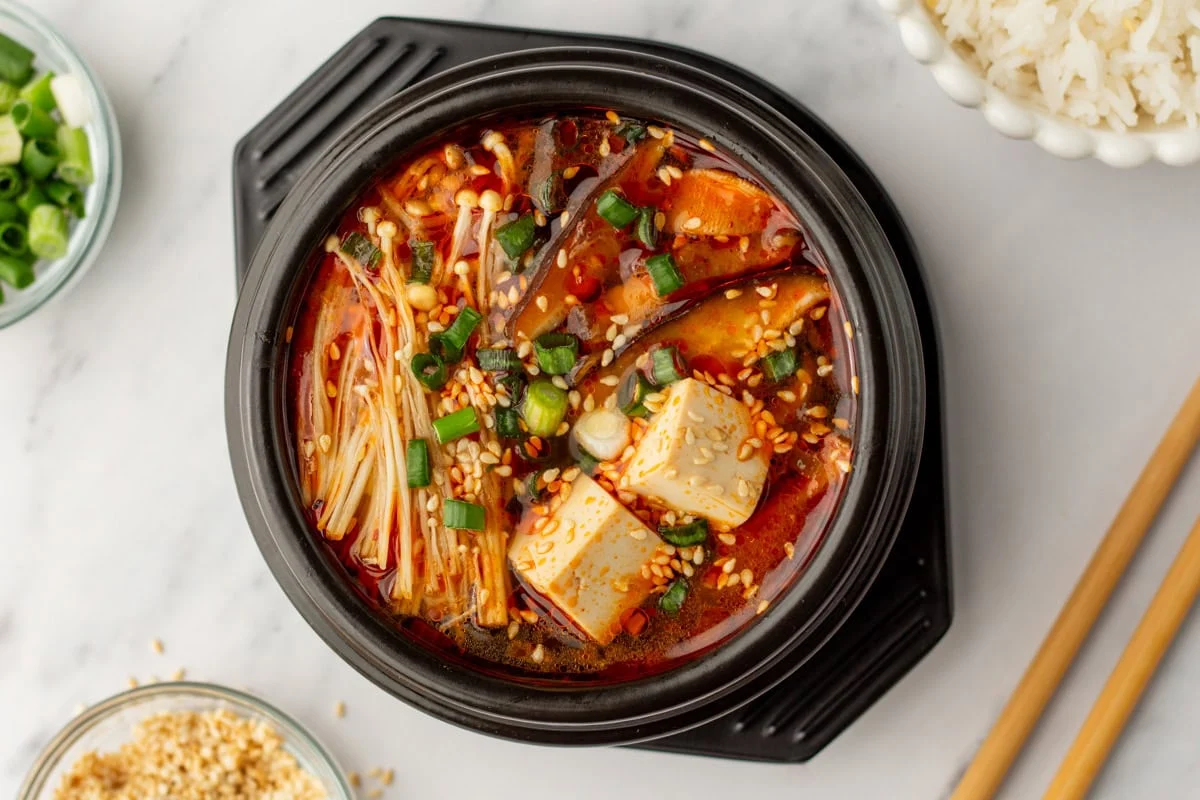
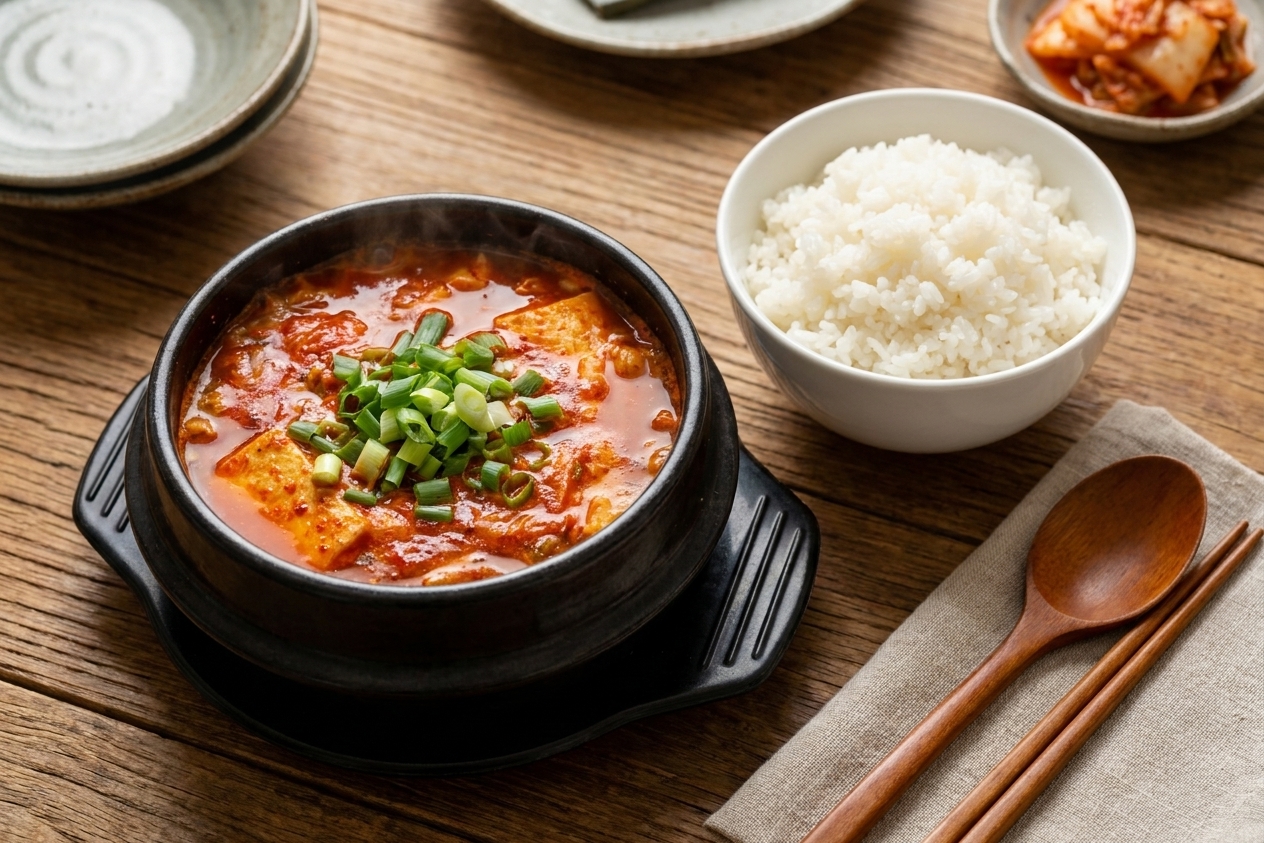
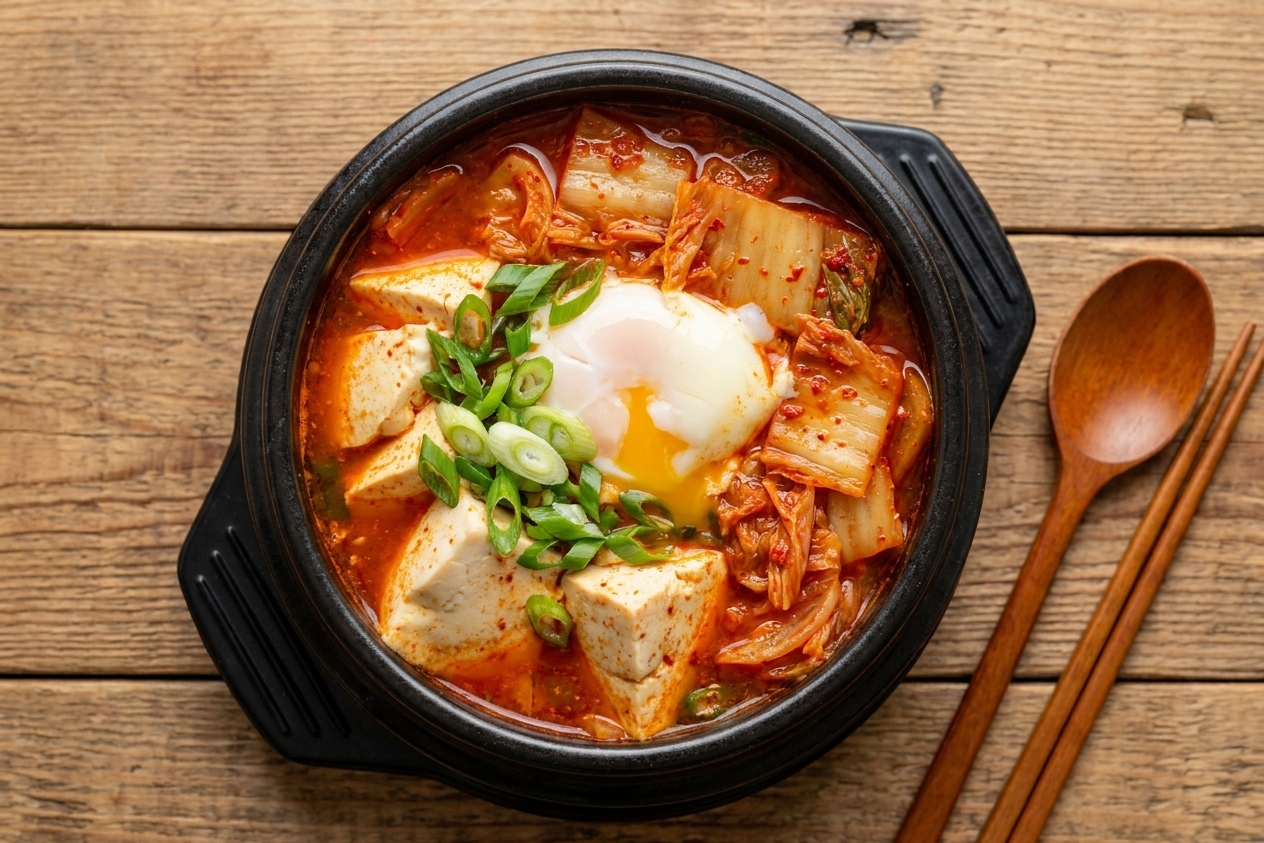
A bubbling pot of soondubu jjigae with extra-soft tofu, kimchi, sliced scallions, and a soft-cooked egg on top, set on a simple wooden table with a spoon and chopsticks

Soondubu jjigae is the kind of stew that makes you feel like you have your life together, even if your sink is full and you are wearing the same hoodie you cooked in yesterday. It is hot, spicy, a little messy, and wildly comforting. Extra-soft tofu breaks into soft clouds, the broth turns brick-red from gochugaru, and your whole kitchen starts smelling like dinner means something.

This is my weeknight version for Moms Best Recipes. The vibe is bold but approachable: common grocery store swaps, clear steps, and a couple little tricks that make the pot taste like you knew what you were doing the whole time. One quick note: depending on where you shop, you might see packages labeled soondubu, soft tofu, or silken tofu. You want the extra-soft, spoonable kind made for soups and stews.

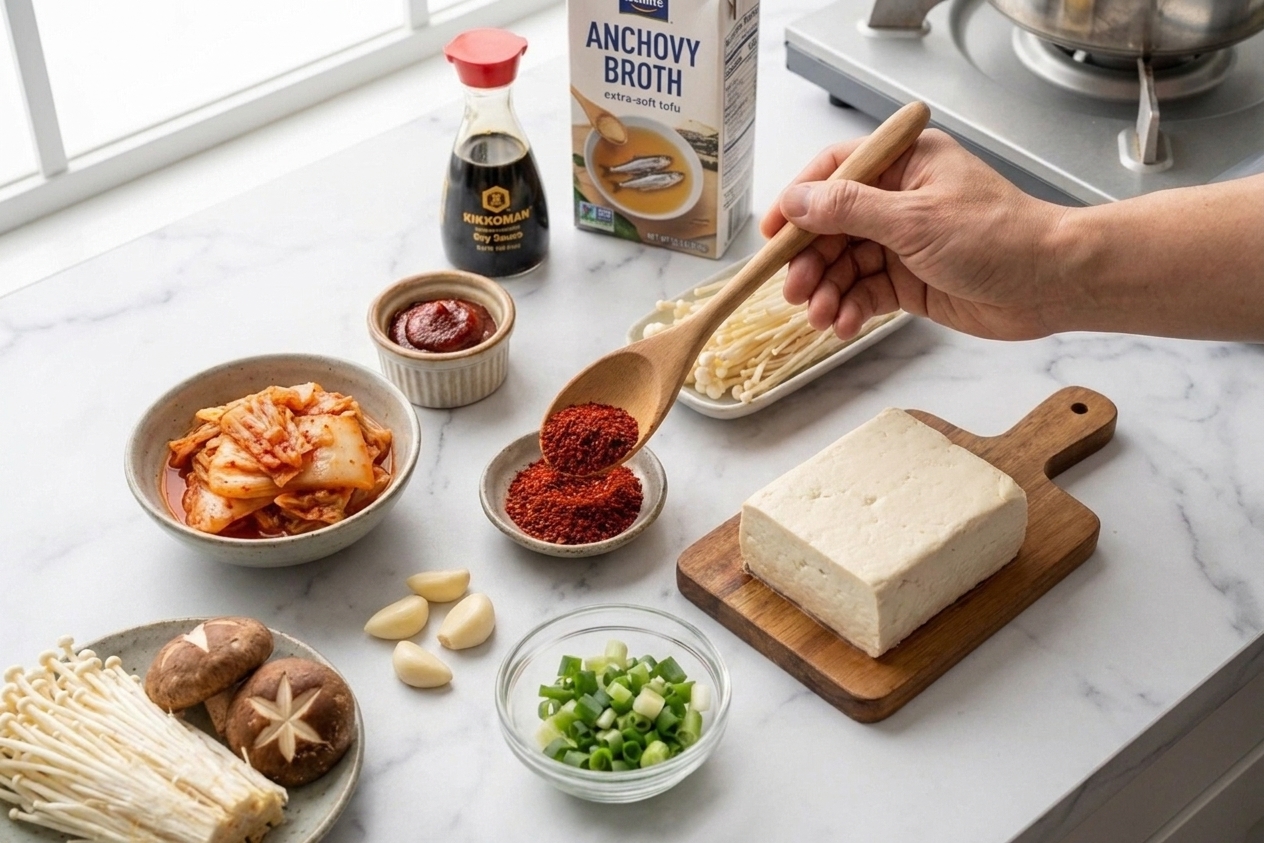
A kitchen counter with ingredients for soondubu jjigae laid out: extra-soft tofu, kimchi, gochugaru, gochujang, garlic, scallions, mushrooms, soy sauce, and a carton of broth

Why It Works

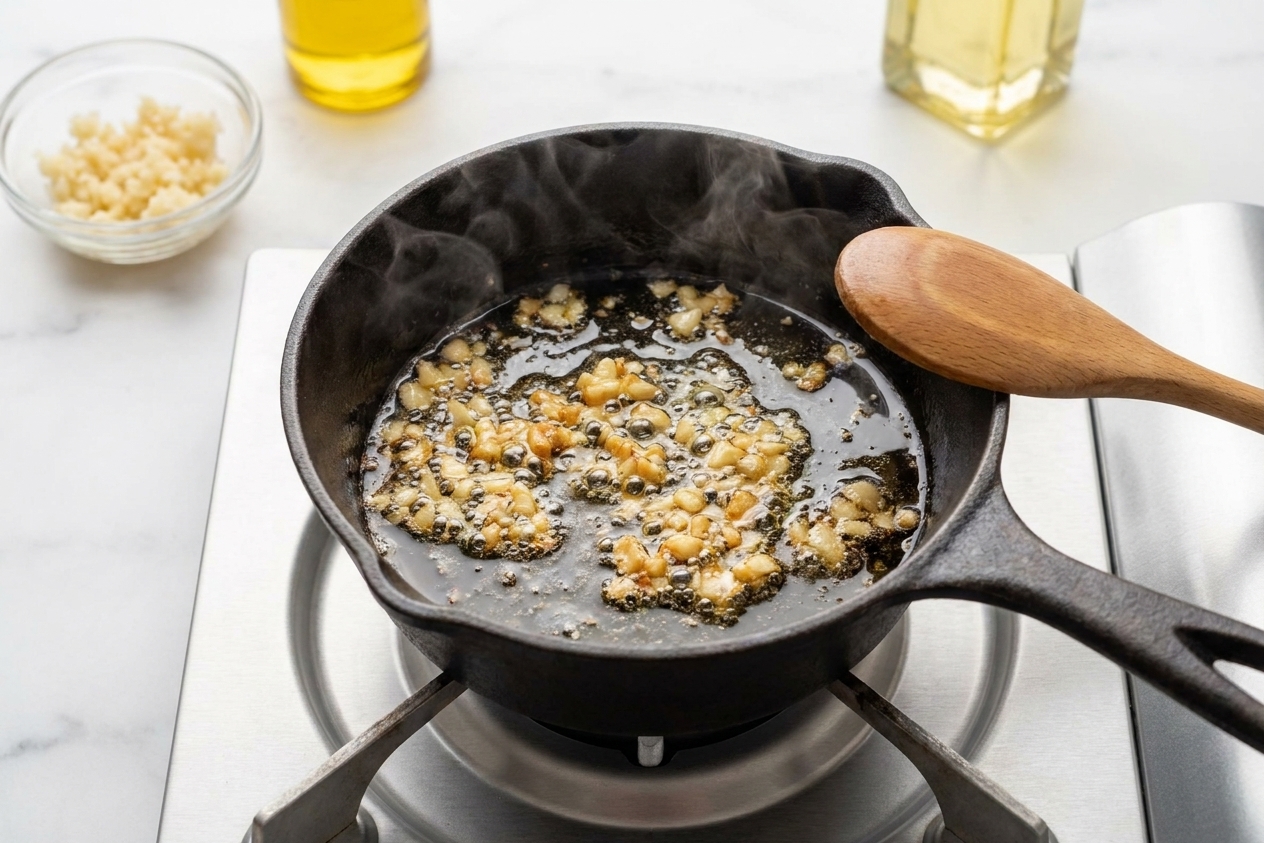
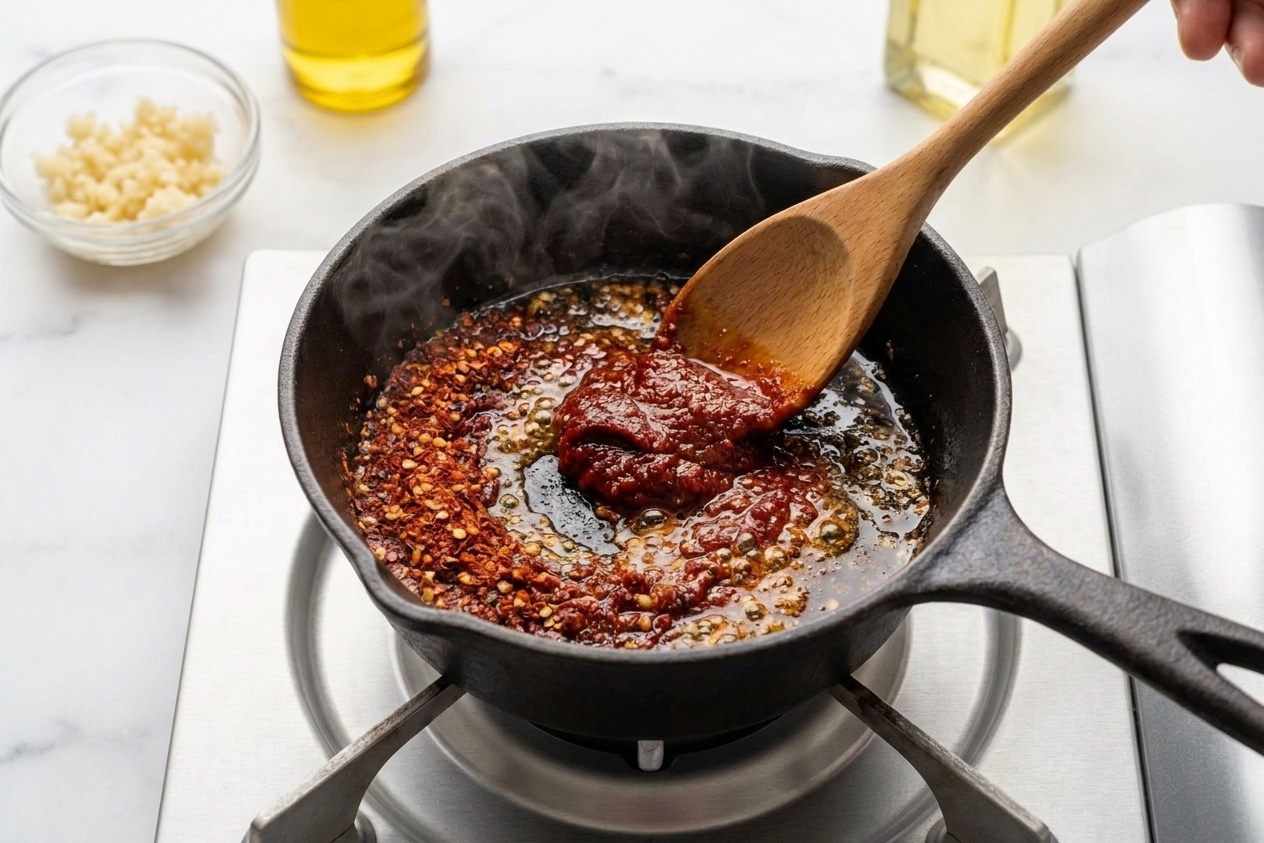
  • Big flavor fast: blooming gochugaru in a little oil wakes up the chili and turns the broth deep and savory.
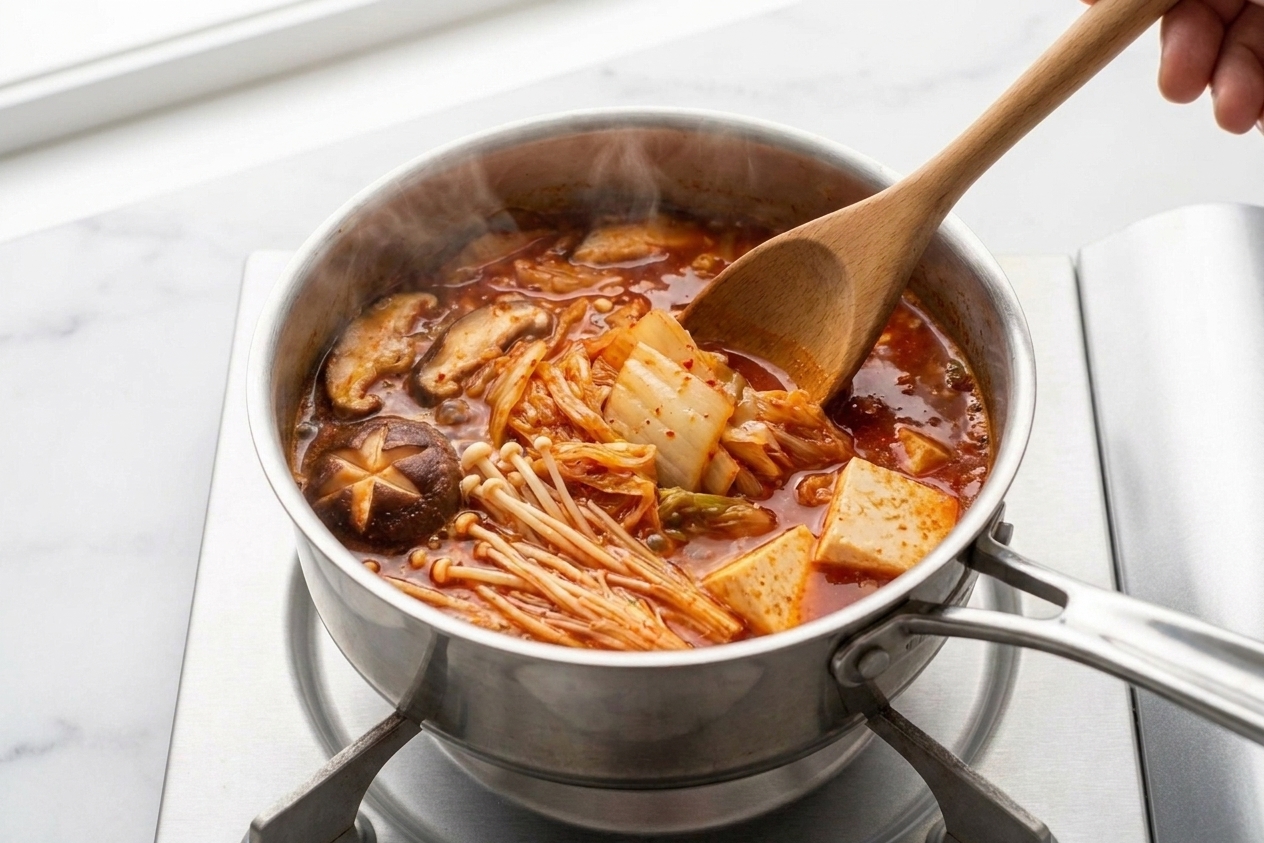
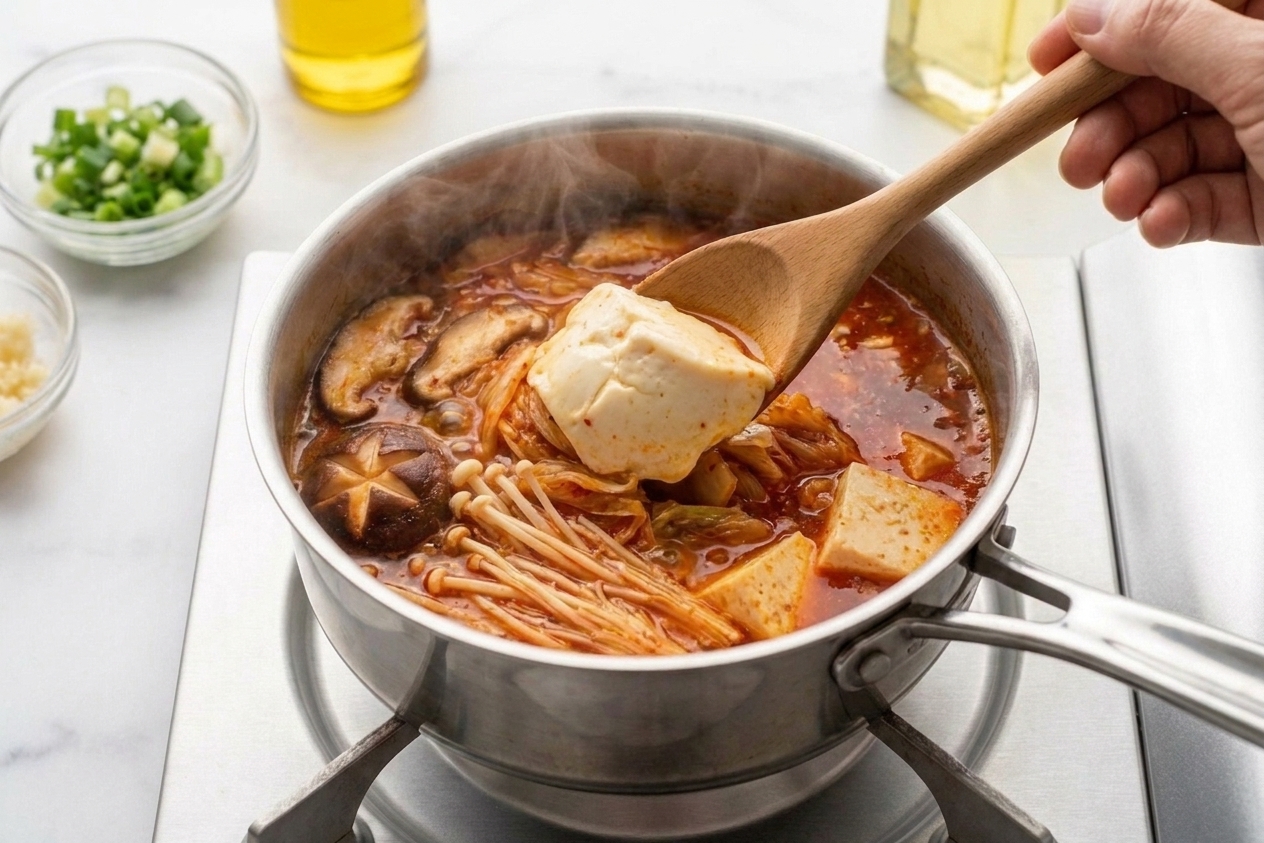
  • Silky tofu, not tofu scramble: we slide the soondubu in gently and let it warm through instead of stirring aggressively.
  • Stew texture, not thin soup: a smaller broth amount keeps the jjigae concentrated, spicy, and spoon-coating.
  • Adjustable heat and salt: kimchi, gochujang, and fish sauce bring salt, so you season at the end and stay in control.
  • One pot comfort: it is cozy on its own, but it also turns into a full meal with rice and one or two simple banchan.

Pairs Well With

Storage Tips

How to Store Leftovers

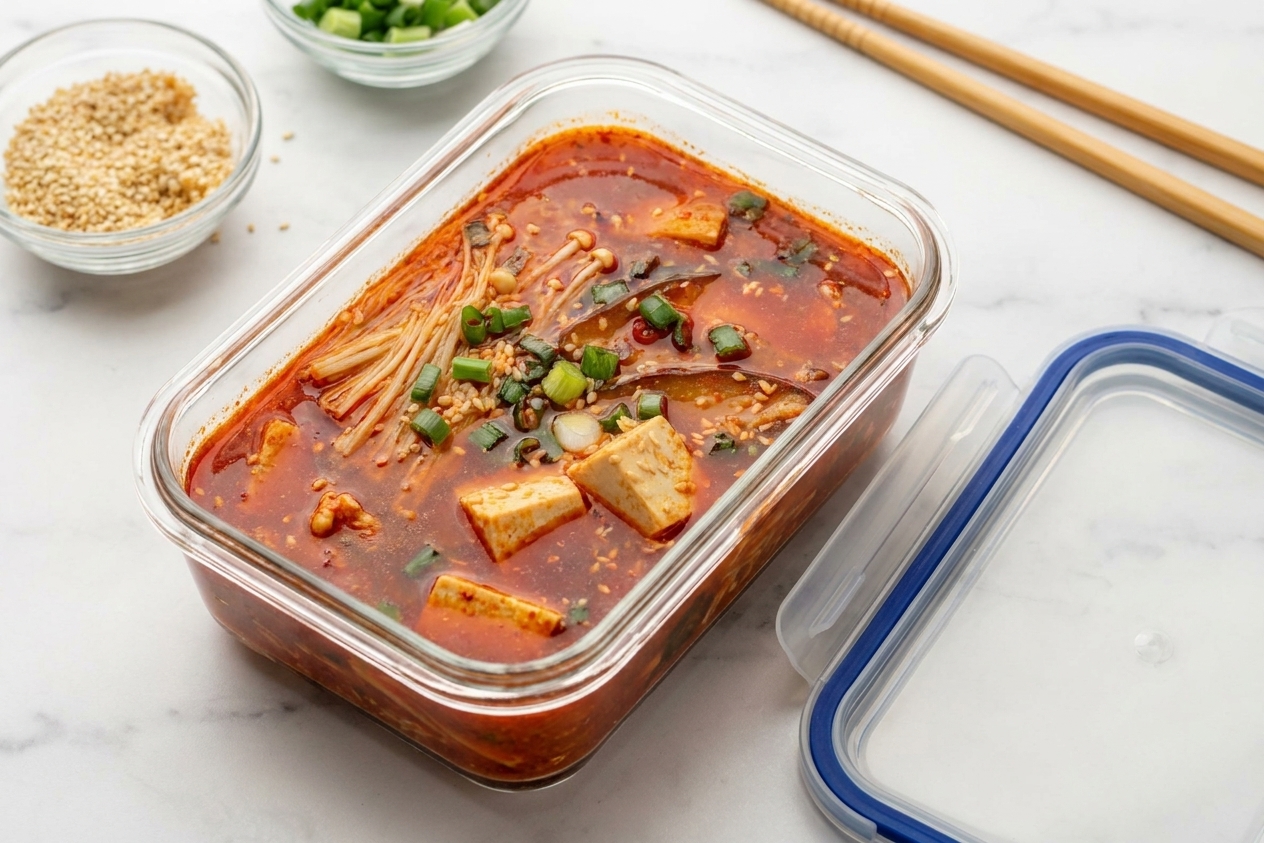
Refrigerate: Let the stew cool, then store in an airtight container for up to 3 days. The tofu will get a bit more delicate as it sits, which is not a bad thing, just softer.

Reheat: Warm gently in a small pot over medium-low heat until steaming and bubbling. Try not to boil it like crazy or the tofu can break down too much.

Freeze: You can freeze it, but the tofu texture changes (spongier and more porous). If you are texture-sensitive, stick to fridge storage.

A glass meal prep container filled with leftover soondubu jjigae, cooled, with a lid set beside it on a clean kitchen counter

Common Questions

Common Questions

What is soondubu?

Soondubu (순두부) is extra-soft, very fresh tofu (sometimes described as “uncurdled” or “soft-set”). In many U.S. stores it is labeled as silken tofu or soft tofu for soup, often sold in a tube or a plastic tray. It is delicate and creamy, perfect for stews because it warms into the broth and turns spoonable.

Do I need an earthenware pot (ttukbaegi)?

Nope. A small saucepan works great. A ttukbaegi holds heat really well and looks awesome on the table, but the flavor comes from the seasoning and broth, not the pot.

How spicy is this recipe?

As written it is medium spicy. For mild, cut the gochugaru in half and use less gochujang. For extra spicy, add more gochugaru or a sliced fresh chili at the end.

What protein can I add?

Classic options are pork, beef, shrimp, clams, or canned tuna. Add raw meat at the beginning with the garlic, or add seafood near the end so it stays tender.

Is kimchi required?

It is not required, but it makes the stew taste instantly more complex. If you do not have kimchi, add a splash of rice vinegar plus extra garlic, and consider mushrooms for depth.

What kind of kimchi works best?

Sour, well-fermented kimchi is the weeknight cheat code here. It brings more tang, funk, and depth. Fresh kimchi works too, but the stew will taste milder. You may want an extra spoon of kimchi juice, a little more gochugaru, or a tiny splash of vinegar at the end.

Can I make it vegetarian?

Yes. Use vegetable broth, skip fish sauce, and lean on mushrooms and a little soy sauce for savory depth. If you have it, simmer a small piece of dried kombu for a sea-like backbone, then remove it after about 10 minutes (or once the broth is gently simmering) so it does not get slimy or bitter.

What if I cannot find gochugaru or gochujang?

There is no perfect substitute, but you have options. If you cannot find gochugaru, use a smaller amount of crushed red pepper flakes (they are usually hotter) plus a pinch of paprika for color. If you cannot find gochujang, add a little extra gochugaru and a touch of sweetness (a tiny bit of sugar or honey) to mimic its balance.

The first time I made soondubu at home, I treated the tofu like it was going to behave like a block of extra-firm. It did not. It melted into the stew like a dramatic little cloud and I thought I ruined it. Then I tasted the broth and realized the “mess” was the point. Now I make it when I want dinner to feel like a reset button: rice in the bowl, stew on top, egg if I have it, and five quiet minutes where the only plan is to keep eating until I am warm again.