Mom's Best Recipes
Recipe

Spaghetti alla Carbonara

Silky egg and Pecorino sauce, crisp guanciale, and a snowstorm of black pepper, done the classic way with zero cream.

Author By Matt Campbell
4.8
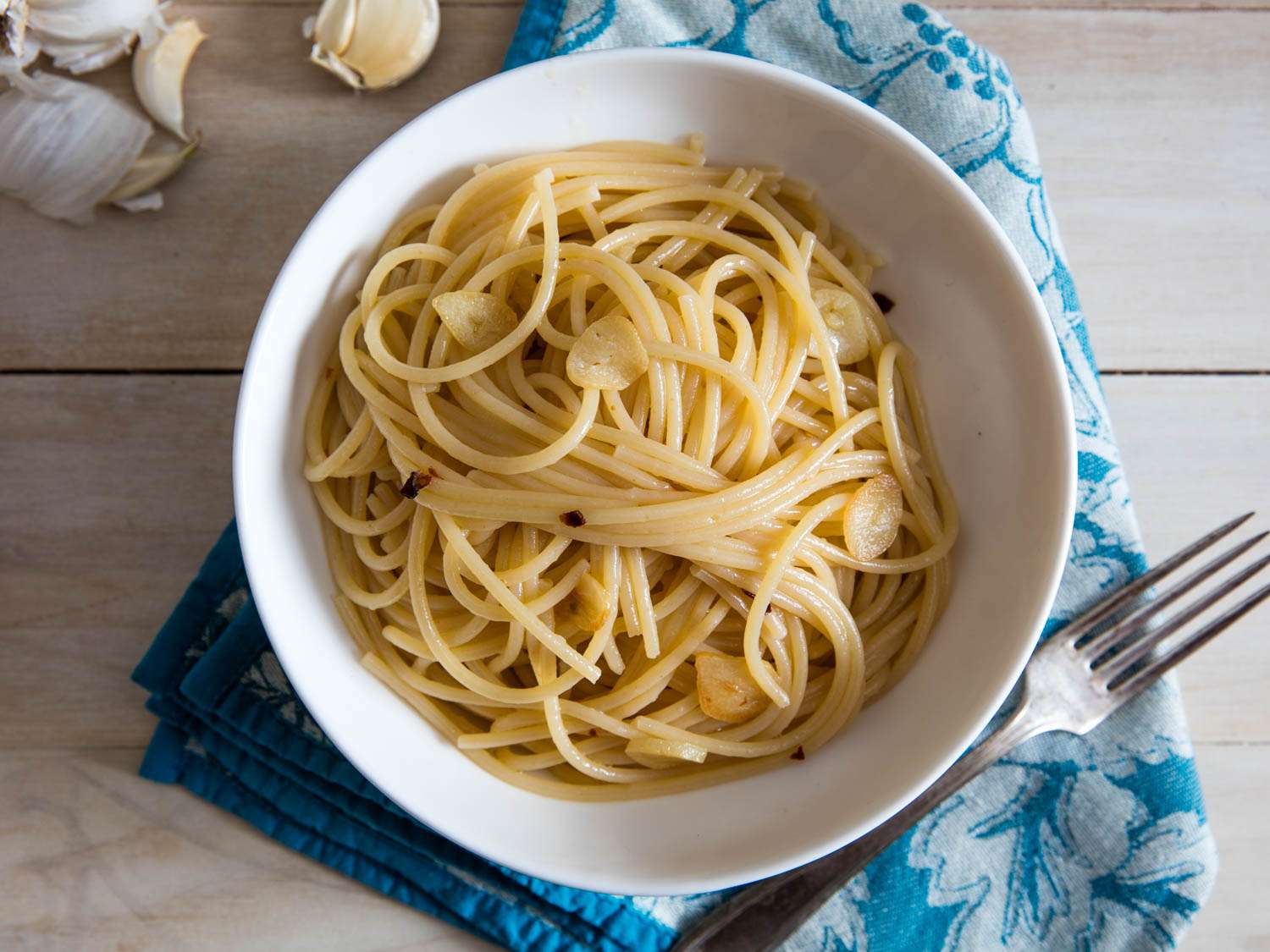
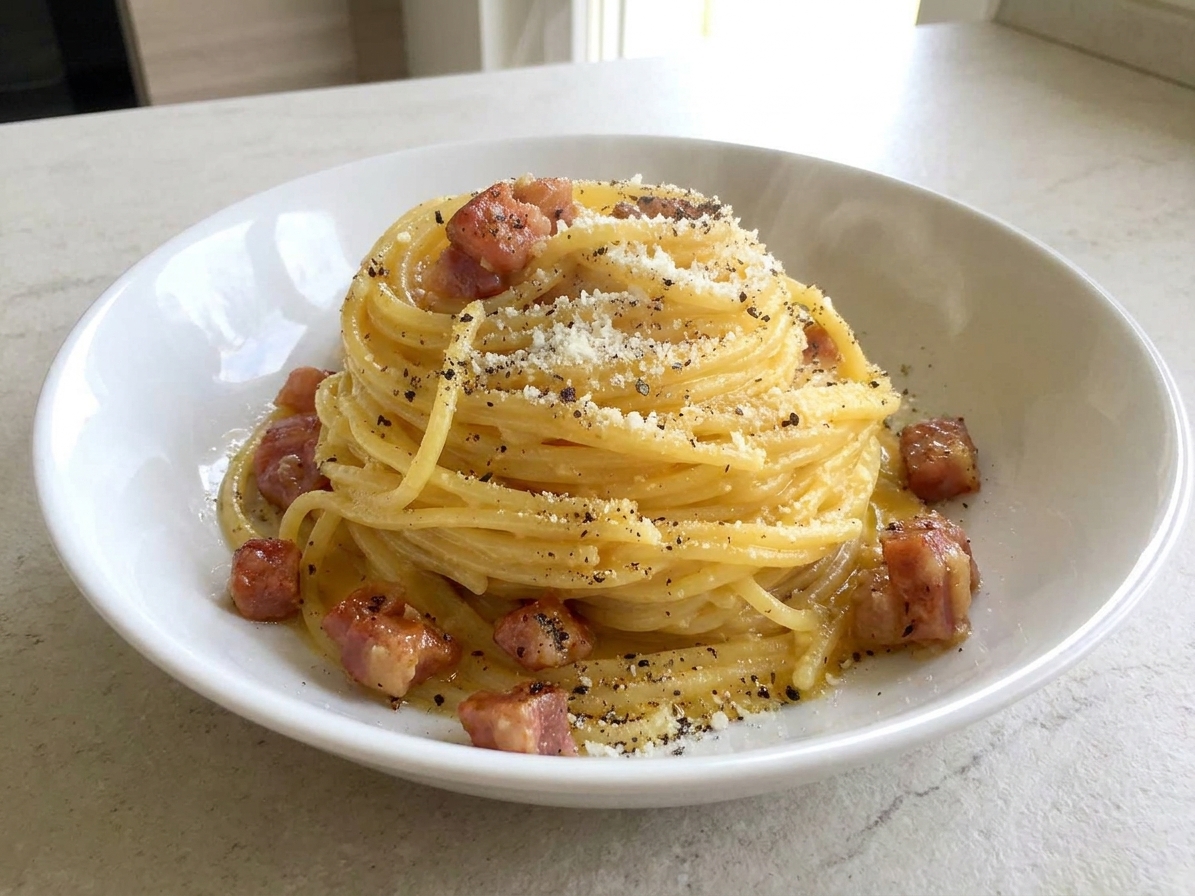
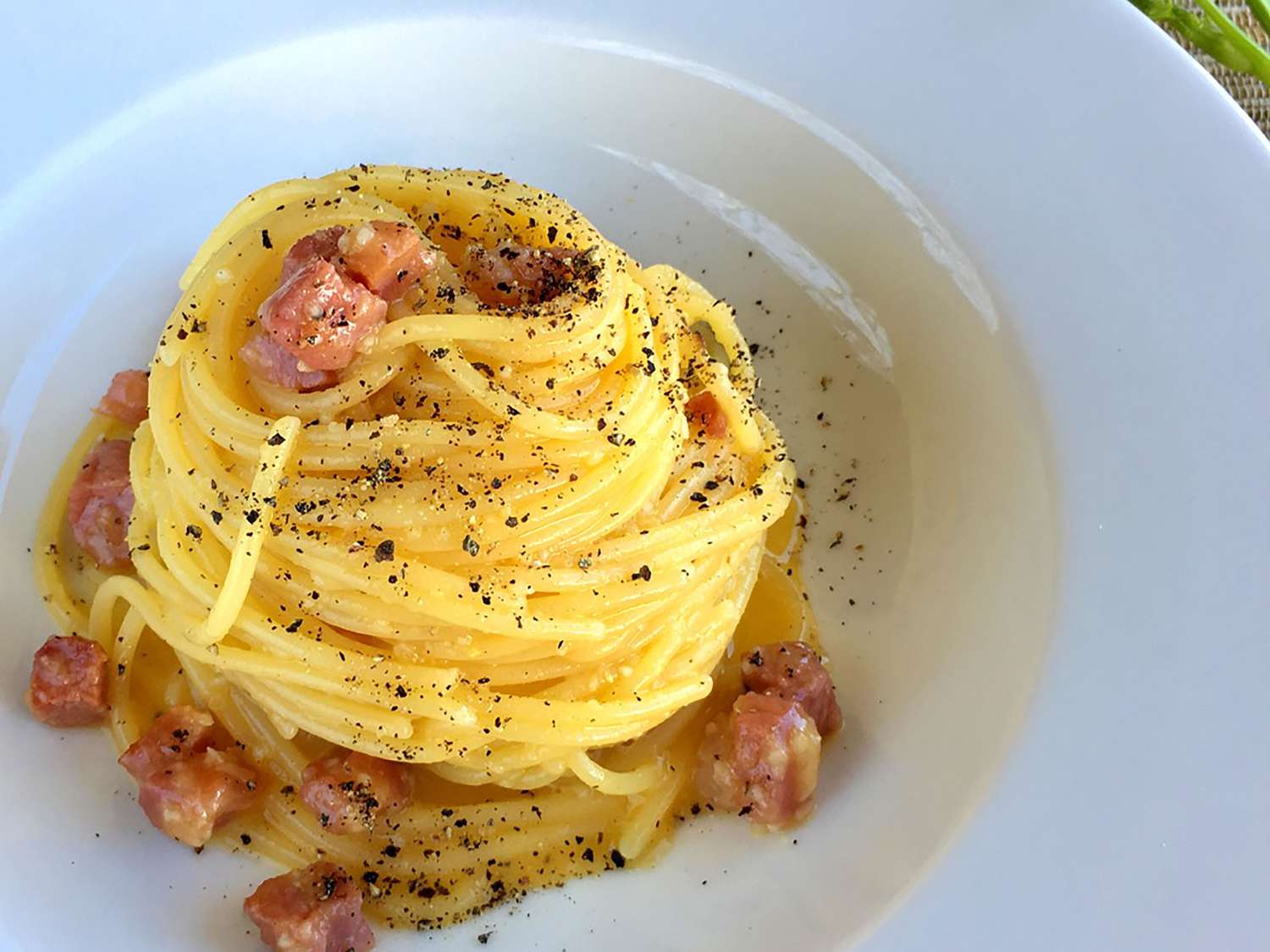
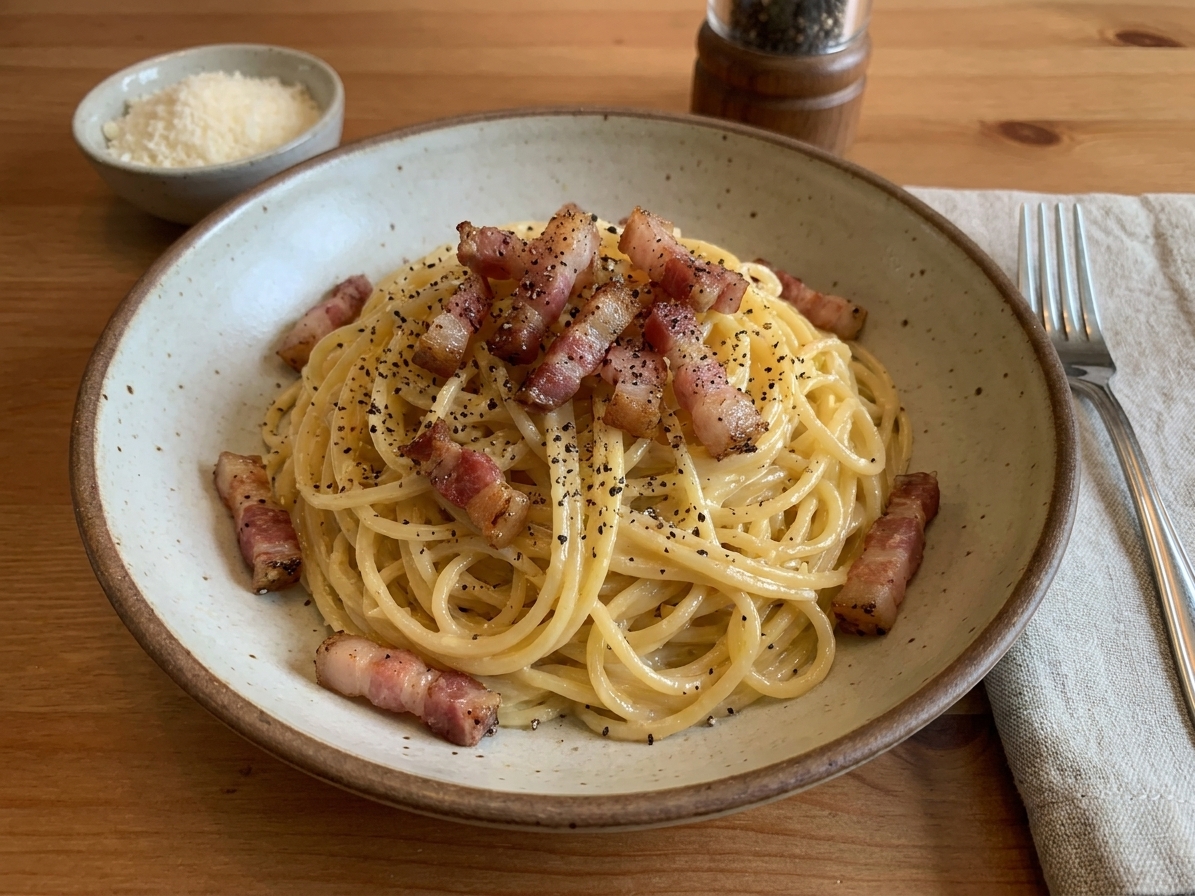
A bowl of spaghetti alla carbonara with glossy sauce, crisp guanciale pieces, and freshly cracked black pepper on top, set on a simple dinner table

Carbonara is one of those dishes that feels like a magic trick the first time you nail it. You start with spaghetti, eggs, cheese, and pork. You end with a sauce that looks like it simmered for hours, clinging to every strand like it pays rent.

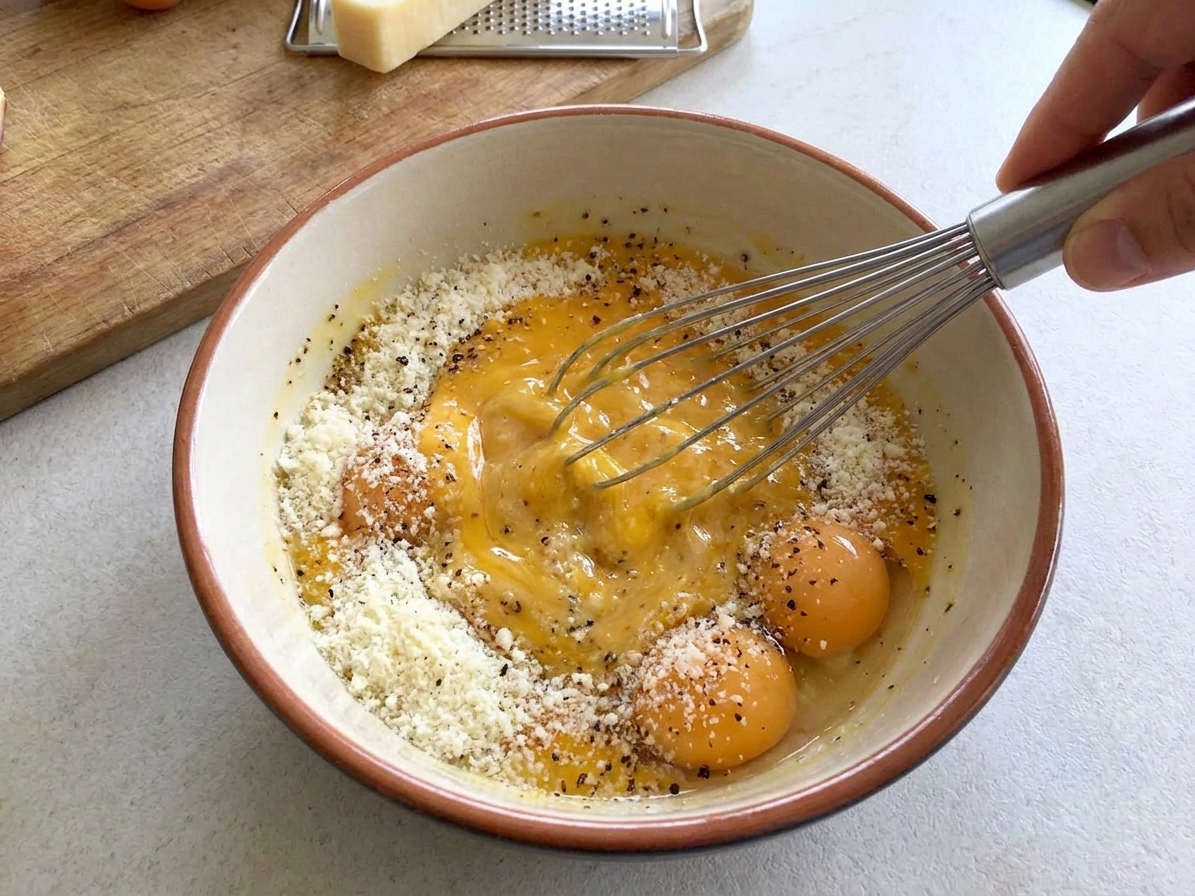
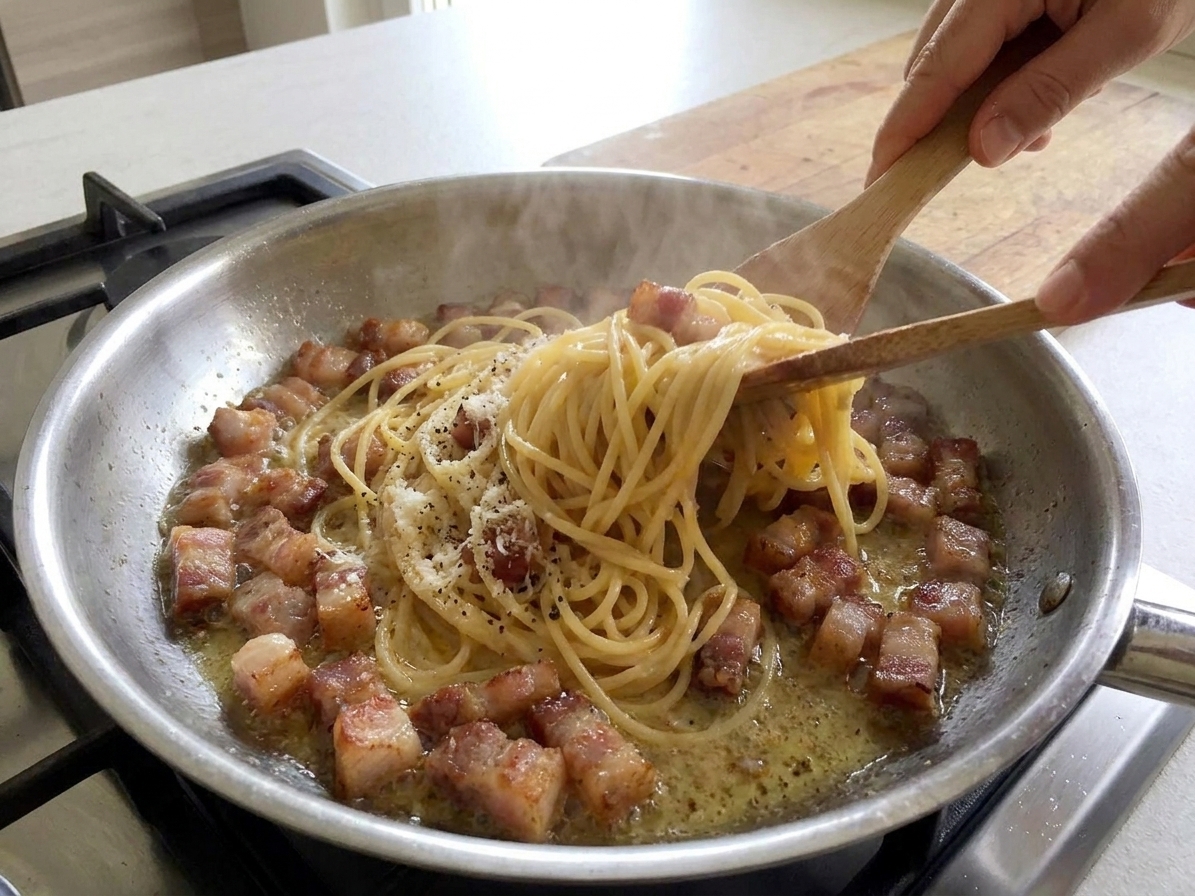
Here is the deal: the “creaminess” comes from eggs + Pecorino Romano + pasta water, not cream. Your job is simple. Crisp the guanciale. Whisk the sauce base. Then use gentle, off-heat tossing to emulsify everything into a glossy, peppery hug.
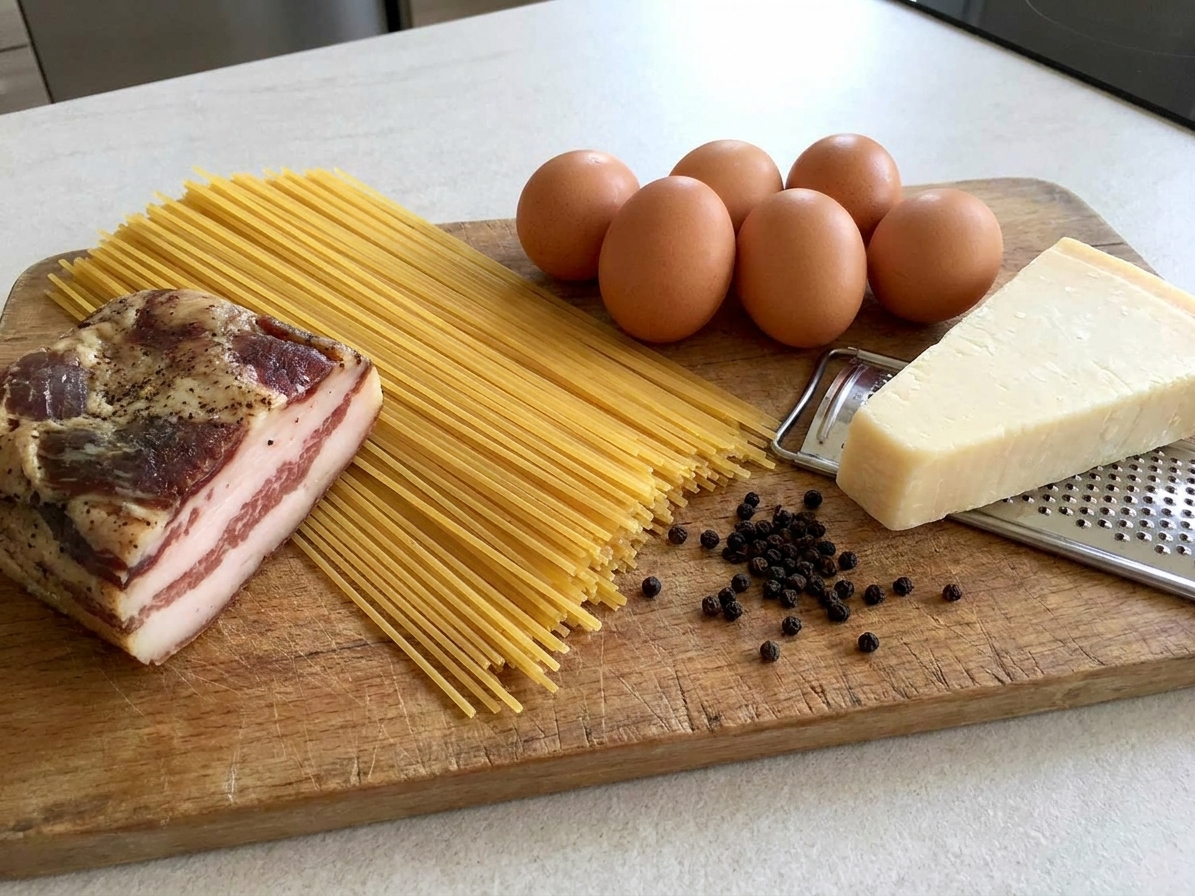
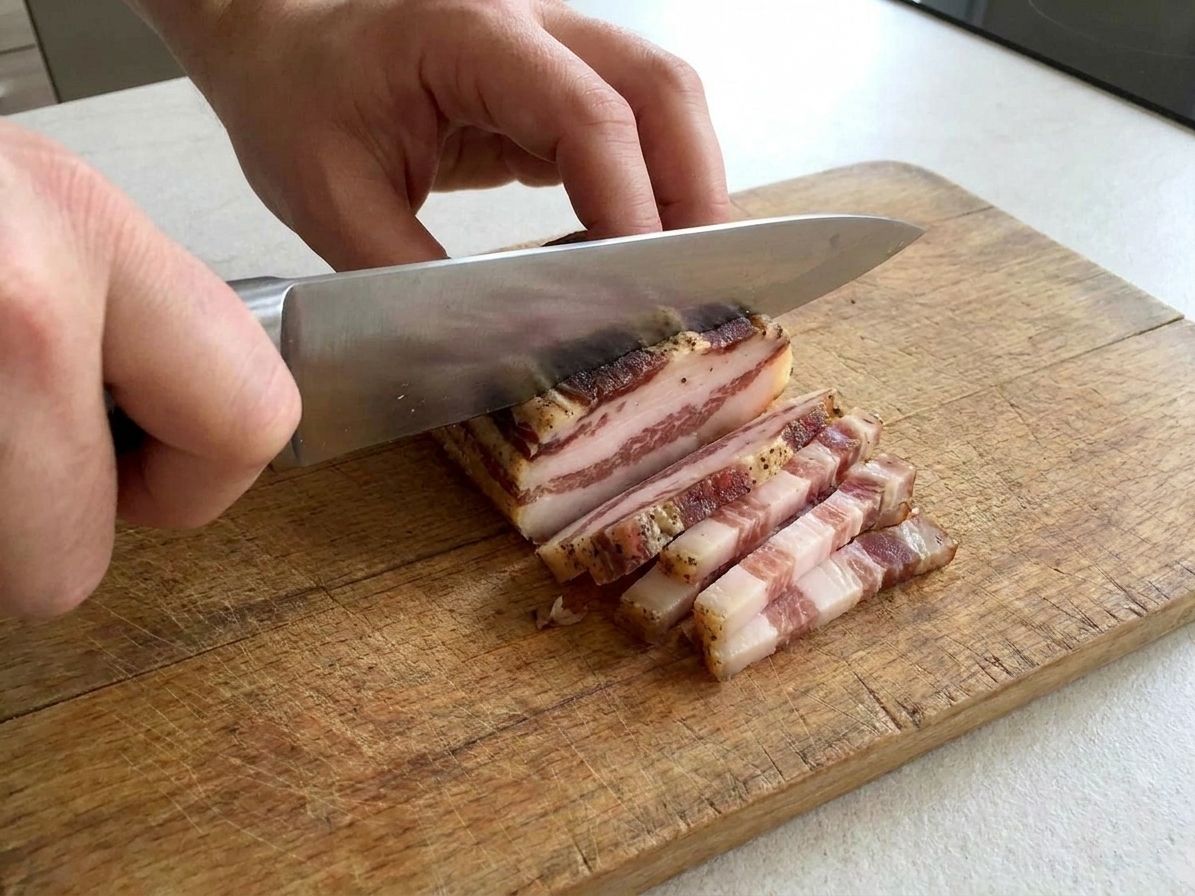
Guanciale, eggs, Pecorino Romano, black pepper, and dried spaghetti gathered and ready to cook

Why It Works

  • Real carbonara texture: creamy and shiny from emulsified eggs, cheese, and starchy pasta water.
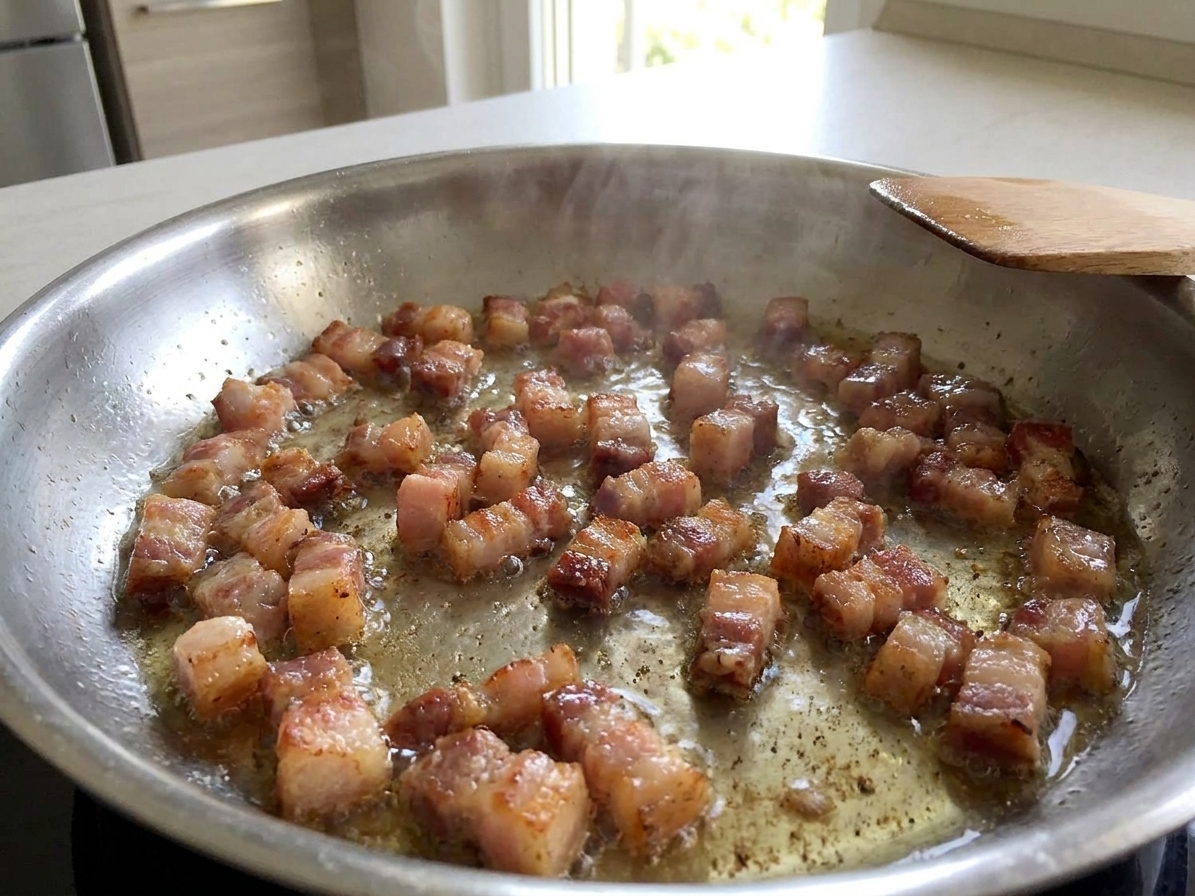
  • Crisp edges, tender bites: guanciale renders slowly so the fat turns silky and the pork turns golden.
  • Built-in flavor boost: blooming black pepper in the warm guanciale fat wakes it up fast.
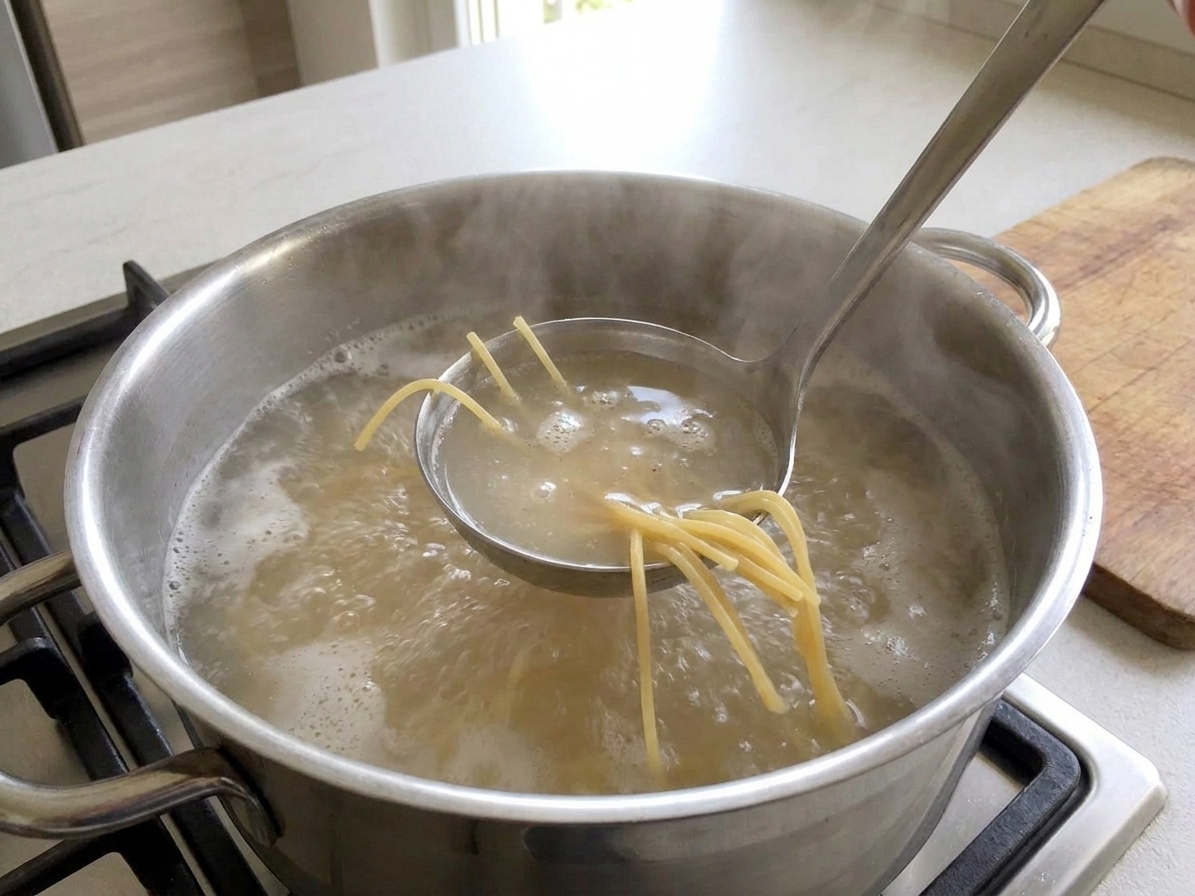
  • No drama method: you temper the eggs with warm pasta water and finish off heat, so you do not end up with accidental scrambled eggs.

Pairs Well With

Storage Tips

Carbonara is at its absolute best right after you toss it, but leftovers can still be very good if you reheat them gently. Expect the sauce to lose a bit of its just-made silkiness, because eggs do what eggs do.

  • Fridge: Store in an airtight container for up to 2 to 3 days. Cool it quickly (do not let it sit out).
  • Reheat on the stove (best): Add a splash of water and warm in a skillet over low heat, tossing constantly. The goal is to loosen the sauce, not cook it more.
  • Microwave method (if you must): Add a small splash of water, cover loosely, and microwave at 50% power in 20 to 30 second bursts, stirring between rounds, until steaming hot.
  • Avoid: High heat. That is how the eggs seize and go grainy.
  • Best rescue move: If it tightens up, add 1 to 2 tablespoons hot water and keep tossing until glossy again.

Common Questions

Do I need guanciale?

Guanciale is the classic choice and it tastes like carbonara is supposed to taste. If you cannot find it, use pancetta. Bacon works in a pinch, but it is smokier and changes the vibe.

Is there cream in carbonara?

Not in the traditional version. The creamy sauce is an emulsion of eggs, Pecorino Romano, rendered pork fat, and pasta water.

How do I keep the eggs from scrambling?

Two rules: turn off the heat before adding the egg mixture, and keep tossing while you add a little warm pasta water to control the temperature and texture. If your pan holds heat like a furnace, let it sit off heat for 30 to 60 seconds before you add the eggs.

Can I use Parmesan instead of Pecorino Romano?

Yes. Pecorino is sharper and saltier, which is why it is traditional. If using Parmesan, you may want a pinch more salt and a few extra cracks of pepper.

Why is my carbonara clumpy or dry?

Usually the pan was too hot or there was not enough pasta water. Fix it by moving off heat and adding hot pasta water 1 tablespoon at a time while tossing until it turns glossy.

The first time I made carbonara on my own, I treated it like any other pasta sauce. I kept the heat on, poured in the eggs, and immediately created something that looked like breakfast. Still edible. Not the dream.

Once I learned to finish it off heat and use pasta water like my secret weapon, carbonara turned into my go-to “I want restaurant comfort but I also want to be in sweatpants” dinner. It is a classic for a reason, and it is also the kind of dish that teaches you a ton about timing, seasoning, and trusting your taste buds.