Mom's Best Recipes
Recipe

Spanish-Style Octopus with Potatoes

Tender octopus, warm potatoes, smoked paprika, and good olive oil. Classic pulpo a la gallega with home-kitchen friendly steps, plus a couple of optional traditional moves for the purists.

Author By Matt Campbell
4.8
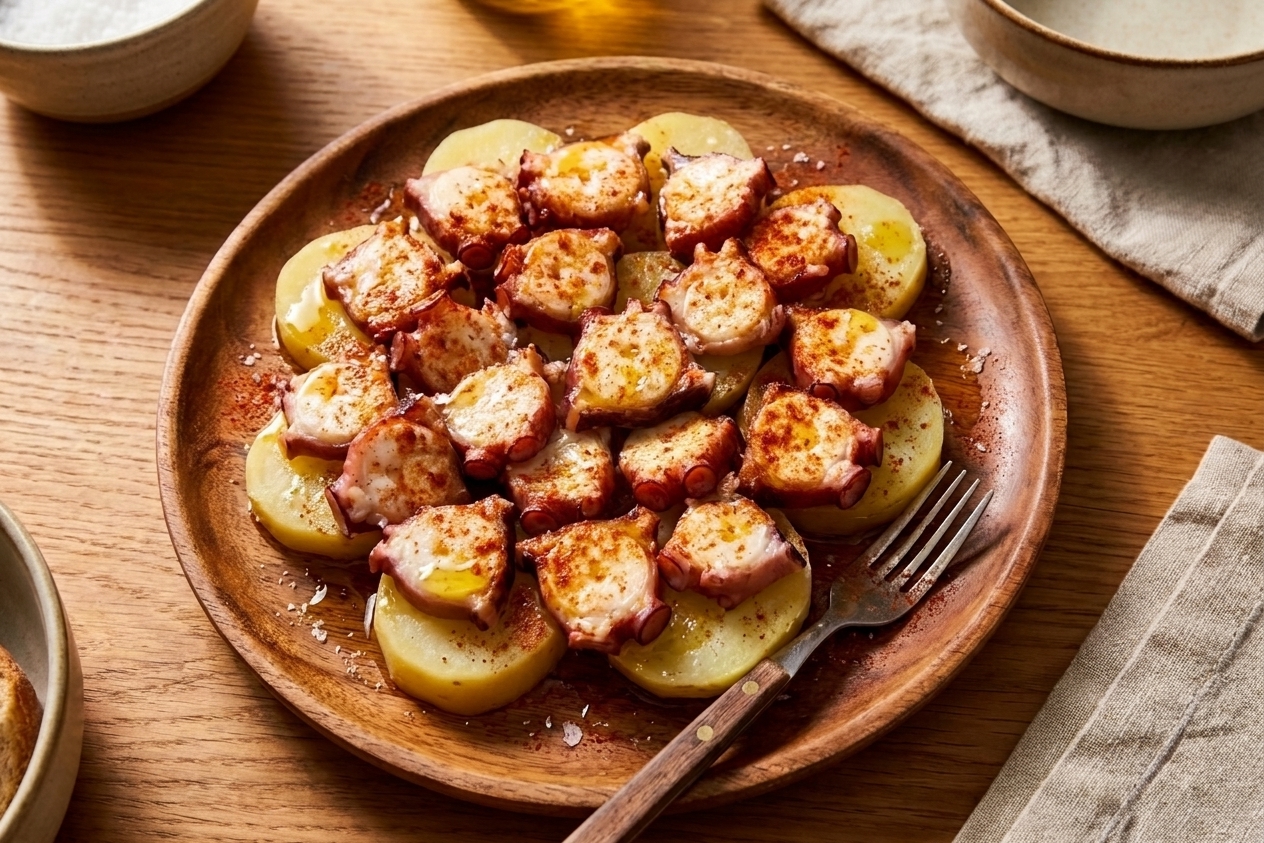
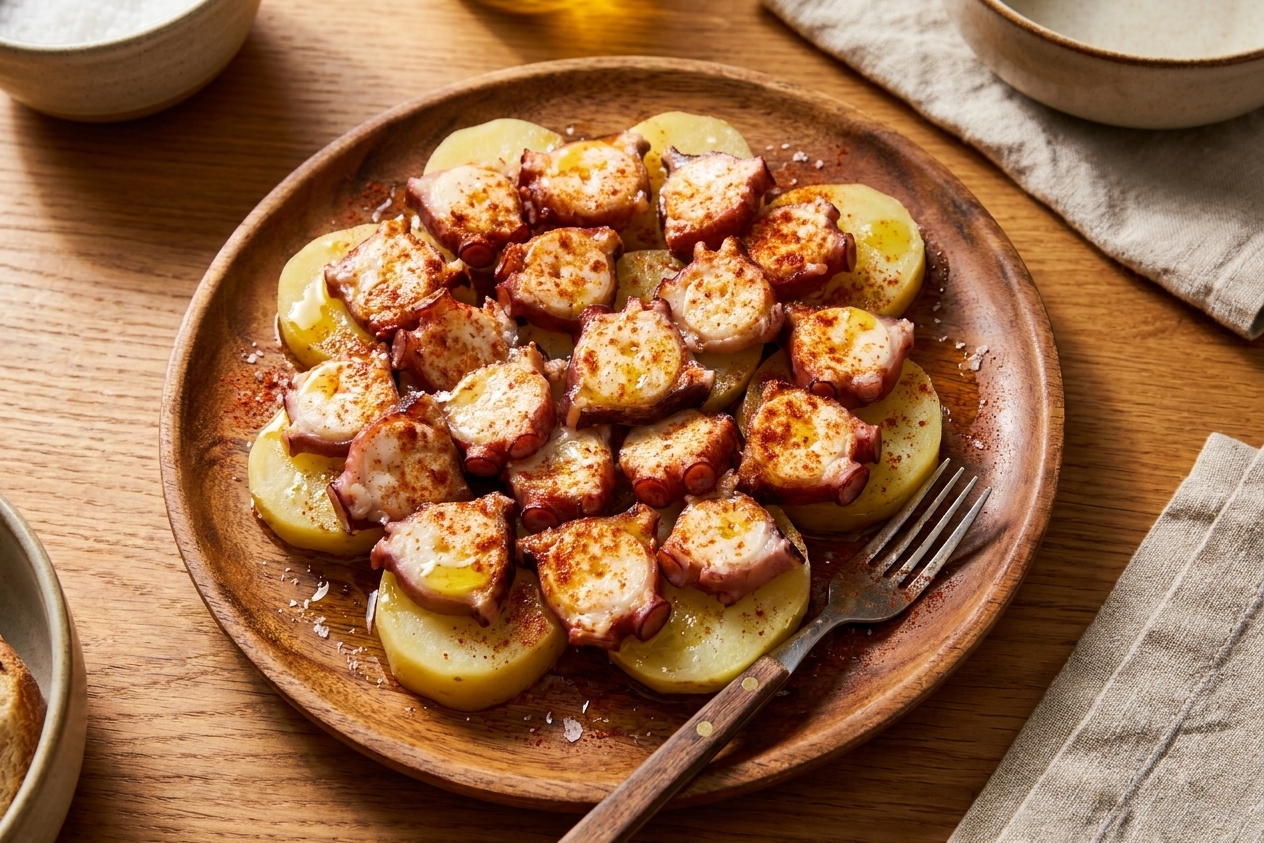
A rustic wooden platter of sliced octopus laid over warm potato rounds, dusted with smoked paprika and flaky salt, glistening with olive oil on a simple kitchen table

Octopus has a reputation. It is either the coolest thing on a tapas menu or the thing you stare at like, how is that going to be tender. Good news: you do not need a commercial kitchen, a pressure cooker, or a culinary degree you never finished (hi, that is me) to make it great at home.

This Spanish-style octopus with potatoes is basically the friendliest entry point. We are talking gentle simmer, warm potatoes, smoked paprika, and a serious pour of olive oil. The vibe is simple, but the flavor is loud in the best way.

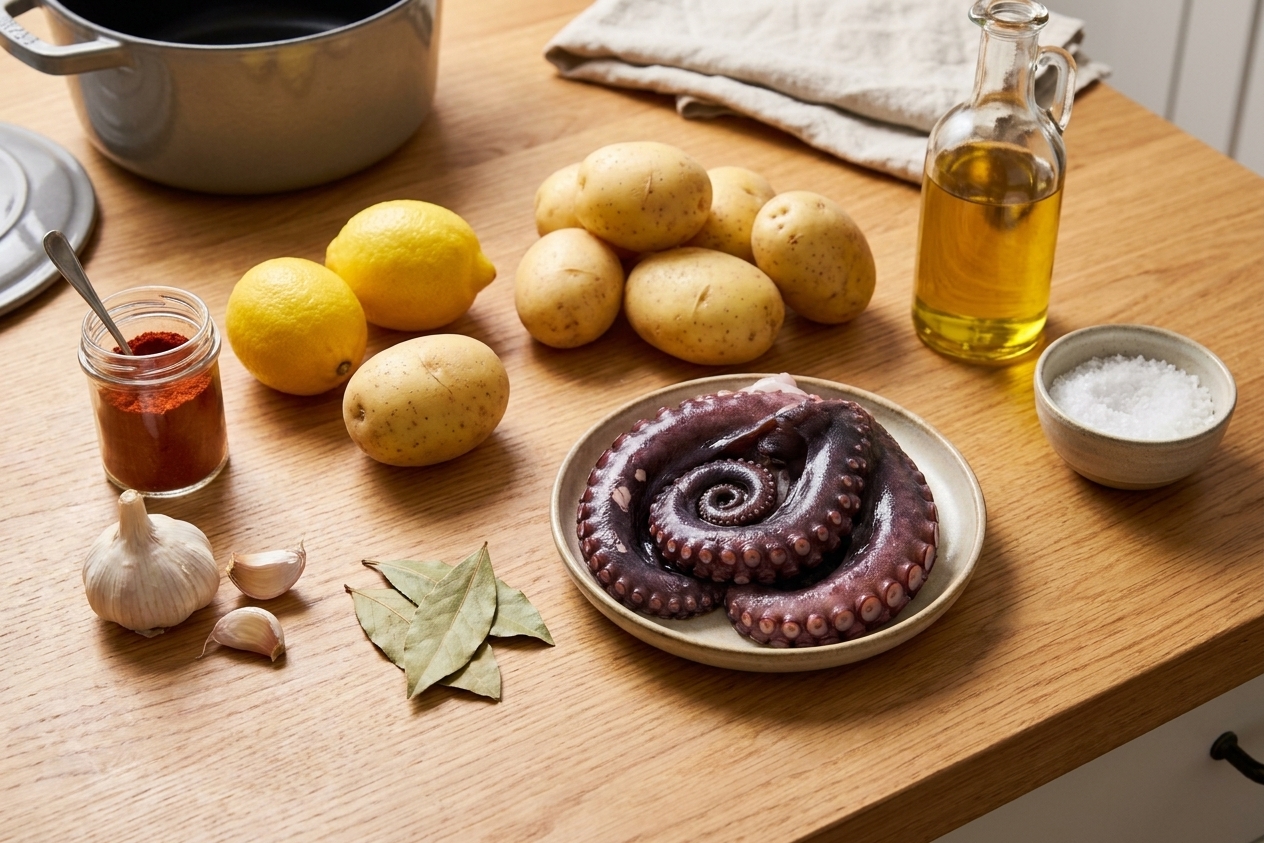
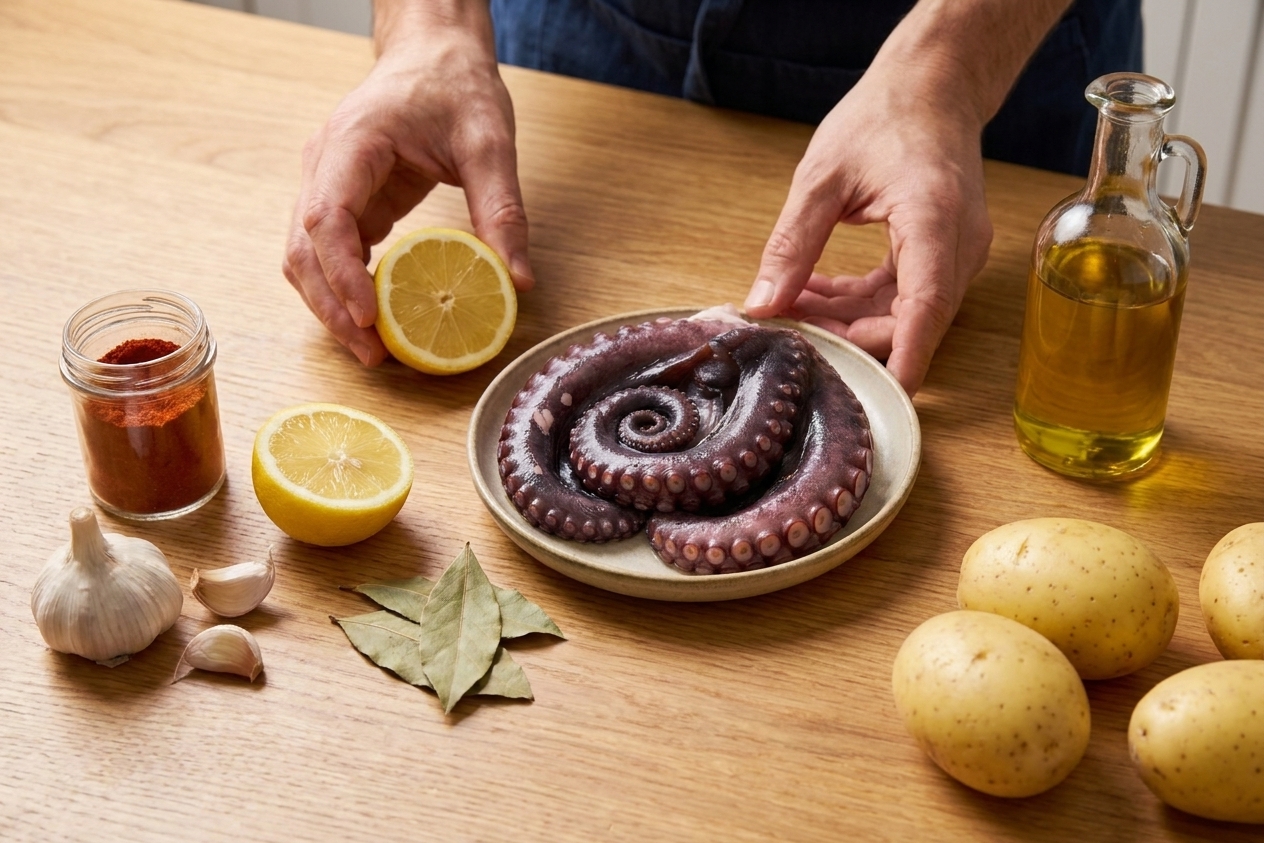
Raw octopus, Yukon Gold potatoes, smoked paprika, olive oil, lemons, garlic, bay leaves, and flaky salt arranged on a clean kitchen counter

Why It Works

  • Tender, not rubbery: a low simmer gives you that silky bite without turning the octopus into a chew toy.
  • Big flavor, small ingredient list: paprika, flaky salt, lemon, and olive oil do the heavy lifting.
  • Flexible finish: serve it classic, or quickly sear slices for crisp edges if you are feeling chaotic in a good way.
  • Entertaining-friendly: it plates beautifully on a board or platter and holds well while you set the table.

Pairs Well With

Storage Tips

Fridge: Store octopus and potatoes in separate airtight containers if you can. They keep well for 2 to 3 days.

Reheat: Warm potatoes in a skillet with a little olive oil. Warm octopus gently in the same pan for 1 to 2 minutes per side, or briefly microwave at 50 percent power so it does not toughen. Finish with fresh paprika, lemon, and flaky salt.

Cold option: Leftover octopus is great sliced thin and tossed with olive oil, lemon, parsley, and a pinch of salt for a quick salad.

Freezing: Cooked octopus can be frozen up to 2 months. Thaw overnight in the fridge and rewarm gently. The texture can soften a bit after freezing, but it is still very usable and very tasty.

Common Questions

Is octopus hard to cook?

Not hard, just easy to overdo. The two rules: cook it long enough (tender happens with time) and do not boil it violently (that can tighten it up). A steady simmer is your best friend.

Do I need to tenderize octopus first?

Freezing helps break down the muscle fibers, which is why many people prefer starting with frozen (then thawed) octopus. Fresh can still turn out great too. Either way, the real secret is a gentle simmer until it is tender.

Do I need to do the dipping thing first?

That traditional step is called “scaring” the octopus: you dip the tentacles into the hot water a few times before fully submerging. It helps the tentacles curl and can help keep the skin intact. Is it required? No. Is it fun and classic? Yes. I included it as an optional step.

How do I know when it is done?

Poke the thickest part where the tentacle meets the body with a knife tip. It should slide in with little resistance, kind of like checking a baked potato. When you slice it, the pieces should feel yielding and silky, not bouncy.

Can I use pre-cooked octopus?

Yes. Skip the long simmer. Warm it briefly in hot water or a skillet, then slice and season. Do not cook it for a long time again or it can turn firm.

What is the best paprika for this?

Smoked paprika (pimentón) is the signature. Use sweet smoked for classic flavor, and add a pinch of hot smoked paprika if you want a little heat.

Should I serve this warm or cold?

Best warm or at room temperature, when the olive oil is happy and the potatoes are still tender. Straight-from-the-fridge is less magical, but leftovers are still very good.
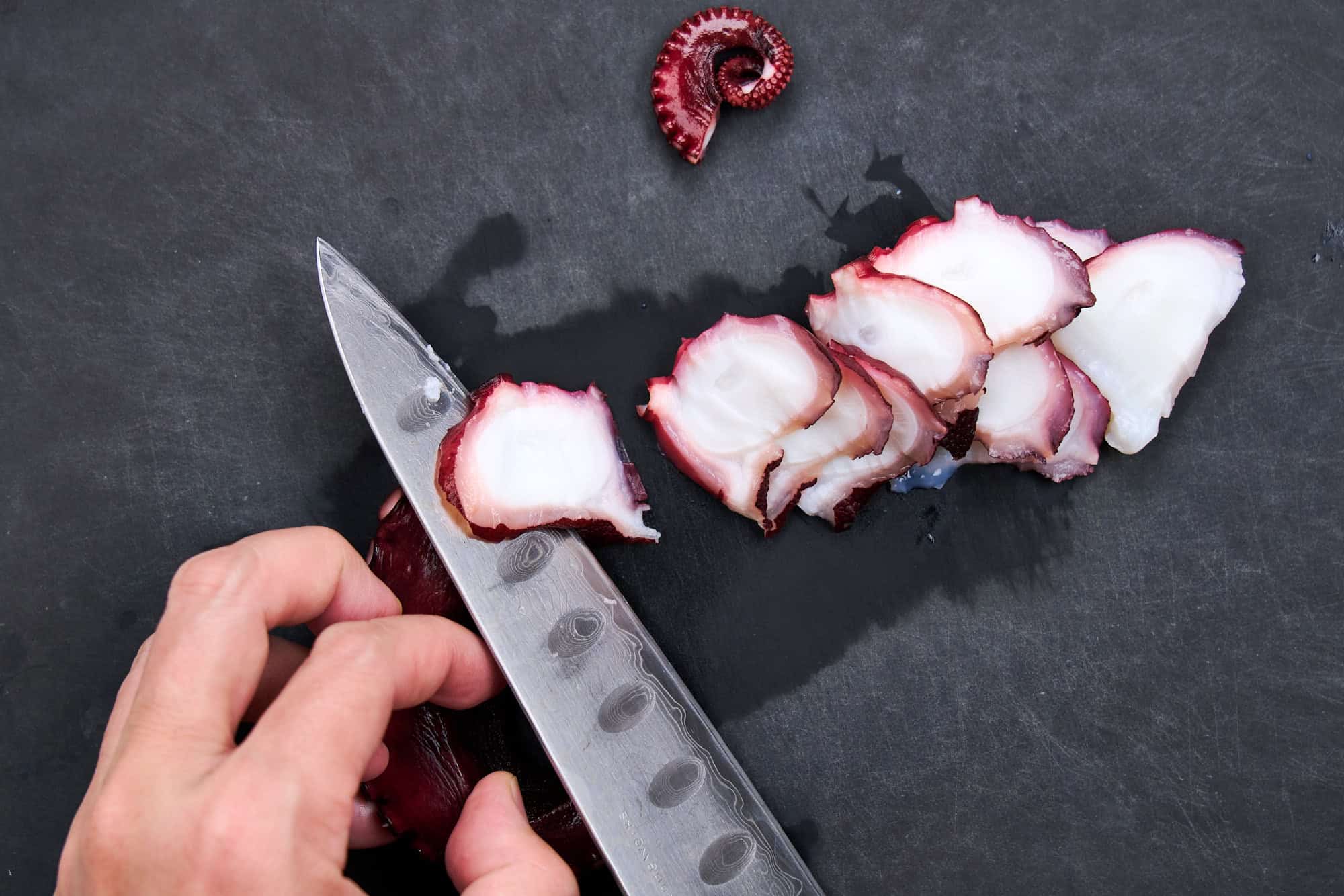

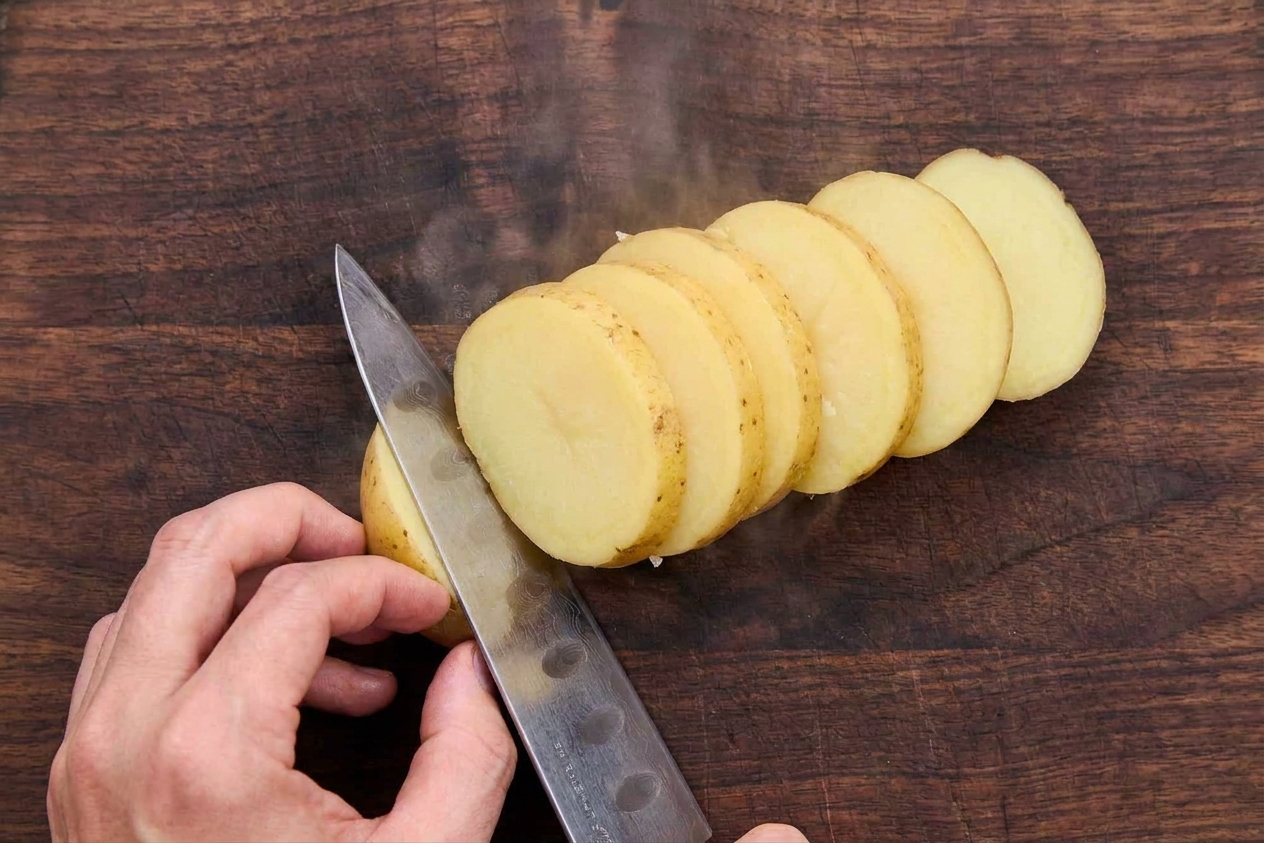
A cutting board with a cooked octopus tentacle being sliced into coins with a chef's knife under warm kitchen lighting

The first time I cooked octopus at home, I treated it like a test I did not study for. I stood over the pot, overthinking every bubble, convinced it was going to come out either rubbery or weird. Then I tasted a slice after it cooled for a minute and realized the truth: octopus is not complicated, it is just patient.

Now it is one of my favorite “I want something special but not fussy” meals. I make it when I want my kitchen to feel like a tiny tapas bar for one, with olive oil on my fingers and paprika on the counter, because honestly that is how you know it was a good night.