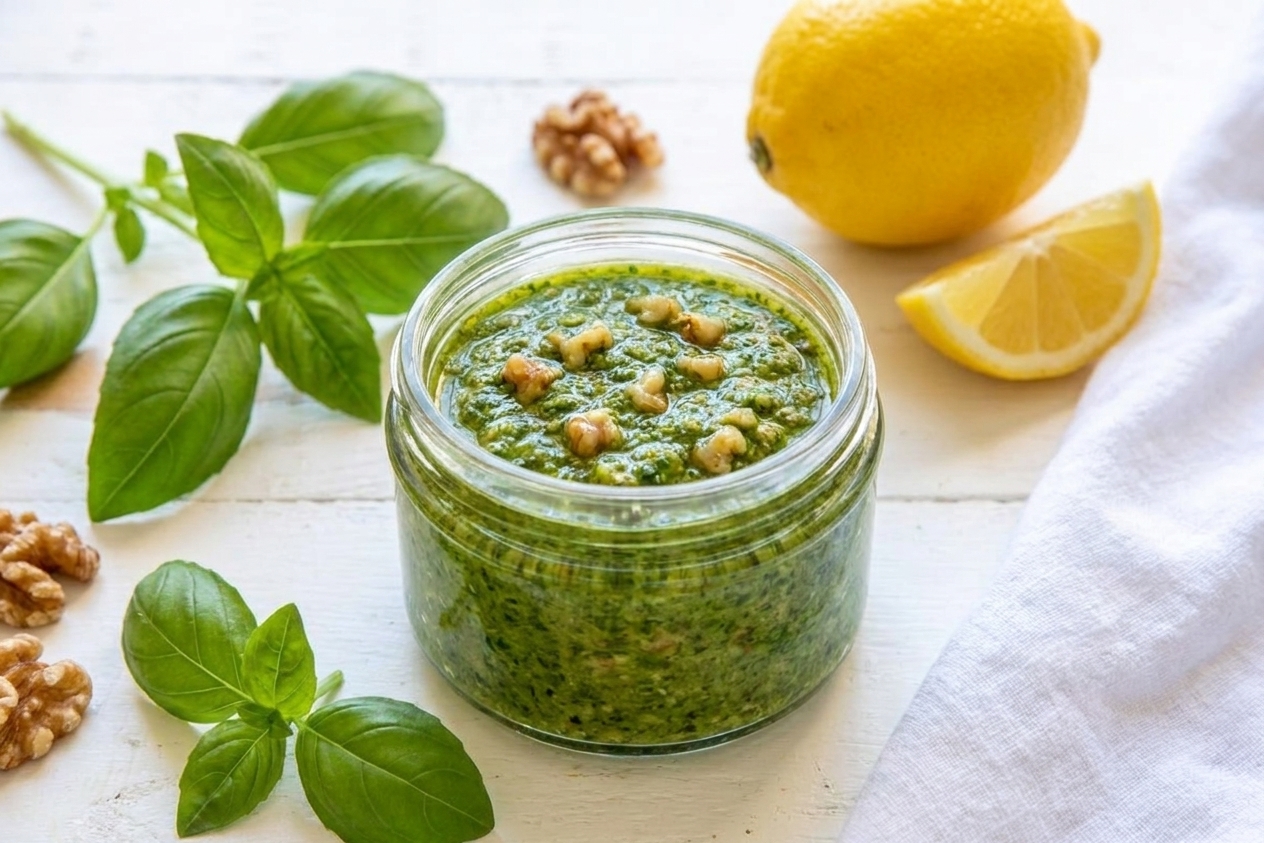
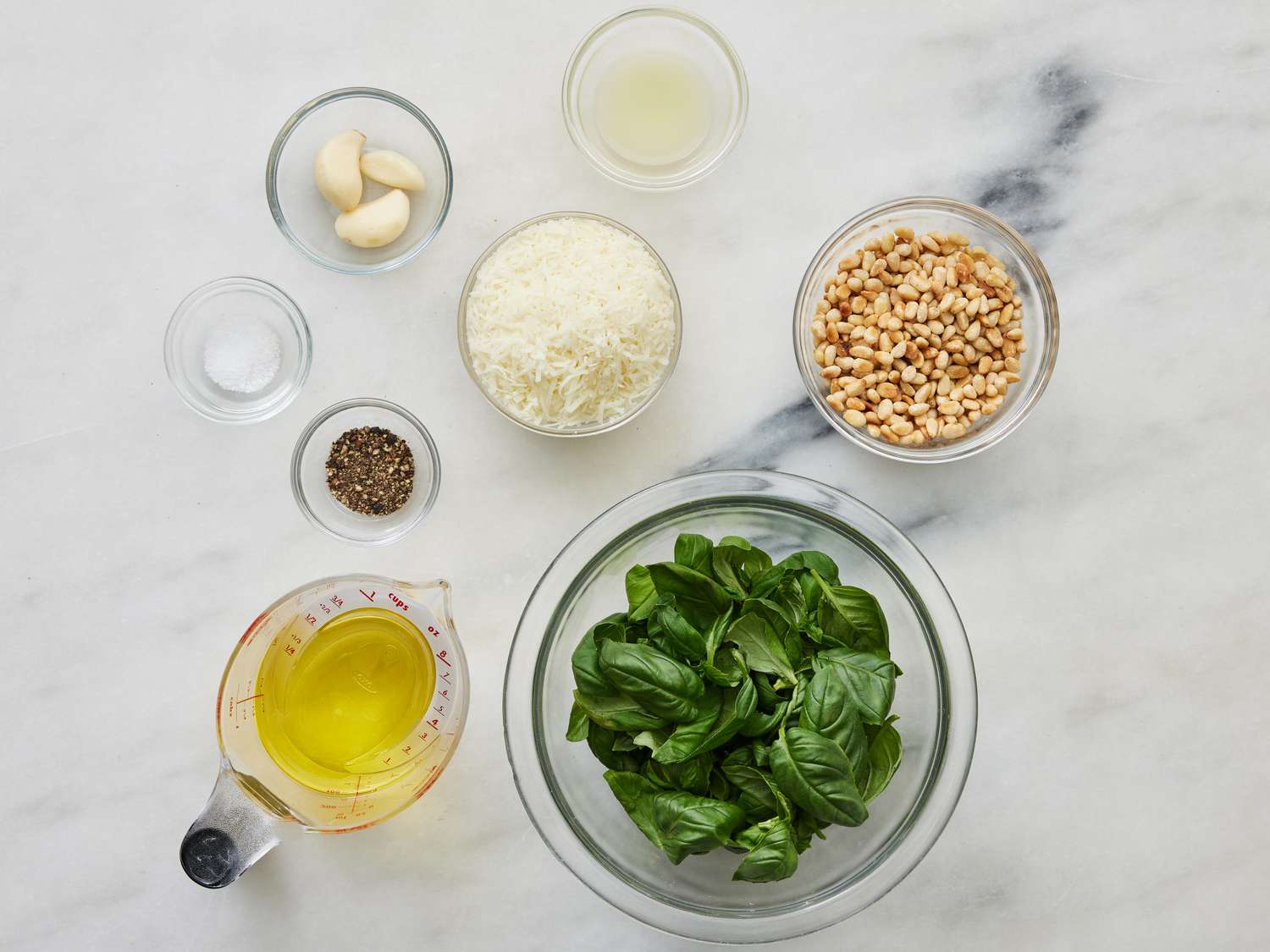
A quick, flavorful basil pesto you can toss with pasta, spread on sandwiches, or spoon over roasted veggies. Includes storage tips and easy swaps.
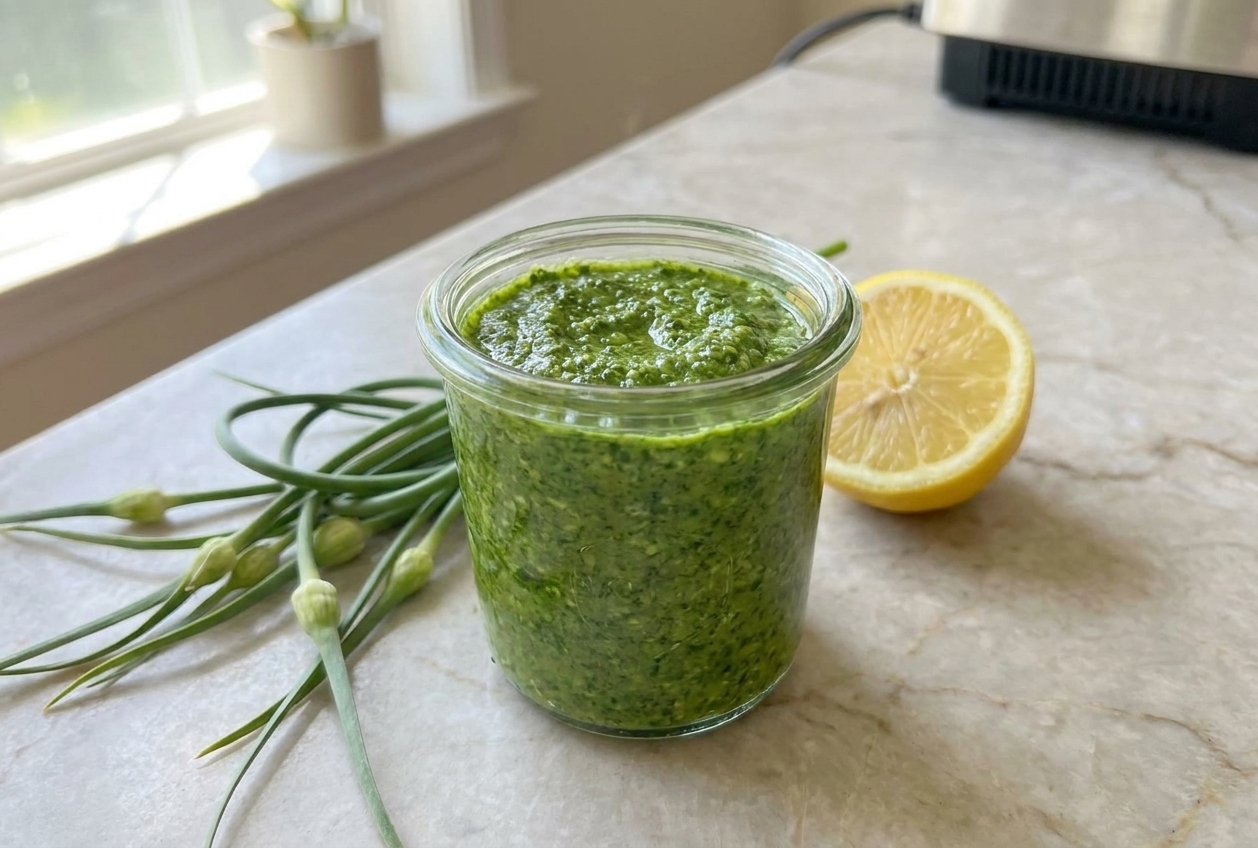
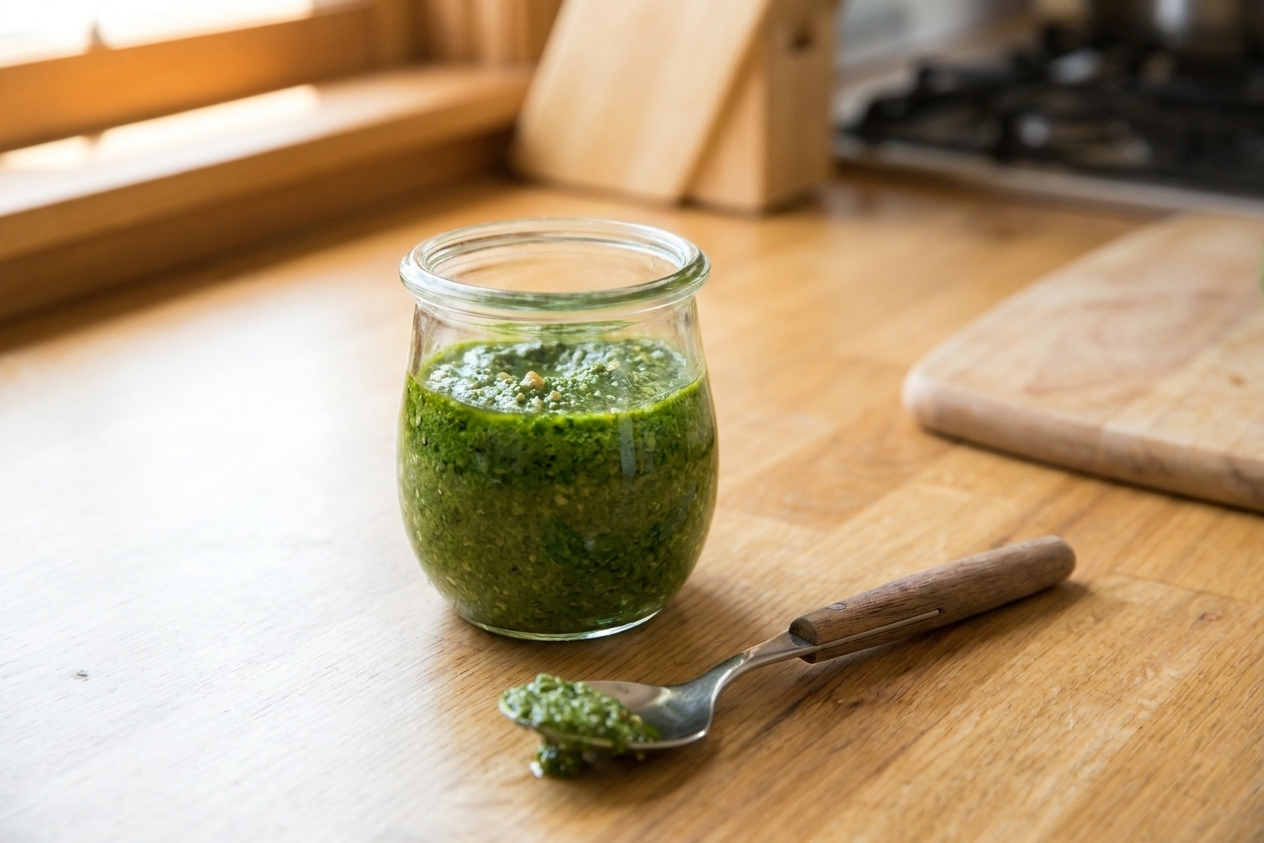
Spinach pesto is my weeknight chaos sauce. Toss it with hot pasta, swipe it onto a sandwich, spoon it over eggs, and suddenly your fridge leftovers are pretending they had a plan. The goal here is a pesto that tastes fresh and bright, not murky or grassy, and a texture that is creamy and clingy, not watery.
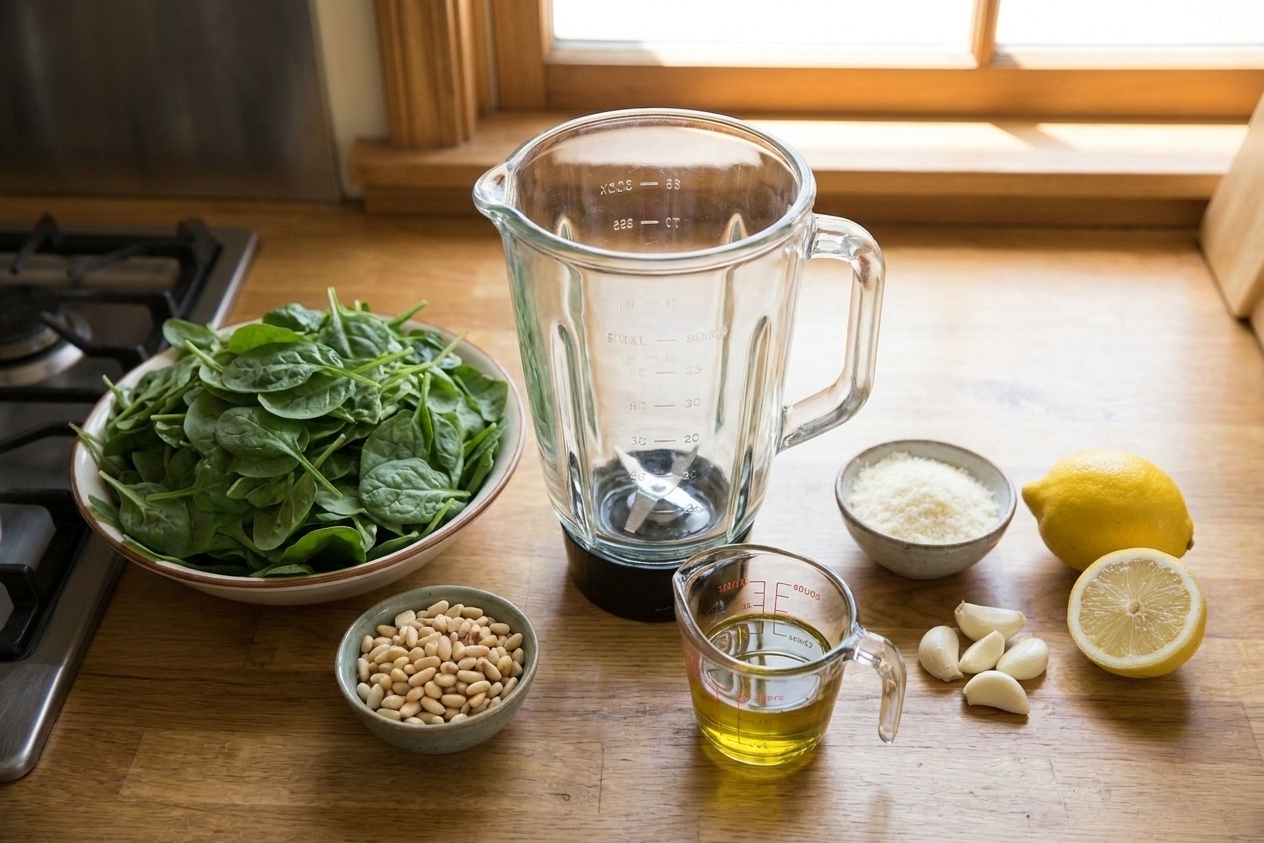
Because spinach holds more water than basil, it needs a slightly different approach. This recipe uses a quick lemon step and the right balance of nuts, cheese, and oil so the flavor pops and the color stays lively.
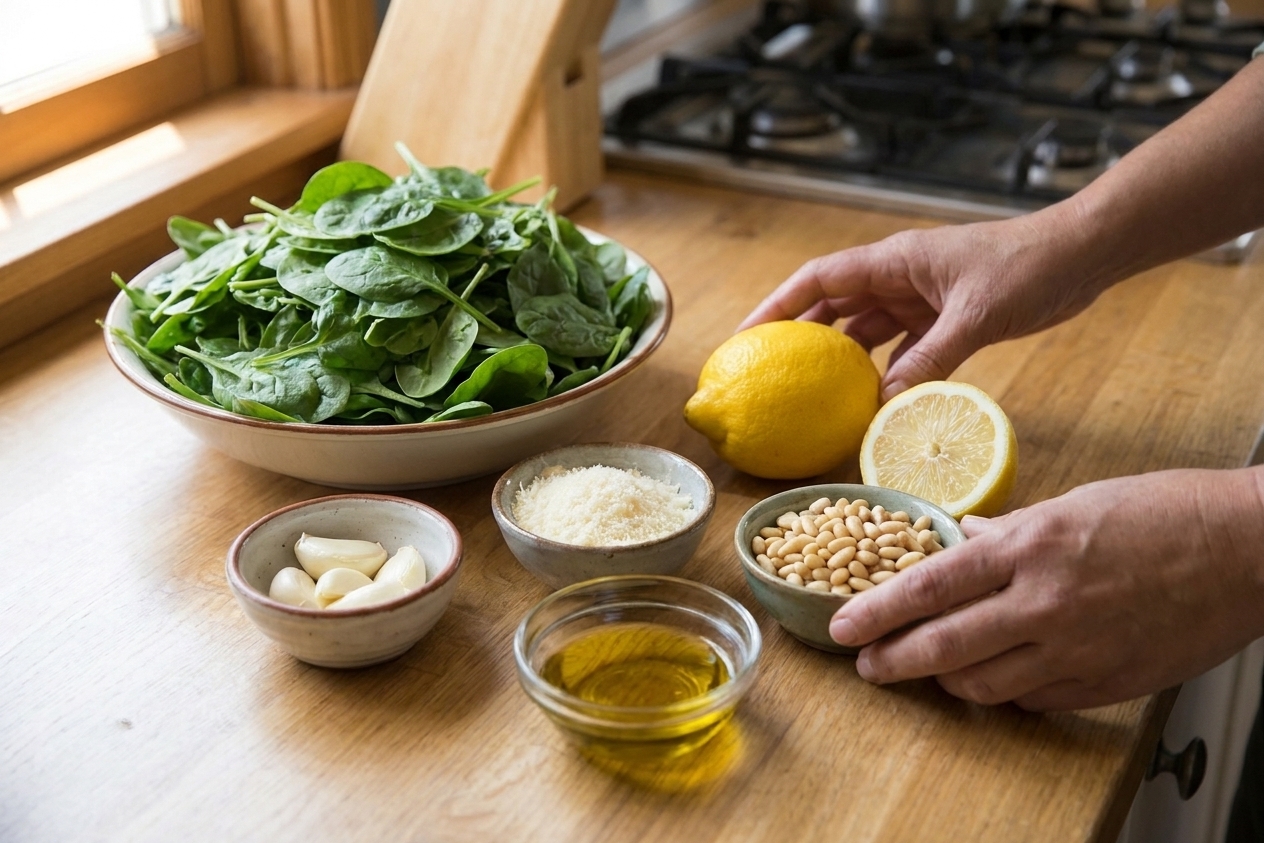
Spinach vs basil pesto
Flavor: Basil pesto is peppery, sweet-herbal, and pretty loud. Spinach pesto is milder and a little more earthy, which makes it a great blank canvas for lemon zest, extra garlic, or a pinch of red pepper flakes.
Water content: Spinach carries more moisture, especially if it is not dried well. That extra water can dull the flavor and make the sauce look thinner. In this recipe, we keep spinach dry, use enough nuts and cheese to give the sauce body, and add lemon in a way that keeps things bright without breaking the texture.
The lemon step
Lemon does two jobs: it adds acidity so the pesto tastes alive, and it can help with color by slowing some browning. That said, oxidation and heat are still the main villains. I like to blend the lemon juice and zest with the garlic first, then add spinach. It spreads the acidity evenly through the sauce so the flavor stays balanced.
Loosen pesto the right way
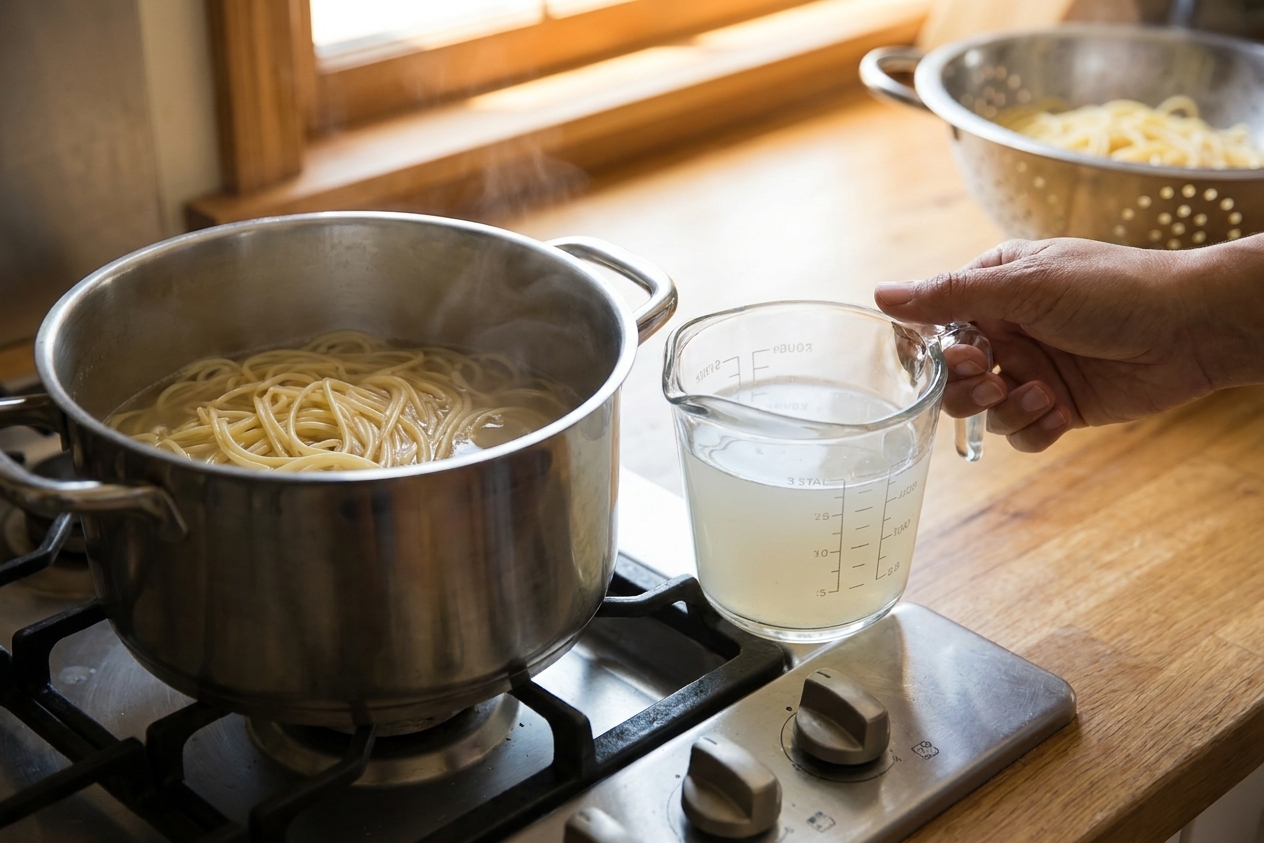
Please do not dump water into the blender and hope for the best. The move is to finish the pesto thick, then loosen it in the pan or bowl with starchy pasta water a tablespoon at a time. The starch helps emulsify, so you get a glossy sauce that coats noodles instead of sliding off.
My reliable method: warm a big bowl (or a skillet) with the hot pasta, add pesto, then splash in pasta water while tossing until it looks silky.
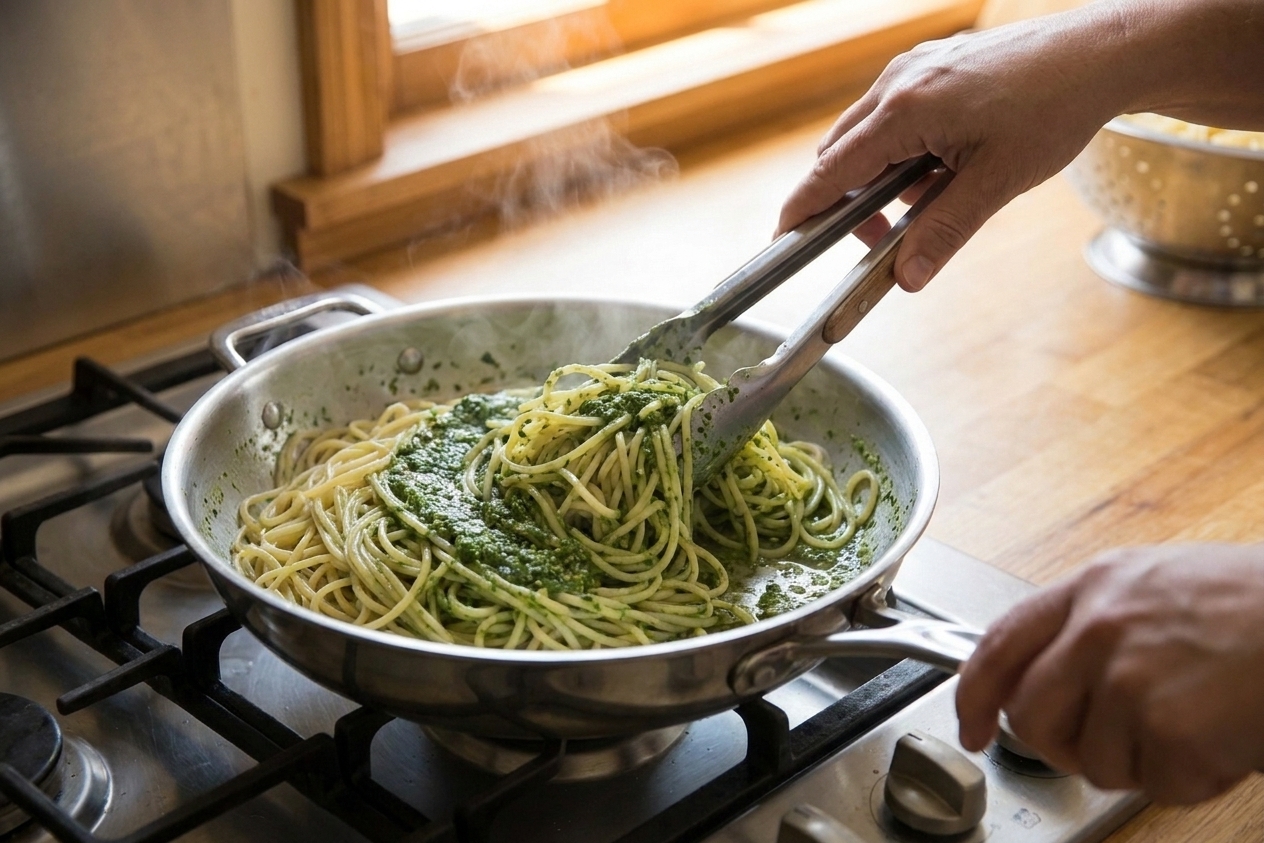
More ways to use it
If you make a jar of this, do not limit it to pasta. Try it on grain bowls, spooned over roasted potatoes, dabbed onto grilled chicken or fish, or thinned with a little olive oil and used as a quick dip for crunchy veggies.