Mom's Best Recipes
Recipe

Sun-Dried Tomato Pesto

A thick red pesto from oil-packed sun-dried tomatoes, garlic, cheese, and nuts that stays spreadable, not greasy. Basil is optional and the uses are endless.

Author By Matt Campbell
4.8
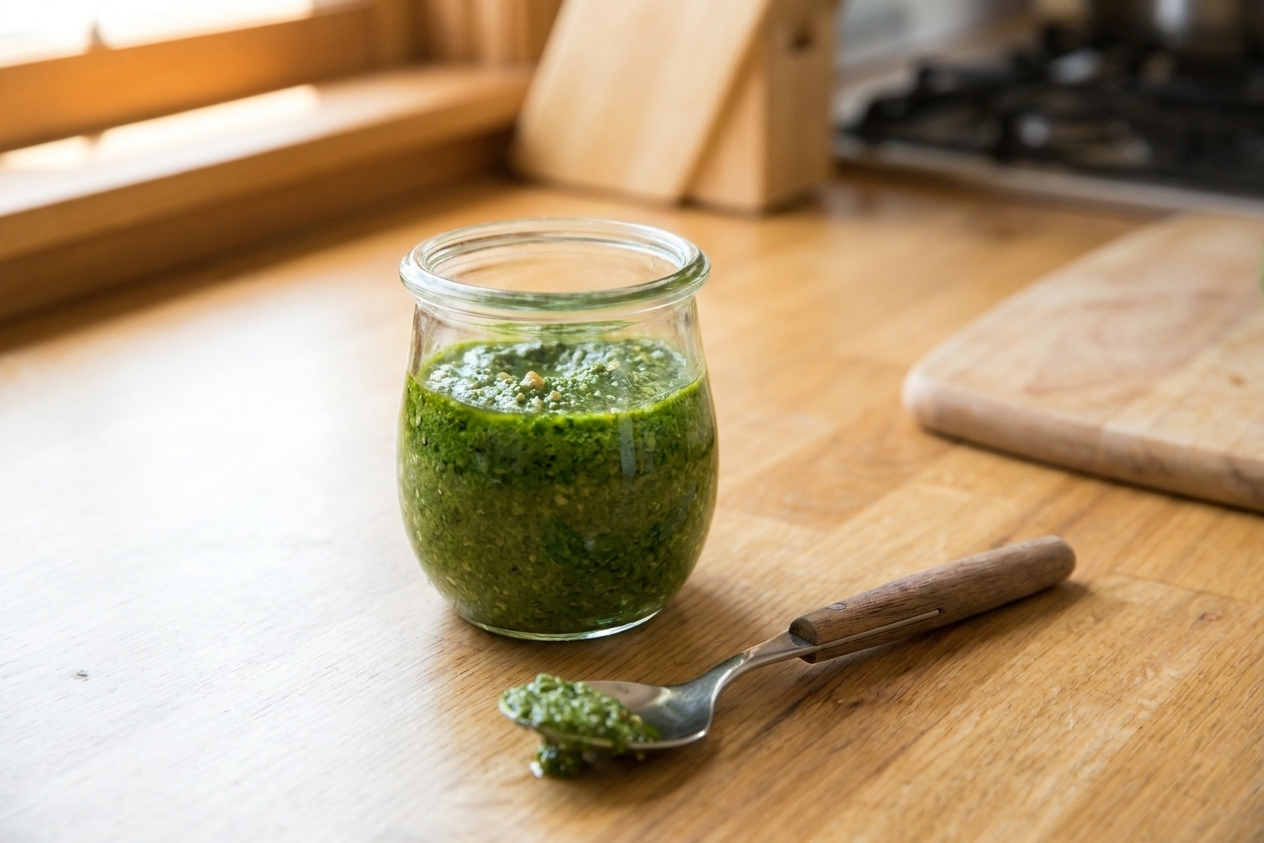
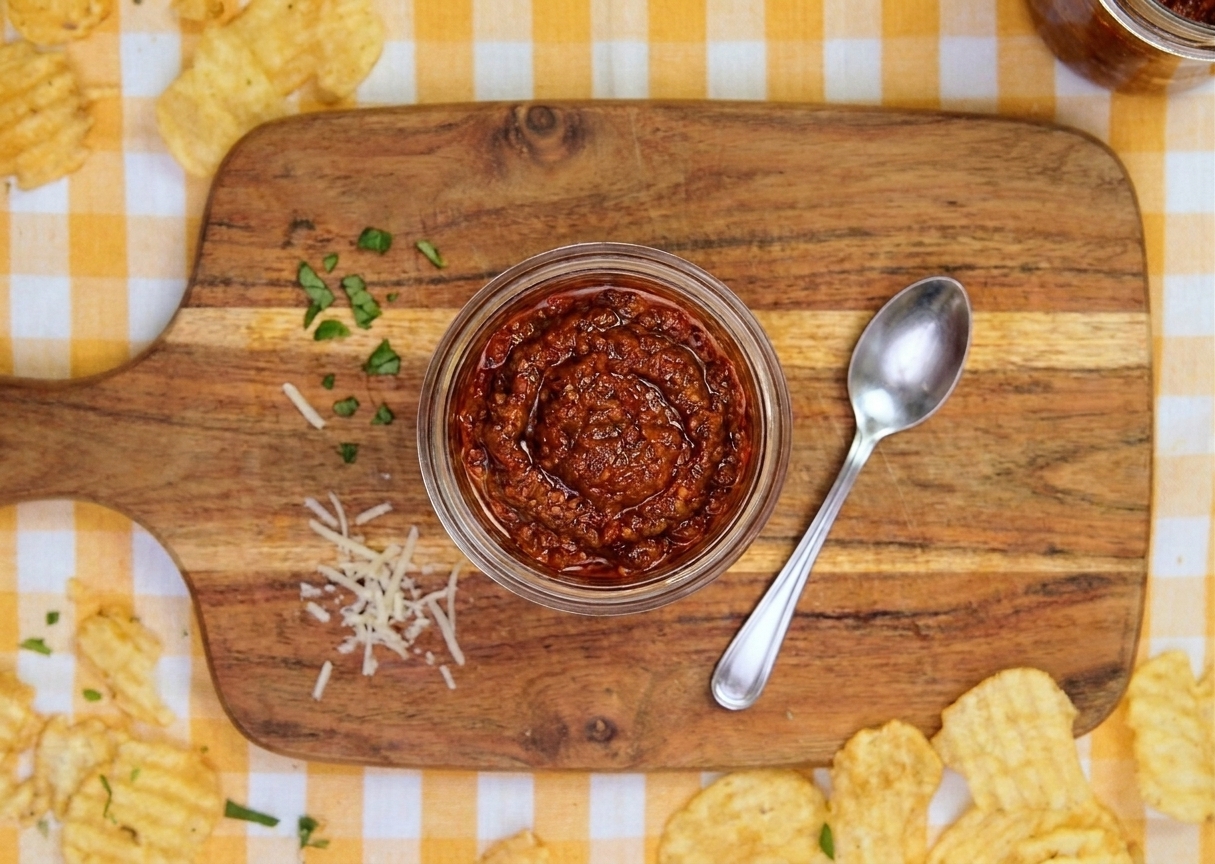
A small glass jar of thick sun-dried tomato pesto on a wooden cutting board with a spoon beside it under warm kitchen lighting

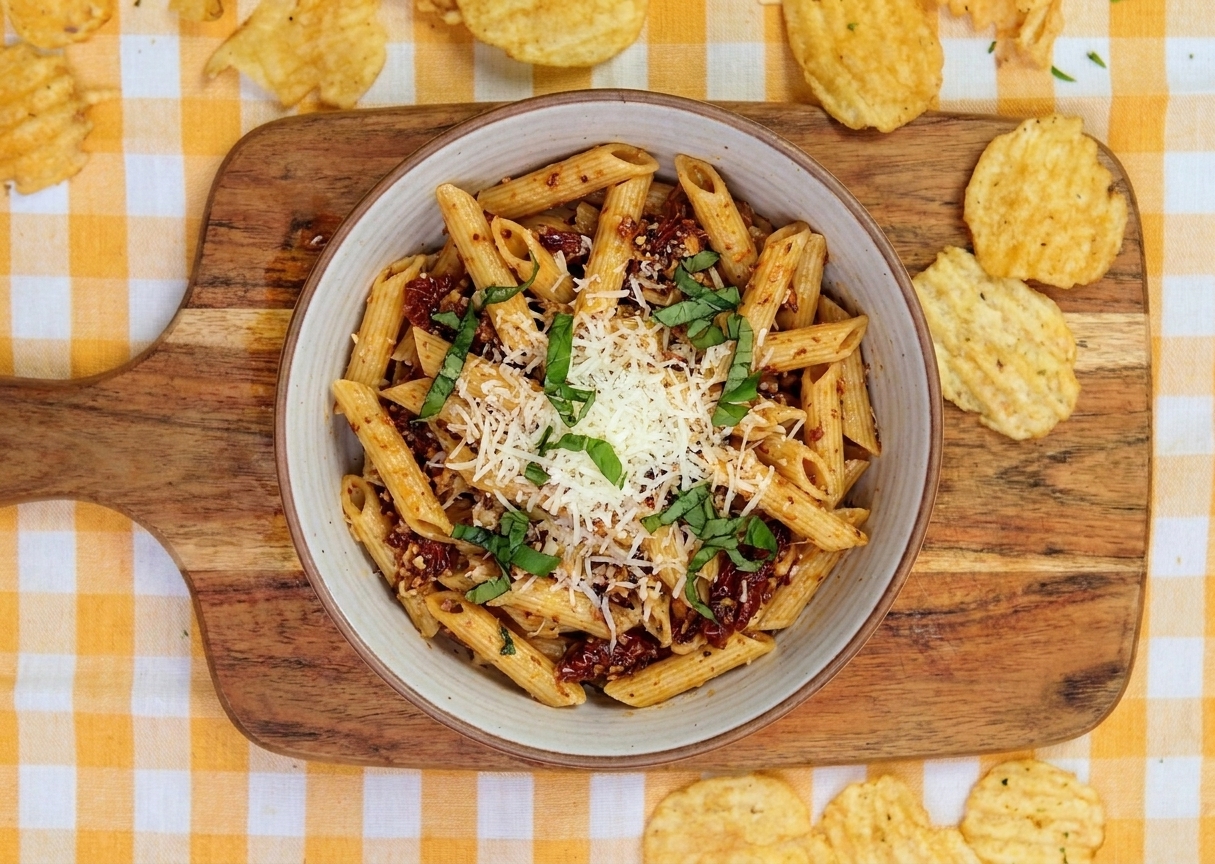
When I need something that tastes like I tried harder than I did, I reach for sun-dried tomatoes. They are basically flavor concentrate. Blend them into pesto and you get this thick, red, punchy sauce that can turn a plain bowl of pasta or a basic turkey sandwich into something you actually look forward to eating.

This version uses oil-packed sun-dried tomatoes (because weeknights), plus garlic, cheese, and nuts. I will also show you exactly how much oil to add so it stays spreadable instead of turning into tomato paste or an oily puddle. Basil is optional here, not a requirement. The tomatoes can absolutely carry the whole thing.

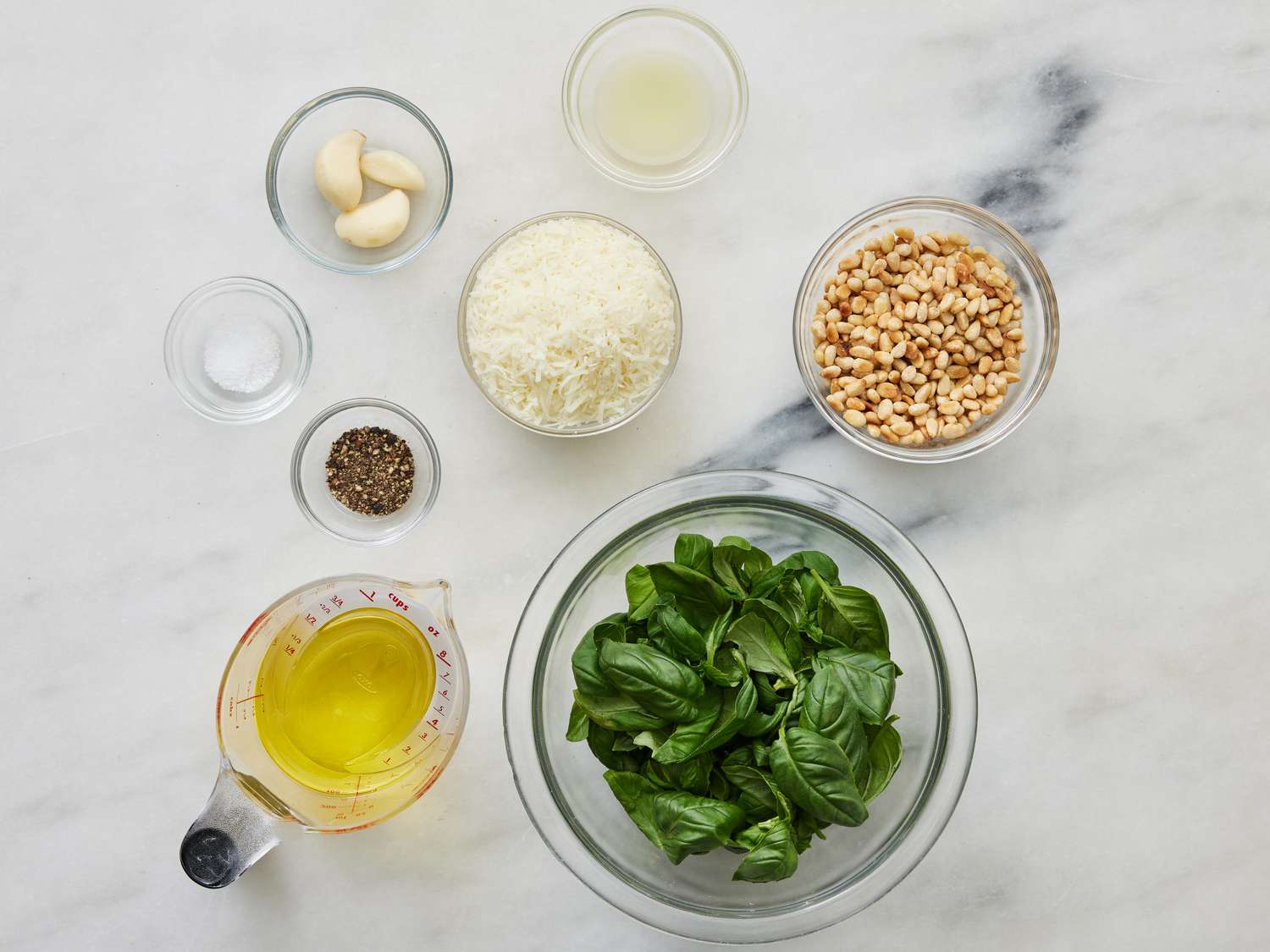
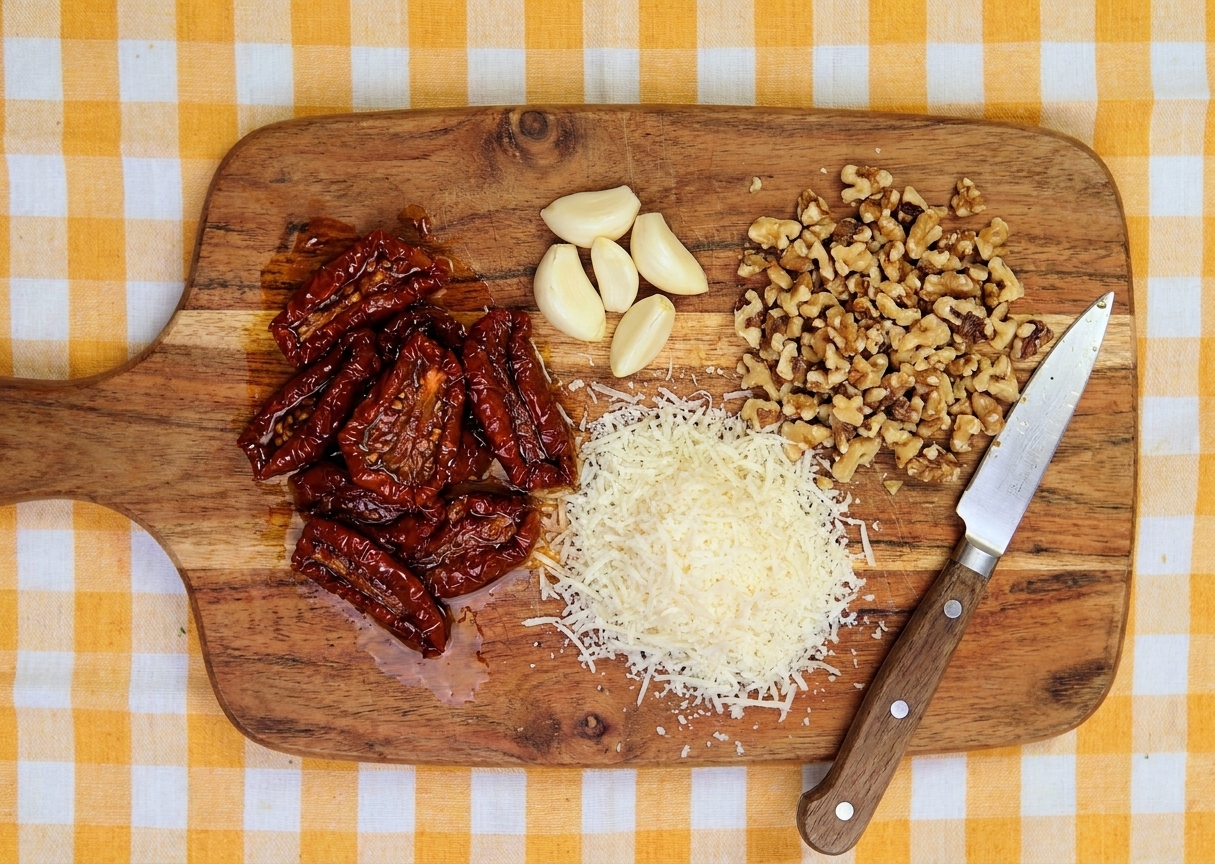
Oil-packed sun-dried tomatoes, garlic cloves, Parmesan cheese, nuts, lemon, and olive oil arranged on a clean kitchen counter

Why It Works

  • Thick but spreadable: The oil ratio is dialed in so it swipes easily on bread and loosens perfectly with pasta water.
  • Bold, not briny: A quick rinse and a little lemon keep the pesto from tasting overly salty.
  • Basil optional: Great with basil, but just as good without it when your herb drawer is looking sad.
  • Meal-prep friendly: Keeps well in the fridge and freezes well for quick meals later.

Pairs Well With

Storage Tips

How to Store Sun-Dried Tomato Pesto

Fridge life: Stored in a clean jar or airtight container, it is usually best for about 5 to 7 days.

Keep it fresher: Smooth the top flat and pour a thin layer of olive oil over the surface before sealing. This helps limit air contact and keeps the color and flavor brighter.

Use clean utensils: Scoop with a clean spoon every time. If it smells off, looks moldy, or tastes “funky” in a bad way, toss it.

Freeze it: Spoon into an ice cube tray, freeze, then pop cubes into a freezer bag. Freeze up to 3 months. Thaw overnight in the fridge or melt a cube gently in a warm pan with a splash of water.

Freezer texture tip: Parmesan can get a little grainy after freezing. If you want the smoothest texture, you can freeze the pesto without the cheese and stir the Parmesan in after thawing.

Food safety note: Keep it refrigerated and do not leave it at room temperature for more than 2 hours.

Common Questions

Common Questions

How much oil should I add to keep it spreadable?

Start with 3 tablespoons of oil (including some of the oil from the jar) for a thick spread. For a looser, pasta-ready pesto, go up to 5 to 6 tablespoons total. The exact amount depends on how dry your tomatoes are and how finely you blend.

Can I make it without basil?

Yes. This pesto is built to work with or without basil. If you want a little green freshness, add a small handful, but it is not required.

My pesto tastes too salty. How do I fix it?

Oil-packed sun-dried tomatoes can be salty. Here is the quick save: blend in 1 to 2 teaspoons lemon juice and 1 tablespoon unsalted nuts or a little more oil. For next time, rinse the tomatoes and pat them dry before blending, and keep added salt to a minimum.

Can I use dried (not oil-packed) sun-dried tomatoes?

You can, but they need a soak. Cover them with hot water for 10 to 15 minutes, then drain well. You will likely need a bit more olive oil to get the same silky texture.

What nuts work best?

Pine nuts are classic, but I often use walnuts for a slightly bitter edge (in a good way) or almonds for a sweeter, sturdier flavor. Pepitas also work if you are avoiding tree nuts.

Can I make it dairy-free?

Yes. Skip the Parmesan and add 2 tablespoons nutritional yeast plus an extra squeeze of lemon. Taste and adjust the salt at the end.

How much pasta does 1 cup pesto cover?

As a general rule, 1 cup is enough for about 12 to 16 ounces of pasta, depending on how saucy you like it. Start with a few big spoonfuls, then loosen with pasta water and keep going until it looks right.

I started making this pesto for the same reason I started learning most kitchen shortcuts in the first place: I wanted restaurant-level flavor on a random Tuesday without turning my sink into a dish graveyard. The first time I made it, I went too far on the sun-dried tomato oil and ended up with something closer to a red slick than a spread. Now I treat the oil like seasoning. Add a little, blend, scrape, check. When it hits that thick, swoopy texture that clings to a spoon, you are there.