Common Questions
Is this the same as pad krapow?
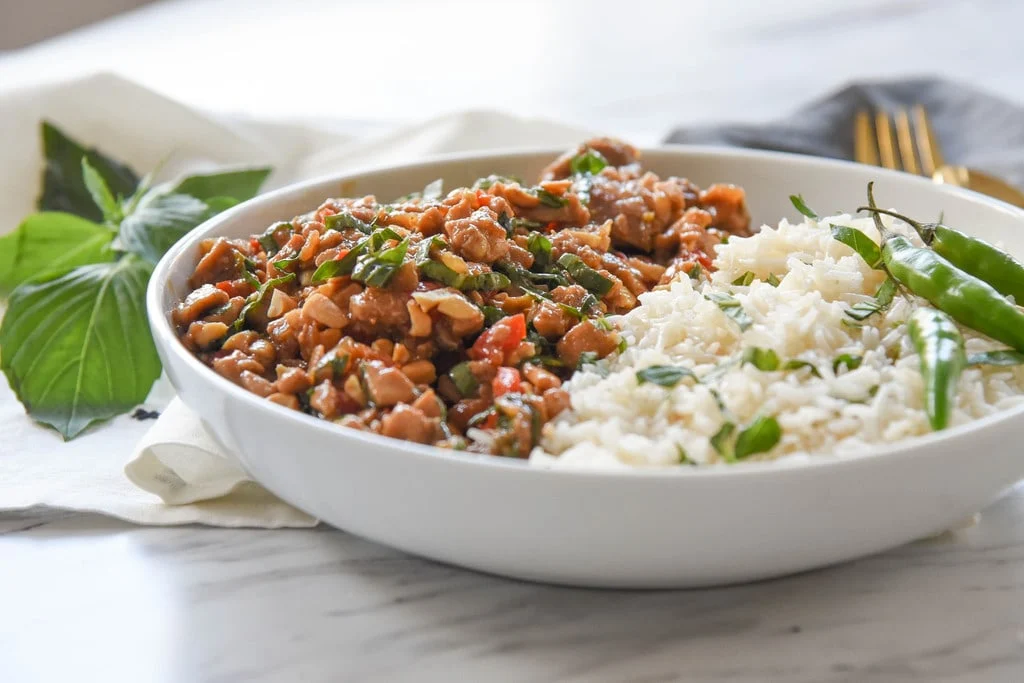
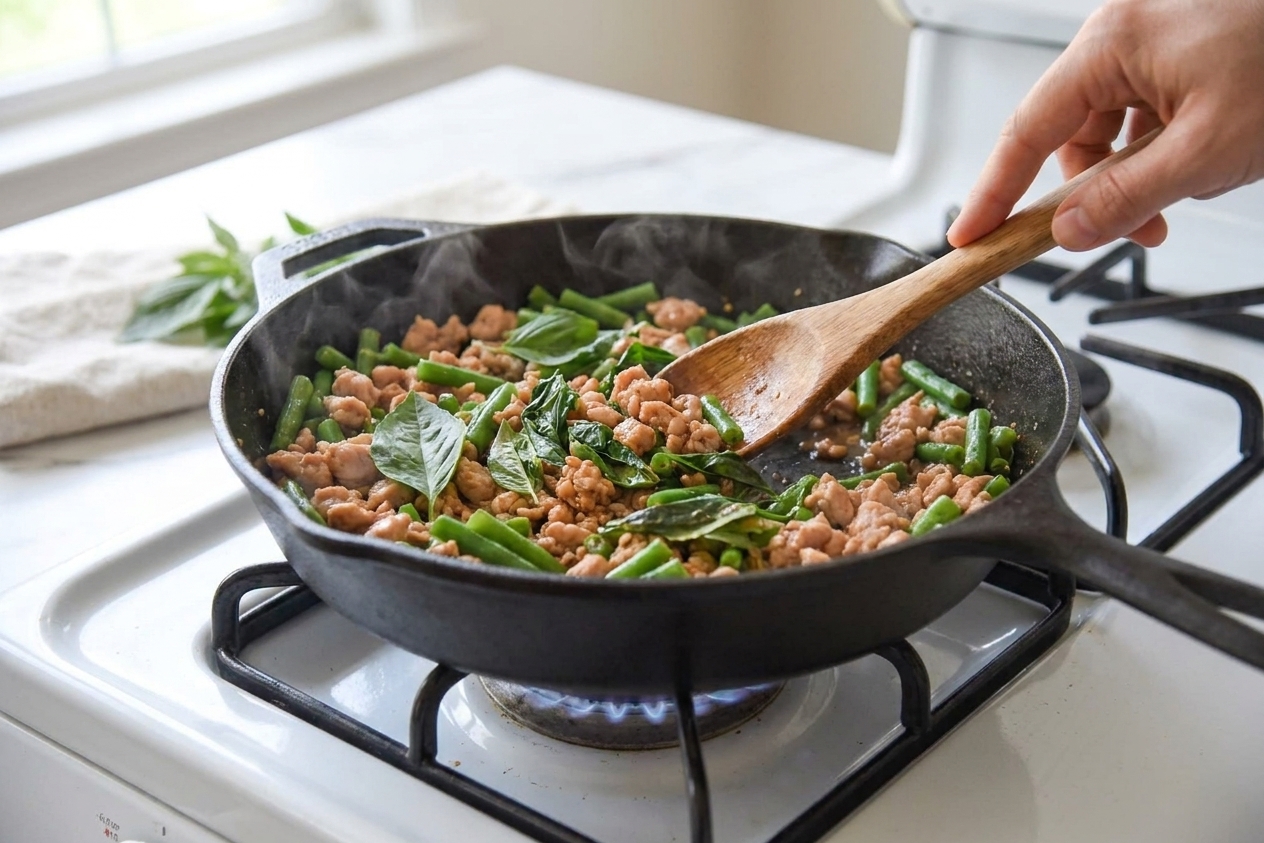
It is inspired by pad krapow flavors, but I am calling it Thai bistro style because we are aiming for the vibe and flavor profile without requiring every traditional ingredient. If you have holy basil, use it. If you do not, Thai basil is fantastic and easy to find.
What if I cannot find Thai basil?
Use regular Italian basil. You will lose a little of the anise-like edge, but the dish will still be delicious. Add a little extra lime at the end to keep it bright.
Do I have to use fish sauce?
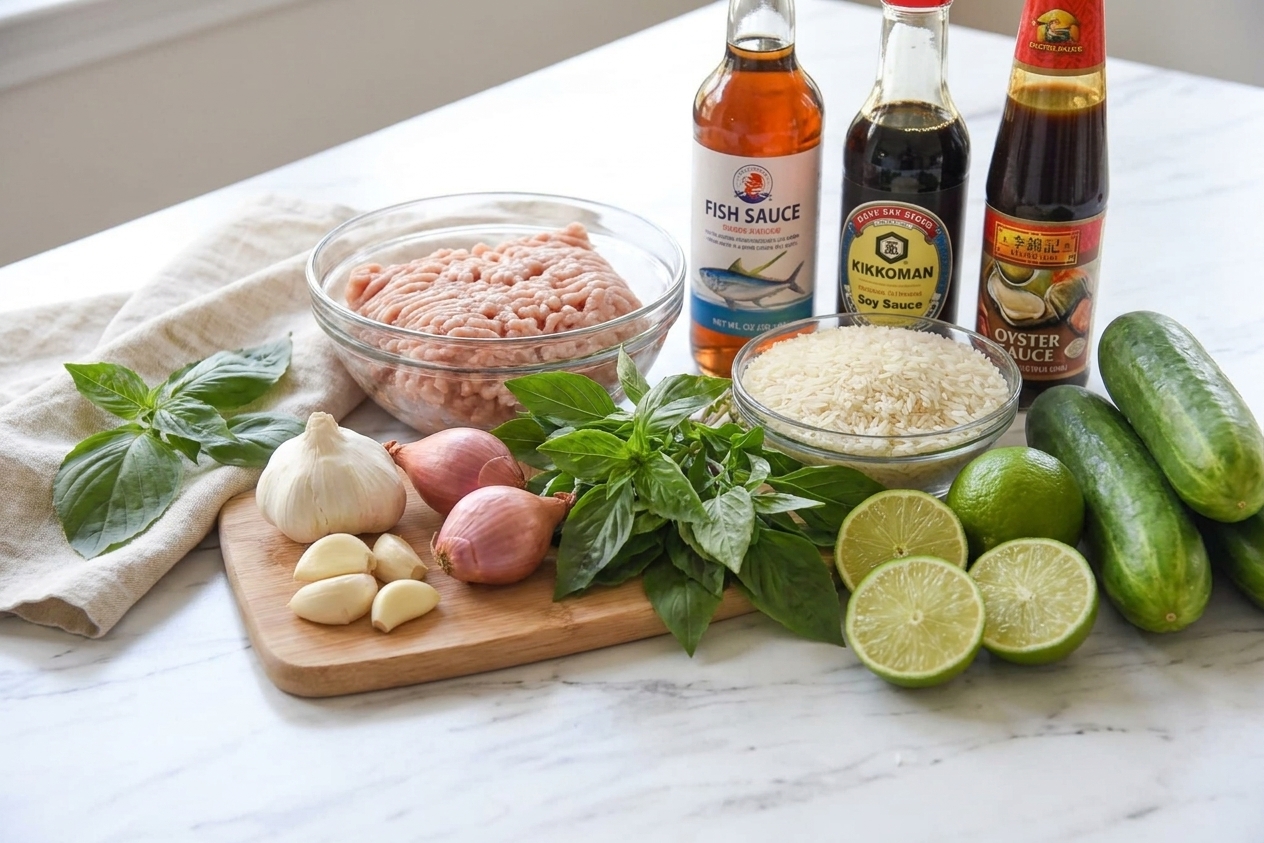
Fish sauce brings the bistro-level savory depth. If you need a substitute, use more soy sauce plus a tiny pinch of sugar and a squeeze of lime, but expect a slightly flatter flavor.
Can I make it vegetarian?
Yes. Use crumbled extra-firm tofu (or tempeh) and brown it well before adding sauce. For a vegetarian sauce, swap in vegetarian oyster sauce (often mushroom-based) and use vegan fish sauce or just add an extra splash of soy plus a squeeze of lime to finish.
Can I make it with turkey or pork?
Yes. Ground turkey and ground pork both work great. Pork is especially bistro-coded and extra juicy.
How spicy is it?
With 1 mild chile, it is gentle. With Thai bird chiles, it gets real. If you want a concrete starting point, use 1 bird chile for medium heat, 2 for hot, and 3 if you want to feel alive. Start small, taste, then add more.
What is the best rice for Thai bistro bowls?
Jasmine rice is the classic. Rice brands vary, so if your package uses a different water ratio, follow that. If you want extra fragrance, rinse it well and cook it with a small piece of ginger or a pandan leaf if you have one.
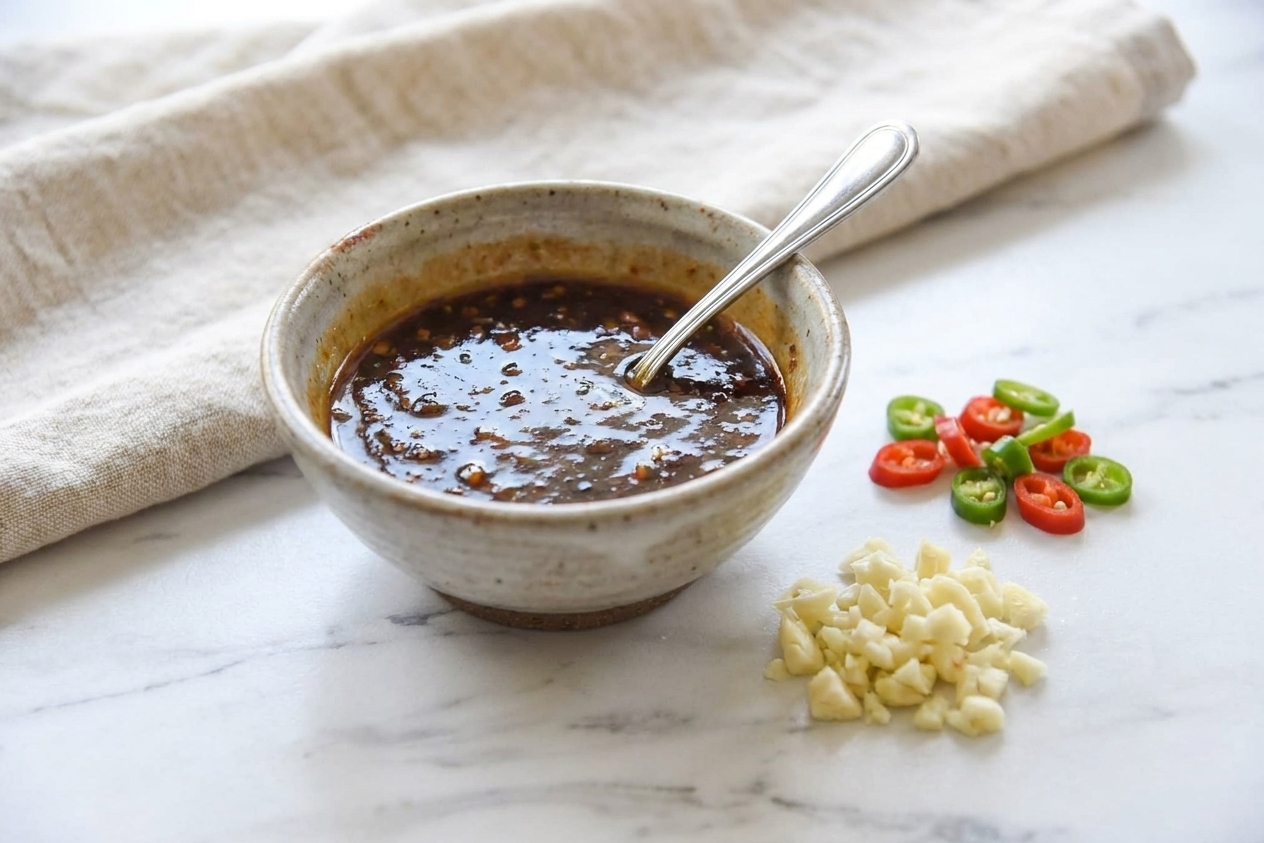
My sauce tastes too salty. Help?
Totally normal: fish sauce, oyster sauce, and soy can vary a lot by brand. Taste the mixed sauce before it hits the pan. If it is intense, loosen it with 1 to 2 more tablespoons water, or add a touch more sugar and finish with lime to balance.