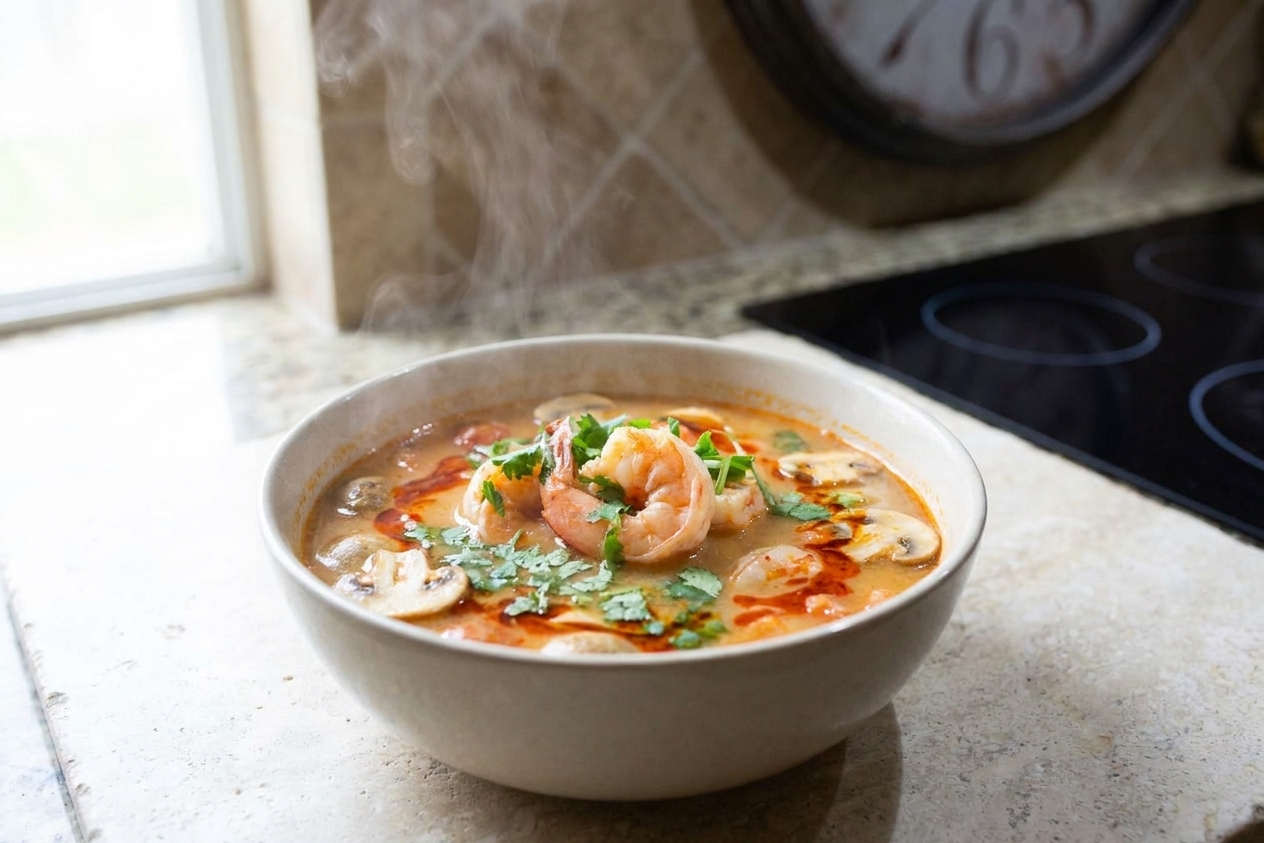
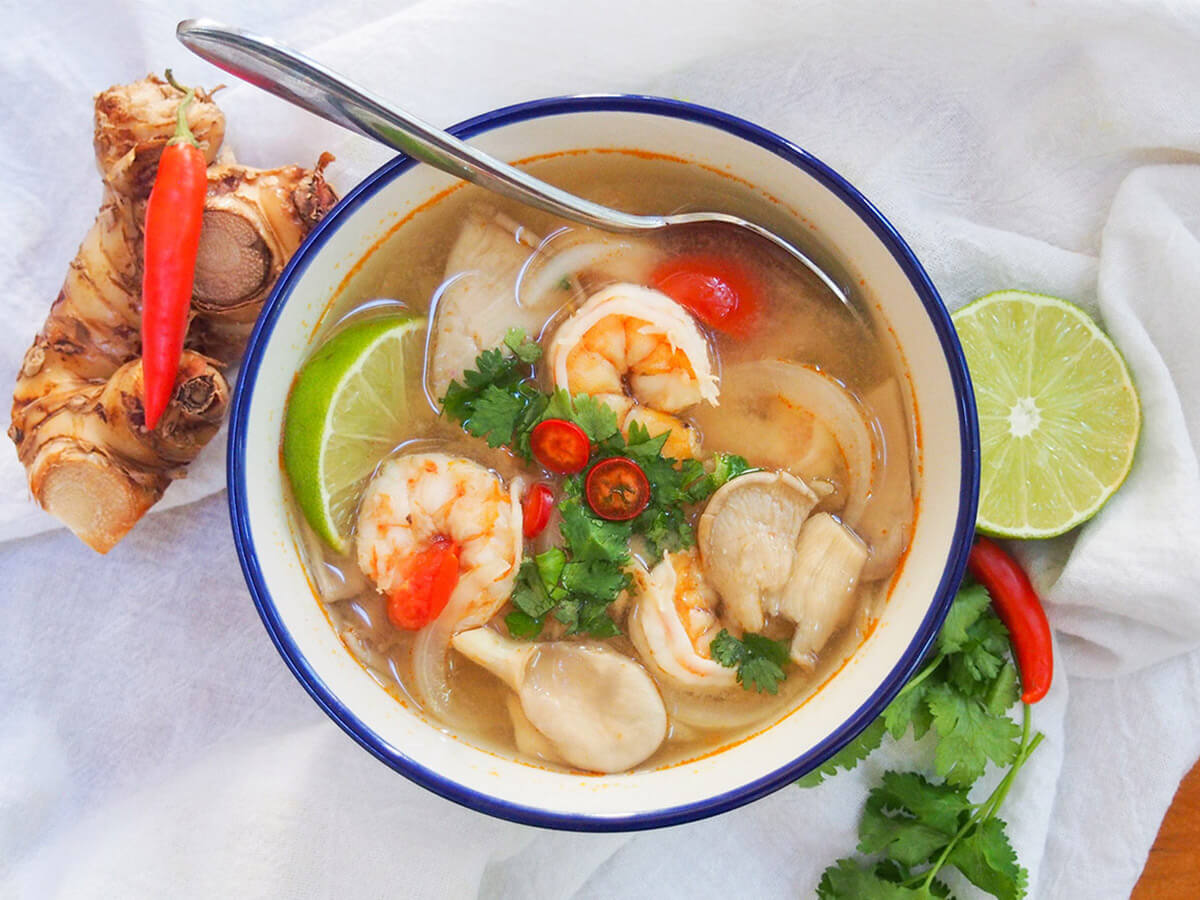
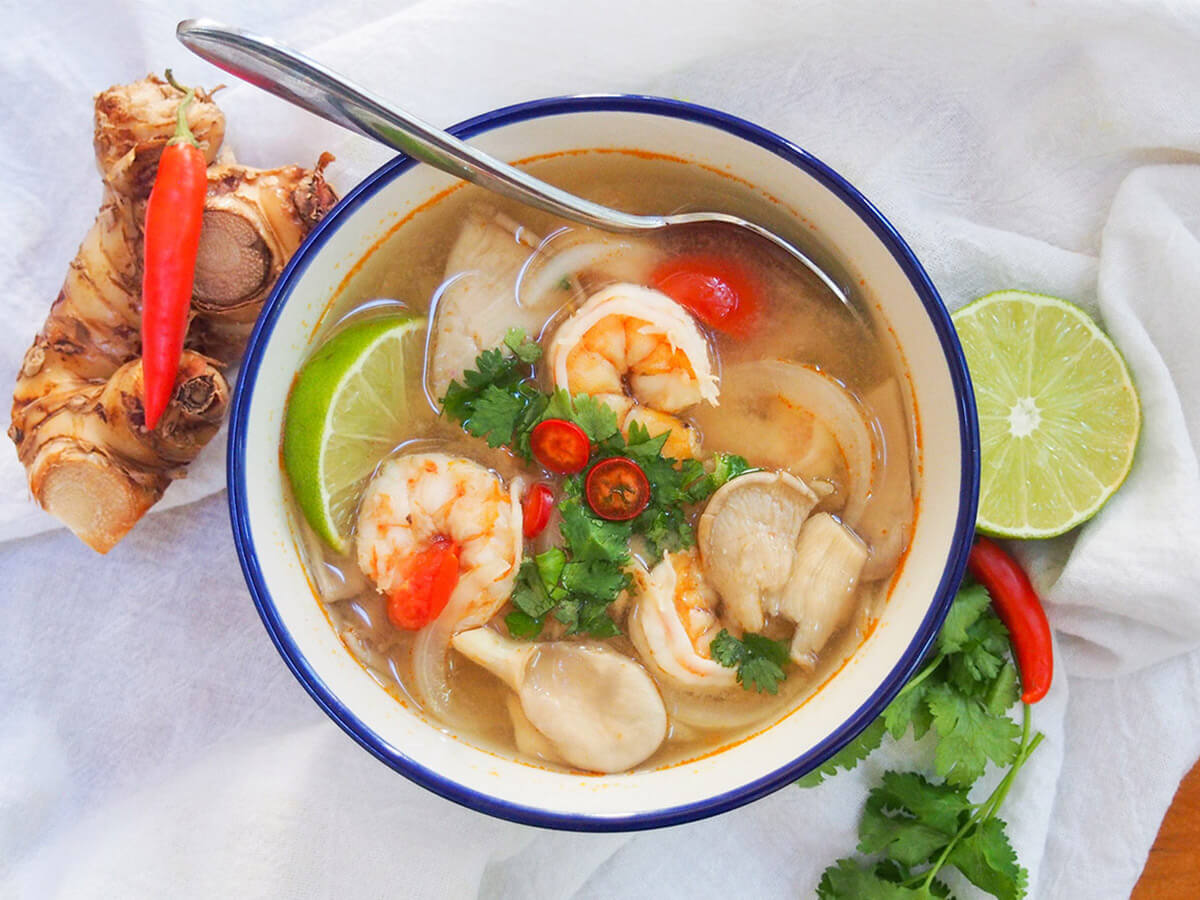
What does tom yum goong taste like?
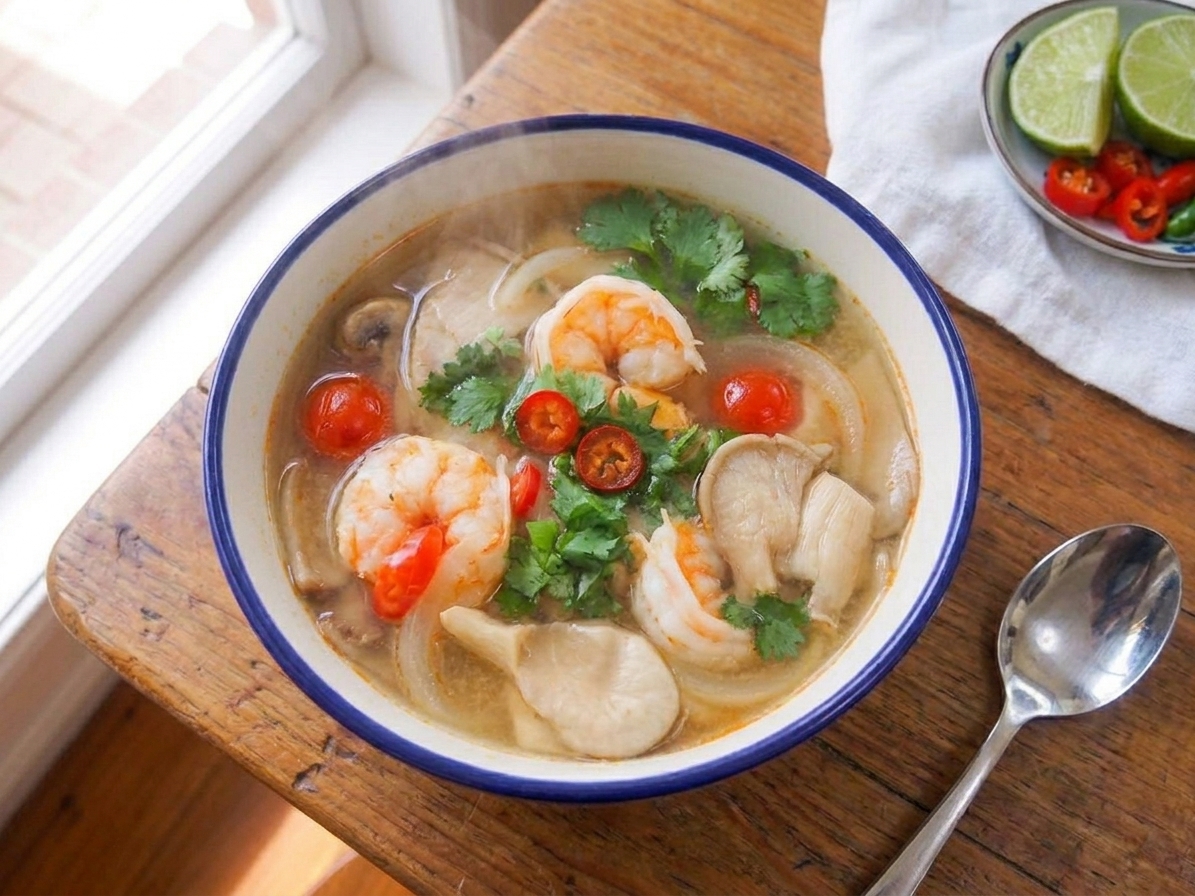
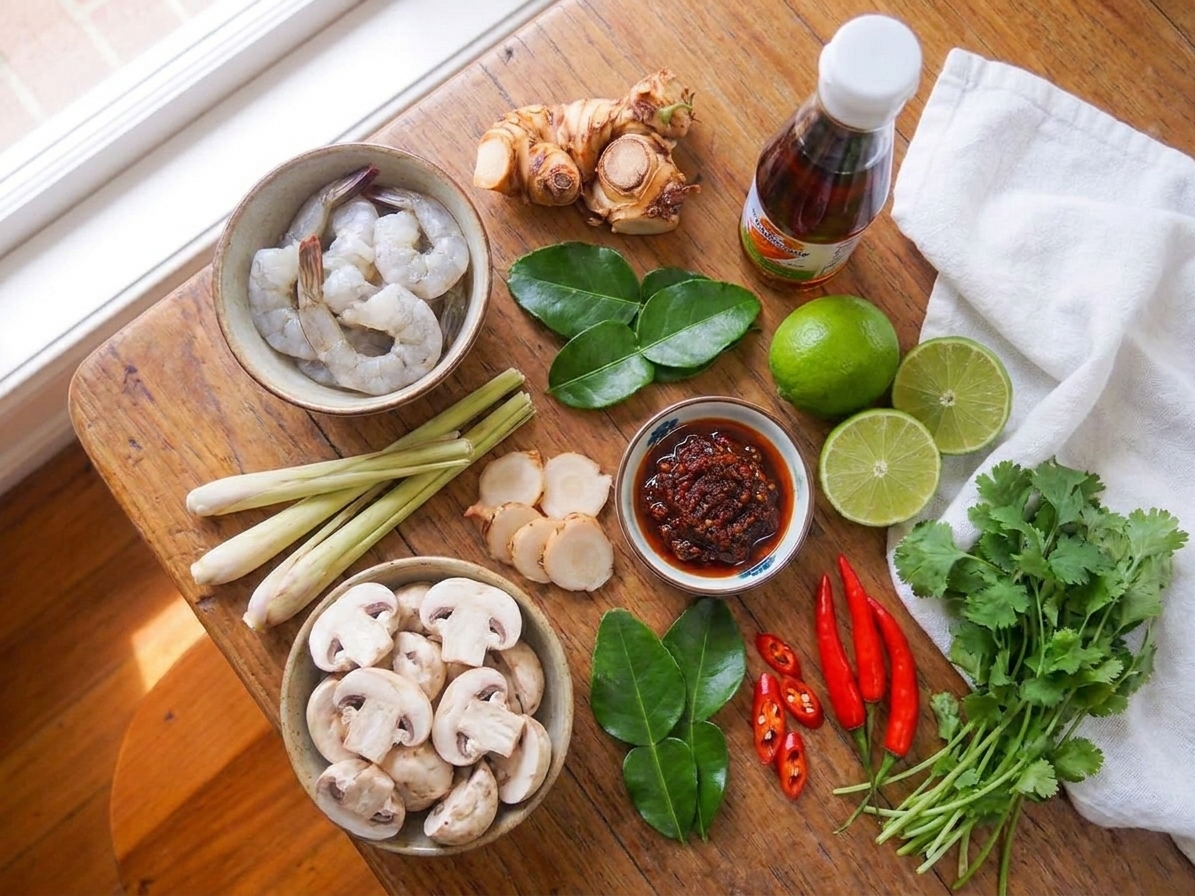
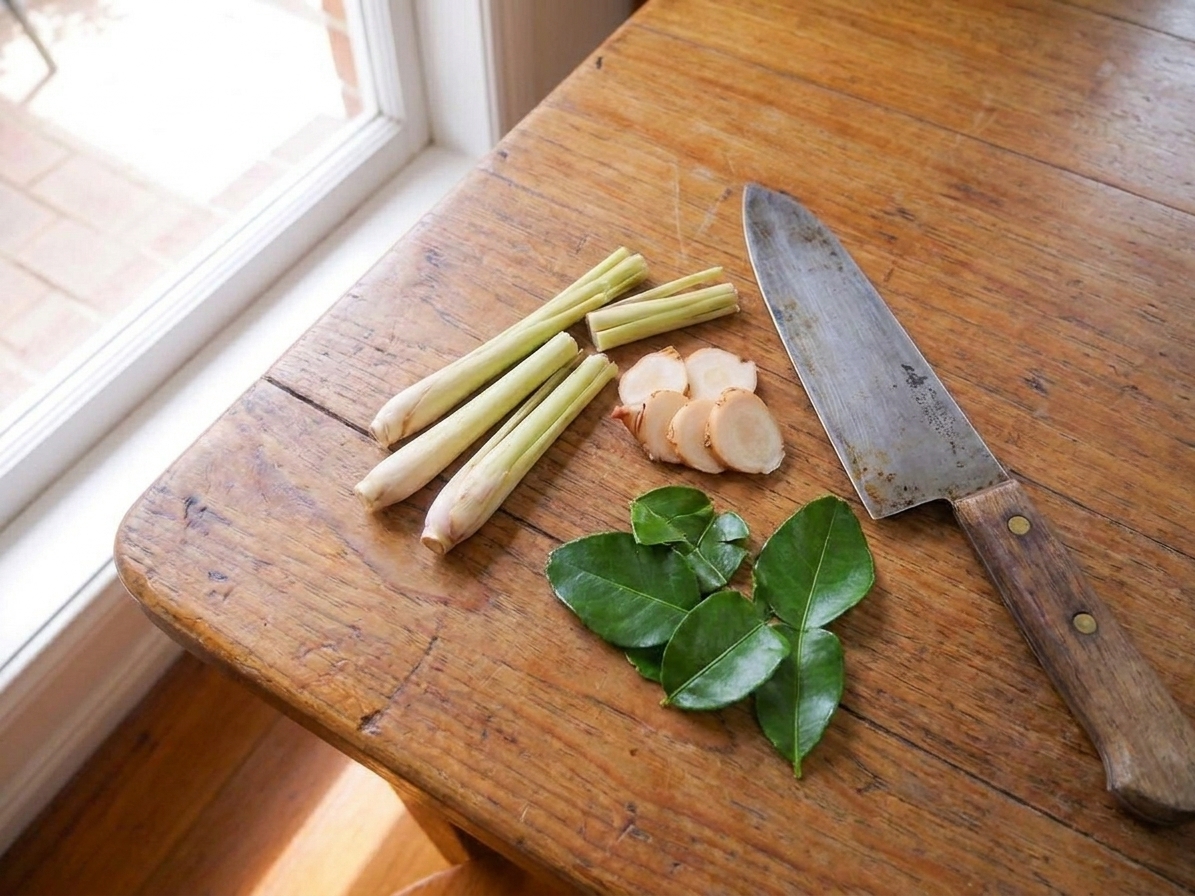
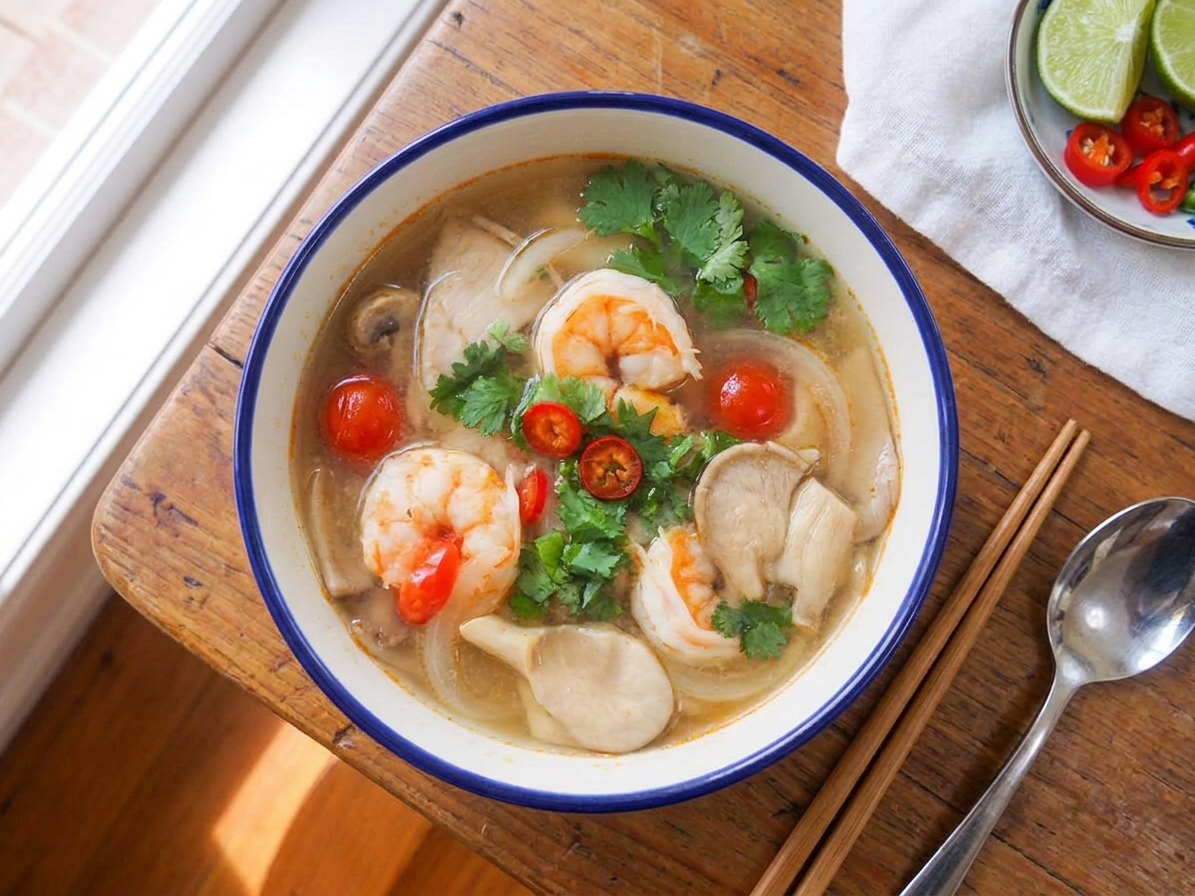
It is a hot and sour soup with a savory backbone. The aromatics (lemongrass, galangal, makrut lime leaf) make it smell like citrusy pine in the best way, then lime juice and chili bring the pop.
Can I make it creamy?
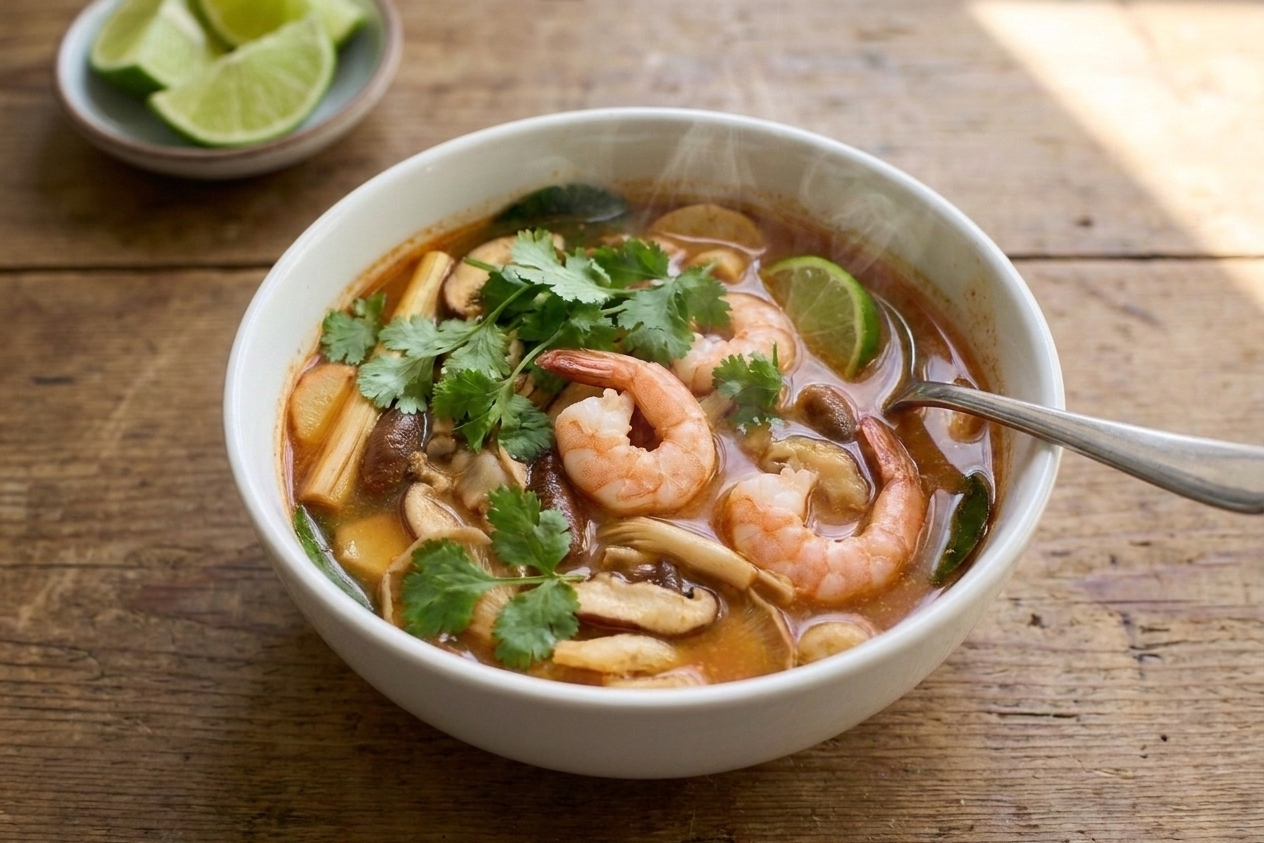
Yes. Stir in 1/4 to 1/2 cup coconut milk at the end for a creamy, restaurant-style tom yum. Some modern versions also use 1 to 3 tablespoons evaporated milk for a silkier broth. Keep the heat gentle so it stays smooth.
What can I use instead of galangal?
Fresh ginger is the easiest swap. It is not identical, but it is still delicious. If you find galangal frozen, grab it. It keeps well and makes this soup taste instantly more “right.”
What can I use instead of makrut lime leaves?
Use wide strips of lime peel (avoid the bitter white pith) plus a little extra lime juice at the end. It gets you close.
Is tom yum goong very spicy?
It can be. Start with less paste and fewer fresh chiles, then add more at the end. The soup should feel exciting, not punishing.
Do I eat the lemongrass and leaves?
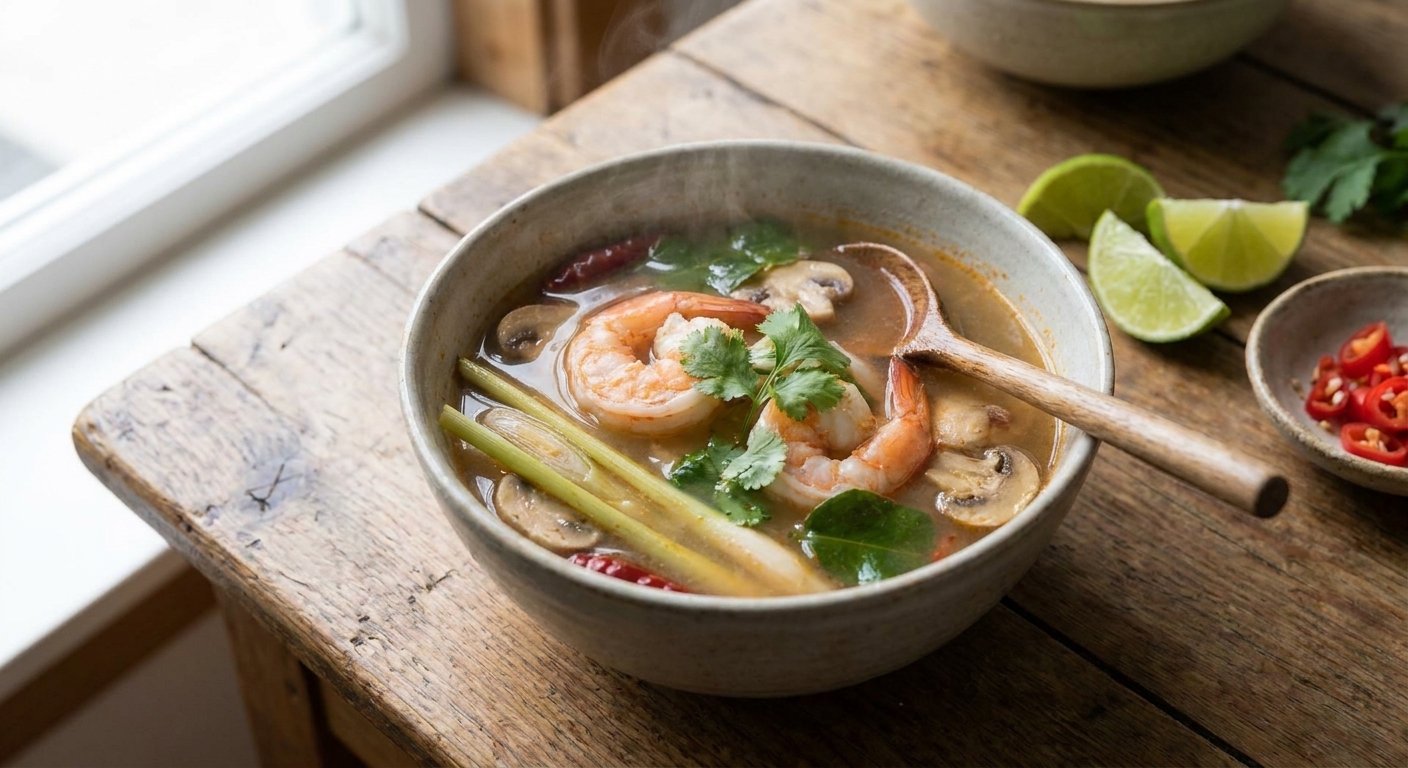
No. They are there to perfume the broth. You can leave them in for rustic vibes and warn everyone, or strain them out before serving.
What is “tom yum paste”?
It is a jarred seasoning paste that usually includes chili plus tom yum aromatics (like lemongrass and lime leaf). Brands vary a lot in salt and heat, so start with 2 tablespoons, simmer, then add more to taste.
Any allergy notes?
This recipe contains shellfish (shrimp) and fish sauce (fish). If you need it, swap fish sauce for soy sauce or tamari, and use a vegetarian tom yum paste if available.