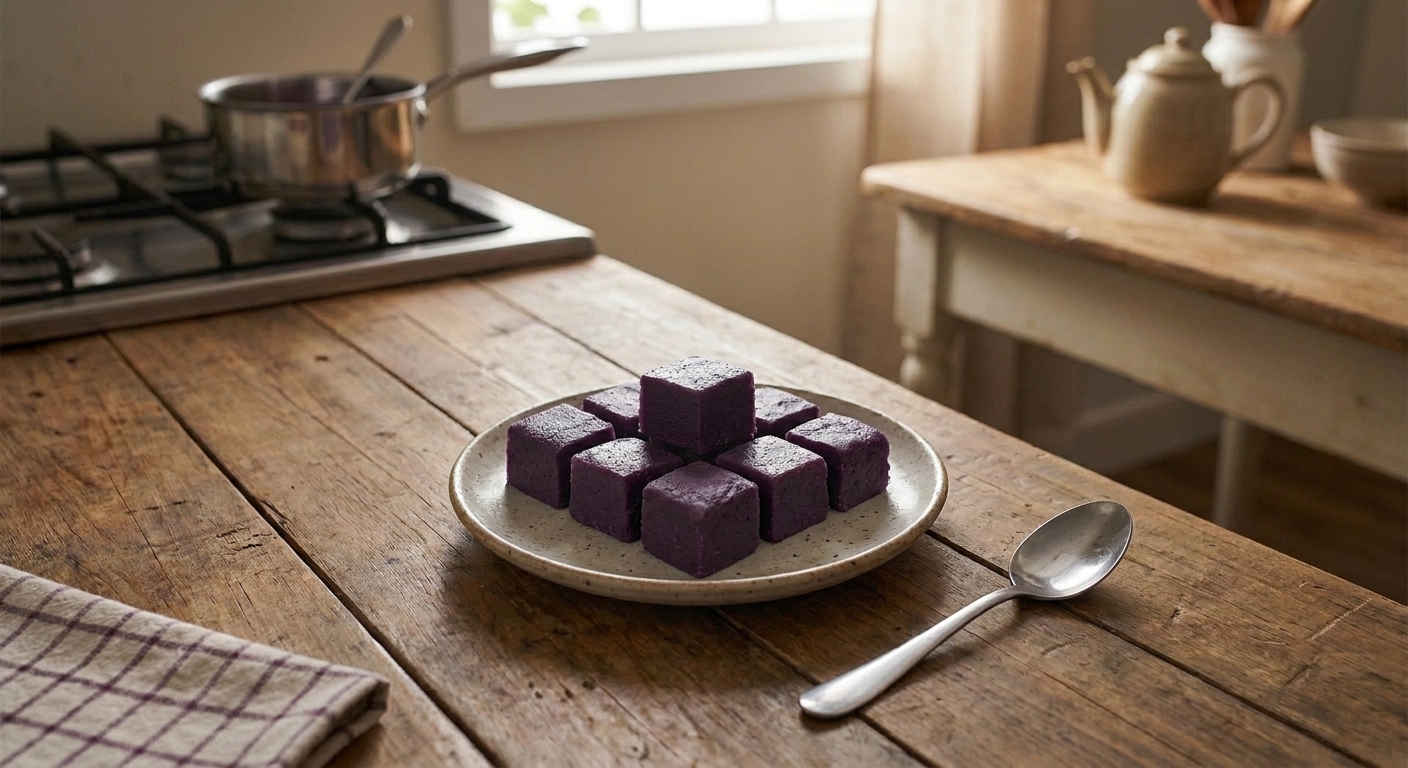
What is ube halaya?
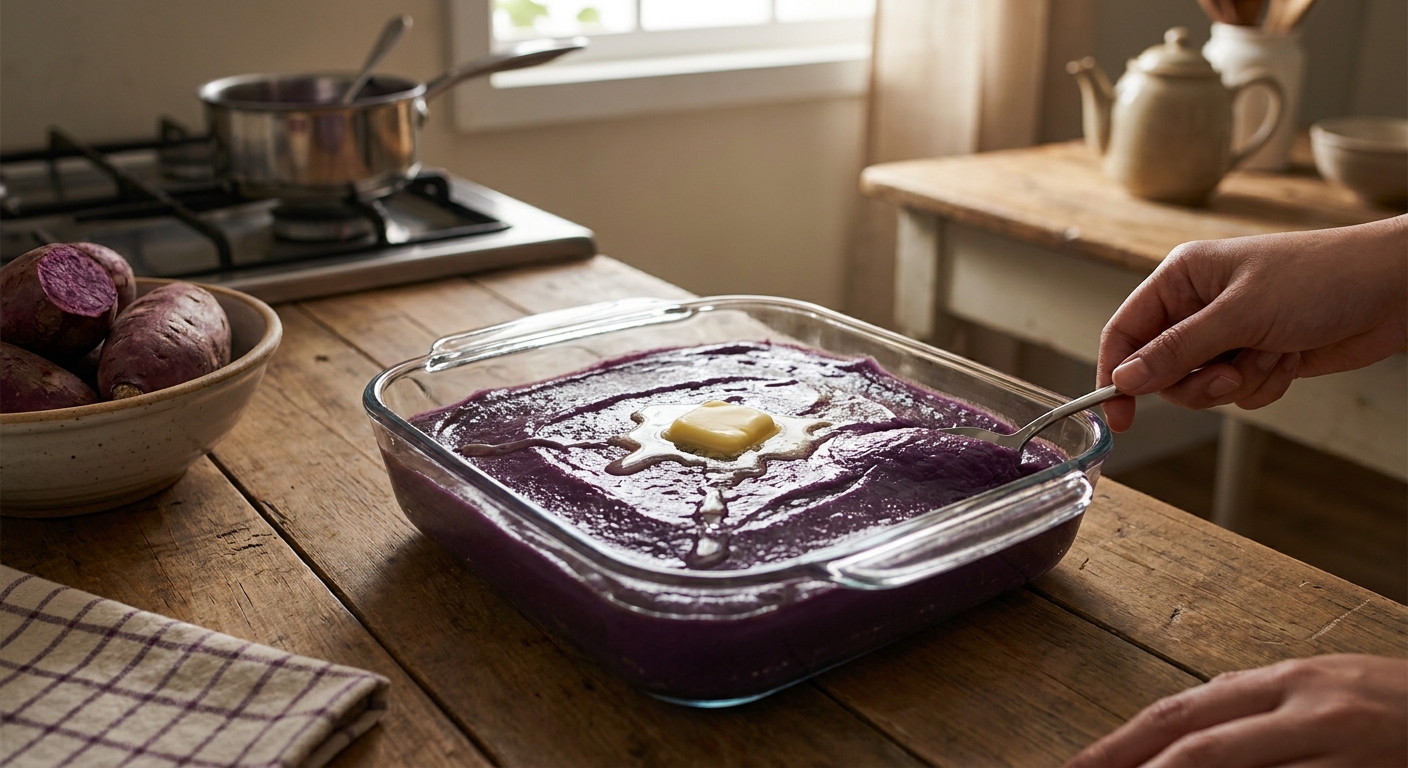
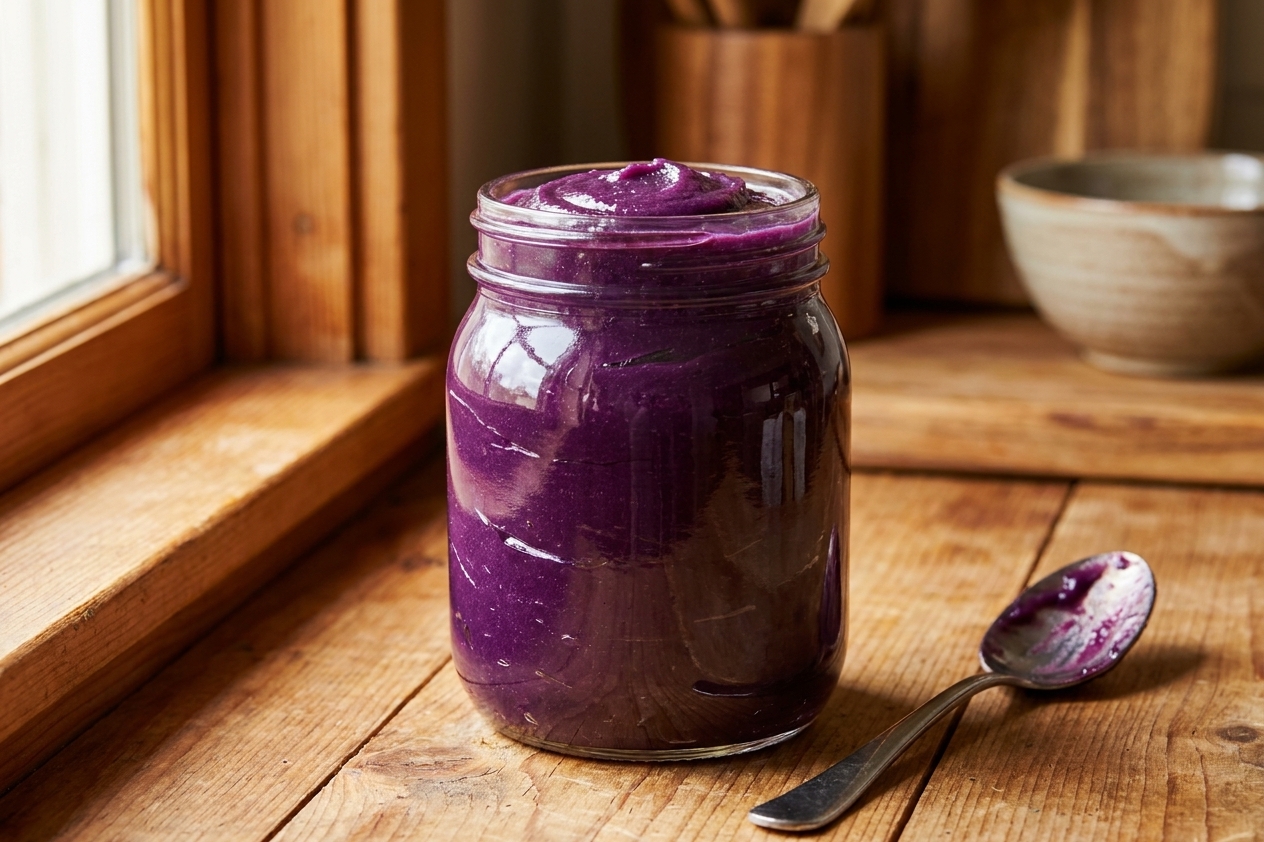
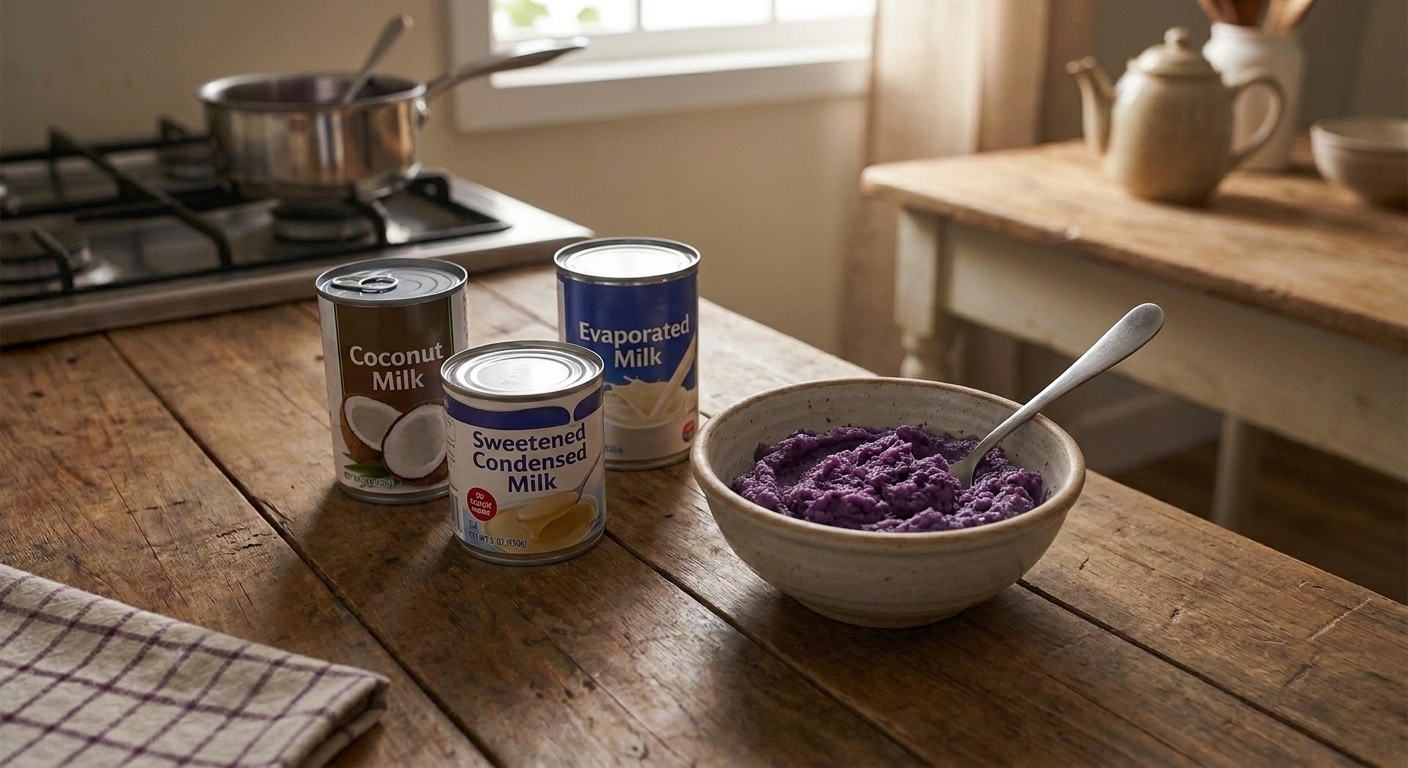
Ube halaya is a Filipino dessert made by cooking ube (purple yam) with milk, coconut milk, sugar, and fat until thick and glossy. Think jam-meets-pudding, meant to be spread, spooned, or sliced once chilled.
Is ube the same as taro?
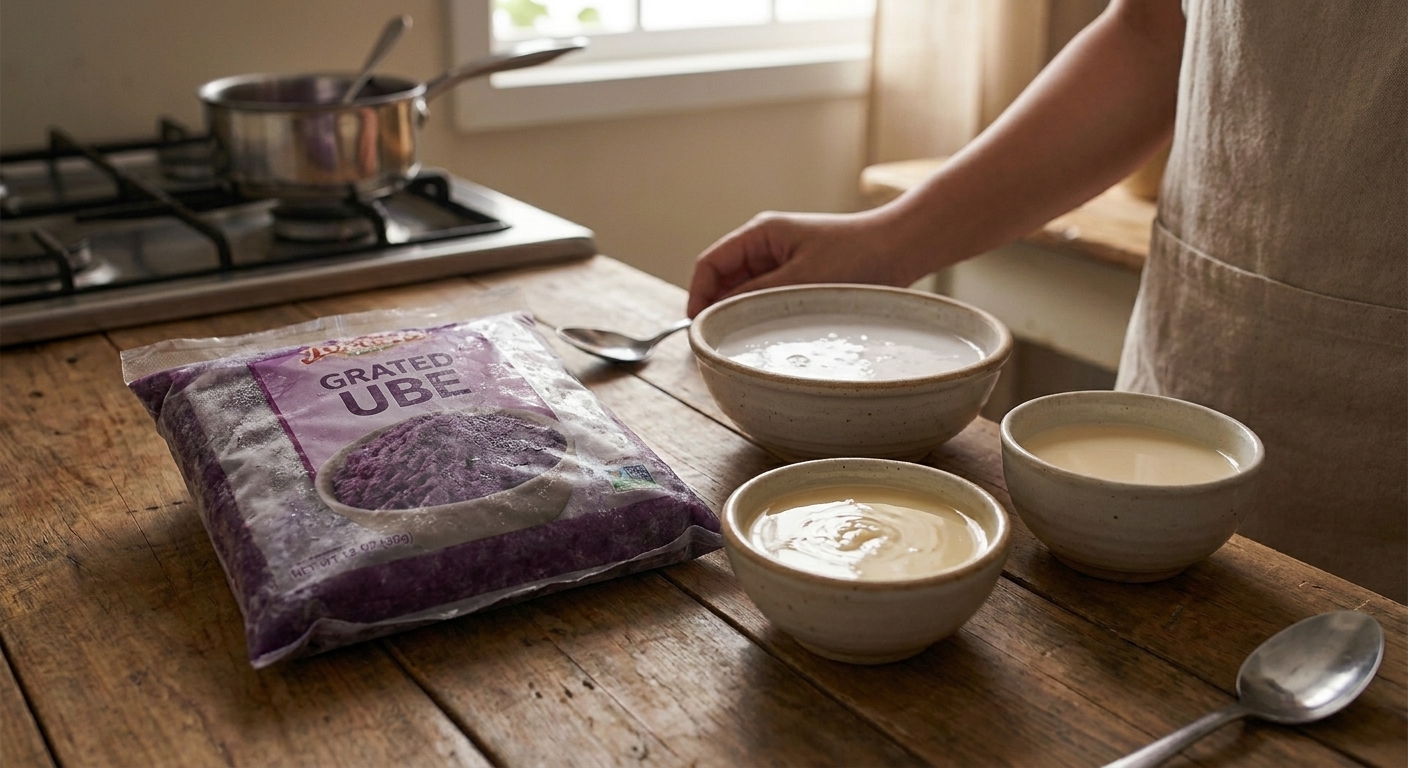
No. Ube is purple yam with a sweeter, more vanilla-like flavor. Taro is starchier and earthier. They can look similar in purple desserts, but the taste is different.
Can I use ube extract instead of ube?
Ube extract is great for boosting aroma and color, but it will not replace the actual ube flavor and body on its own. If you only have extract, you can make a sweet coconut milk pudding, but it will not taste like true halaya. If you have some ube, a small splash of extract (about 1 teaspoon) can amplify it.
Can I make this with ube powder?
You can, but results vary by brand. Ube powder often needs extra hydration time and can turn grainy. If you go that route, whisk the powder with warm milk first to dissolve fully, then proceed, and expect to adjust liquids.
How do I know it is done?
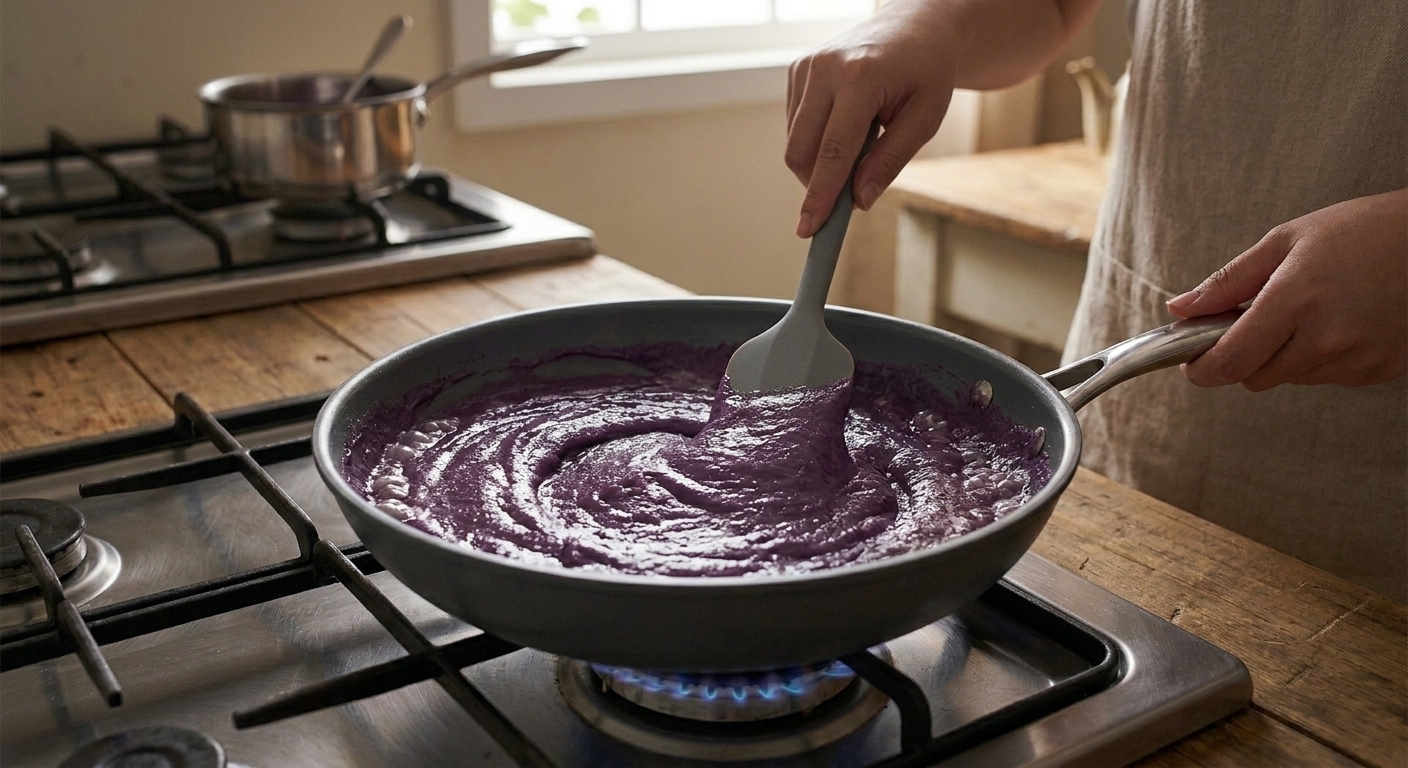
For spreadable halaya, it should be thick and glossy and slowly fall off the spoon in heavy ribbons.
For sliceable halaya, drag a spatula across the bottom of the pan. It should leave a clear path that stays open for a couple seconds, and the halaya should pull away from the sides and gather into a thick mound.
Why is my halaya grainy?
Most commonly, the ube was not fully smooth to begin with or the heat was too high. Thaw ube completely and blend it with some of the milk until smooth, and cook over medium-low while stirring steadily.
Do I need to stir the whole time?
Pretty much, yes. Once it starts thickening, it can scorch fast. Consider it a forearm workout with benefits.
Does it splatter?
It can, especially near the end when it is thick and bubbling like lava. Keep the heat on medium-low, stir steadily, and use a splatter screen if you have one. Long sleeves do not hurt either.