Mom's Best Recipes
Recipe

Venison Jerky

Savory, slightly sweet, peppery venison jerky you can make in a dehydrator or oven, with clear timing, safety tips, and that perfect bend-not-snap chew.

Author By Matt Campbell
4.8
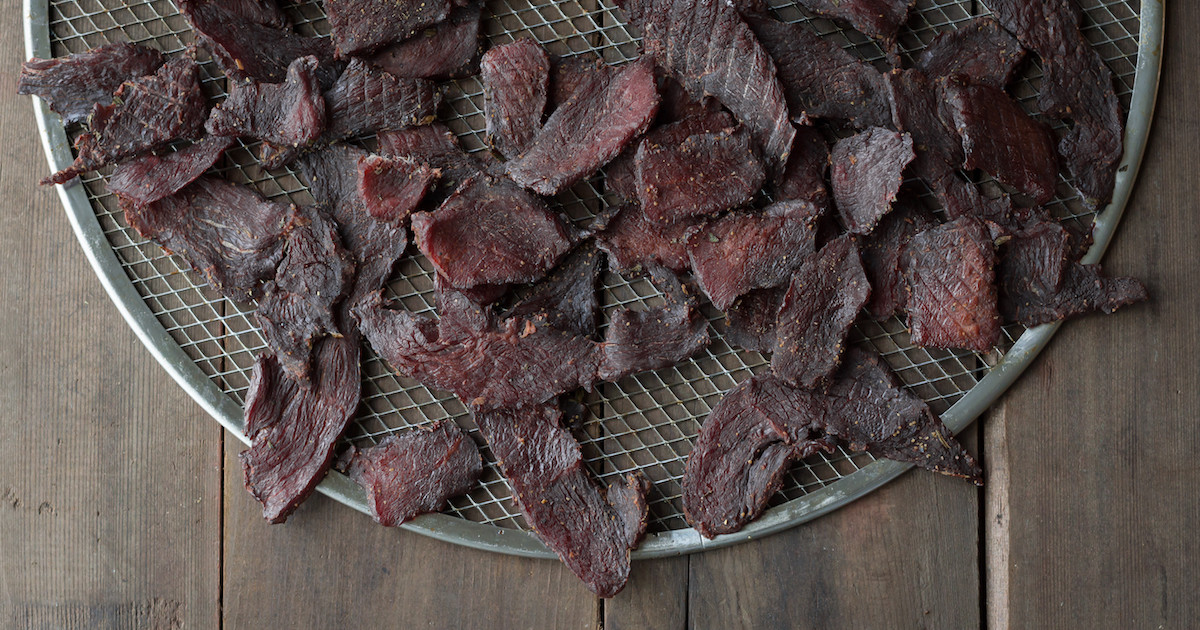
Sliced venison jerky strips piled on a wooden cutting board with a small ramekin of black pepper nearby on a kitchen counter

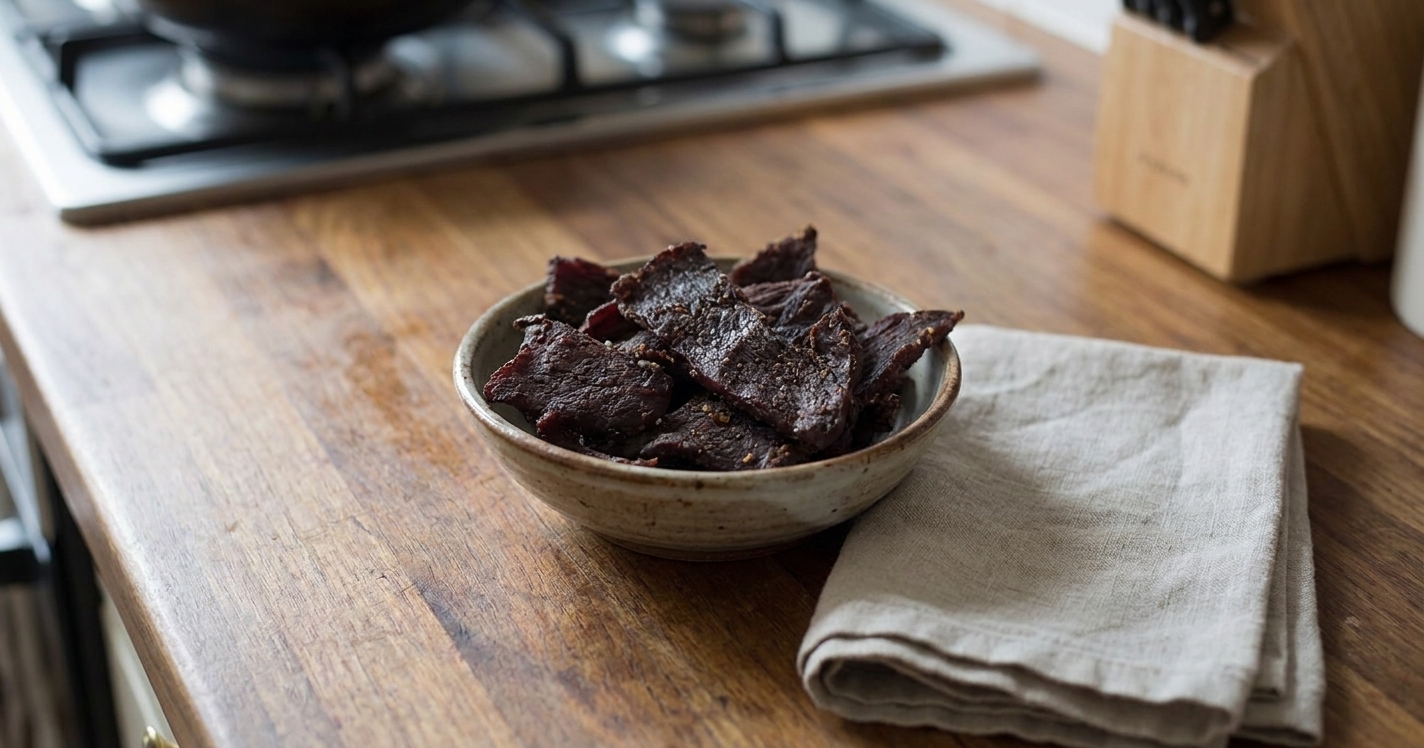
Venison jerky is one of those kitchen projects that feels a little old-school and a little magical. You take a lean cut of deer, give it a salty, savory bath, then dry it low and slow until it turns into the kind of snack that mysteriously disappears from the bag every time someone walks past the counter.

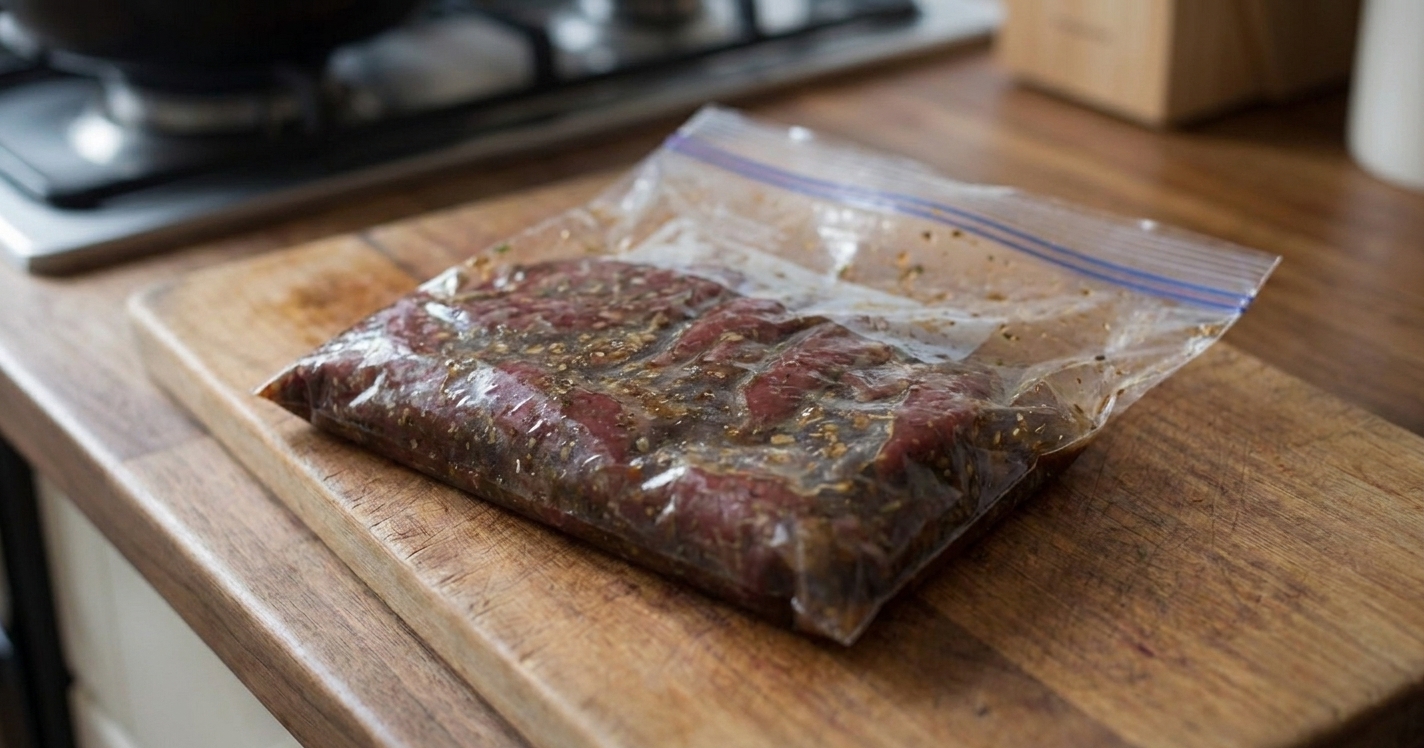
This version is my go-to: soy sauce and Worcestershire for deep, savory flavor, brown sugar for balance, black pepper for bite, and just enough garlic and smoked paprika to make it taste like you tried harder than you did. I will walk you through slicing (that is the real secret), marinating, and drying in either a dehydrator or your oven. Keep it relaxed, taste the marinade, and remember: jerky is forgiving as long as you do not rush the dry.

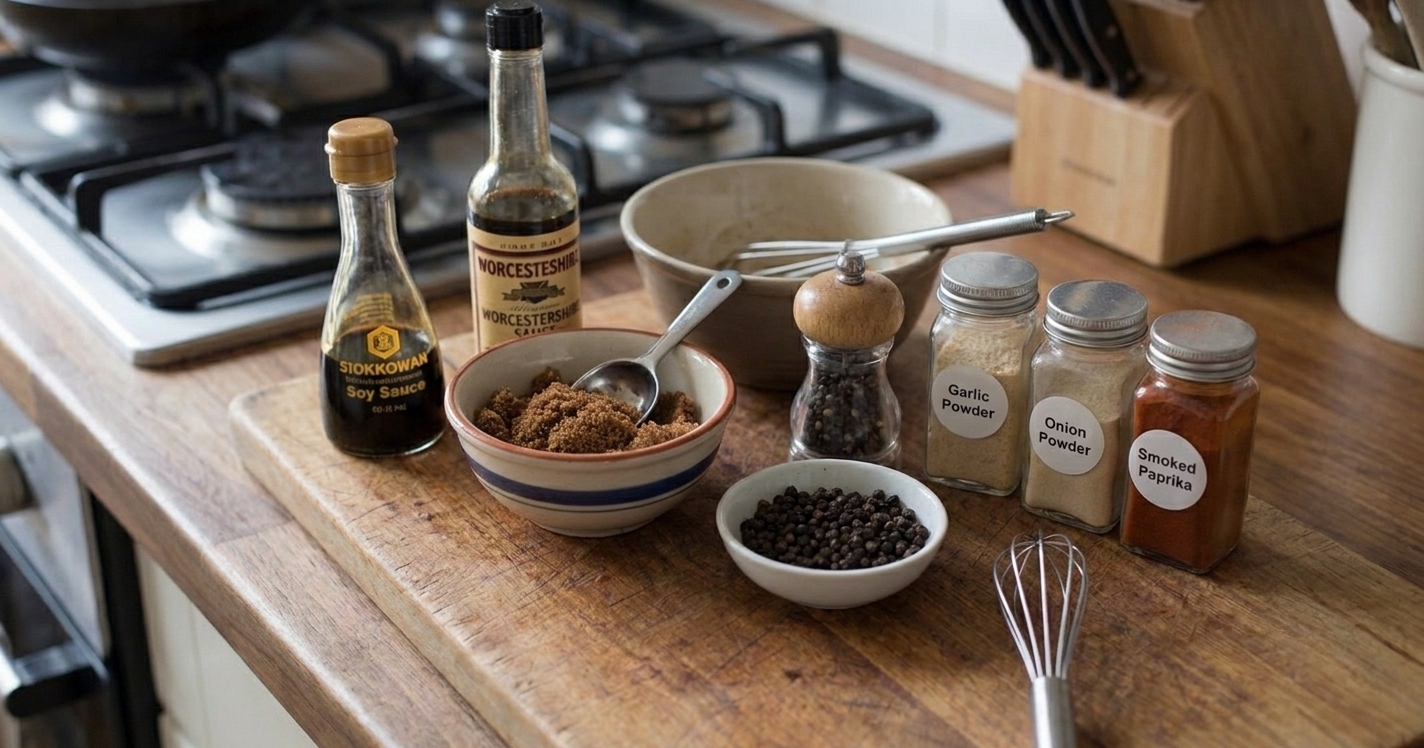
Ingredients for a venison jerky marinade on a kitchen counter, including soy sauce, Worcestershire, brown sugar, black pepper, garlic powder, onion powder, and smoked paprika

Why It Works

  • Big flavor with basic pantry stuff: Soy, Worcestershire, brown sugar, and spices do the heavy lifting.
  • Better texture from smart slicing: Thin, even slices dry evenly and stay pleasantly chewy instead of brittle.
  • Works with a dehydrator or oven: You have options, and both methods are laid out clearly.
  • Helps mellow strong venison flavor: Pepper, smoke, and a bold marinade can soften the edge, especially with good trimming and clean field care.

Pairs Well With

Storage Tips

Cool it first: Let jerky cool completely before storing. Warm jerky trapped in a container can sweat and soften.

Room temperature: Store in an airtight container or zip-top bag in a cool, dry place for up to 1 week for best quality. (If you dried it on the softer side, keep it in the fridge.)

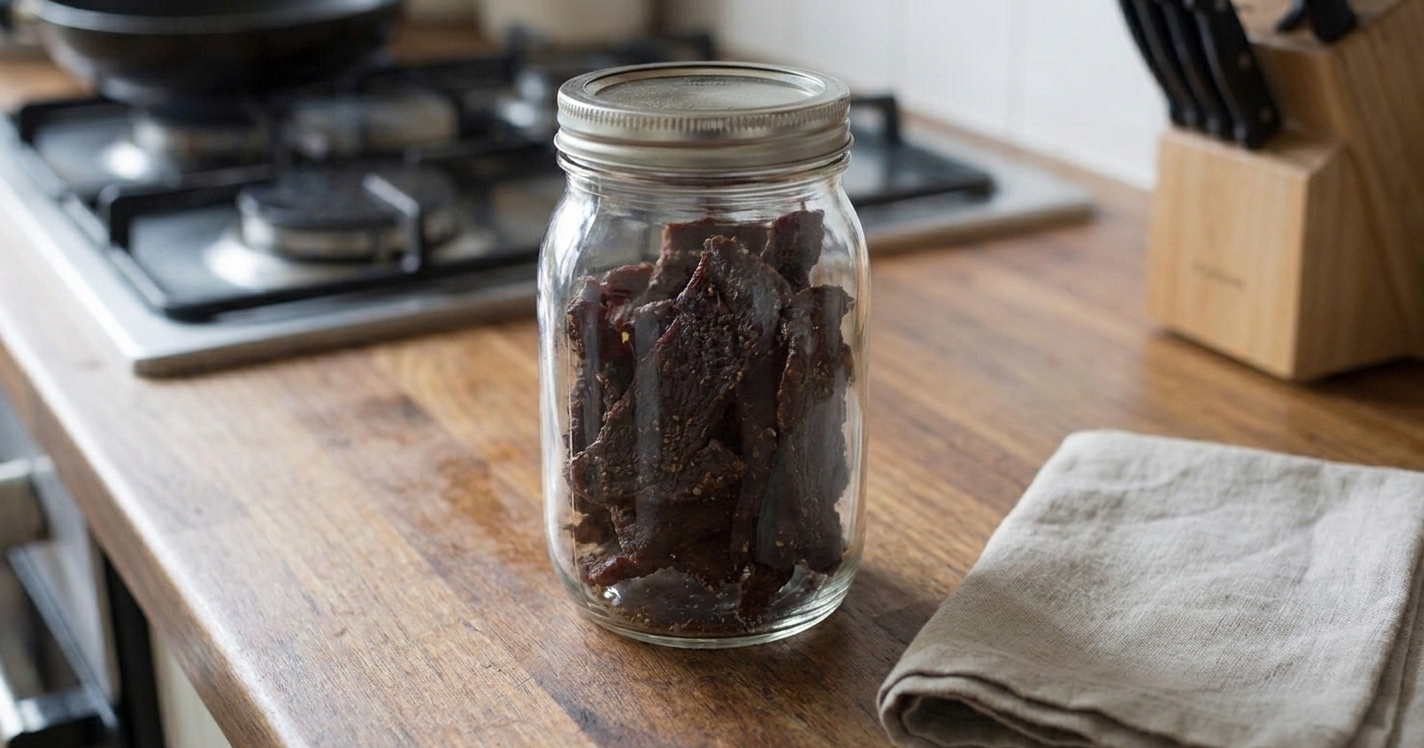
Refrigerator: For longer freshness, refrigerate up to 2 to 3 weeks. I like using a jar so it stays neat and easy to grab.

Freezer: Freeze up to 3 months. Thaw in the fridge overnight or on the counter for about 30 minutes.

Signs it needs to go: Any fuzzy mold, sour smell, or sticky wet patches mean it is time to toss it. When in doubt, throw it out.

Homemade venison jerky stored in a clear glass jar with a tight lid on a kitchen counter

Common Questions

What cut of venison is best for jerky?

Go for a lean cut: top round, bottom round, eye of round, or backstrap. Fat does not dehydrate well and can shorten shelf life, so trim aggressively.

Do I slice with the grain or against the grain?

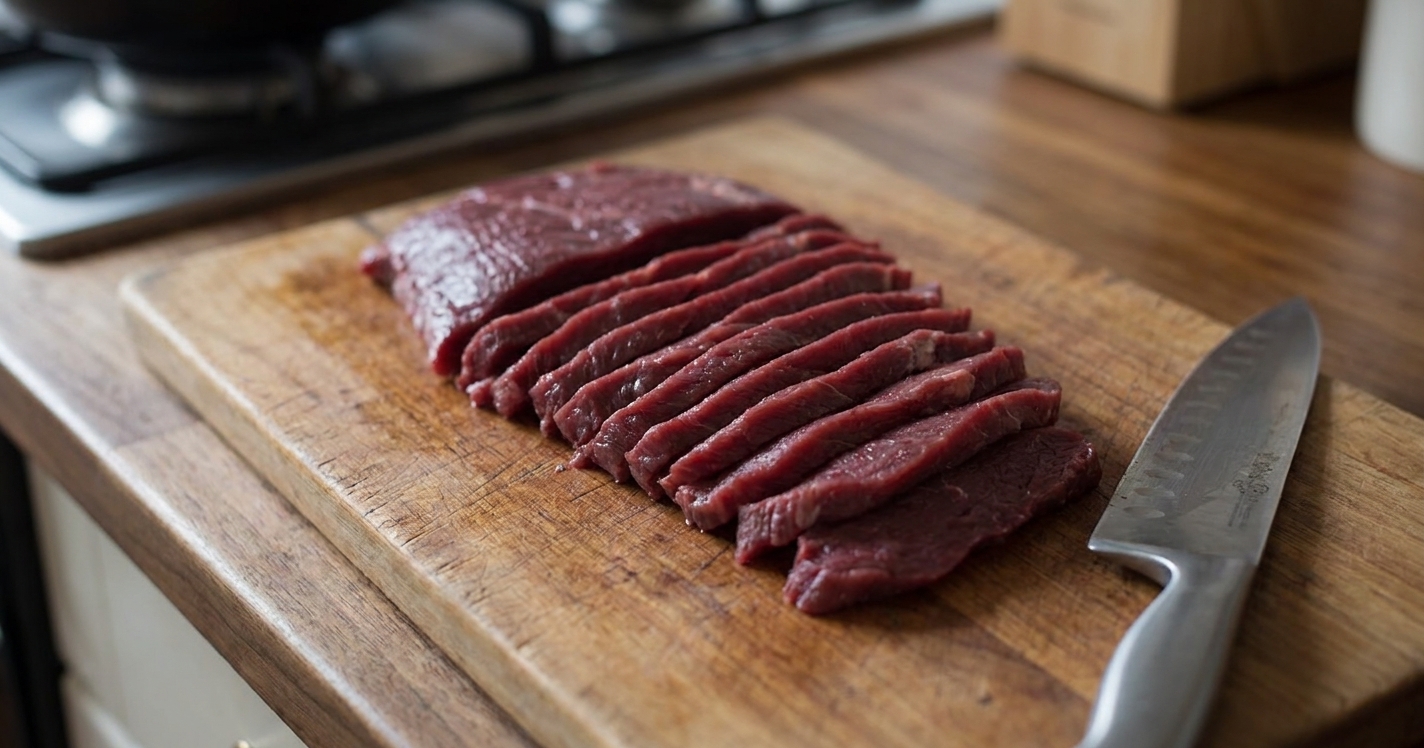
Both work, but they eat differently. With the grain gives you that classic jerky chew and longer strands. Against the grain is more tender and easier to bite. If you are unsure, slice half and half once and see what your crew likes.

How thin should I slice venison for jerky?

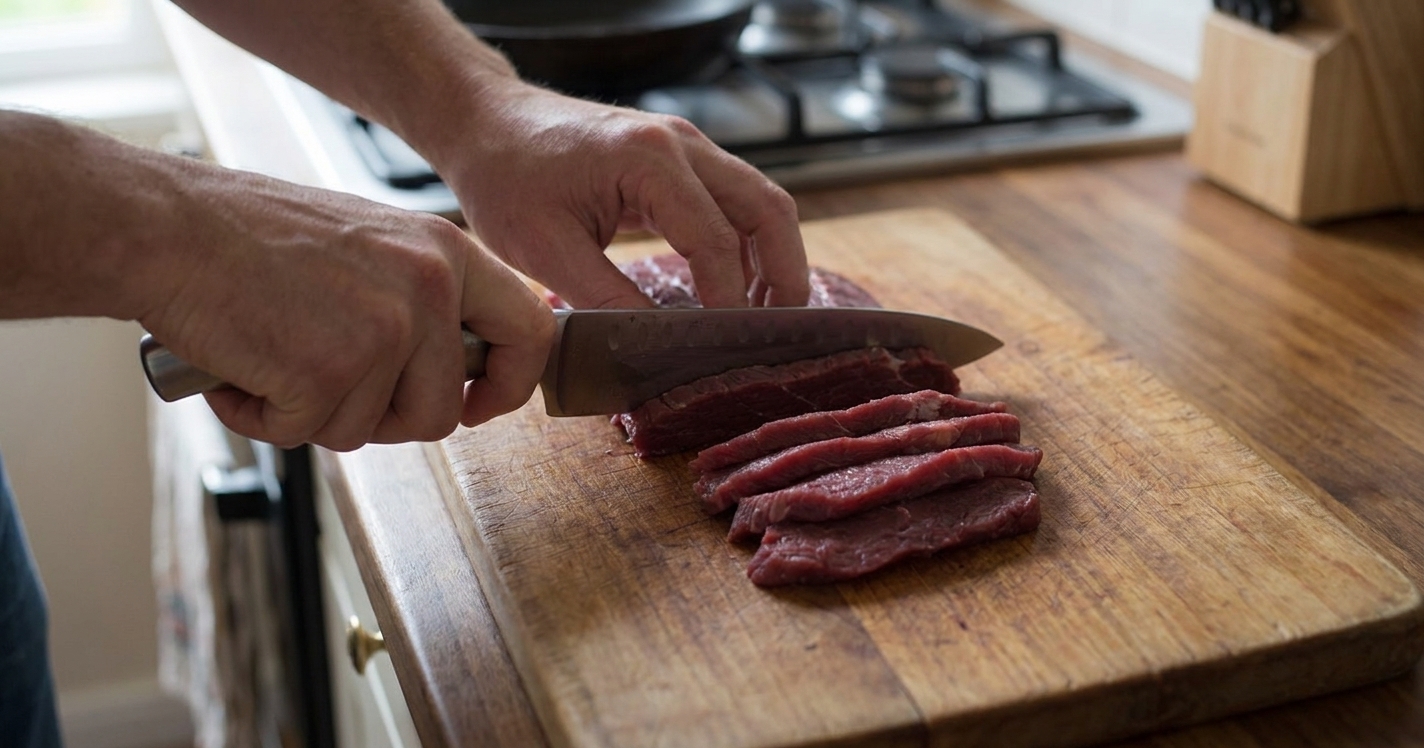
Target 1/8-inch to 1/4-inch. Consistency matters more than the exact number. Thickness drives dry time, so if some pieces are thicker, plan on a longer finish.

How do I know when jerky is done?

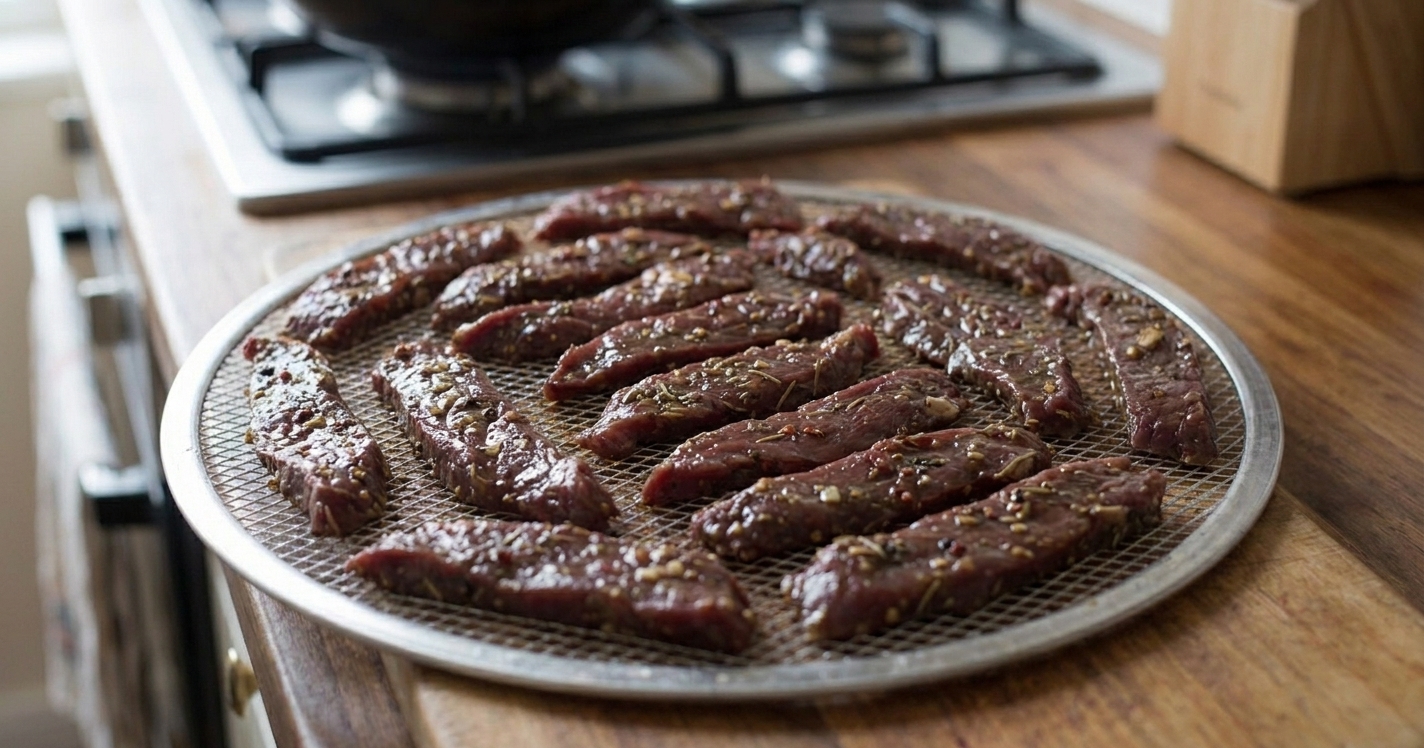
It should look dry on the surface and bend and crack but not snap clean in half. If it snaps like a cracker, it is over-dried. If it folds with no cracking and feels squishy, it needs more time.

Is oven jerky safe?

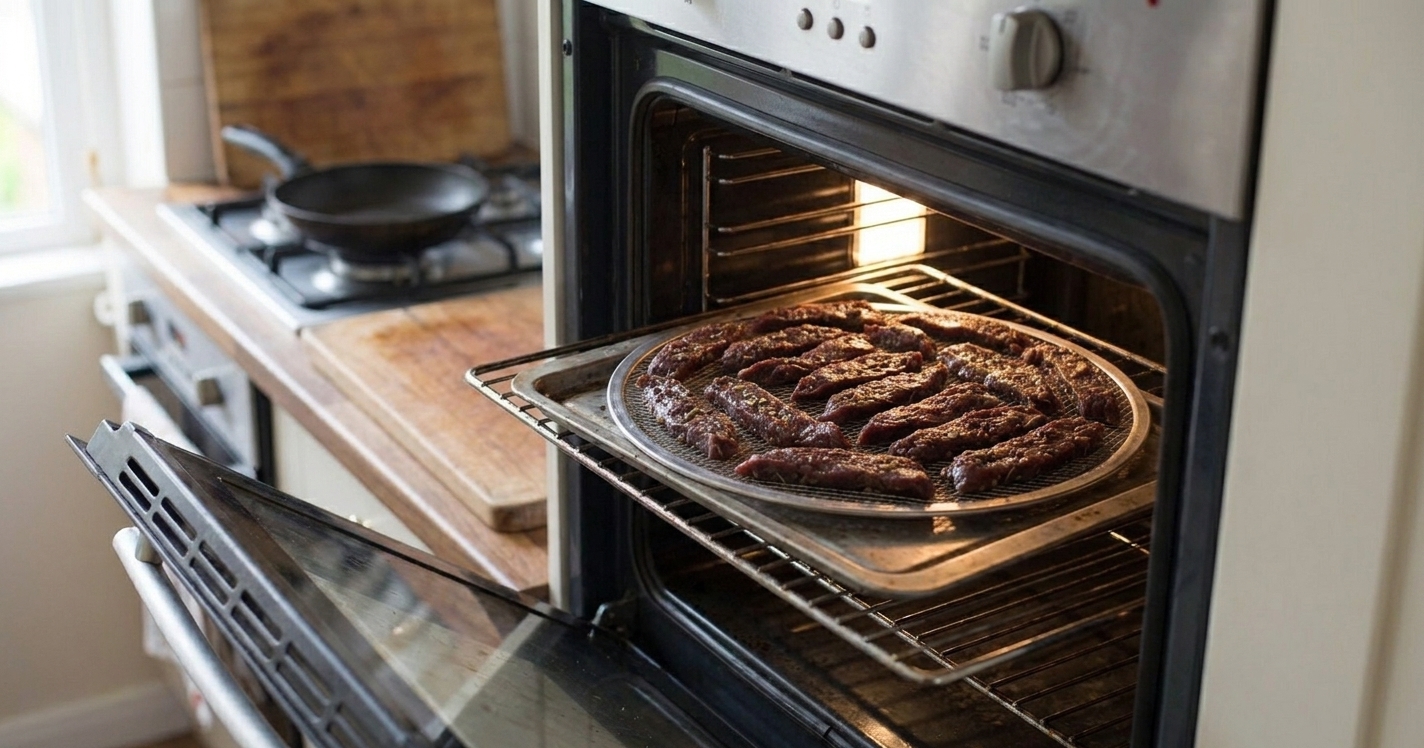
It can be, but safety is not just airflow. You want clean handling, meat kept cold while marinating, and a reliable heat step. For whole-muscle jerky, many USDA and extension guidelines recommend heating the meat to an internal 160°F (165°F for poultry) either before or after dehydrating. I include an easy post-dry oven heat step in the instructions to cover this.

Why add a post-dry oven heat step?

Even if your dehydrator is set to 160°F, jerky can cool itself as moisture evaporates, so the strip surface might not actually hit 160°F right away. A short finishing heat in a 275°F oven is a simple way to follow common USDA-style guidance for a pathogen kill step.

Can I make this without soy sauce?

Yep. Swap soy sauce for coconut aminos or a gluten-free tamari. If you use coconut aminos, taste and add a pinch more salt because it is a bit sweeter and less salty.

Do I really need the extra kosher salt?

Maybe, maybe not. If you are using regular (not low-sodium) soy sauce, you can reduce the added salt to 1/2 teaspoon or skip it. The marinade should taste boldly seasoned and a little salty.

Can I reuse the marinade?

Not as-is. If you want to use it as a sauce, you must boil it first. Otherwise, discard it.

I love venison because it is honest food. It shows you exactly what your knife work looks like, exactly how patient you are, and exactly how often you taste as you go. The first time I made venison jerky, I sliced it too thick, got impatient, and ended up with pieces that were dry on the outside but still a little soft in the middle. Still tasty, still gone in a day, but not the texture I wanted. Now I freeze the meat just enough to firm it up, slice it thin, and let the dehydrator do its slow, boring magic while I pretend I am “just checking on it” every 45 minutes.