Does vinegar really kill weeds?
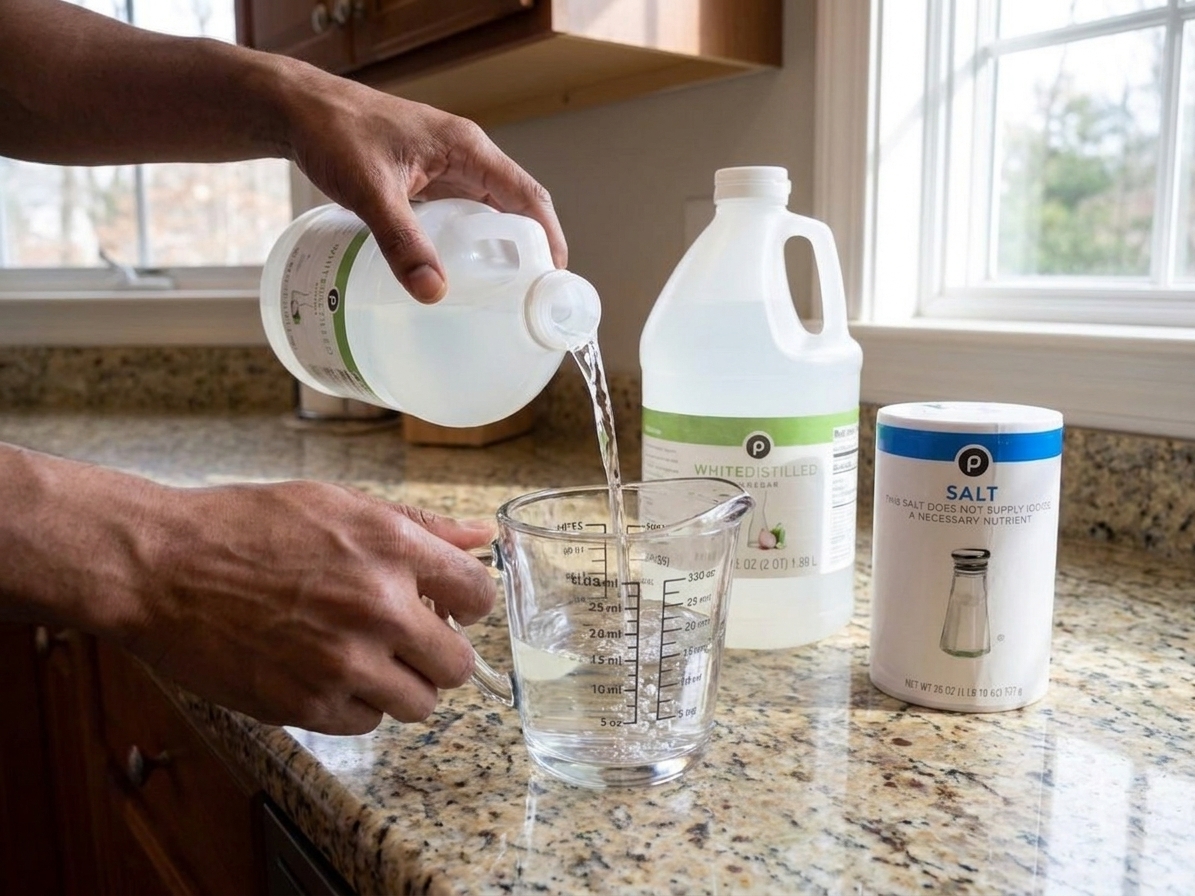
Yes, it can. Household vinegar (5% acetic acid) works best on small, young weeds by drying out the leaves. It usually does not kill deep roots on established perennials, so regrowth can happen and you may need repeat sprays.
Should I use 5% vinegar or stronger vinegar?
Regular 5% white vinegar is the most common choice and is usually enough for small weeds. Higher-strength horticultural vinegar can work faster, but it's more hazardous to handle and can irritate skin and eyes. If you use stronger vinegar, treat it like a serious chemical and follow the product label.
What does the dish soap do?
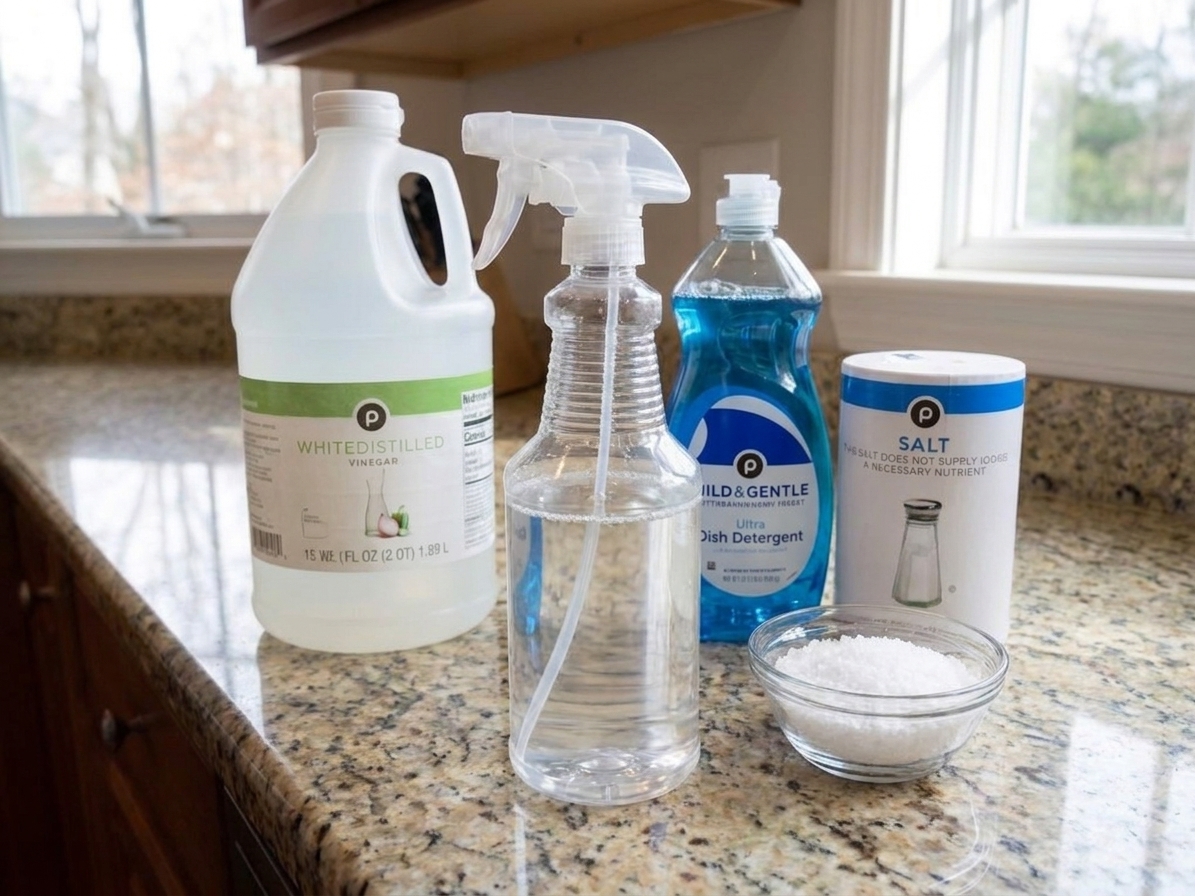
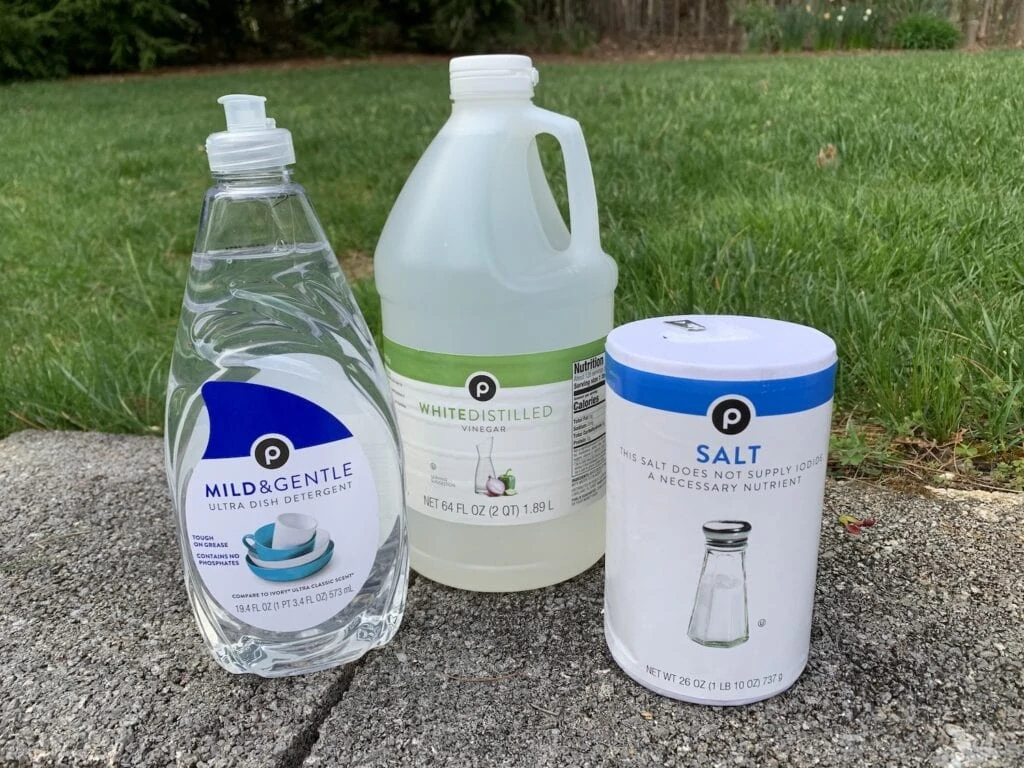
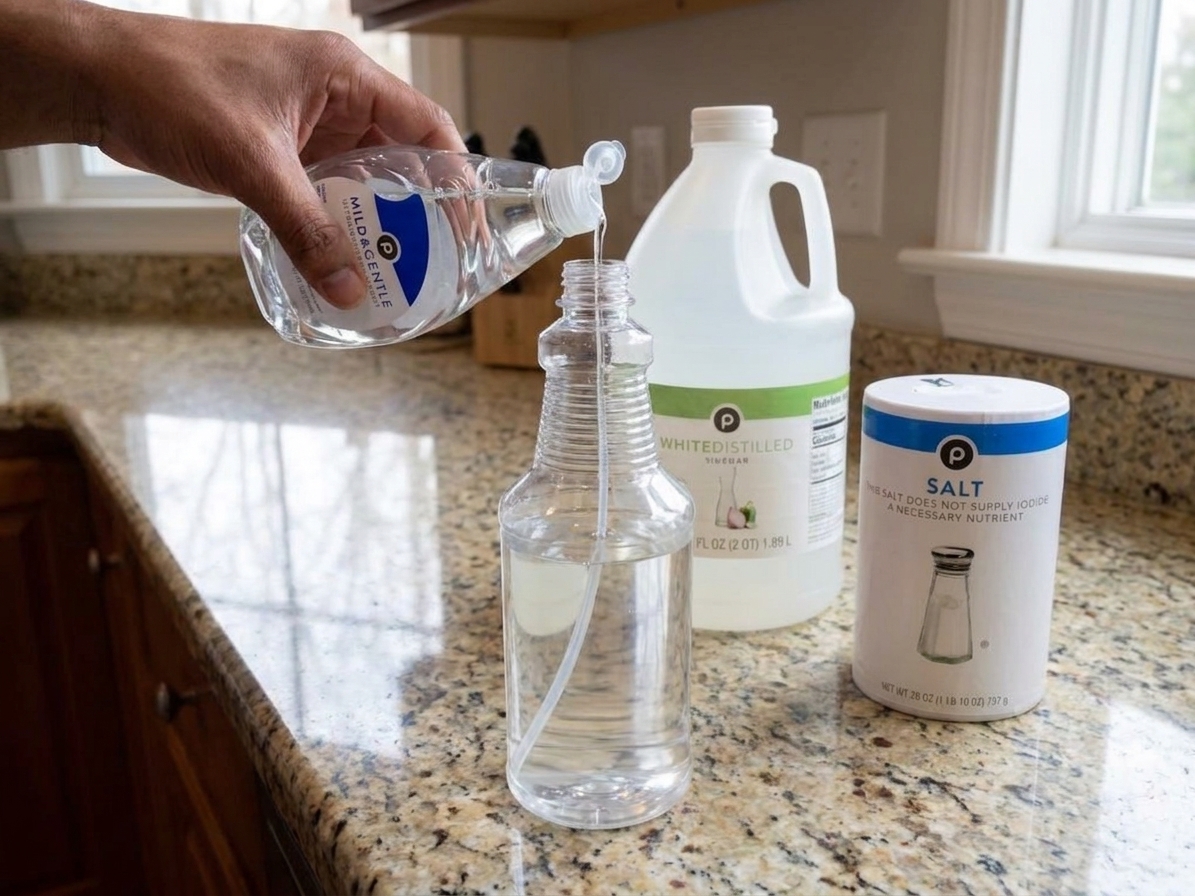
Dish soap is the “sticker.” It breaks surface tension so the vinegar solution coats the weed evenly instead of sliding off. Use a small amount. Too much soap can make it foam and waste product.
Will this kill grass and flowers too?
Yes. This is non-selective. If it hits leaves you like, it can burn them. Shield nearby plants with cardboard and spray close to the target.
Is it safe for pets?
Vinegar is common in kitchens, but this mixture is still an irritant, and salt can be harmful if ingested. Keep pets away while spraying and until the area is fully dry.
Can I use it in vegetable gardens?
I don't recommend it. Overspray can damage crops, and salt can accumulate in soil. For garden beds, hand weeding, mulching, hoeing, or targeted mechanical removal is usually a better move.
How long does it take to work?
On a hot, sunny day you can see wilting in a few hours. Full browning often shows up within 24 hours. Cool, cloudy weather slows it down.
Why did my weeds come back?
This spray mainly burns top growth. Deep-rooted weeds can regrow. Reapply when you see new green, and consider pulling after the leaves die back to help remove roots.