How do I know halibut is done?
It should turn opaque and flake easily with a fork. If you have an instant-read thermometer, 125°F to 130°F in the thickest part gives you a moist, tender result (think “medium”). If you prefer to follow USDA guidance for fin fish, cook to 145°F. Either way, halibut dries out fast, so start checking early and pull it as soon as it is where you want it.
Can I bake this instead of pan-searing?
Yes. Bake at 400°F until the fish flakes and reaches your target temp, usually 10 to 18 minutes depending on thickness. (For 1 to 1 1/4 inch fillets, expect the longer end of the range.) Make the lemon butter sauce on the stove and spoon it over at the end.
Do I have to use flour?
No, but a light dusting helps with browning and gives the sauce something to cling to. If you are gluten-free, use rice flour or just skip it and sear directly.
What is the best halibut to buy?
Look for thick, moist-looking fillets with a clean ocean smell, not fishy. Fresh is great, but good-quality frozen halibut (thawed in the fridge overnight) can be excellent for weeknights. Most halibut is sold skinless, but it is worth running your fingers over the fillet to check for pin bones.
My fish stuck to the pan. What happened?
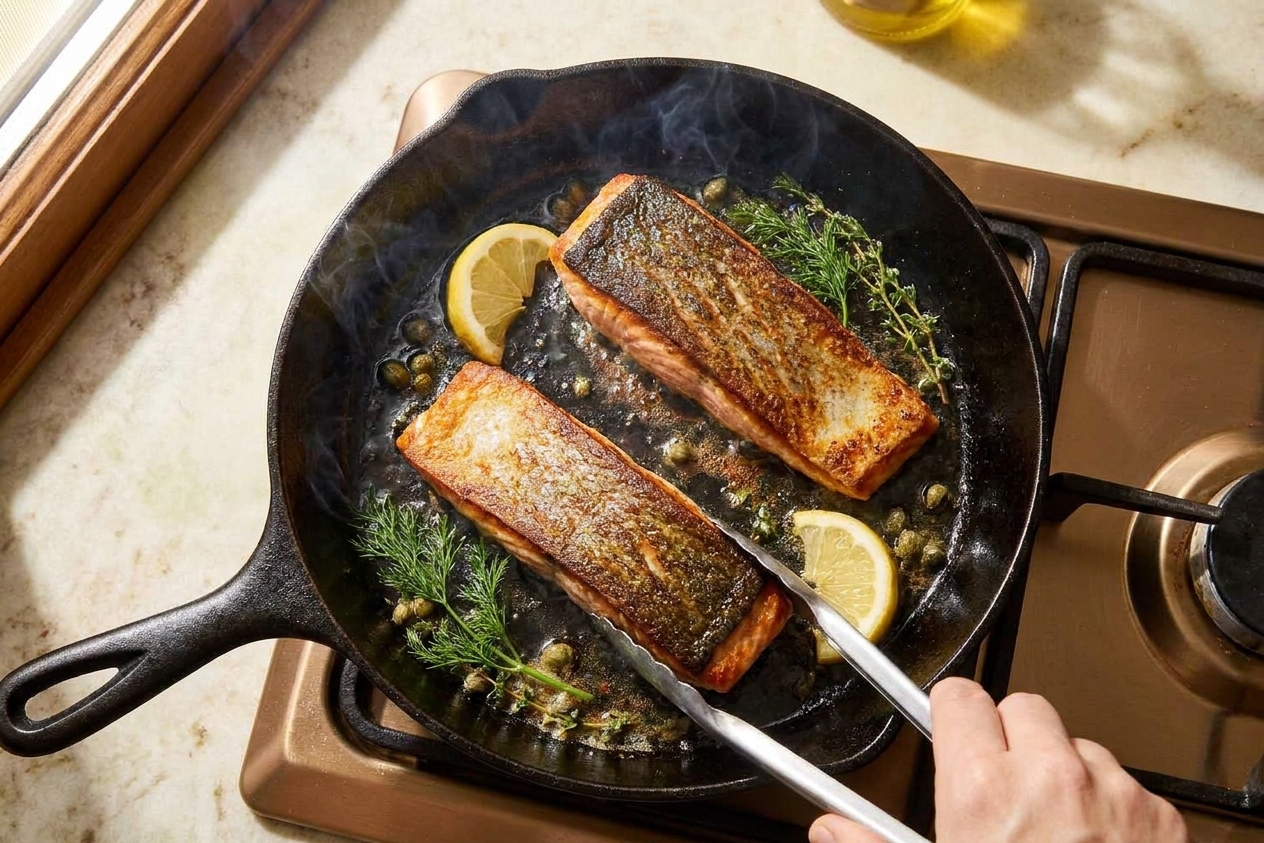
Usually one of two things: the pan was not hot enough, or you tried to flip too soon. Let the crust form, then it releases more easily. Also make sure the surface of the fish is dry before it hits the pan.