Mom's Best Recipes
Recipe

All’Amatriciana Sauce

A Roman classic: crisp guanciale, tomato, chile, and a Pecorino finish for a sauce that clings to pasta and hits every salty, spicy, cozy note.

Author By Matt Campbell
4.8
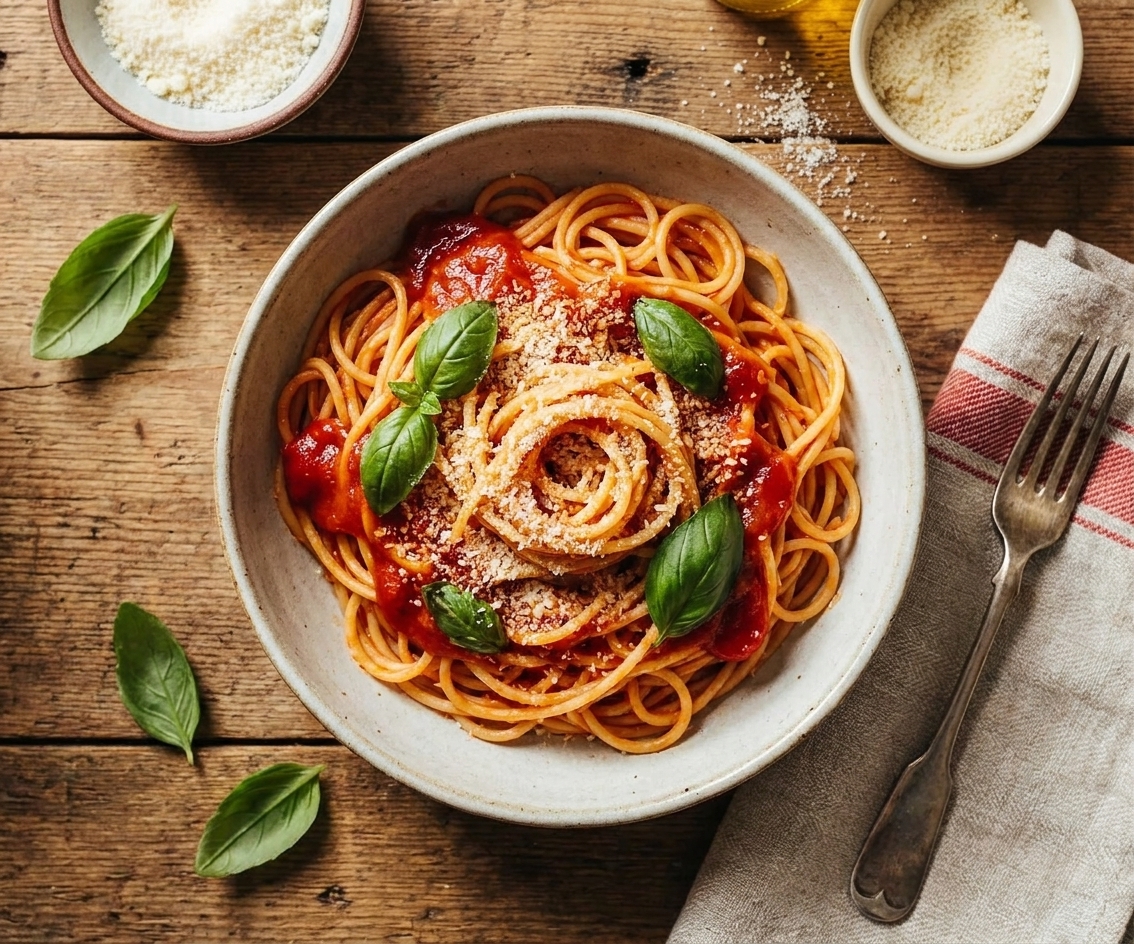
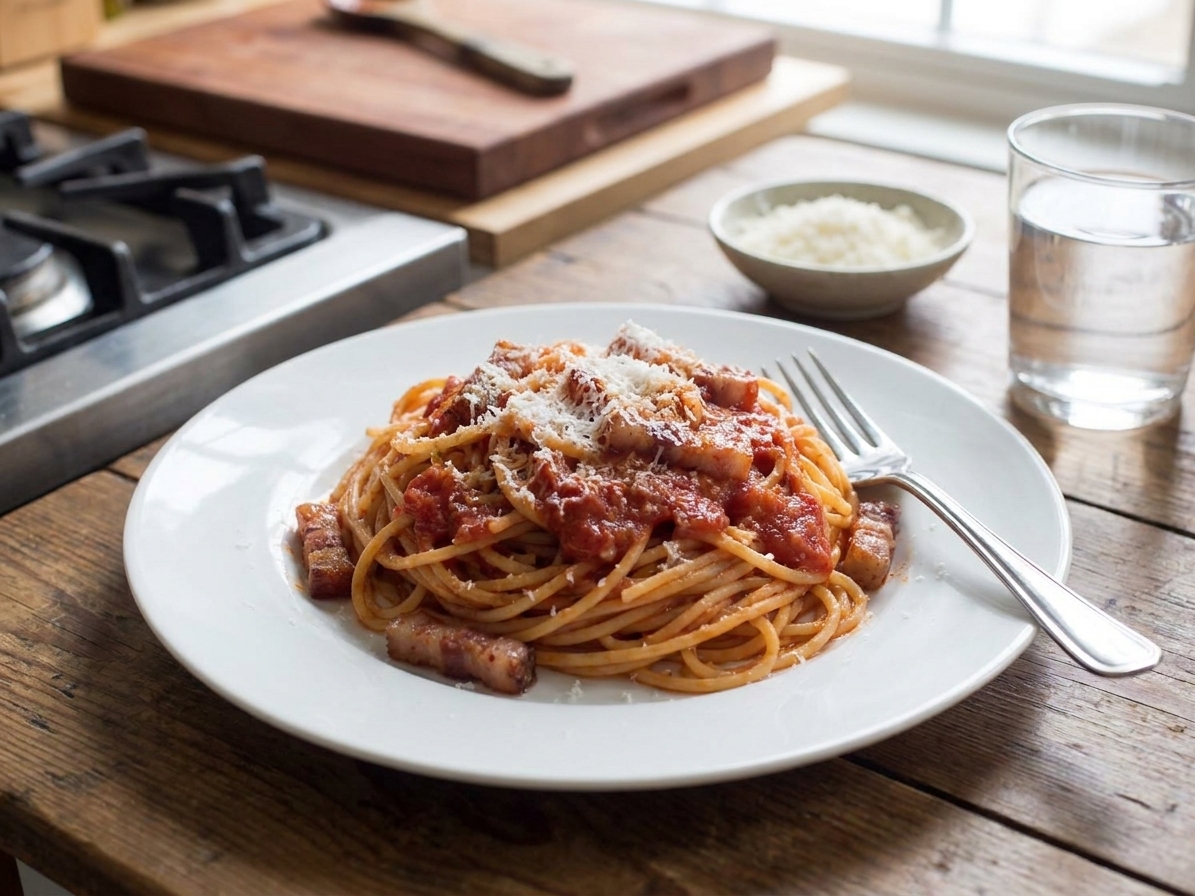
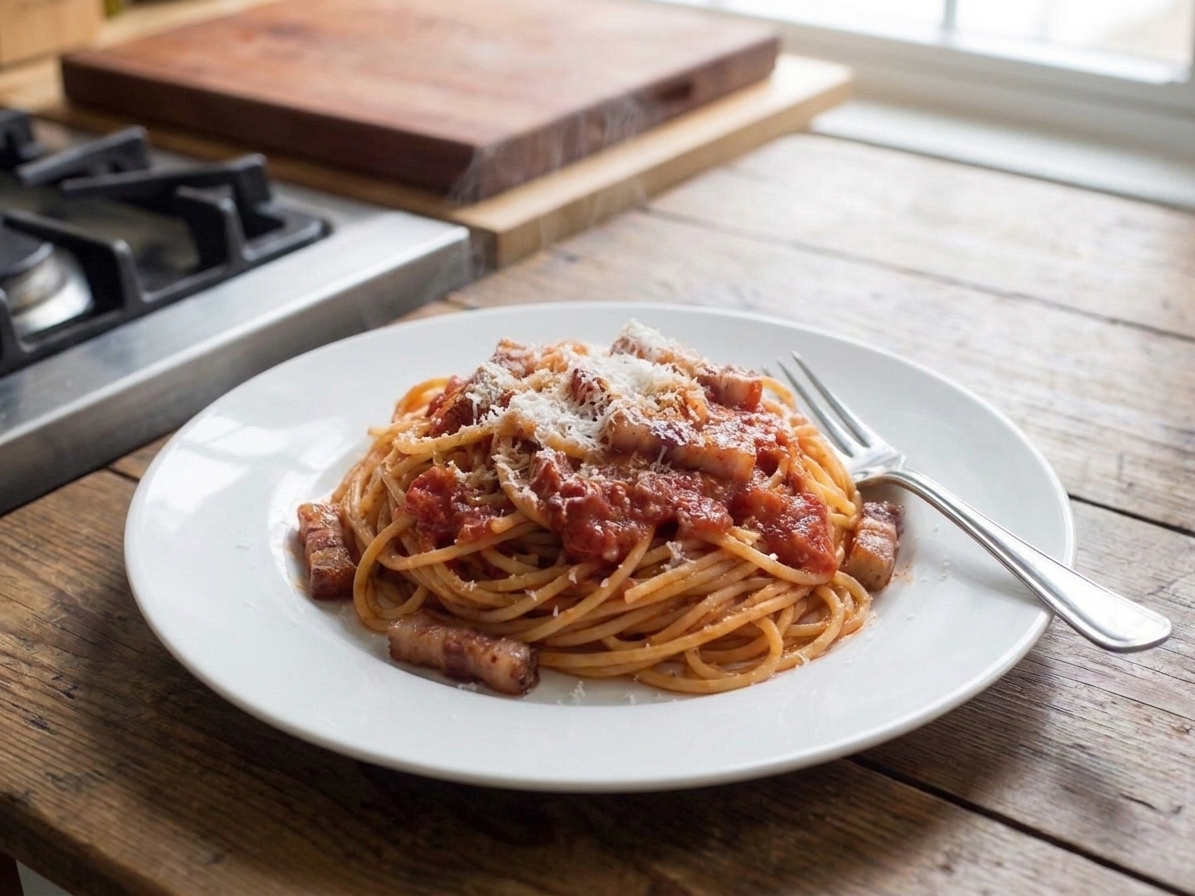
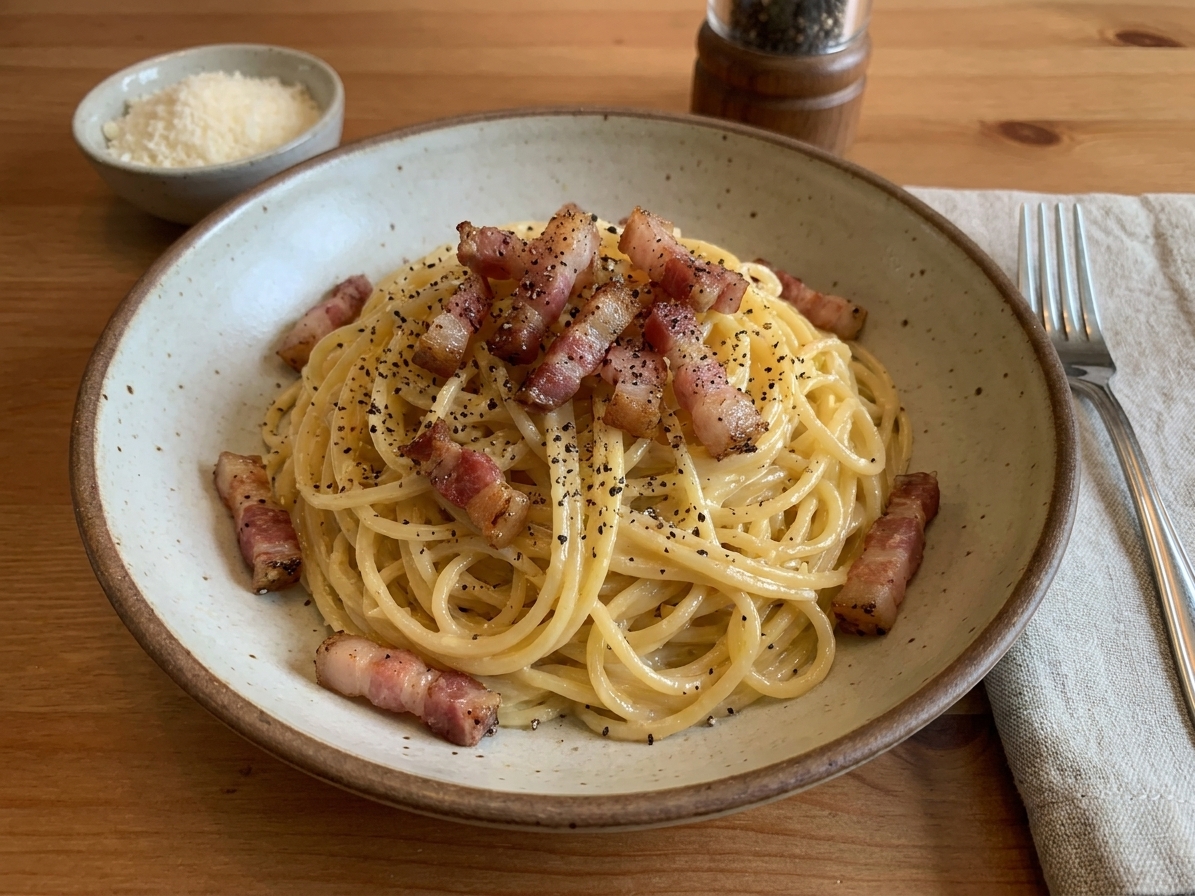
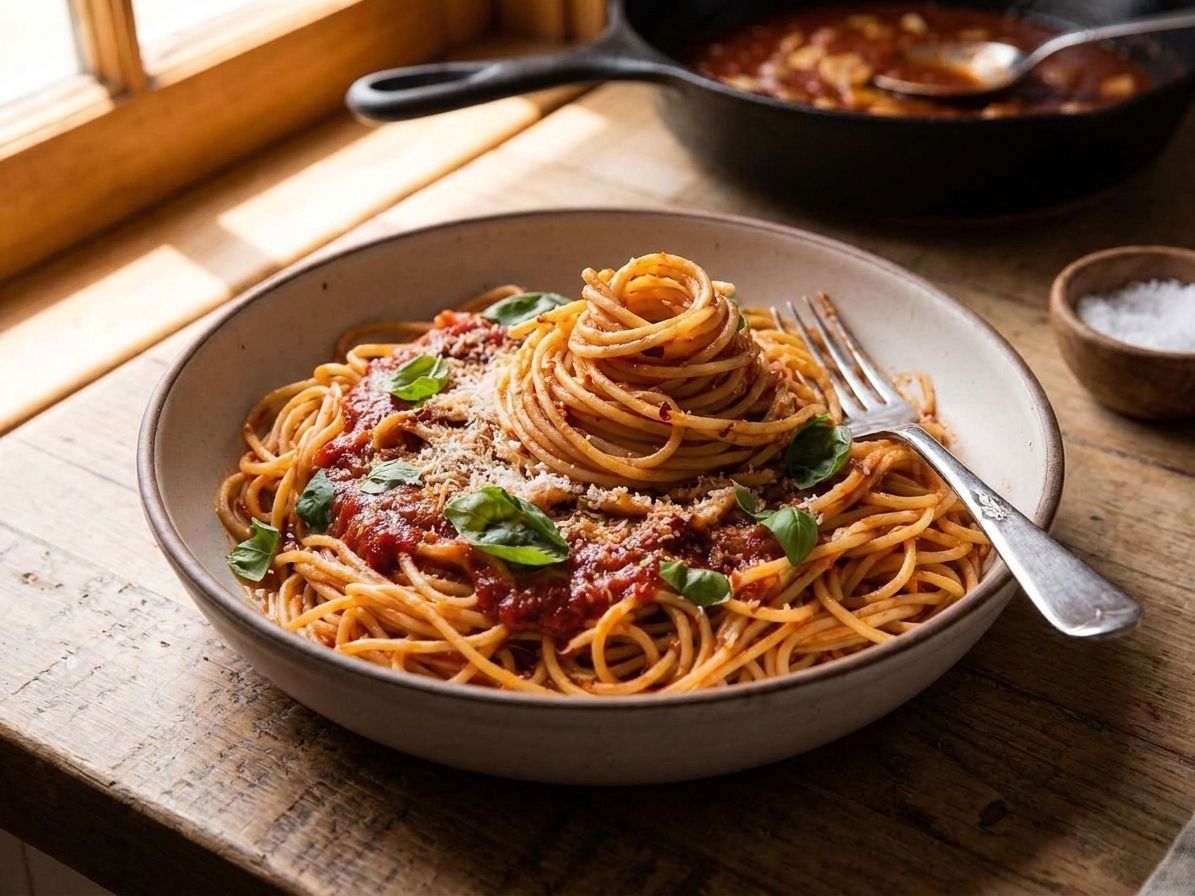
A warm bowl of spaghetti all’amatriciana with a glossy red tomato sauce, crisp guanciale pieces, and a snowy shower of grated Pecorino Romano on a simple white plate on a wooden table

All’amatriciana is one of those sauces that feels like kitchen magic, because the ingredient list is short but the flavor is loud in the best way. You crisp fatty pork, bloom a little chile, add tomatoes, then toss it all with pasta and finish with Pecorino Romano. The sauce gets silky, the pork stays punchy, and every bite tastes like you just upgraded your weeknight to something worth lighting a candle for.

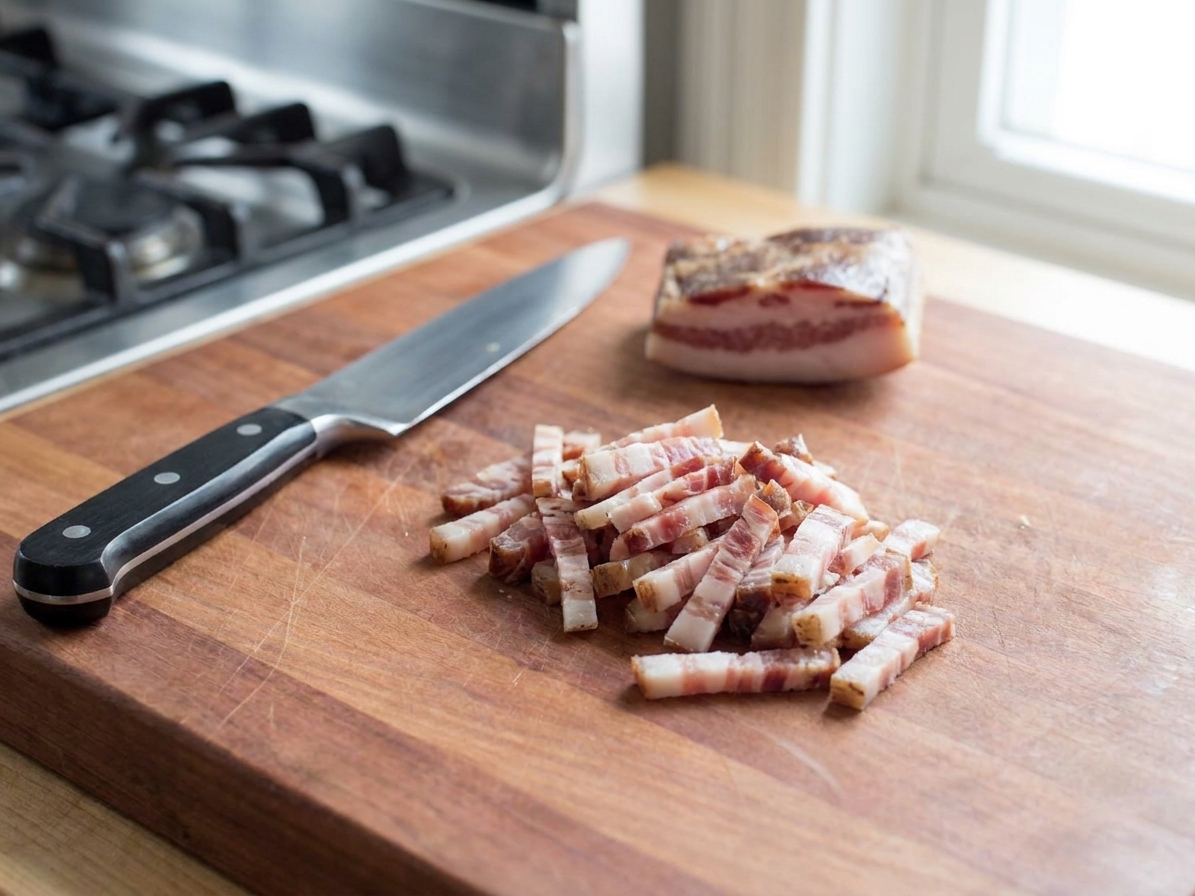
Traditionally this is made with guanciale (cured pork jowl), and yes, it matters. It renders into a deeply savory fat that basically is the seasoning. That said, I’ll also tell you exactly how to do it with pancetta if guanciale is not happening in your zip code.
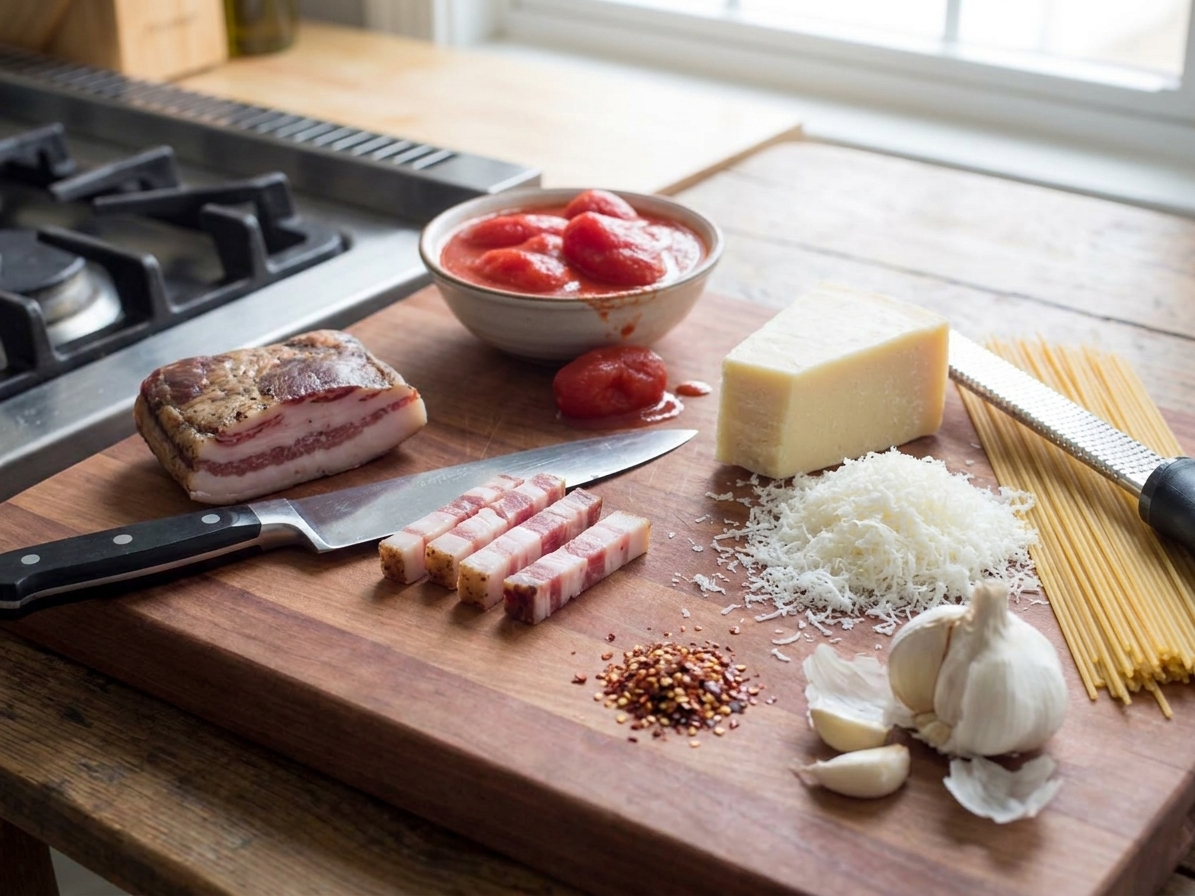
Guanciale, canned whole tomatoes, Pecorino Romano, dried pasta, garlic, and red pepper flakes arranged on a clean kitchen counter with a cutting board and chef knife

Why It Works

  • Built-in flavor from the start: rendering guanciale creates a seasoned cooking fat that carries the whole sauce.
  • Tomato sauce that tastes fresh, not flat: a quick simmer keeps it bright while still giving you that cozy, clinging texture.
  • Pecorino does double duty: it finishes the sauce with saltiness and helps emulsify everything when you toss with pasta water.
  • Low drama, high reward: one skillet sauce (plus the pasta pot), about 25 minutes, and it tastes like a restaurant bowl.

Pairs Well With

Storage Tips

Fridge: Store the sauce (separate from pasta if possible) in an airtight container for up to 4 days.

Freeze: Freeze sauce in a sealed container for up to 2 months. Thaw overnight in the fridge.

Reheat with care: Warm the sauce in a skillet over medium-low heat with a splash of water. If you’re reheating with pasta, add more water and toss until glossy again. Finish with fresh Pecorino off heat so it stays creamy, not clumpy.

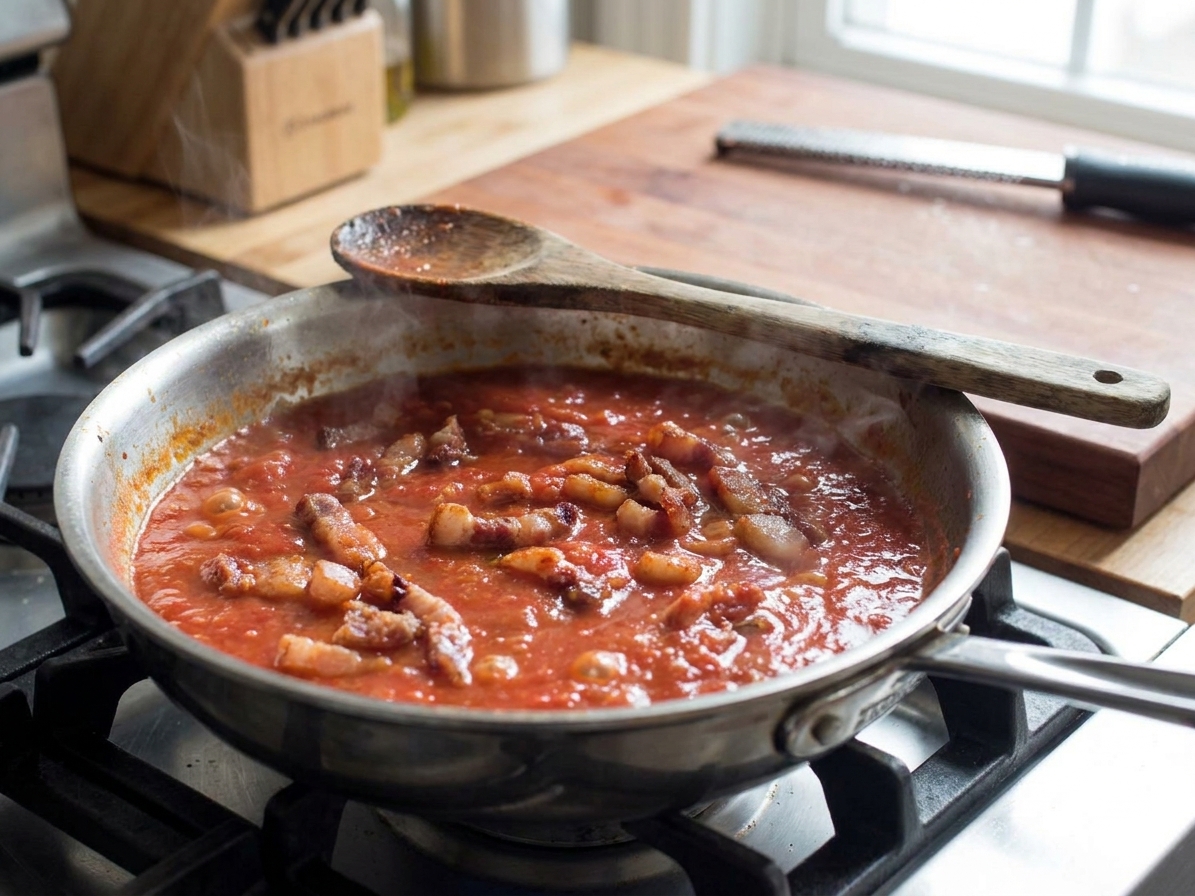
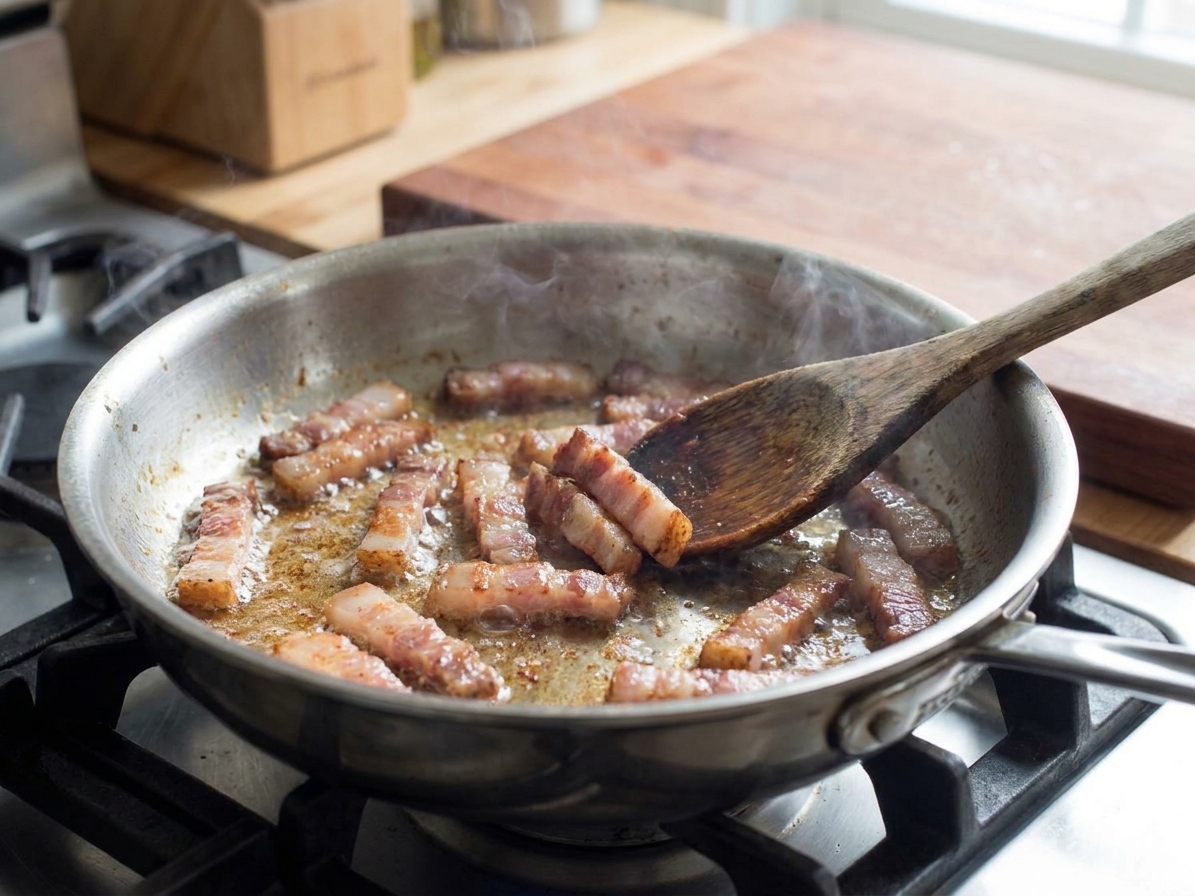
All’amatriciana sauce simmering in a stainless steel skillet with visible guanciale pieces, a wooden spoon resting on the edge of the pan on a home stove

Common Questions

What is all’amatriciana sauce made of?

All’amatriciana is commonly made with guanciale, tomatoes, chile (often dried pepper or flakes), and Pecorino Romano. Depending on the source (and the cook), you will also see a splash of white wine and/or a little onion. This recipe keeps it simple and practical while staying true to the sauce’s bold, pork-forward vibe.

Do I have to use guanciale?

No, but it’s the gold standard. If you can’t find it, use pancetta. If you only have bacon, choose a thick-cut one and expect a smokier flavor that’s not traditional. Bacon also tends to give off more moisture as it cooks, so it may take a few extra minutes to crisp. Either way, go easy on added salt until you taste the finished sauce.

Is onion or garlic traditional?

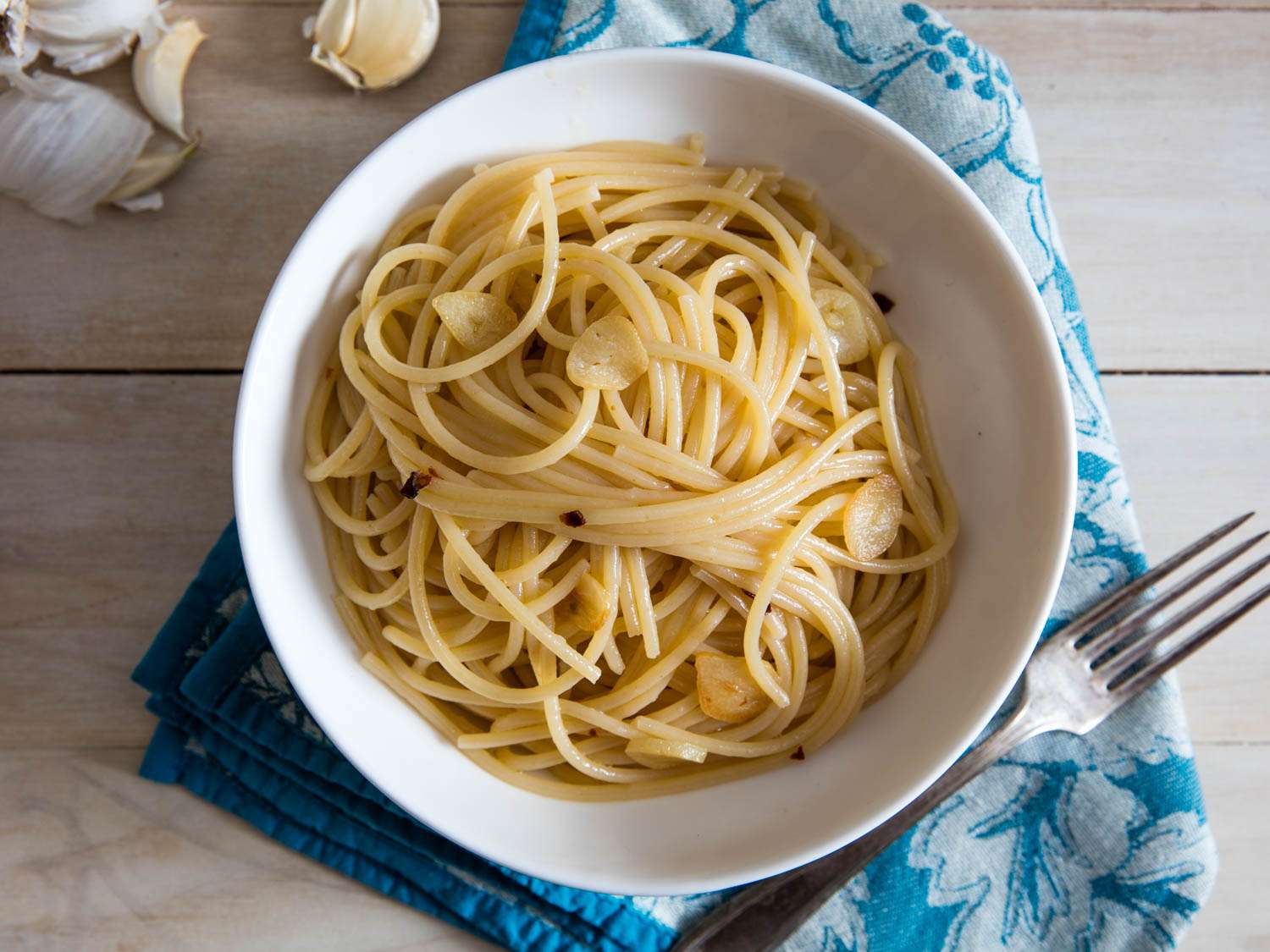
You will see arguments about this. Some versions use onion, some use garlic, some use neither. For a home kitchen, a light touch of garlic can be a great support as long as it doesn’t take over. Keep it subtle and let the guanciale and Pecorino lead.

Why did my sauce turn greasy?

Two common causes: you didn’t emulsify with pasta water, or there was simply too much rendered fat for your tomato amount. Fix it by adding a splash or two of hot pasta water and tossing vigorously. If it’s still oily, spoon off a little excess fat before adding tomatoes next time.

Can I make it less spicy?

Absolutely. Start with 1/4 teaspoon red pepper flakes, or skip them. You will still get a rich, savory sauce.

The first time I tried to cook amatriciana at home, I treated it like a normal tomato sauce and wondered why it tasted fine but not special. The fix was humbling: stop rushing the guanciale. Let it slowly turn crisp and golden so it gives you that intensely seasoned fat, then use pasta water like it’s part of the ingredient list, not an optional afterthought. Now it’s my go-to when I want dinner to feel a little dramatic without actually being difficult.

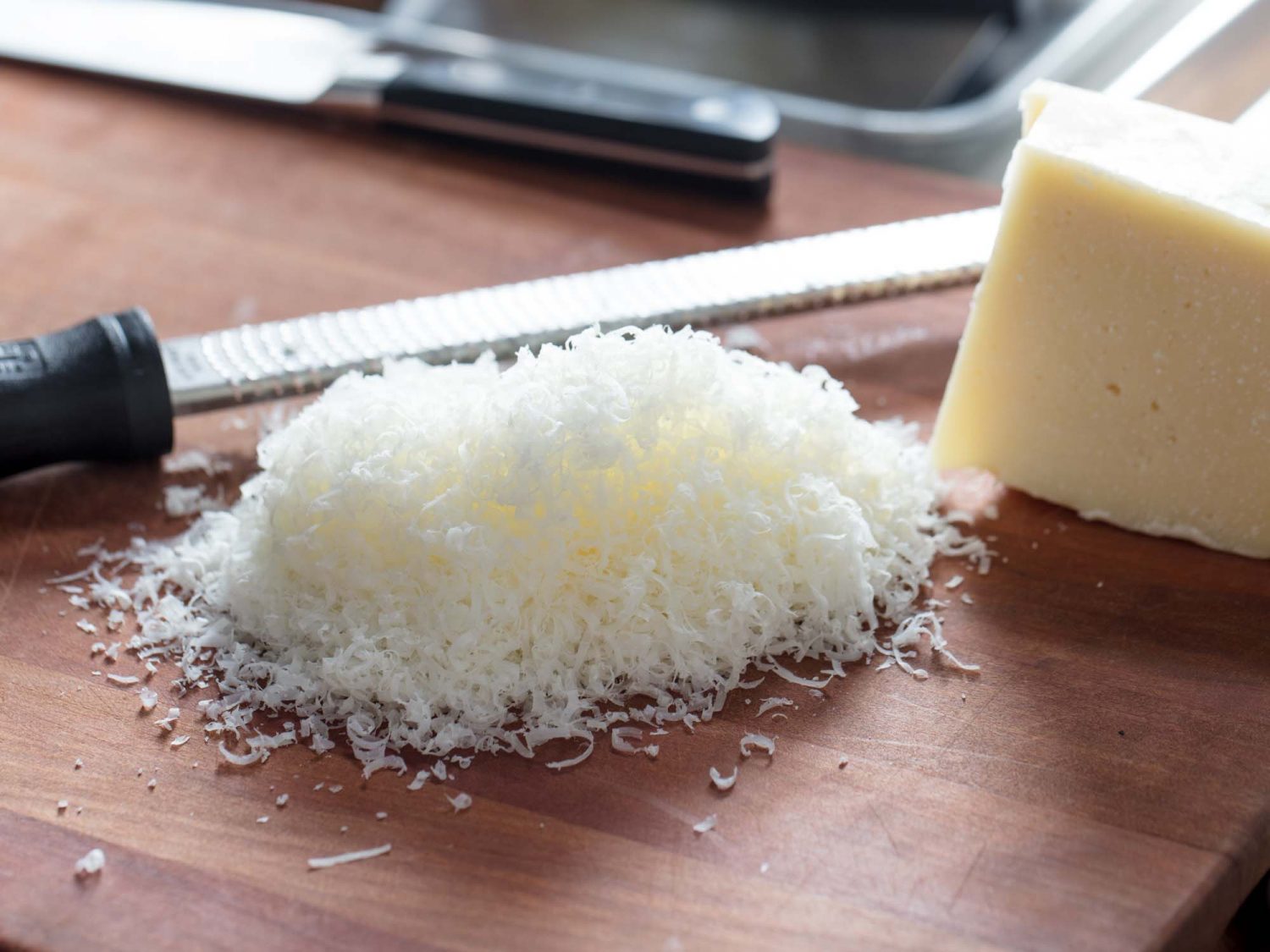
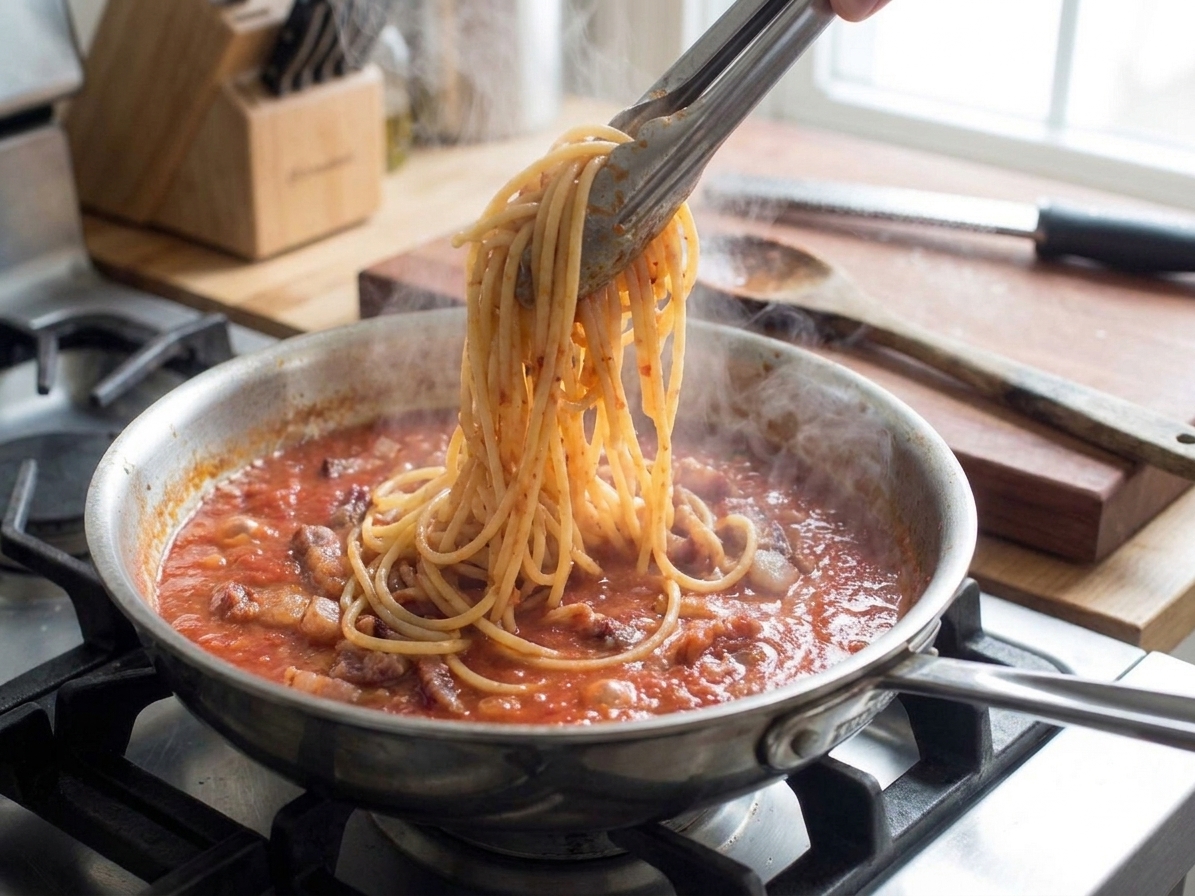
Hands grating Pecorino Romano with a microplane over a wooden cutting board beside a skillet of red tomato sauce on a home kitchen counter