Common Questions
What temperature should halibut be cooked to?
For food safety, the USDA guidance for fish is 145°F in the thickest part. Personally, I like pulling halibut a touch earlier, around 135°F to 140°F, then letting it rest for a few minutes so it stays juicy. If you are serving higher-risk guests (pregnant, elderly, or immunocompromised), cook to 145°F.
How long does it take to bake halibut?
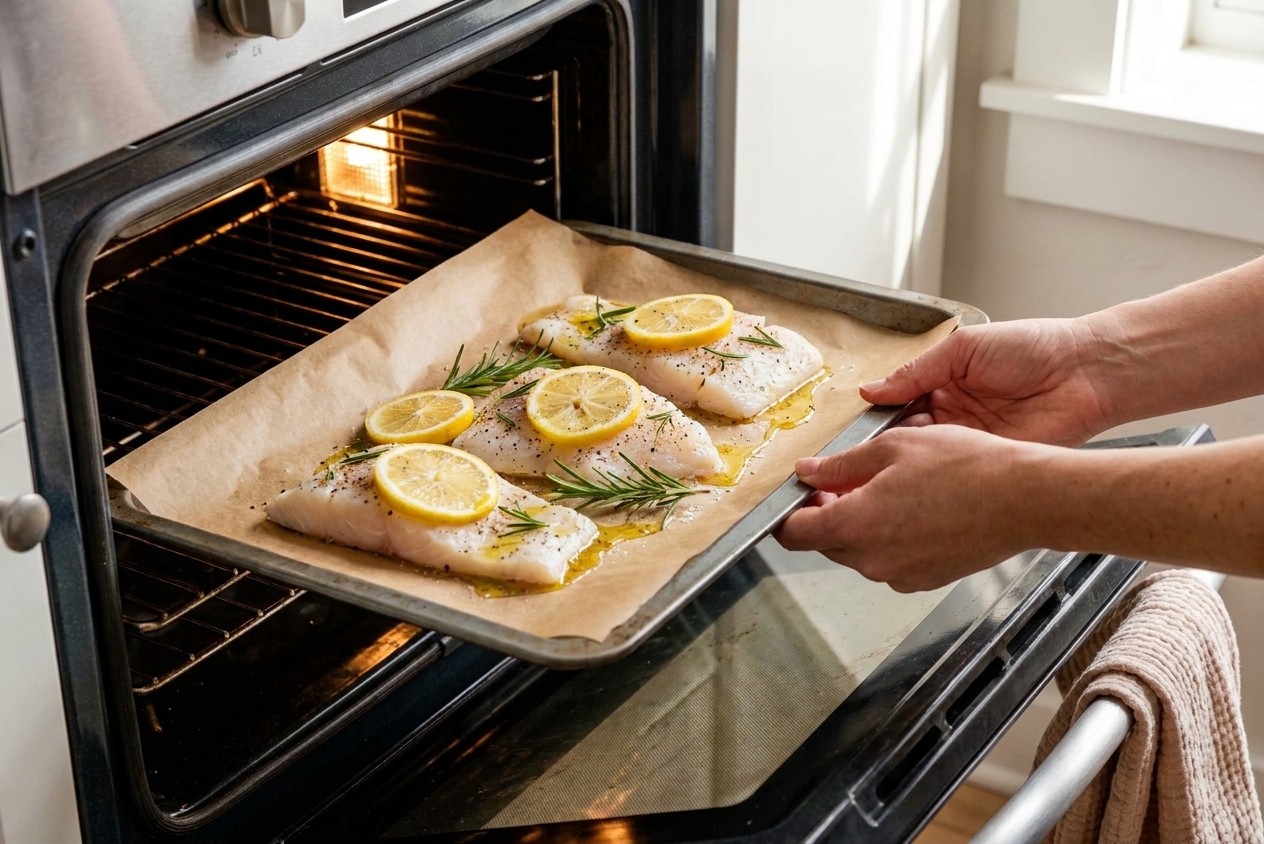
It depends on thickness. At 425°F, most fillets that are about 1 inch thick take roughly 10 to 14 minutes. Thicker pieces can go 15 to 18 minutes. The fish should look opaque on the sides and flake easily, with a slightly translucent center if you like it moist.
How do I keep baked halibut from drying out?
- Do not overbake. Start checking early.
- High heat helps, but the real trick is pulling it at the right temp for your preferred doneness.
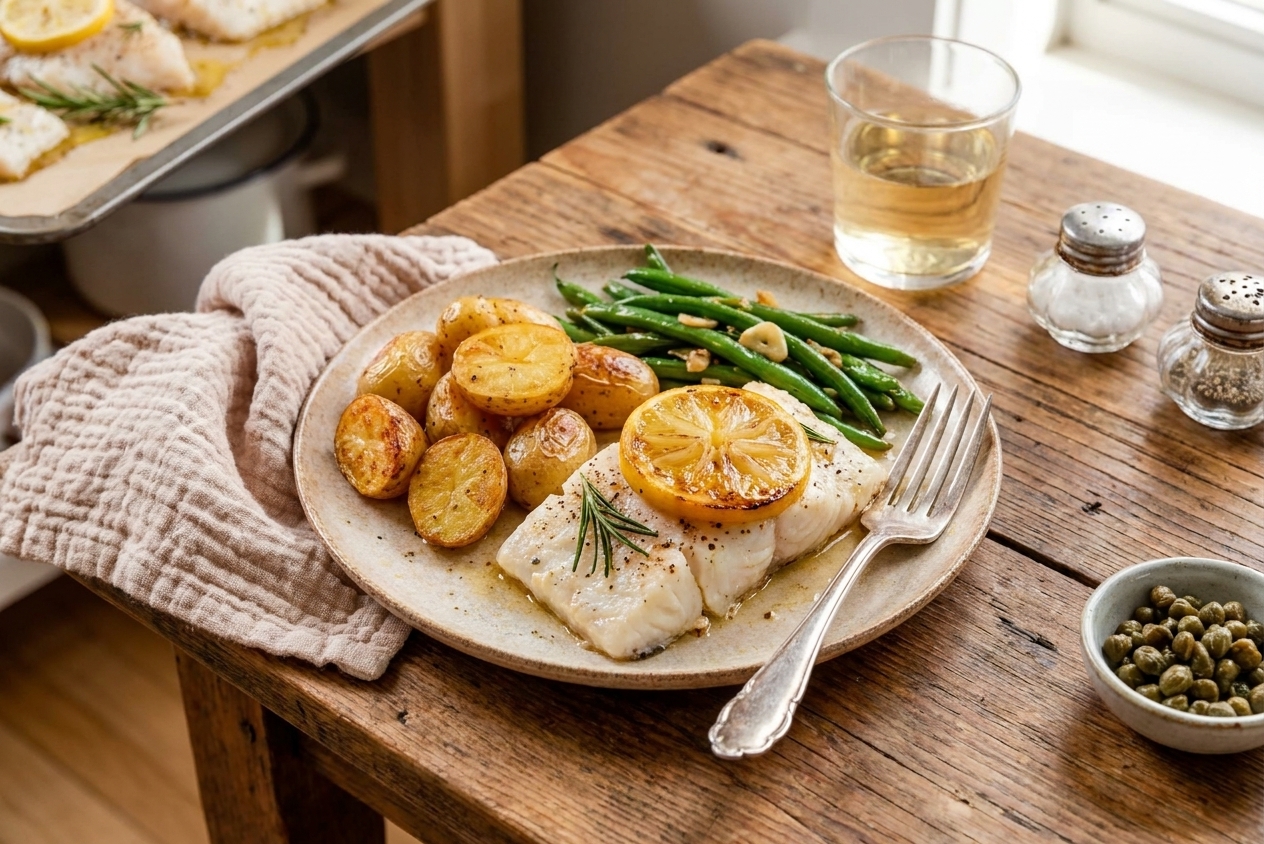
- Finish with sauce or butter right away so it soaks in while the fish rests.
Can I use frozen halibut?
Yes. Thaw overnight in the fridge, then pat it very dry before seasoning. If it is still wet, it will steam and you will lose that nice surface texture.
Do I need to remove the skin or pin bones?
Most halibut fillets are sold skinless, but if yours has skin, you can bake it as-is. If you want to remove it, it is easiest after baking: slide a thin spatula between the skin and the fish and lift the fillet right off. For pin bones, run your fingertips over the fillet before cooking and pull any you find with tweezers.
What can I use instead of capers?
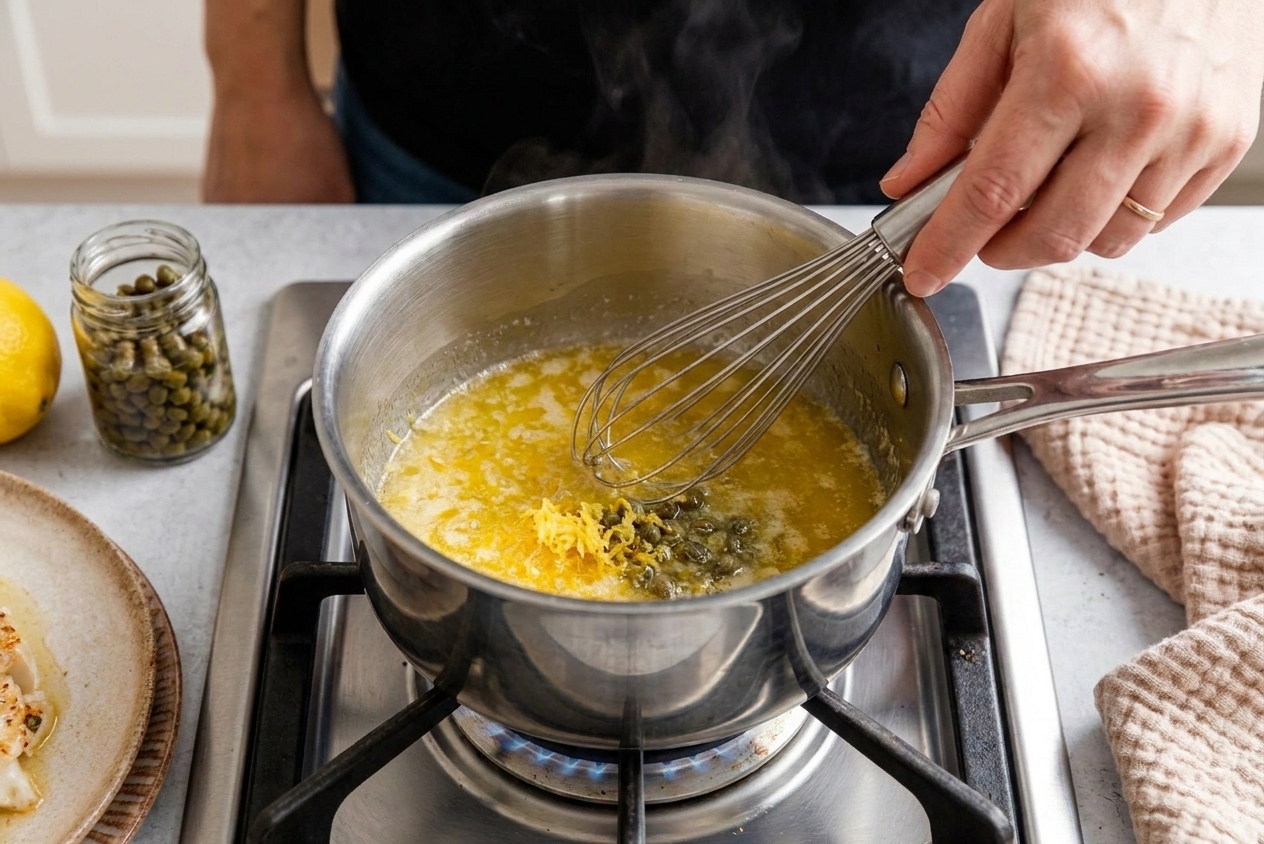
Chopped green olives, a tiny bit of minced dill pickle, or just extra lemon zest and flaky salt. Capers are the briny shortcut, but the sauce still works without them.
Can I bake halibut in foil?
You can, but it will steam more than it bakes. If you want tender and saucy, foil is fine. If you want slightly crisp edges, bake uncovered and add sauce at the end.