Mom's Best Recipes
Recipe

Baked Salmon in the Oven

Tender, flaky salmon with a lemon-garlic butter you'll want to spoon over everything.

Author By Matt Campbell
4.8
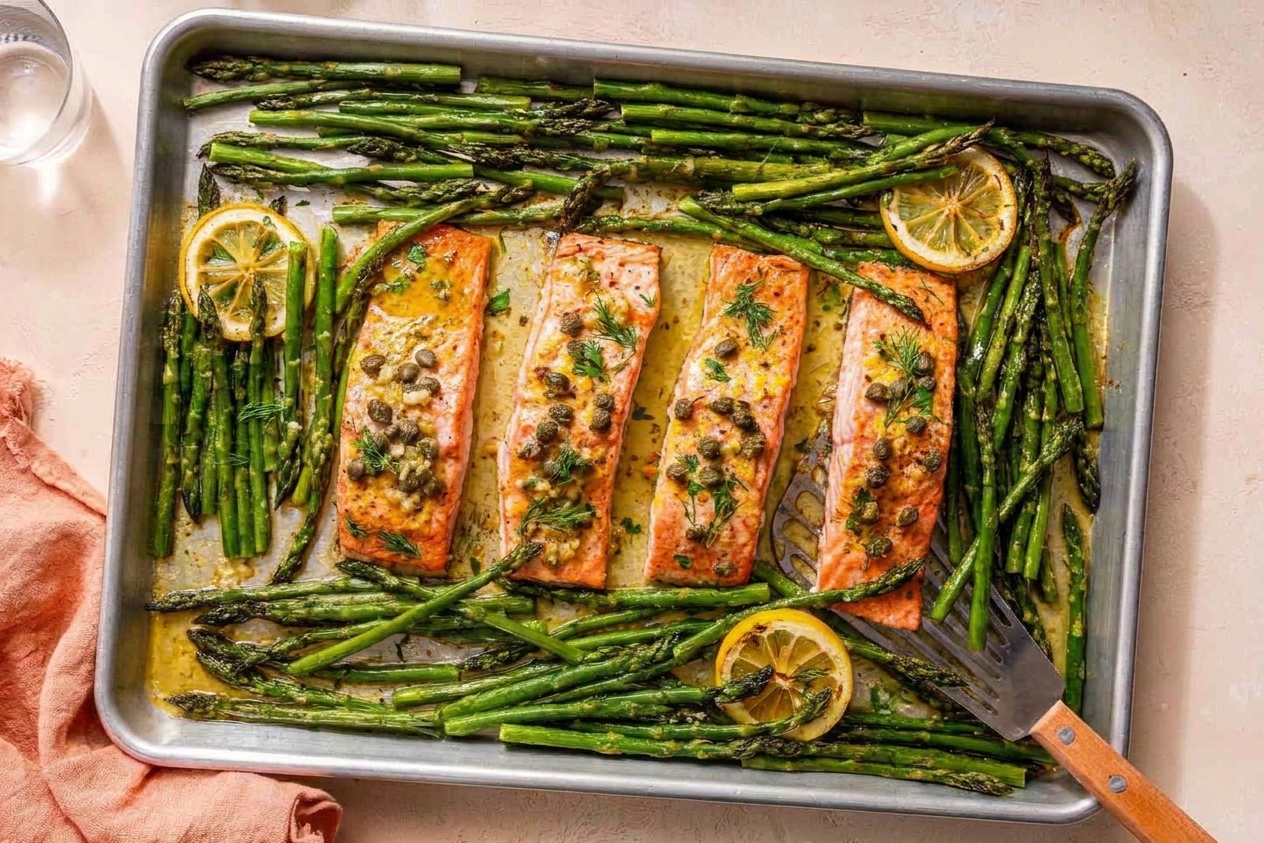
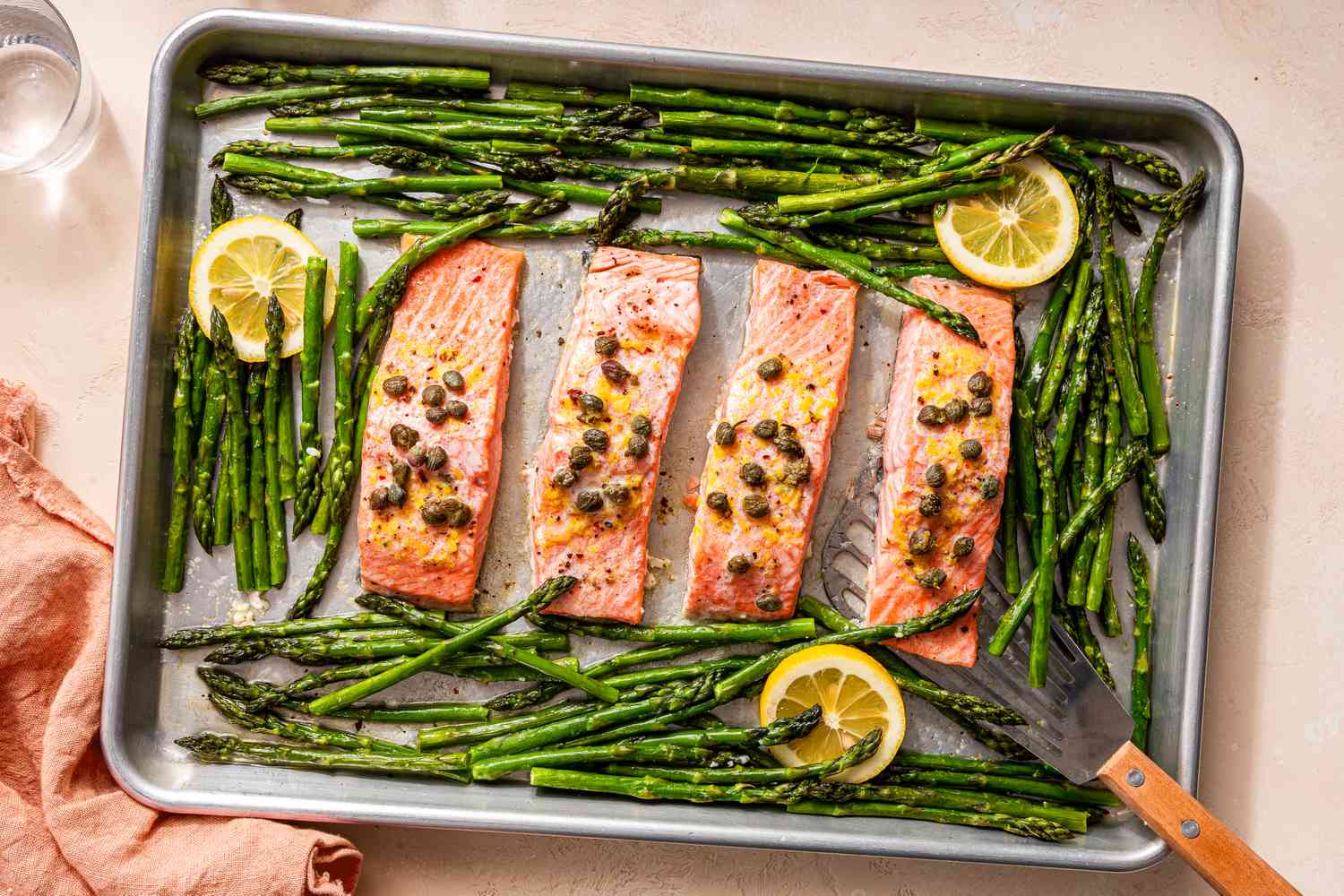
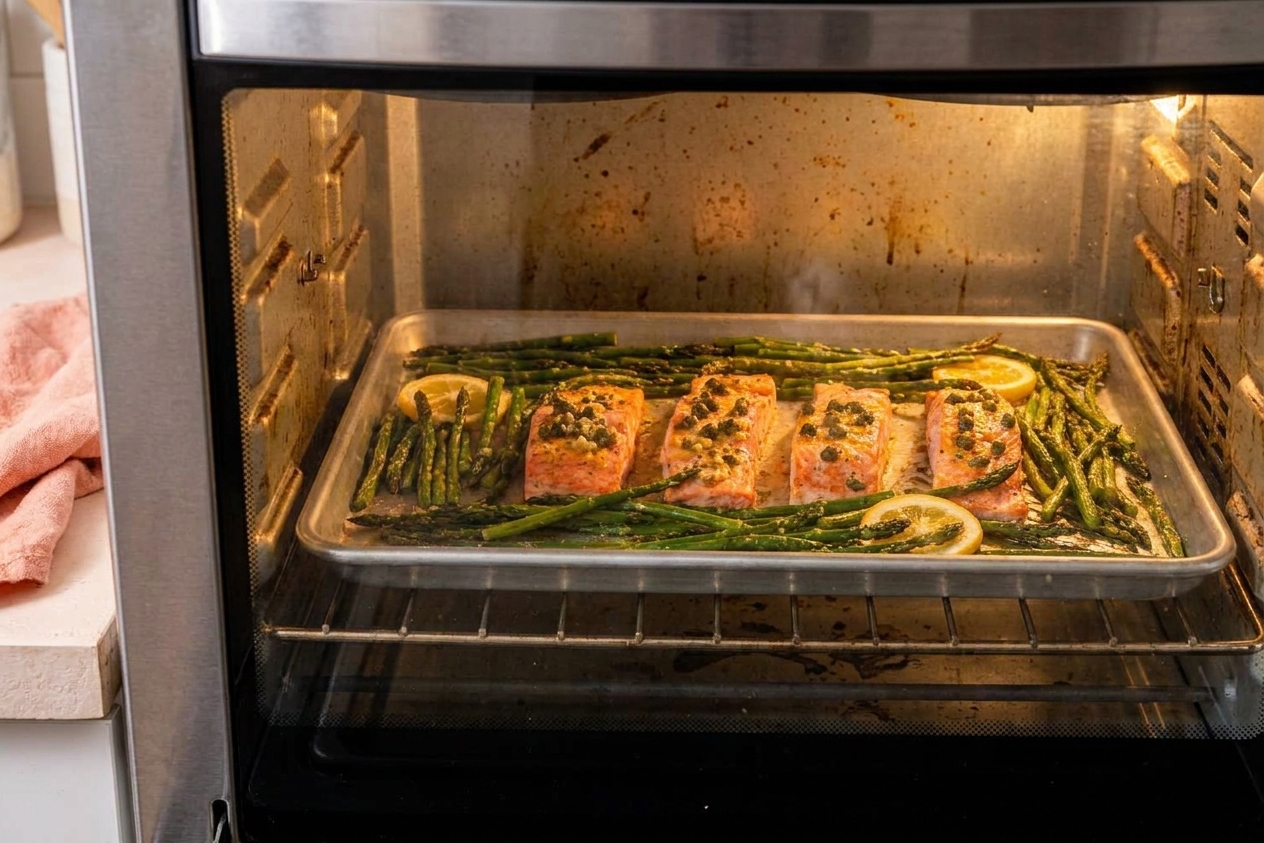
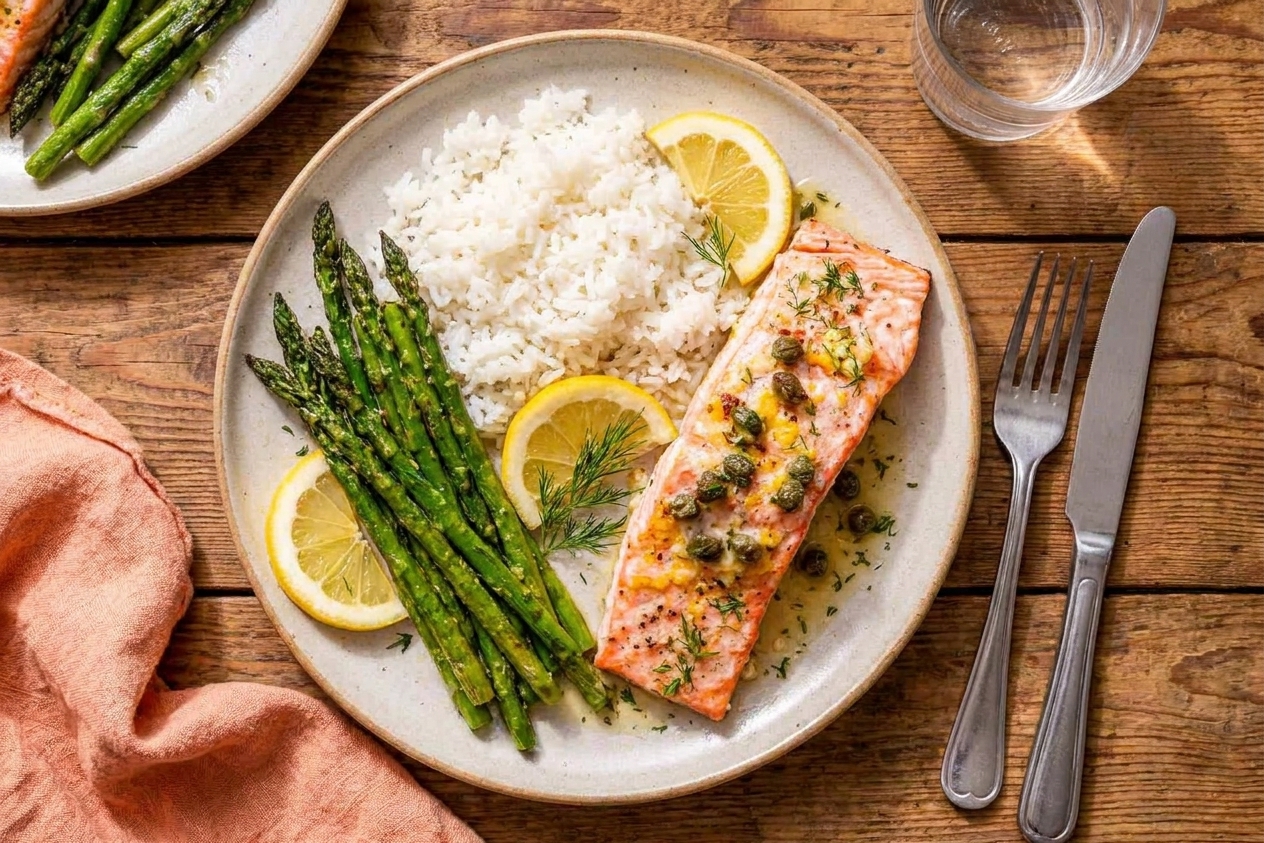
A sheet pan of oven baked salmon fillets topped with lemon slices and herbs, with roasted edges and glossy butter sauce

Baked salmon is one of those dinners that looks like you tried way harder than you did. It's cozy, fast, and wildly forgiving as long as you respect two things: high heat and not overcooking it.

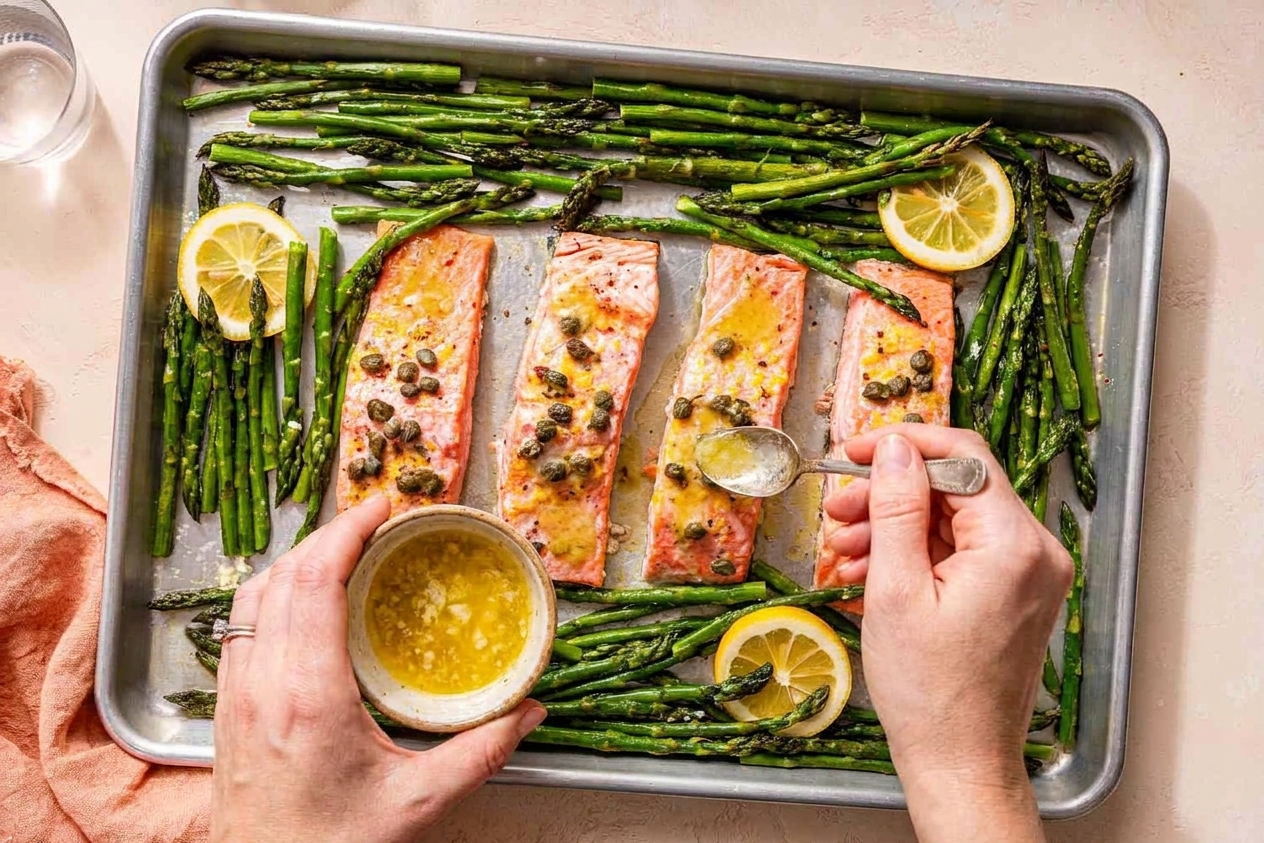
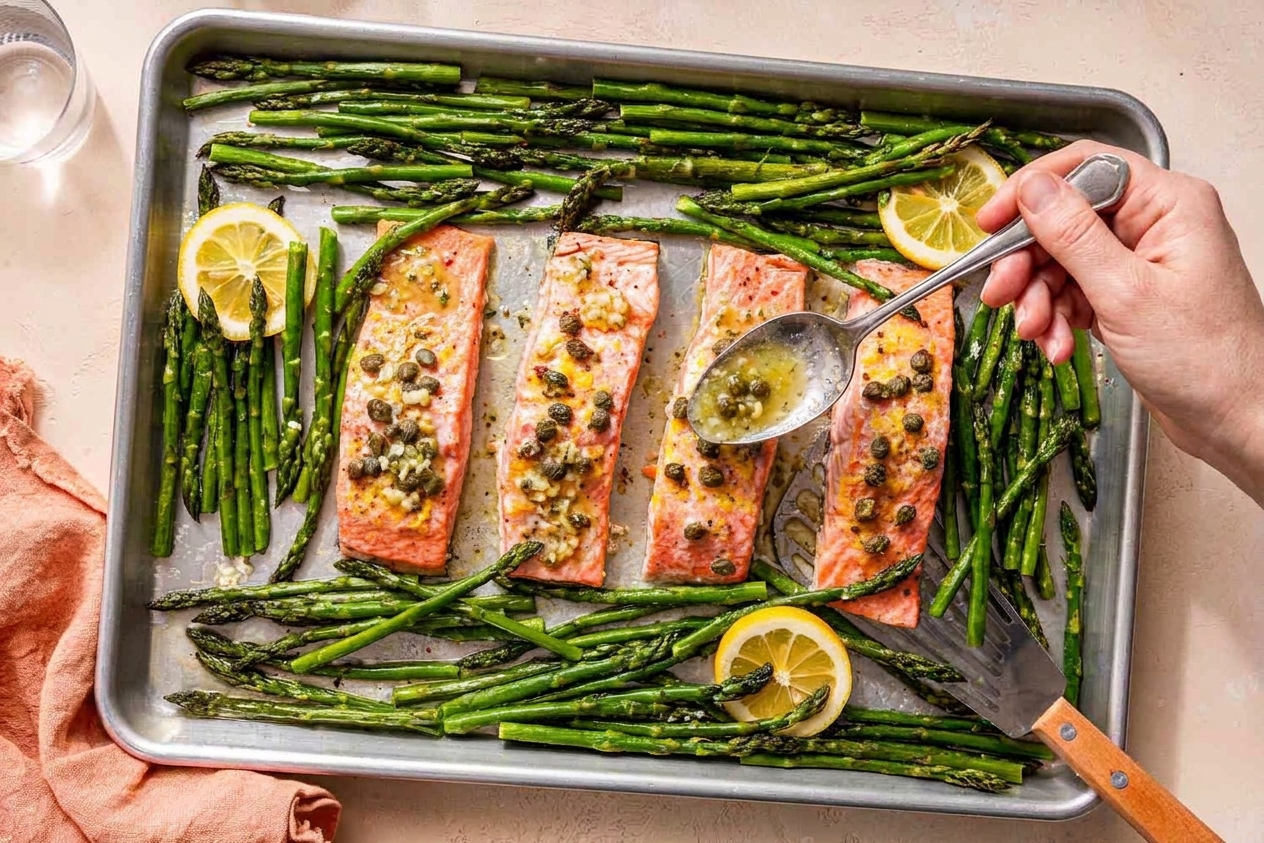
This version goes full weeknight hero with a lemon-garlic butter that melts into the fish while it bakes. You get crisp edges, a juicy center, and that moment where you drag a fork through the flakes and think, okay wow, we're doing great.

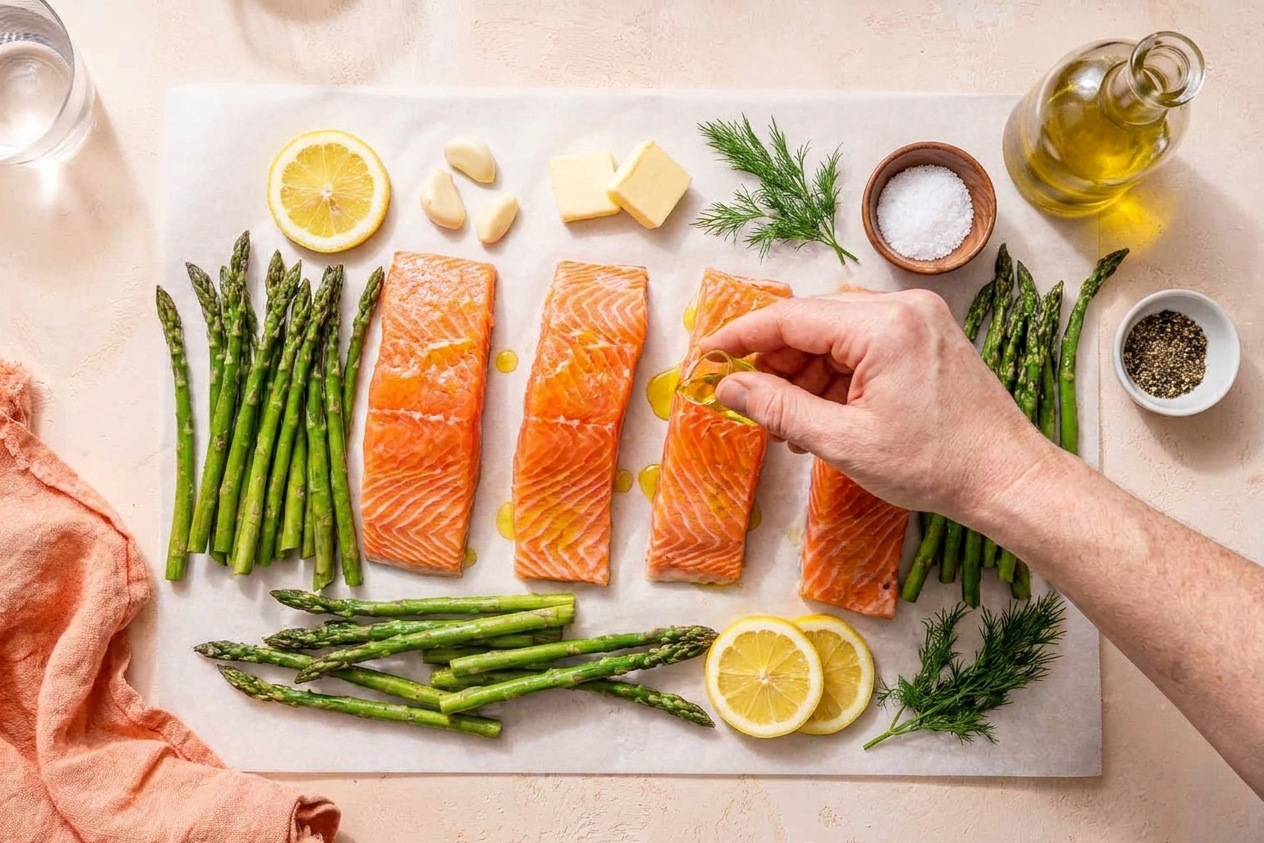
Raw salmon fillets on parchment beside lemon, garlic, butter, olive oil, salt, pepper, and fresh herbs on a bright kitchen counter

Why It Works

  • Reliable doneness: A hot oven and a simple temp target keep the salmon tender and flaky, not chalky.
  • Big flavor, small effort: Lemon zest, garlic, and butter do the heavy lifting while the oven handles the rest.
  • Easy cleanup: Parchment or foil on a sheet pan means you're done with dishes in minutes.
  • Flexible for any salmon cut: Works with fillets or one larger side of salmon with minor timing tweaks.

Pairs Well With

Storage Tips

How to Store Leftovers

Refrigerate: Cool salmon, then store in an airtight container for up to 3 days.

Reheat gently: Salmon dries out fast. Reheat in a 275°F oven until just warmed through, about 8 to 12 minutes. Add a tiny pat of butter or a splash of water to keep it moist.

Cold salmon is underrated: Flake it into salads, tuck it into a wrap with mayo and lemon, or pile it on rice with cucumbers and soy sauce.

Freezing: You can freeze cooked salmon for up to 2 months, but the texture softens. Wrap tightly and thaw overnight in the fridge.

Common Questions

Common Questions

What temperature should I bake salmon at?

I like 400°F for most weeknights. It's hot enough to get a little color, but not so aggressive that the butter browns too fast before the fish is done. If your fillets are very thin, 375°F can be gentler.

How long does salmon take to bake?

At 400°F, most 1-inch-thick fillets take 10 to 14 minutes. A thicker center-cut piece can take 14 to 18 minutes. A helpful rule of thumb is about 10 minutes per inch, but your best move is checking early, then adding time in 2-minute increments.

How do I know when salmon is done?

Two easy checks:

  • Fork test: Press gently with a fork. It should flake into large, moist pieces.
  • Temperature: Aim for 125°F to 130°F in the thickest part for juicy salmon. It'll carryover cook a bit after you pull it. If you prefer well-done or need FDA-style guidance, cook to 145°F.

Should I bake salmon covered or uncovered?

Uncovered is my default for better edges. If you're working with very lean salmon or you know your oven runs hot, you can loosely tent with foil for the first half, then uncover to finish.

Skin on or skin off?

Either works. Skin-on is a little more forgiving and helps protect the flesh from overcooking. Serve it skin-side down and lift the flesh right off, or crisp the skin later under the broiler if you're feeling ambitious.

Can I use frozen salmon?

Yes, but thawing first gives the best texture. Thaw overnight in the fridge, then pat very dry. If you bake from frozen, plan on about 50 percent more time depending on thickness (and whether the pieces are frozen individually or in a solid block), and start checking by temperature as soon as it looks close.
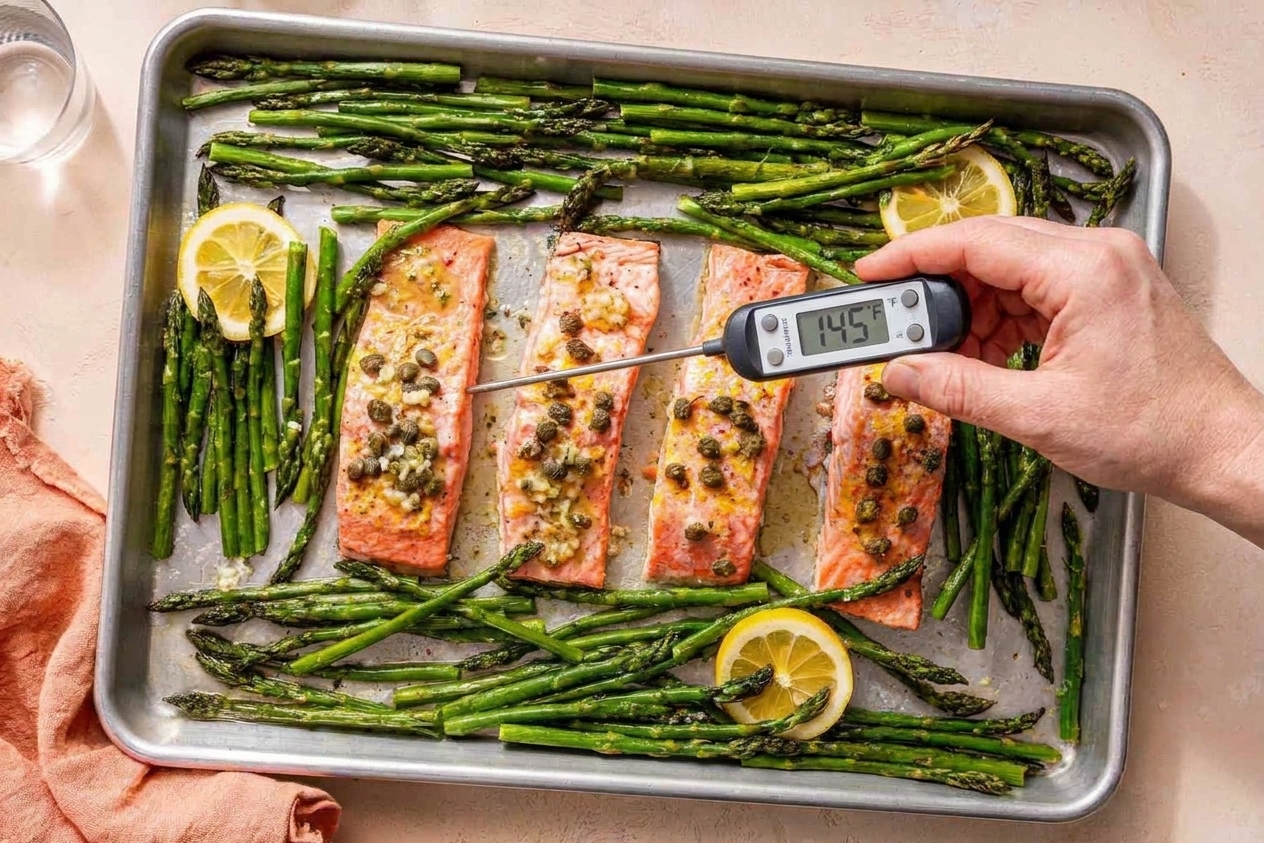

An instant read thermometer inserted into the thickest part of a baked salmon fillet on a sheet pan

I didn't take the long, romantic route into cooking school. I chased practical skills, the kind you can use on a random Tuesday when everyone's hungry and you want dinner to feel like a win. Oven baked salmon is exactly that for me. It's the meal I make when I want something that tastes restaurant-y but still lets me clean the kitchen before the show comes back on. Also, I love a dish where the sauce basically makes itself. Butter, lemon, garlic, heat, done. That's the kind of teamwork I can get behind.