Mom's Best Recipes
Recipe

Beef Bone Broth

Roasted beef bones simmered low and slow for a deep, savory broth that sets up jiggly in the fridge.

Author By Matt Campbell
4.8
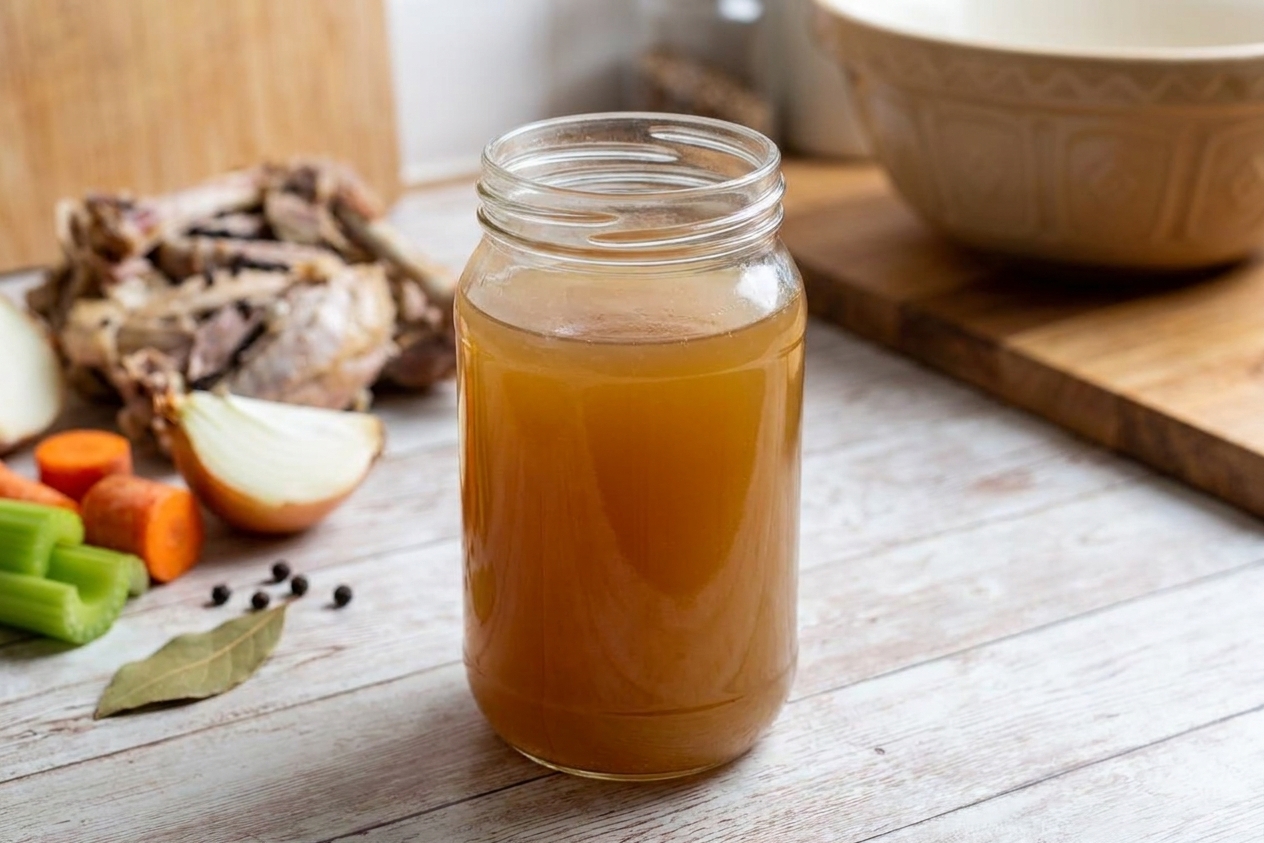
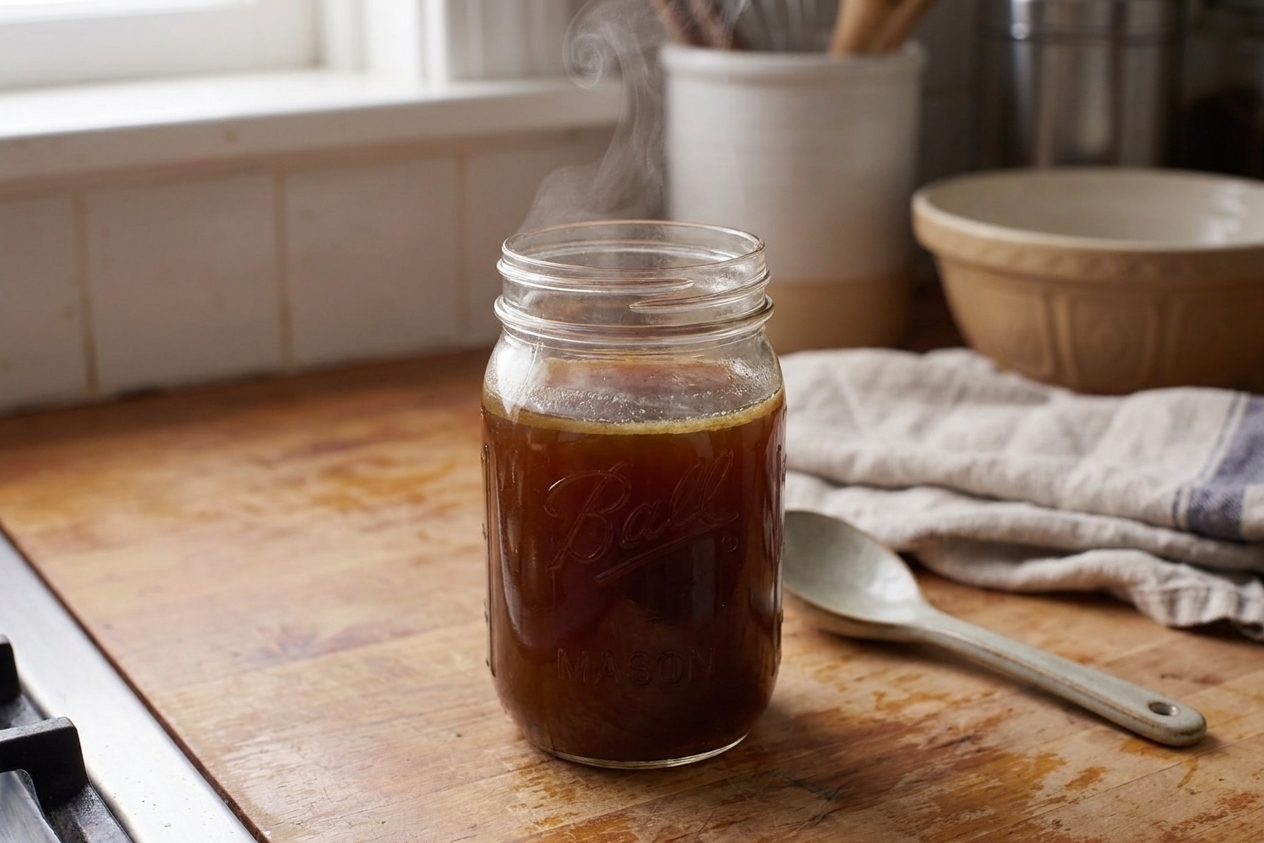
A clear glass jar of deep brown beef bone broth on a wooden kitchen counter with steam rising

Beef bone broth is one of those kitchen projects that looks serious, sounds intimidating, and then turns out to be mostly: put stuff in a pot, walk away, and feel accomplished every time you open the fridge.

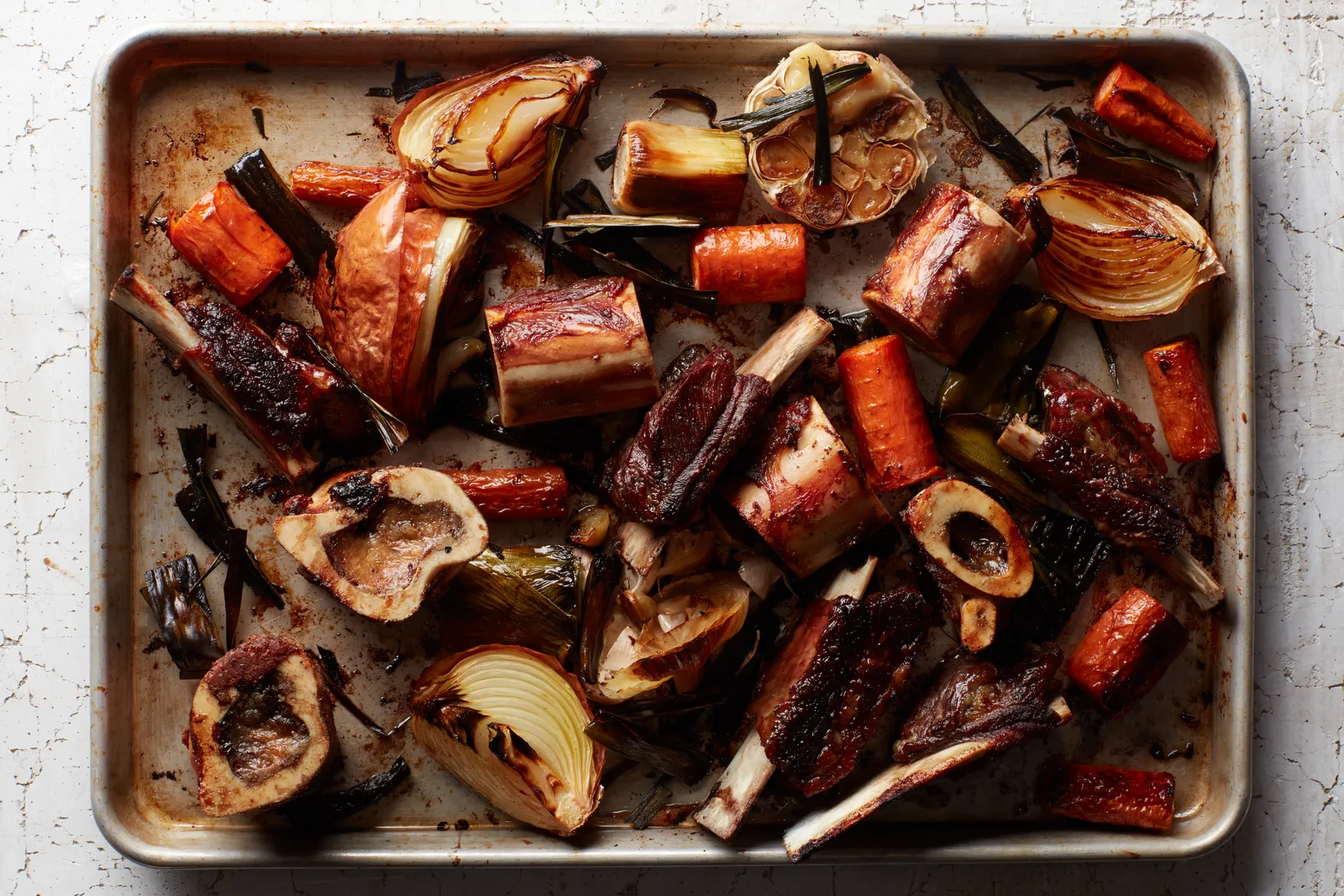
This version is built for real life. We roast the bones for color and that toasty, steakhouse depth. We keep the ingredient list tight and grocery-store friendly. Then we simmer gently until the broth goes from “brown water” to “why does this taste like a hug?”

Use it for soups, ramen nights, gravy emergencies, risotto that tastes like you know what you are doing, or just a mug of broth with a squeeze of lemon when you want something cozy that is not another snack.
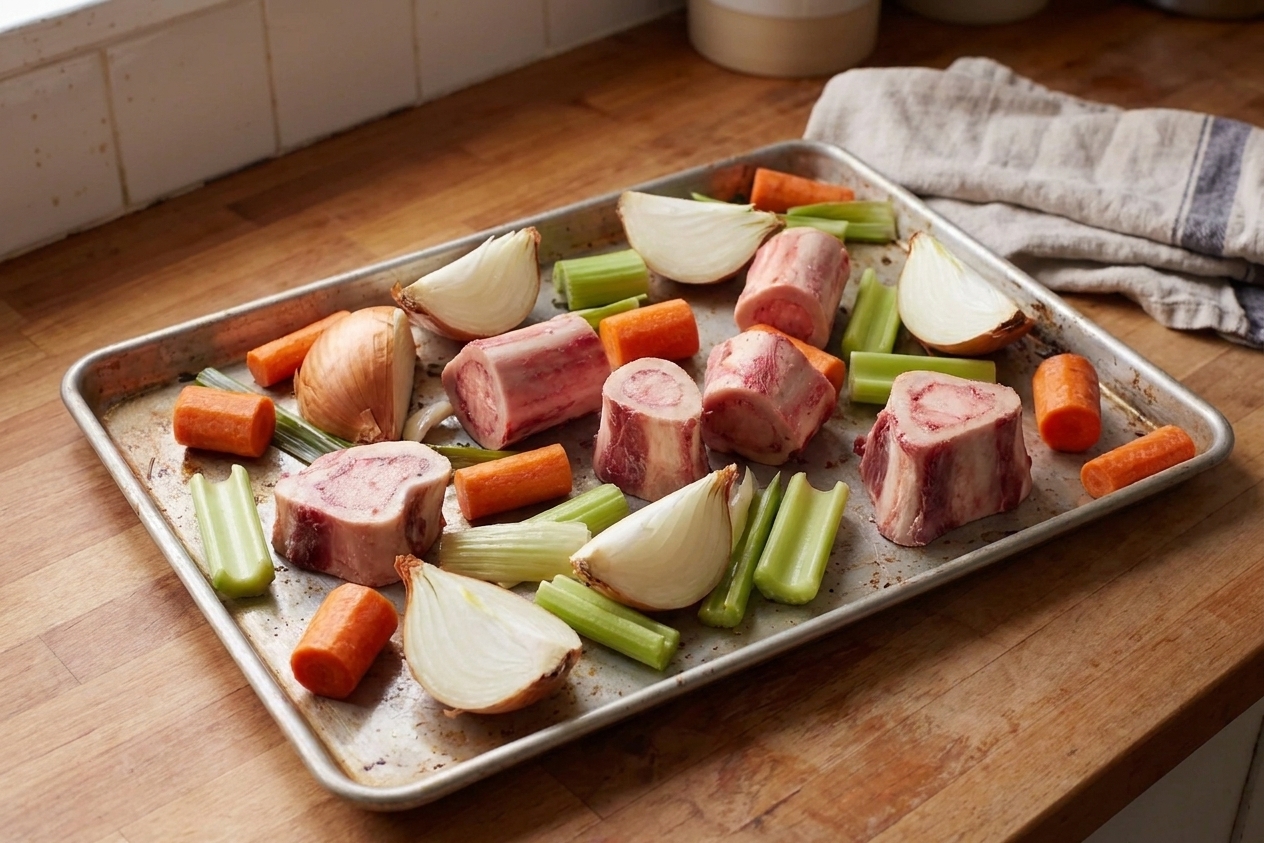
Raw beef marrow bones with onions, carrots, and celery arranged on a sheet pan on a bright kitchen counter

Why It Works

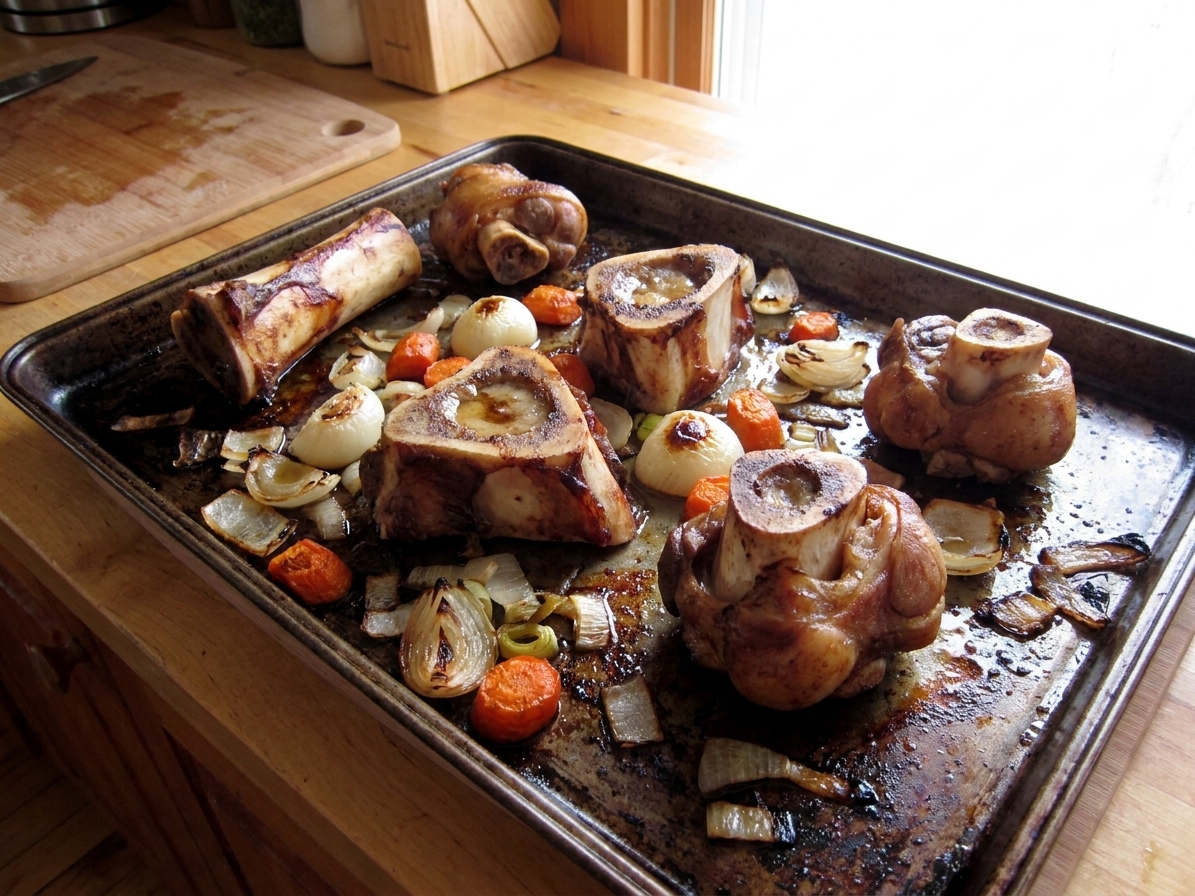
  • Roasting first builds real flavor. Those browned bits on the pan are basically free seasoning. We deglaze them into the pot so nothing delicious gets left behind.
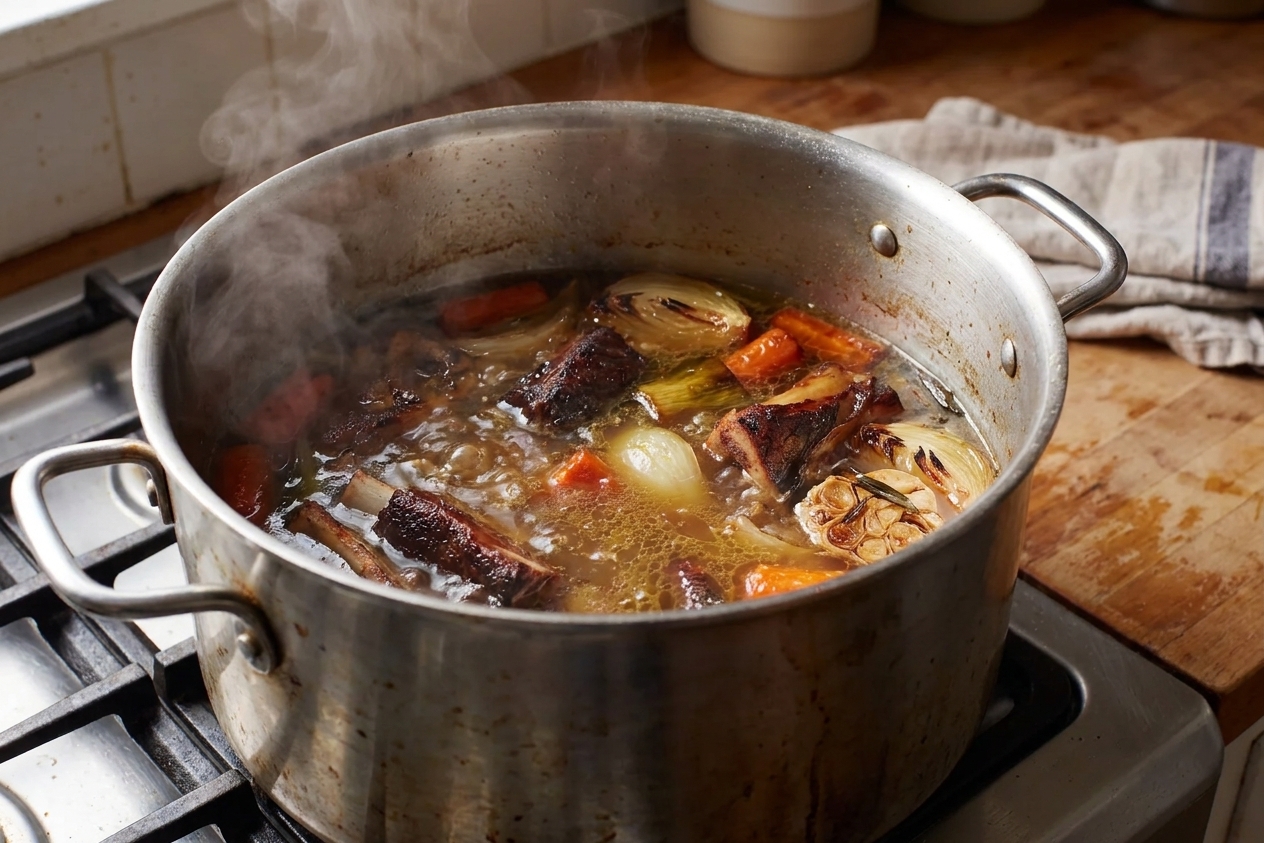
  • A gentle simmer keeps it clean. Boiling makes broth cloudy and can turn flavors harsh. Low and slow gives you a clearer, smoother broth.
  • Vinegar helps, but it is not the star. A small splash of apple cider vinegar supports extraction from bones without making your broth taste like salad dressing.
  • Gelatin is the goal. Using collagen-rich joints and knuckles plus a long simmer gives you that silky body that sets when chilled.

Pairs Well With

Storage Tips

How to Store Beef Bone Broth

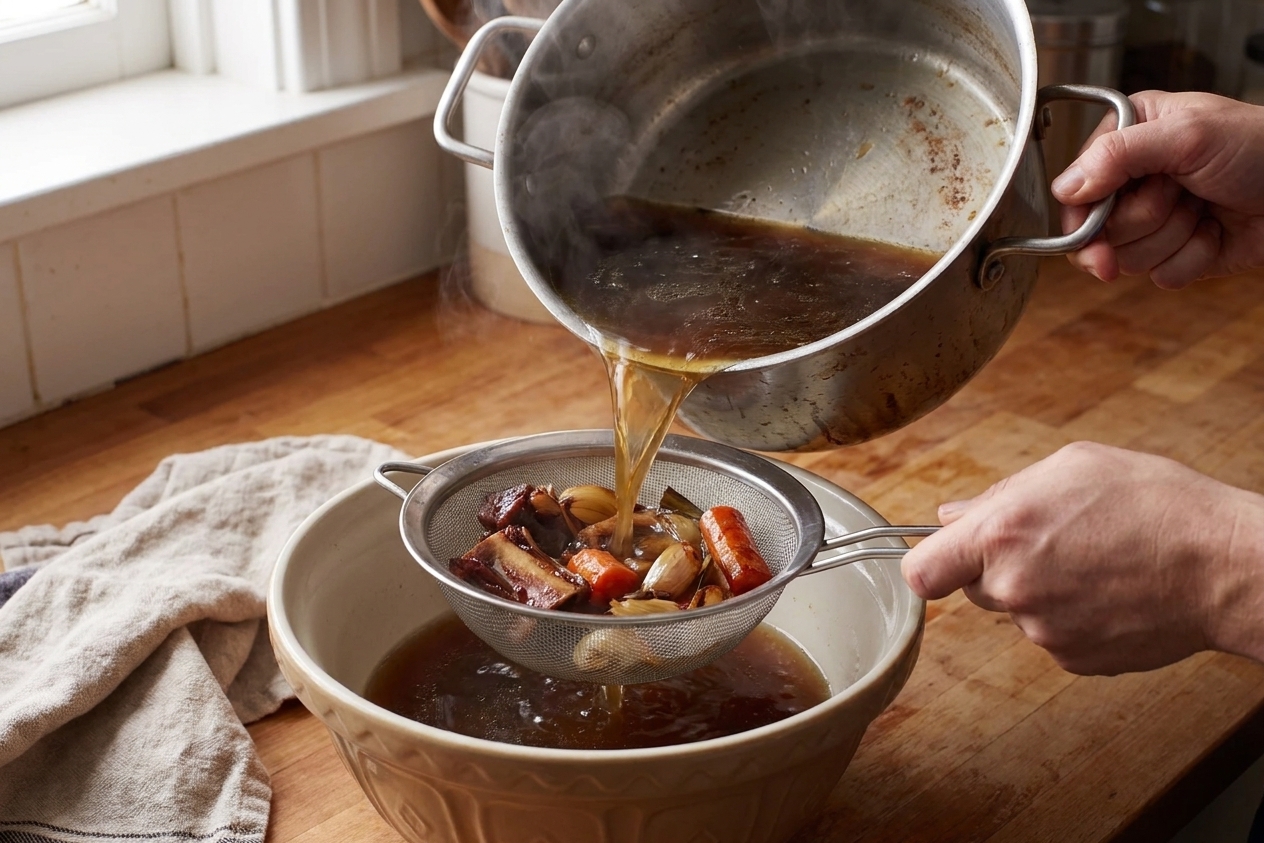
Cool it fast and safely: A full 10 to 12-quart pot holds heat for a long time, so do not rely on a quick sit on the counter and do not put a huge hot pot straight into the fridge. Instead, strain the broth, then divide it into smaller, shallow containers so it drops in temperature quickly.

Ice bath method (my go-to): Set the (strained) pot or containers in a sink filled with ice water and stir occasionally until the broth is no longer hot and has cooled down significantly. Then refrigerate.

  • Refrigerator: Store in sealed jars or containers for up to 5 days. A solid fat cap on top is normal and helps protect the broth. Scoop it off to use for cooking, or leave a thin layer if you are storing.
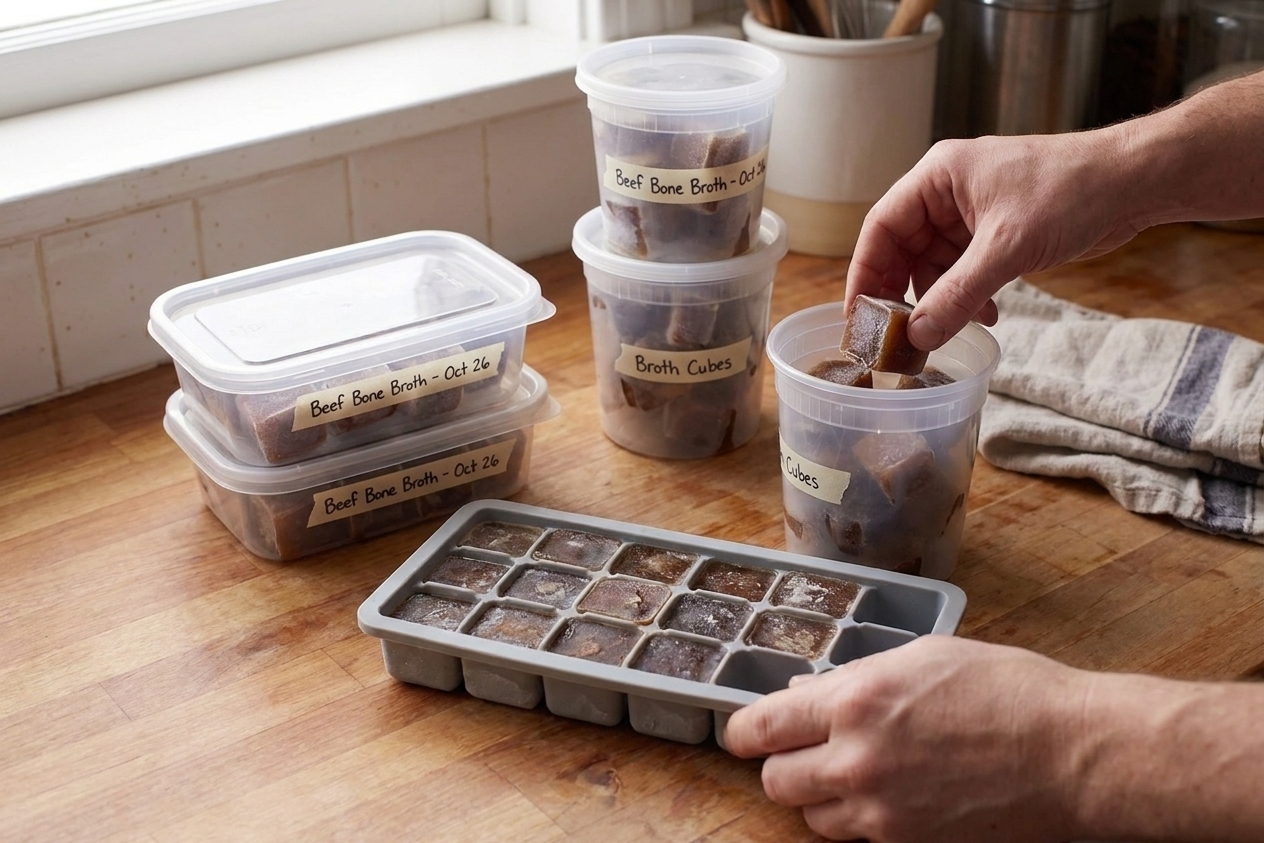
  • Freezer: Freeze up to 6 months. Portion into 1 cup containers for cooking, and ice cube trays for small boosts (pan sauces, rice, reheating leftovers).
  • Reheat: Warm gently until steaming. If it is jiggly like Jell O when cold, you nailed it.
Beef bone broth frozen into cubes in a silicone tray next to labeled freezer containers on a kitchen counter

Common Questions

Common Questions

What bones are best for beef bone broth?

My favorite mix is marrow bones (for richness) plus knuckle, joint, or oxtail (for gelatin). If you can only get one type, choose knuckle or joint bones for body, then add a little meaty shank if you want extra beefy flavor.

Do I have to roast the bones?

No, but I strongly recommend it. Roasting gives you darker color and deeper flavor. If you want a lighter, cleaner broth for delicate soups, you can skip roasting and just simmer gently.

Why is my broth cloudy?

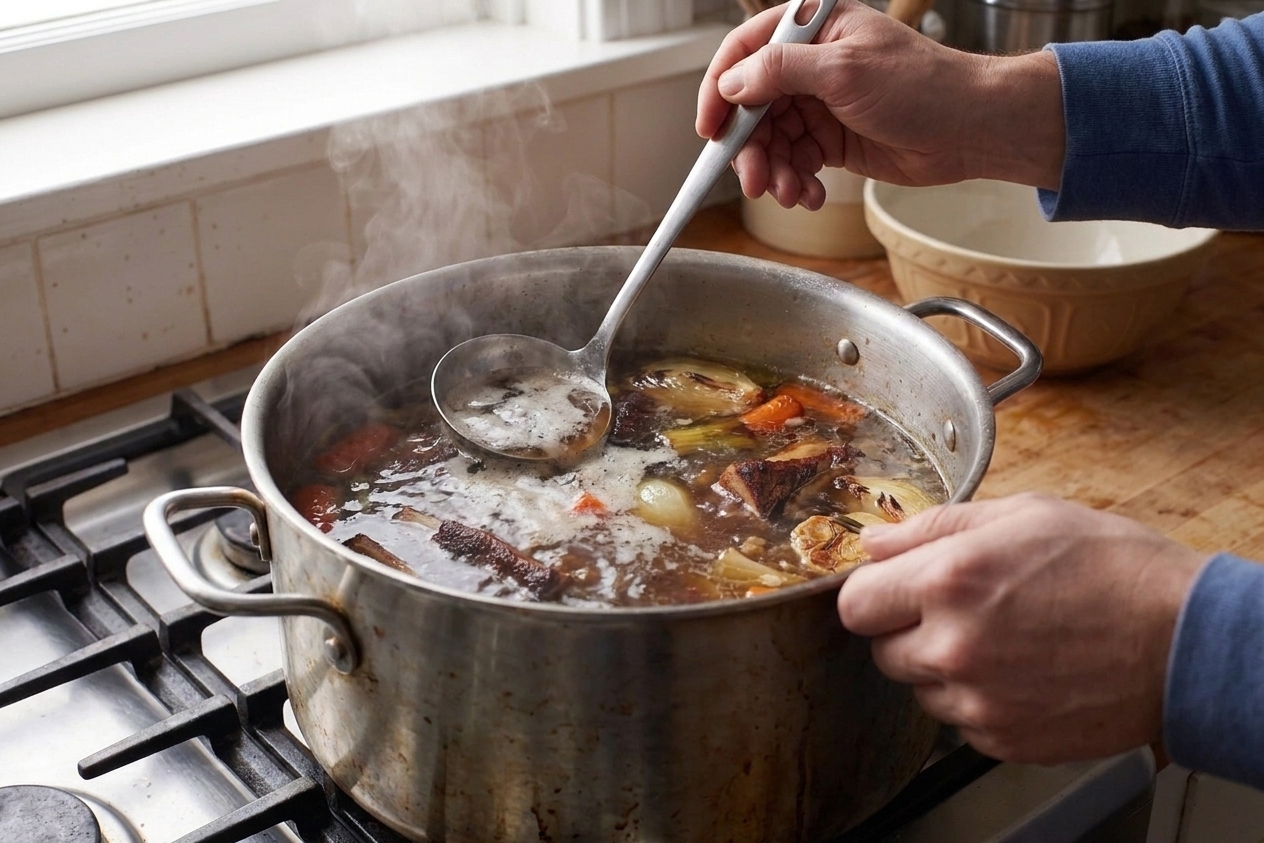
Usually it is from boiling or vigorous bubbling. Keep it at a lazy simmer. Also skim early foam for a cleaner result.

How do I know when it is done?

When it tastes full and beefy, the liquid has reduced a bit, and the bones look like they have given up their secrets. For stovetop, I aim for 12 to 18 hours. You can go longer, but the big flavor payoff is usually in that window.

Is beef bone broth the same as beef stock?

They are cousins. Stock is often simmered shorter and can be made with more meaty bones. Bone broth is typically simmered longer with collagen-rich bones for more gelatin. In your kitchen, the line is blurry and that is fine. If it tastes great, it is doing its job.

Can I make it in an Instant Pot?

Yes. You still want to roast the bones first for best flavor, then pressure cook and let it naturally release.

A ladle skimming light foam from the surface of gently simmering beef broth in a large stainless steel stockpot

The first time I made beef bone broth, I treated it like a high-stakes science experiment. Thermometer. Timers. Intense focus. Then I realized the secret is basically the opposite: roast for flavor, simmer gently, and do not panic. Now it is my favorite “quiet background” cook. I make a batch when the week feels chaotic, and suddenly I have soup, sauce, and comfort on standby. Also, opening the fridge to a container of broth that jiggles a little is weirdly satisfying, like your past self left you a delicious trophy.