Mom's Best Recipes
Recipe

Beef Chow Fun

Tender beef, bouncy wide rice noodles, crisp sprouts, and a savory sauce that clings to everything in the best way.

Author By Matt Campbell
4.8
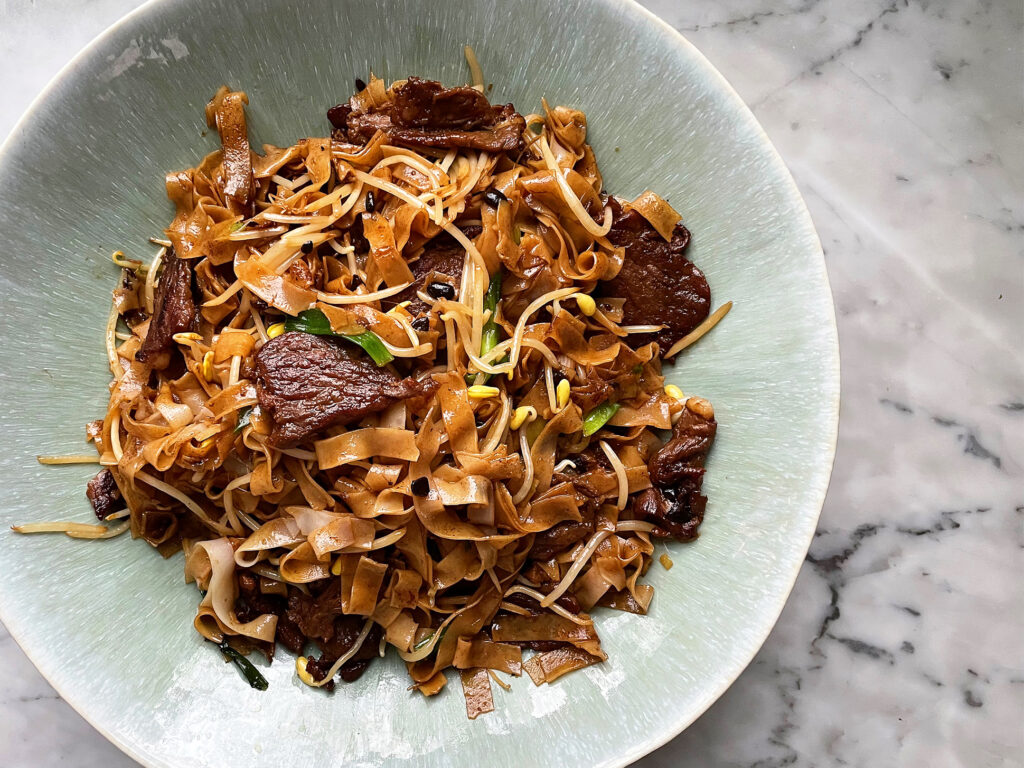
A plated serving of beef chow fun with glossy wide rice noodles, seared beef slices, bean sprouts, and scallions on a ceramic plate on a warm kitchen table

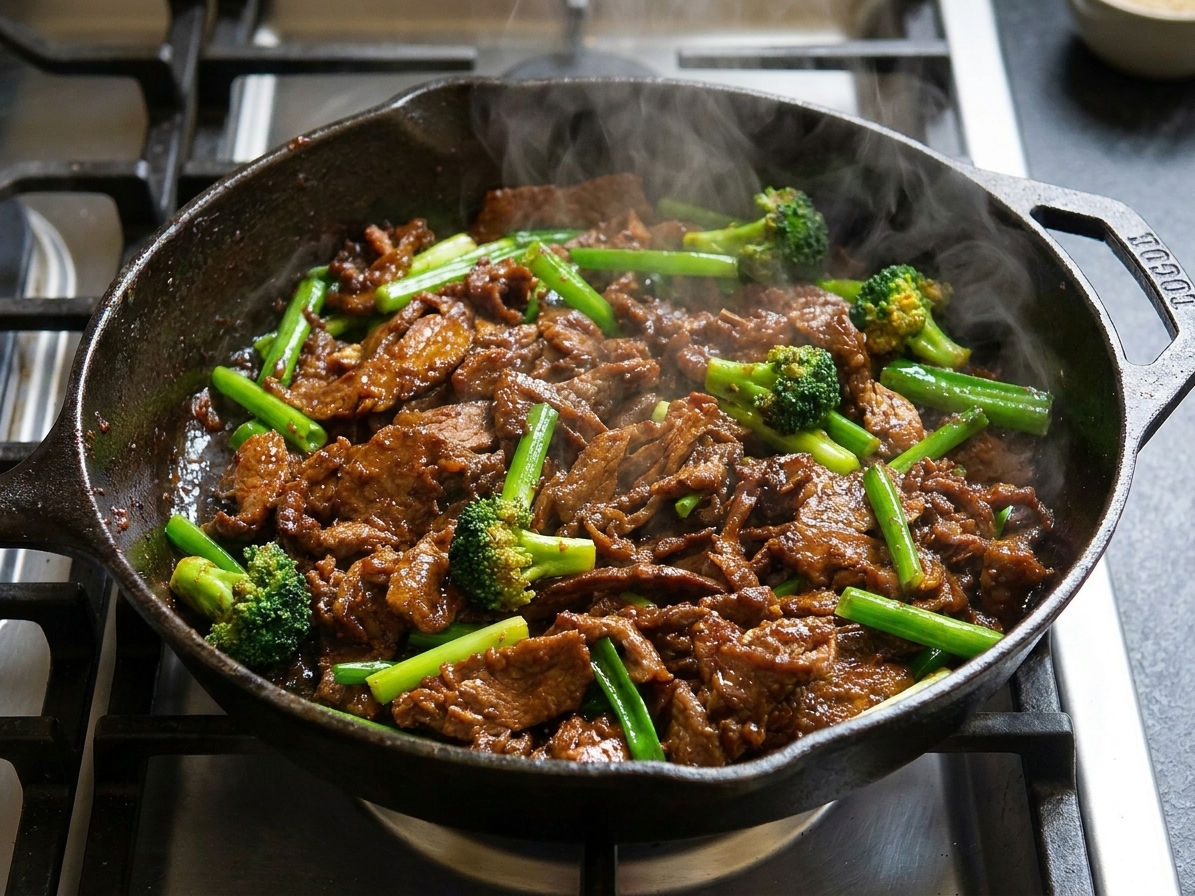
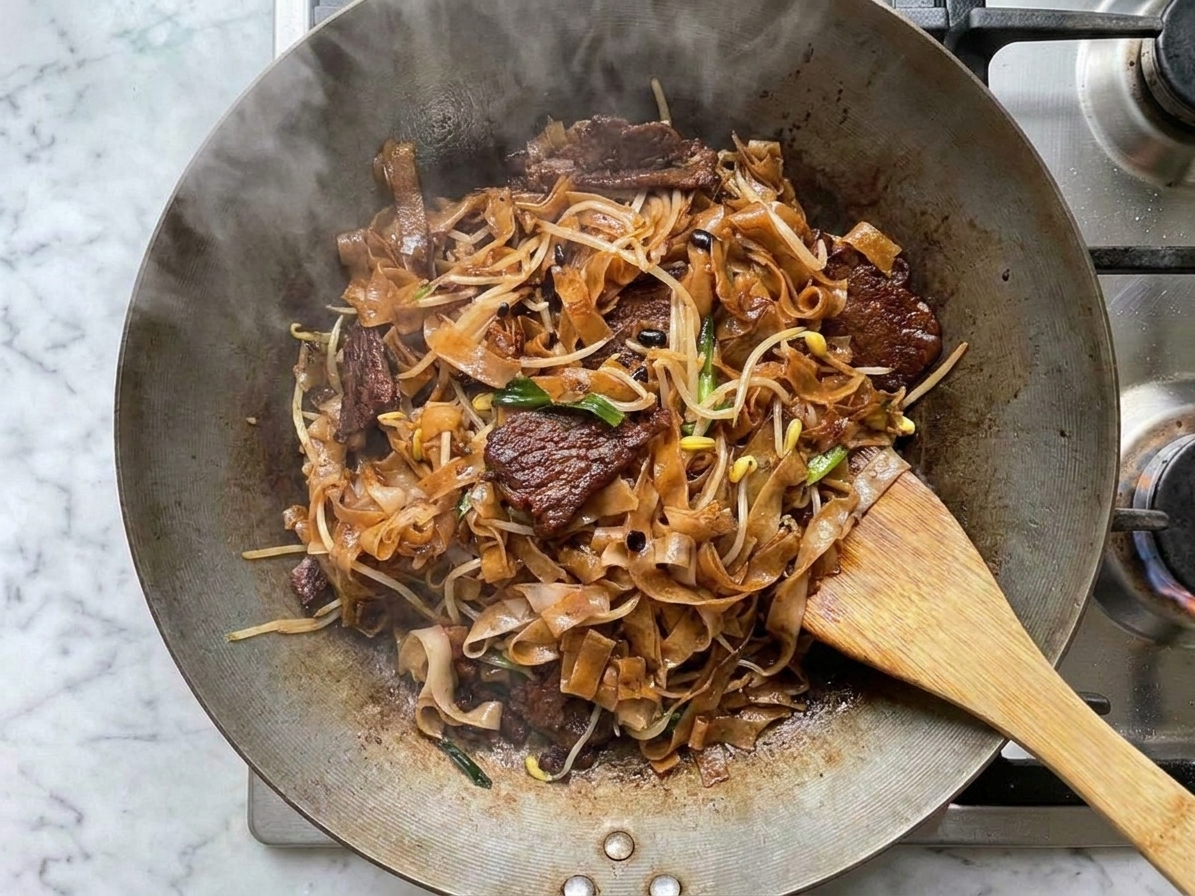
Beef chow fun is one of those dishes that looks like it should require a jet engine of a wok burner and a decade of muscle memory. Good news: you can absolutely pull it off at home with a big skillet, a little prep, and the confidence to let your pan get properly hot.

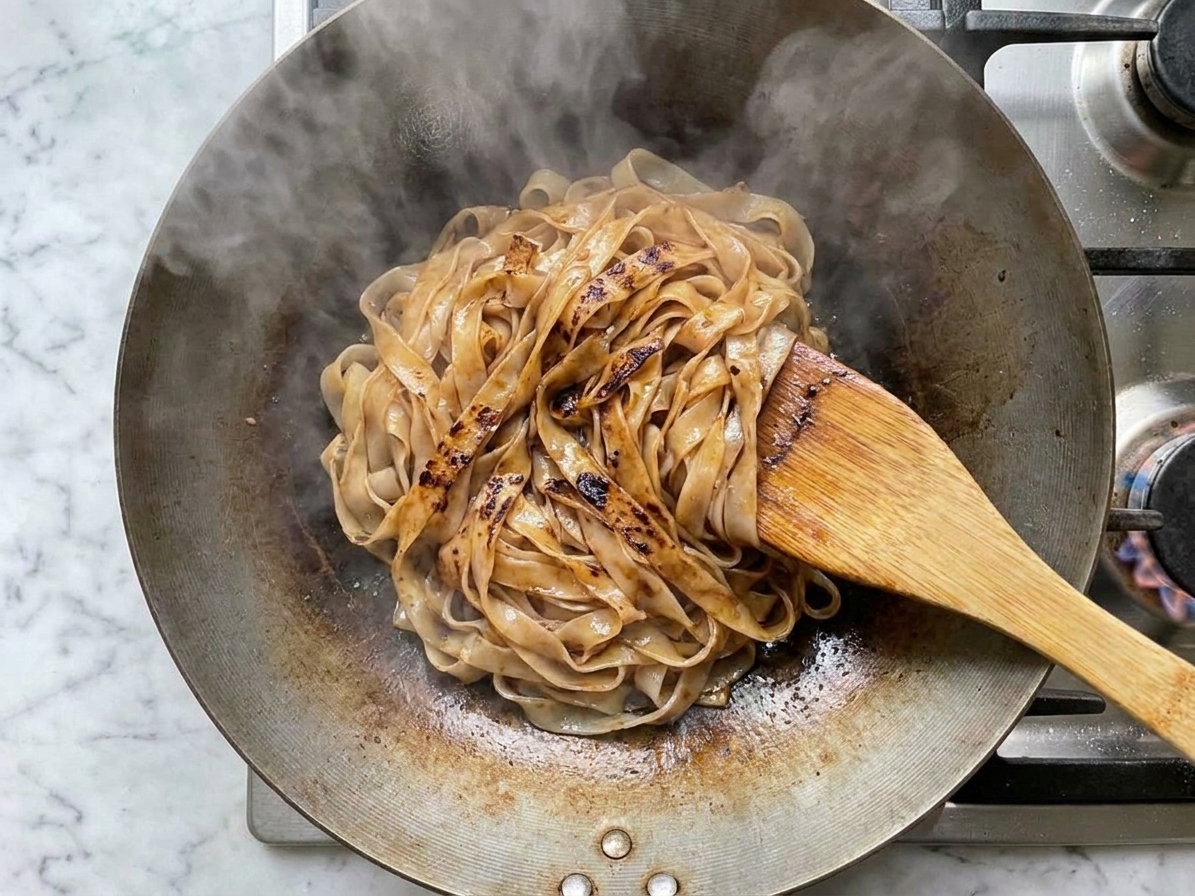
This is the vibe: silky, wide rice noodles with a bit of chew, seared beef that stays tender, bean sprouts that keep it crisp, and a sauce that hits salty, lightly sweet, and deeply savory. If your noodles get a few toasty, browned spots, that is not a mistake. That is the point.

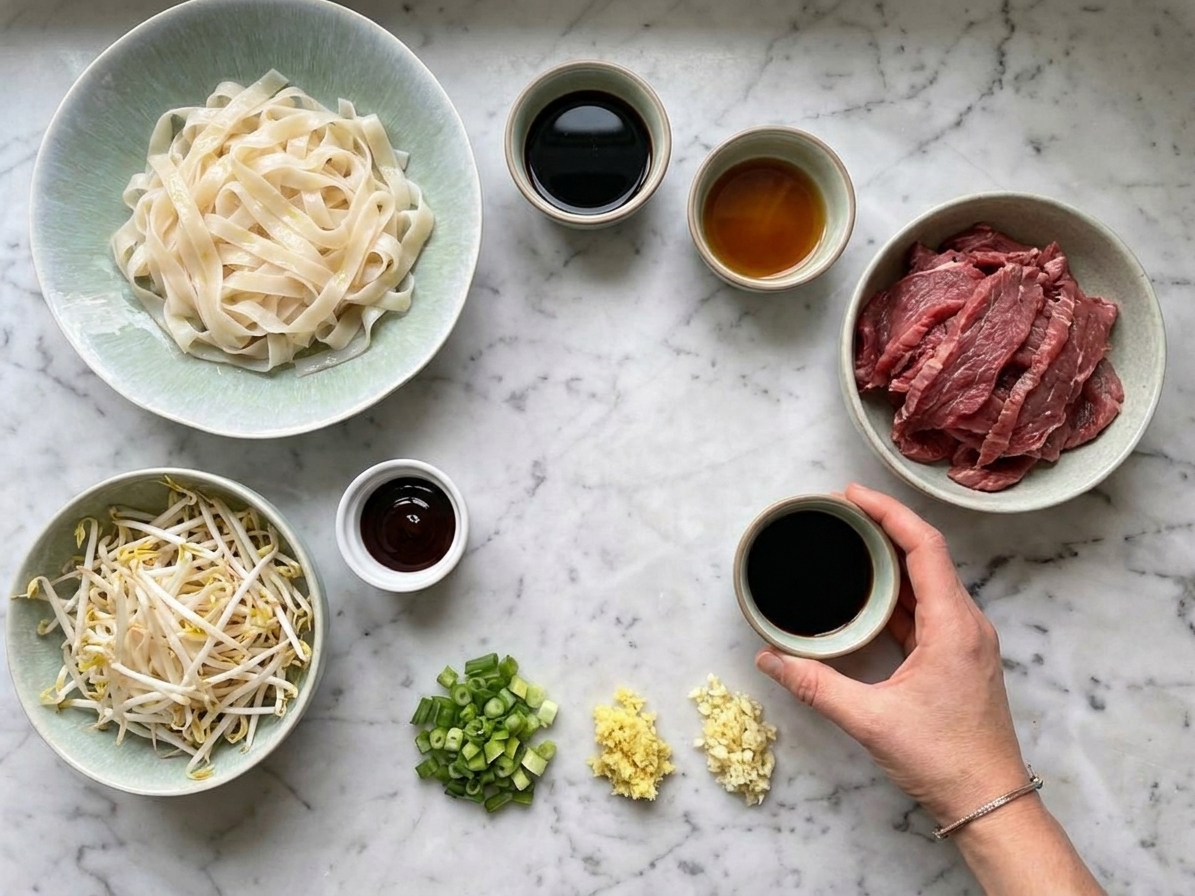
Measured ingredients for beef chow fun on a kitchen counter, including wide rice noodles, sliced flank steak, soy sauces, oyster sauce, bean sprouts, scallions, ginger, and garlic

Why It Works

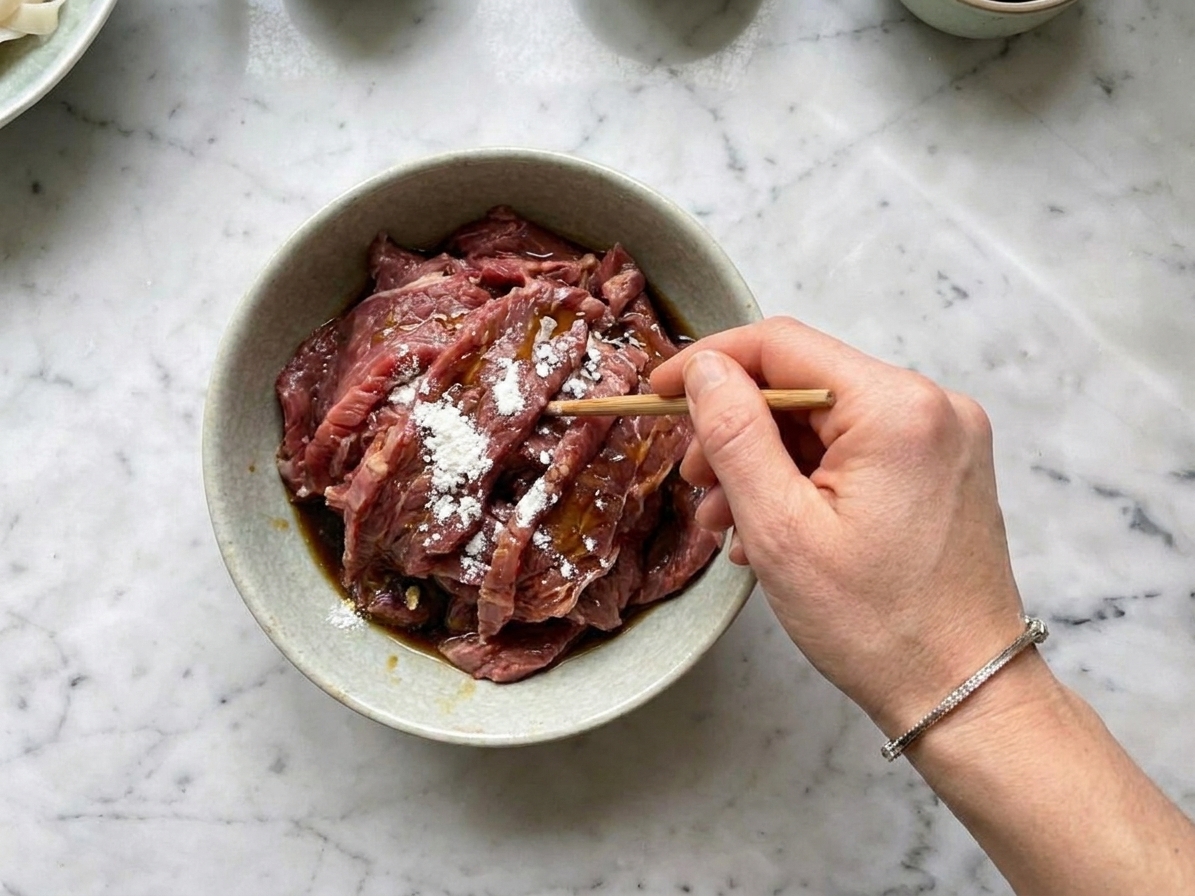
  • Tender beef without drama: A quick marinade with cornstarch and soy protects the meat and keeps it juicy even in a hot pan.
  • Noodle success: We loosen wide rice noodles gently and stir fry in short bursts, so they do not shred into sad ribbons.
  • Big flavor fast: A simple sauce of soy, oyster sauce, and a little sugar gives you that classic savory depth with zero mystery ingredients.
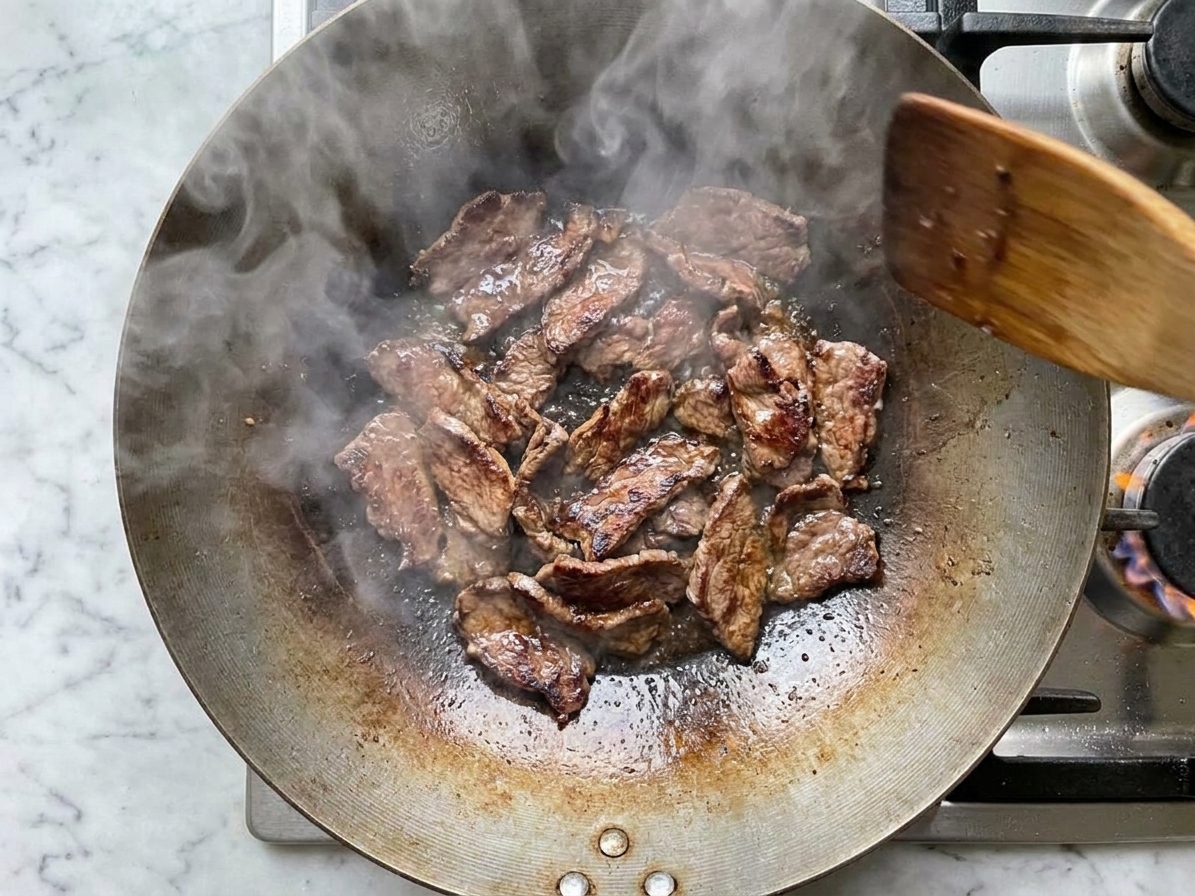
  • Real stir fry texture: High heat, quick cooking, and minimal stirring create crisp edges and smoky notes, even on a home stove.

Pairs Well With

Storage Tips

Refrigerate: Cool leftovers fast, then store in an airtight container for up to 3 days. Rice noodles firm up in the fridge. That is normal.

Reheat (best method): Warm a skillet over medium heat with 1 to 2 teaspoons neutral oil. Add noodles and a splash of water (or broth) and toss until loosened and glossy again, 2 to 4 minutes.

Microwave method: Add a small splash of water, cover loosely, and heat in 30-second bursts, tossing between rounds.

Freezing: Not my favorite. Wide rice noodles can get brittle or mushy after thawing. If you must, freeze up to 1 month and reheat in a skillet with extra liquid.

Common Questions

What are the best noodles for beef chow fun?

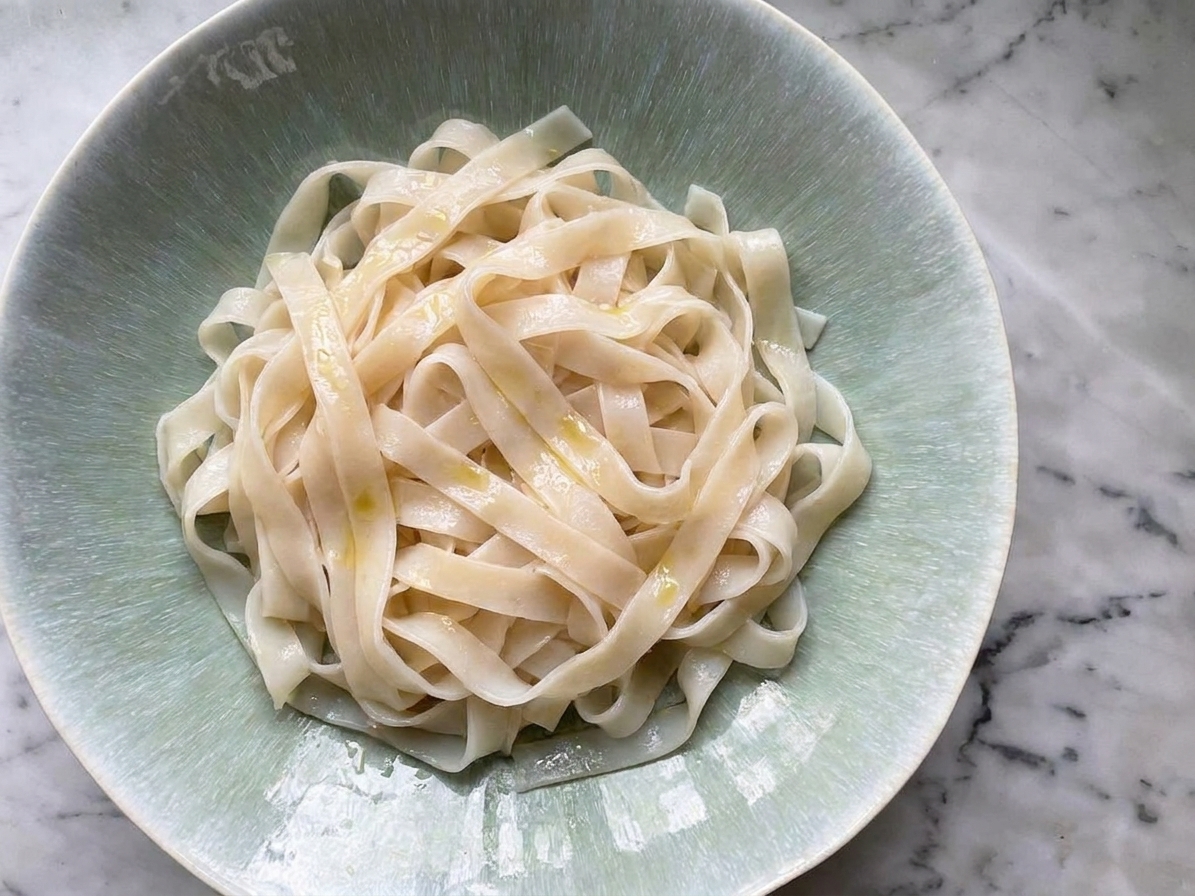
Fresh wide rice noodles (often labeled ho fun, hor fun, or chow fun noodles) are the classic choice. They vary a lot by brand and moisture, so think of it as about 14 to 16 ounces (400 to 450 g). If you can only find dried wide rice noodles, that works too. Cook them until barely tender, then drain and rinse briefly to stop the cooking. Toss with a little oil so they do not glue together.

How do I know fresh ho fun is still good?

Fresh rice noodles can spoil quickly. If they smell sour, feel slimy, or look damp in a way that seems off, skip them. Fresh noodles should smell neutral and feel soft and pliable, not funky.

Why do my rice noodles break?

Usually one of three things: the noodles are too cold and stiff, they are overcooked, or you are stirring aggressively. Bring noodles to room temp, loosen gently with oiled hands, and use a wide spatula to toss more than you stir.

Can I make this without oyster sauce?

Yes. Oyster sauce gives classic depth and gloss, but you can swap in vegetarian mushroom oyster sauce or use 1 extra tablespoon low-sodium soy sauce plus 1 teaspoon brown sugar. The flavor will be slightly different, still delicious.

My sauce tastes salty. What should I do?

These sauces stack up fast (soy plus dark soy plus oyster). Using low-sodium light soy sauce helps. You can also start with 1 tablespoon light soy sauce in the sauce mix, stir fry, then add a splash more at the end only if it needs it.

What cut of beef should I use?

Flank steak is my go-to. Skirt steak, sirloin, or flat iron also work. Slice thinly against the grain for tenderness.

How do I get that smoky restaurant flavor?

High heat, a hot pan, and cooking in quick batches. Do not crowd the skillet. Let the noodles sit briefly to pick up a little browning before tossing.

The first time I tried making beef chow fun at home, I treated the noodles like any other pasta and stirred with the enthusiasm of a golden retriever. They disintegrated. The sauce was fine, the beef was good, but the noodles looked like they lost a fight.

Now I do what this dish actually wants: prep everything first, crank the heat, and handle the noodles like they are delicate, expensive, and slightly offended to be here. A few calm tosses, a little time sitting on the pan, and suddenly it tastes like you did something impressive on purpose.