What temperature should salmon be cooked to?
For moist, flaky salmon, aim for an internal temp of 125°F to 130°F in the thickest part, then rest for 3 to 5 minutes (carryover heat finishes the job). If you prefer it more firm, go to 135°F. USDA guidance for fish is 145°F, which is fully cooked but often drier. If you are pregnant, immunocompromised, or just more cautious, follow the temp that matches your comfort level.
How do I know when baked salmon is done without a thermometer?
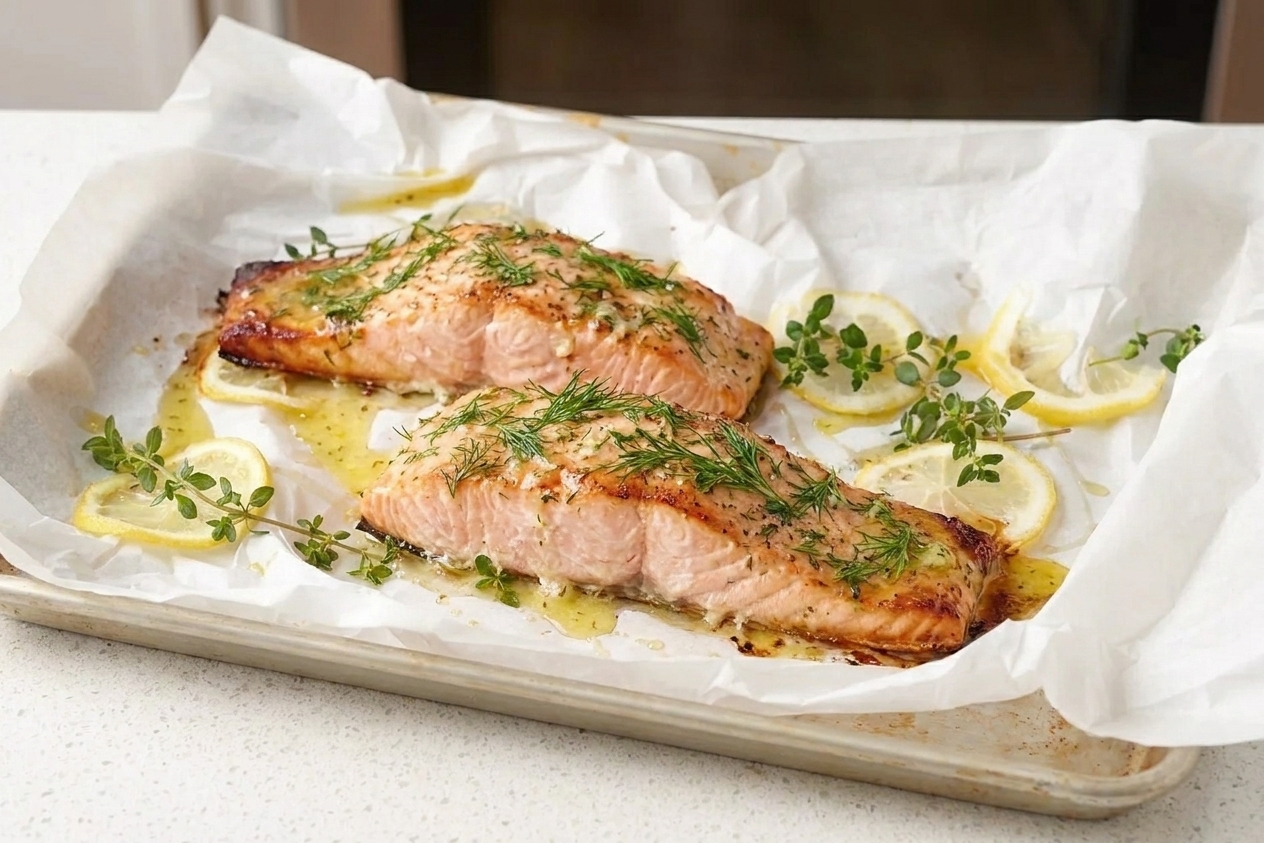
Look for these signs: the salmon turns opaque on the outside, flakes easily with a fork, and the very center is still a slightly deeper pink. If white stuff (albumin) is pouring out aggressively, it is usually overcooked or cooked too hot for too long.
Do I bake salmon covered or uncovered?
Uncovered for this recipe. You want a bit of edge browning and sauce reduction. Covering traps steam and makes the surface soft.
Should I rinse salmon before cooking?
Nope. Pat it dry with paper towels instead. Dry surface equals better browning and less steaming.
Can I use frozen salmon?
Yes, but thaw first for best texture. Thaw overnight in the fridge, then pat very dry before seasoning. If you must cook from frozen, add a few minutes and expect less browning.
Skin on or skin off?
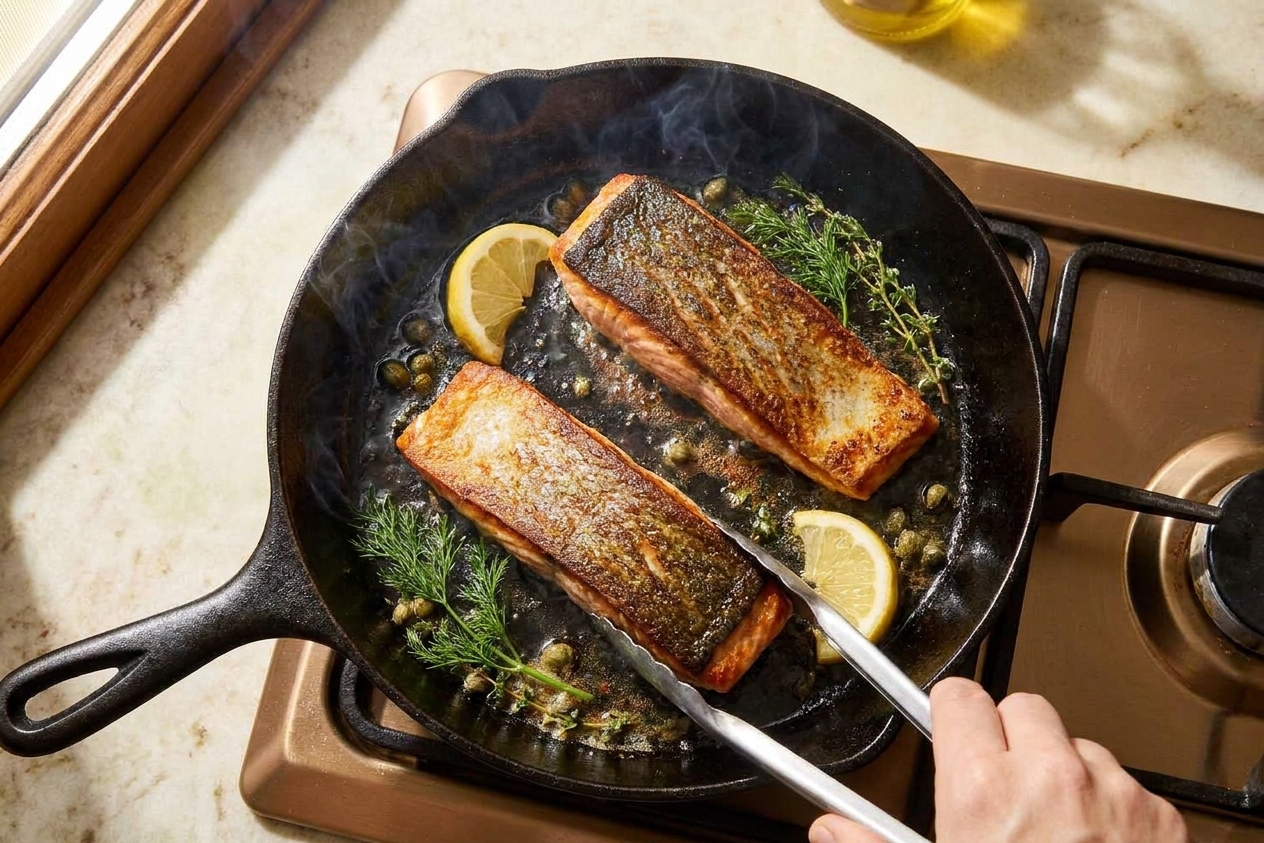
Either works. If skin is on, place salmon skin side down. The skin acts like a little heat shield, helping the fish stay juicy. Note: this method focuses on a great top and juicy center, not shatteringly crisp skin. If you want crisp skin, skip sauce on the skin side and consider a quick skillet sear skin-side down first.
Why is my salmon watery?
Usually one of three things: the fish was not patted dry, the oven temp was too low (so it steams), or the salmon was previously frozen and released extra moisture. High heat and a dry surface help a lot, but previously frozen fish can still weep a bit.