Common Questions
Is beef shoulder roast the same as chuck roast?
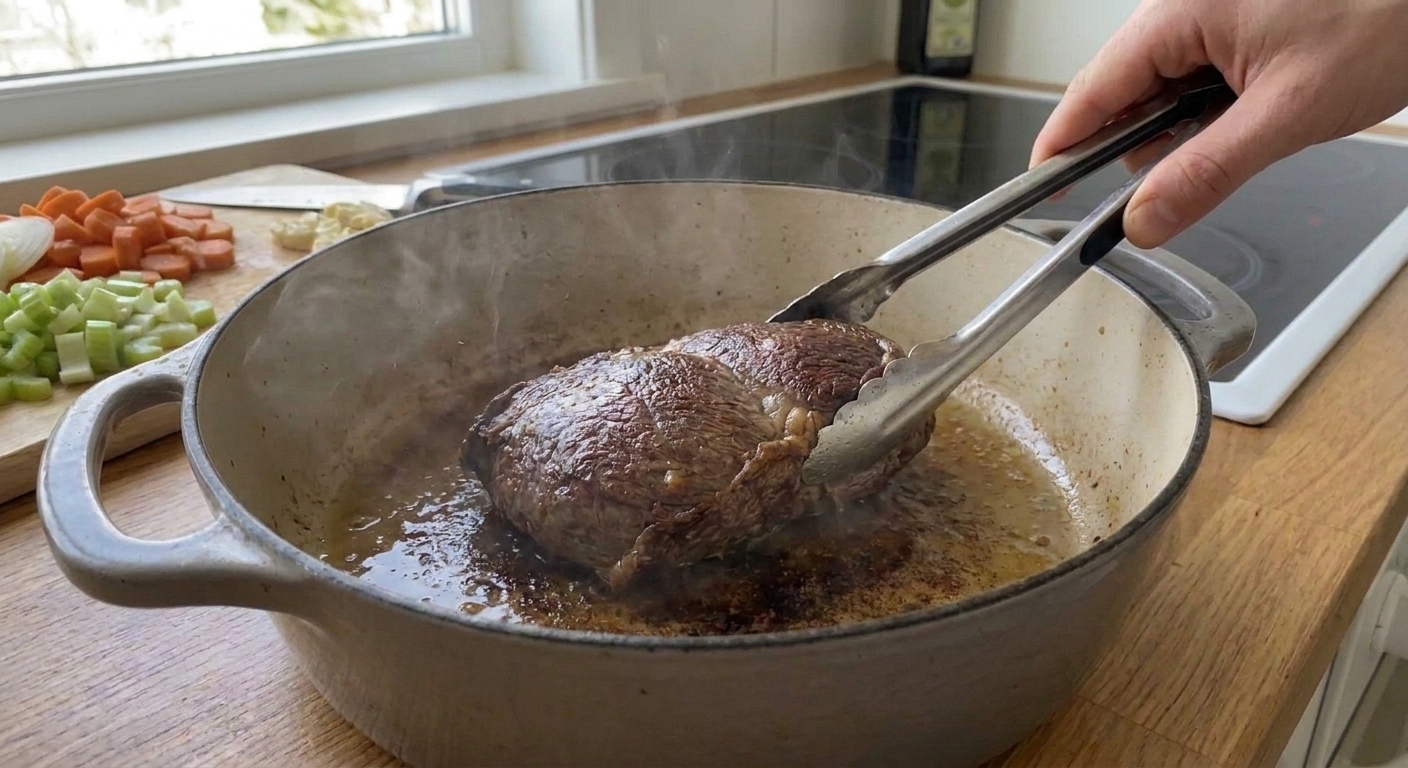
They are close cousins, but labels vary a lot by store. “Shoulder roast” might mean shoulder clod, shoulder pot roast, or something merchandised like chuck. Here is the key: some shoulder cuts are leaner than chuck, so they can eat a little drier if you do not give them enough time and braising liquid. If you can, choose a roast with good marbling and a thick, even shape. If yours looks lean, plan on adding a bit more broth and giving it a little extra time.
Do I need to marinate it?
Nope. The sear and braise do the heavy lifting. If you want to prep ahead, salt the roast the night before and leave it uncovered in the fridge. That is a sneaky way to boost seasoning and browning.
What if I do not cook with wine?
Skip the wine and add an extra cup of beef broth plus 1 tablespoon balsamic vinegar or Worcestershire for depth. You still get a rich, balanced braising liquid.
How do I know it is done?
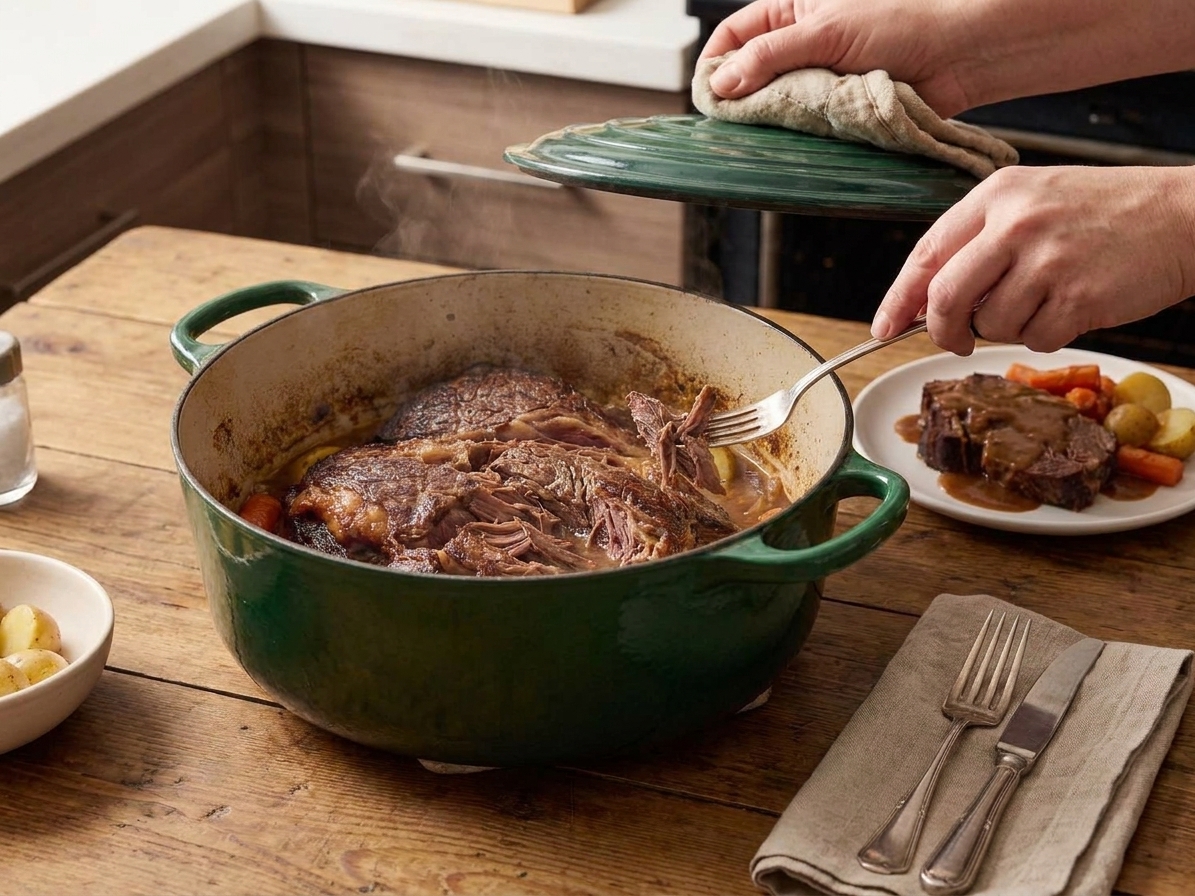
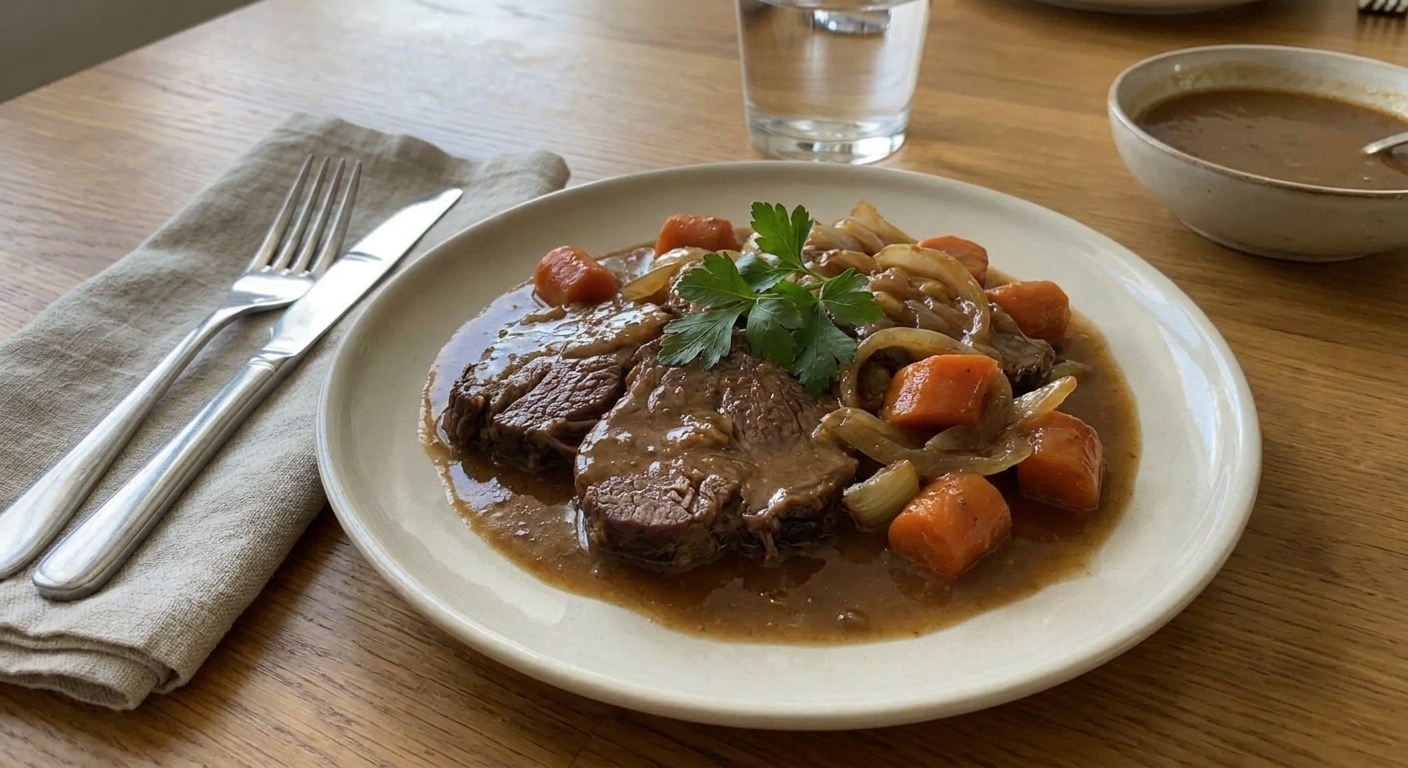
Temperature helps, but texture matters more. When it is ready, a fork should slide in with very little resistance, and a twist should pull the meat apart. For collagen-rich roasts, that often happens somewhere around 195°F to 205°F in the thickest part, but do not chase a number if the texture is not there yet (or if it is already perfect).
My roast is still tough. What did I do wrong?
Almost always: it just needs more time. Shoulder has connective tissue that tightens before it relaxes. Keep braising, check every 20 to 30 minutes, and it will eventually cross over into tender.
What if the braising liquid gets low?
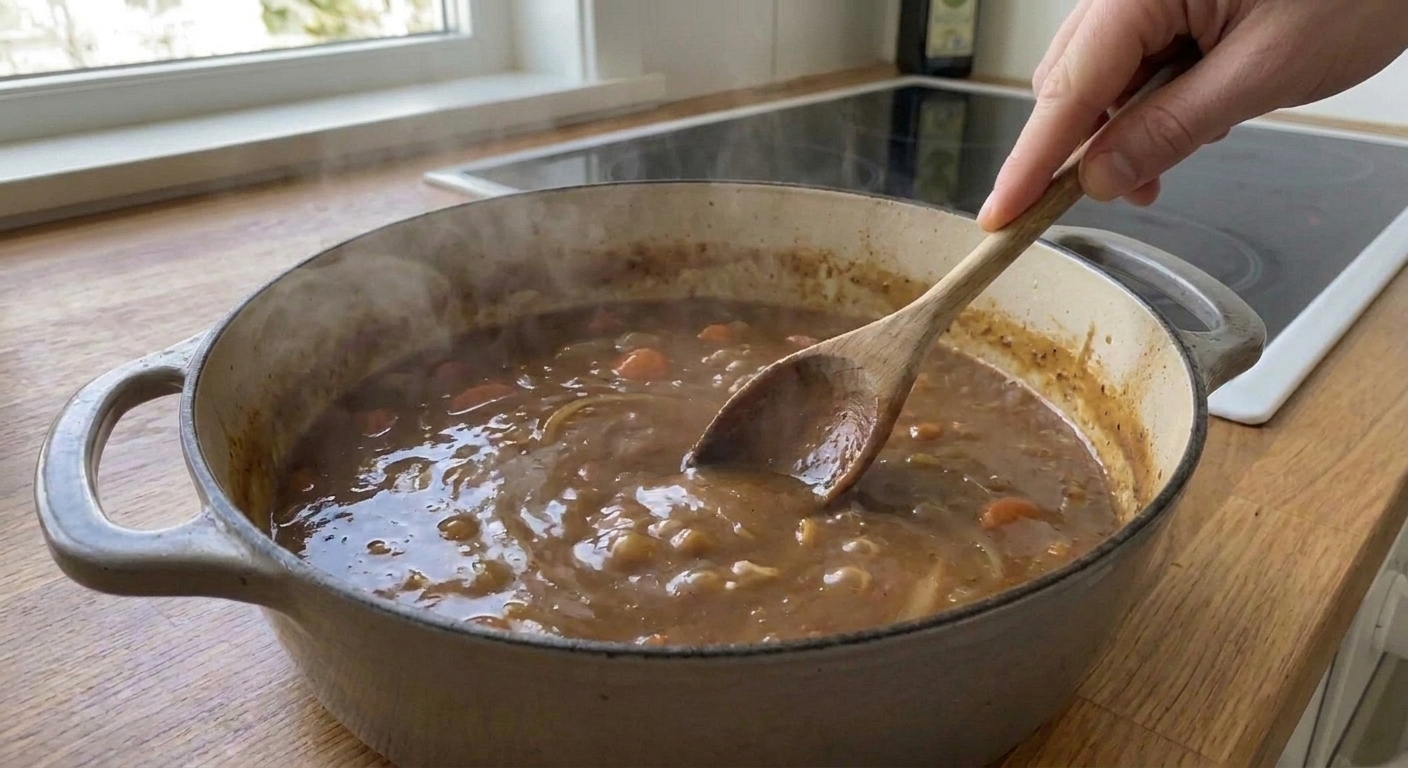
If you look in the pot and the liquid is getting too low, add a splash of broth or water. You want steady moisture in the pot and ideally at least 1 to 2 cups of liquid left at the end so you have enough gravy to spoon over everything.
Can I make this in a slow cooker?
Yes. Still do the sear and onion cook on the stove for best flavor, then transfer everything to a slow cooker. Cook on low 8 to 10 hours or high 5 to 6 hours until shreddable.
Can I make it in an Instant Pot?
Yes. Sear using sauté mode, build the braise, then pressure cook about 60 to 75 minutes for a 3.5 to 4.5 lb roast (time depends on thickness), with a 15 minute natural release. If it is not fork-tender, put it back under pressure for another 10 to 20 minutes. It will be slightly less “roasty” than the oven version but still delicious.
Do I need to add more salt?
Maybe. Boxed broths vary a lot. Taste the gravy at the end and adjust with salt and pepper if needed. This is the moment everything comes into focus.