Common Questions
What is the difference between scalloped potatoes and au gratin?
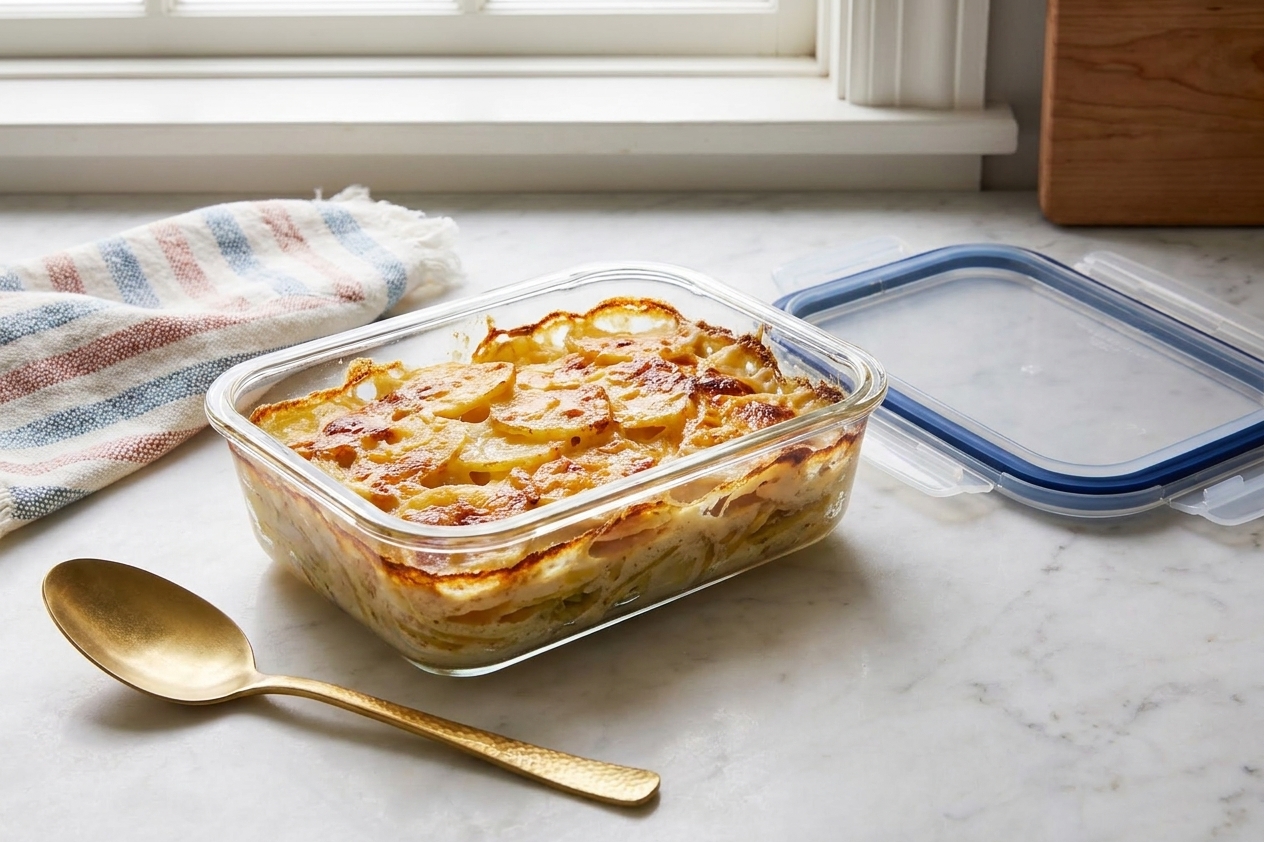
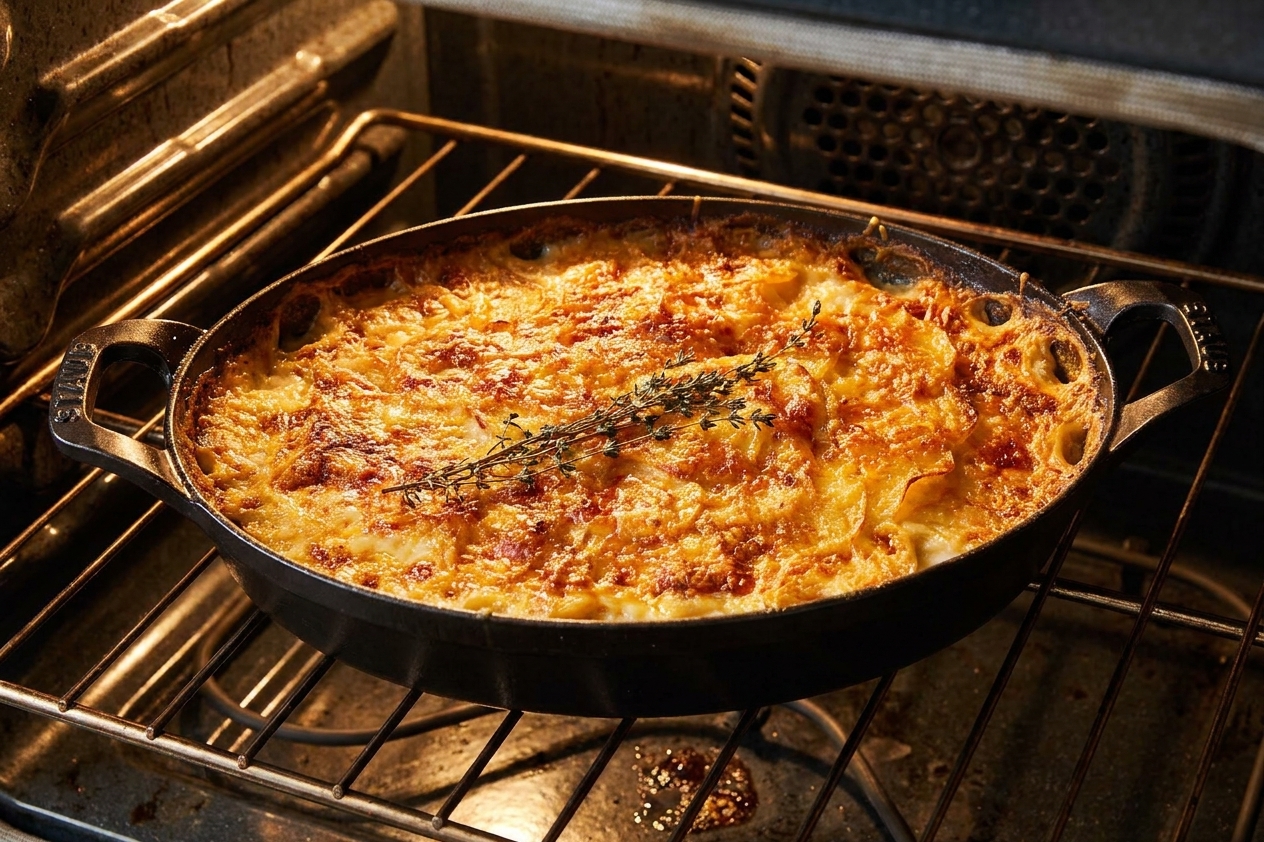
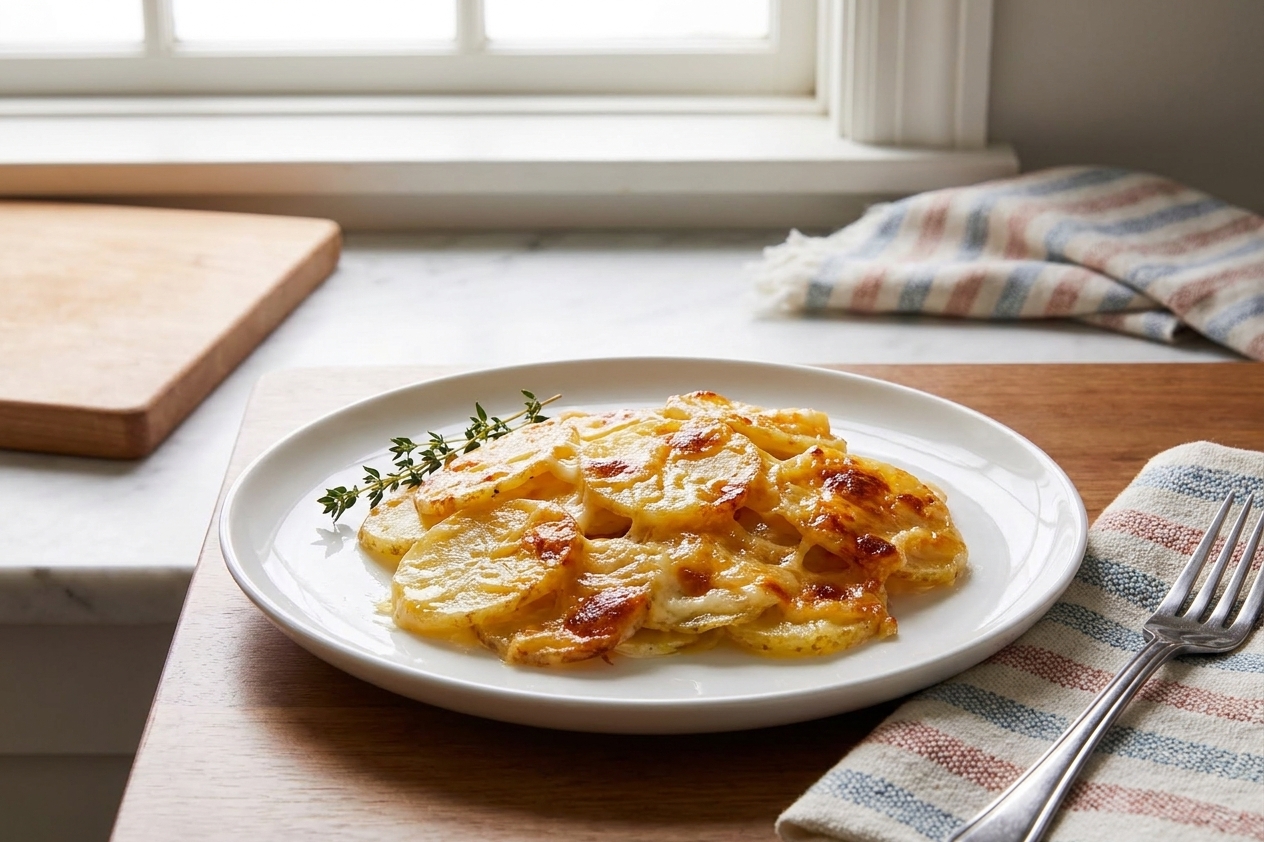
Traditionally, scalloped potatoes are baked in a creamy sauce, while au gratin includes cheese (and sometimes breadcrumbs). Real life is messier and more delicious, so most of us call the cheesy version scalloped anyway. This recipe is proudly in the “cheesy and creamy” camp.
Why are my scalloped potatoes still hard in the middle?
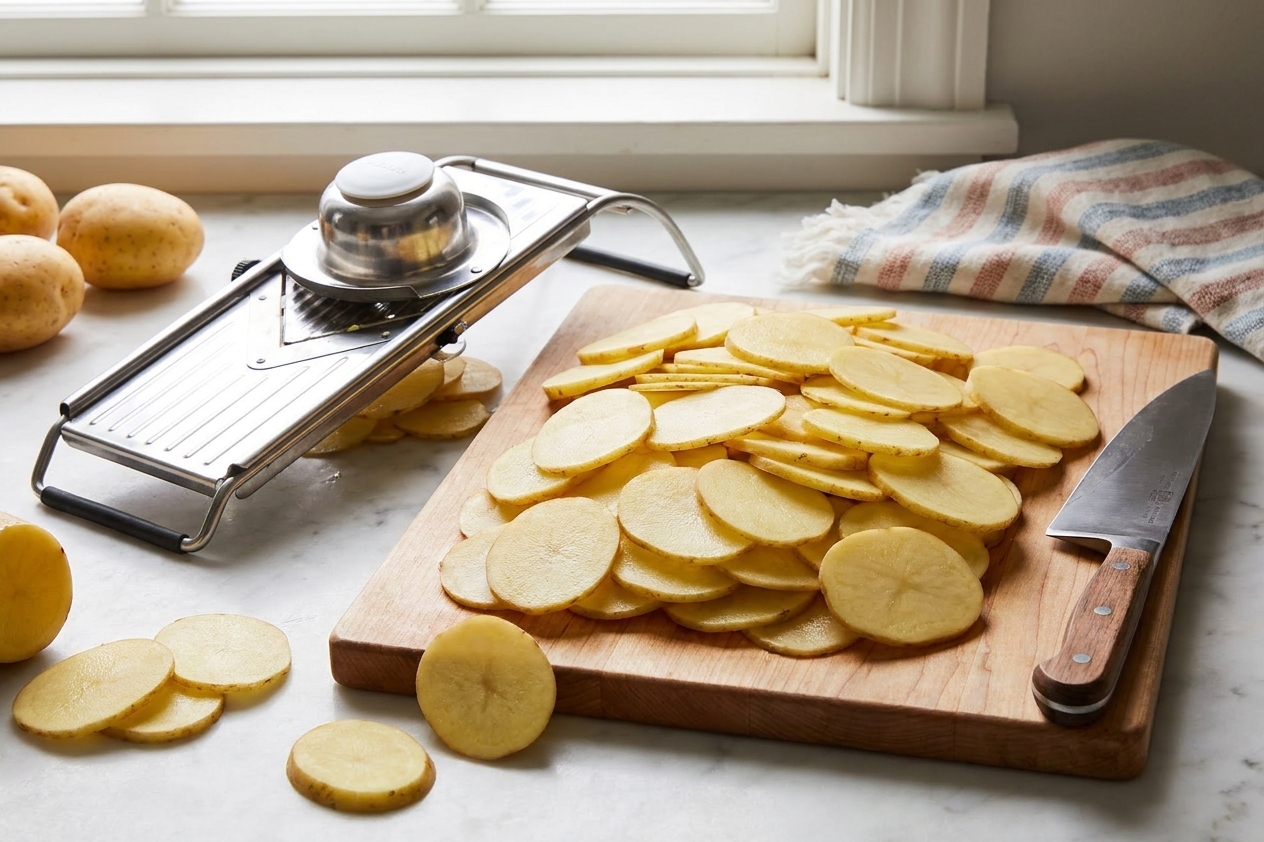
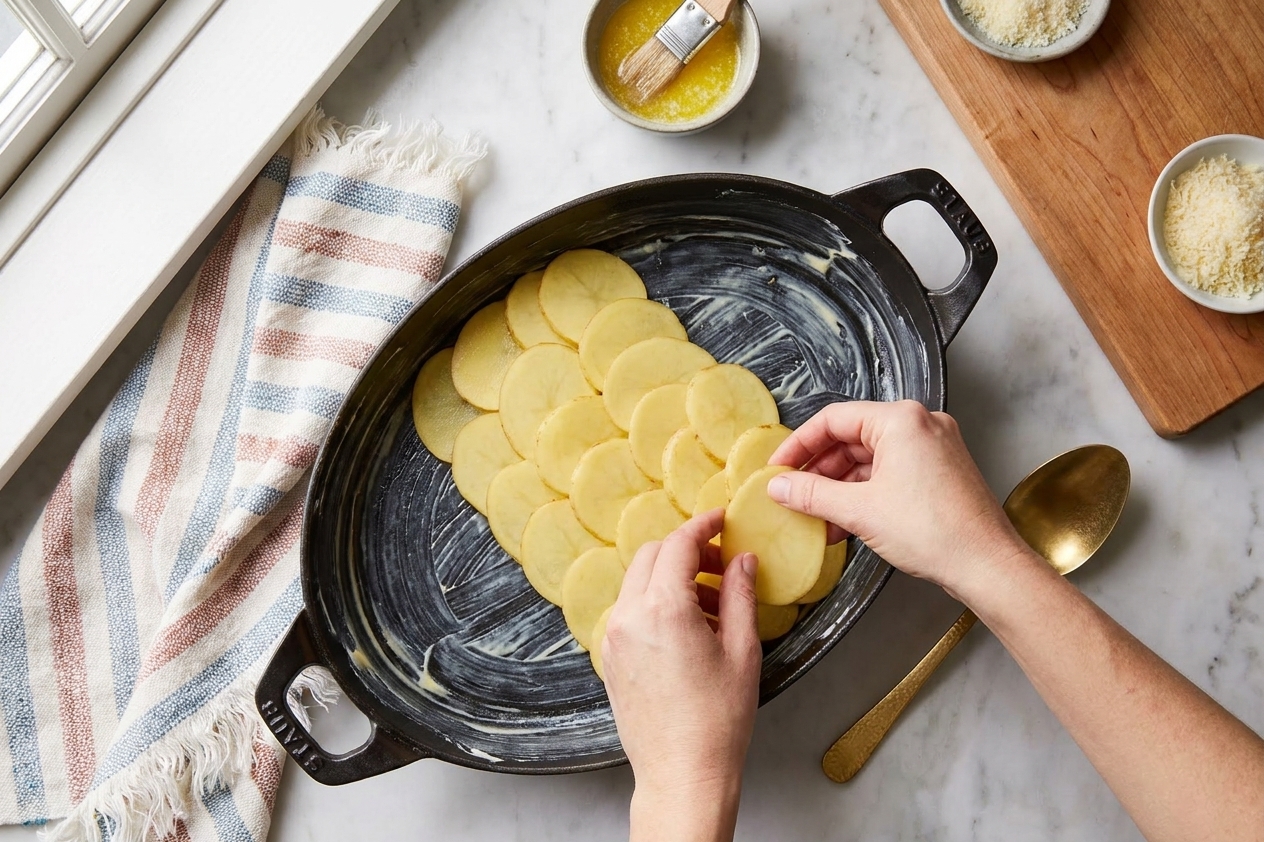
The usual culprits are slices that are too thick, a dish that is too deep, or not enough bake time while covered. Aim for 1/8-inch slices, keep the layers fairly even, and make sure you bake covered long enough for the potatoes to steam and soften. When they are done, a knife should slide into the center with basically no resistance.
Can I make these ahead?
Yes. Assemble the dish, cover, and refrigerate up to 24 hours. Let it sit at room temp for 30 minutes before baking. You may need to add 10 to 15 minutes to the covered bake time since it is starting cold.
Do I have to peel the potatoes?
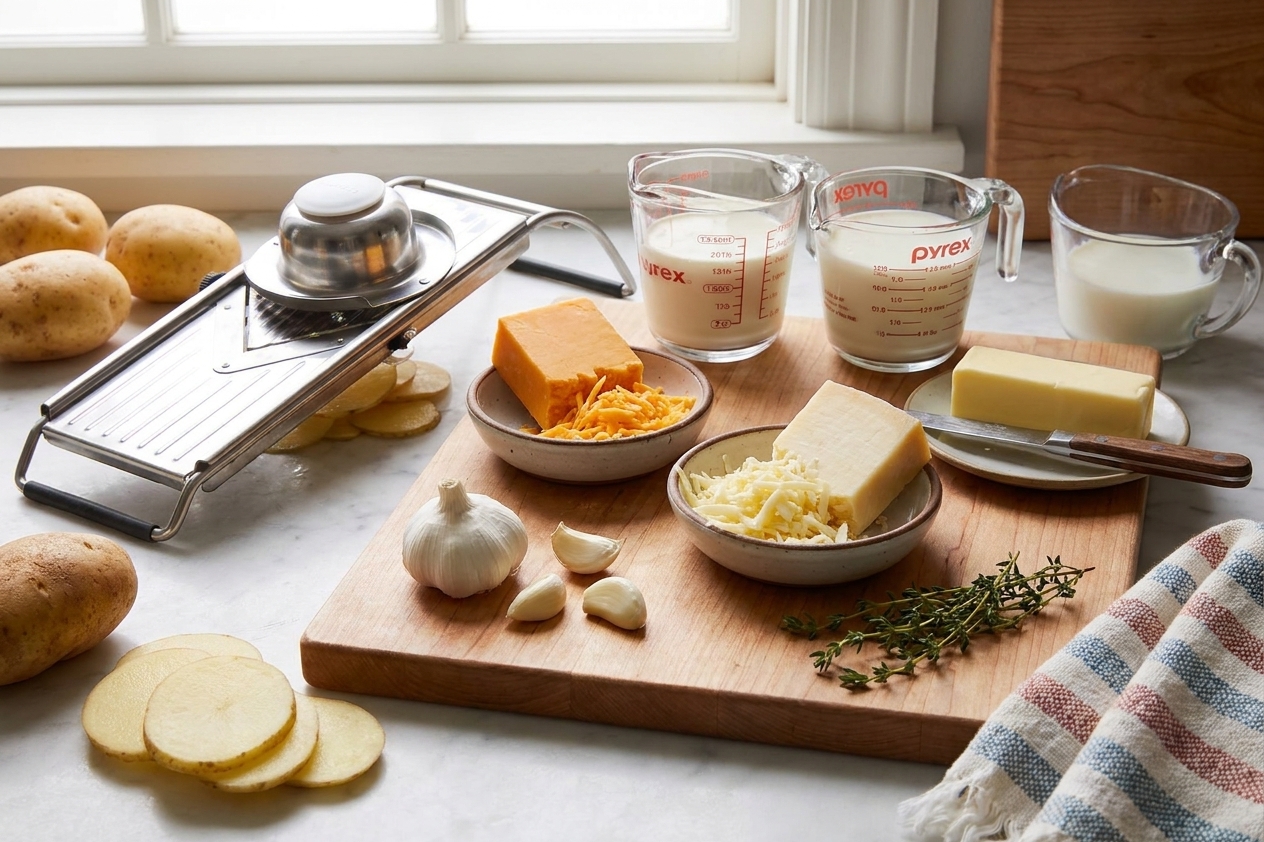
Nope. If you like a more classic, silky look, peel them. If you want less prep and a little more rustic vibe, scrub well and leave the skins on. Russets have thicker skins, so I usually peel those and leave Yukon Gold skins on.
Which potatoes are best?
Russets bake up fluffy and soak in sauce like it is their job (a little more classic “scalloped” texture). Yukon Golds hold their shape a bit more and taste naturally buttery. Both work, so choose your vibe.
What cheese works best?
I love sharp cheddar for flavor plus Gruyere for that smooth, nutty melt. If you need swaps: Monterey Jack, fontina, low-moisture mozzarella, or even a smoked cheddar all work. Avoid pre-shredded if you can since it does not melt as smoothly.
How do I keep the sauce from turning grainy?
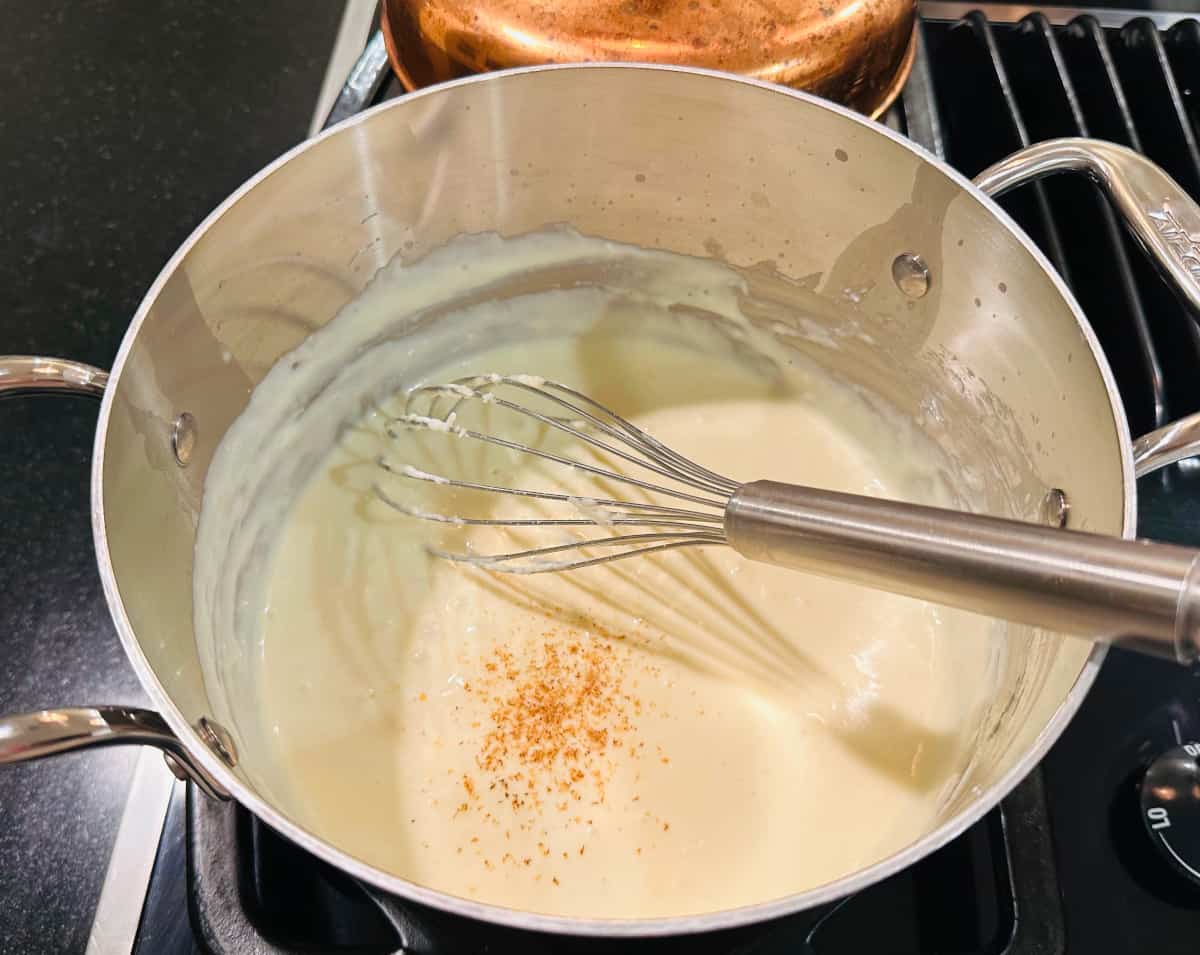
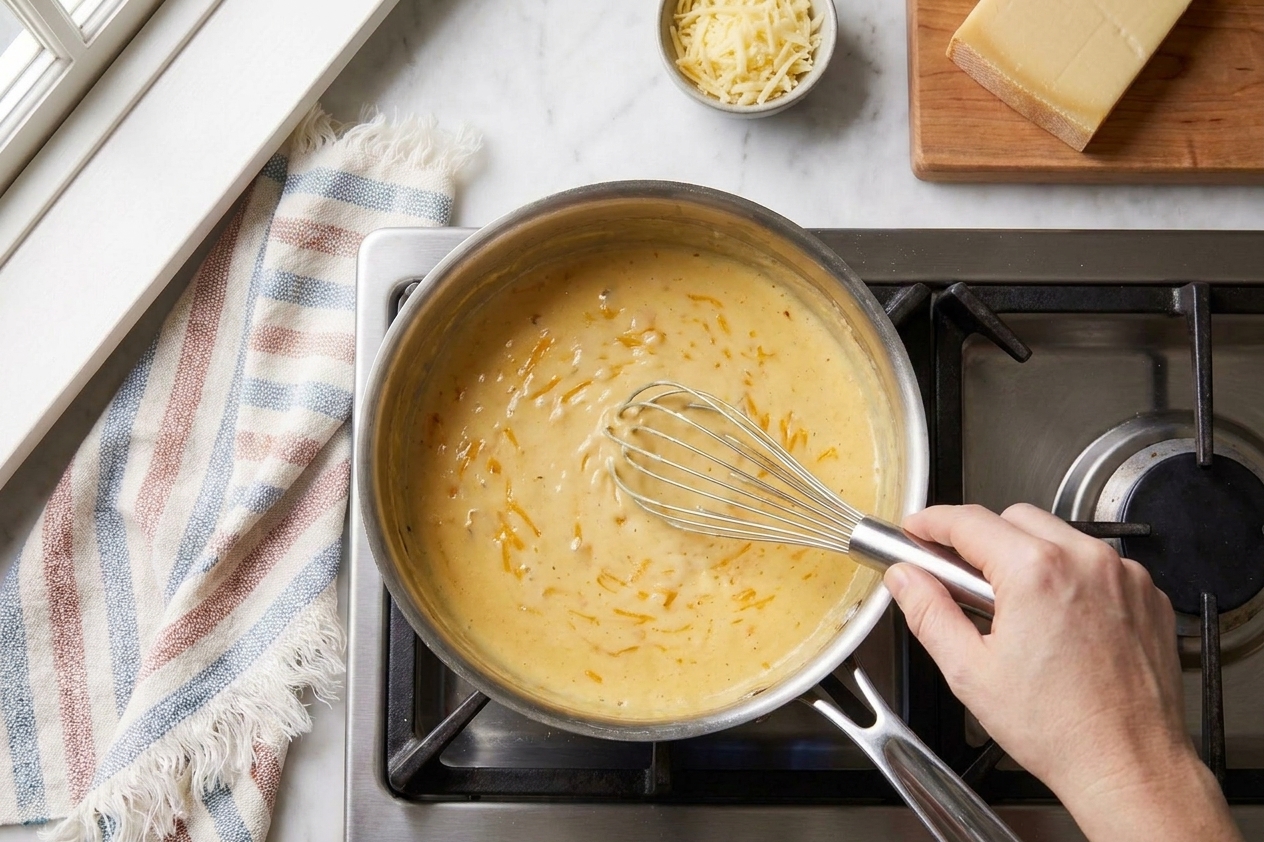
Keep the sauce at a gentle simmer (not a boil) after adding the milk and cream, then take it off the heat before stirring in the cheese. High heat can cause dairy to split and cheese to seize, and we are not doing that today.