Mom's Best Recipes
Recipe

Easy Chicken Adobo

A cozy Filipino classic with soy sauce, vinegar, garlic, bay leaves, and peppercorns. One pot, bold flavor, and leftovers that somehow taste even better.

Author By Matt Campbell
4.8
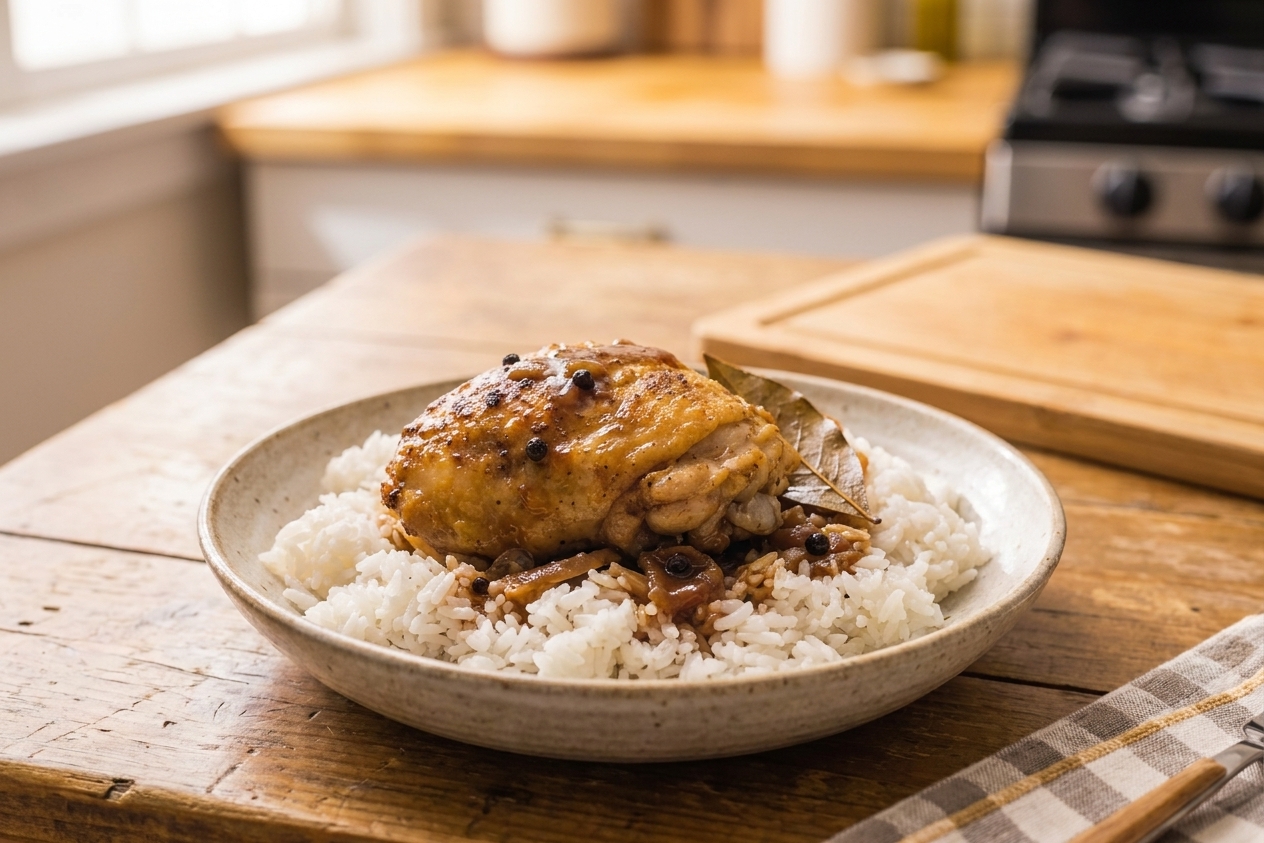
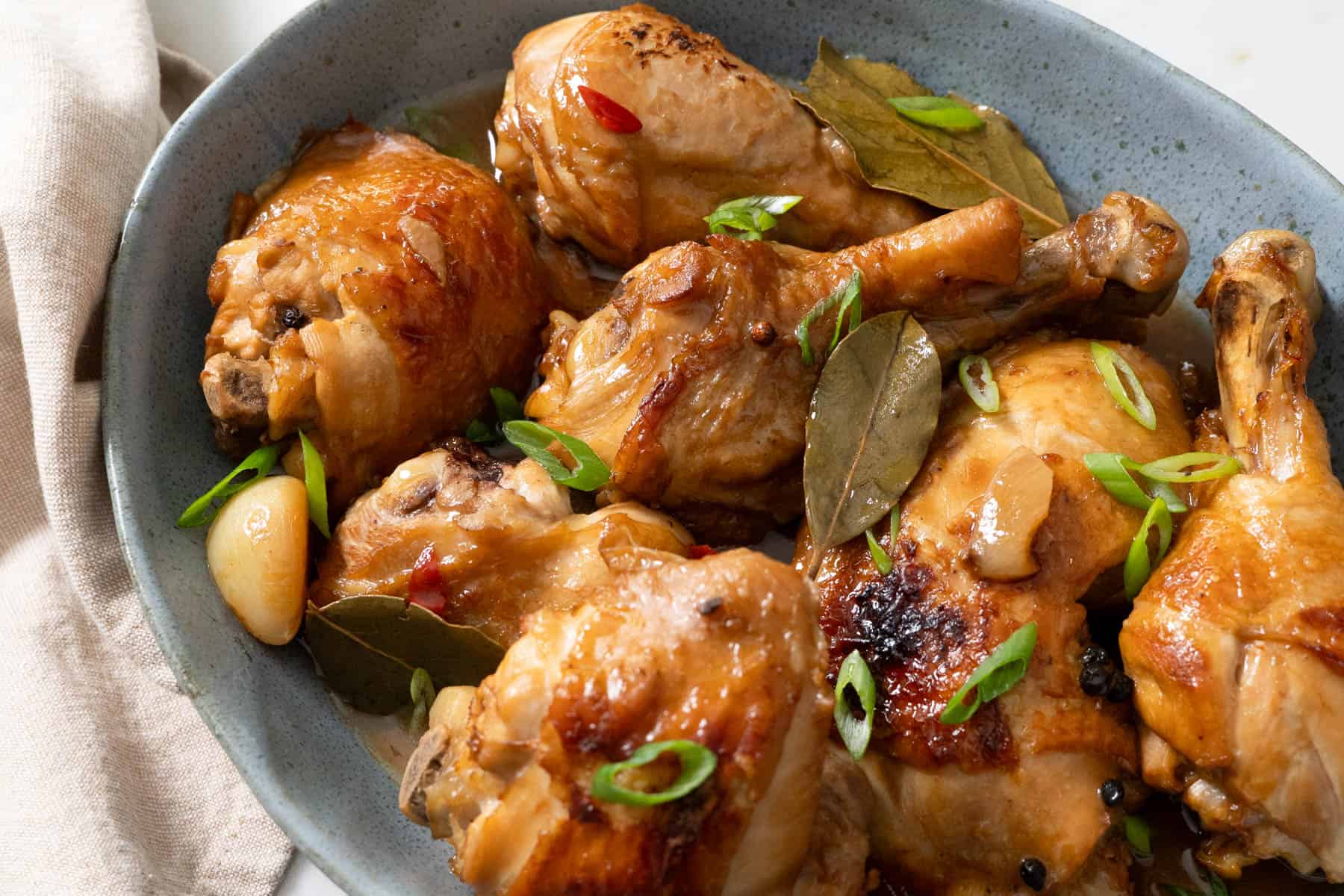
A bowl of Filipino chicken adobo with glossy brown sauce, bay leaves, and peppercorns served over steamed white rice on a warm, softly lit kitchen table

Filipino food has this special talent for being both comfort-first and flavor-loud. And if you've ever met chicken adobo, you already know the vibe: salty soy, punchy vinegar, a lot of garlic, bay leaves doing their cozy little thing, and a sauce so good you're planning extra rice before you even taste it.

This is my weeknight version that still respects the classic. It's one pot, pantry-friendly, and designed for the home cook who wants crisp edges and a glossy, spoonable sauce without babysitting the stove all night.
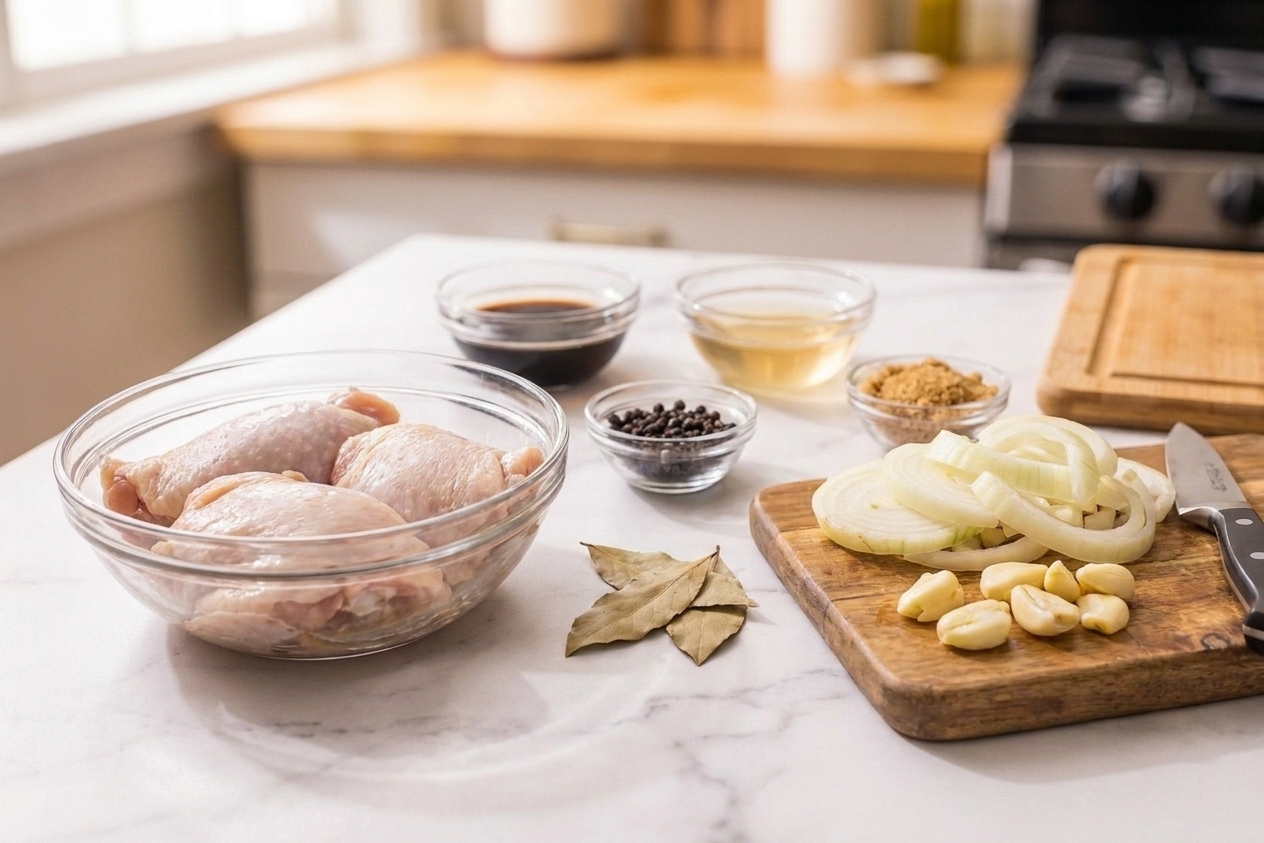
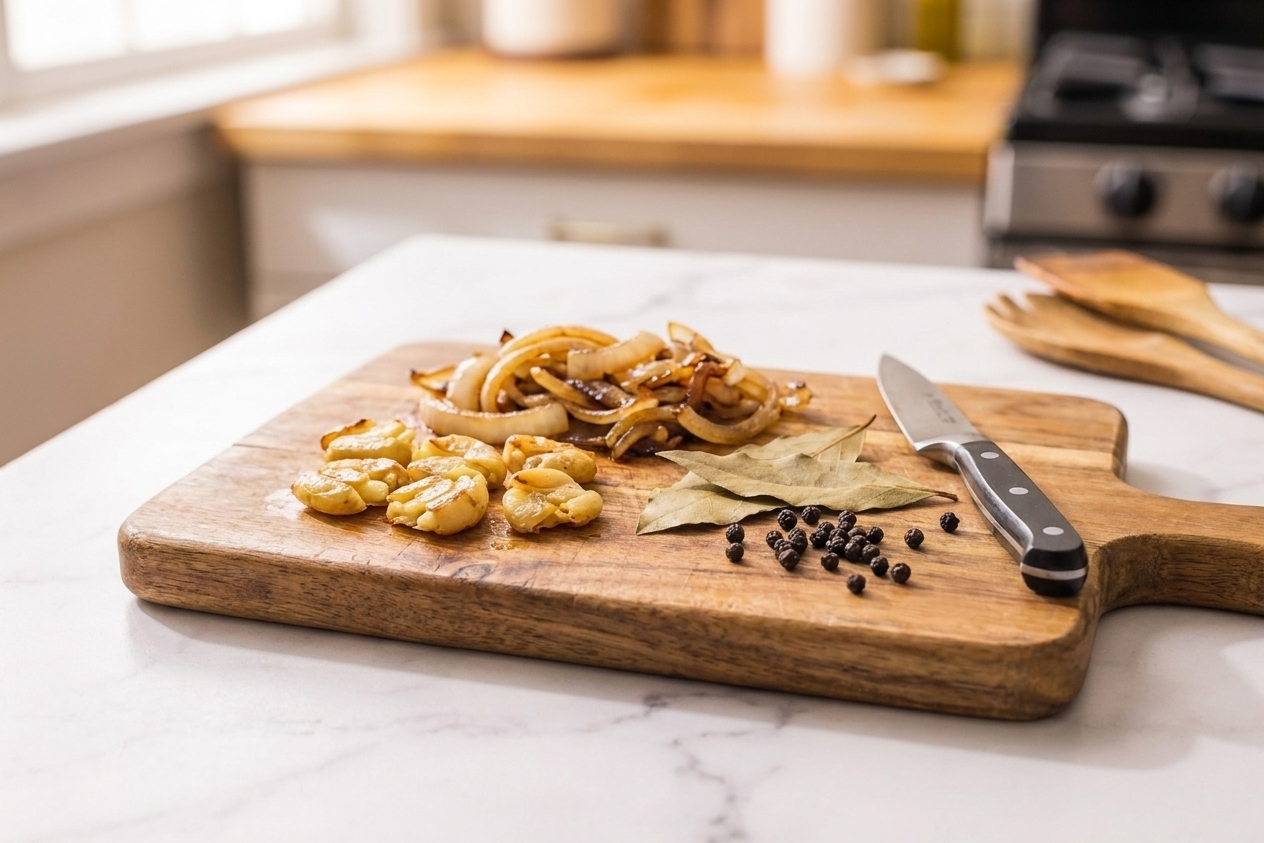
Raw chicken thighs, soy sauce, cane vinegar, garlic, bay leaves, whole peppercorns, brown sugar, and sliced onions arranged on a clean kitchen counter with warm natural light

Why It Works

  • Big flavor from basic ingredients: soy sauce, vinegar, garlic, bay, and peppercorns create that signature sweet-salty-tangy balance.
  • Crisp edges, not rubbery chicken: a quick sear gives you browned bits that melt into the sauce later.
  • A sauce that behaves: a gentle simmer reduces it into a glossy glaze without needing cornstarch.
  • Leftovers level up: the flavors deepen overnight, which is basically adobo showing off.

Pairs Well With

Storage Tips

Refrigerate: Cool completely, then store in an airtight container for up to 4 days. Keep chicken and sauce together so everything stays juicy.

Freeze: Freeze in a freezer-safe container for up to 3 months. Thaw overnight in the fridge.

Reheat: Warm gently in a covered saucepan over medium-low with a splash of water if the sauce has tightened too much. For extra crisp edges, pull the chicken out and sear it in a hot skillet for 1 to 2 minutes per side, then pour the sauce over.

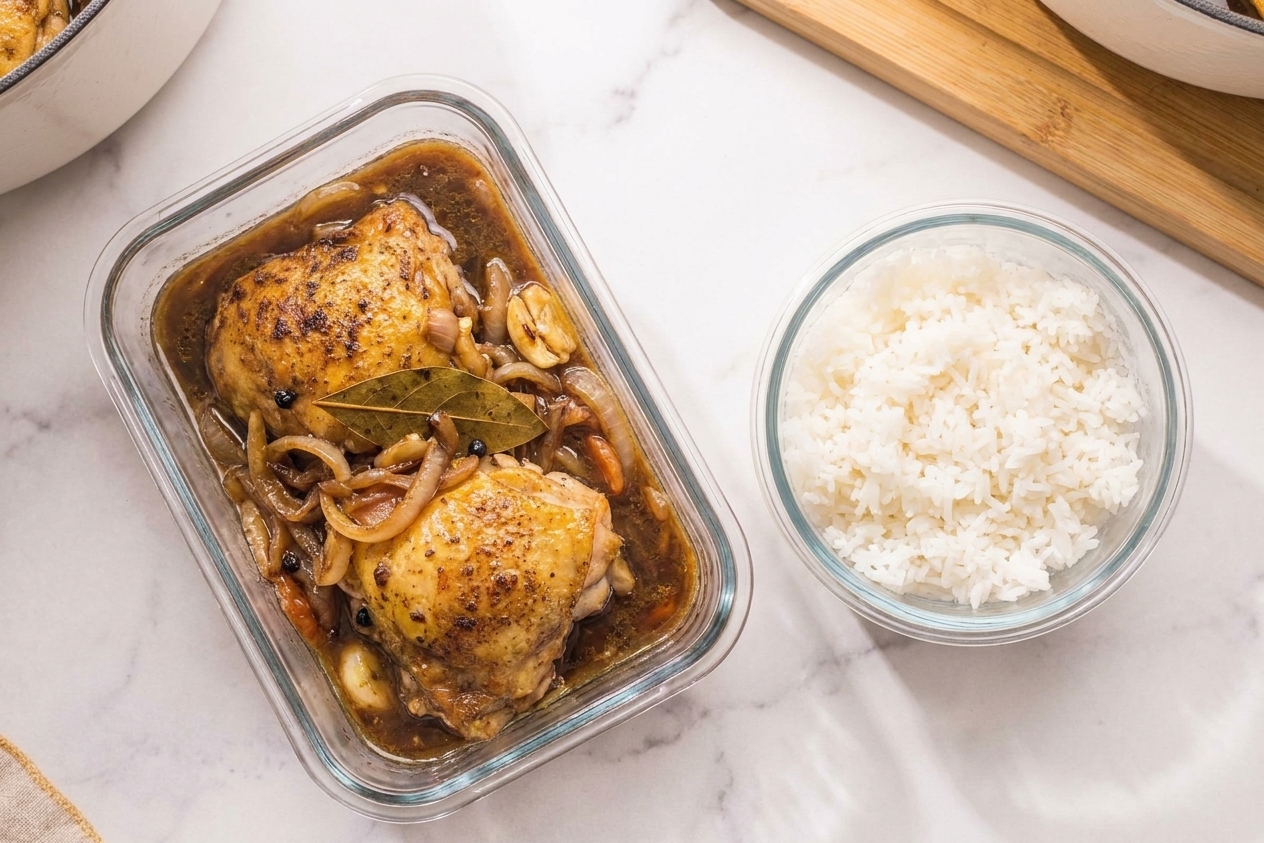
A glass meal prep container filled with chicken adobo and sauce next to a small container of steamed rice on a kitchen counter

Common Questions

Is chicken adobo supposed to be sour?

It should be tangy, not aggressively sour. If yours tastes sharp, simmer it a little longer to mellow the vinegar and concentrate the savory notes. A pinch more sugar also rounds the edges.

Do I need cane vinegar?

No. Cane vinegar is classic and beautifully bright, but distilled white vinegar works, and apple cider vinegar gives a softer fruitiness. Use what you can find.

Can I use chicken breast?

You can, but thighs stay juicier. If using breast, keep the simmer gentle and start checking around 12 to 15 minutes after it hits a simmer so it doesn't dry out.

Why are there whole peppercorns?

That is part of the signature adobo flavor. They soften as they simmer and give little pops of warmth. If you're pepper-sensitive, use fewer or lightly crush them.

Do I have to avoid stirring after adding the vinegar?

Many cooks prefer to let the vinegar boil for a minute or two before stirring. The practical idea is to cook off some sharpness early, but it's not a deal-breaker. I still do it because it works for me and it feels like kitchen folklore in real time.

The first time I made adobo at home, I thought, This is too simple. There's no way it tastes like that. Then the kitchen started smelling like garlic, bay leaves, and pure comfort, and I had to admit defeat. Now it's one of my favorite “feed yourself like you care” dinners. It's forgiving, it's bold, and it rewards the slightly chaotic cook who tastes as they go and isn't afraid of an extra clove of garlic.