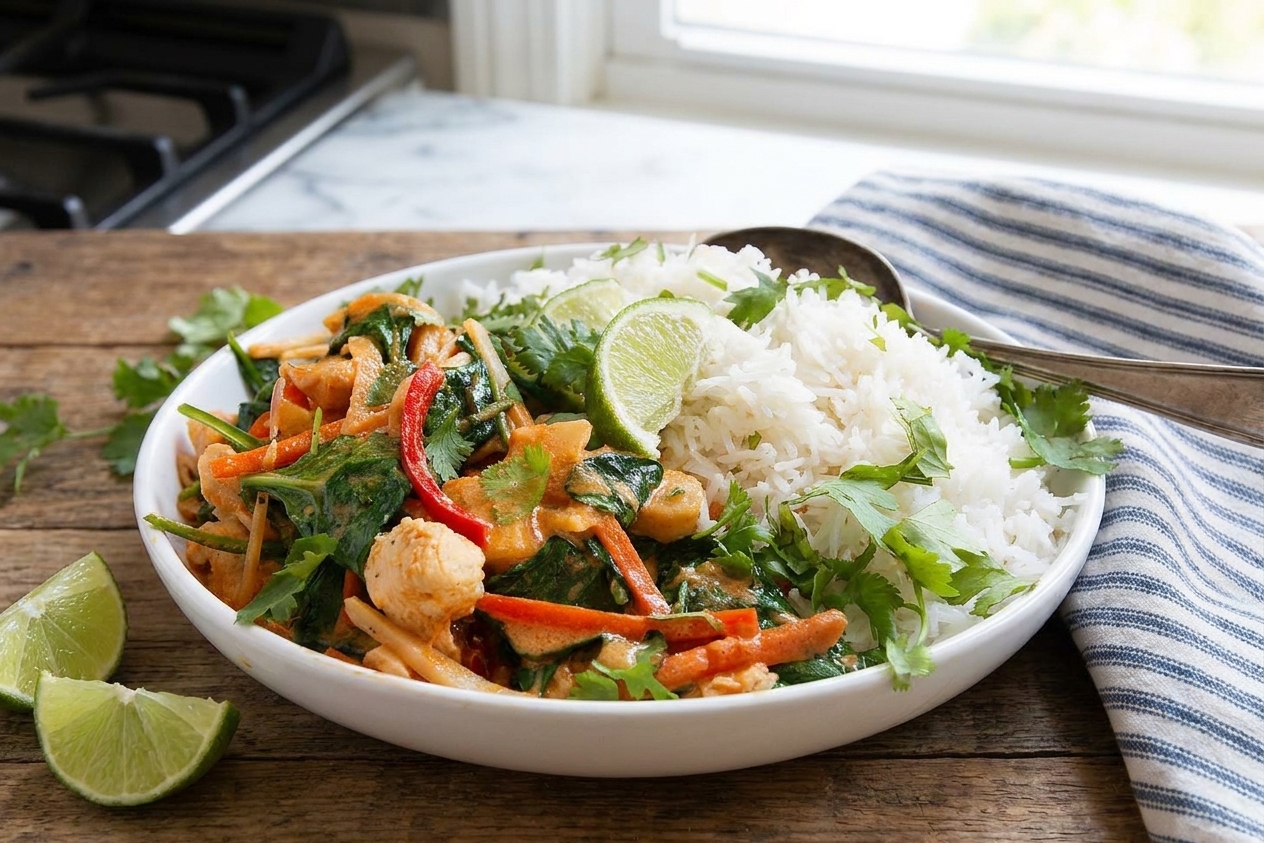
How spicy is chicken red curry?
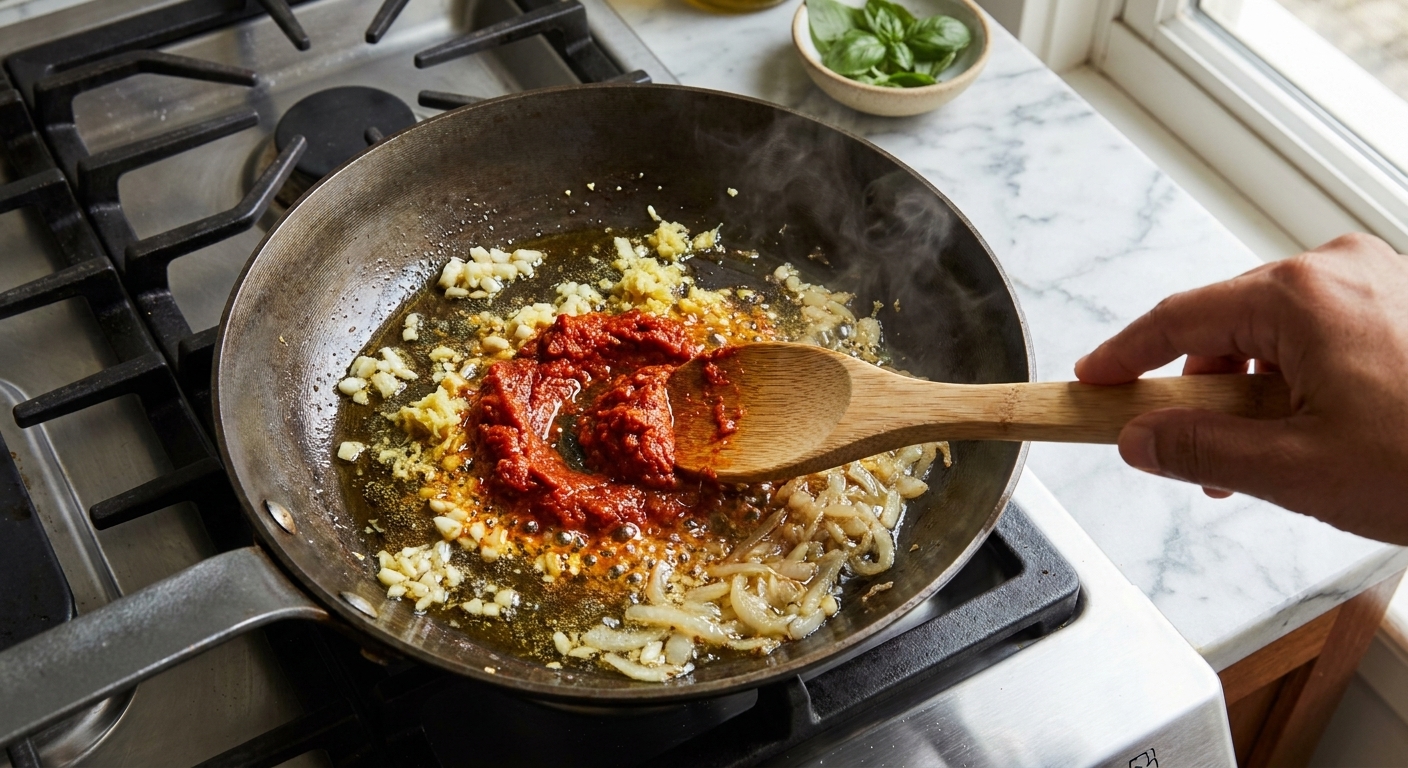
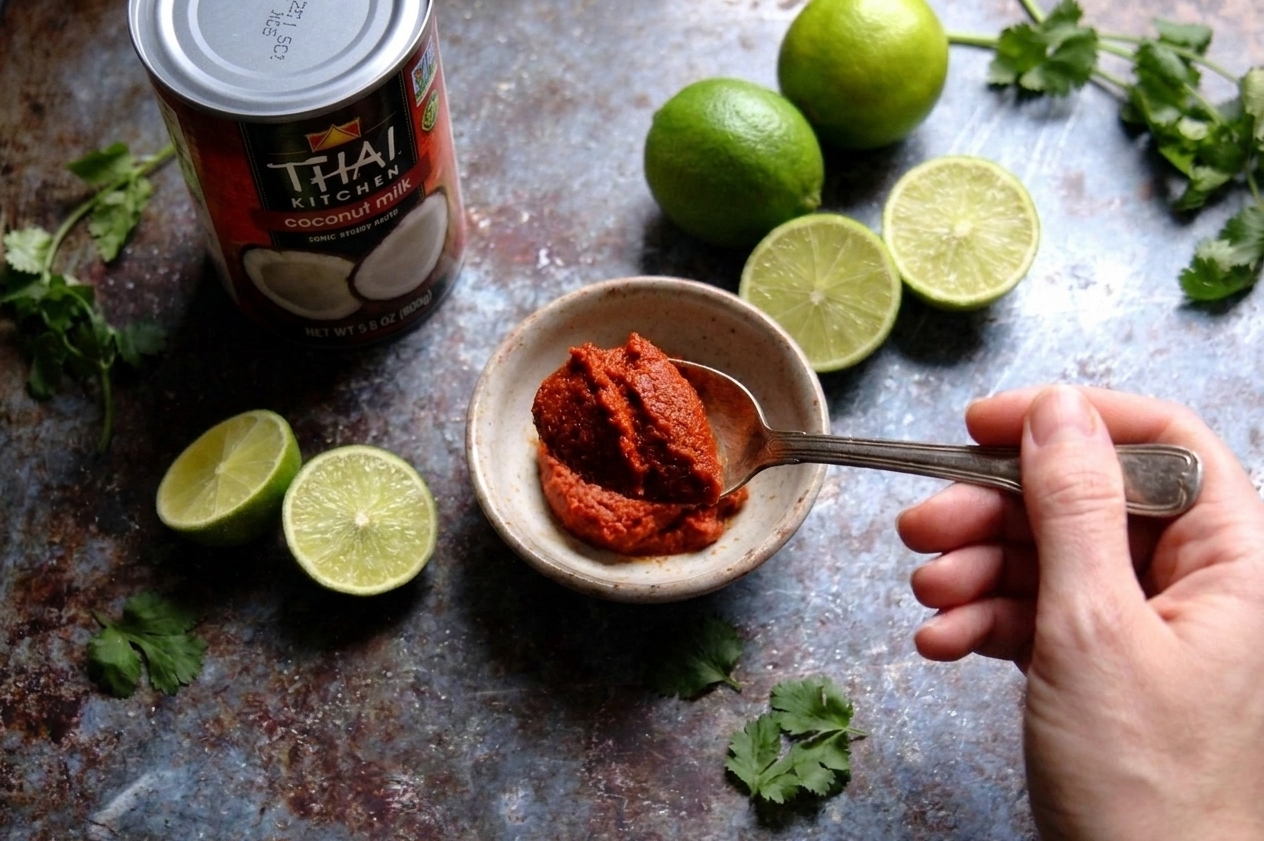
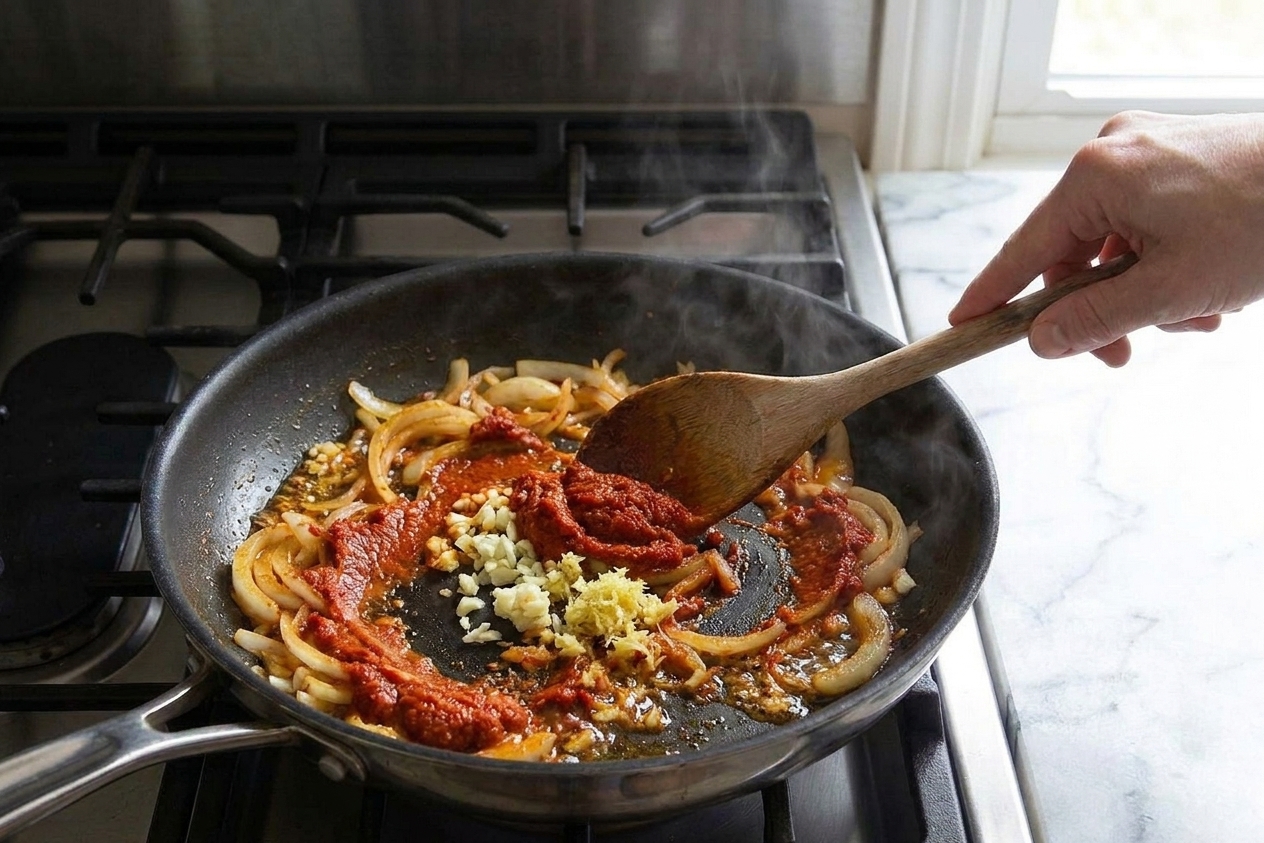
It depends almost entirely on your red curry paste brand. Start with 2 tablespoons for mild-medium, then add more to taste. If you add extra curry paste at the end, let it simmer 1 to 2 minutes so it loses that raw edge and tastes fully “woken up.” If you overshoot the heat, extra coconut milk and a little sugar help bring it back into balance.
Can I use light coconut milk?
You can, but the sauce will be thinner and less rich. If light coconut milk is what you have, simmer a few extra minutes to reduce, or stir in a quick slurry at the end: 1 to 2 teaspoons cornstarch mixed with 1 to 2 tablespoons cold water. Add it while simmering and stir until glossy.
What can I use instead of fish sauce?
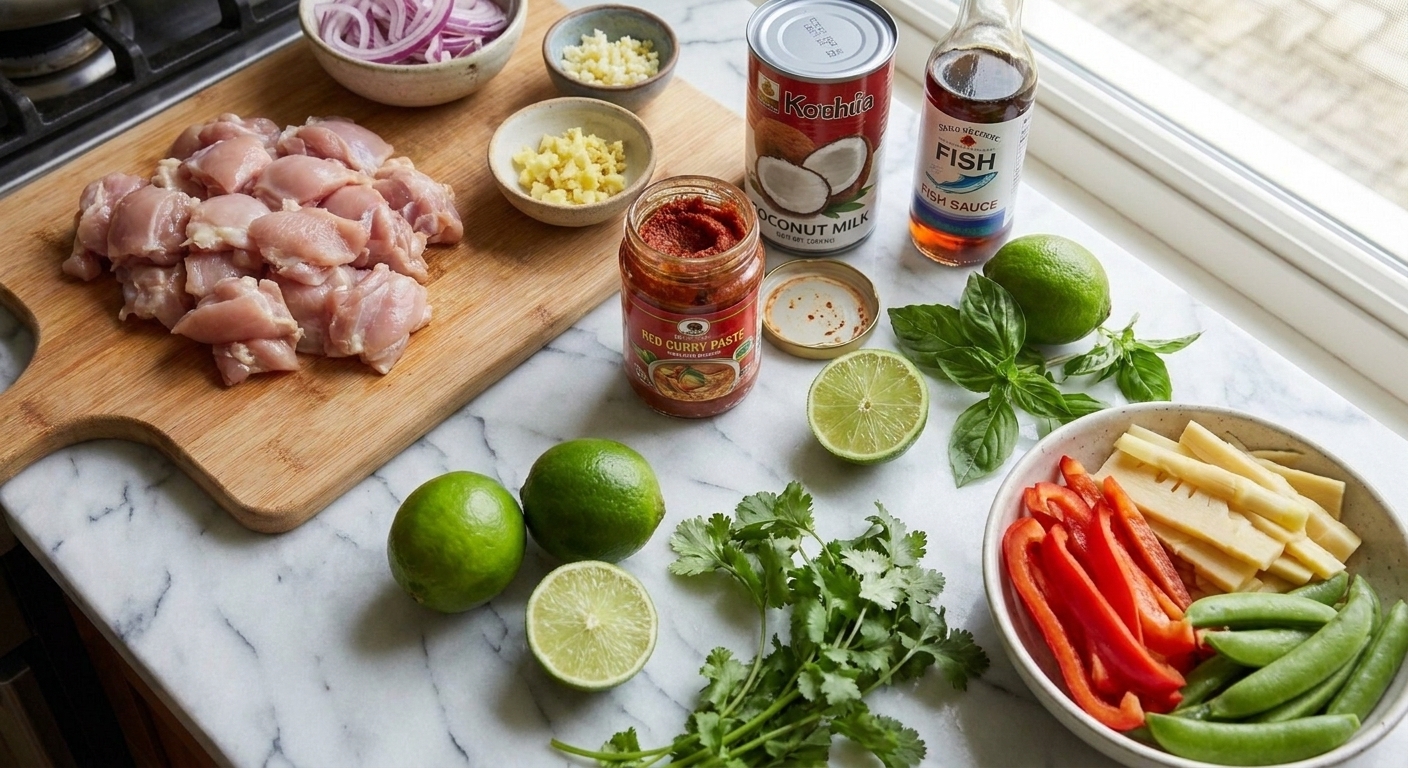
Fish sauce adds salty depth. If you need a substitute, use soy sauce (or tamari) plus a tiny pinch of sugar. It will be a little different, still very good.
Can I make this in advance?
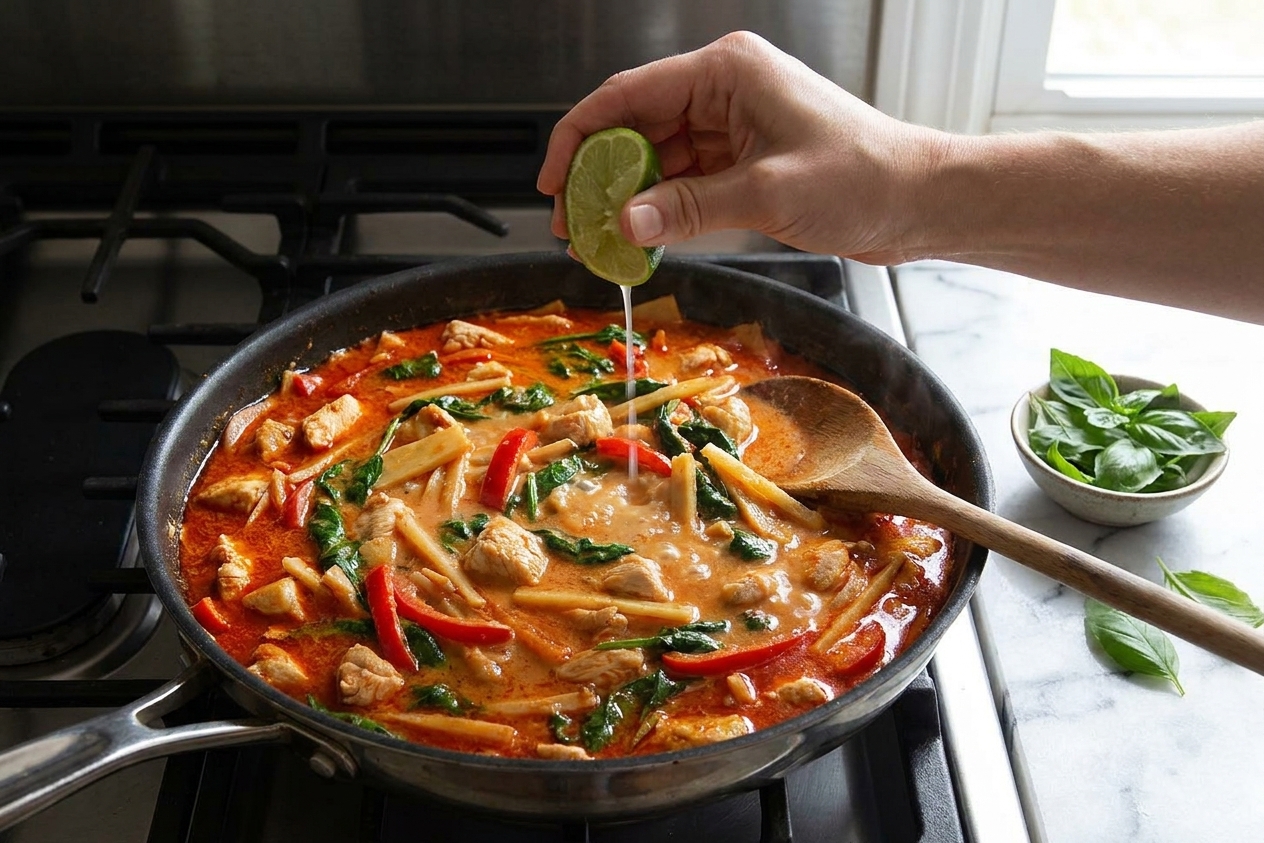
Yes. It actually tastes even better the next day. Just reheat gently and add lime and basil at the end so it tastes fresh.
What veggies work best?
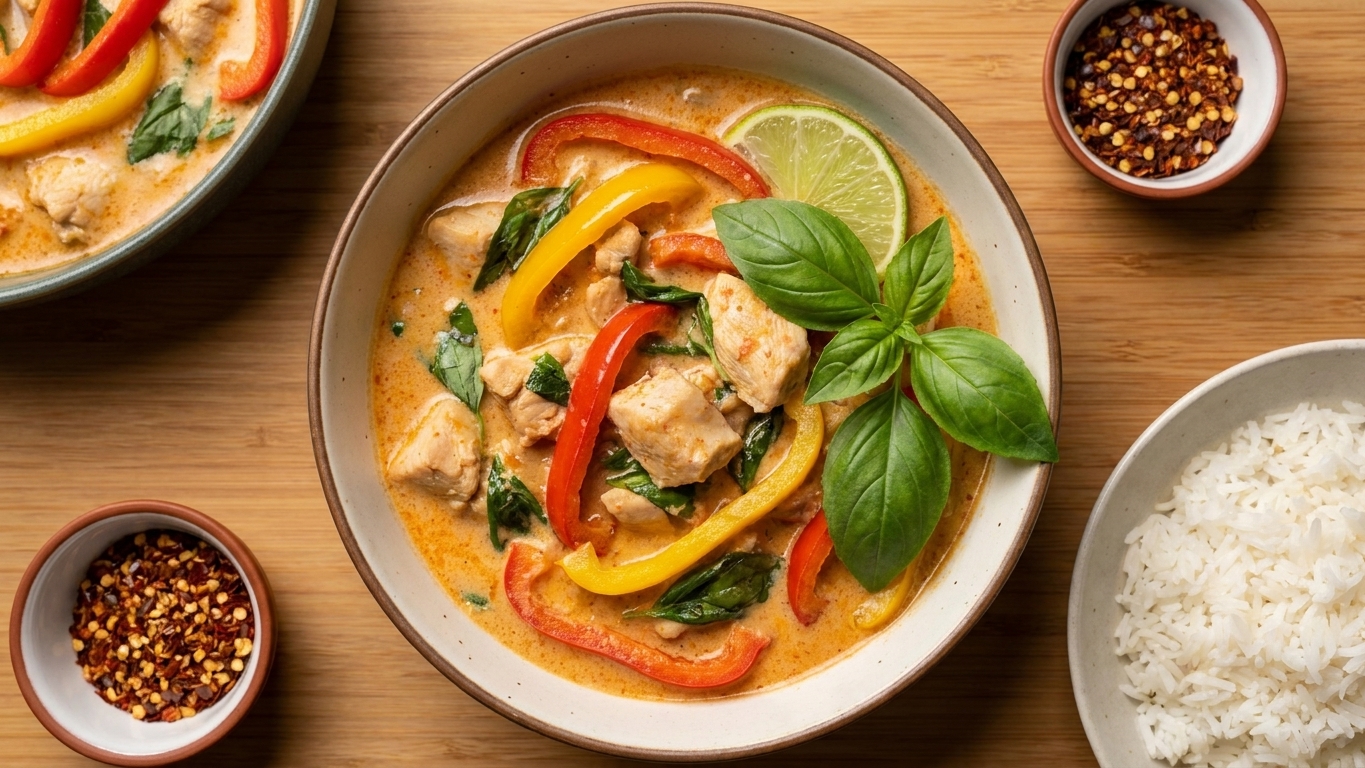
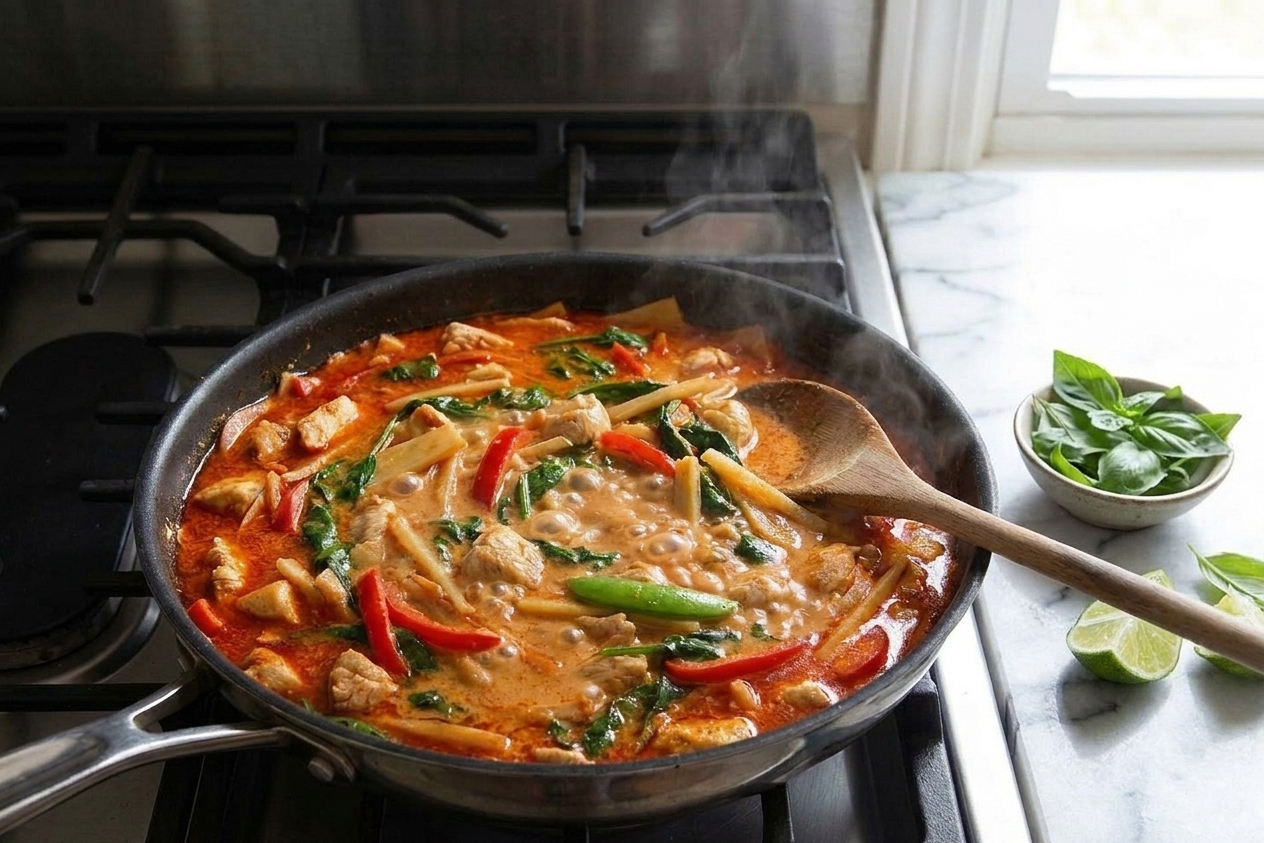
Bell peppers, snap peas, green beans, zucchini, mushrooms, spinach, and baby corn all work. Add quick-cooking veggies late so they stay crisp and bright.
Do I have to use Thai basil?
Thai basil is more peppery and slightly anise-y, which really fits this curry. If you cannot find it, regular basil works, and cilantro is great too. It will taste different, but still in the “I would absolutely eat this again” category.
Any optional add-ins that make it taste extra legit?
If you have them, add 2 to 3 kaffir lime leaves (torn) or a short piece of lemongrass while the sauce simmers, then remove before serving. Instant upgrade, minimal effort.
What should I serve with it besides rice?
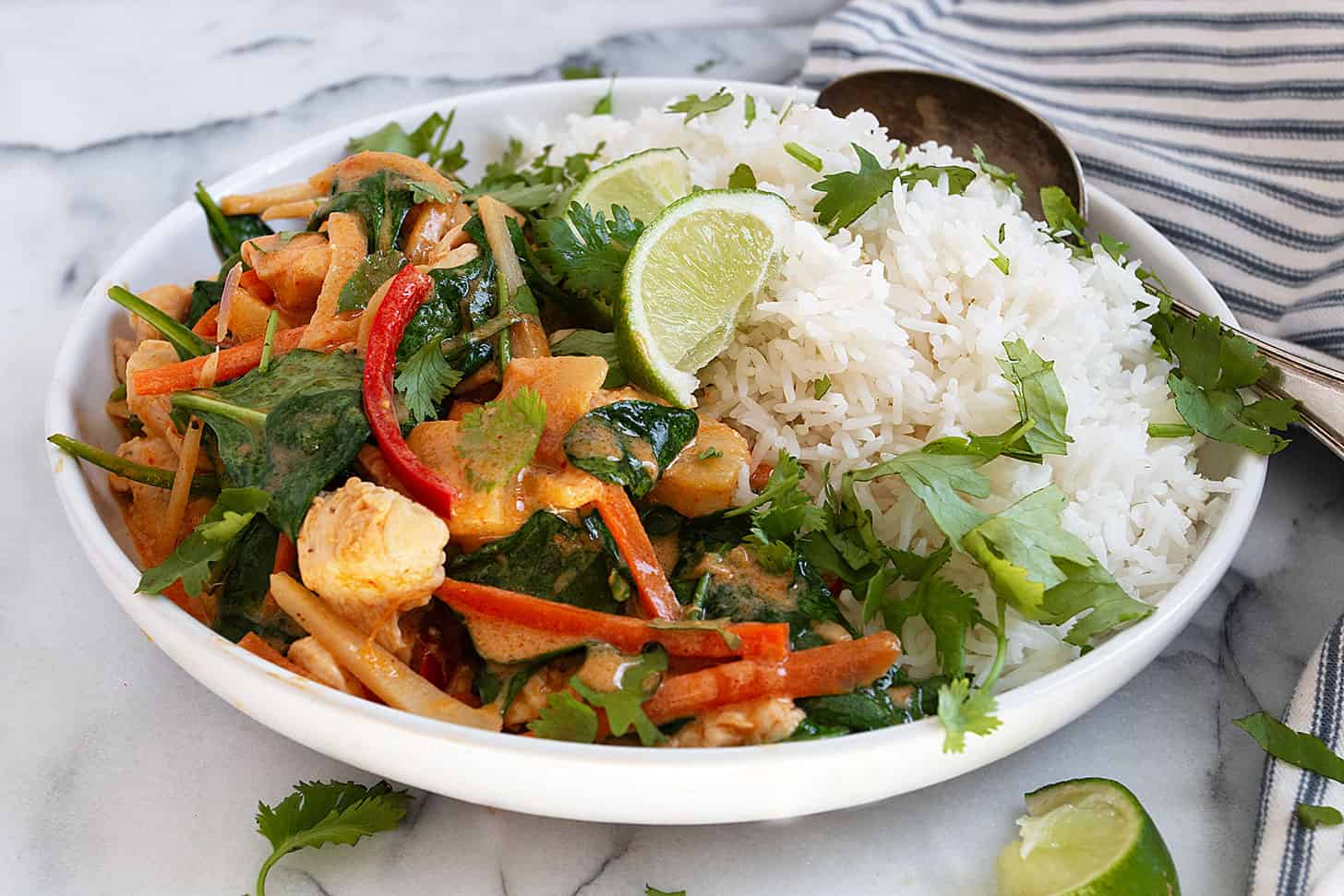
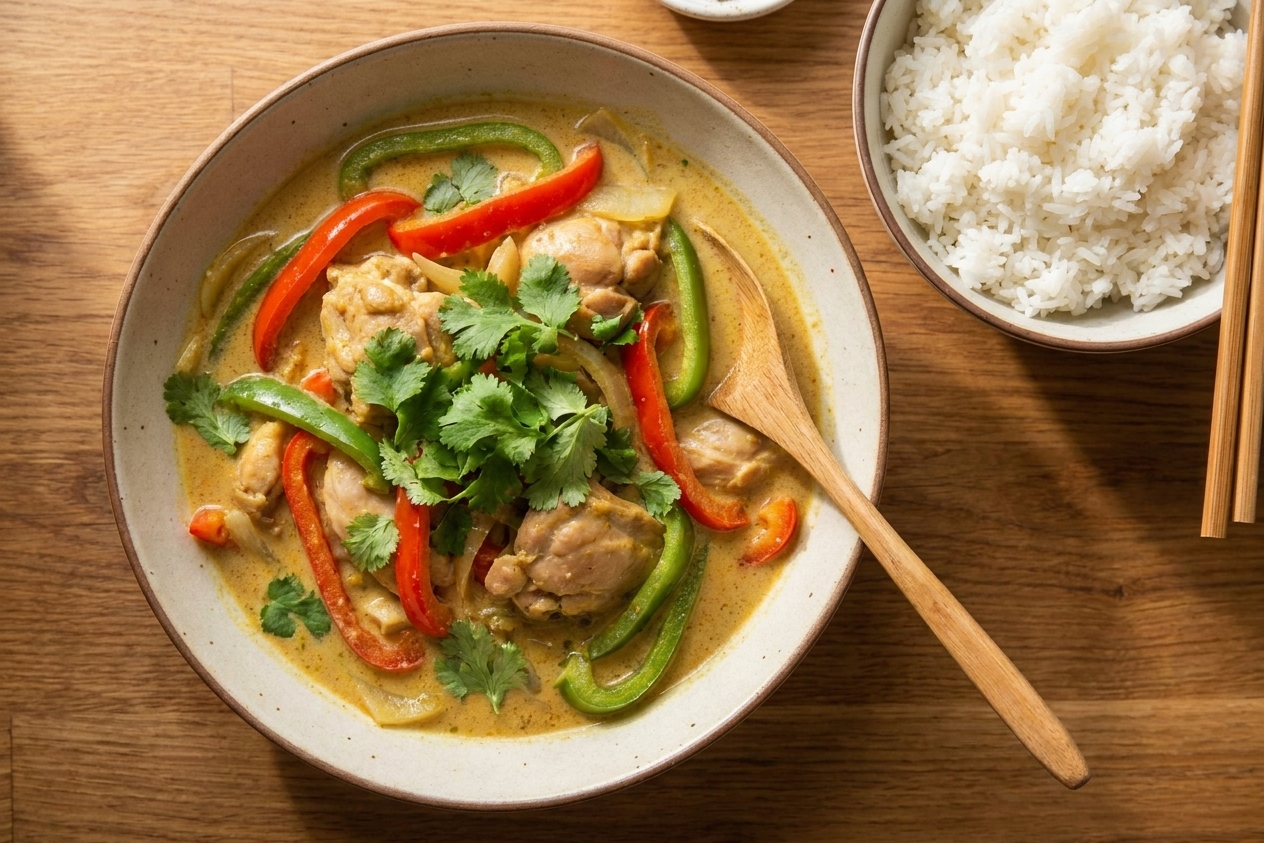
Jasmine rice is the classic, but it is also great over rice noodles, with roti for scooping, or over cauliflower rice if that is your weeknight vibe.