Mom's Best Recipes
Recipe

Khao Soi Thai

Northern Thai-inspired coconut curry noodle soup with chicken, soft noodles, and crispy noodles on top.

Author By Matt Campbell
4.8
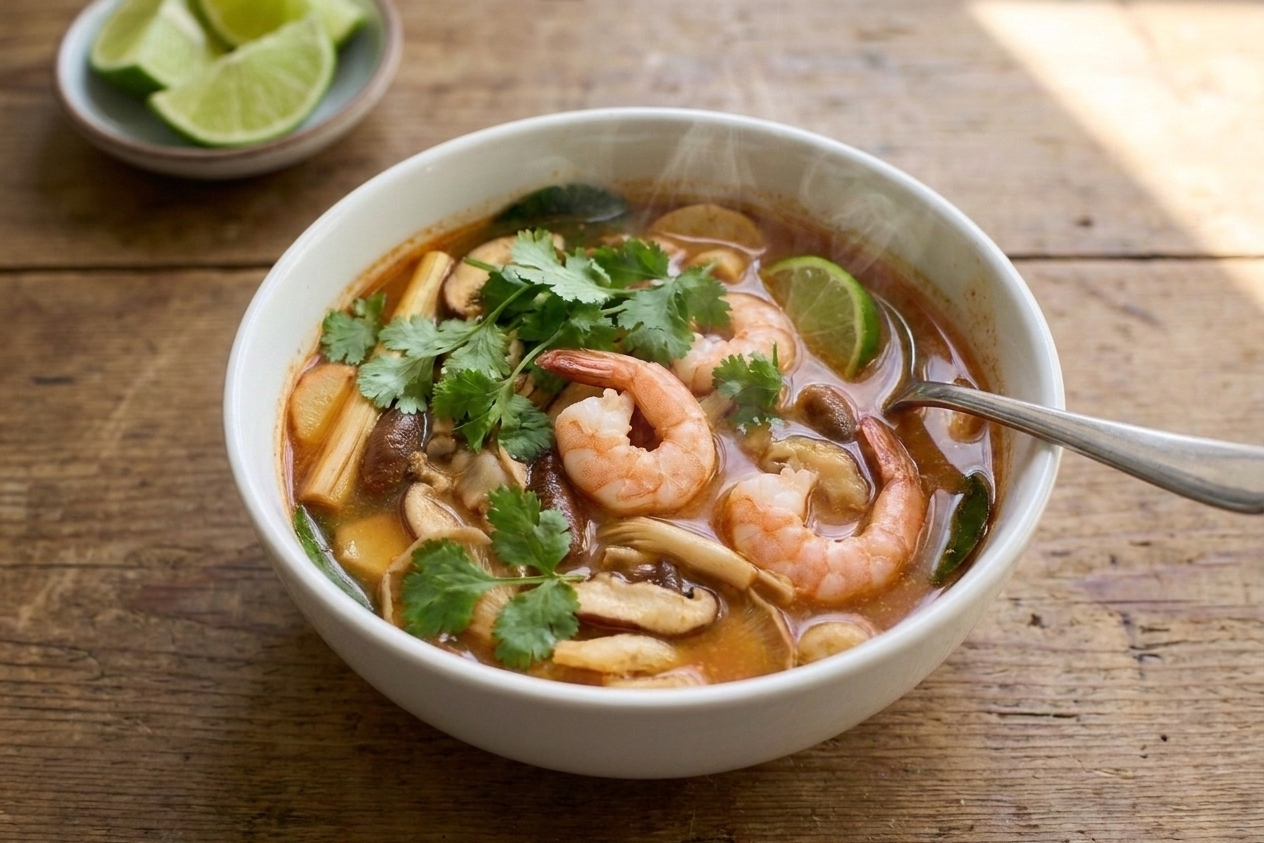
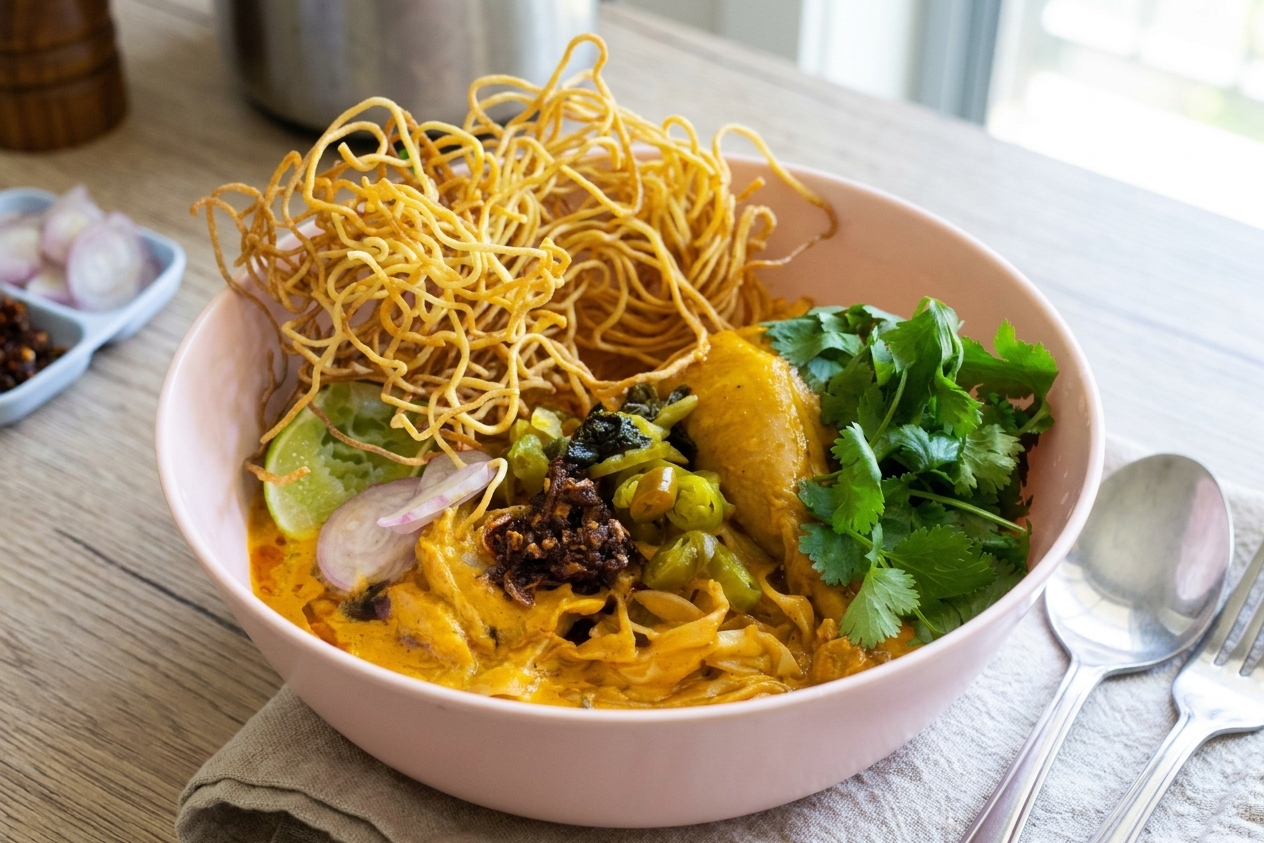
A steaming bowl of Thai khao soi with golden coconut curry broth, tender chicken, soft egg noodles, crispy fried noodles on top, and lime wedges on a wooden table

Khao soi is the kind of soup that makes you stop mid-slurp and reassess your weeknight standards. It is creamy coconut curry broth that still tastes bright, noodles that feel like a hug, and that signature crunchy noodle pile on top that makes every bite a little chaotic in the best way.

This is a home-cook-friendly version inspired by the northern Thai classic, built with accessible ingredients and a few smart shortcuts. You will toast a quick curry paste, simmer chicken in coconut broth, and finish with lime, pickled mustard greens, and shallots for that sweet sour salty snap.

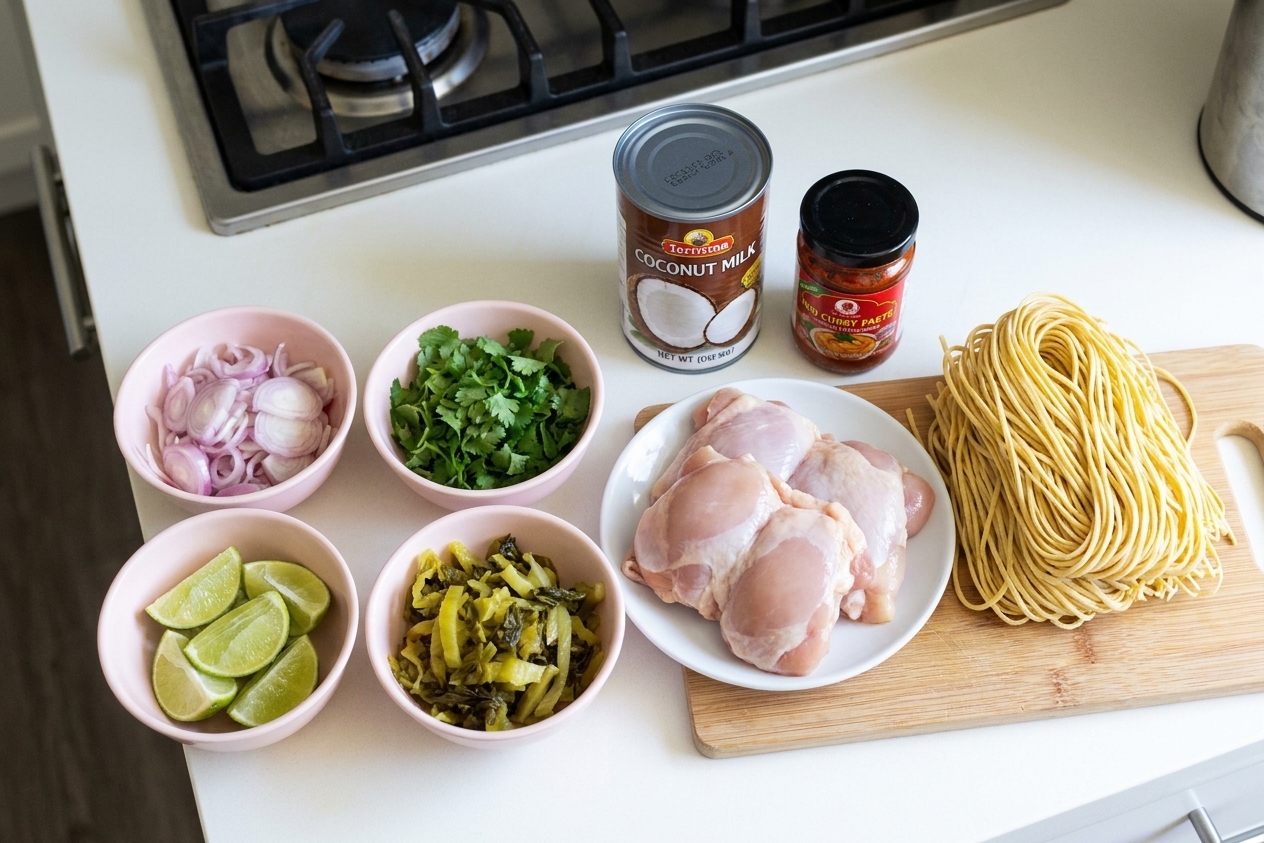
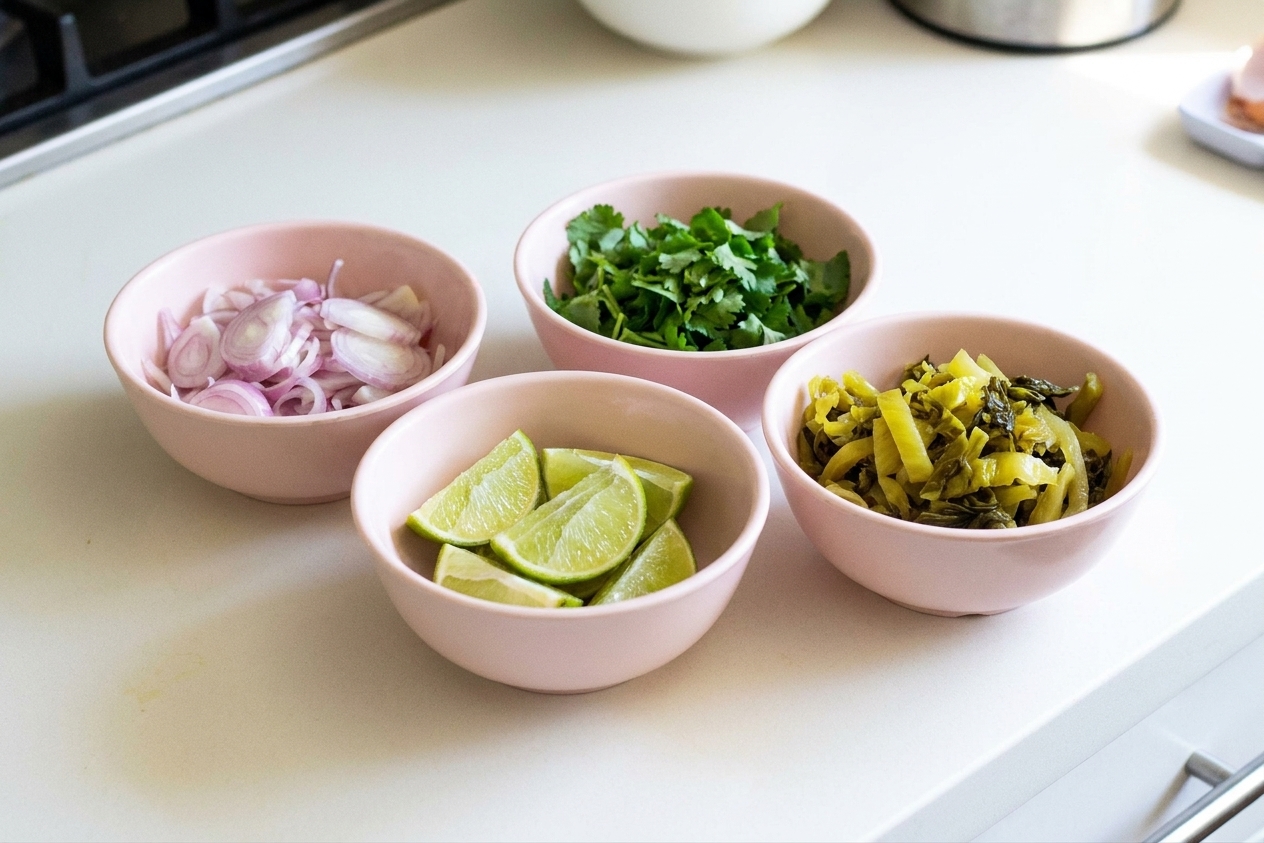
All ingredients for khao soi arranged on a bright kitchen counter including coconut milk, curry paste, chicken thighs, egg noodles, lime, shallots, cilantro, and mustard greens

Why It Works

  • Rich but not heavy broth: Coconut milk plus stock, balanced with lime and a little sugar, keeps it silky and lively.
  • Real depth fast: Blooming curry paste with aromatics and a touch of curry powder wakes up the spices in minutes.
  • Two noodle textures: Soft noodles in the soup, crispy noodles on top. That contrast is basically the point.
  • Make it your way: Works with chicken, tofu, or shrimp, and you can dial the heat up or down without losing the soul of the dish.

Pairs Well With

Storage Tips

Best practice: Store the broth and noodles separately if you can. Noodles love to drink broth and they will turn extra soft by day two.

  • Fridge: Broth and chicken keep well in an airtight container for 3 to 4 days. Noodles keep for 2 to 3 days.
  • Freezer: Freeze broth and chicken (no noodles) for up to 2 months. Thaw overnight in the fridge.
  • Reheat: Warm broth gently on the stove. Add a splash of water or stock if it thickened. Heat noodles briefly in hot water, then add to bowls and ladle broth over.
  • Keep toppings separate: Lime, shallots, cilantro, and mustard greens stay fresher and punchier when added at the last second.

Common Questions

Is it "khao soi" or "kow soi"?

You will see a few spellings in English. The dish is most commonly written as khao soi, though kow soi pops up too.

What does khao soi taste like?

Think: coconut curry meets chicken noodle soup, with a bright limey finish. It is savory, gently sweet, aromatic, and as spicy as you choose to make it.

Do I have to fry noodles for the topping?

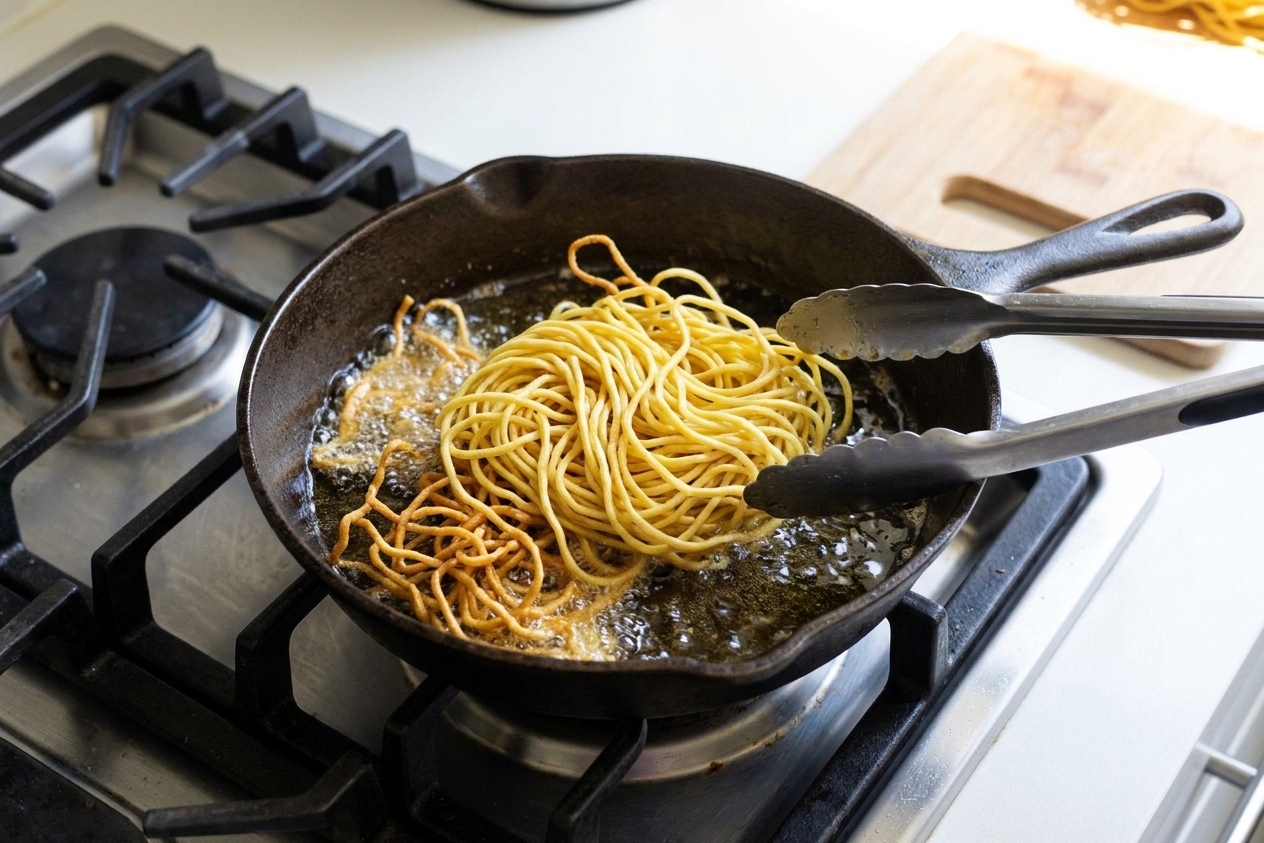
Nope. It is traditional and very fun, but you can also top with crushed ramen (untoasted for crunch, or quickly toasted in a dry pan) or crispy wonton strips. If you do fry noodles, do a small handful and call it a day.

What noodles should I use?

Fresh egg noodles are very commonly used, and they are also what most people fry for the crispy topping. Dried egg noodles work great at home too. In a pinch: spaghetti, lo mein noodles, or even ramen noodles work. Just avoid super wide pasta that overpowers the broth.

Can I make it vegetarian?

Yes. Swap chicken stock for vegetable stock, use tofu or mushrooms, and use soy sauce (or tamari) instead of fish sauce. Also, many curry pastes contain shrimp paste, so grab a vegan/vegetarian curry paste if needed. Finish with lime and a little extra salt to taste.

My broth looks split. Did I ruin it?

Probably not. Coconut milk can separate if boiled hard. Keep it at a gentle simmer and whisk. If it looks a little broken, it will usually come back together with low heat and stirring.

How do I control the spice level?

Curry pastes vary a lot. Start with 3 tablespoons, then add more at the end if you want extra heat. If you accidentally go too spicy, add a little more coconut milk or a pinch more sugar to round it out.

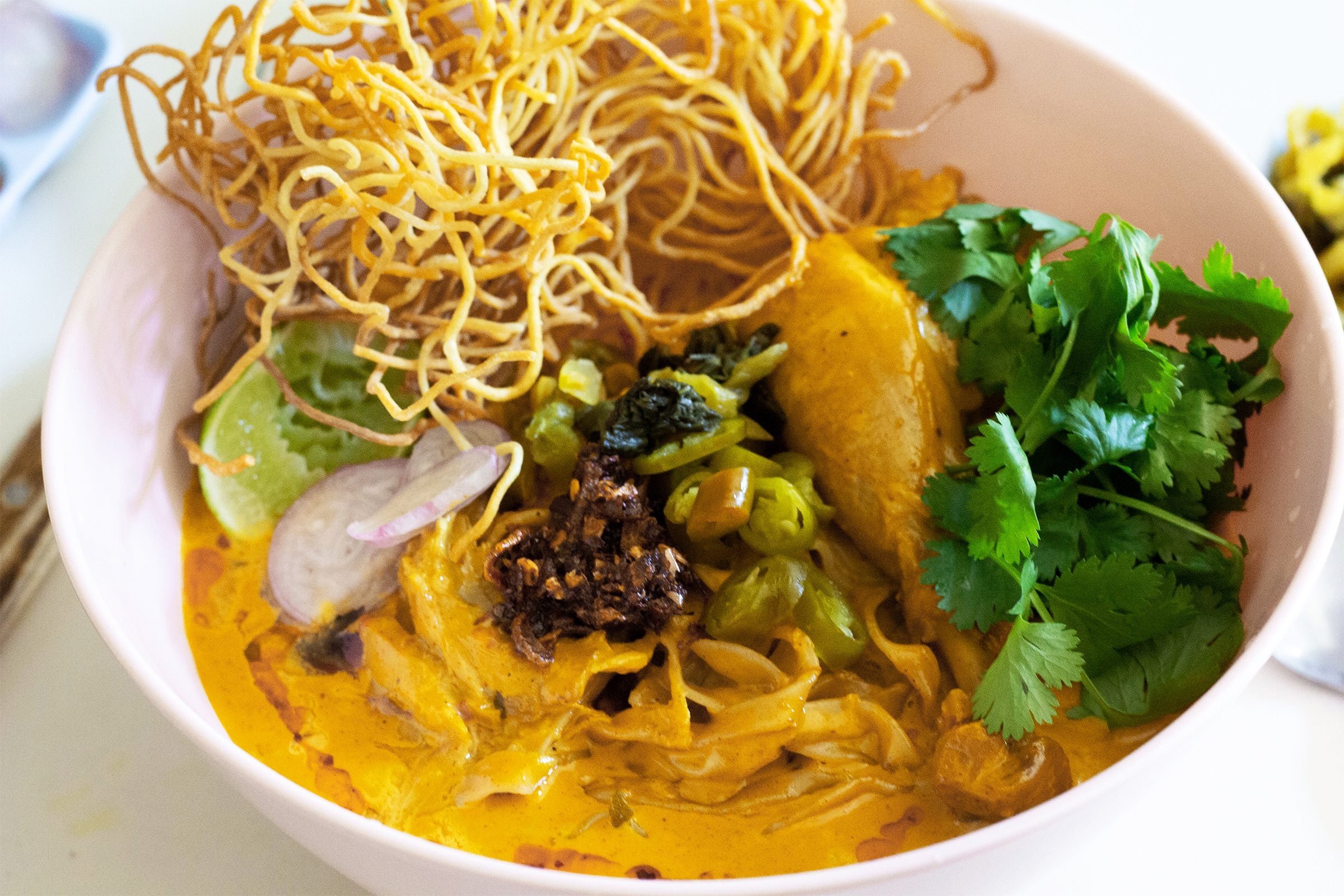
The first time I made khao soi at home, I was convinced it required a suitcase full of specialty ingredients and a level of calm I simply do not possess. Turns out, the magic is mostly in the order of operations: toast the paste, simmer the chicken gently, then hit it with lime and crunchy toppings like you are finishing a masterpiece.

Now it is one of my favorite “I want restaurant comfort but I am wearing sweatpants” dinners. Also, the crispy noodle topping is a tiny cooking project that feels fancy while still being very much a snack you make in your own kitchen, leaning over the stove, stealing crunchy bits as you go.