Mom's Best Recipes
Recipe

Classic Chicken and Sausage Gumbo

A rich, cozy gumbo with a dark roux, the holy trinity, and smoky andouille, finished with okra and served over rice.

Author By Matt Campbell
4.8
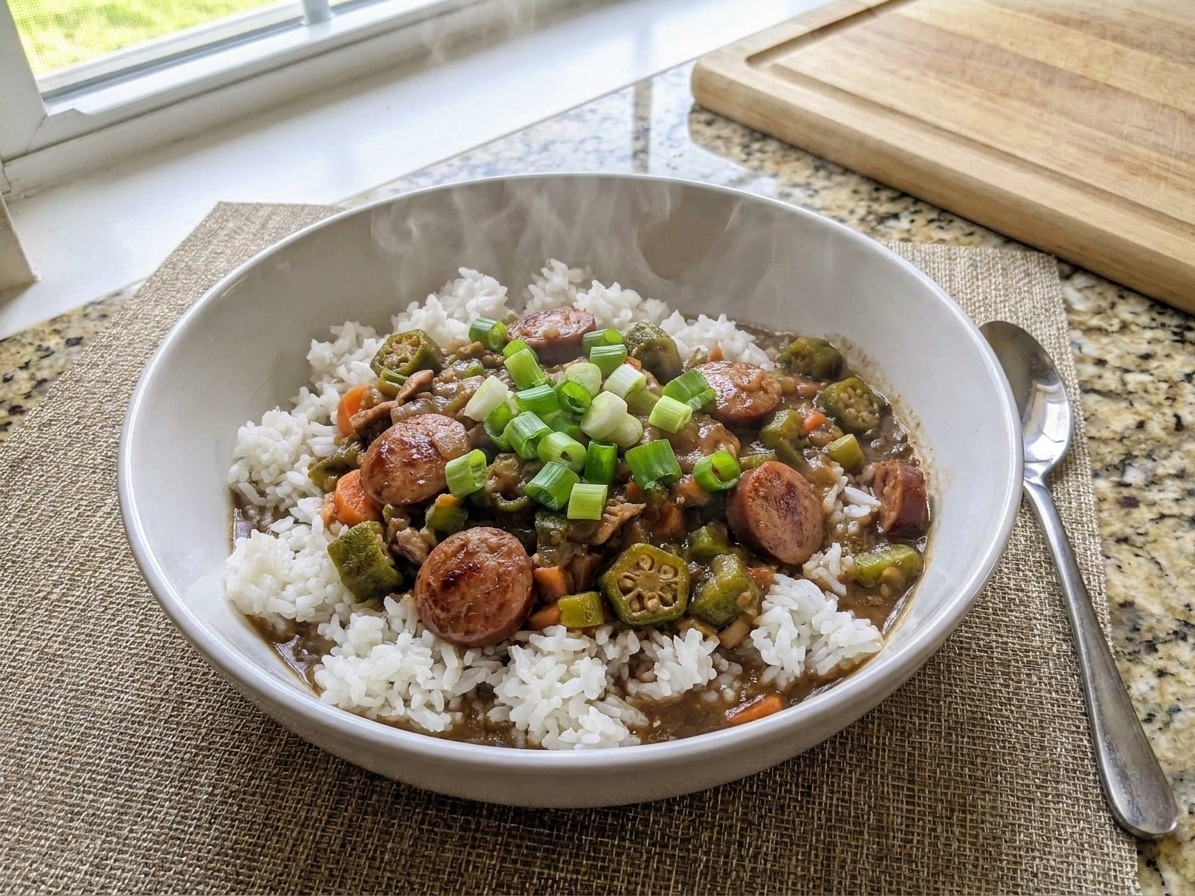
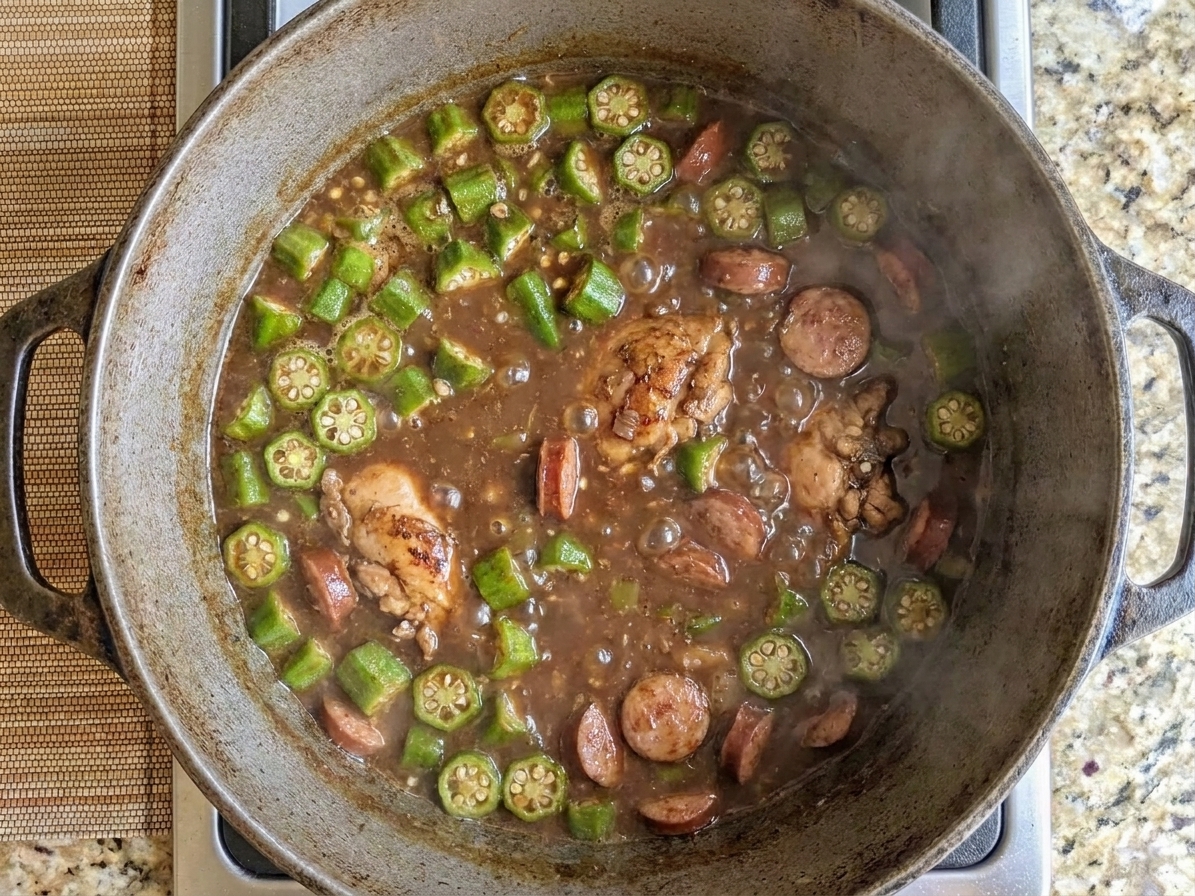
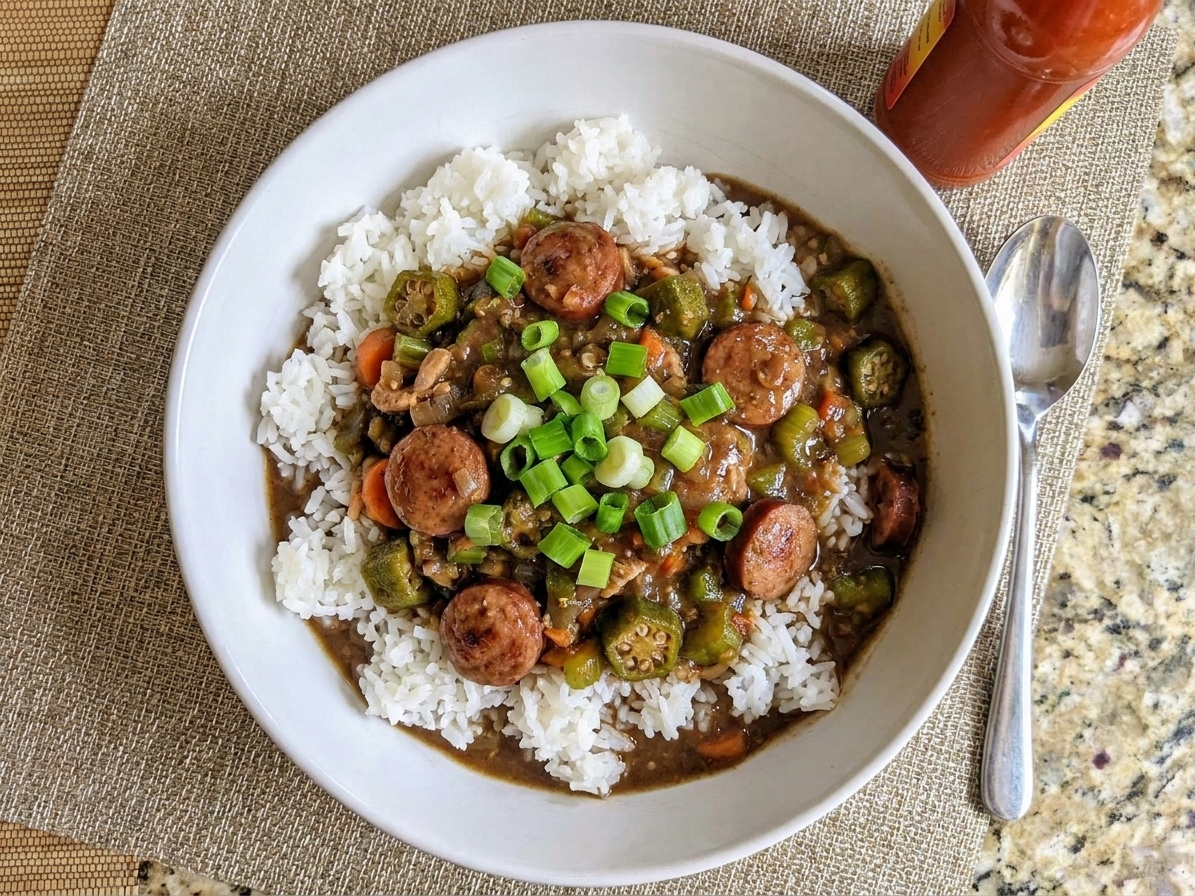
A steaming bowl of chicken and sausage gumbo with visible okra slices and green onions, served over white rice on a rustic wooden table with a spoon beside it

Gumbo is one of those dishes that makes your kitchen smell like you really have your life together, even if you are standing there in socks, stirring a pot and tasting like it is your job. It is cozy, bold, and built on a few moves that look fussy on paper but feel easy once you do them once.

This version is my go-to: chicken and andouille, a dark roux for that deep, toasty backbone, plus the holy trinity (onion, celery, bell pepper) so the whole thing tastes like it has been simmering since noon. We will keep ingredients accessible, instructions clear, and absolutely taste as we go.

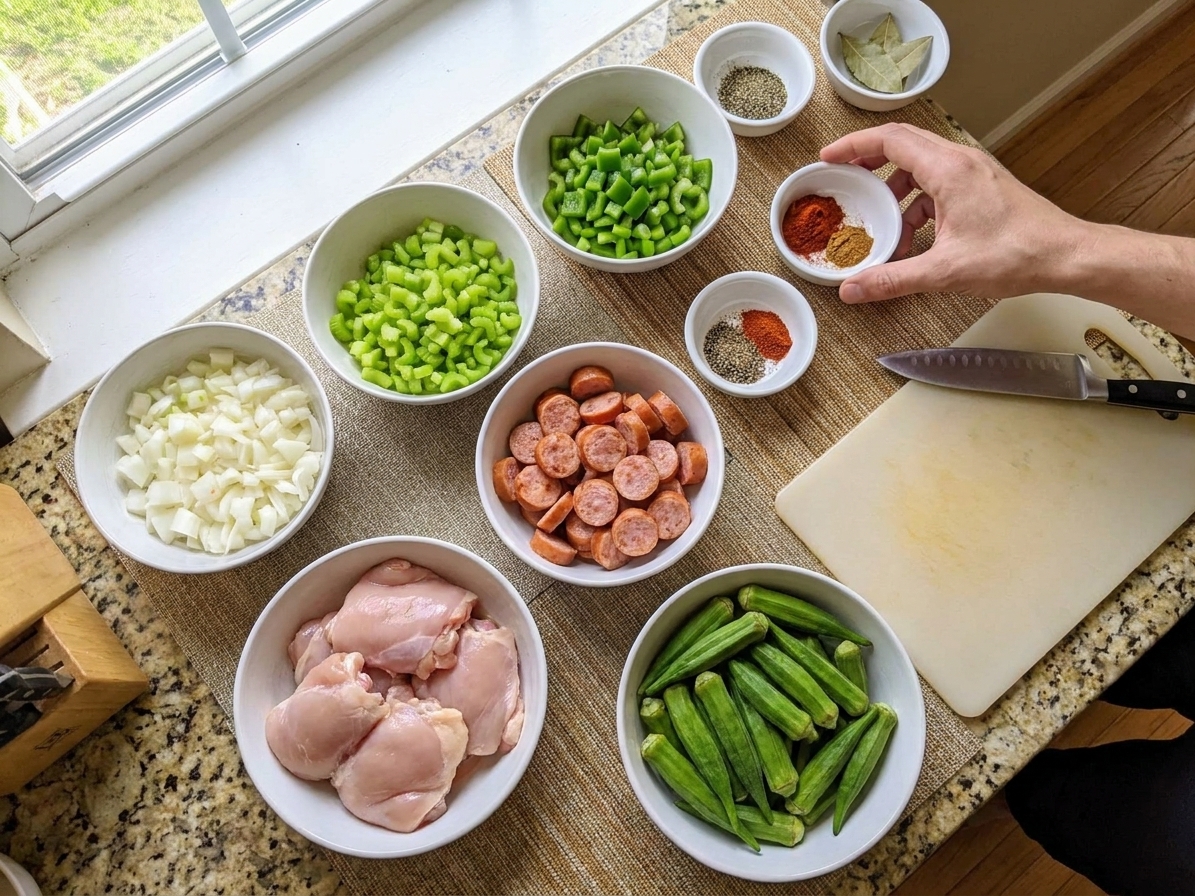
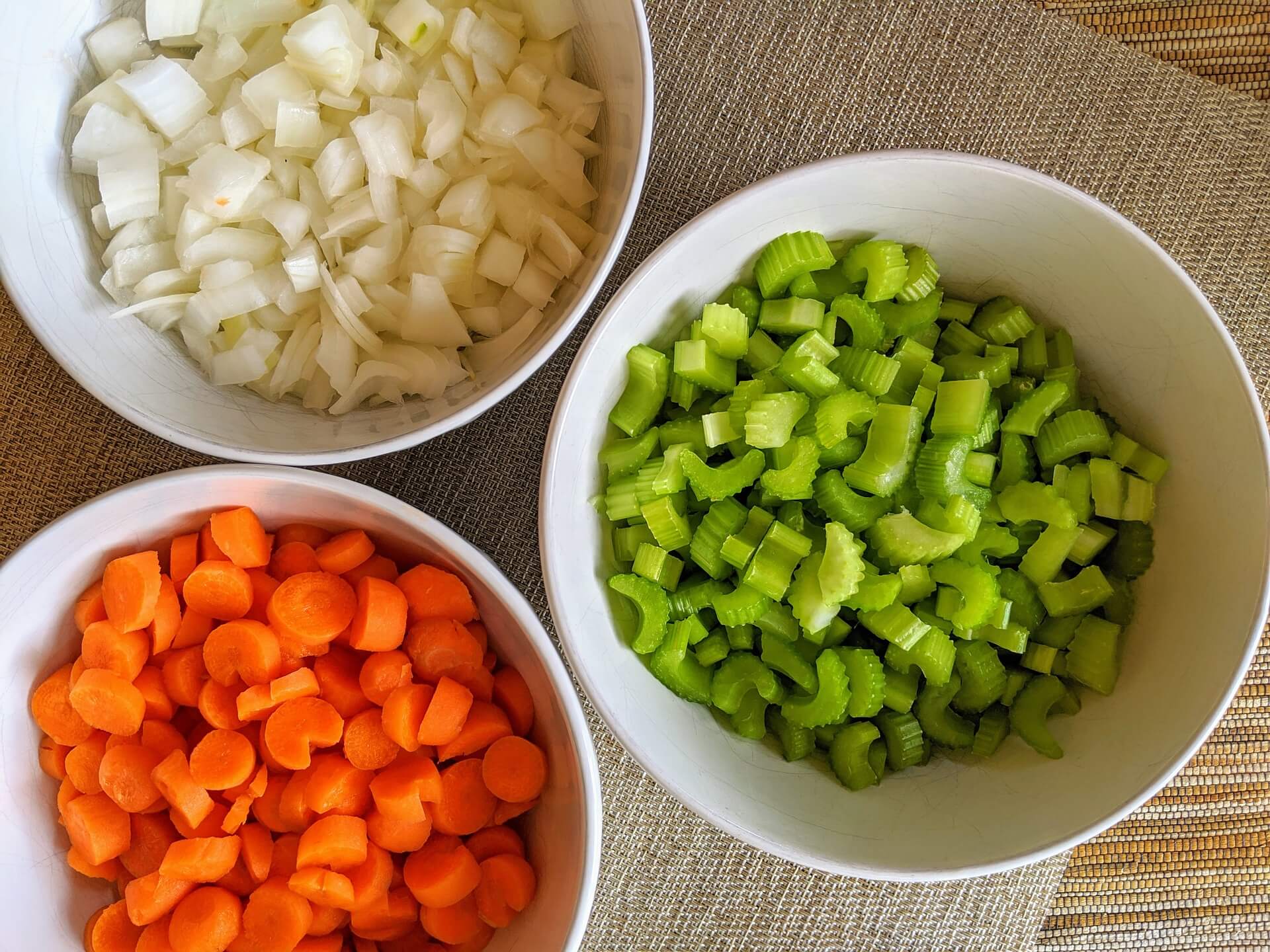
Measured gumbo ingredients on a bright kitchen counter including chopped onion celery and green bell pepper, sliced andouille sausage, chicken thighs, okra, and small bowls of spices

Why It Works

  • Dark roux flavor without panic: you will cook it to a deep peanut butter to milk chocolate color, which adds nutty depth and thickens the gumbo naturally.
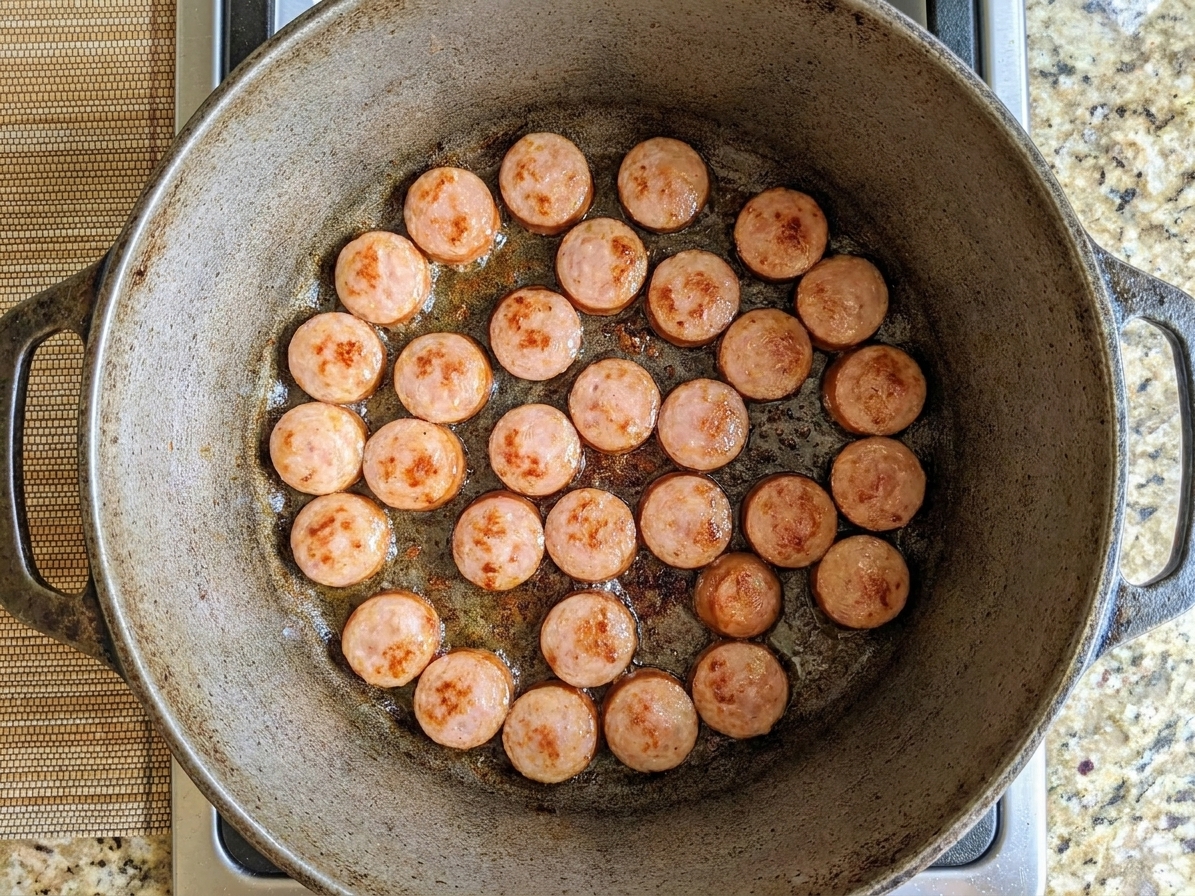
  • Layered savoriness: browning the sausage, sweating the trinity in the roux, and blooming spices builds flavor fast.
  • Flexible thickening: okra adds body and a classic gumbo vibe. Filé powder is optional at the end for extra silk and a subtle earthy note.
  • Even better leftovers: gumbo tastes richer the next day, which is basically free effort.

Pairs Well With

Storage Tips

How to Store Gumbo

Refrigerator: Cool gumbo to room temp, then store in an airtight container for up to 4 days. Store rice separately so it does not soak up all your broth.

Freezer: Gumbo freezes beautifully. Freeze in containers (leave a little headspace) for up to 3 months. Thaw overnight in the fridge.

Reheat: Warm gently on the stovetop over medium-low heat, stirring occasionally. If it has thickened a lot, splash in a little chicken stock or water until it is brothy again. For food safety, reheat leftovers until steaming hot and the gumbo reaches 165°F / 74°C. Reheat rice separately or make fresh rice.

Common Questions

Common Questions

What is the “holy trinity” in gumbo?

Onion, celery, and bell pepper. It is the flavor base that shows up in a lot of Louisiana cooking, kind of like a Cajun and Creole version of mirepoix.

How dark should my roux be?

For this gumbo, aim for deep peanut butter to milk chocolate. Lighter roux thickens more, darker roux tastes deeper. If you are new to roux, stop at peanut butter color the first time and call it a win.

My roux smells burnt. Can I save it?

If it smells like burnt popcorn or looks speckled black, it is done. Sadly, you cannot un-burn a roux. Dump it, wipe the pot, and start over. The good news is your second roux always goes faster because you are less nervous.

Okra or filé powder, or both?

You can use either. Okra thickens while it simmers and adds a classic flavor. Filé (ground sassafras) is usually stirred in off heat at the end. Using both is fine, but go easy on filé or it can get a little gummy. Also, do not boil the gumbo after adding filé.

Can I make gumbo without andouille?

Yes. Use smoked sausage, kielbasa, or even diced smoked turkey. You want something smoky and salty to carry the pot.

Fresh or frozen okra?

Both work. Frozen sliced okra is convenient and goes straight into the pot. Fresh okra is great too, just slice it and add it the same way. Either one will help thicken the gumbo as it simmers.

Where do I find filé powder?

Look in the spice aisle, sometimes near Cajun seasonings, or grab it online. A little goes a long way, and it lasts a while in the pantry.

Should gumbo be spicy?

It can be. I keep the base gently warm, then let everyone add hot sauce at the table. That way the kids and heat-lovers can both win.
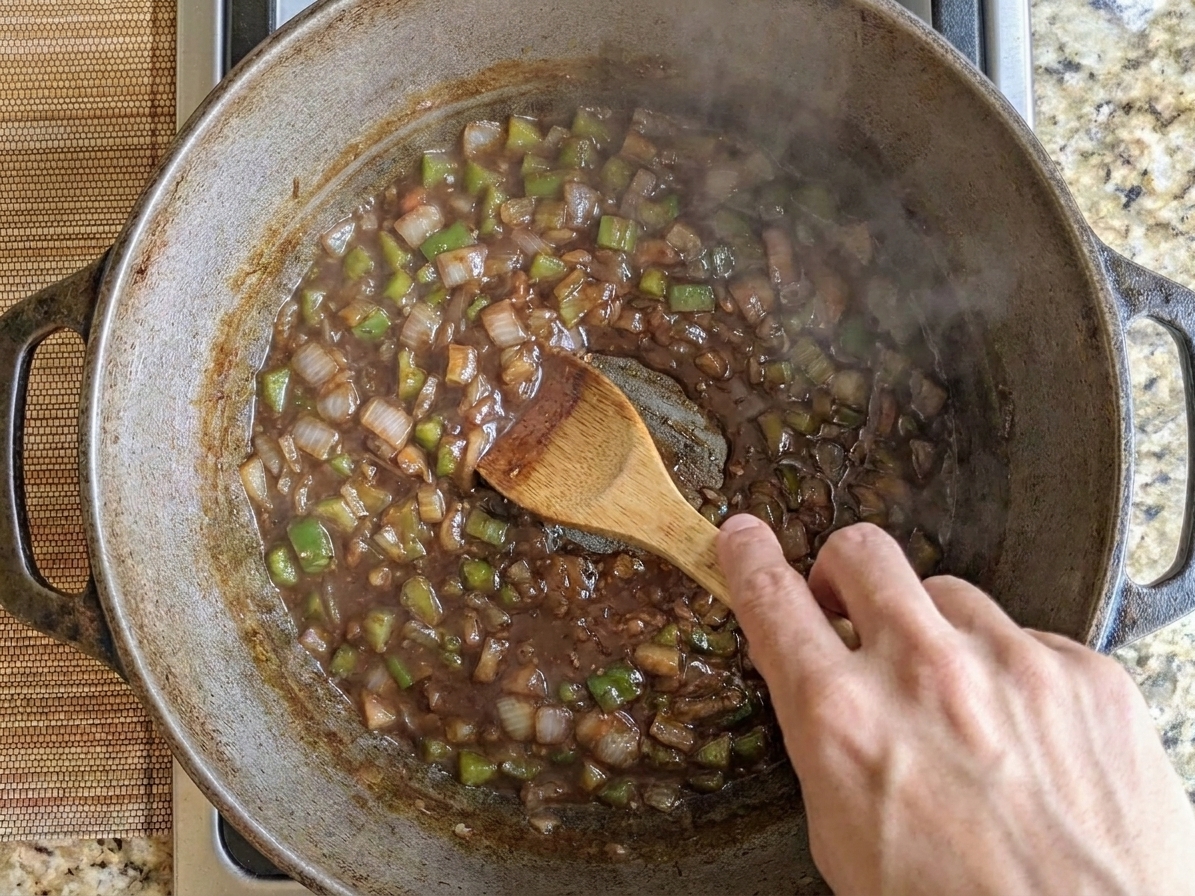

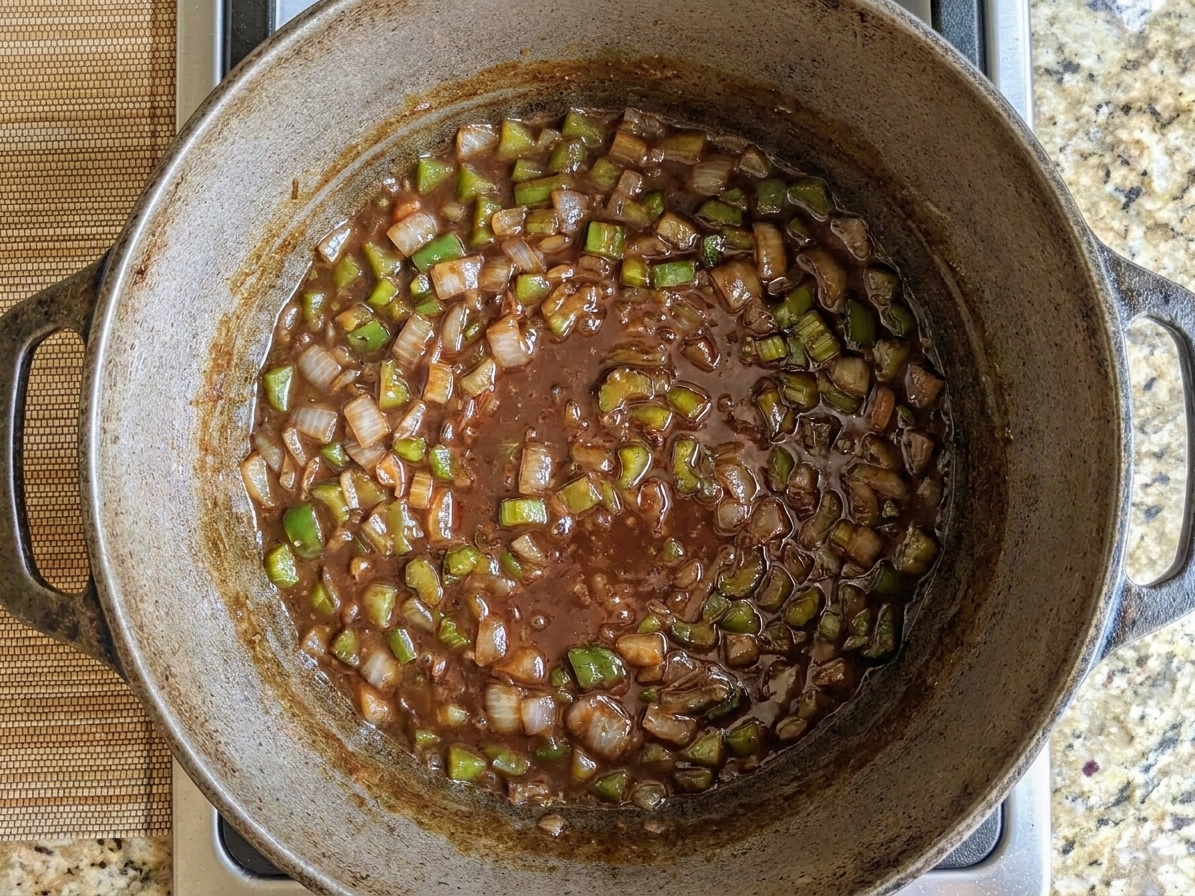
A hand stirring a dark roux and vegetables in a heavy Dutch oven on a stovetop, with a wooden spoon and steam rising

The first time I made gumbo, I treated the roux like it was a wild animal that could sense fear. I hovered. I over-stirred. I under-stirred. I got distracted for five seconds and convinced myself I ruined everything. Now it is one of my favorite kinds of cooking: slow, a little messy, and wildly rewarding. Gumbo taught me that good food is not about perfection, it is about paying attention. Also, it taught me that tasting the broth early is basically mandatory, for quality control reasons.