What is a mooncake, exactly?
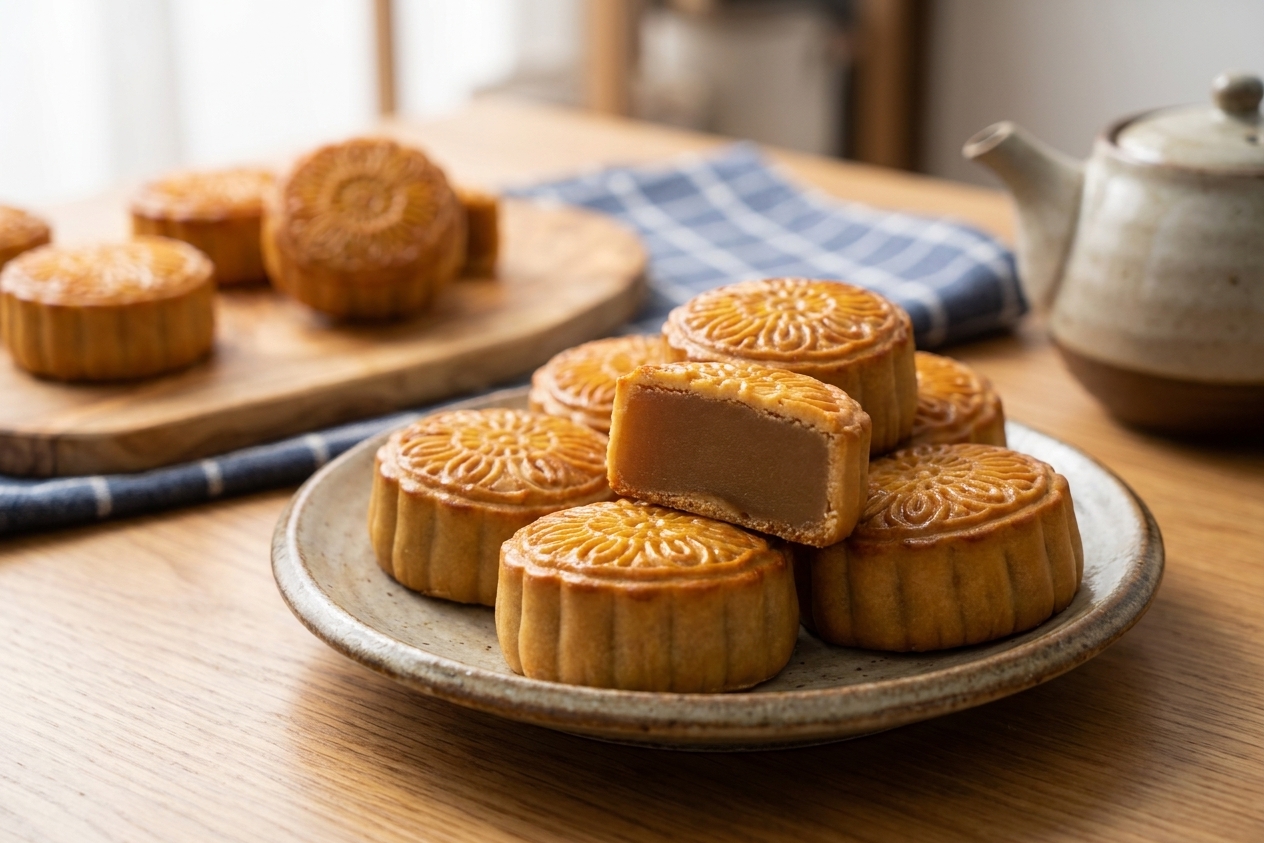
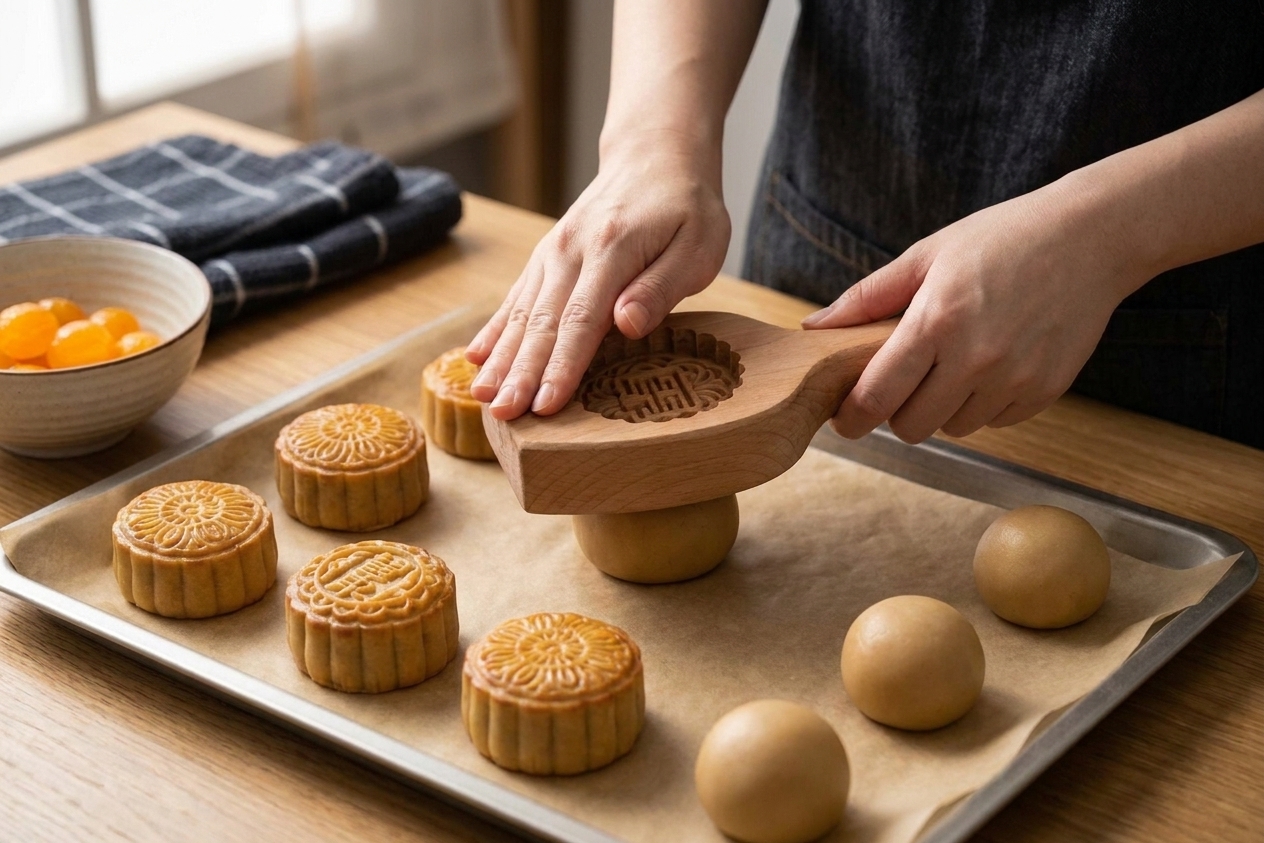
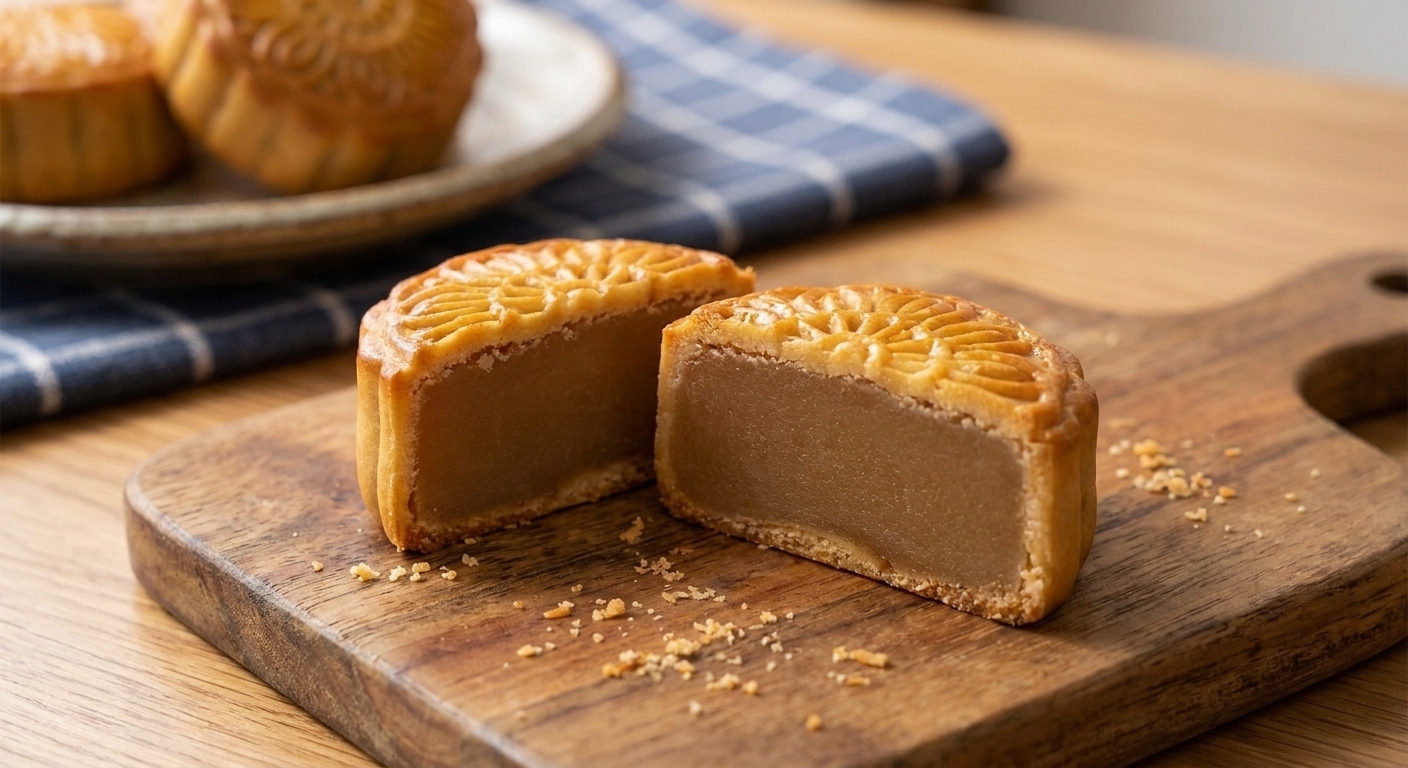
A mooncake is a traditional filled pastry commonly enjoyed during the Mid-Autumn Festival. The baked style we are making has a thin, tender crust and a dense, smooth filling like lotus seed paste or red bean paste.
Do I need alkaline water (lye water)?
It helps with browning, that classic mooncake aroma, and the overall look of the crust. If you cannot find it, you can still make mooncakes, but they may be lighter in color and slightly different in flavor. Many Asian groceries sell it as “alkaline water” or “lye water.”
What is “golden syrup” and can I substitute it?
Golden syrup here means a thick invert sugar syrup like Lyle’s. Chinese mooncake syrup works too. If you substitute honey or straight corn syrup, the flavor and browning can change, and the dough may handle a little differently. If golden syrup is not available, use mooncake syrup if you can find it.
Why did my mooncake pattern blur after baking?
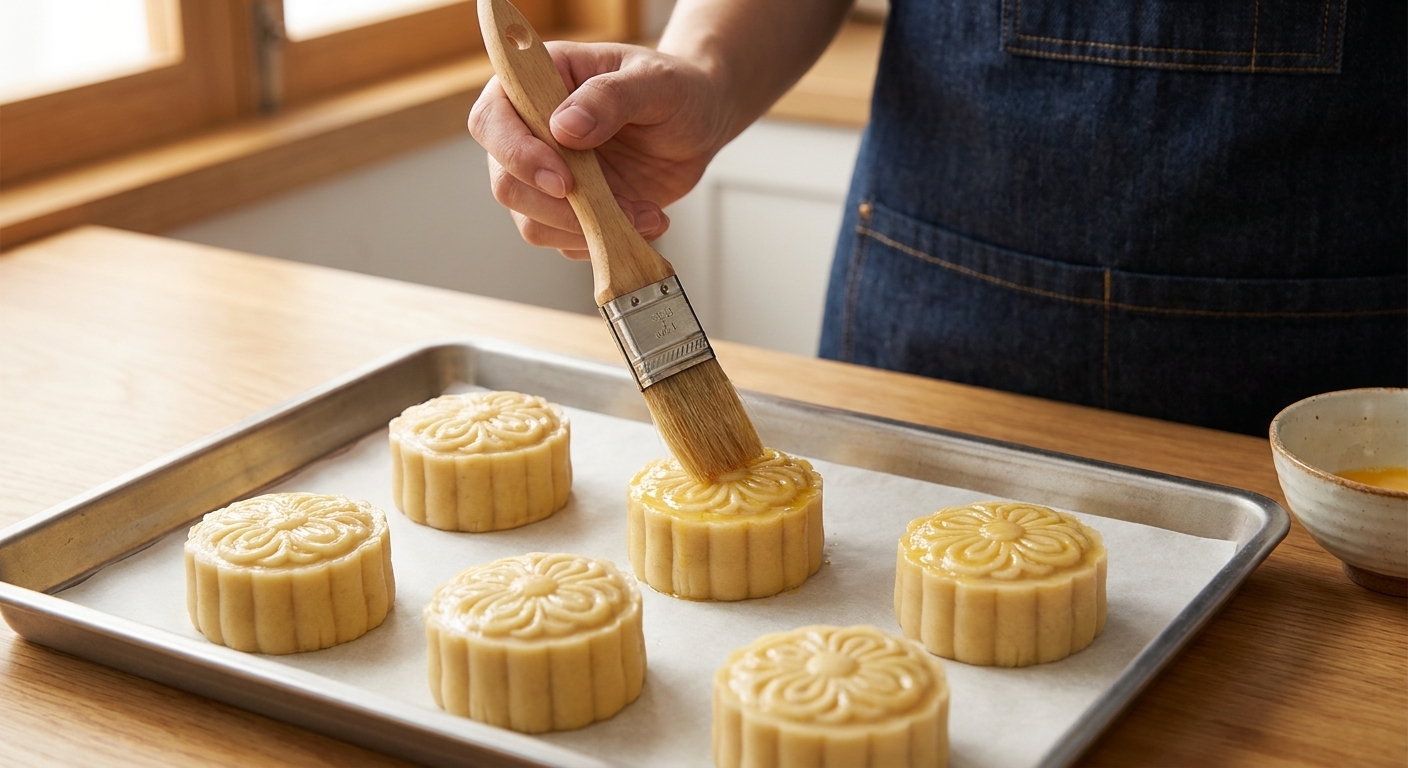
Usually one of three things: the dough was too warm, the mooncake was over-brushed with egg wash (it flooded the grooves), or you handled the stamped mooncake too much. Chill the shaped cakes for 10 minutes and brush a thin coat of egg wash.
Why are mooncakes better the next day?
Freshly baked mooncakes can feel a little dry. Over 24 to 48 hours, the oil in the crust redistributes into the dough, making it softer and more cohesive. This is the famous “returning oil” stage.
How do I cook salted egg yolks?
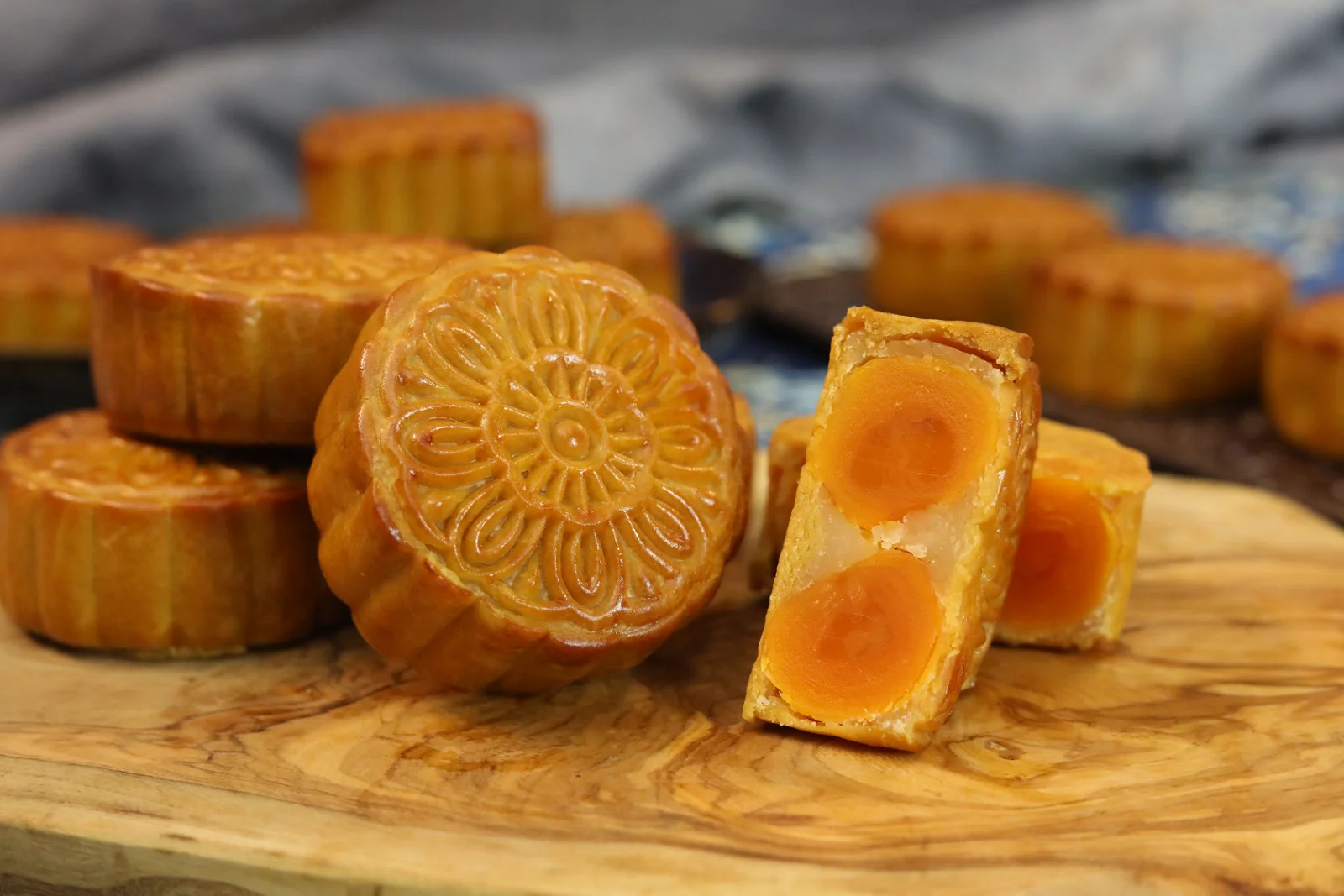
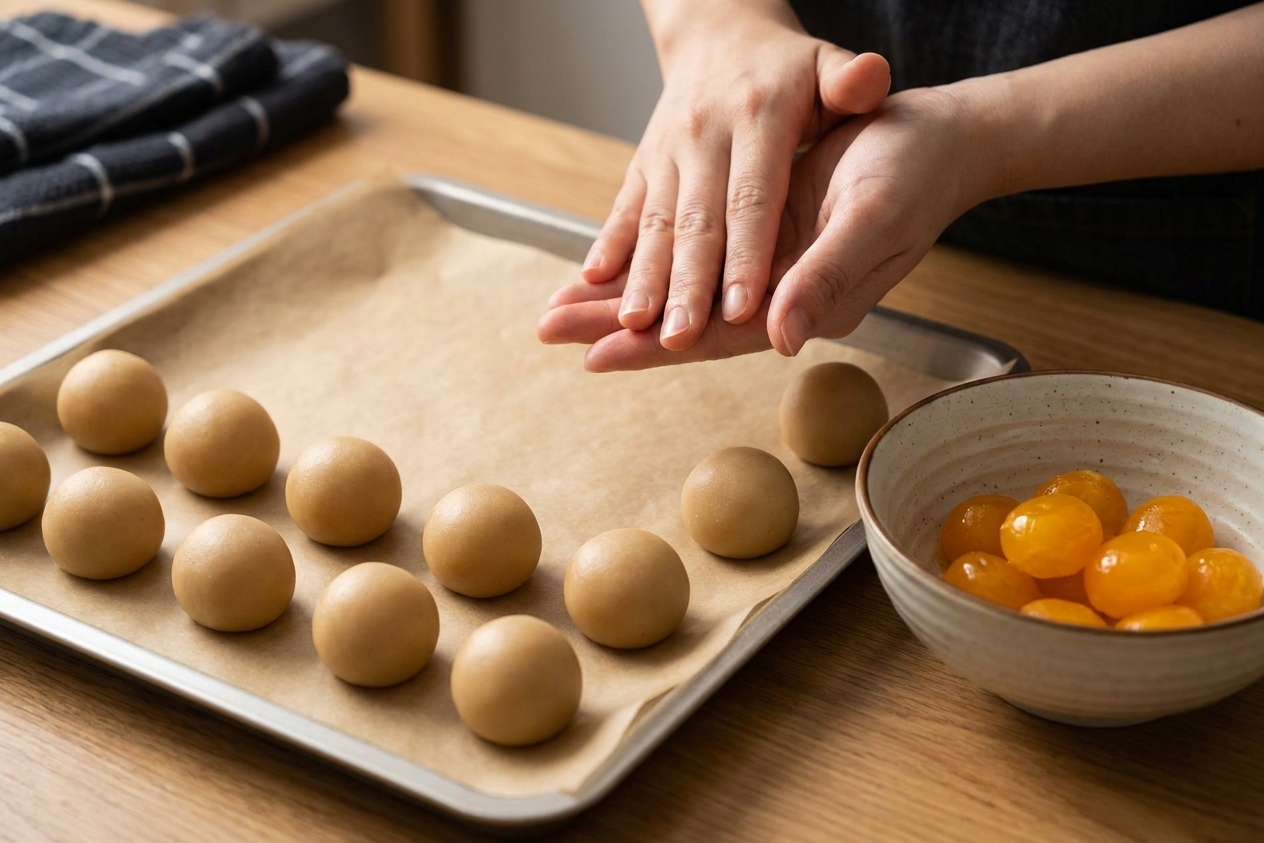
For salted egg yolk mooncakes, cook the yolks first, then cool completely. You can steam them for 8 to 10 minutes, or bake at 350°F (175°C) for about 10 minutes, just until firm. Let them cool before wrapping.
Can I change the filling?
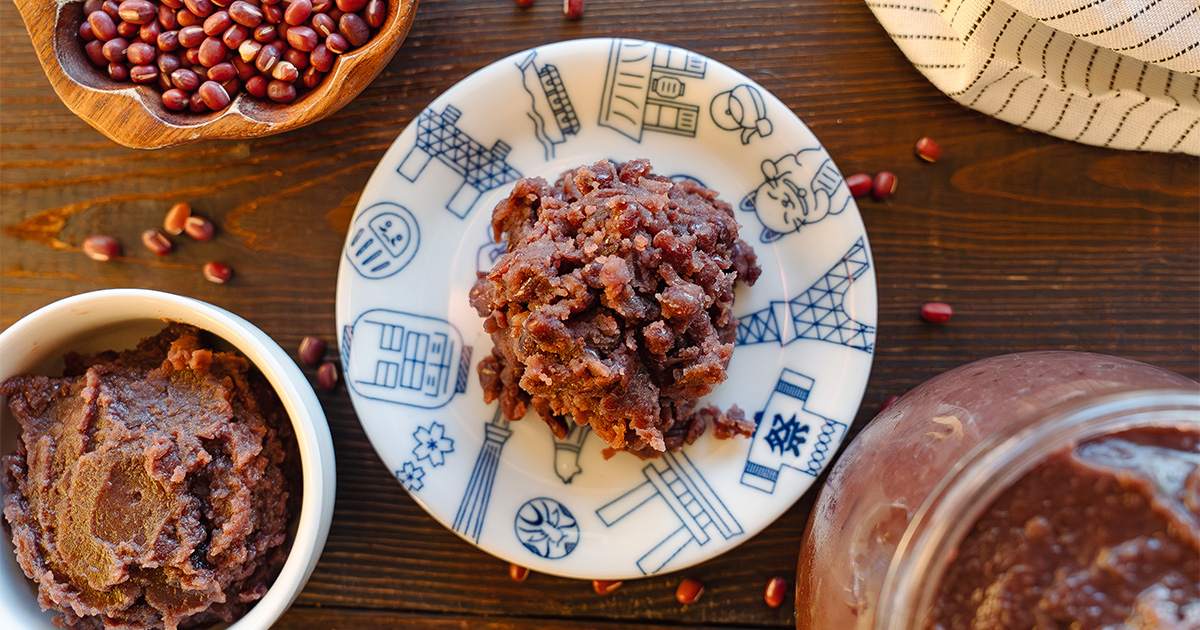
Absolutely. Swap lotus seed paste for red bean paste, black sesame paste, or even a thick peanut butter and sesame mixture. Just keep the filling firm enough to roll into balls, or it will leak.