Common Questions
Do I have to use rutabaga?
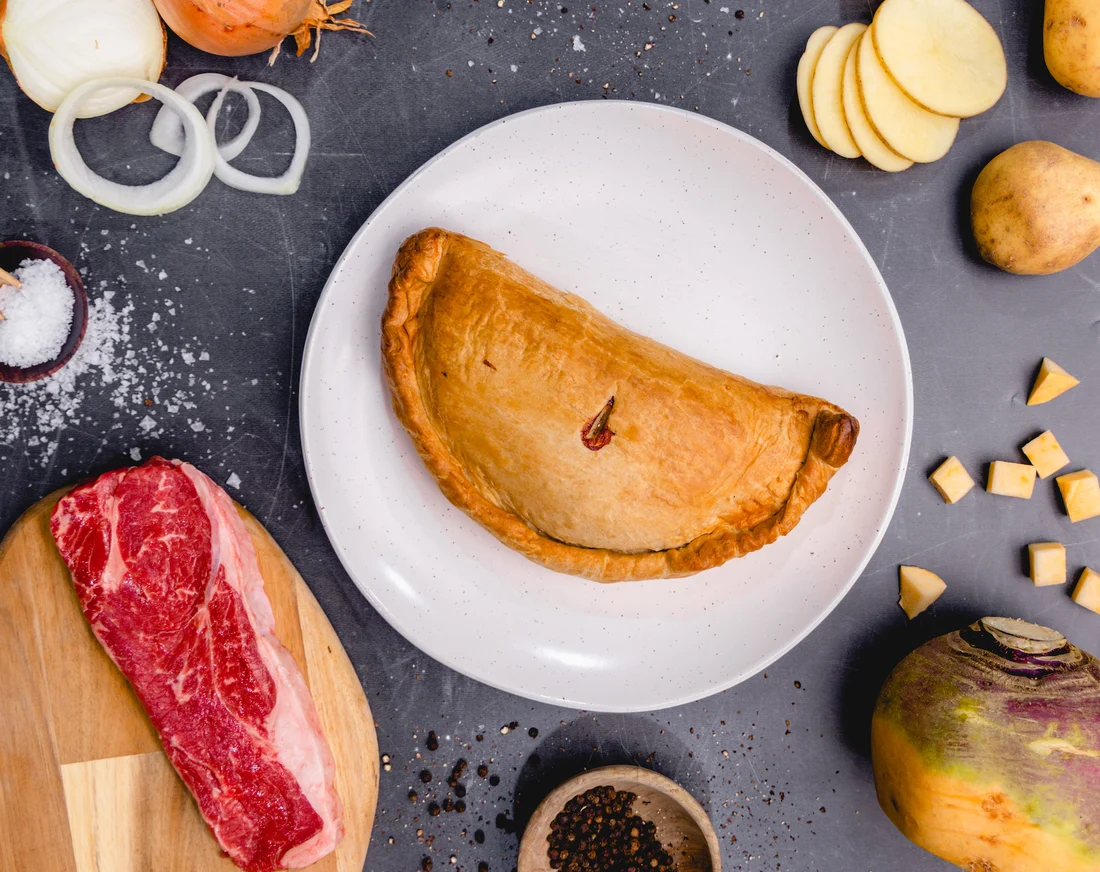
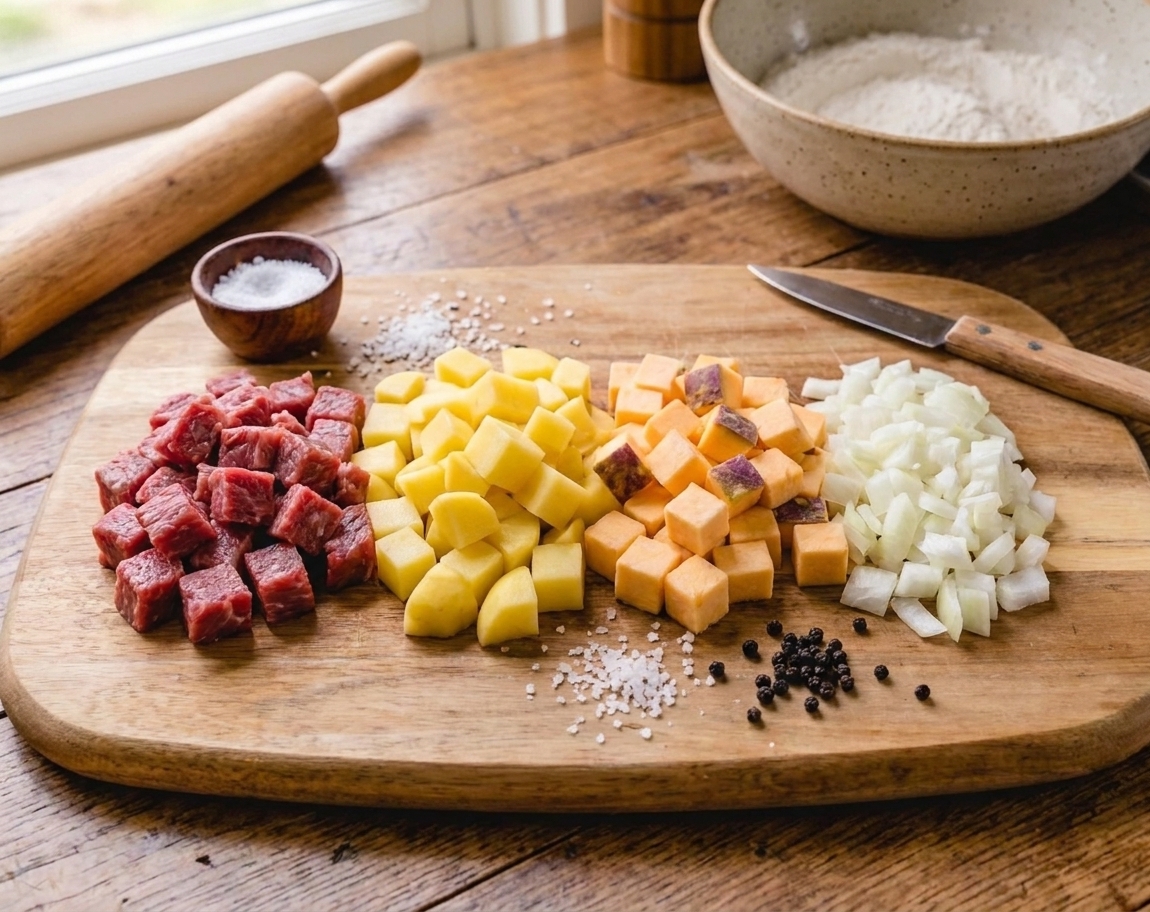
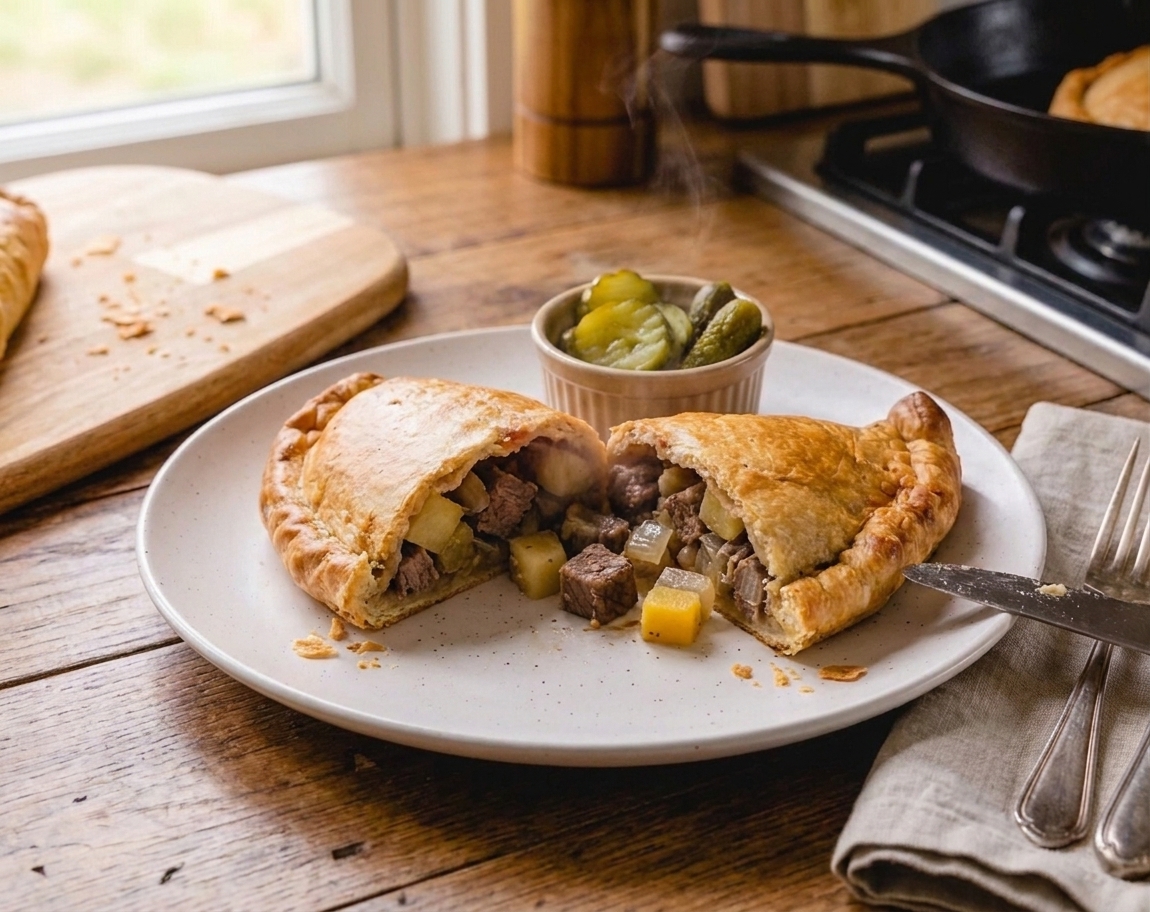
Rutabaga (swede) is traditional and brings a sweet, earthy bite that makes a pasty taste like a pasty. If you cannot find it, use turnip (a little sharper) or add an extra potato and a small carrot for sweetness.
Should the filling be cooked first?
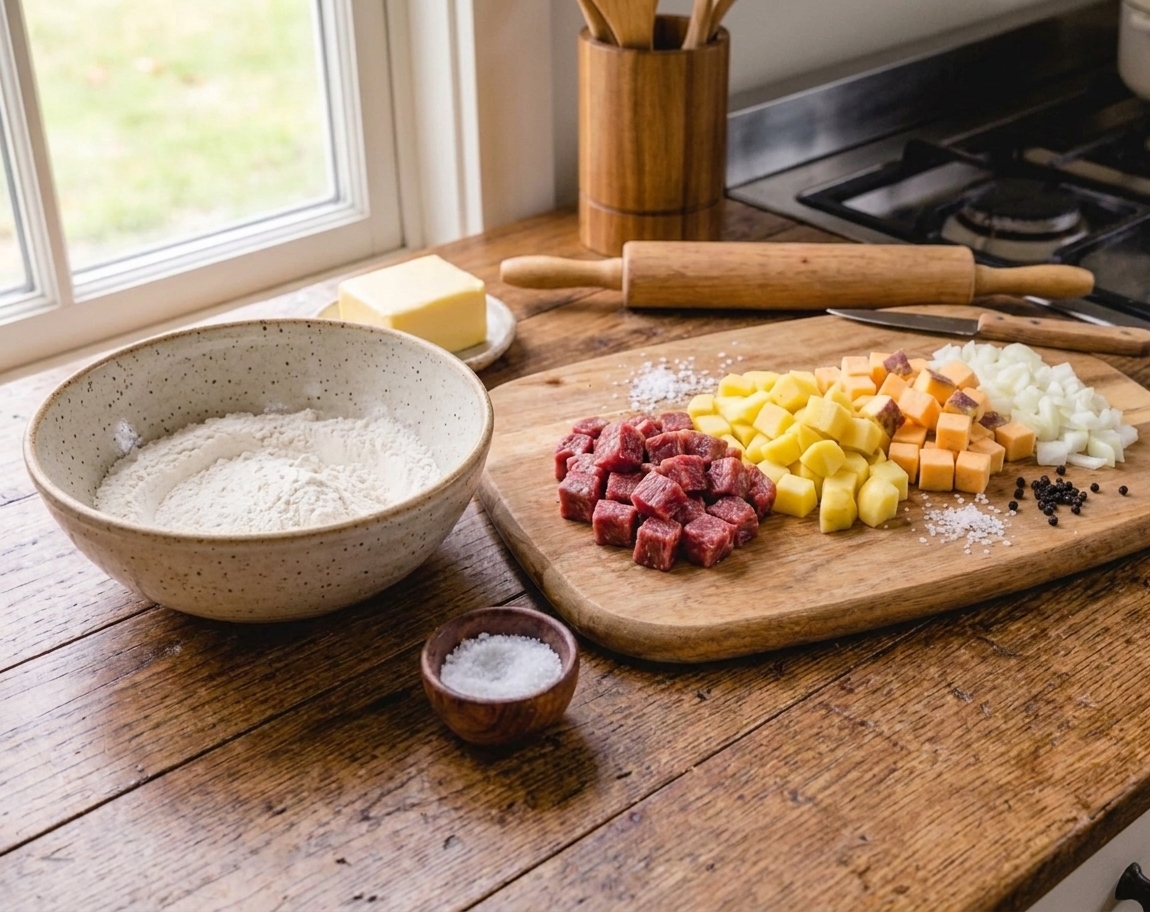
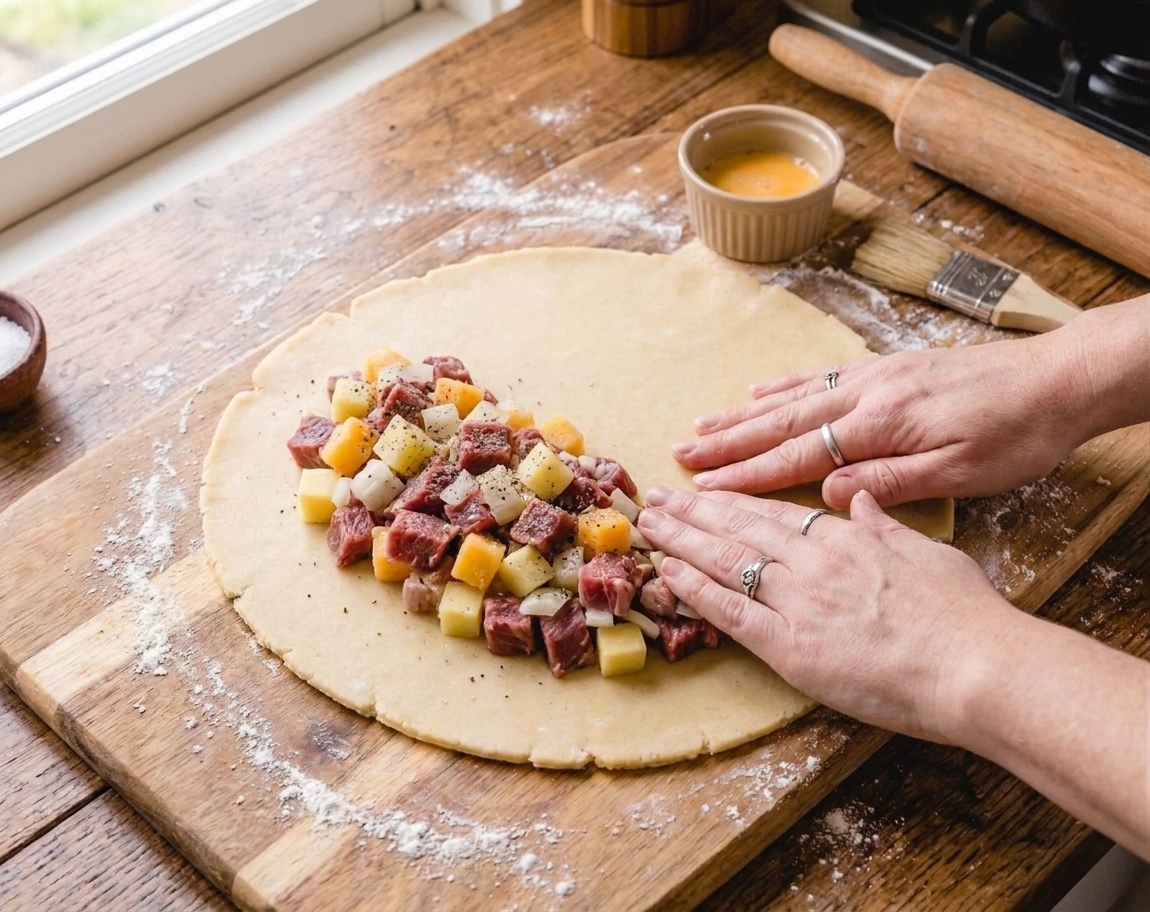
Nope. The beauty is that it cooks inside the pastry. Just keep the dice small so everything gets tender by the time the crust is golden.
Why did my pasty leak?
Usually one of three things: the seam was not sealed well, the filling was too wet, or the vent was missing. Press the edges firmly, crimp confidently, and cut a small vent so steam can escape without blowing out the side.
If your meat or veg looks extra wet in the bowl, you can drain off a tablespoon or two of liquid, or add 1 to 2 teaspoons more flour to help it thicken as it bakes.
Do I have to crimp it on top?
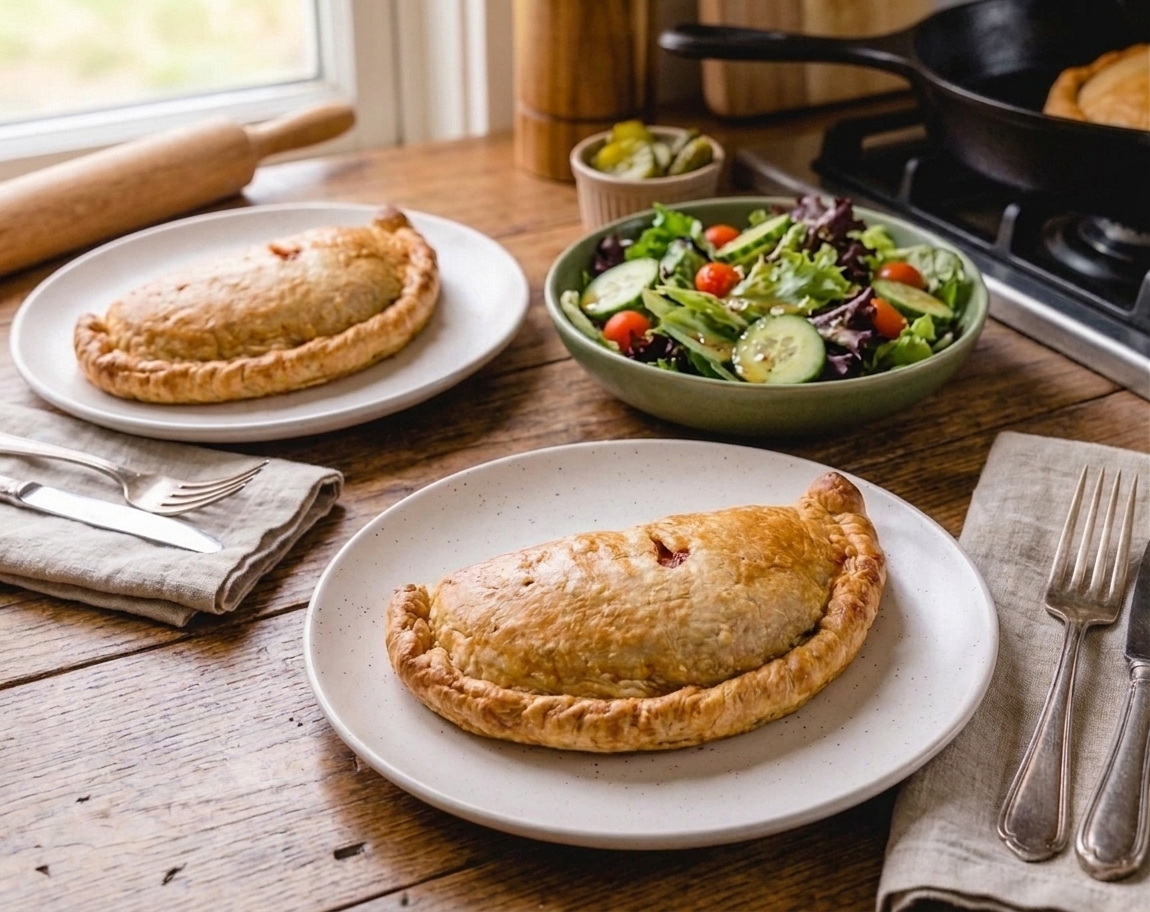
You can crimp along the curved edge (like a turnover) or do a top crimp. Either is fine at home. Pick the one that feels easiest to seal well, because a good seal matters more than the exact placement.
Can I make smaller pasties?
Absolutely. Divide the dough into 8 pieces instead of 6 for lunch-size pasties. Start checking for doneness around 35 to 40 minutes.
How do I know they are done?
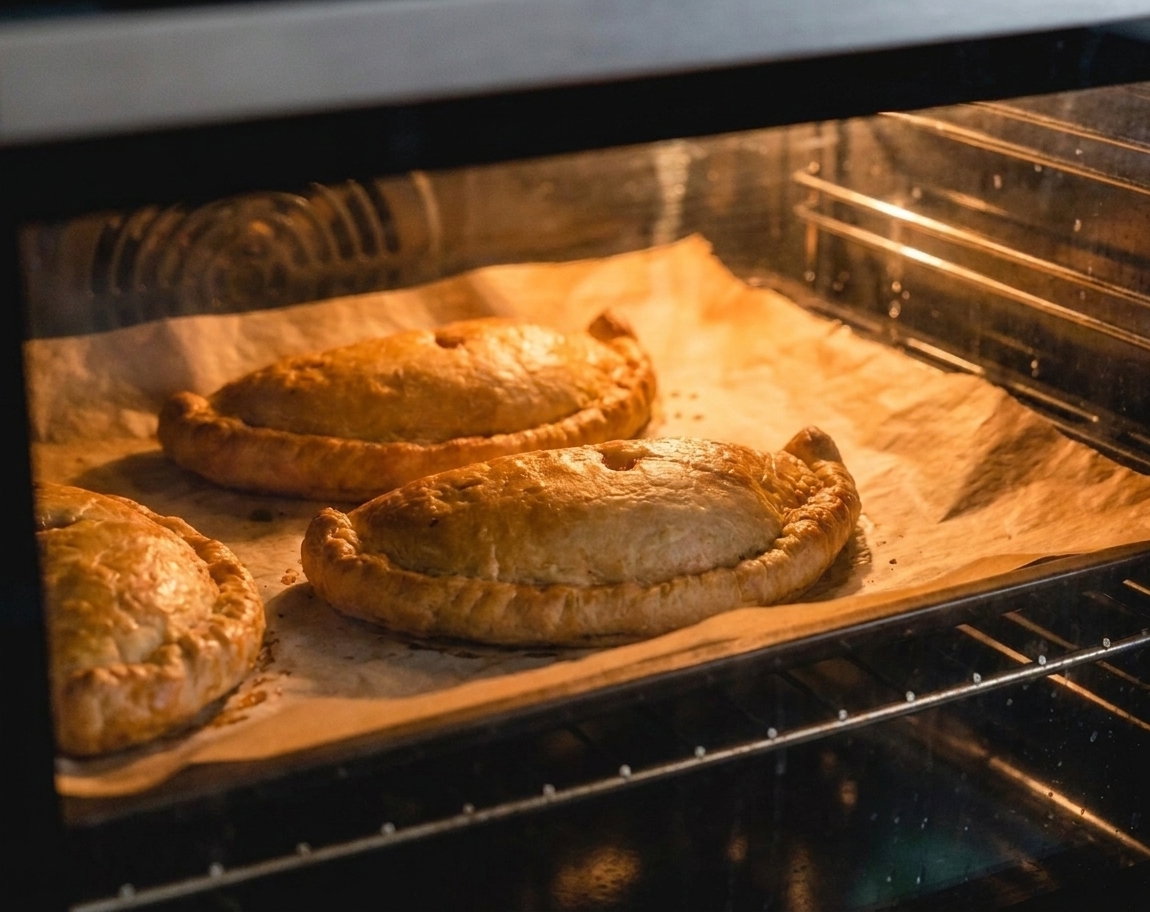
The crust should be deep golden, and the center should be hot. If you have a thermometer, aim for at least 165°F in the middle for food safety. Many batches end up closer to 175 to 190°F once the vegetables are fully tender. You can also look for a little steam and gentle sizzling at the vent. If the crust browns too fast, tent loosely with foil.