Mom's Best Recipes
Recipe

Creamy Hummus with Tahini

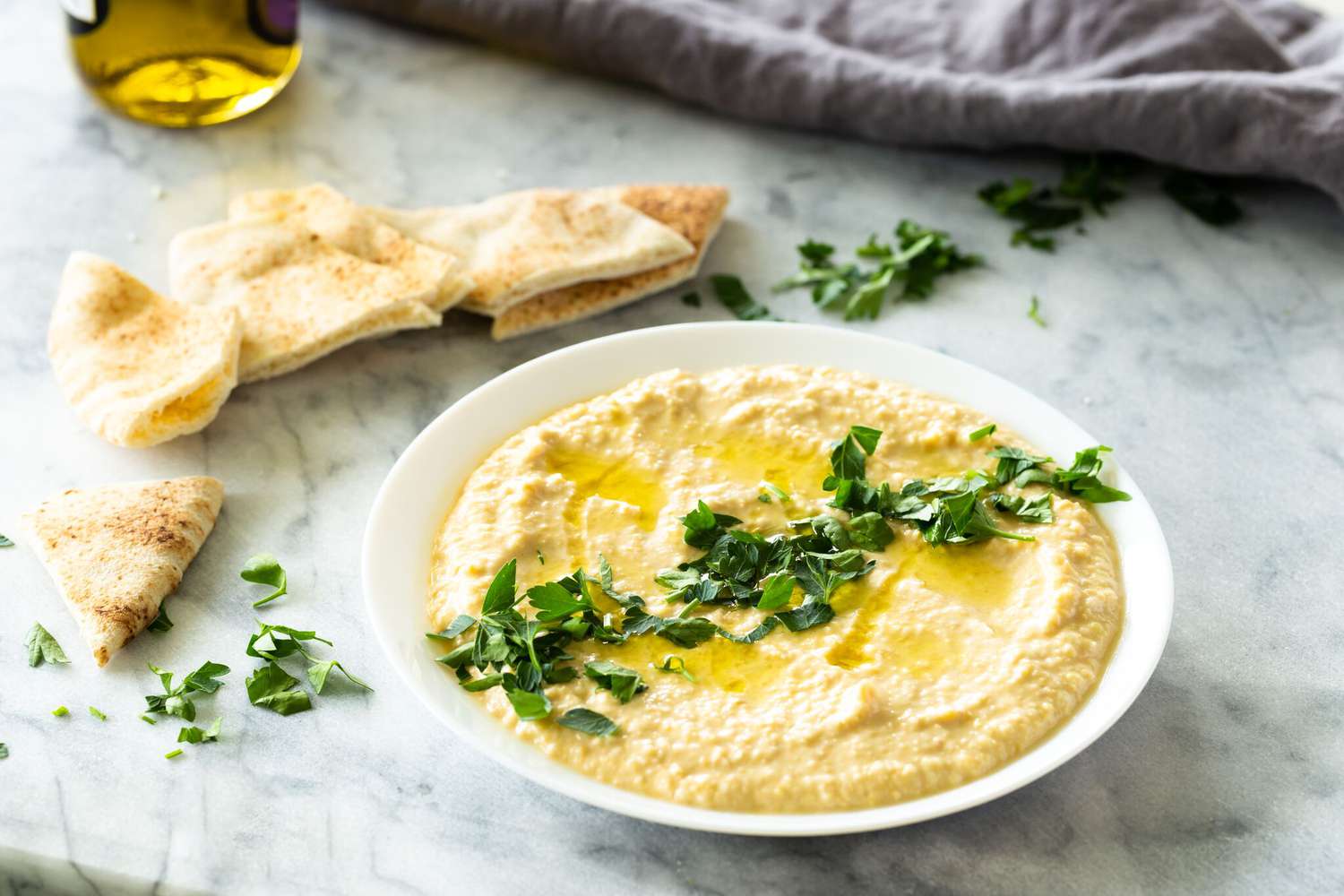
Smooth, bright hummus with tahini, lemon, and garlic, blended until fluffy and finished with olive oil and paprika.

Author By Matt Campbell
4.8
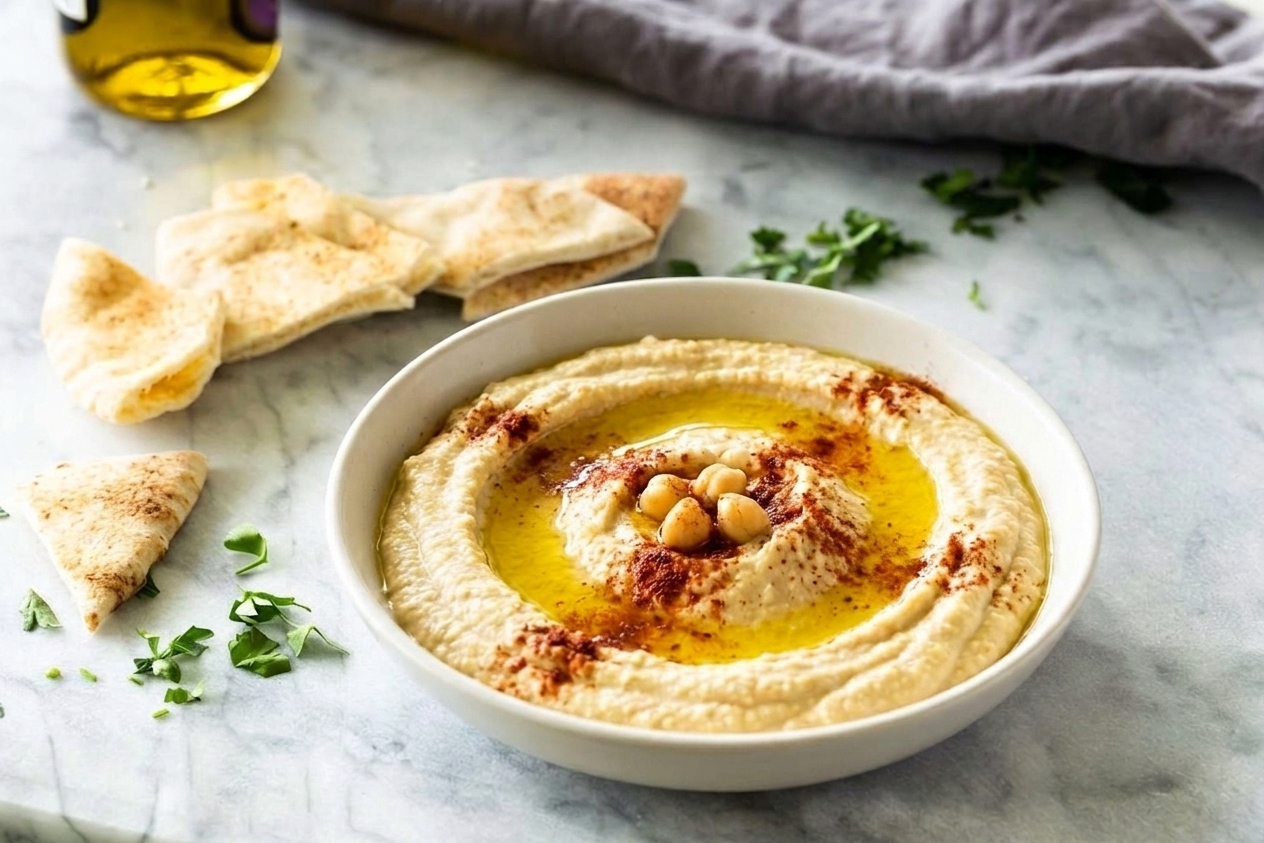
A shallow bowl of creamy hummus swirled with olive oil, sprinkled with paprika, and topped with chickpeas on a light stone kitchen counter

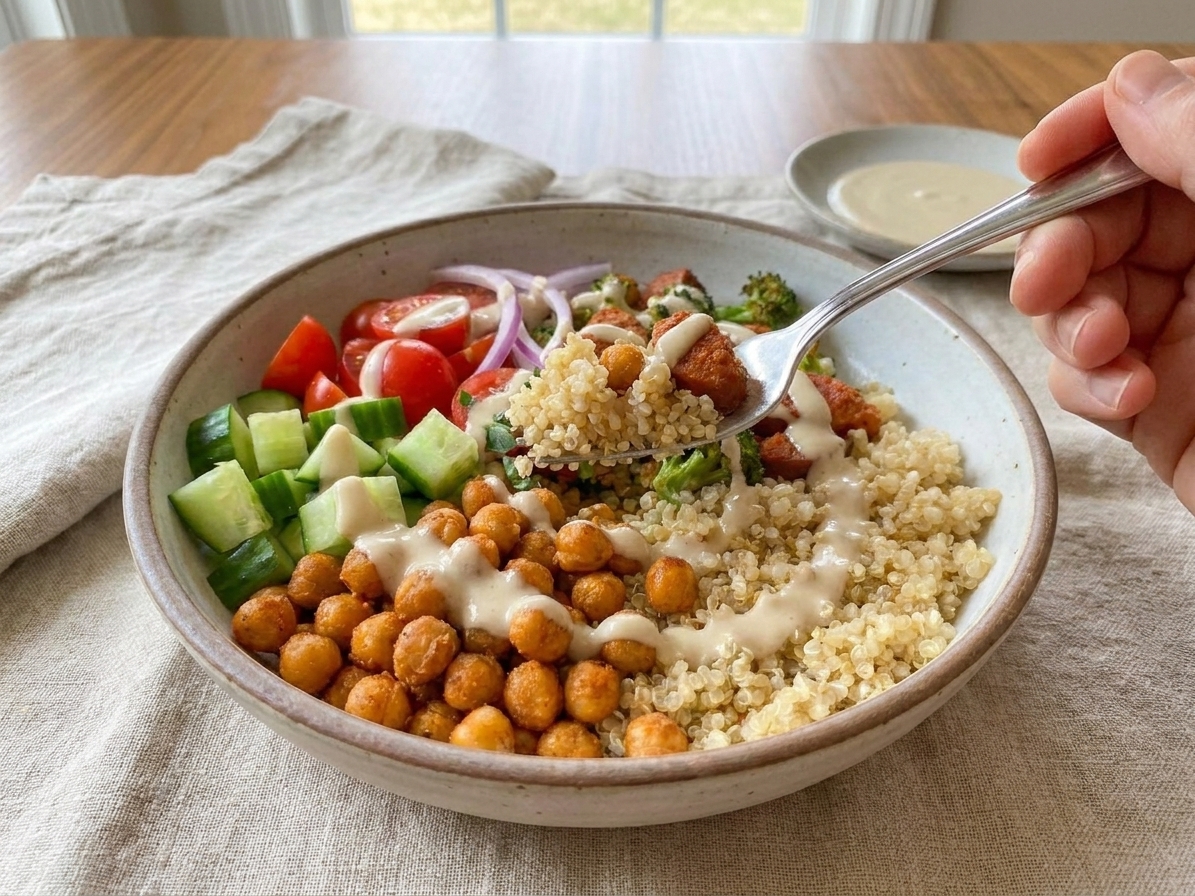
There are two kinds of hummus nights in my kitchen. The first is the snack-attack situation, where you blink and half a bag of pita chips disappears. The second is the I need dinner to feel put together situation, where hummus turns into the main character with warm pita, crunchy cucumbers, and whatever leftovers are hanging out in the fridge.

This hummus with tahini is my go-to because it hits all the right notes: nutty and creamy from tahini, bright from lemon, and just garlicky enough to make you go back for “one more scoop” three times. The method is simple, but a couple small tricks make it taste like you bought it from a place that also makes dangerously good falafel.

One quick note before you start: tahini quality matters. If your tahini is thick, dry, or tastes aggressively bitter, it will show up in the final bowl. A smooth, pourable tahini makes this recipe shine. This recipe makes about 2 cups, which is perfect for snacking and for building an easy dinner spread.
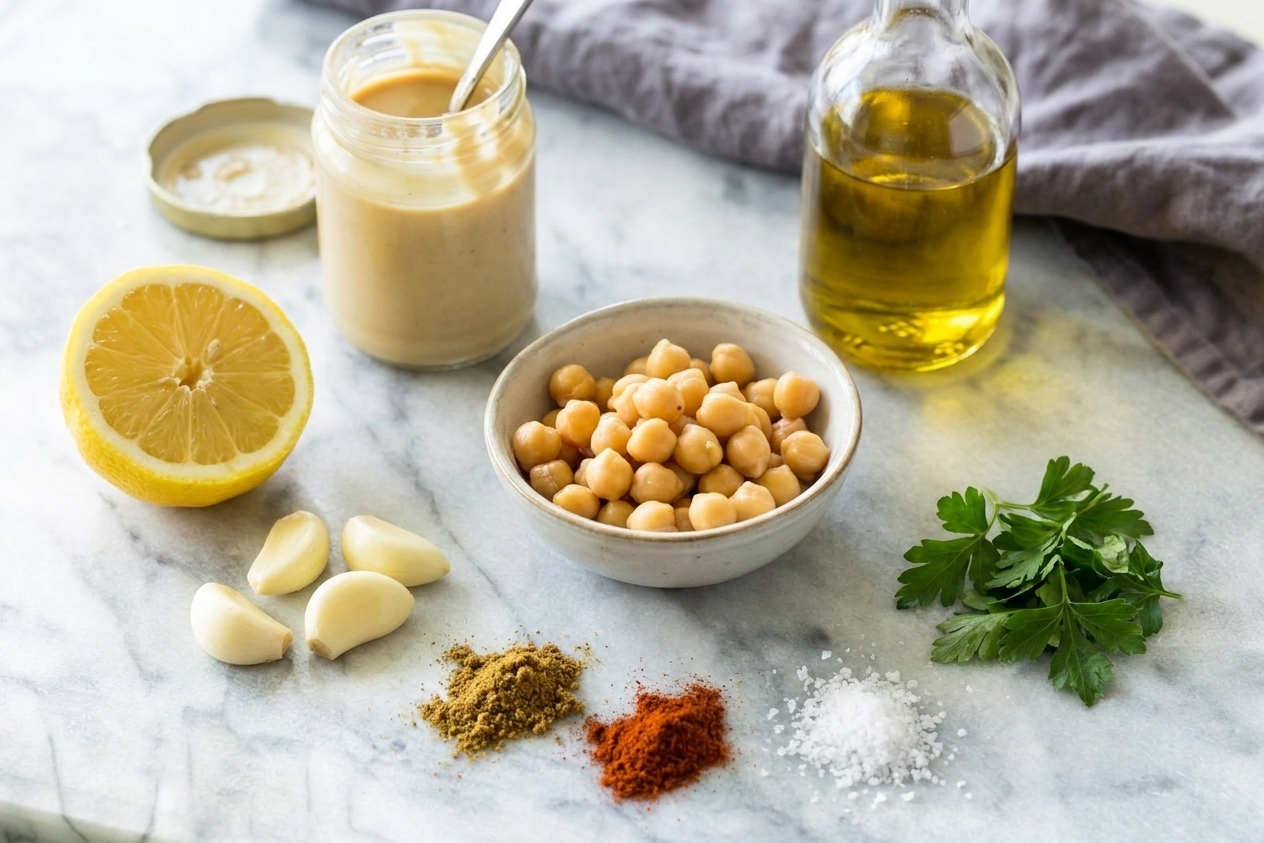
Tahini, a halved lemon, peeled garlic cloves, canned chickpeas, olive oil, and spices arranged on a light kitchen counter with neutral bowls

Why It Works

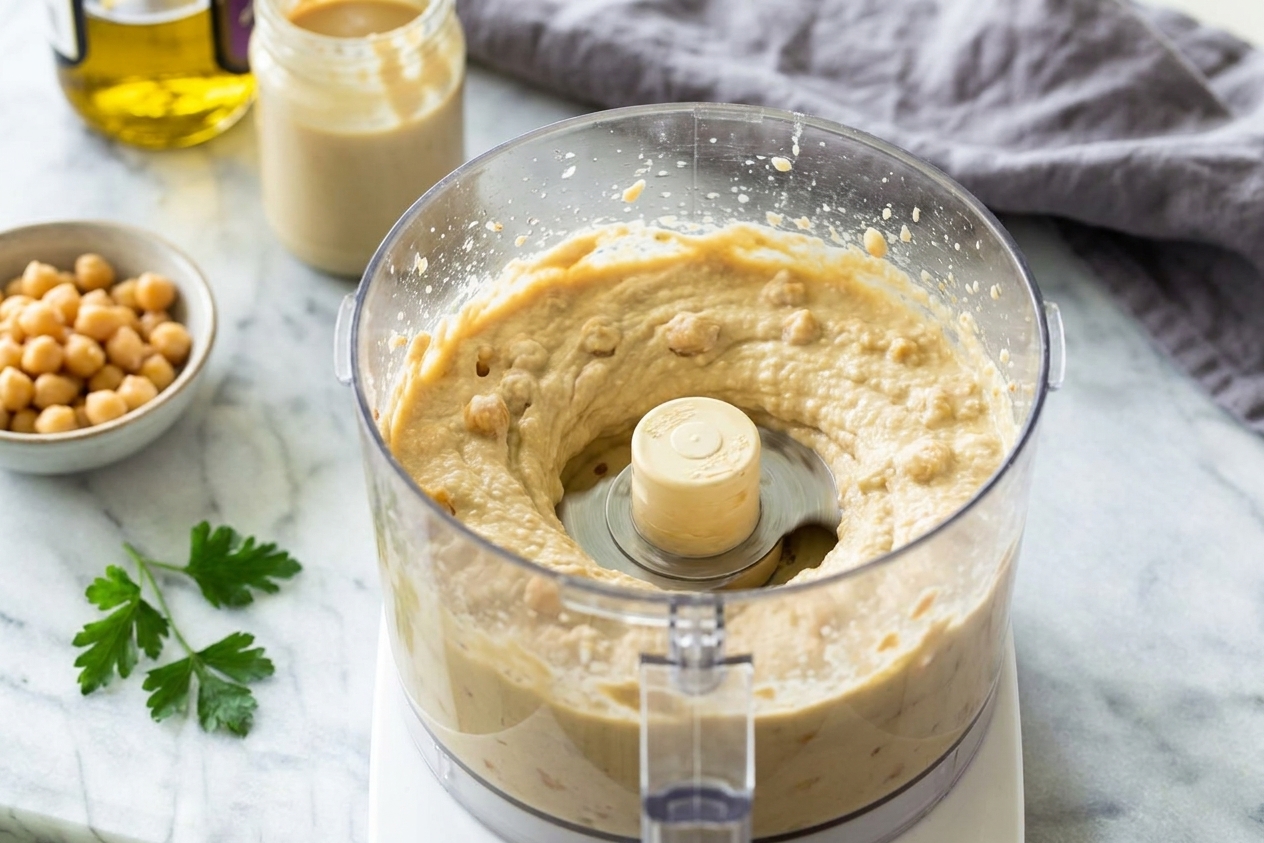
  • Ultra-creamy texture: Blending the tahini and lemon first whips in air and prevents grainy hummus.
  • Balanced flavor: Lemon, garlic, and cumin keep it bright and savory without tasting harsh.
  • Custom thickness: Ice water lets you dial in the perfect scoopable consistency.
  • Accessible ingredients: Pantry chickpeas plus a few staples, no specialty shopping required.

Pairs Well With

Storage Tips

Refrigerate: Store hummus in an airtight container for up to 4 to 5 days. Smooth the top and add a thin layer of olive oil to help keep it from drying out.

Stir before serving: Hummus can thicken as it chills. Stir and loosen with a teaspoon or two of cold water or lemon juice.

Freeze: You can freeze hummus for up to 2 months. Thaw overnight in the fridge, then blend or stir vigorously with a splash of water to bring back the creamy texture. The flavor is still great, though the texture can be slightly less fluffy than fresh.

Common Questions

What does tahini do in hummus?

Tahini adds a nutty, toasted richness and makes the texture creamier and more “restaurant-style.” It also helps the lemon and garlic taste rounded instead of sharp.

Does tahini quality matter?

Yes, a lot. Look for tahini that is smooth, runny, and well-stirred (not dry or chalky). A lighter-roasted tahini tends to taste milder and less bitter, which makes a big difference in a simple recipe like hummus.

Can I make hummus without tahini?

You can, but it will taste different. If you are out, try adding 1 to 2 tablespoons of olive oil plus 1 tablespoon of Greek yogurt for creaminess. Nut butters (like peanut or almond butter) can work in a pinch, but the flavor will be noticeably different and they are not ideal if you are serving anyone with nut allergies. Start small, taste, and adjust.

How do I fix hummus that tastes too bitter?

Bitterness usually comes from the tahini (especially if it is old, overly roasted, or not well-stirred), but it can also come from harsh garlic, oxidized olive oil, or even a little pith sneaking into your lemon juice.

To fix it: Start with balance first. Add a pinch more salt and another squeeze of lemon, then blend and taste again. If the flavor is good but the hummus feels heavy or too thick, add ice water 1 teaspoon at a time to lighten the texture. If it is still bitter after that, a tiny pinch of sugar can help, but start with less than 1/8 teaspoon.

Why is my hummus grainy?

Common reasons are not blending long enough, not using enough liquid, or using tahini that is stiff and not well-stirred. Blend longer than you think, use ice water gradually, and make sure your tahini is smooth before measuring.

Do I really need to peel chickpeas?

No. Peeling makes hummus extra silky, but it is optional. If you want most of the benefit with almost none of the annoyance, rub drained chickpeas in a clean towel for 30 seconds and discard any loose skins.

I did a lot of my learning the hands-on way, by cooking alongside other people and paying attention to the little details that make food taste “right.” Hummus is the perfect example of why that clicked for me. It looks simple, but the feel matters. You taste, you adjust, you learn what “needs salt” actually means in real time.

This is the version I make when friends wander into my kitchen and start hovering by the chips. It is relaxed, a little chaotic, and it disappears fast, which is honestly the best compliment.