Mom's Best Recipes
Recipe

Crispy Calamari With Lemon Garlic Aioli

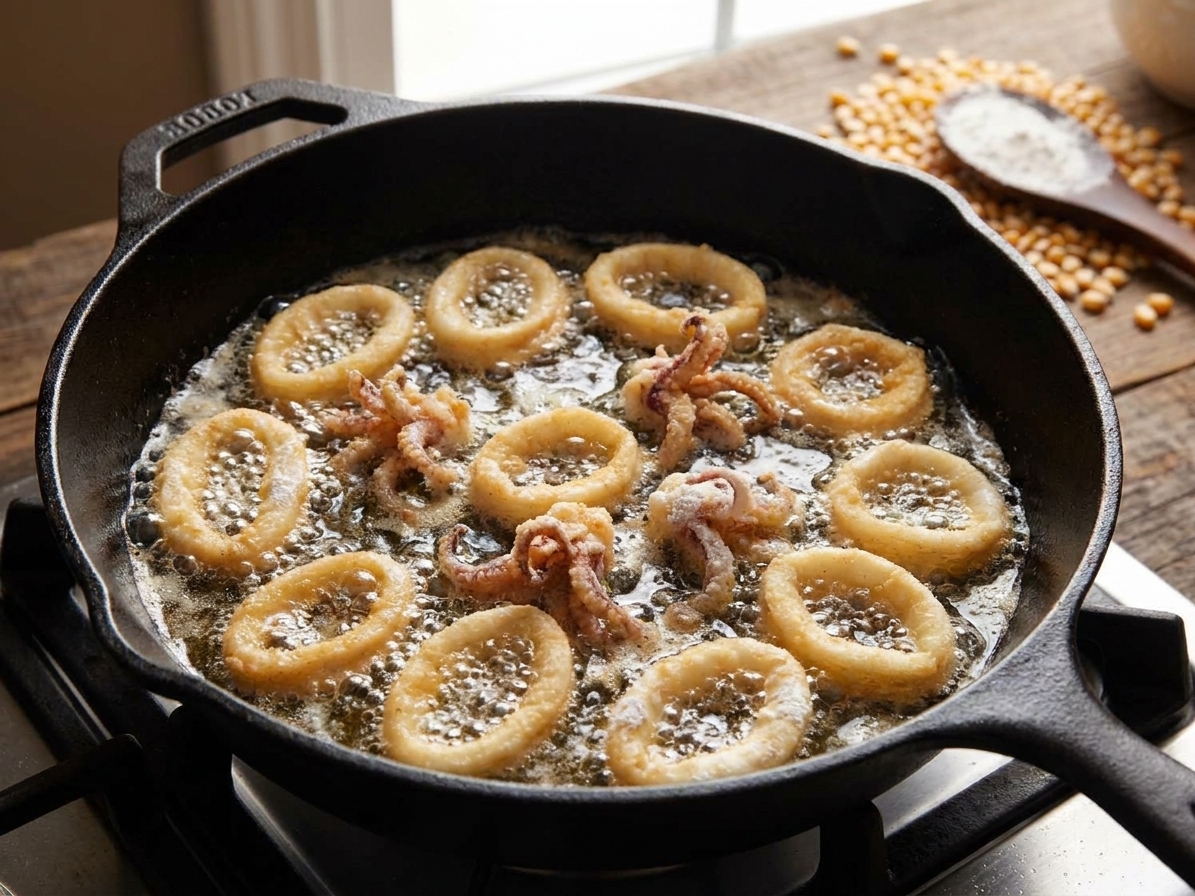
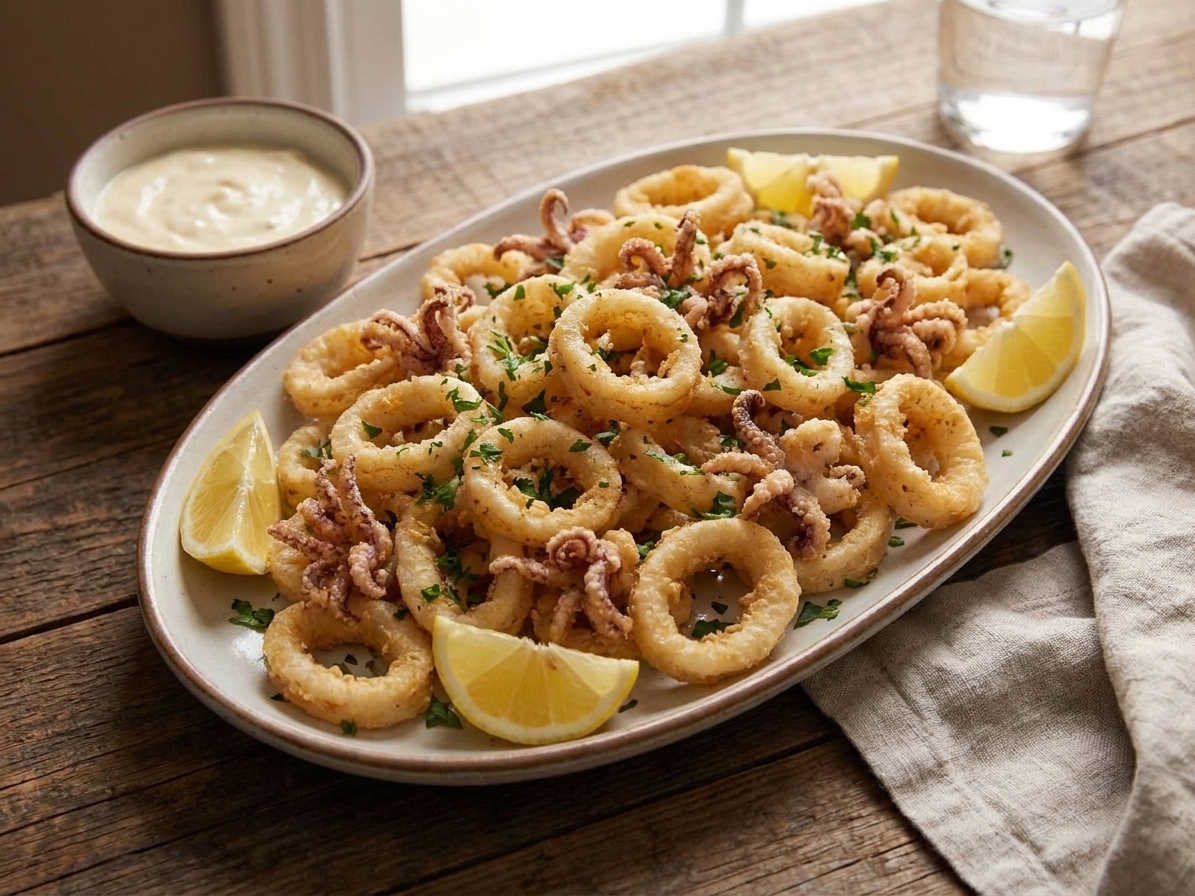
Lightly coated, quickly pan-fried calamari with crisp edges and a zippy lemon garlic aioli for dipping.

Author By Matt Campbell
4.8
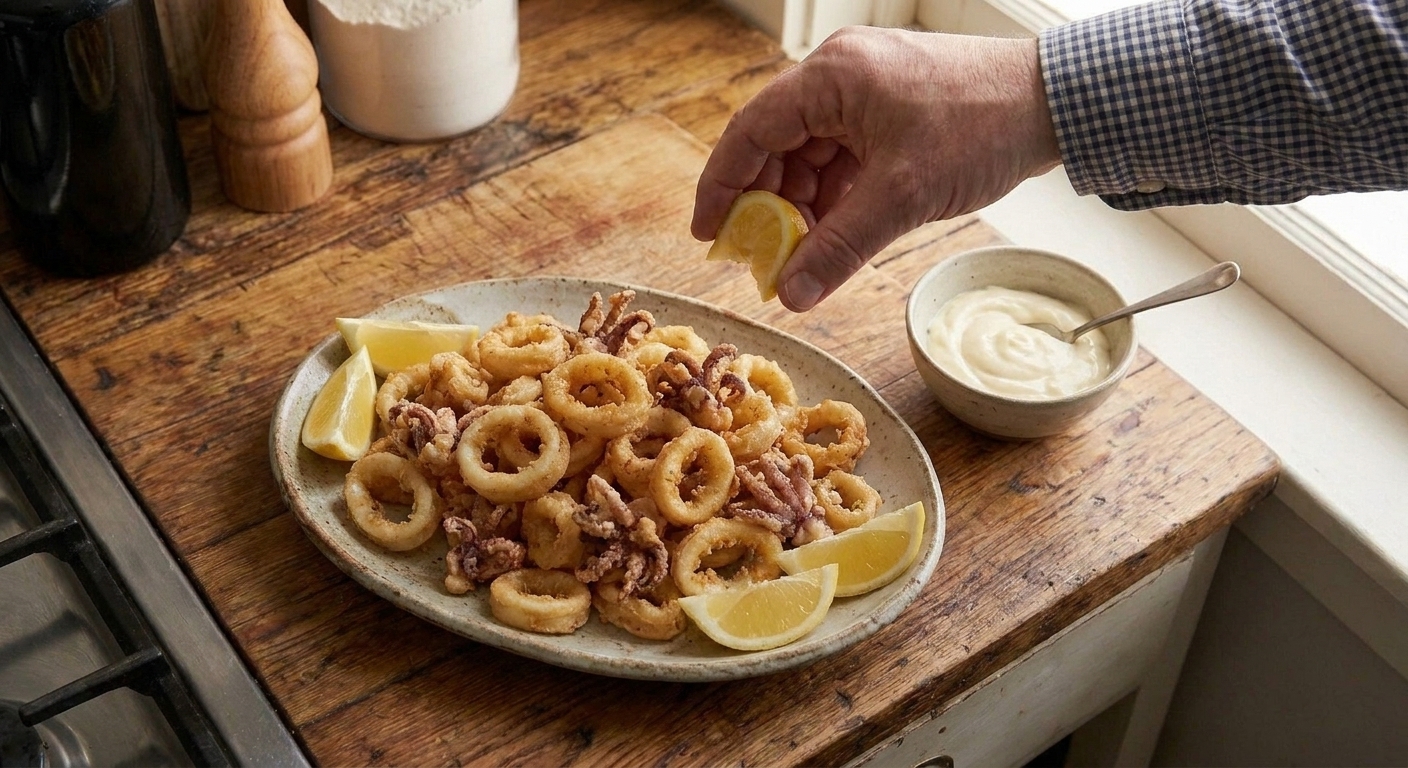
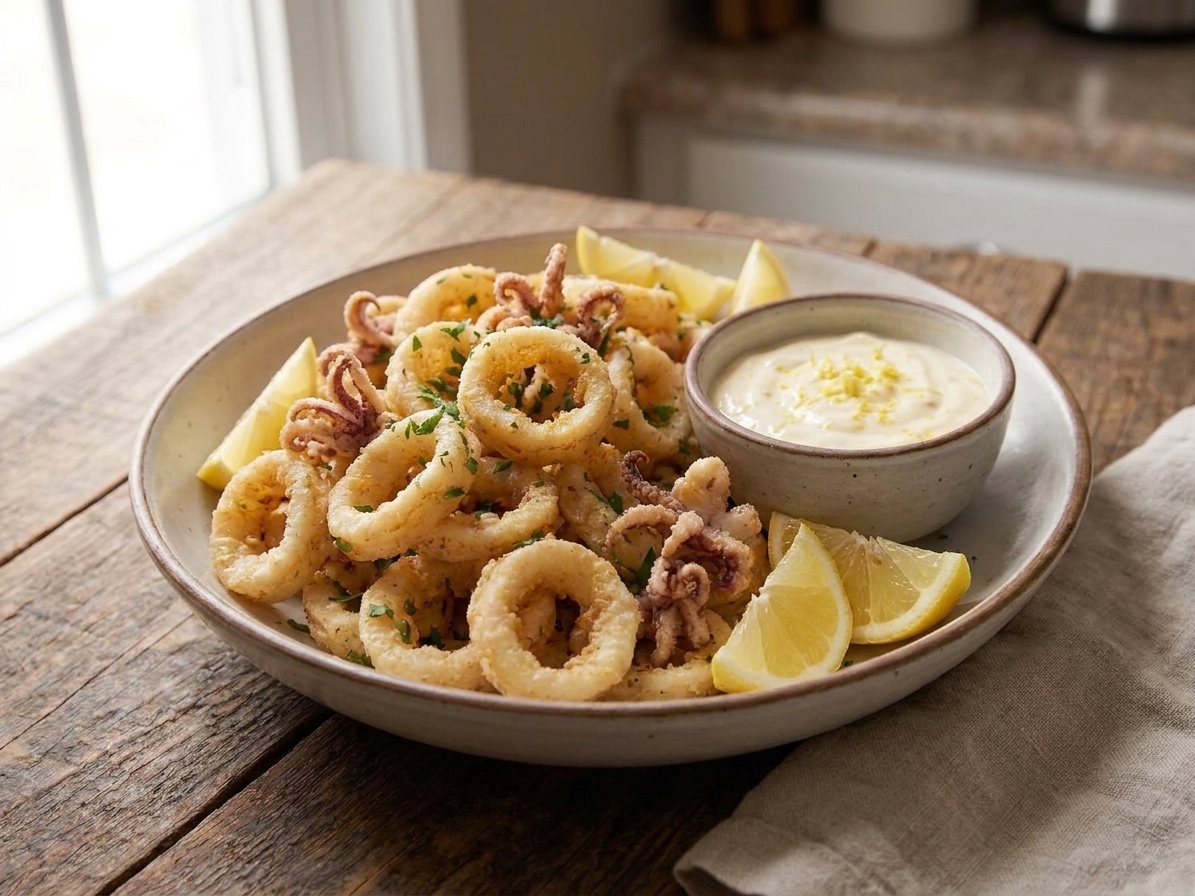
A shallow bowl piled with golden crispy calamari rings and tentacles, served with lemon wedges and a small ramekin of lemon garlic aioli on a simple wooden table

If calamari has ever let you down, it was probably cooked too long. Squid has a tiny window where it turns from tender to chewy, and my goal here is to keep you firmly in the tender zone while still getting those crisp, salty edges that make you reach for just one more piece.

This is my weeknight-friendly, no-fryer version: a light coating, a hot skillet, and a bright lemon garlic aioli that tastes like you ordered it at your favorite spot and somehow it arrived at your house. We are going for crunchy, not heavy. Bold, not complicated. And yes, you should absolutely taste as you go.

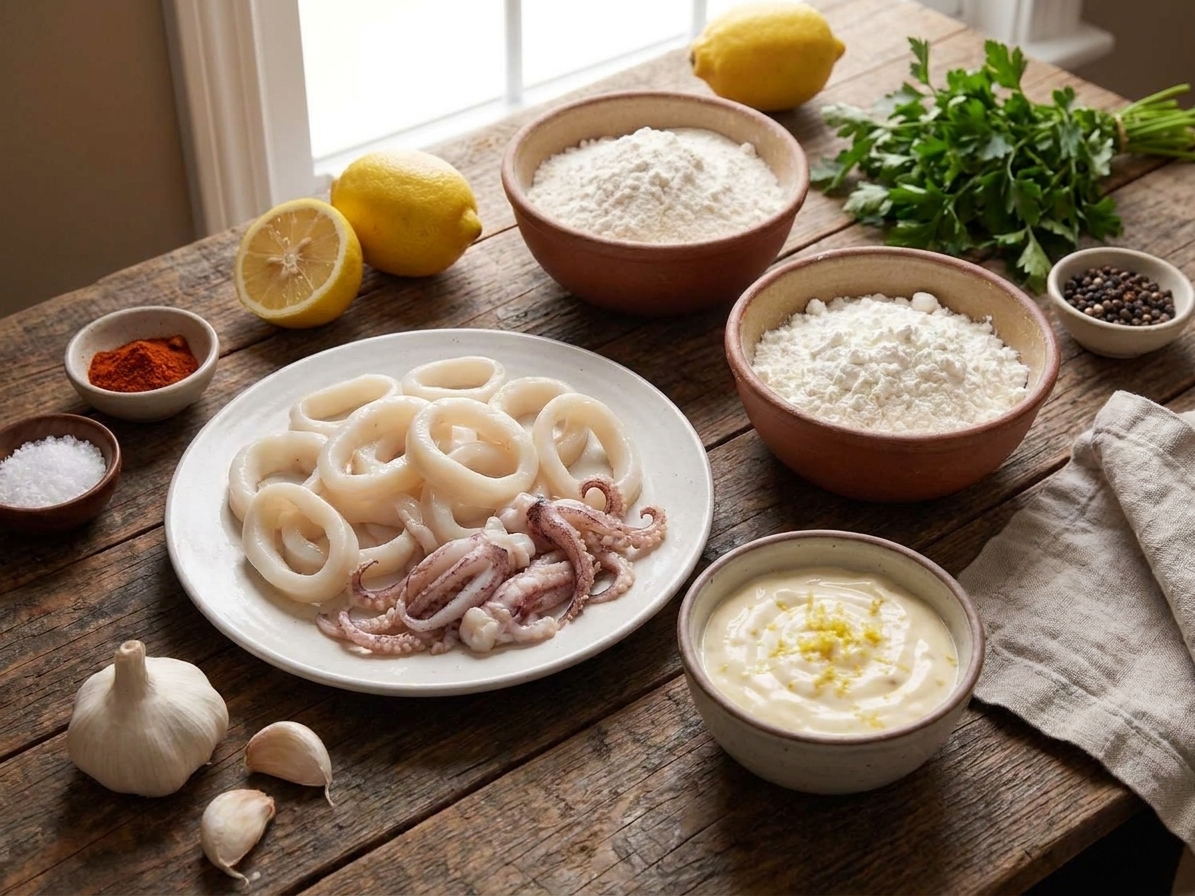
A kitchen counter with raw cleaned calamari rings and tentacles, flour, cornstarch, lemons, garlic, parsley, paprika, salt, pepper, and a small bowl of mayonnaise laid out for cooking prep

Why It Works

  • Tender calamari, not rubber bands: The cook time is short on purpose. High heat plus a quick fry keeps squid sweet and bouncy.
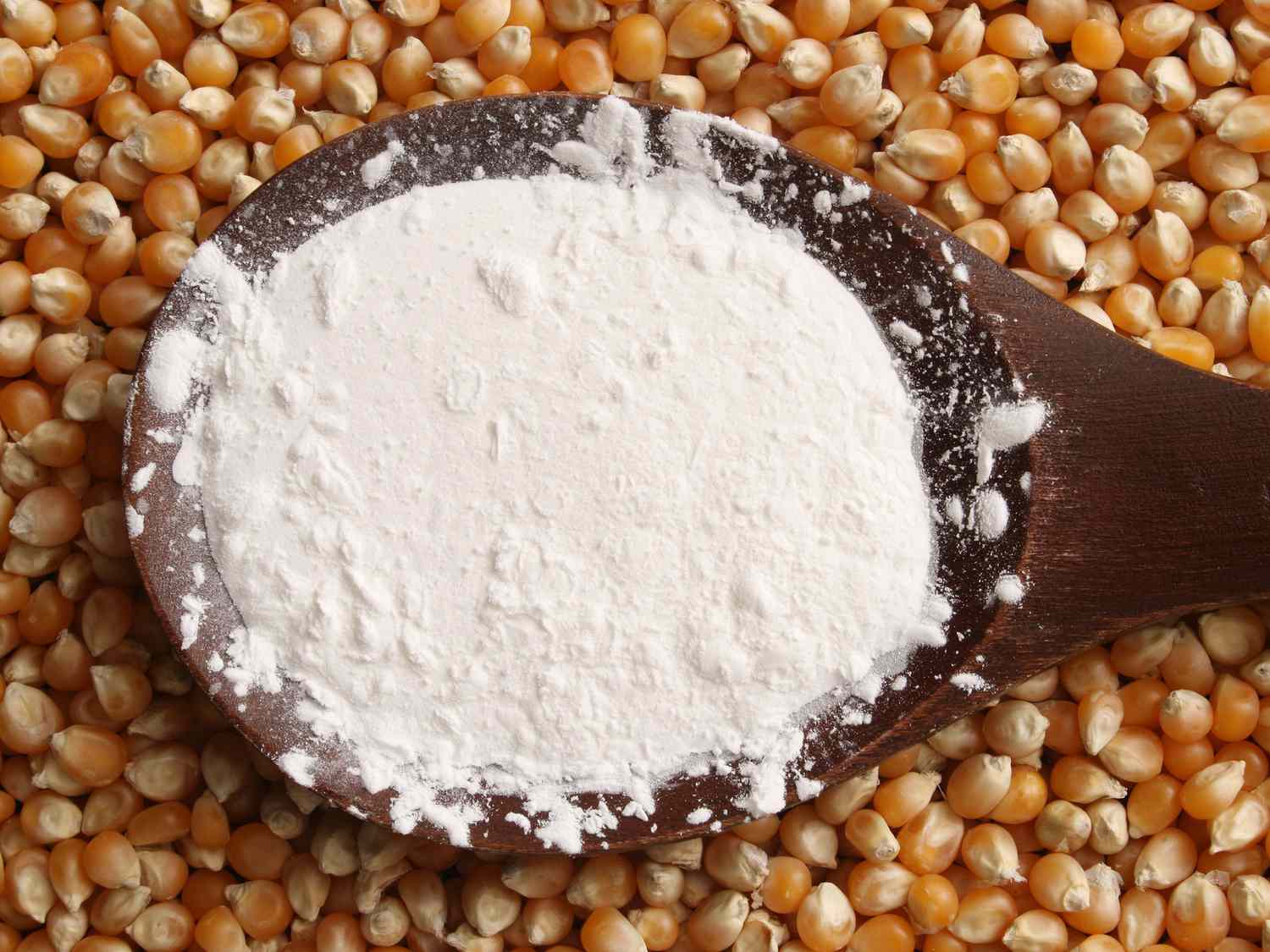
  • A light, crisp coating: A flour and cornstarch mix gives you that airy crunch without deep frying.
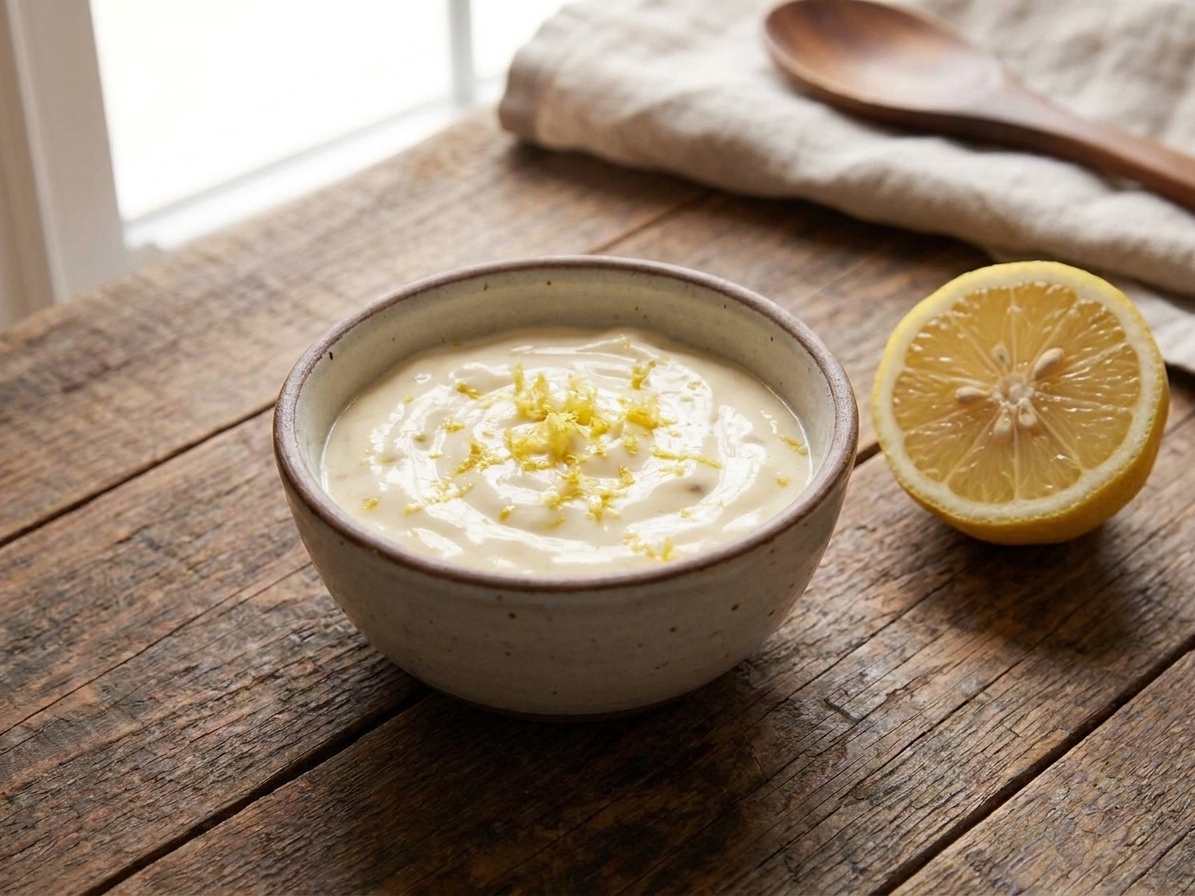
  • Bright sauce that wakes everything up: Lemon zest and garlic in the aioli cuts through the richness and makes the whole plate taste louder.
  • Minimal mess: One skillet, a shallow dredge, and a paper-towel-lined plate (or a rack). Done.

Pairs Well With

Storage Tips

Calamari is at its absolute best right after cooking. If you do end up with leftovers, here is how to keep them decent.

Fridge

Store cooled calamari in an airtight container lined with a paper towel (it absorbs condensation). Refrigerate for up to 2 days. Store aioli separately and keep it refrigerated for up to 3 to 4 days. Give it a quick sniff and taste check before serving.

Reheat

  • Best: Re-crisp on a sheet pan in a 425°F oven for 5 to 7 minutes, flipping once.
  • Also good: Air fryer at 400°F for 3 to 5 minutes.
  • Avoid: Microwave. It turns the coating soft and the squid chewy.

Freezing

I would not freeze cooked calamari. Texture takes a real hit. If you want a freezer-friendly option, freeze the raw cleaned squid instead and make the coating fresh.

Common Questions

How do I keep calamari from getting chewy?

Two rules: dry it well and cook it fast. Pat the squid thoroughly dry, then fry over medium-high heat and pull it as soon as it turns opaque with light golden edges. Overcooking is the main reason it gets rubbery.

Should I soak calamari in milk or buttermilk first?

You can, but you do not need to. A 15 to 30 minute soak in buttermilk can slightly mellow the flavor and help coating adhesion. The bigger tenderness win is still short cook time.

Can I bake it instead of frying?

Yes, with different expectations. Toss the coated calamari with a little oil, spread it out on a rack set over a sheet pan, and bake at 450°F for 8 to 10 minutes. It will be drier and less shatter-crisp than pan-fried, but still tasty with the aioli.

Rings only or tentacles too?

Both. Tentacles get extra crispy little edges that are honestly the best part. Just make sure everything is similar thickness and fully dry before coating.

What oil is best for frying calamari?

Use a neutral, high smoke point oil like canola, avocado, vegetable, or grapeseed. Olive oil can work in a pinch, but it is more likely to smoke at the heat you want.

If my calamari is frozen, how should I thaw it?

Thaw it overnight in the fridge in a colander set over a bowl so it can drain. Right before cooking, rinse if needed, then pat it very dry with paper towels. Wet squid plus hot oil is a splatter situation, so take the drying step seriously.

The first time I tried making calamari at home, I treated it like chicken. Big mistake. I cooked it until I felt “sure,” and it fought back like a rubber bouncy ball. Eventually I learned the trick that restaurant cooks already know: calamari is not a long-cook situation unless you are braising it forever. It is a quick, hot, in-and-out kind of food.

Now I make this when I want something that feels a little fancy but still lands like comfort food. It is crunchy, salty, bright, and honestly kind of chaotic in the best way. The aioli is the peace treaty that brings it all together.

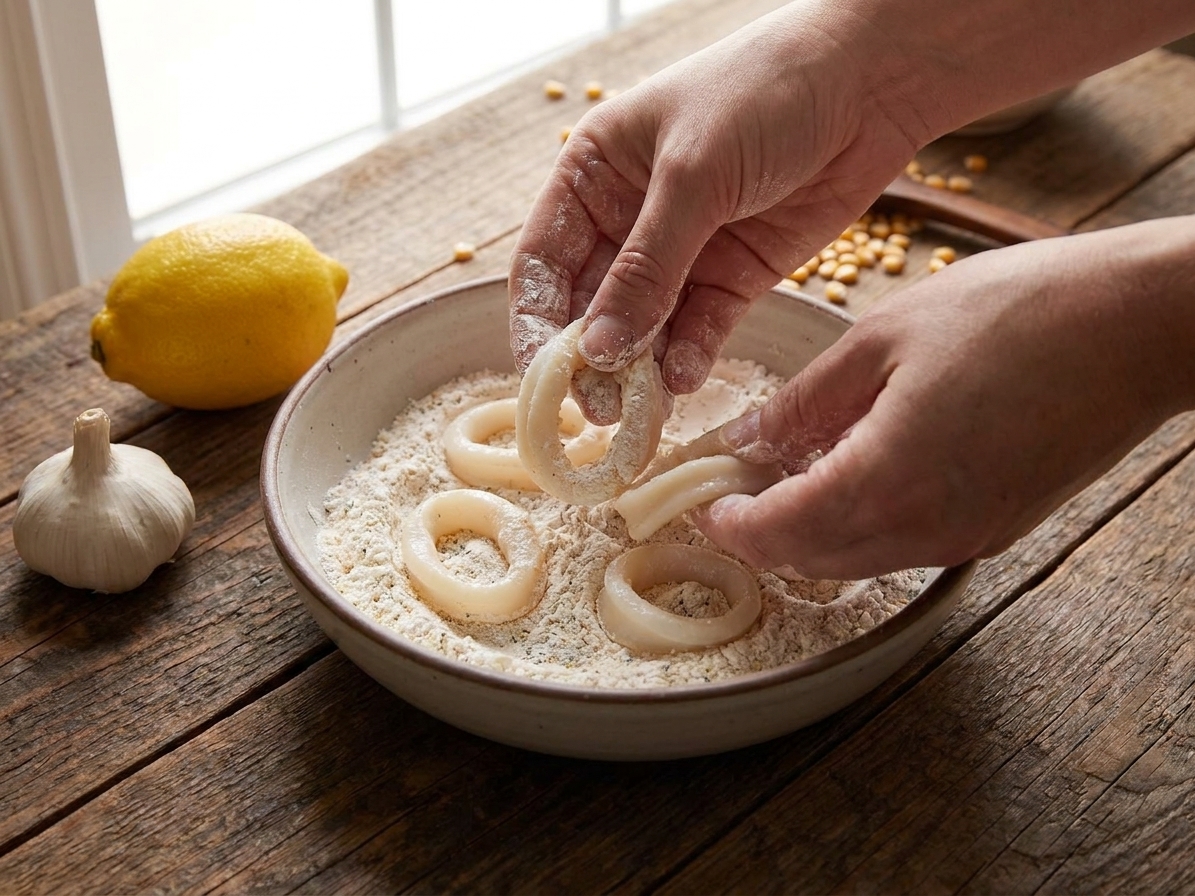
A pair of hands dredging calamari rings in a bowl of seasoned flour and cornstarch on a home kitchen counter with a lemon and garlic nearby