How do I keep calamari from getting chewy?
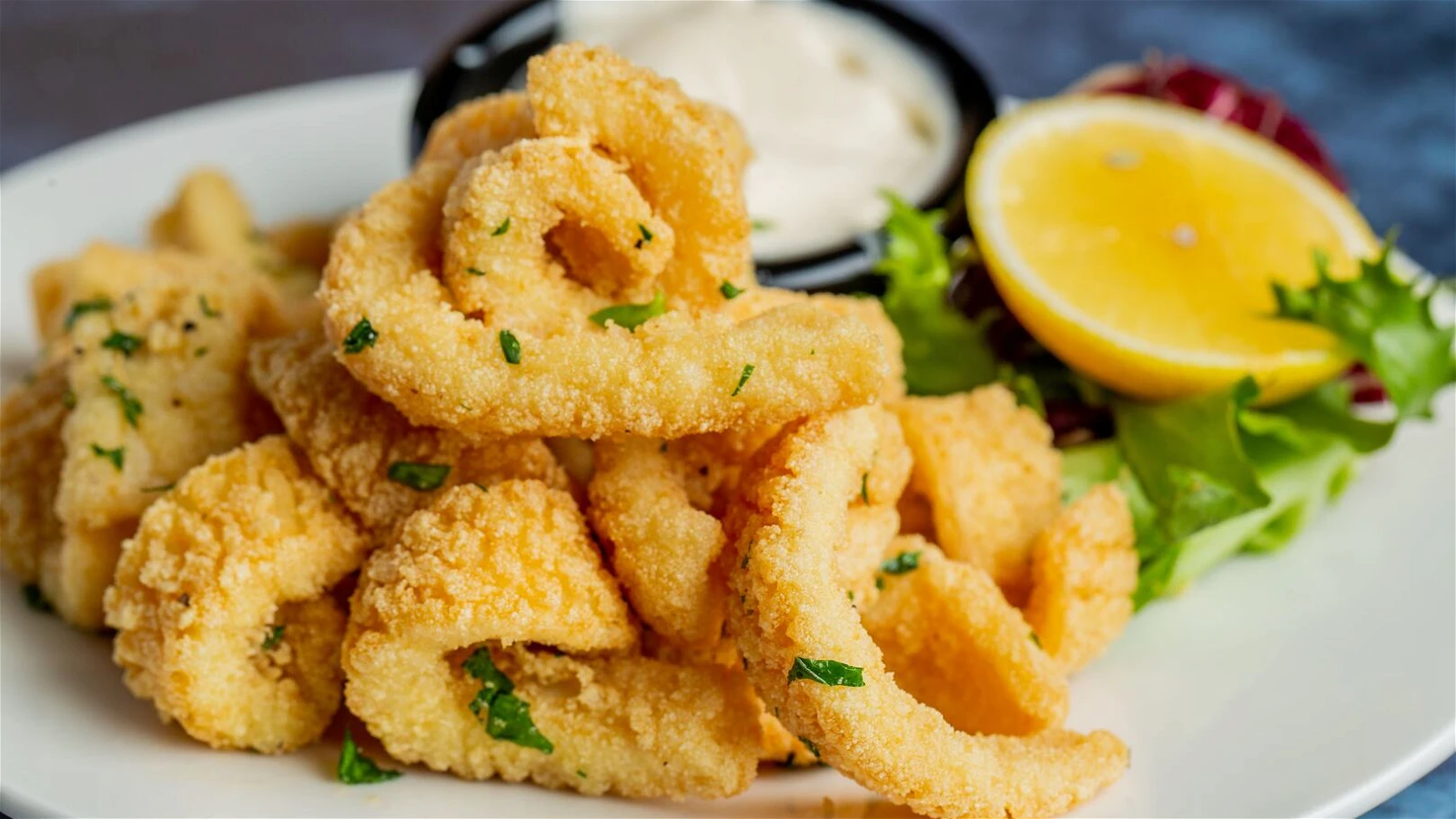
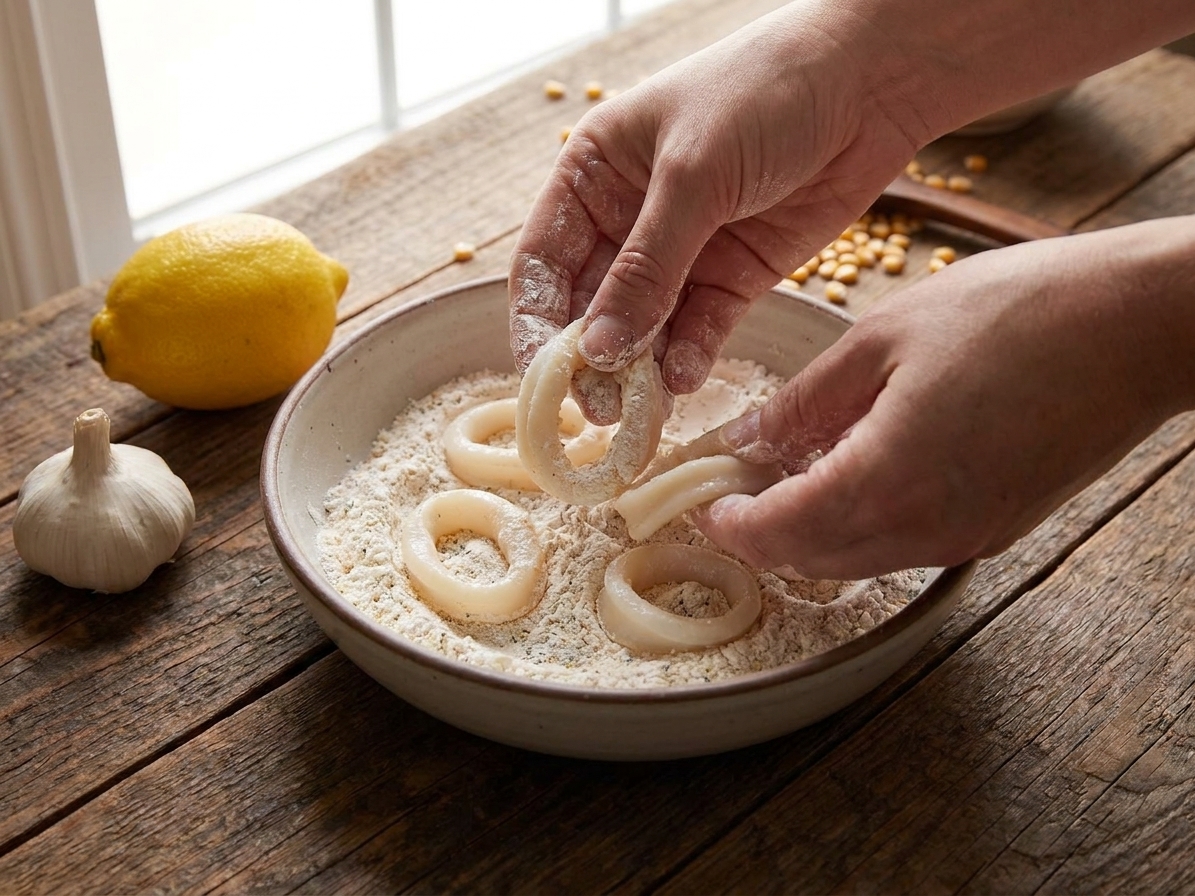
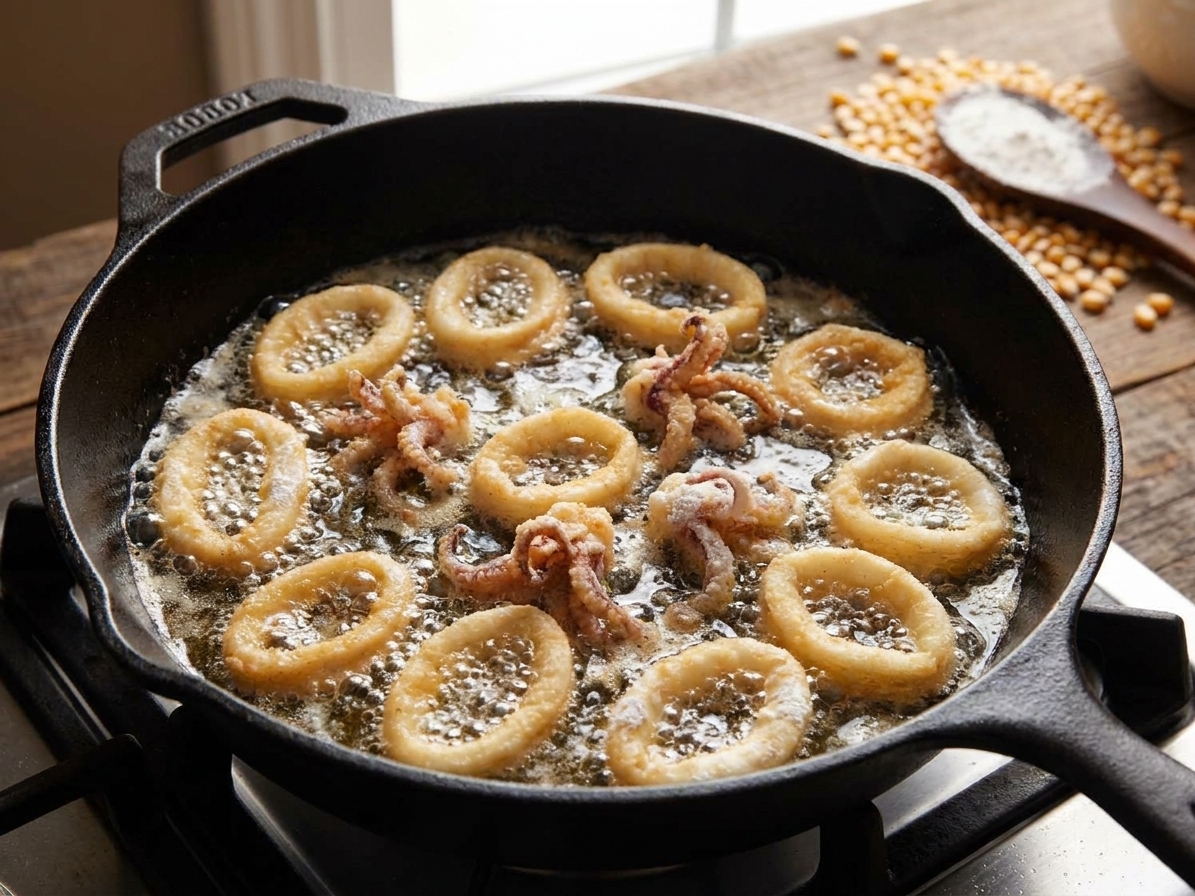
Two rules: dry it well and cook it fast. Pat the squid thoroughly dry, then fry over medium-high heat and pull it as soon as it turns opaque with light golden edges. Overcooking is the main reason it gets rubbery.
Should I soak calamari in milk or buttermilk first?
You can, but you do not need to. A 15 to 30 minute soak in buttermilk can slightly mellow the flavor and help coating adhesion. The bigger tenderness win is still short cook time.
Can I bake it instead of frying?
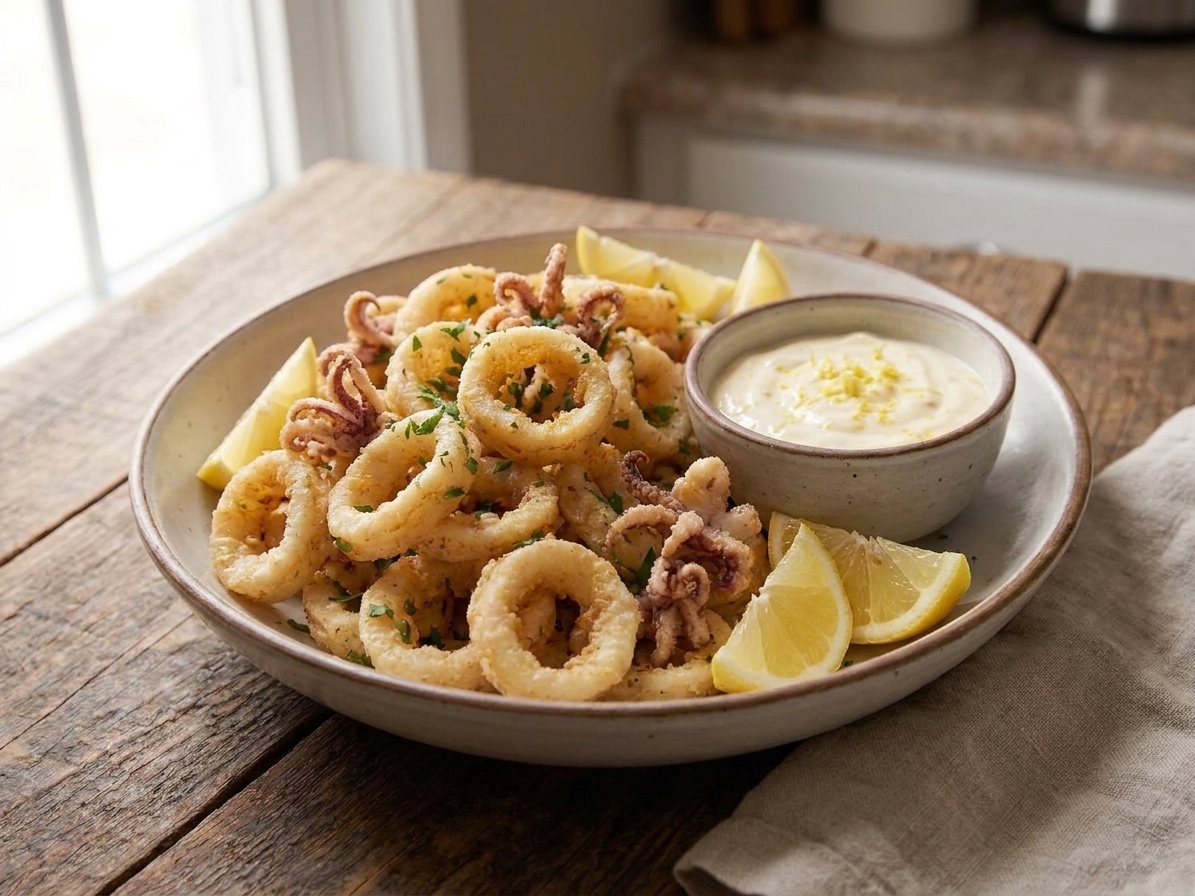
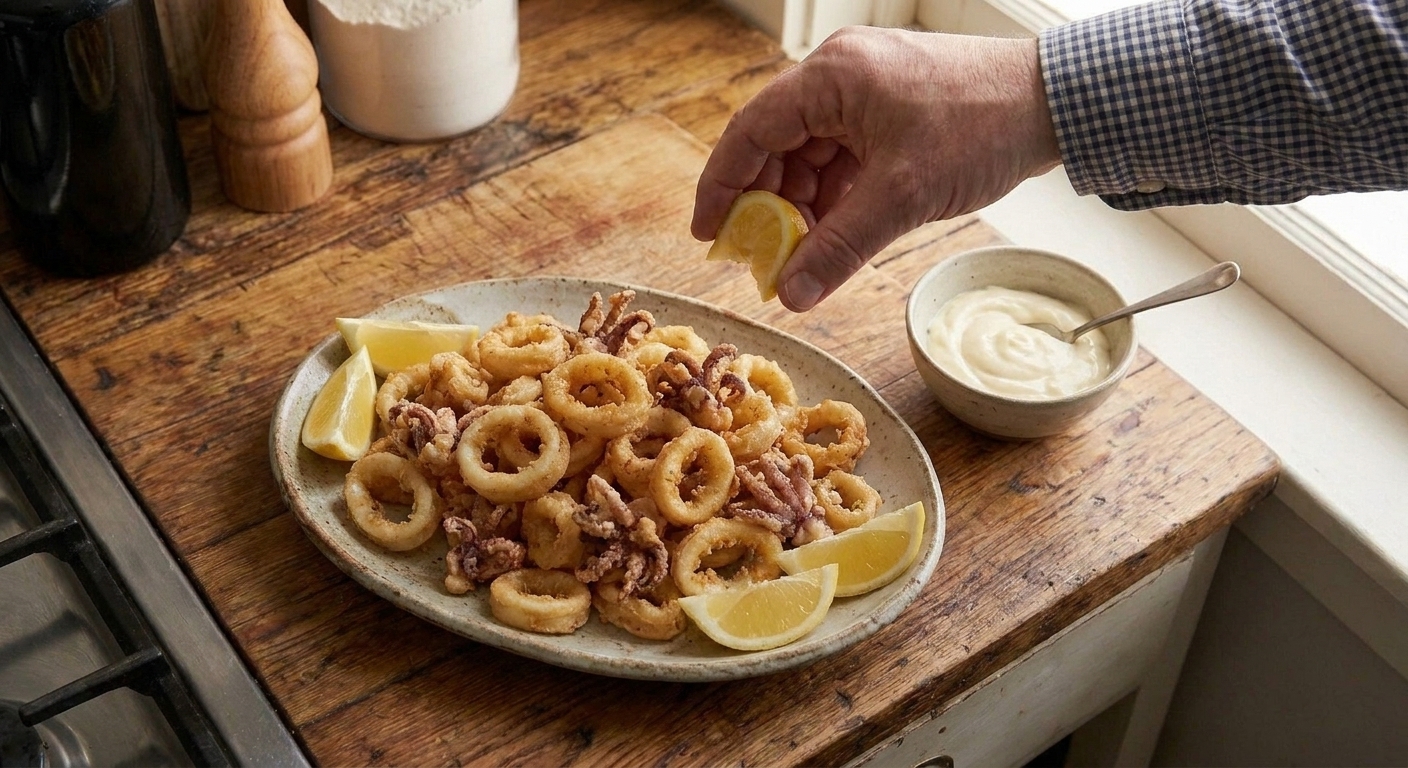
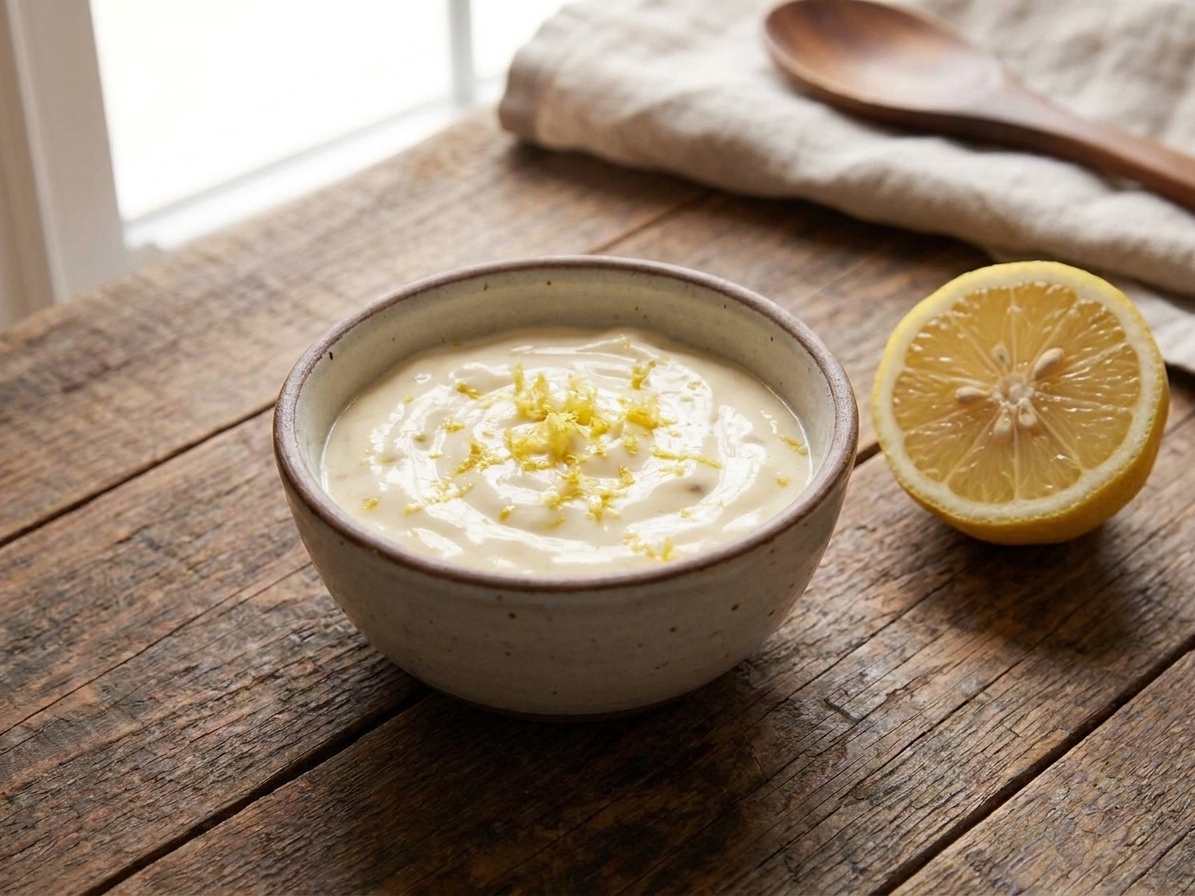
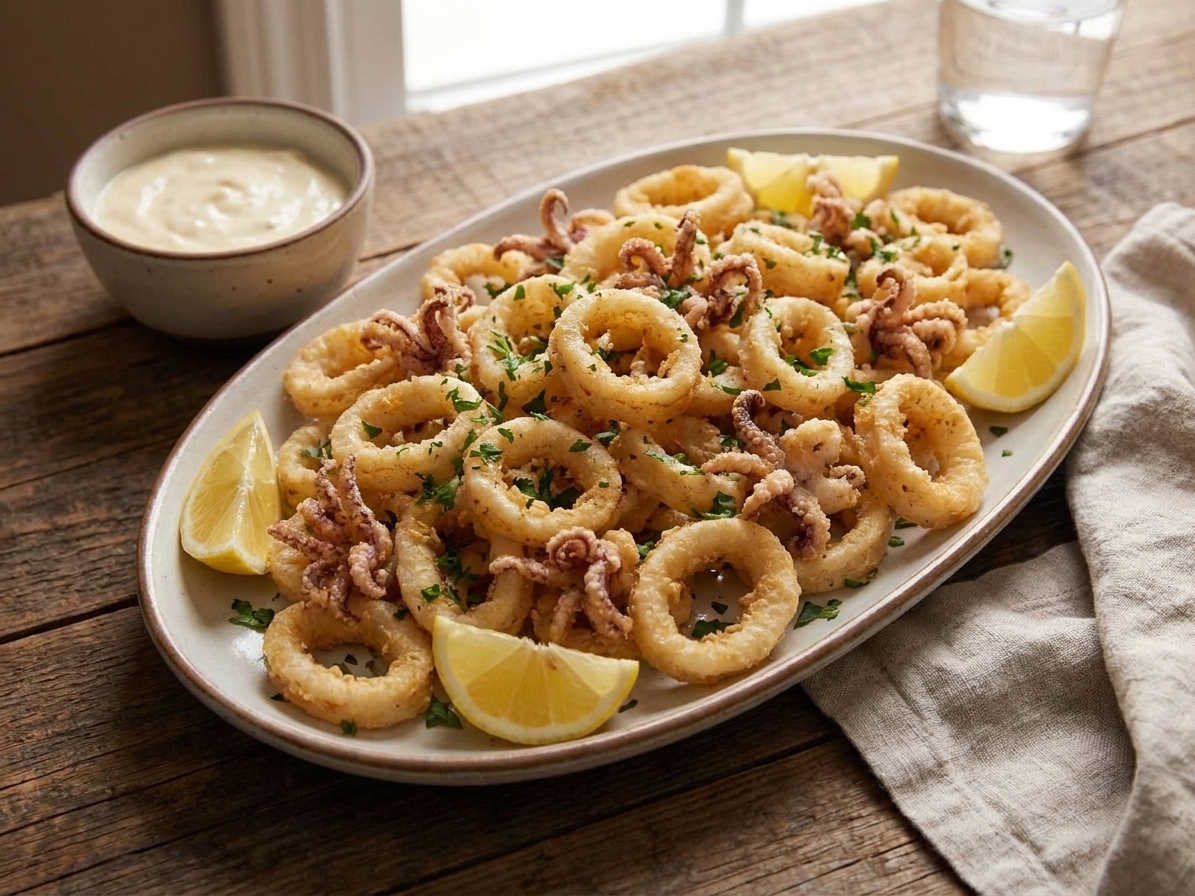
Yes, with different expectations. Toss the coated calamari with a little oil, spread it out on a rack set over a sheet pan, and bake at 450°F for 8 to 10 minutes. It will be drier and less shatter-crisp than pan-fried, but still tasty with the aioli.
Rings only or tentacles too?
Both. Tentacles get extra crispy little edges that are honestly the best part. Just make sure everything is similar thickness and fully dry before coating.
What oil is best for frying calamari?
Use a neutral, high smoke point oil like canola, avocado, vegetable, or grapeseed. Olive oil can work in a pinch, but it is more likely to smoke at the heat you want.
If my calamari is frozen, how should I thaw it?
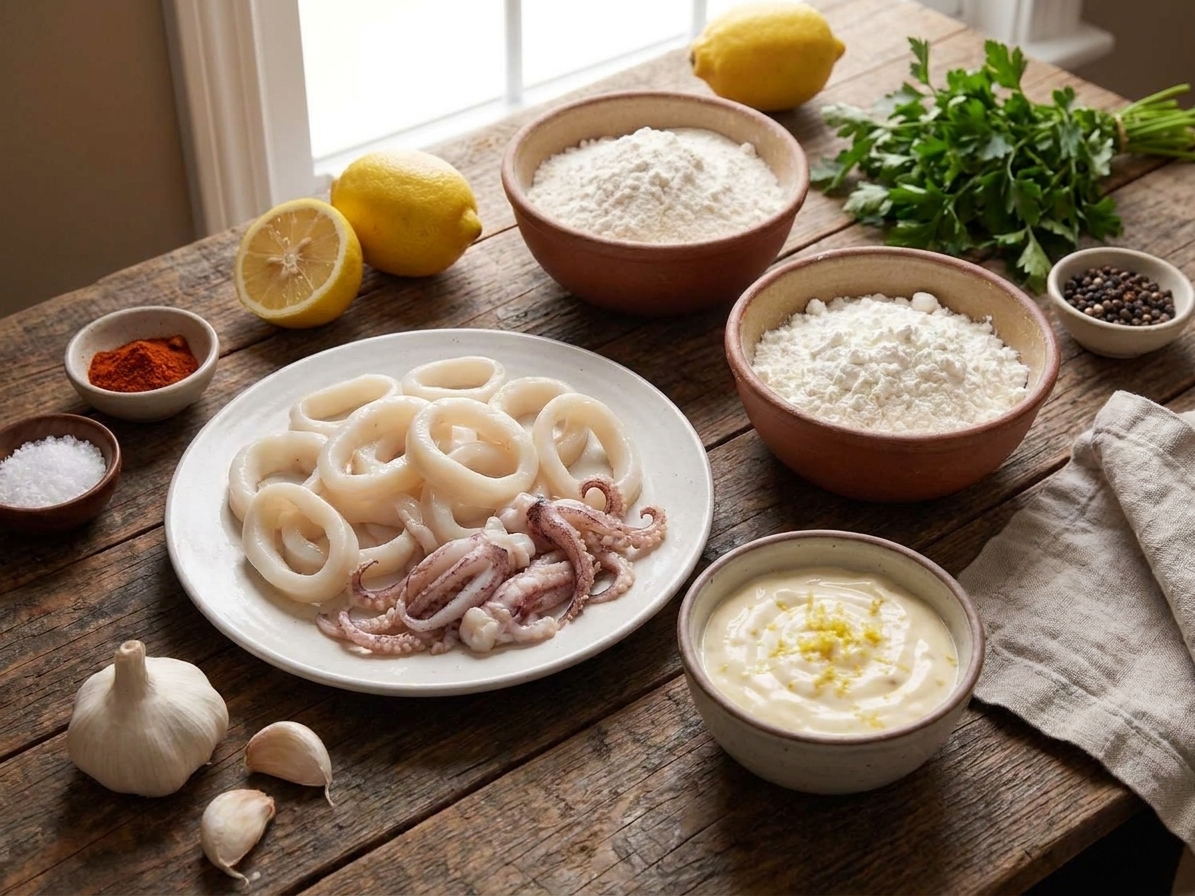
Thaw it overnight in the fridge in a colander set over a bowl so it can drain. Right before cooking, rinse if needed, then pat it very dry with paper towels. Wet squid plus hot oil is a splatter situation, so take the drying step seriously.