Mom's Best Recipes
Recipe

Crispy Homemade Takoyaki

Golden Japanese octopus balls with crisp edges, creamy centers, and the classic sauce and mayo finish.

Author By Matt Campbell
4.8
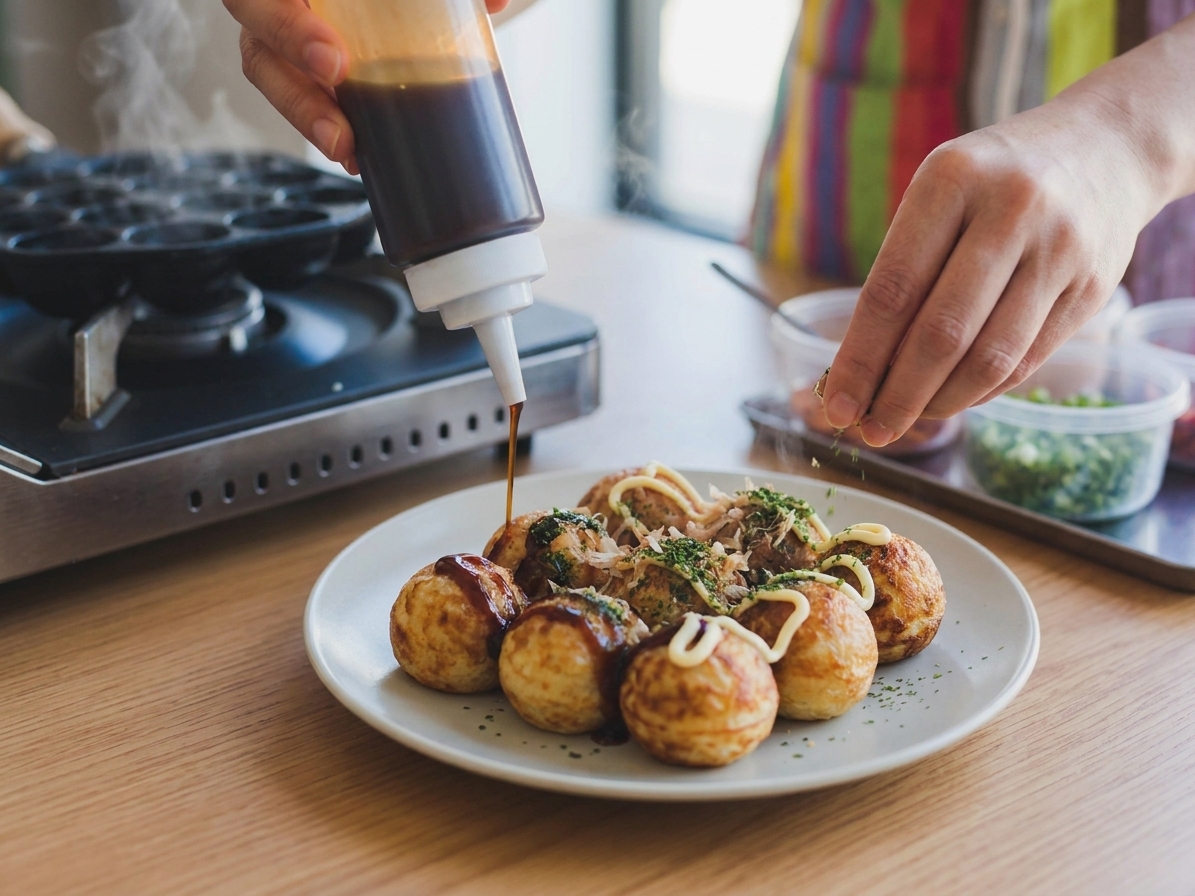
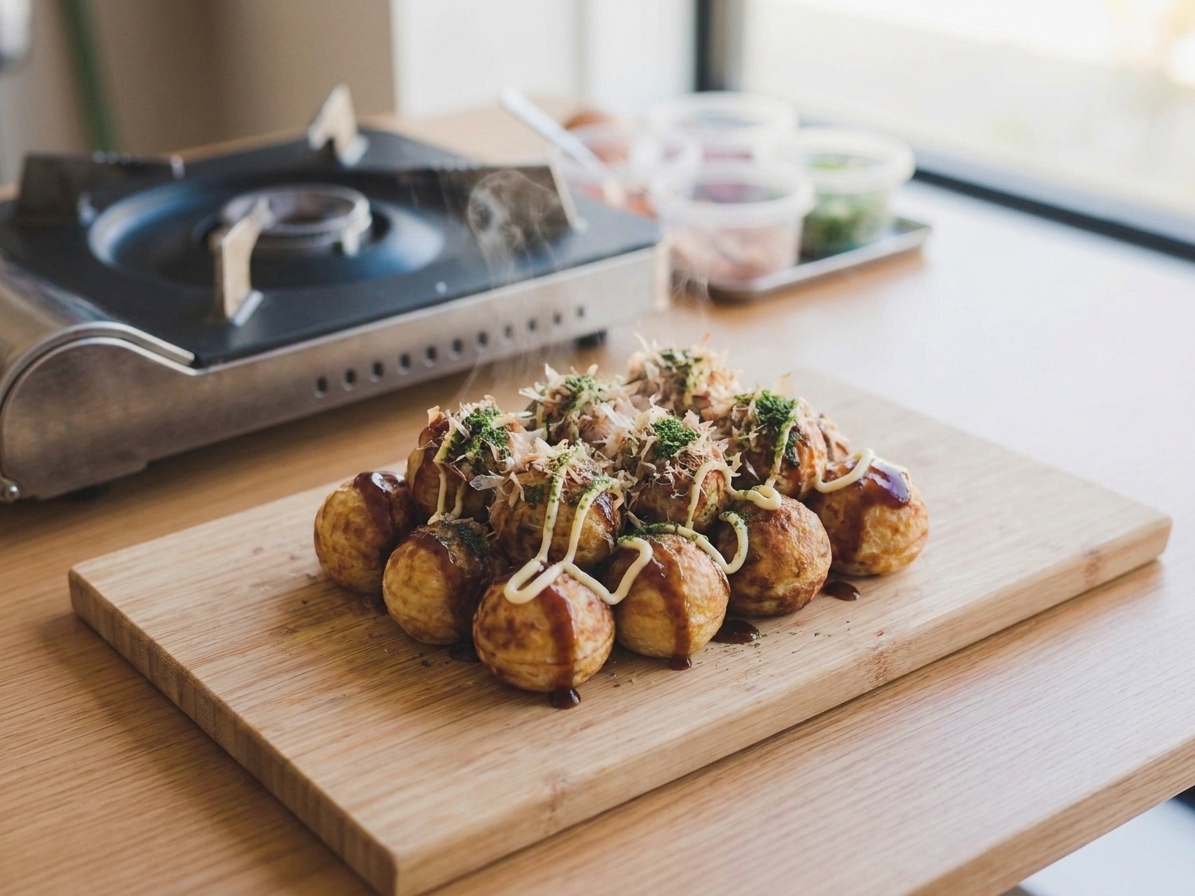
Freshly cooked takoyaki piled on a wooden board, glossy with takoyaki sauce and Japanese mayo, topped with bonito flakes and aonori

Takoyaki is one of those foods that feels like a little kitchen magic trick. You pour a thin batter into a pan full of half-spheres, add a few savory surprises, then somehow end up with bite-sized golden balls that are crispy on the outside and soft and custardy in the middle.

This is my at-home version: accessible ingredients, clear steps, and enough tips to keep the chaos fun instead of stressful. If you can flip a pancake and you own a couple skewers or chopsticks, you can make takoyaki.

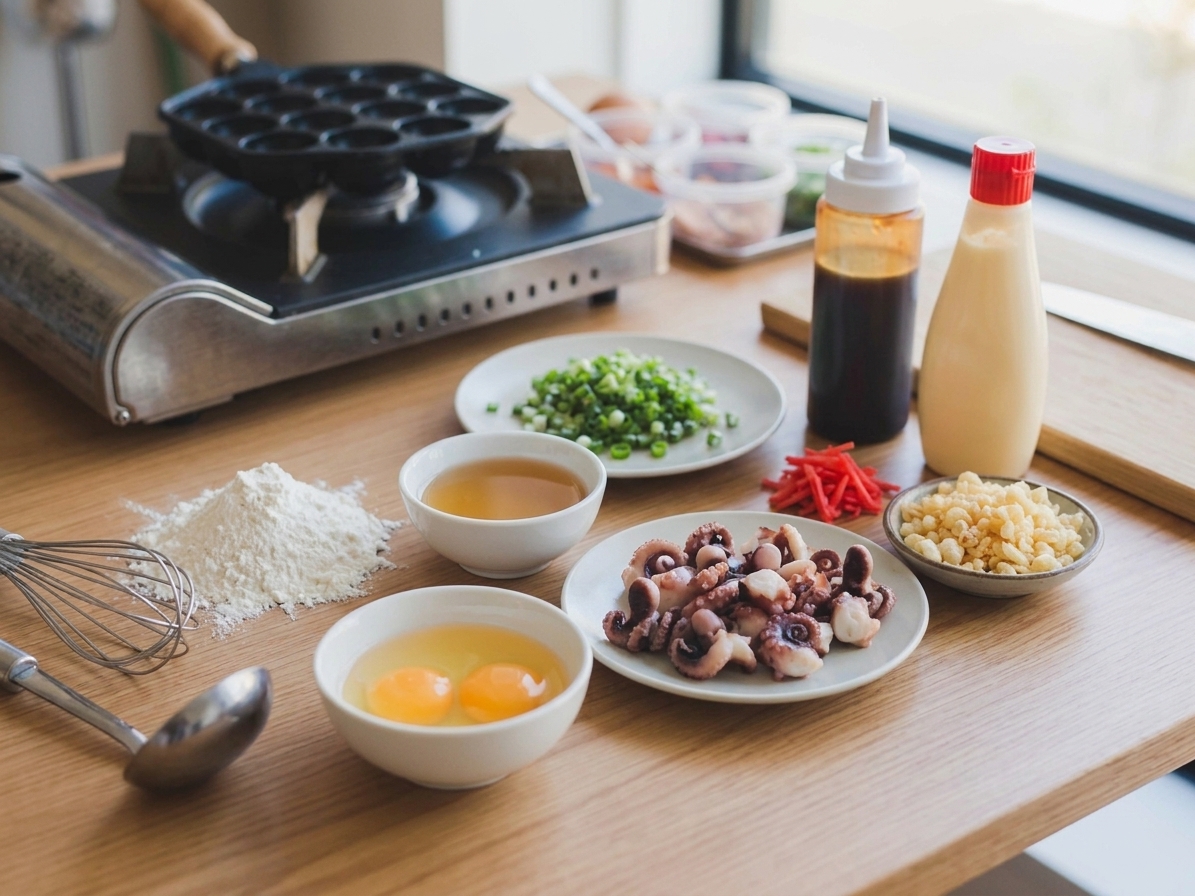
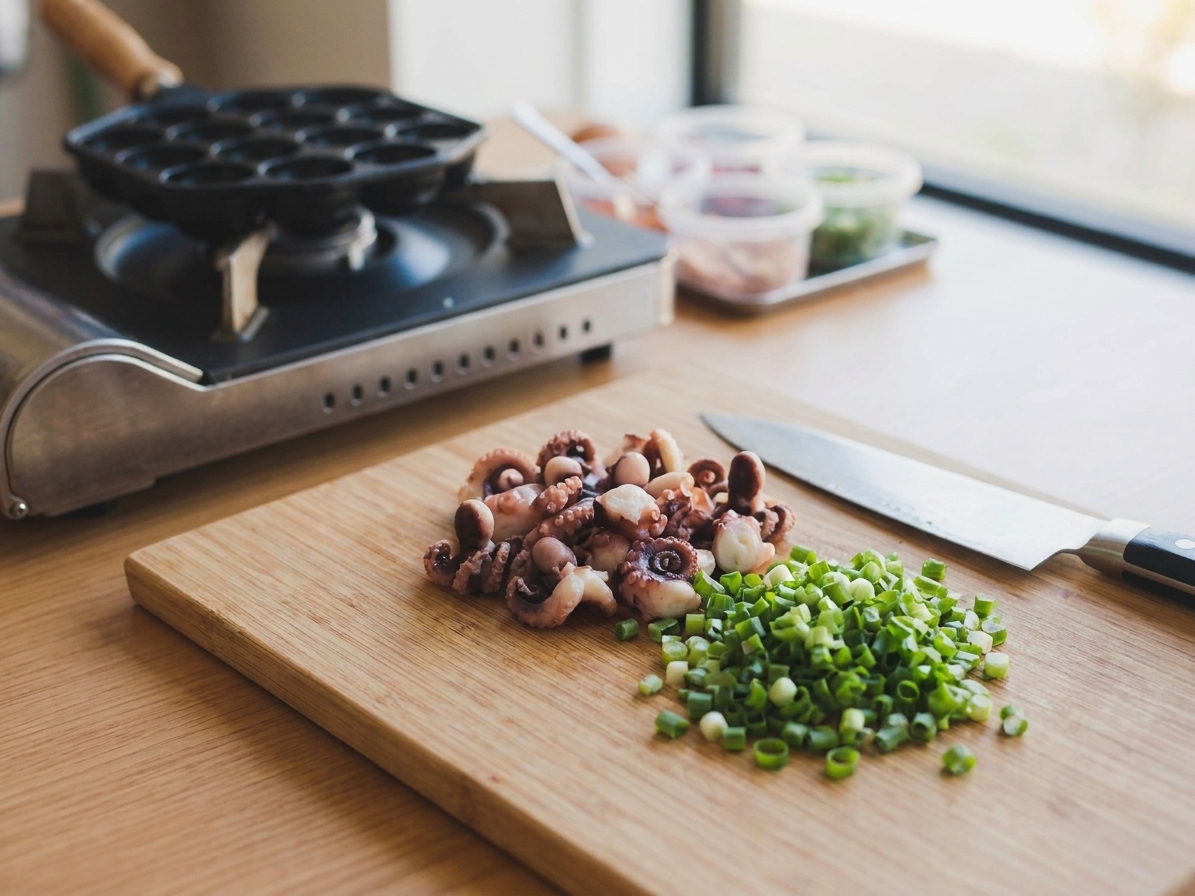
Takoyaki ingredients arranged on a kitchen counter, including flour, eggs, dashi or stock, cooked octopus, green onions, pickled ginger, and sauces

Why It Works

  • Bright, savory flavor fast: dashi in the batter plus punchy toppings means it tastes like a festival snack stand, in the best way.
  • Crisp edges, creamy center: a thin batter and hot pan give you that contrast that makes takoyaki addictive.
  • Totally customizable: swap the octopus for shrimp, crab, mushrooms, or even cheddar-corn if your fridge is feeling chaotic.
  • Beginner-friendly flipping: I walk you through the timing so you are not wrestling batter soup.

Pairs Well With

Storage Tips

Takoyaki is best right off the pan, but leftovers can still be great if you reheat them correctly.

Fridge

  • Cool completely, then store in an airtight container for up to 1 to 2 days for best quality and food safety.
  • Store toppings separately if possible. Sauced takoyaki still reheats fine, but it will be softer.

Freezer

  • Freeze cooked, untopped takoyaki on a sheet pan until firm, then transfer to a freezer bag.
  • Best within 1 month for texture.

Reheating (best methods)

  • Air fryer: 375°F for 6 to 9 minutes, shaking once, until hot and steaming in the center.
  • Oven: 425°F for 10 to 14 minutes on a rack over a sheet pan, until hot and steaming. Ovens vary, so start checking early.
  • Skillet: medium heat with a tiny drizzle of oil, roll them around until crisp again and heated through.
  • Microwave: works in a pinch, but you lose crispness. If you microwave, finish in a hot skillet for 2 minutes.

Common Questions

Do I need a takoyaki pan?

For the classic shape, yes. A cast iron takoyaki pan is easiest to control on the stove, but electric takoyaki makers work too. If you do not have one, you can make a similar vibe as okonomiyaki or even savory pancake bites, but they will not be true takoyaki balls.

What can I use instead of octopus?

Cooked shrimp, lump crab, smoked salmon, diced ham, sautéed mushrooms, or even a little mozzarella are all fair game. Keep pieces small so the balls seal.

Why is my batter sticking?

Usually one of three things: the pan was not hot enough, you did not oil the wells well, or you tried to turn too early. Heat first, oil generously, then wait until the edges look set before you start rotating.

Why are my takoyaki balls flat or leaking?

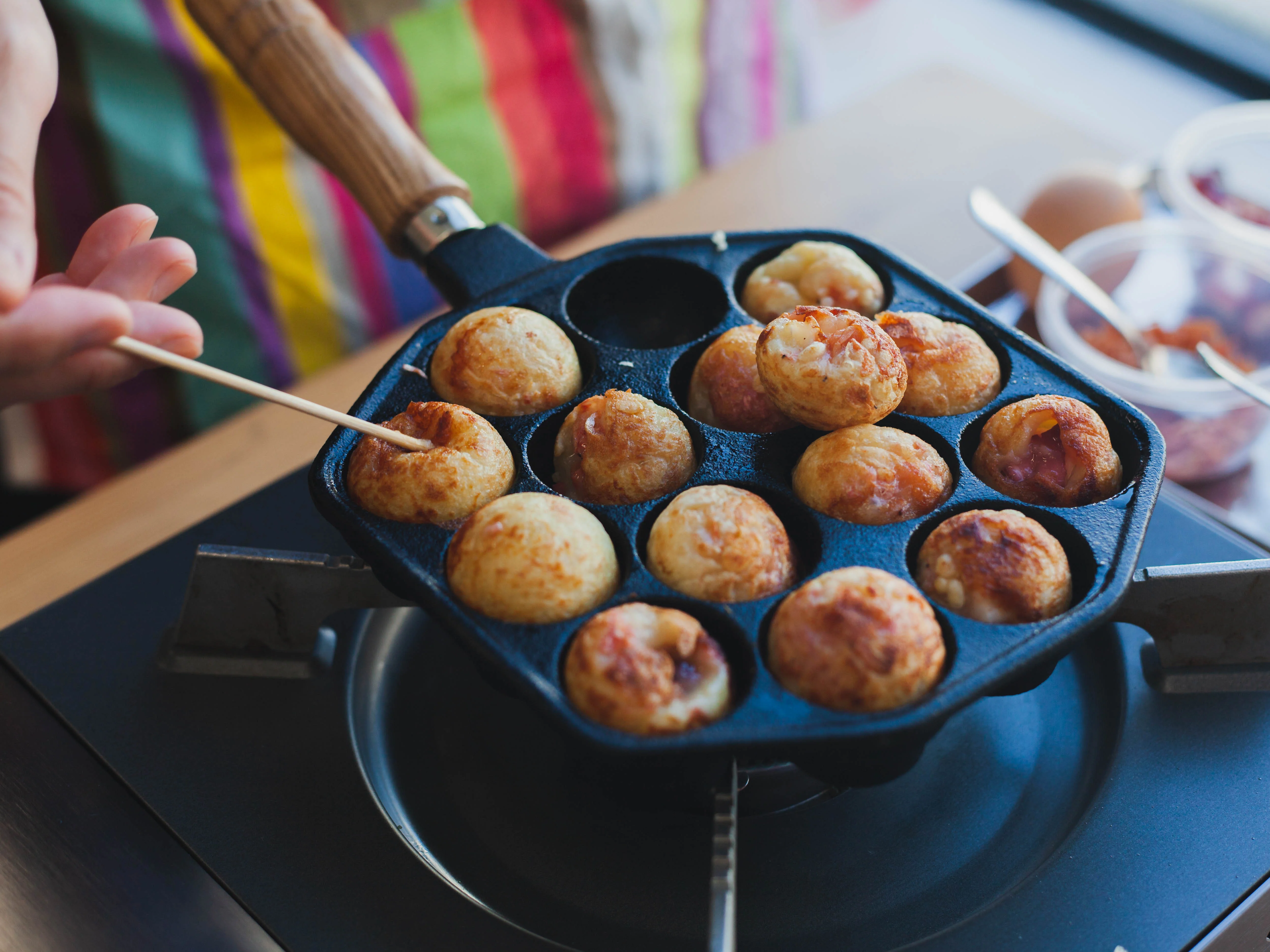
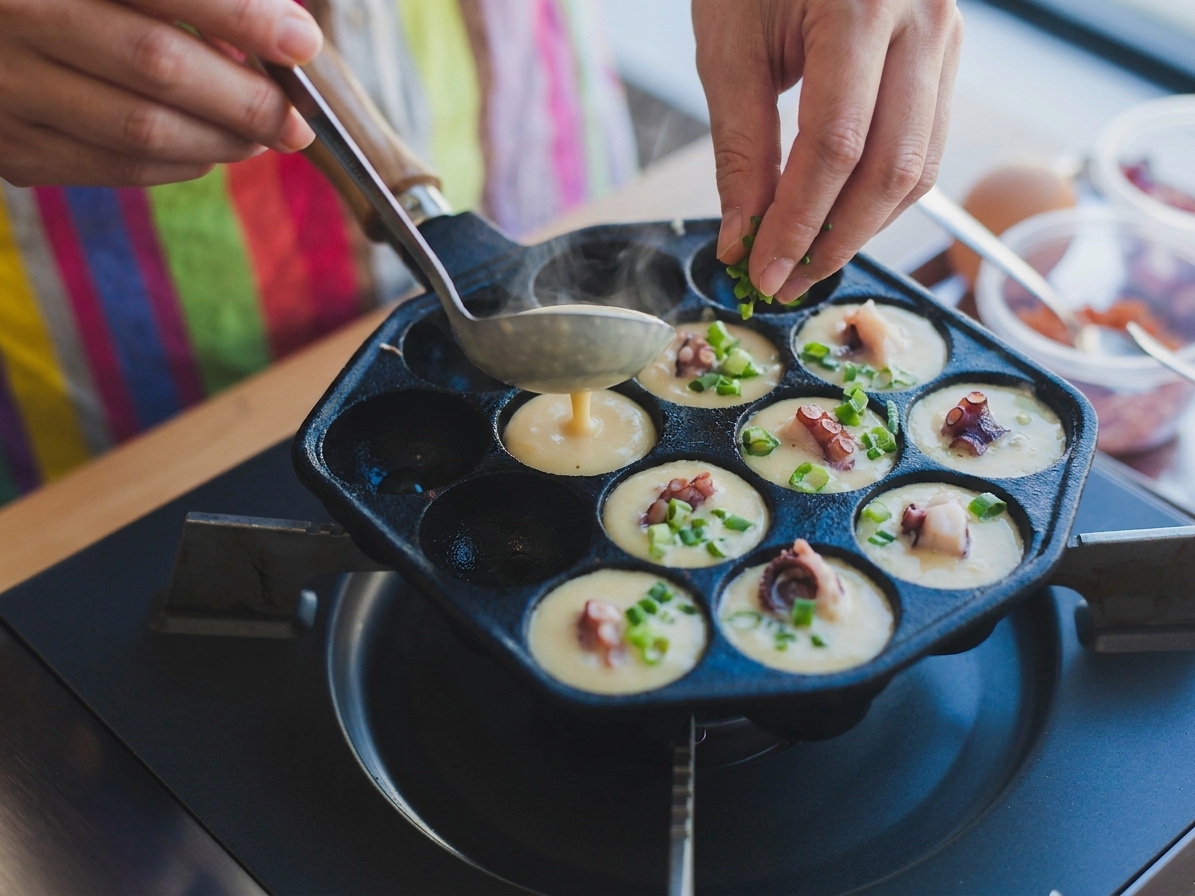
Most often, it is because you did not add enough batter to overfill the wells. Takoyaki is supposed to look messy at first. Pour the batter to the top, let it overflow a little, then use your pick to tuck the cooked edges in as you turn.

Can I make the batter ahead?

Yes. Mix and refrigerate up to 24 hours. Whisk again before using because the flour settles. Just note the baking powder can lose a little oomph overnight, so the texture may be slightly less airy than a same-day batch.

Is takoyaki supposed to be gooey inside?

It should be soft and creamy, not raw. If the centers taste floury, cook longer and make sure your pan is fully preheated.

The first time I made takoyaki at home, I treated it like a calm, orderly project. Huge mistake. Takoyaki is a little chaotic by design. Batter overflows, fillings try to escape, you question your life choices for about 90 seconds, and then suddenly you are rolling perfect golden bites like you have been doing it for years.

Now it is one of my favorite “friend in the kitchen” foods. It is interactive, forgiving, and ridiculously satisfying when you nail that crispy edge. Also, it is basically an excuse to put a bright, tangy sauce on something and call it dinner. Respect.