
Mom's Best Recipes
Recipe

Crispy Peking Duck (Home-Style)

Crackly skin, juicy meat, and the classic hoisin-scallion-cucumber wraps, made doable in a normal oven.

Author By Matt Campbell
4.7
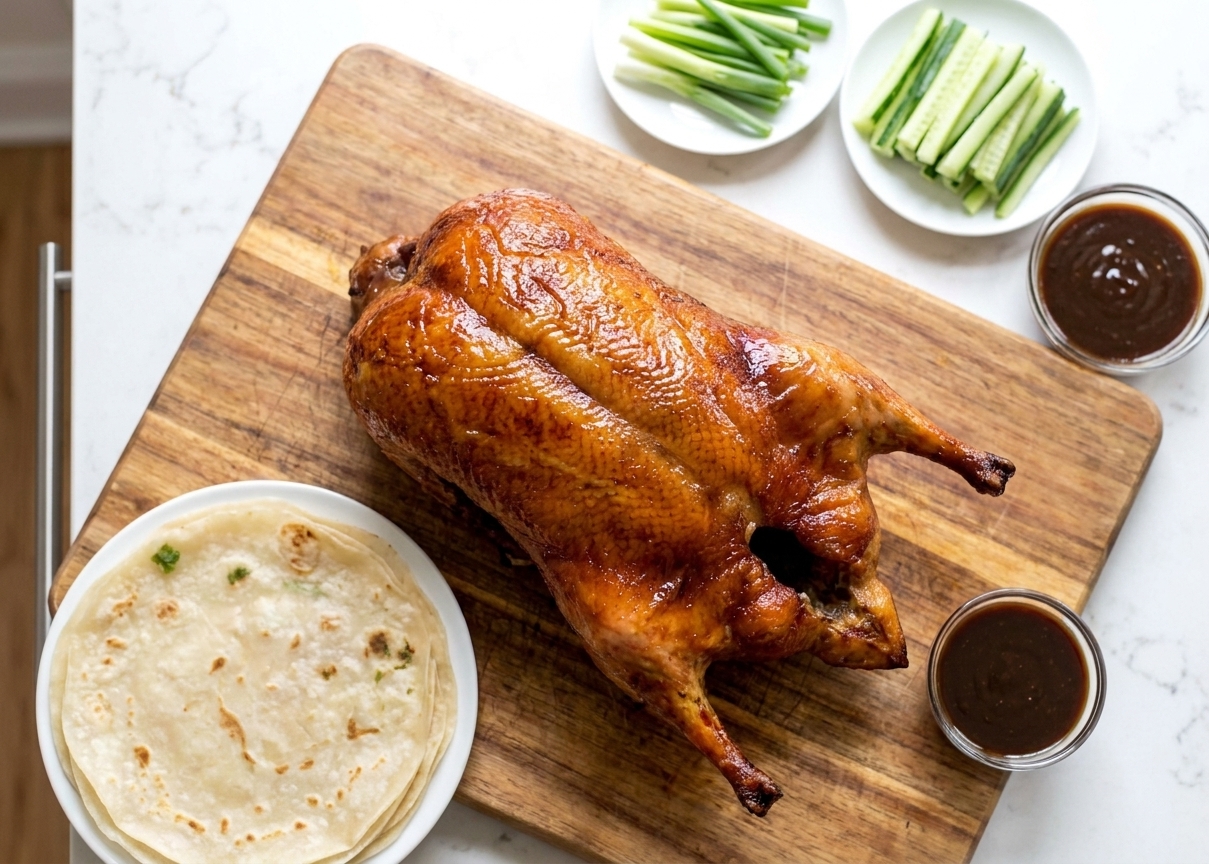
A whole roasted duck with deeply crisp, lacquered skin on a wooden cutting board, surrounded by Mandarin pancakes, sliced cucumber, scallions, and a small bowl of hoisin sauce on a warm kitchen table

Peking duck has a reputation. It walks into the room like it owns the place, all glossy skin and dramatic carving. And yes, the real-deal restaurant version involves specialized ovens, air pumps, and a whole choreography of steps.

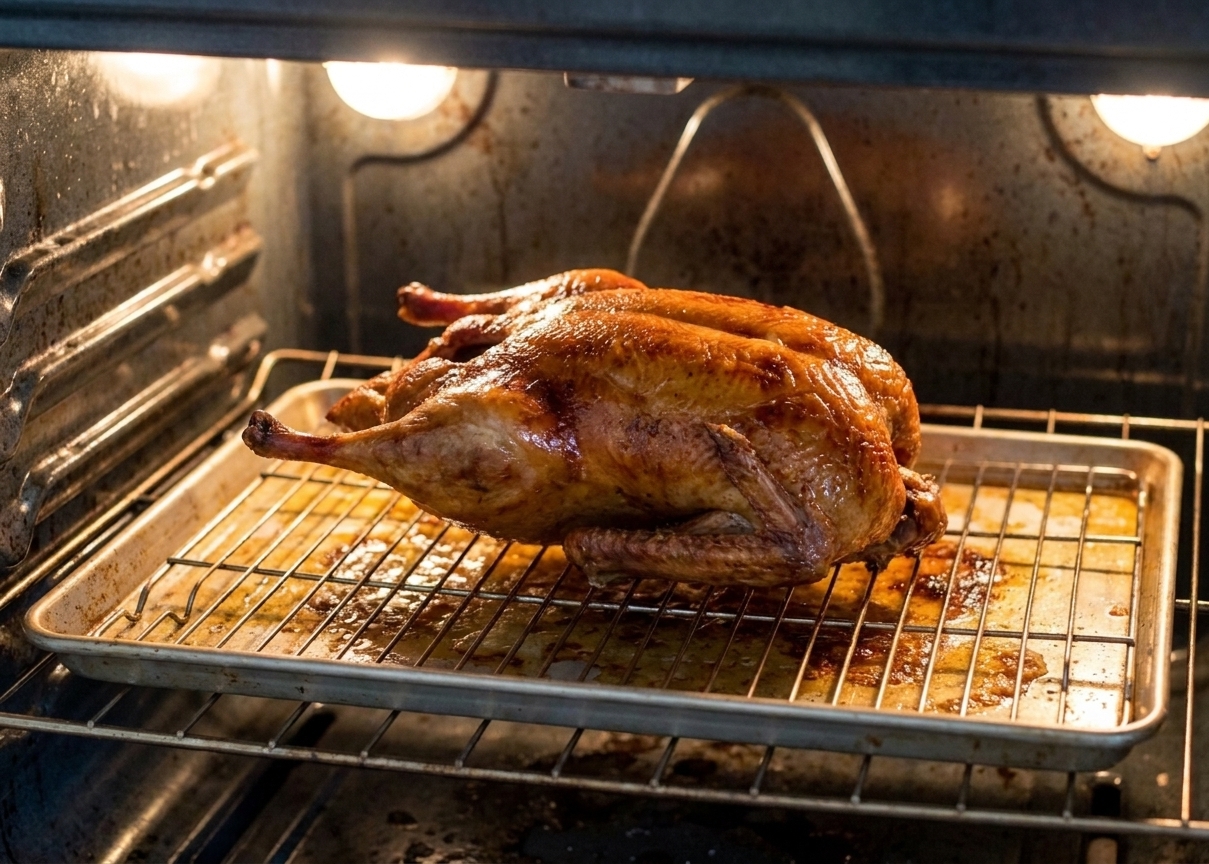
But here is the good news: you can get seriously crispy skin and that sweet-savory lacquer at home with an oven, a rack, and a couple smart moves. This is my home-style take, built for a regular kitchen and real life. It is not fussy for the sake of being fussy, but it does reward patience in the spots that matter.

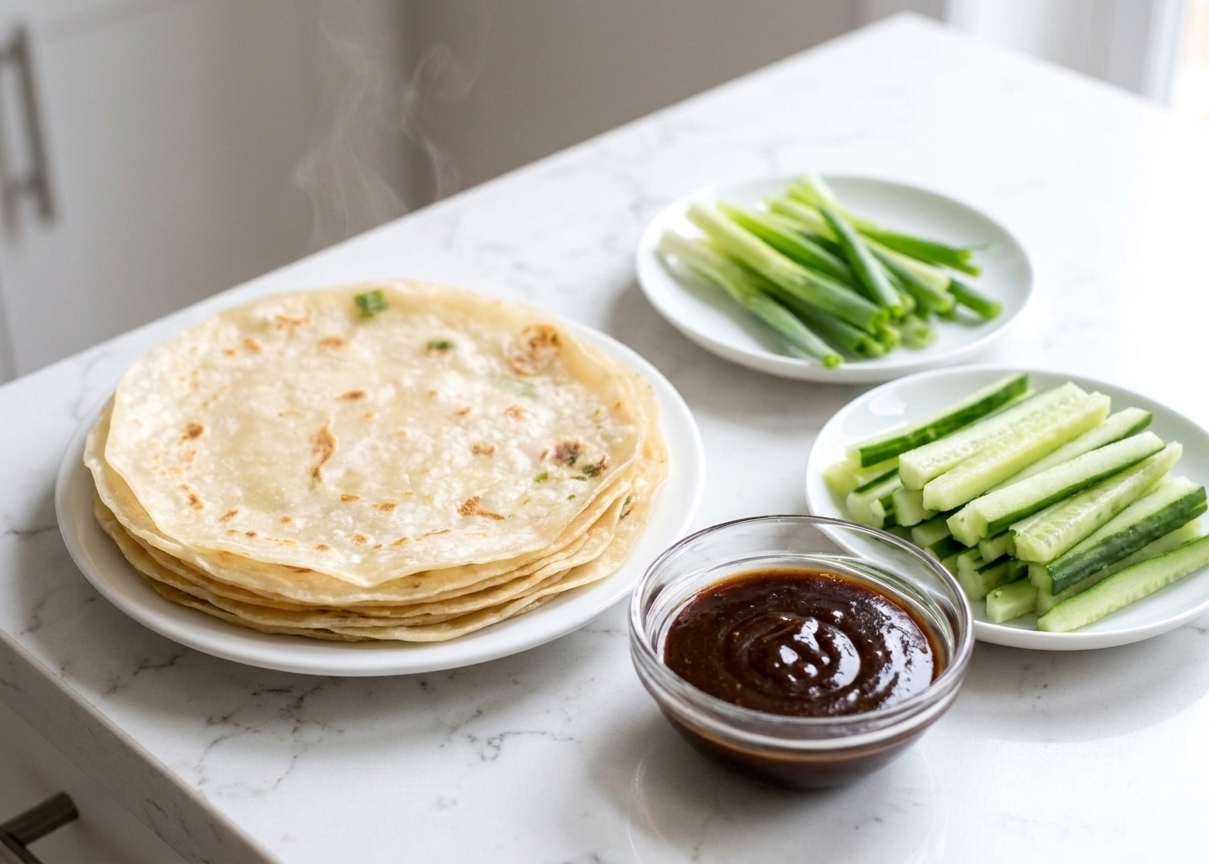
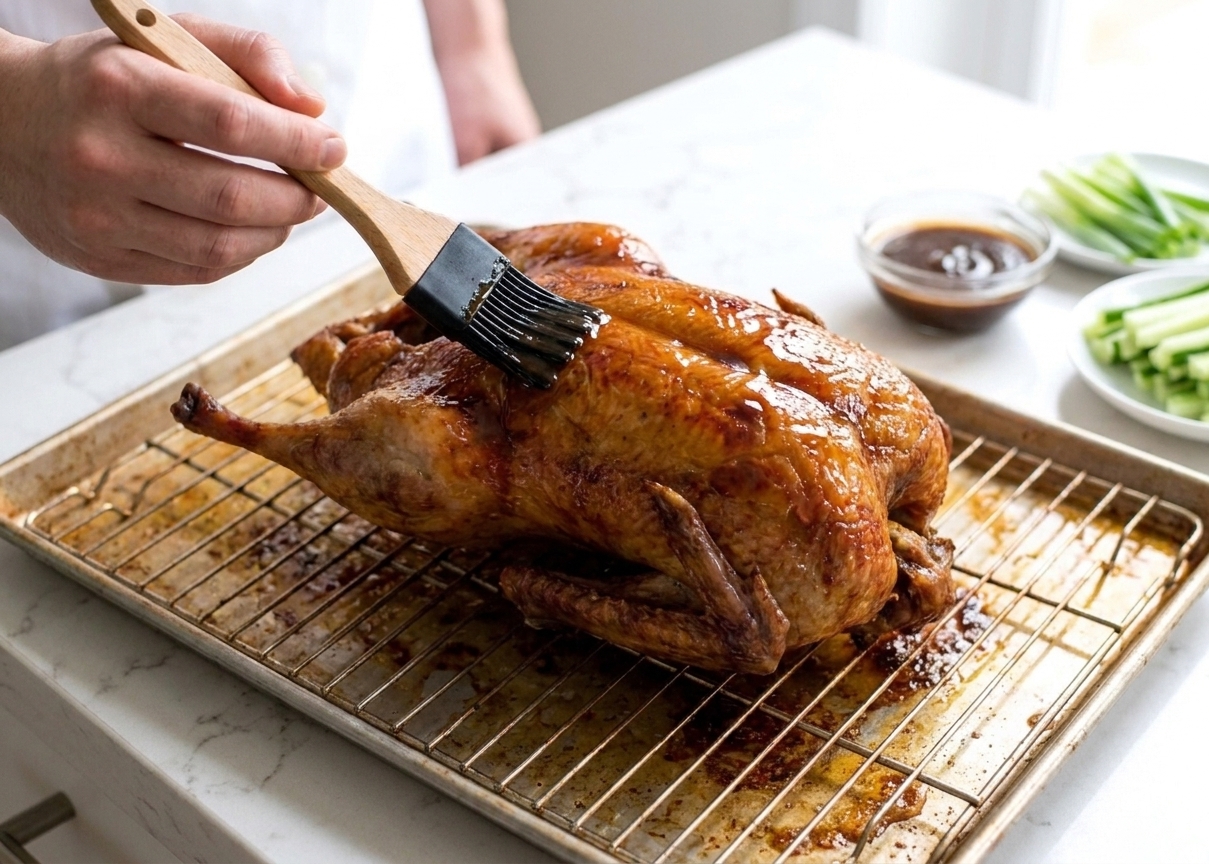
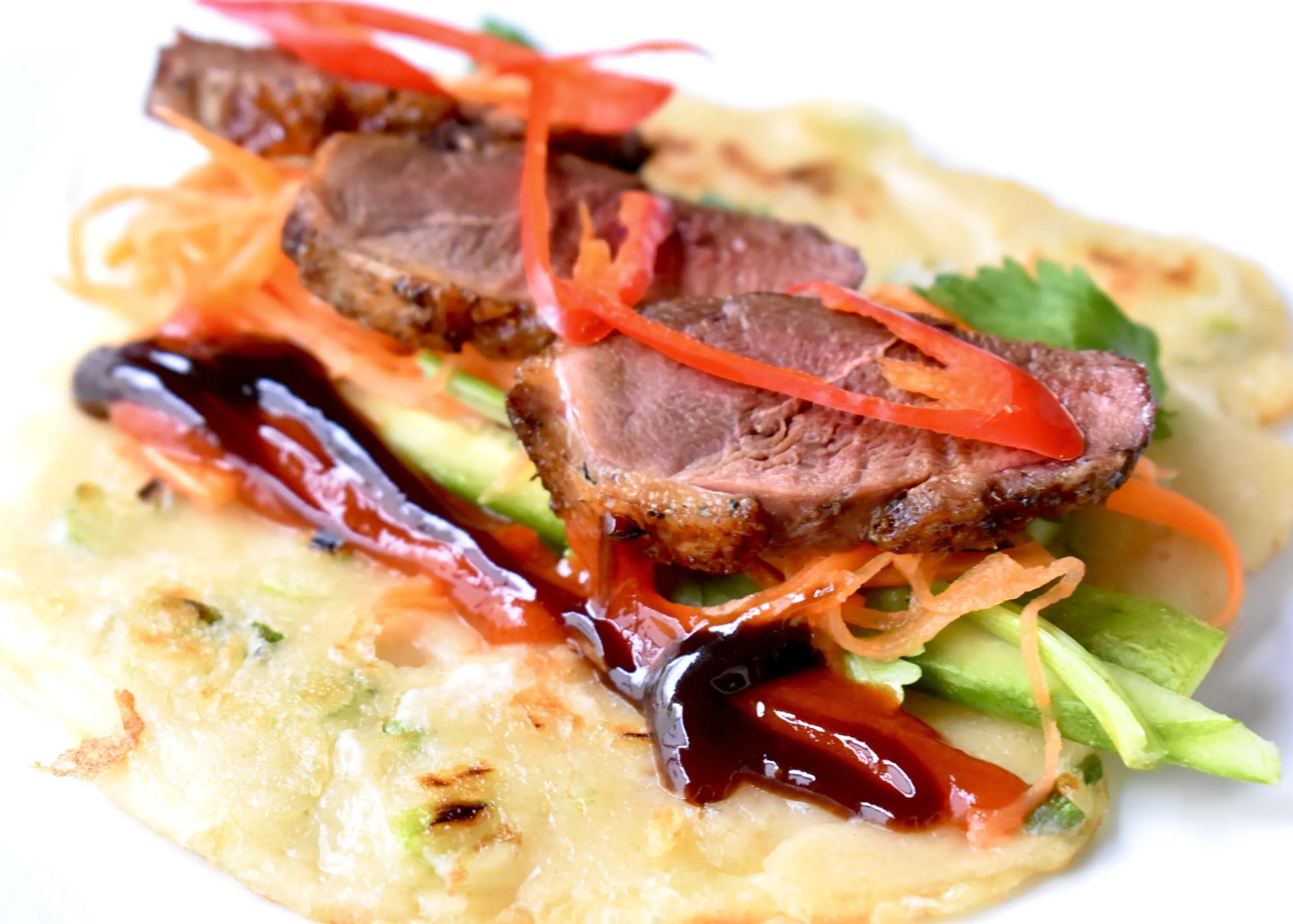
We are going for three things: dry skin, steady heat, and a glaze that hits the “pause mid-bite” zone. Then we wrap it up with warm pancakes, hoisin, scallions, and cucumber like we are treating ourselves because we are.
Raw whole duck on a sheet pan next to bowls of hoisin sauce, honey, soy sauce, five-spice, grated ginger, and bundles of scallions and cucumbers on a clean kitchen counter

Why It Works

  • Crispy skin without special equipment: A thorough dry-out in the fridge, a few shallow pricks in the skin, and a low-then-high roast give you that crackly bite.
  • Juicy meat, not dried out: The gentle first stage renders fat slowly, then the final blast crisps the skin fast.
  • Peking-duck-inspired flavor with easy pantry staples: Five-spice and a glossy hoisin-honey glaze bring the sweet-savory vibe, with hoisin also doing its job at the table.
  • The wrap bar makes it fun: Pancakes, crunchy veg, and sauce turn dinner into a build-your-own situation.

Pairs Well With

Storage Tips

Fridge: Store sliced duck in an airtight container for up to 3 days. Keep pancakes and toppings separate so everything stays fresh.

Best way to re-crisp skin: Heat the oven to 425°F. Spread duck pieces skin-side up on a rack over a sheet pan and warm for 6 to 10 minutes. If you skip the rack, the skin can go soft from steam.

Freeze: You can freeze duck meat for up to 2 months. Thaw overnight in the fridge, then reheat in a hot oven to bring some crisp back.

Bonus move: Save the rendered duck fat. Strain it and refrigerate. Use it for potatoes, fried rice, or sautéed greens.

Common Questions

Do I need to inflate the duck skin with air?

No. That technique is awesome and very traditional, but for a home oven it is optional. The biggest win is drying the skin uncovered in the fridge. That gets you most of the way there.

Should I prick or score the skin first?

Yes, for best results. Lightly prick the skin all over (or score shallowly) to help the fat render. The key is to not pierce the meat, especially on the breast, or you will lose juices and risk a tougher bite.

Can I use orange marmalade instead of maltose?

Yes. Maltose is classic for that glassy shine, but it is not always easy to find. This recipe uses honey for accessible sweetness and lacquer. If you want a slightly citrusy note, swap in orange marmalade for half the honey.

What kind of duck should I buy?

A standard whole Pekin duck (often labeled Long Island duck in the US) is perfect. Look for one around 5 to 6 pounds.

How do I serve it if I cannot find Mandarin pancakes?

Tortillas work in a pinch. So do steamed buns, lettuce cups, or even warm flour crepes. The key is something soft that can hold sauce and crisp bits.

What should the internal temperature be?

For safety, you can aim for 165°F in the thickest part of the thigh. For texture, duck legs often get better around 170 to 180°F (more tender, more forgiving). If you are worried about the breast drying out, prioritize not overcooking the breast and remember: the duck will keep cooking a bit as it rests.

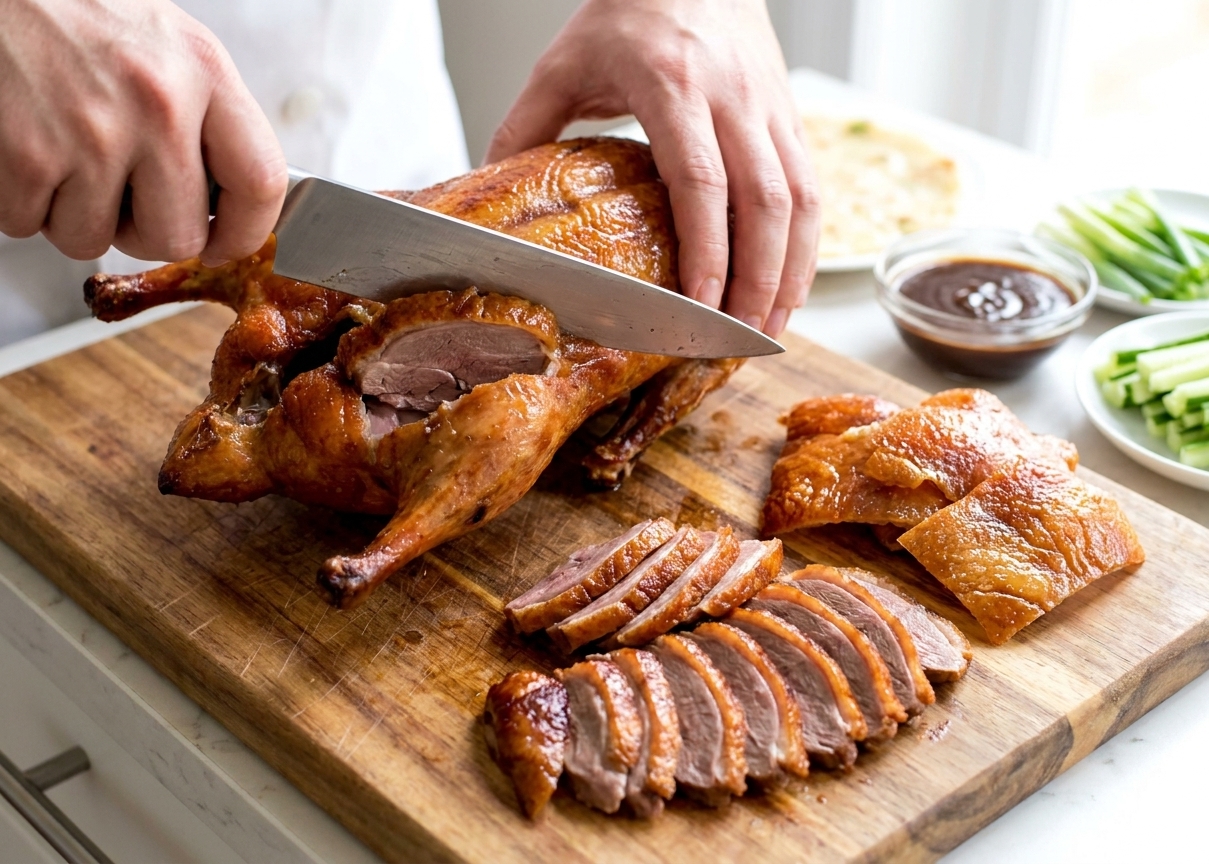
A roasted duck being carved on a wooden cutting board with a sharp knife, with crisp skin pieces and sliced meat arranged neatly beside it

The first time I tried to make Peking duck at home, I went in with chaotic confidence and exactly zero respect for how much fat a duck can render. The smoke alarm had opinions. The upside is that I learned what matters fast: dry skin, a rack, a few little pricks in the skin to help the fat do its thing, and a plan for the drippings. Now it is one of my favorite “I wonder if…” weekend projects. You do a little prep, let the fridge do some work overnight, and the payoff is this ridiculously crisp, glossy bird that turns dinner into an event without turning you into a stressed-out person.